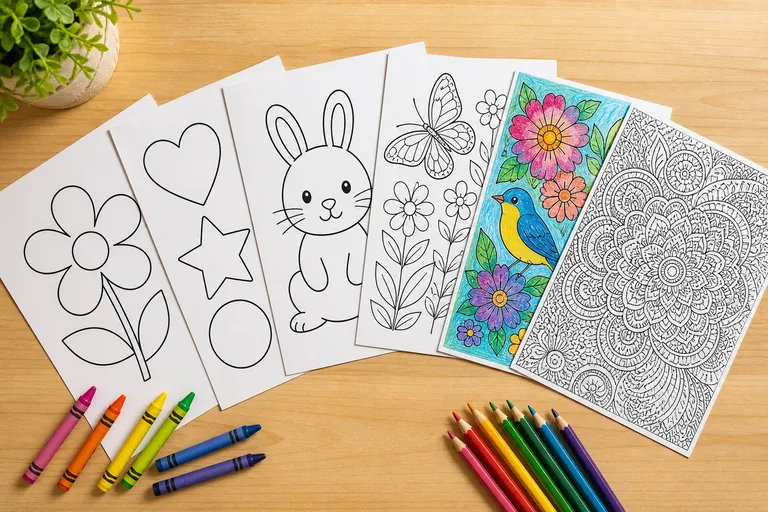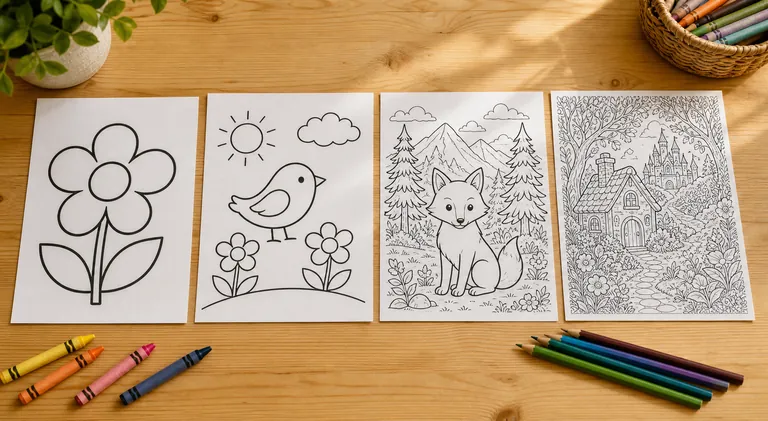
Hand a crayon to a two-year-old and a twelve-year-old and you are really handing them two different activities. The toddler is building an arm. The tween is making art. Everything in between is a slow, visible climb, and the coloring page that delights a child one year can bore or frustrate them the next.
This guide walks that climb stage by stage: what your child is actually doing when they color, what to expect at each age, and how to choose pages and tools that fit where they are right now. Think of it as the map. The detailed, single-age guides branch off from here.
Coloring by age, at a glance
Before the detail, here is the whole arc on one screen.
| Stage | What is happening | What to look for in a page | Good tools |
|---|---|---|---|
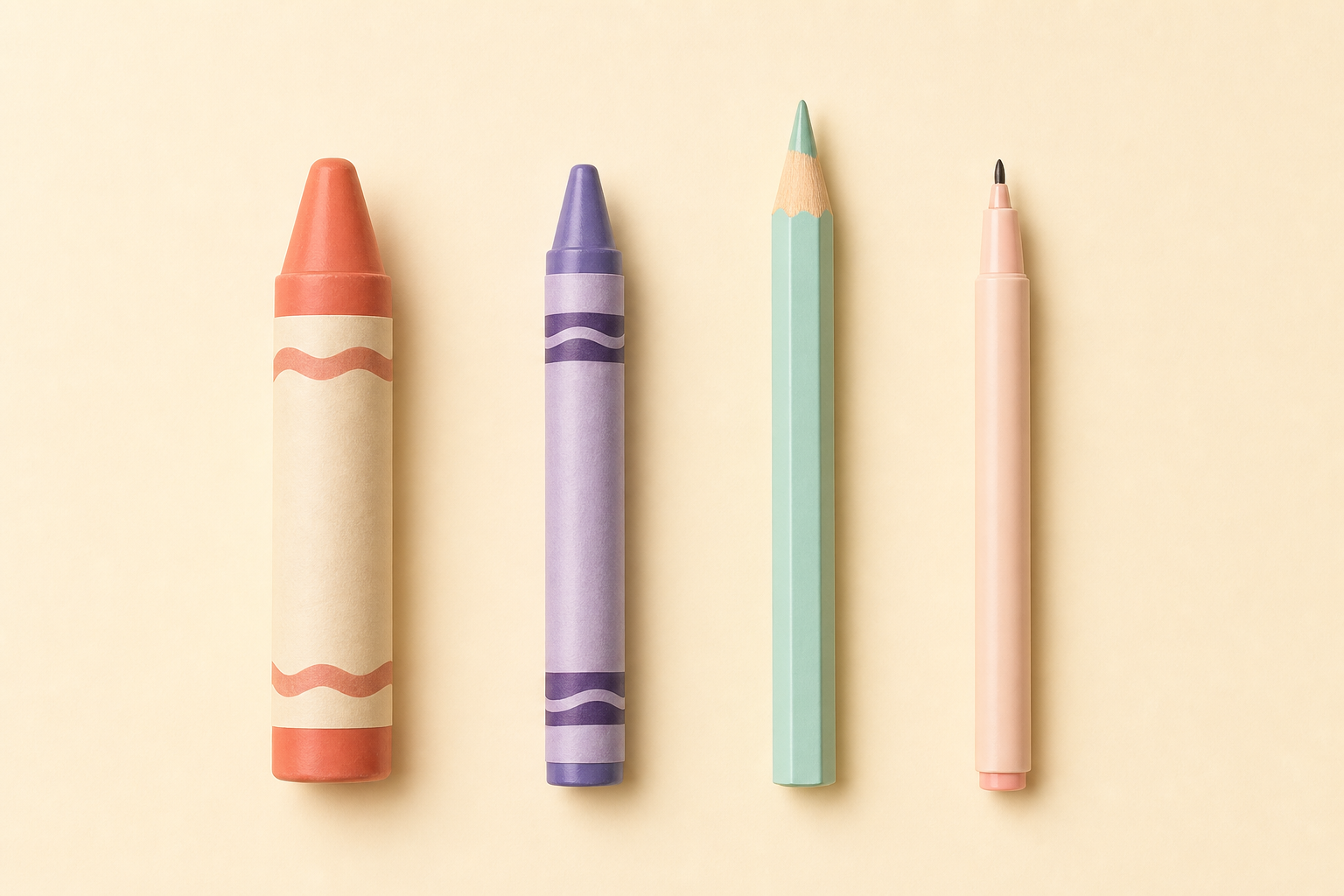
| Toddler (about 2 to 4) | Whole-arm scribbling, fist grip, no lines yet | One big shape, thick outline, lots of empty space | Chunky crayons, large paper |
| Preschool (about 3 to 5) | Finger grip emerging, naming colors, aiming for shapes | Bold outlines, one simple subject, a few regions | Standard crayons, washable markers |
| School-age (about 5 to 8) | Staying in the lines, focus, finishing a page | More regions, medium detail, a small scene | Washable markers, colored pencils |
| Tween (about 9 to 12) | Fine control, technique, doing it their own way | Intricate detail, patterns, nothing babyish | Fine-liners, quality pencils, blending |
Toddlers, about 2 to 4: the scribble is the whole point
A toddler holds a crayon in a fist and colors with the whole arm, not the fingers. There is no expectation of staying inside anything, because the lines are not the goal yet. The goal is the motion: up and down, side to side, around. Occupational therapists describe coloring developing through exactly this sequence, from fisted whole-arm strokes toward finer finger control over the next couple of years (The OT Toolbox).
So the best toddler page is almost empty. One big, friendly shape with a thick outline and plenty of room to fill. A single balloon, a fat cloud, one round cat. Detail is wasted here, and small regions only frustrate. Big crayons that fit a small fist beat anything fine-tipped.
What this quietly builds is real: grip strength, the back-and-forth coordination that later powers handwriting, and the plain joy of leaving a mark on the world. If you want the why behind it, see how coloring builds focus and fine motor skills. For pages at this stage, start with the simplest subjects you can find, like big, soft cloud pages.
Preschoolers, about 3 to 5: naming colors and aiming for shapes
Somewhere in here the fist loosens into fingers, the helping hand starts to hold the paper steady, and a child begins to aim. They will tell you the grass is green and color a patch of it, roughly, in about the right place. Naming and matching colors tends to click around three to four, with the basic set usually sorted by four or five (Lovevery).
Pages can now carry a few distinct regions, but keep outlines bold and the subject single and recognizable. A butterfly, a flower, one animal. This is the stage where matching pages help: a butterfly with two wings to match gives a preschooler a reason to slow down and compare left to right without it feeling like a worksheet.
Expect color outside the lines and color that has nothing to do with reality. Both are fine. Washable markers earn their place around now, because the reward of bright, instant color often pulls a reluctant colorer back to the table.


Coloring fun for kids — anywhere.
Free for iOS & Android. No ads, no sign-up, offline-ready.


Coloring fun for kids — anywhere.
Free coloring app for kids. iOS and Android, phones and tablets. No ads, no sign-up, even offline.
School-age, about 5 to 8: staying in the lines, and finishing what they start
This is the stage parents tend to wait for, and it helps to know it arrives on its own. Coloring inside the lines is a developmental milestone most children reach somewhere between three and five, with real consistency landing in the early school years (Scholastic). You cannot rush it, and you do not need to. A mature pencil grip and the patience to fill a whole page tend to show up together.
What changes most here is attention. A school-age child can pick a page, stick with it, and feel real pride in a finished one. So pages can grow up: more regions, a bit of background, a small scene rather than a single object. A dinosaur in its landscape gives plenty to do without overwhelming. Colored pencils alongside markers let them start controlling pressure and edges.
Tweens, about 9 to 12: detail, technique, and doing it their way
By now the hand does what the eye asks. Tweens can manage intricate patterns, shading, and blending, and they want to. What they do not want is anything that reads as for little kids. Treat the activity as the genuinely calming, creative thing it is, not as a babysitter. Coloring's quieting effect is one reason it keeps its grip well into the teens, which is worth knowing if you ever wonder why coloring lowers stress.
Give them density and freedom: mandalas, repeating patterns, detailed scenes, intricate mandala pages they can lose an afternoon inside. Fine-liners, a decent set of pencils, and permission to ignore every suggestion you just made. At this age, the autonomy is half the point.
How to pick the right page, not the right child
Pull all of that together and the rule is short: meet the child where they are, and let the page do the adjusting. A child who seems behind on a page is usually just holding the wrong page. Hand a toddler a tween's mandala and of course it ends in tears; hand a tween a toddler's balloon and of course it bores them.
Read your own child, not the age label. Watch what they reach for, notice when a page lights them up or shuts them down, and slide the difficulty to match. The stages above are a guide, not a schedule.
Start where your child is today
Find the row that sounds like your kid, pick a page that fits it, and keep the bar low: the win is a child who wants to come back tomorrow. When you are ready for more, the single-age guides go deeper on each stage, and the showroom is full of pages sorted by exactly the qualities that matter here.
What else could you color?
Pick a prompt or type your own — opens in a new tab.