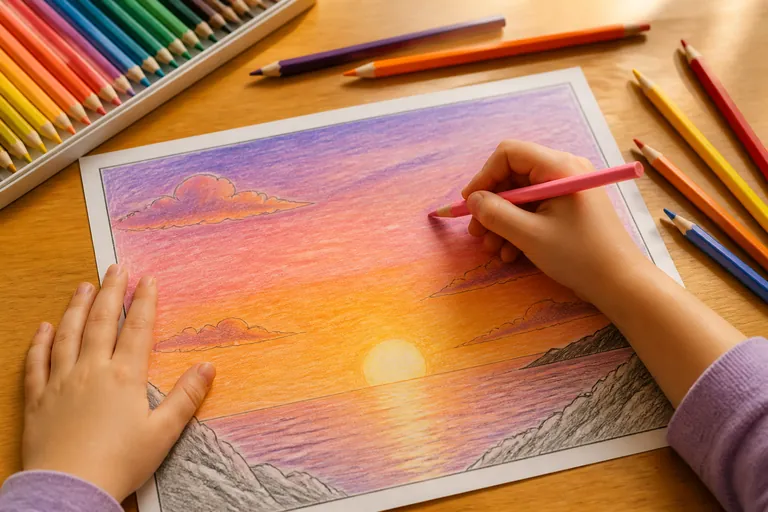
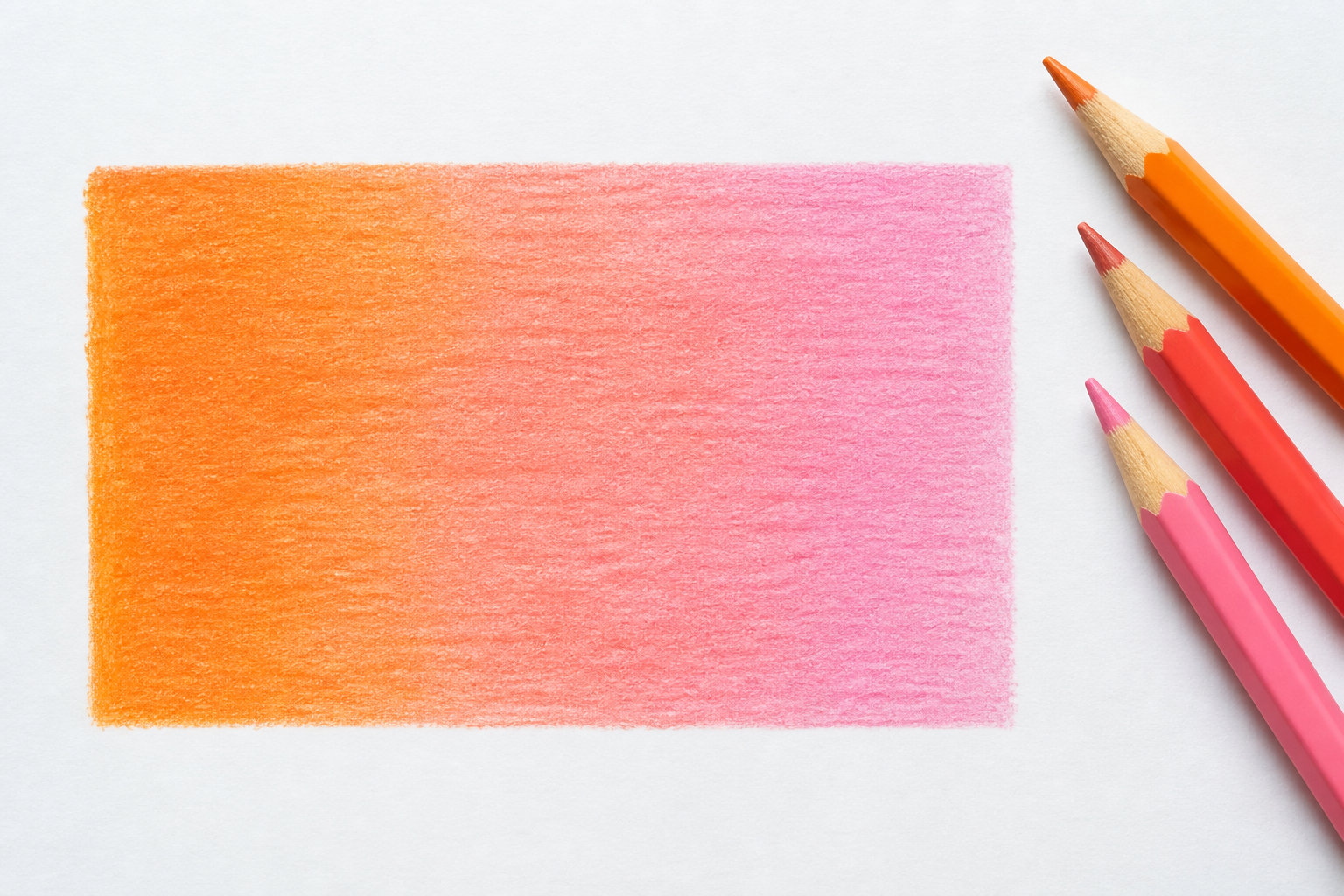
Coloring can go one of two ways. Colors can stop at a hard line, where one shade ends exactly where the next begins. Or they can melt into each other, so the orange of a sunset turns pink without you ever spotting the seam. That second look, where two colors fade together, is called blending, and it is the difference between a sky that looks flat and a sky that looks real.
The best part: blending does not need a special tool or an expensive set. It needs light pressure, a little patience, and letting one color walk a few steps into the next.
What you'll need
Blending works best with crayons or colored pencils, because you can build them up in soft layers. Markers are trickier. A fresh one lays down solid color that is hard to fade, and a dry one tends to streak. If you're deciding what to hand your child, our crayons, markers, and colored pencils guide breaks down which one to reach for and when.
You also want two colors that get along, and paper with a tiny bit of texture, which grabs the color and helps it smooth out.
Blend in five steps
- 1Pick two colors that are neighbors. Shades that sit next to each other, like yellow and orange or blue and purple, fade together smoothly. Colors from opposite sides of the color wheel tend to turn muddy where they meet.
- 2Color the first shade with light pressure. Hold the pencil a little further back and press softly. You can always go darker later, but you can't lift color back off the page, so start gentle.
- 3Bring in the second color and let it overlap. Color the second shade so it reaches into the first one by about a finger's width. That overlapping strip in the middle is where the blend will happen.
- 4Go back and forth over the overlap. With light strokes, all going the same direction, color over the middle strip again and again. Each soft layer fills in a little more, until the two colors stop looking like two separate colors.
- 5Press a bit harder at the very end. Once the blend looks close, one firmer pass smooths the last streaks and pushes the color into the paper. Artists call this burnishing, and it works best as the final move, because once you press hard the paper won't take much more.


Coloring fun for kids — anywhere.
Free for iOS & Android. No ads, no sign-up, offline-ready.


Coloring fun for kids — anywhere.
Free coloring app for kids. iOS and Android, phones and tablets. No ads, no sign-up, even offline.
Common mistakes
Which colors blend nicely
The easy rule: neighbors blend into something pretty, opposites blend into mud. Warm colors like red, orange, and yellow melt together into sunset shades. Cool colors like blue, green, and purple fade into ocean and twilight shades. Picking two colors from the same family is the safest way to get a blend you'll like.
What else could you color?
Pick a prompt or type your own — opens in a new tab.
Practice on something forgiving
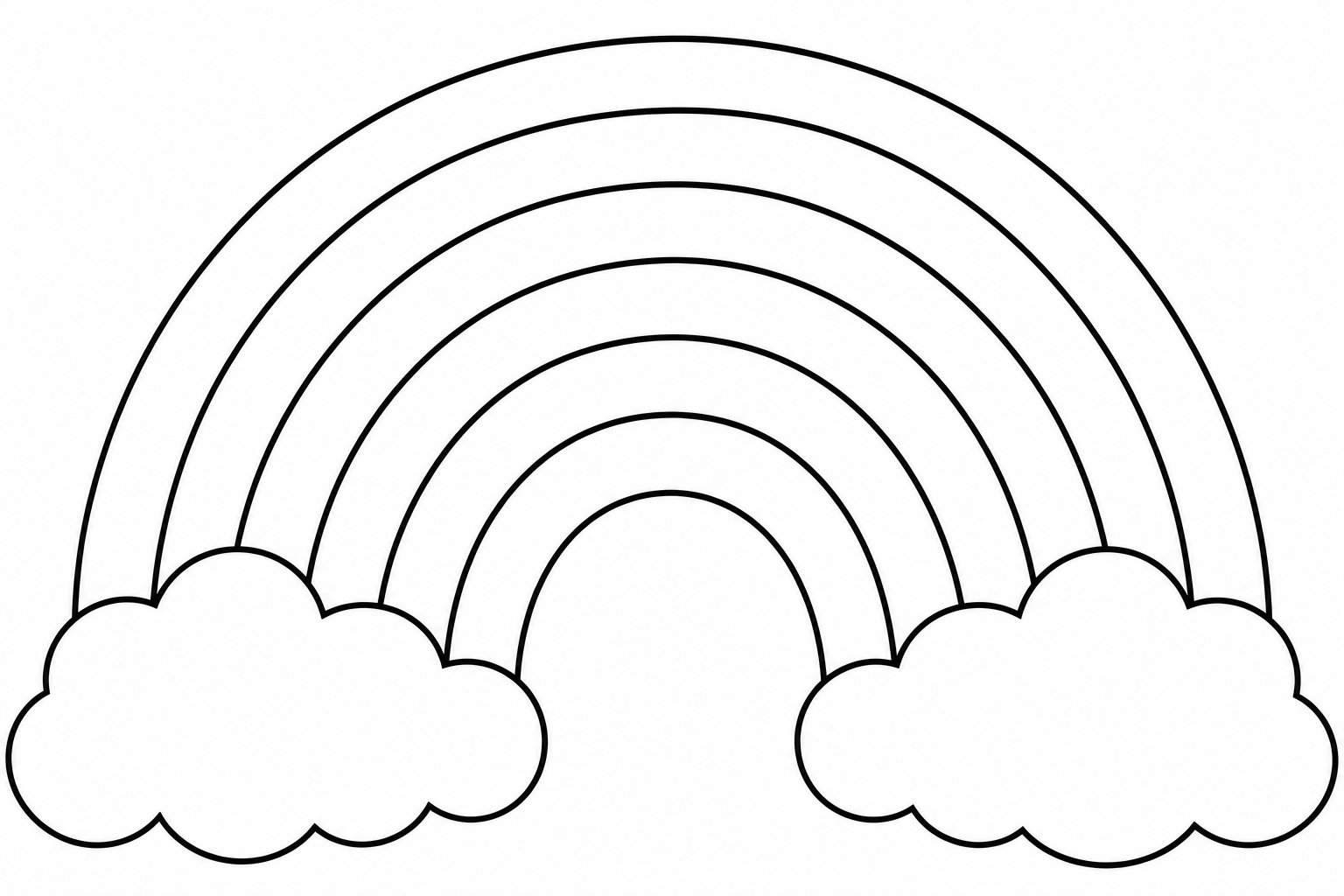
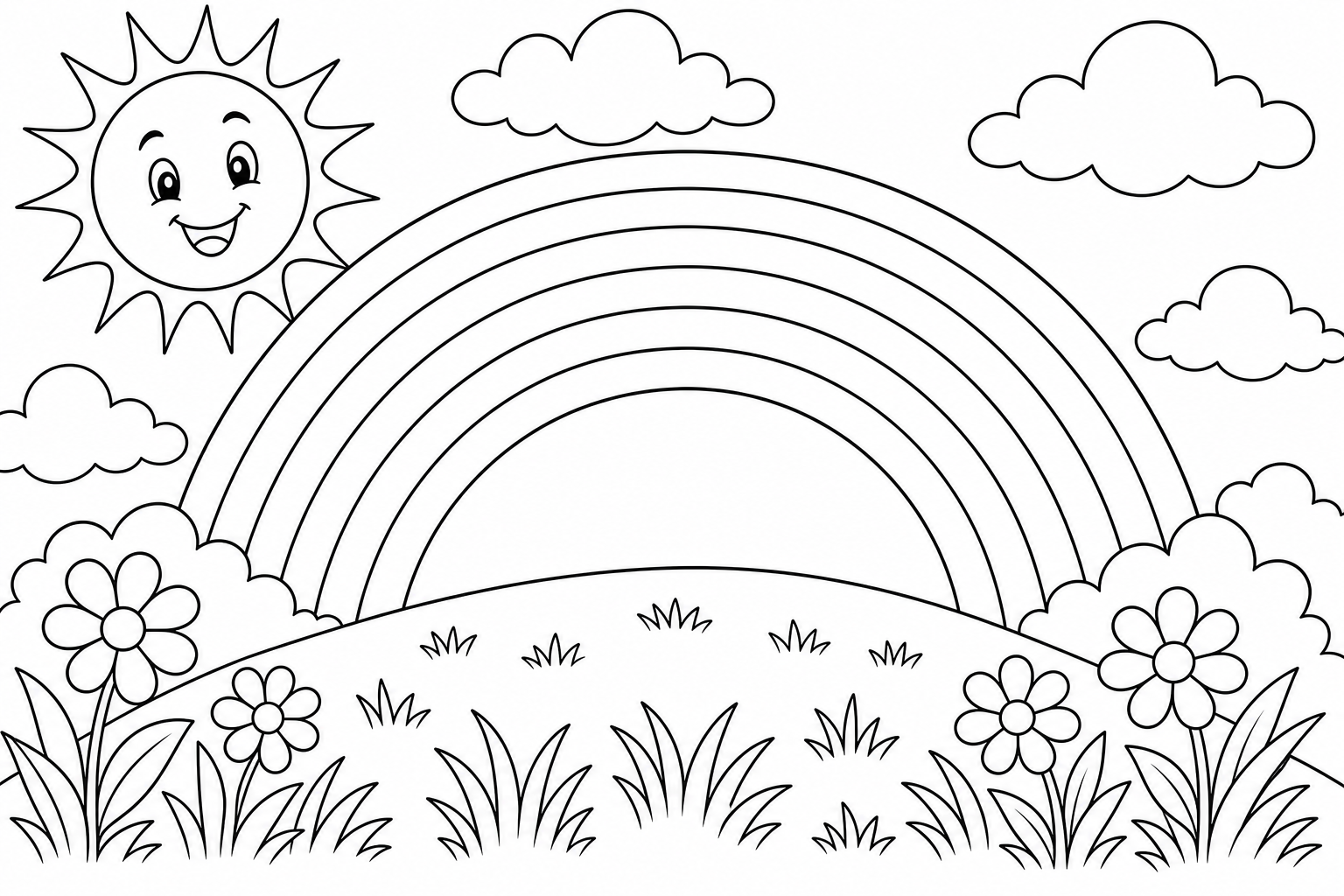
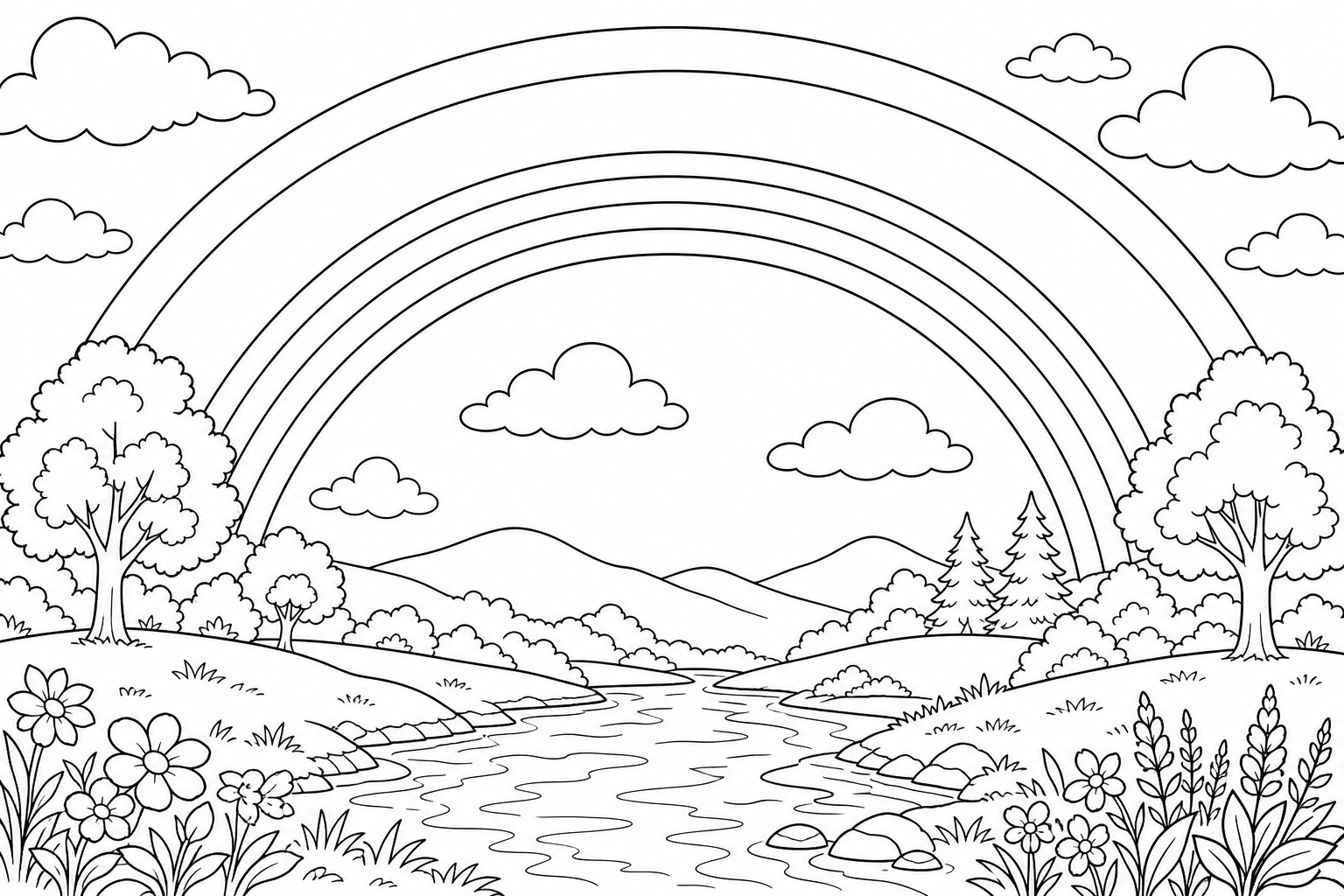
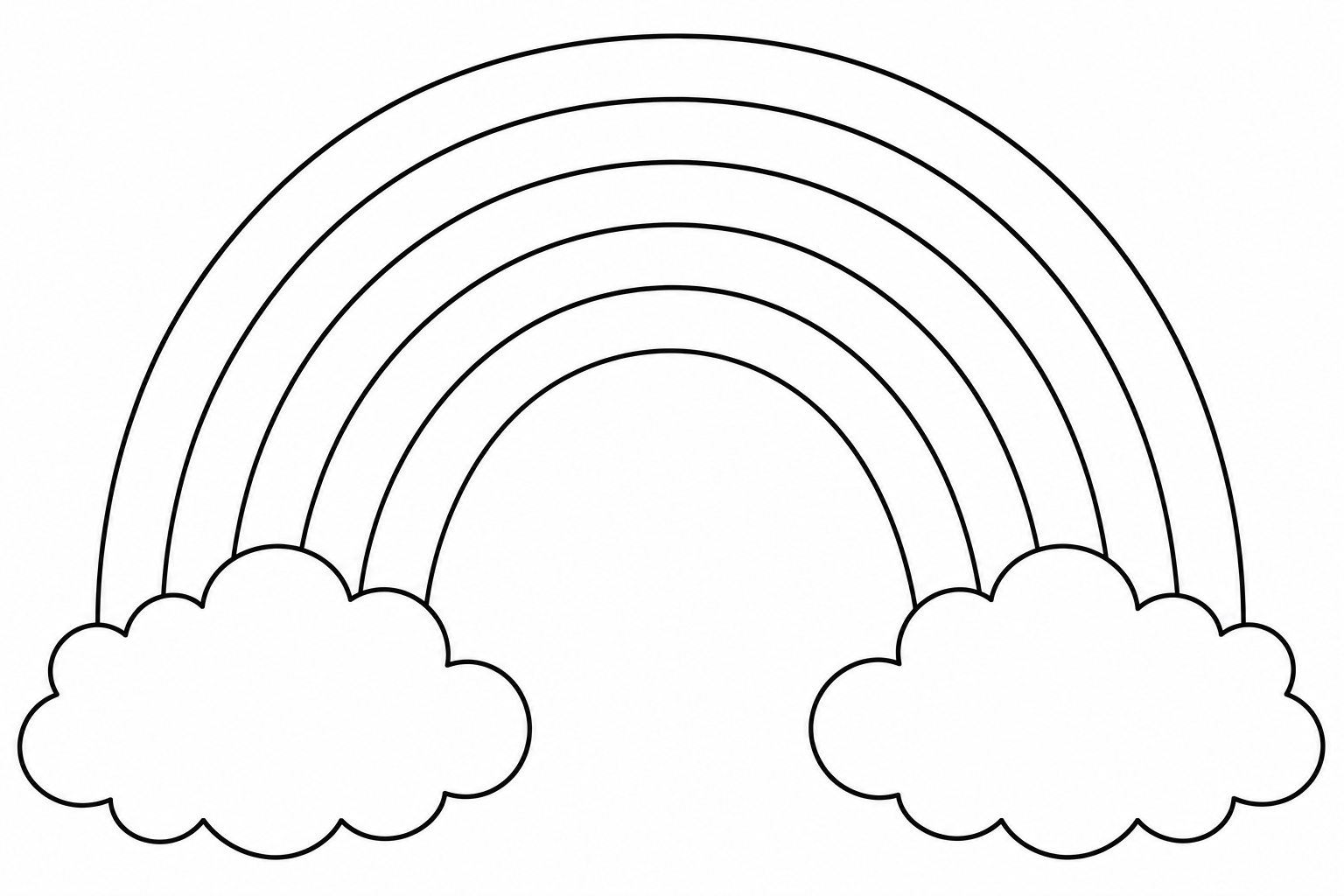
Blending is easier to learn on big, simple shapes than on tiny detailed ones. A rainbow is a perfect first project, because it is really just bands of neighboring colors fading into each other. Our rainbow coloring pages give you wide, simple arcs with room to practice.
Once your fades start looking smooth, the next skill to try is shading, which uses a single color from light to dark to make things look round. Our guide to shading with colored pencils picks up right where this one leaves off.