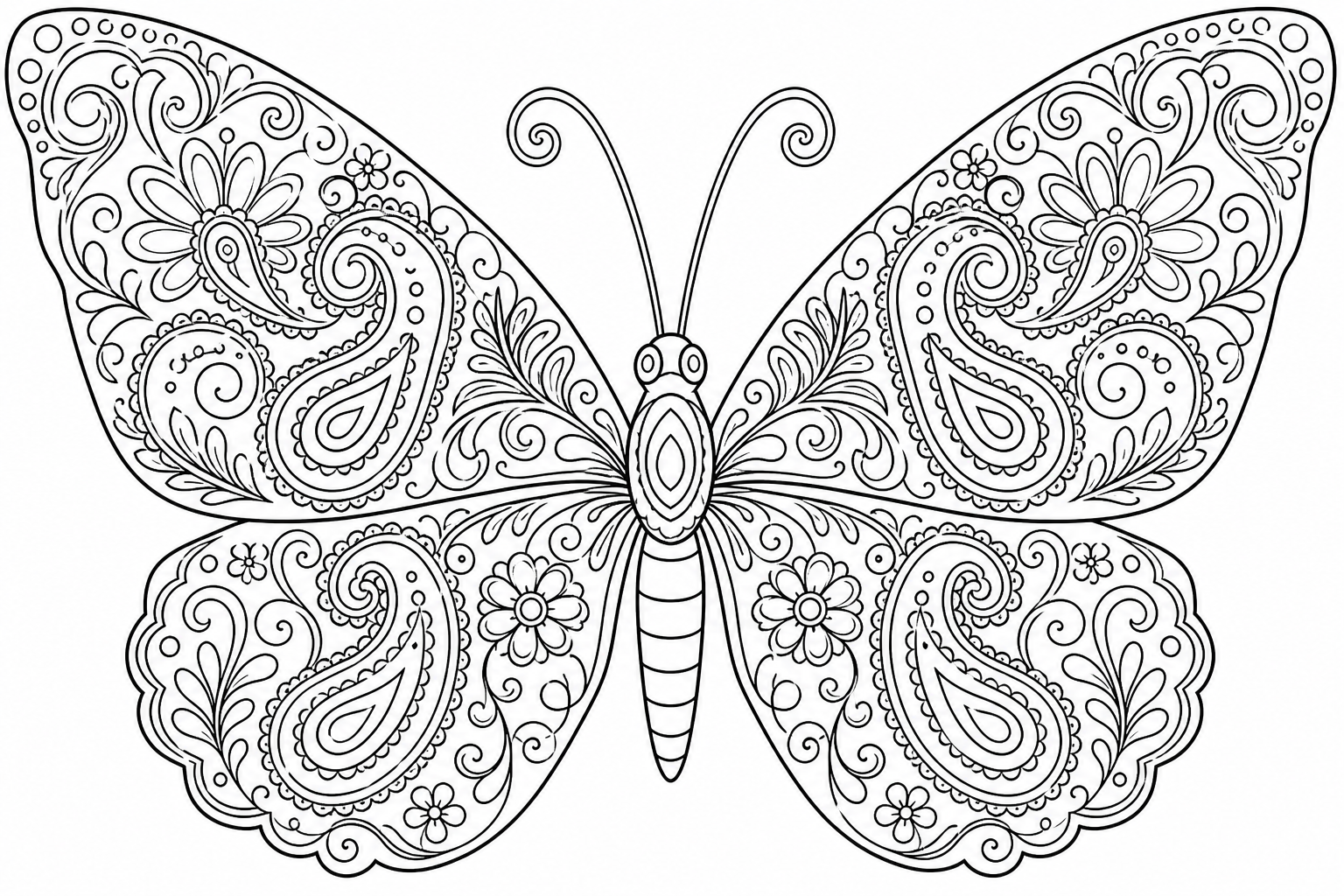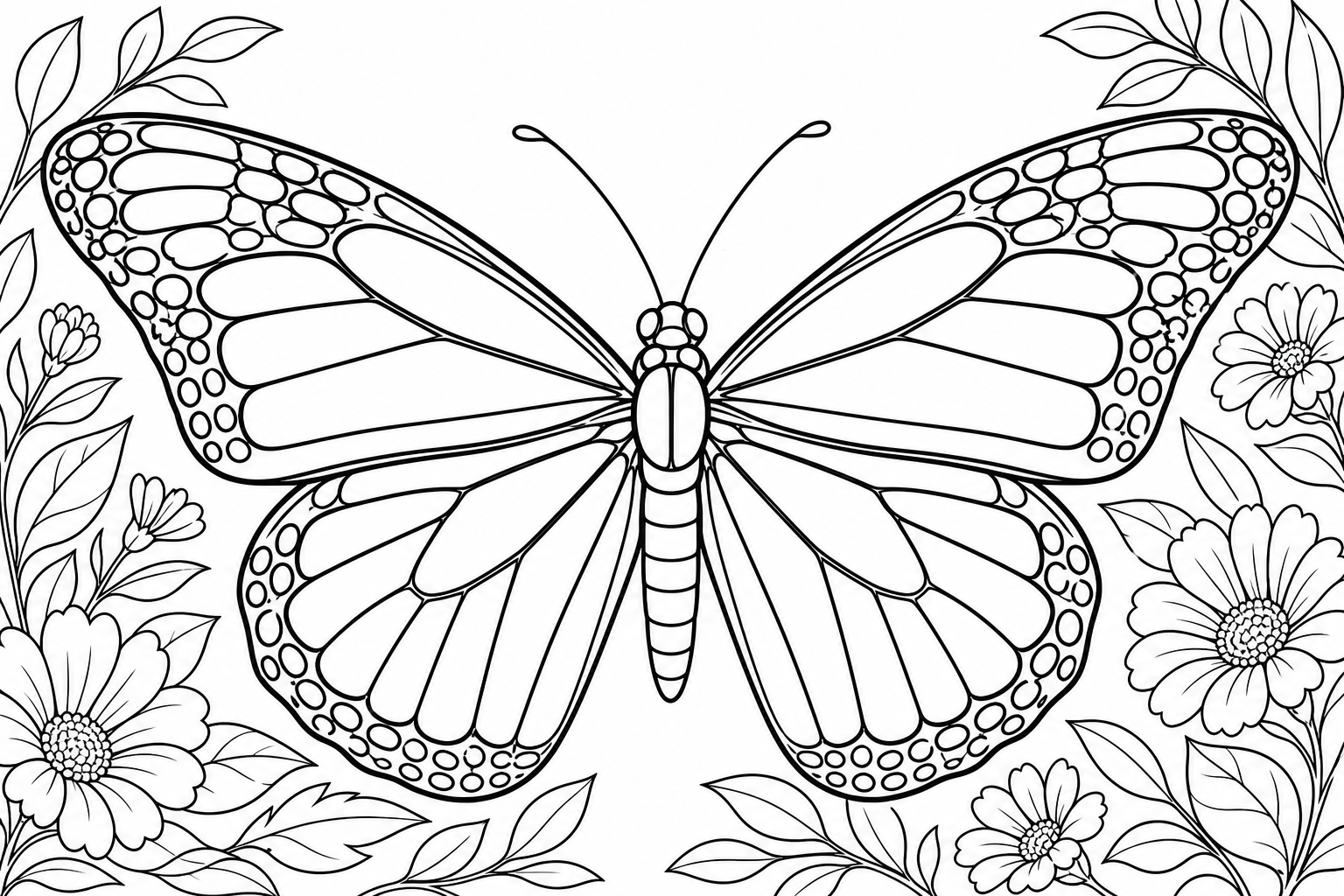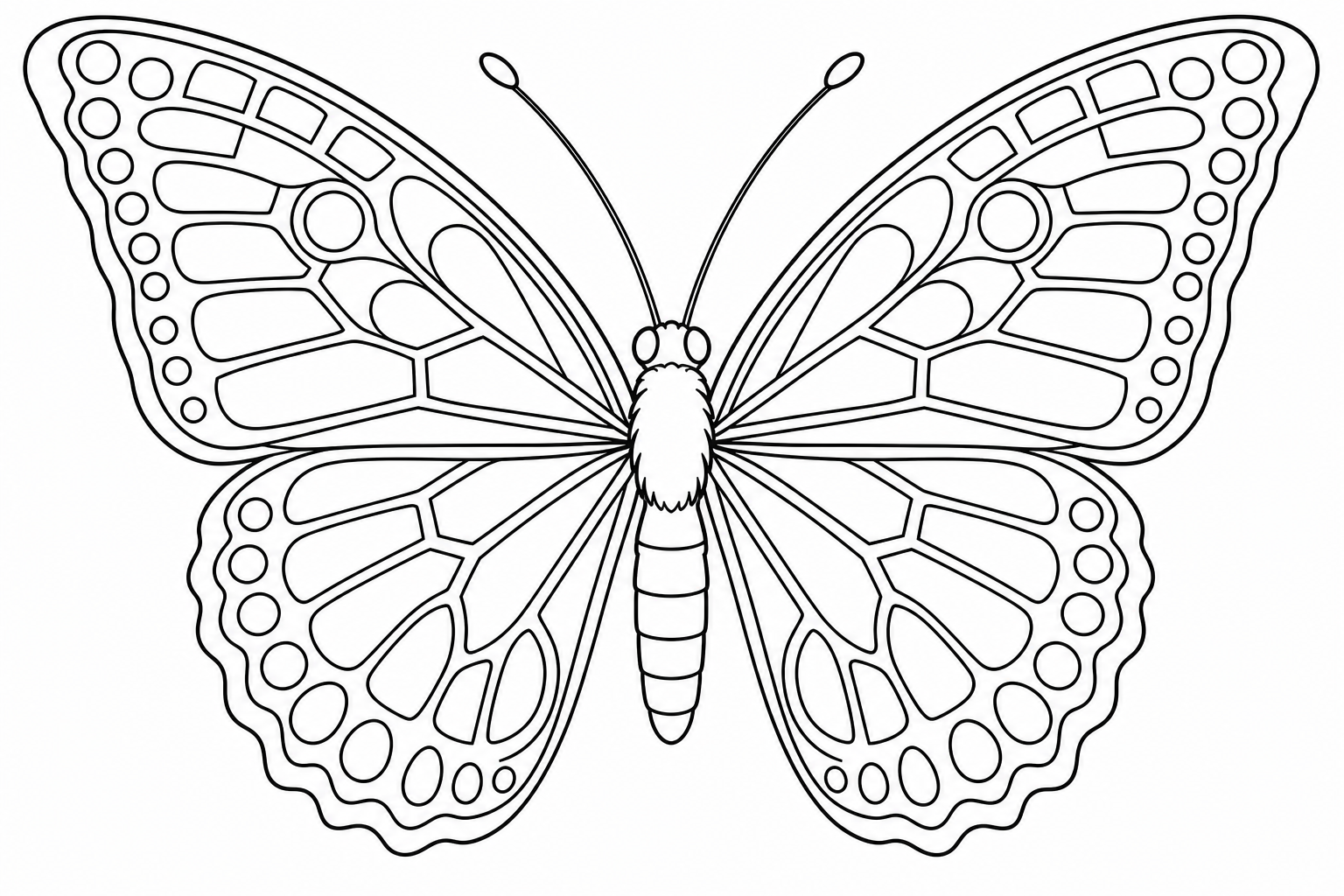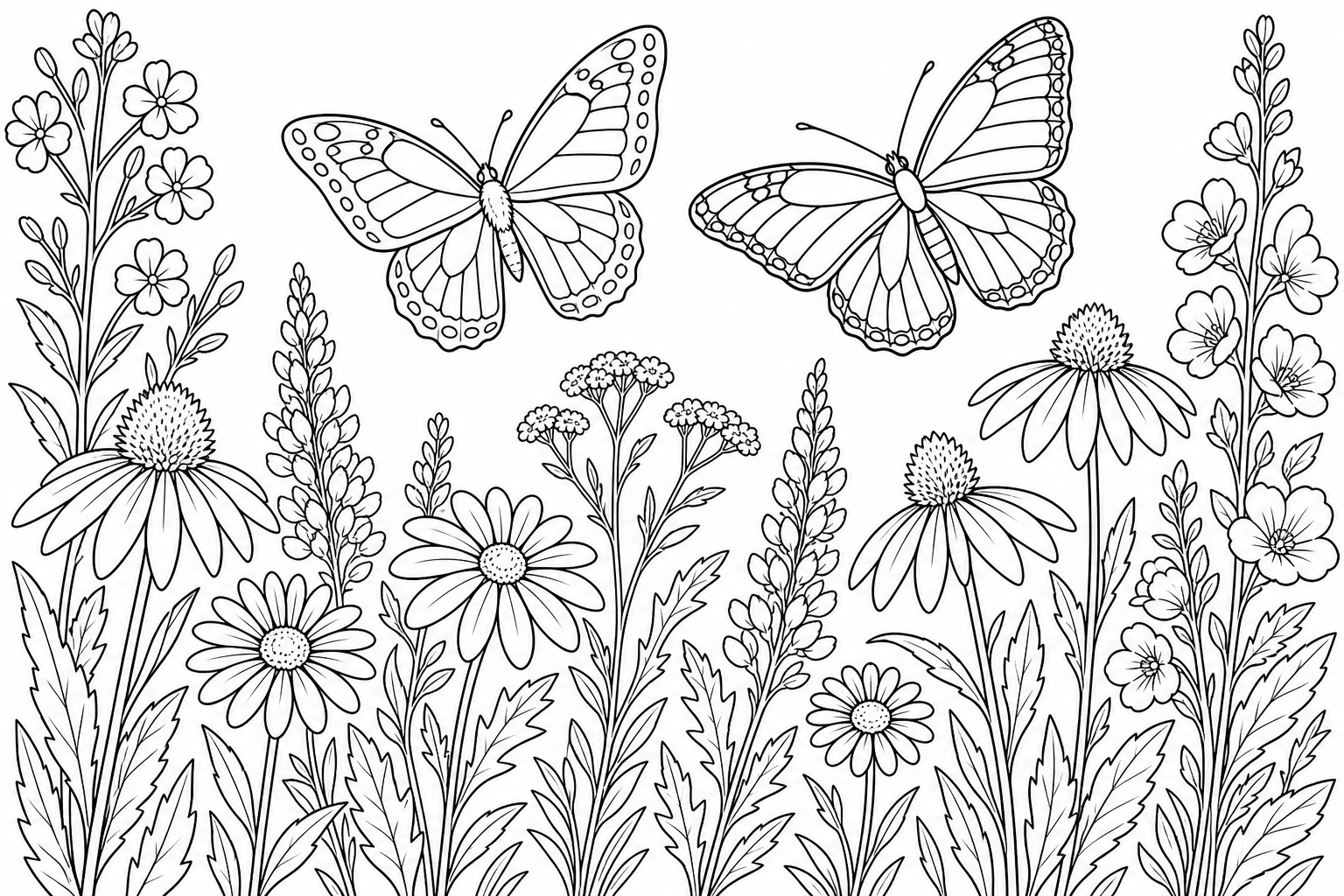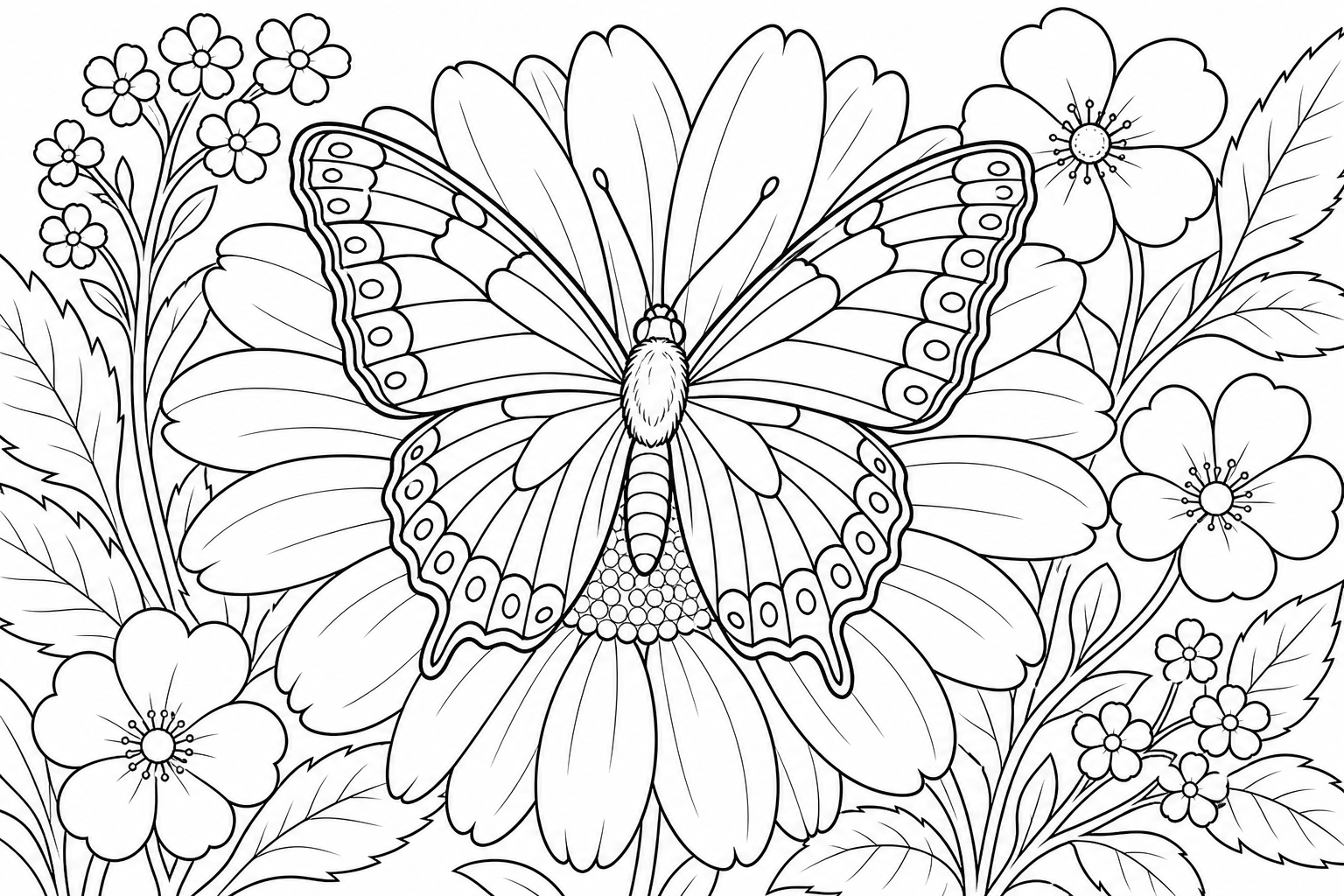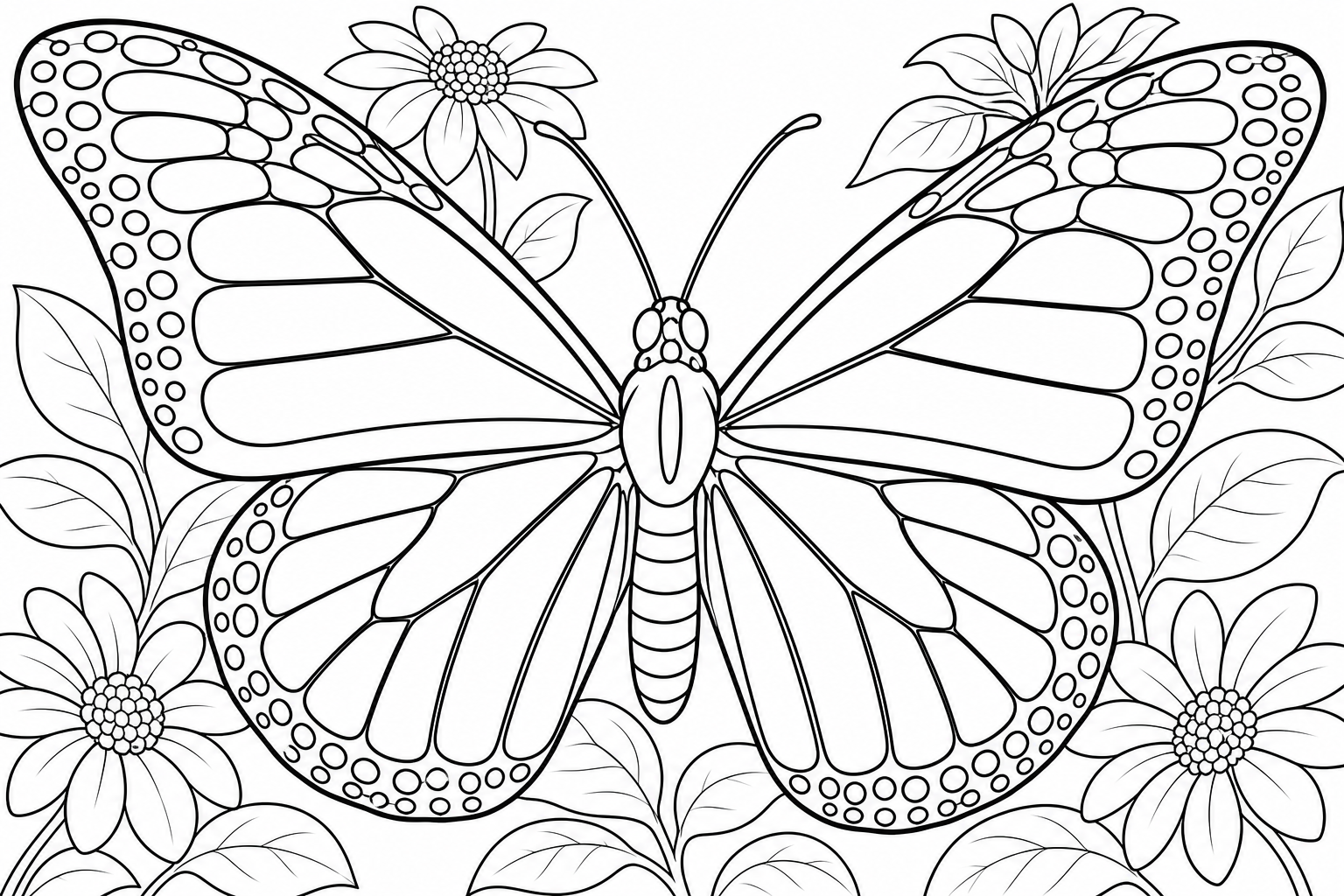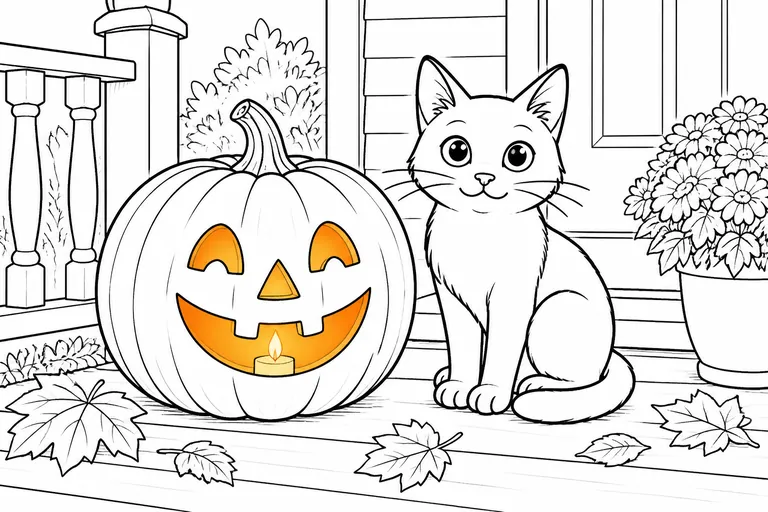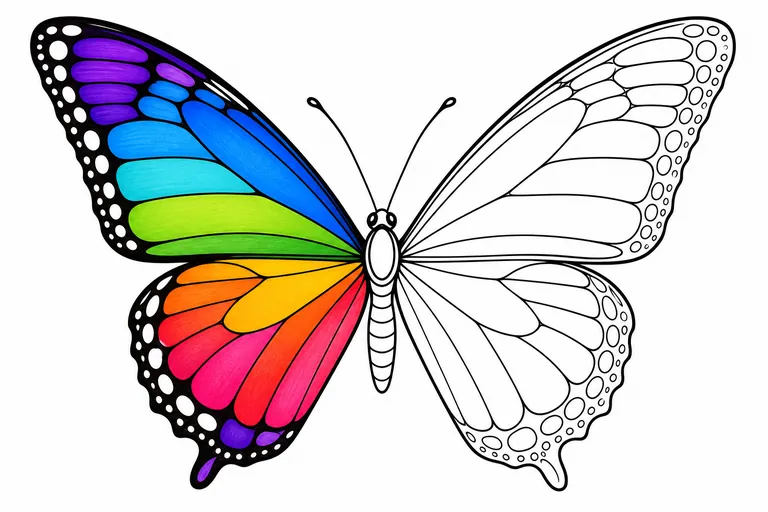
Fold a real butterfly down the middle and the two halves would land almost exactly on top of each other. Same shapes, same bands, same spots, flipped. That mirror is the whole trick of the wings, and it is the reason a butterfly page colors differently from almost anything else on the table.
Most coloring pages let a kid do whatever they like. A butterfly page asks a quiet question first: can you make the right side match the left? Color one wing, then look across the body and try to land the same marks again. The page turns into a small game of copy-the-mirror, and a kid can actually check their own work.
Both wings tell the same story
A butterfly's left and right wings are near-perfect mirror images, a pattern biologists call bilateral symmetry. The matching is not decoration. Even, balanced wings help a butterfly fly straight and signal to mates that it grew up healthy, so the symmetry is doing real work out in the garden.
For a kid with crayons, that fact becomes a plan. The body is the fold line. Whatever happens on one wing has a twin waiting on the other.
Color one wing, then chase it
Start on the side that feels easy. Pick the biggest shape on that wing and fill it, then jump to the matching shape across the body and use the same color. Work shape by shape, mirror by mirror, instead of wandering all over the page. By the end the two wings rhyme, and the butterfly looks like it could lift off.
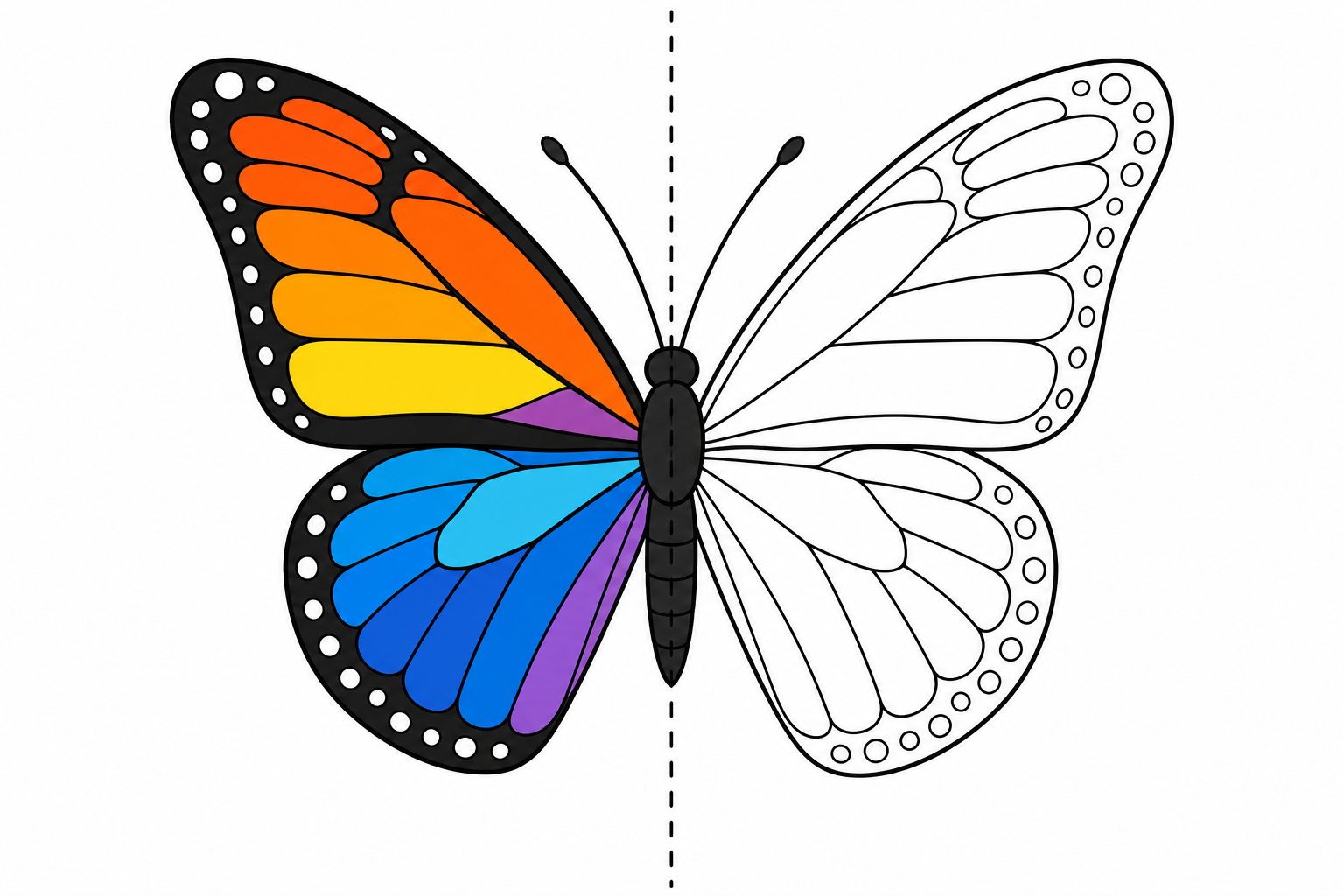
This is also where the quiet comes from. Matching asks for a kind of soft attention, the same steady focus that makes coloring such a good reset after a loud afternoon. There is more on that in why coloring builds focus if you want the longer version.



Coloring fun for kids — anywhere.
Free for iOS & Android. No ads, no sign-up, offline-ready.


Coloring fun for kids — anywhere.
Free coloring app for kids. iOS and Android, phones and tablets. No ads, no sign-up, even offline.
The butterfly that breaks its own rules
Real wings have to match. A coloring page does not. The moment a kid realizes they can give one wing a sunset and the other a thunderstorm, butterflies stop being a copying exercise and turn into an invention.
Nature even has a rare version of this. A few butterflies grow up split right down the middle, one half male and one half female, with two different wing patterns on the same body. They are called gynandromorphs, and they look almost exactly like a page where someone colored each wing for fun. So the mismatched butterfly is not wrong. It is just unusual.
Try it on purpose. One wing realistic, one wing impossible. Warm on the left, cold on the right. A real monarch on top, a made-up galaxy below.
Which wings do you want to try
Not every butterfly draws the same, and a few are worth seeking out because their wings give a kid something specific to do.
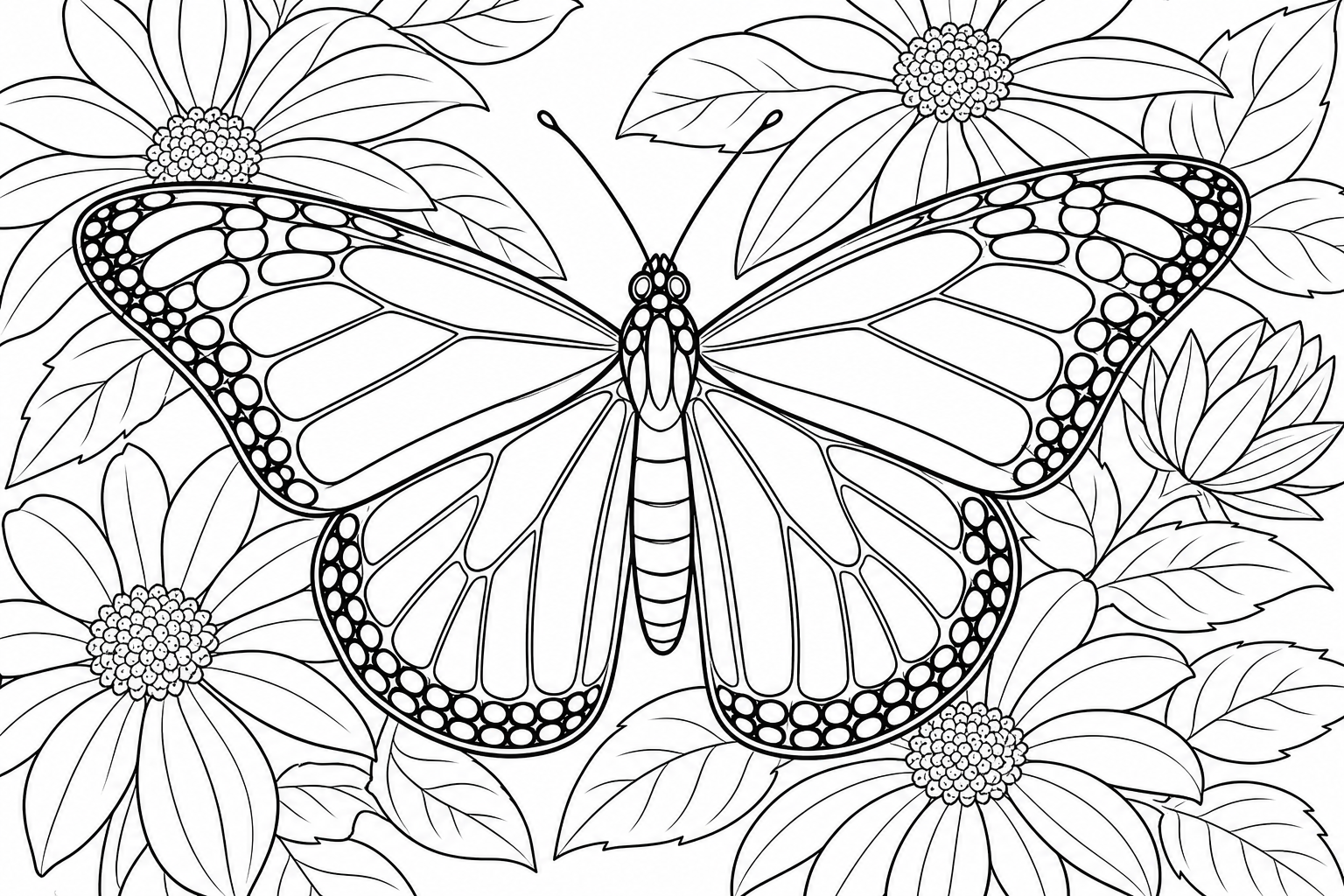
- Monarch: stained-glass panels of orange boxed in by thick black veins, edged with a border of white dots. The cleanest mirror to practice on.
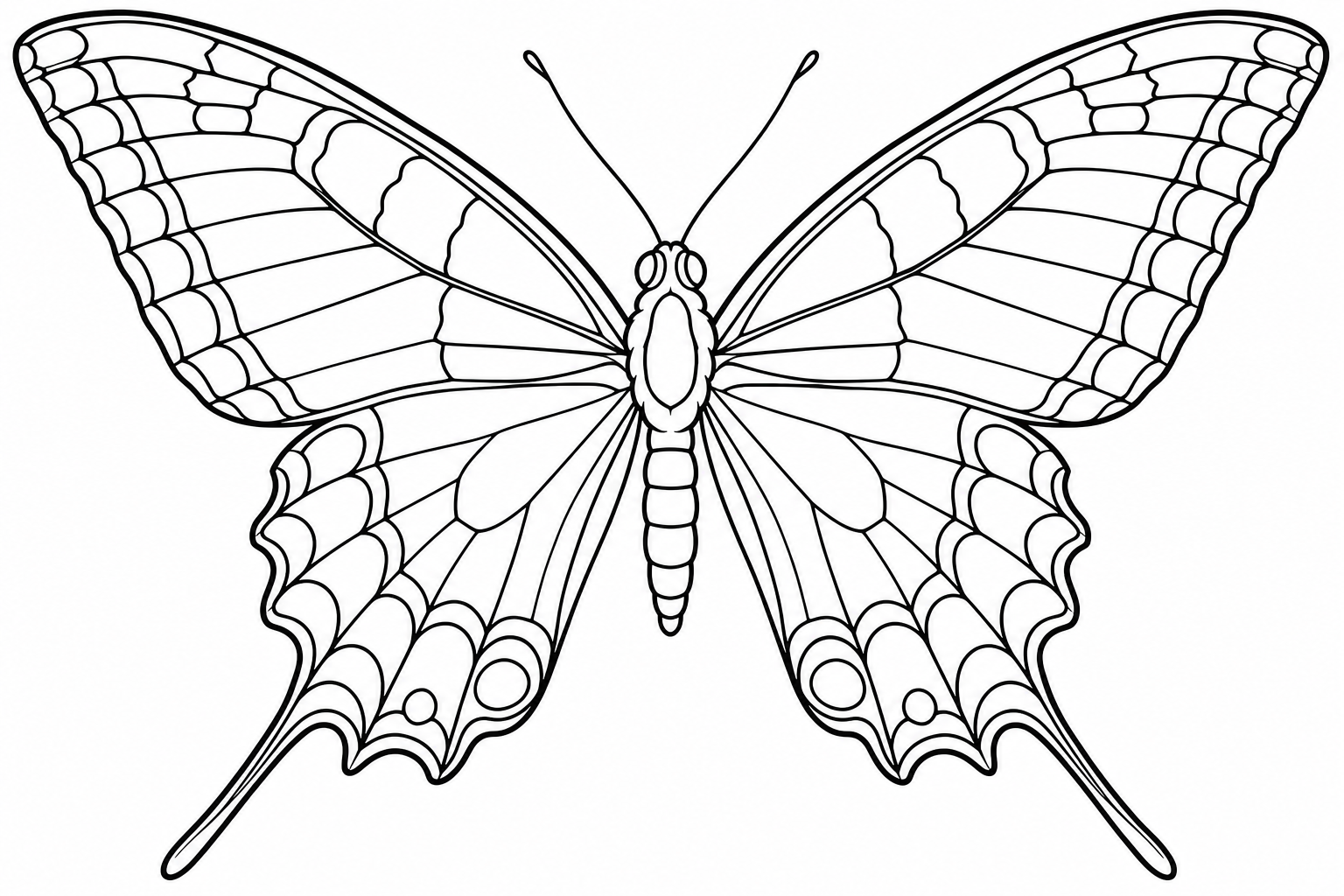
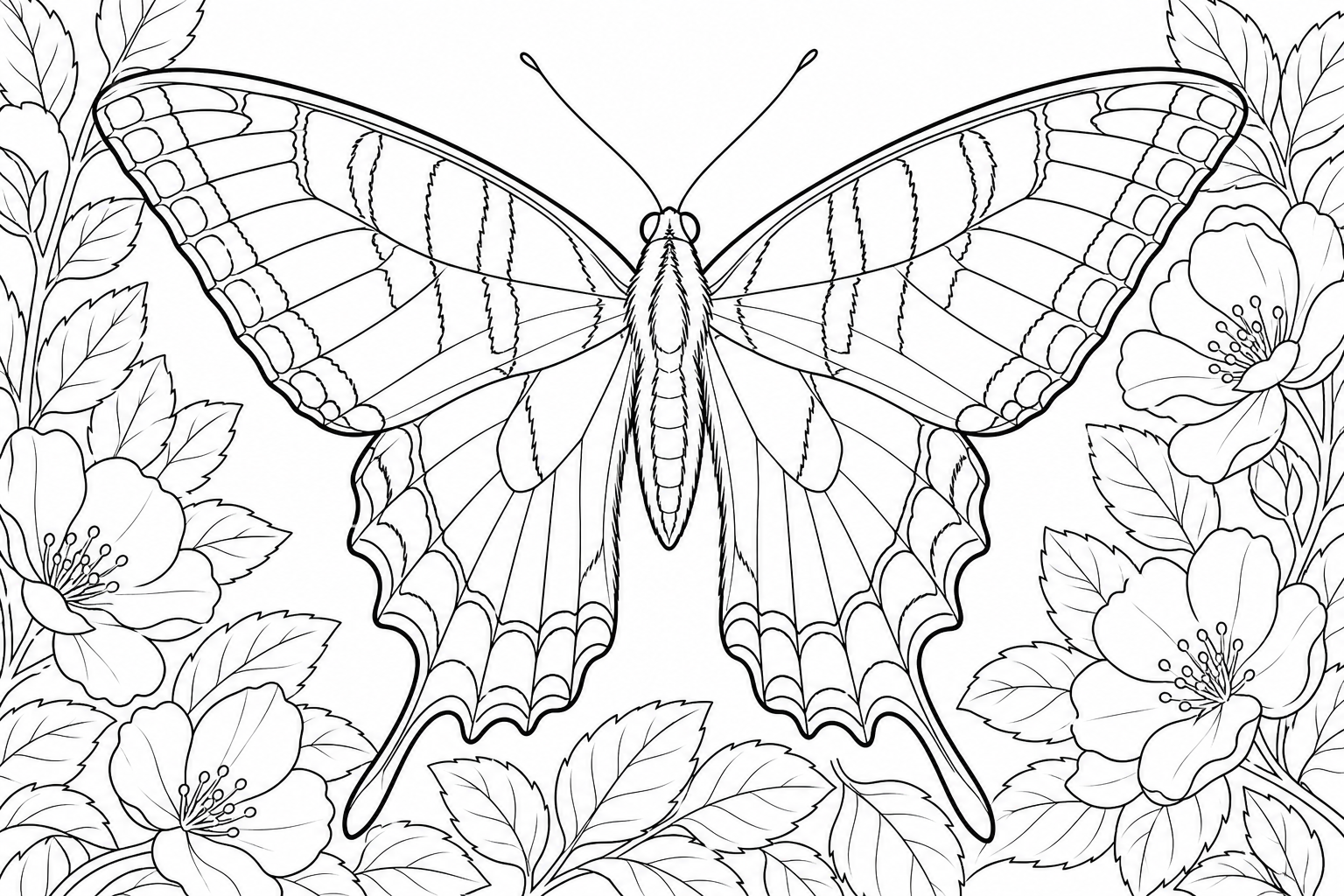
- Swallowtail: long tails trailing off the back wings, so the shape itself is dramatic before any color goes down.
- Blue morpho: big rounded wings that are mostly one electric blue, perfect for a kid who would rather blend than stay inside tiny lines.
Pick the one that matches the mood, simple and bold or fiddly and detailed.
What else could you color?
Pick a prompt or type your own — opens in a new tab.
Ready to print
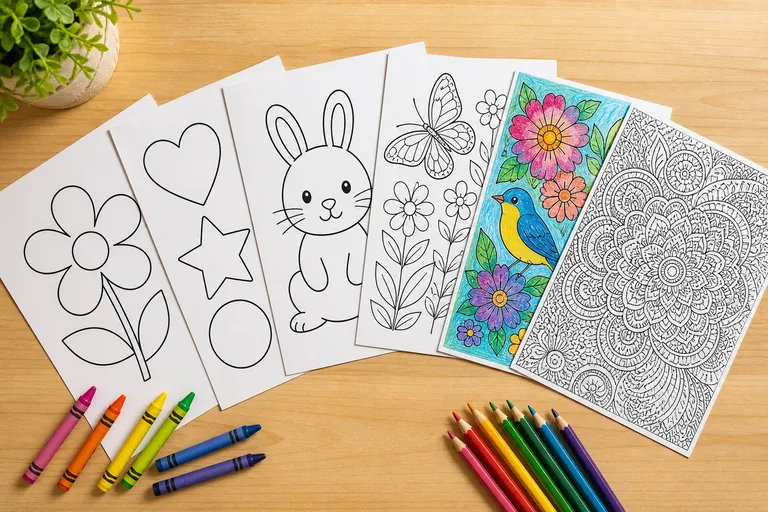
Pick a wing, match its twin, then break the rule on the next one. Here is the full set to start from.