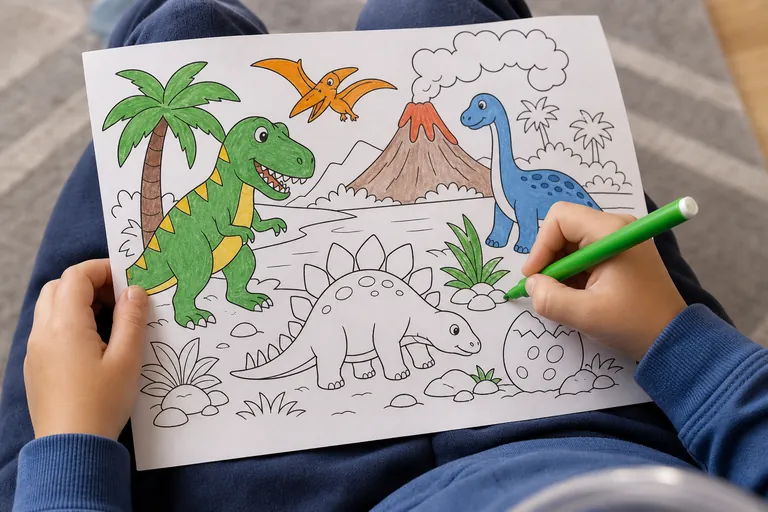
Most kids can name three dinosaurs before they can spell their own name. That is not a parenting failure; it is how dinosaur obsession works. Months of asking "is that a sauropod?" before any of us were ready.
This is a small set of dinosaur pages picked by family, not by quantity. Print one, finish one. Then maybe print another.
Why dinosaur pages work harder than most
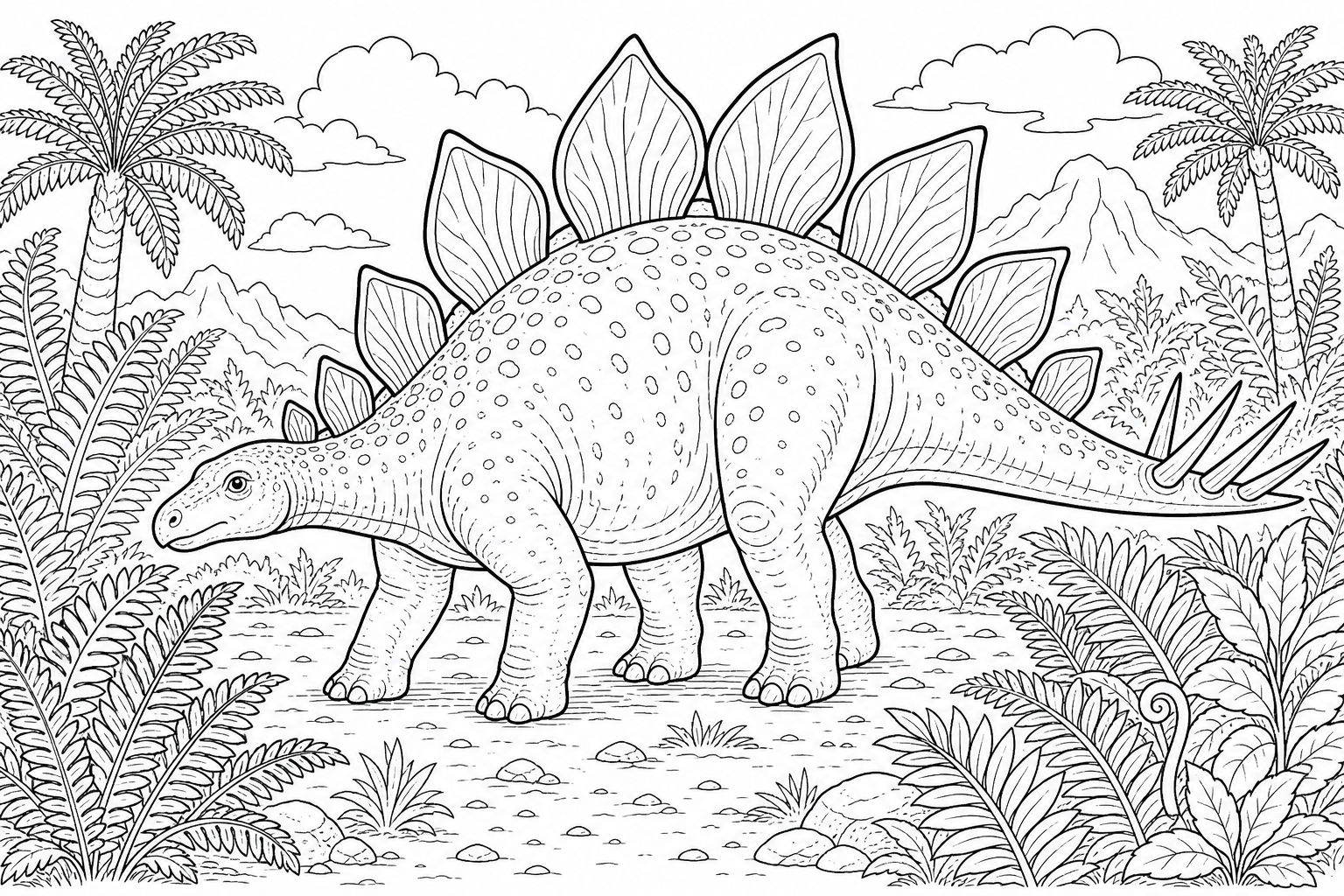
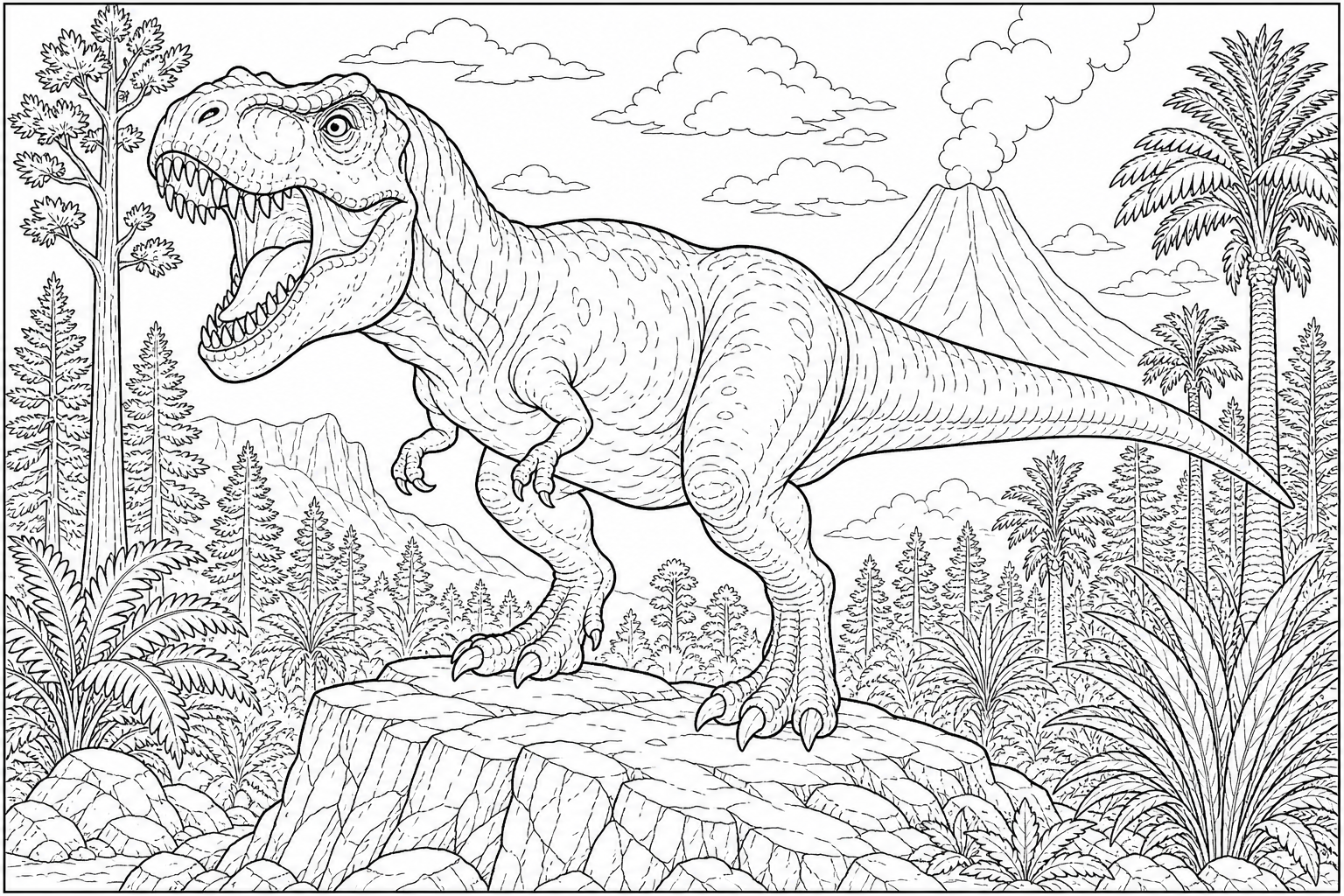
A dinosaur page does two jobs at once. It satisfies the obsession (kid recognizes the body shape, gets to name it) and gives the hand something hard enough to take a real minute. T. rex teeth are five minutes of careful work. A stegosaurus back is twenty plates of patient pattern.
That combination, recognition plus genuine difficulty, is rare. Most coloring page topics give you one or the other. The same small-muscle work shows up in How Coloring Pages Build Focus, Fine Motor Skills, and Steady Little Hands, if you want the longer story.
The long-necked ones
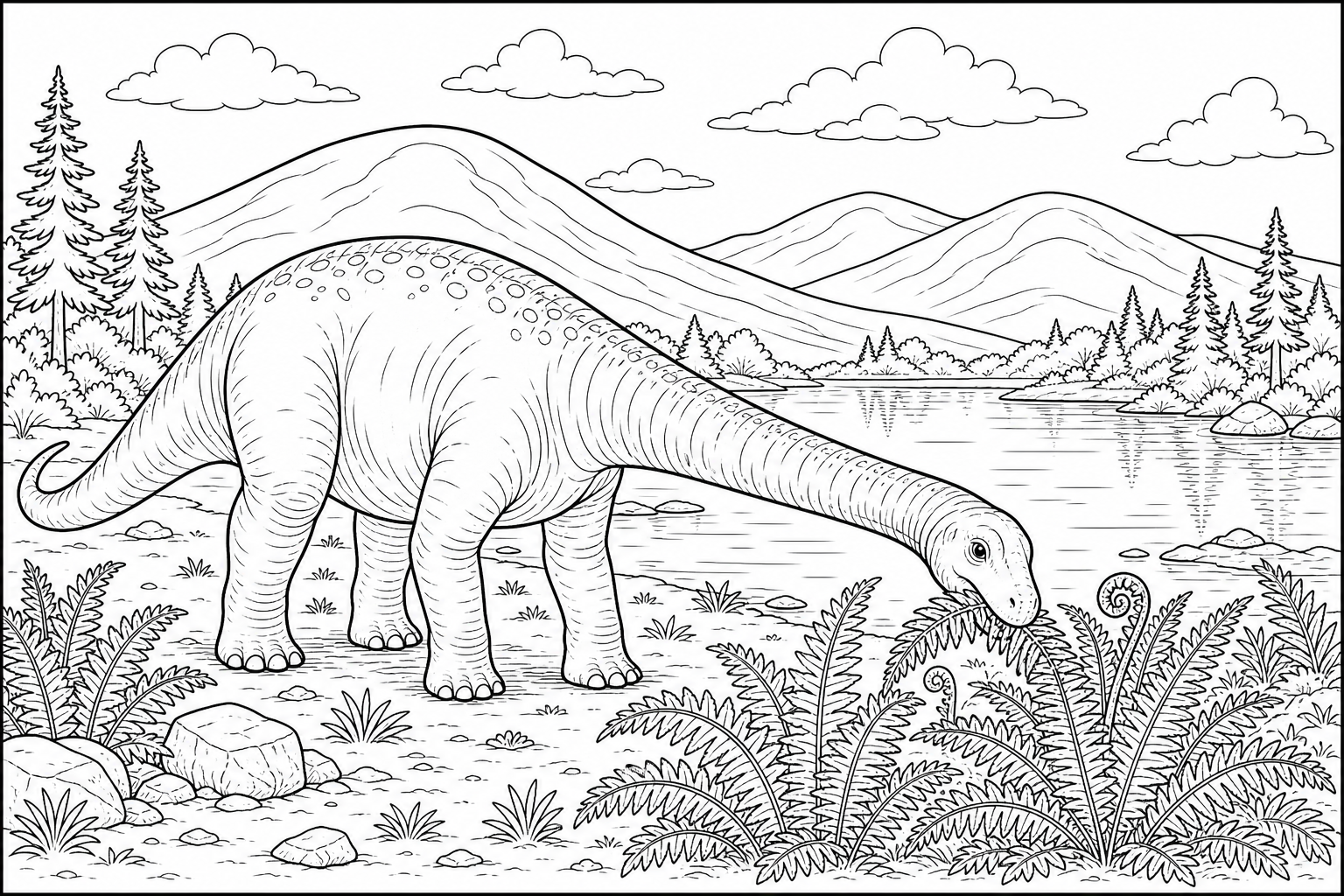
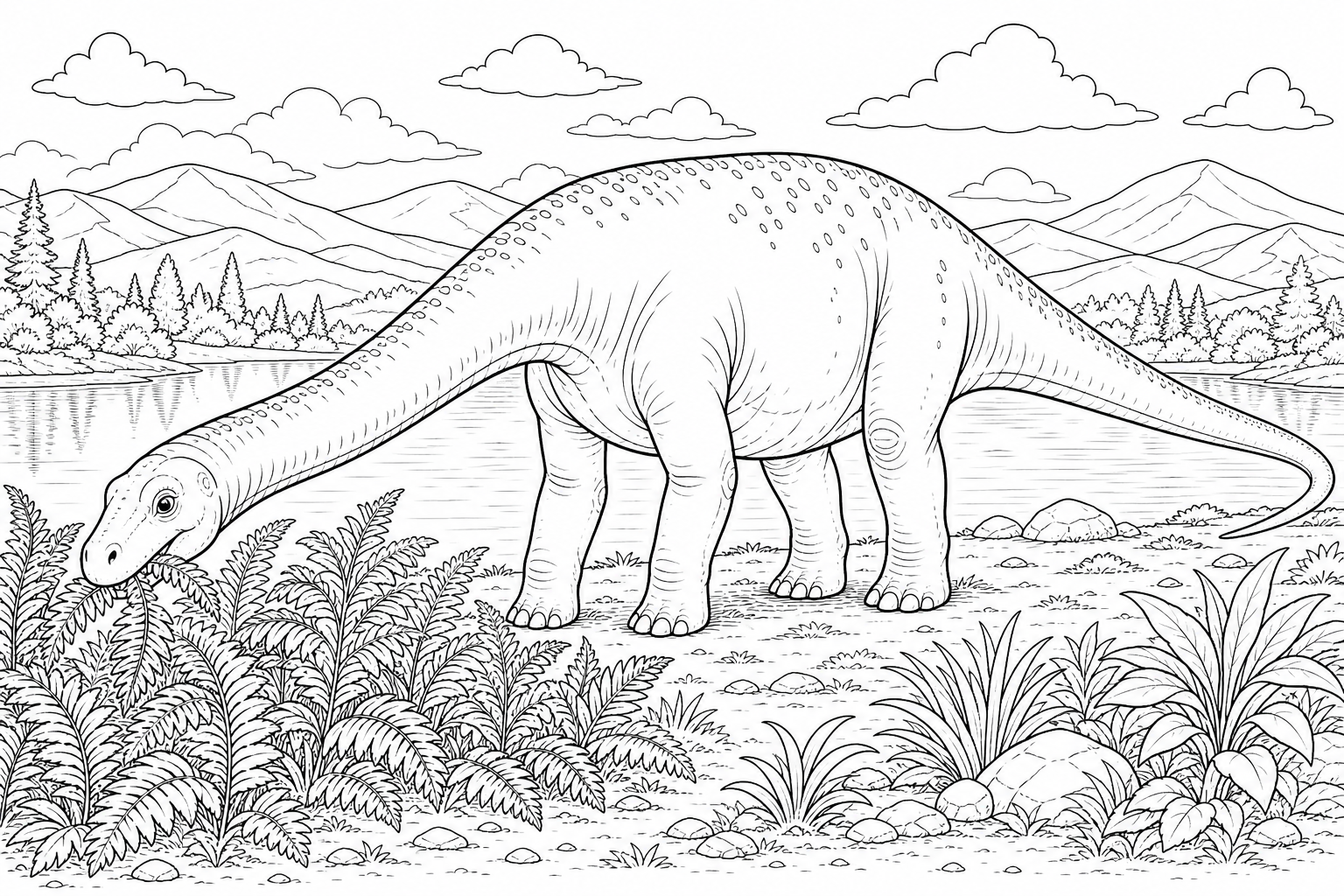
Sauropods sit at the top of the easy pile. Long curving neck, round body, four chunky legs. A three-year-old can finish a brachiosaurus in one sitting and feel proud. Print these when the day is already a little too loud.
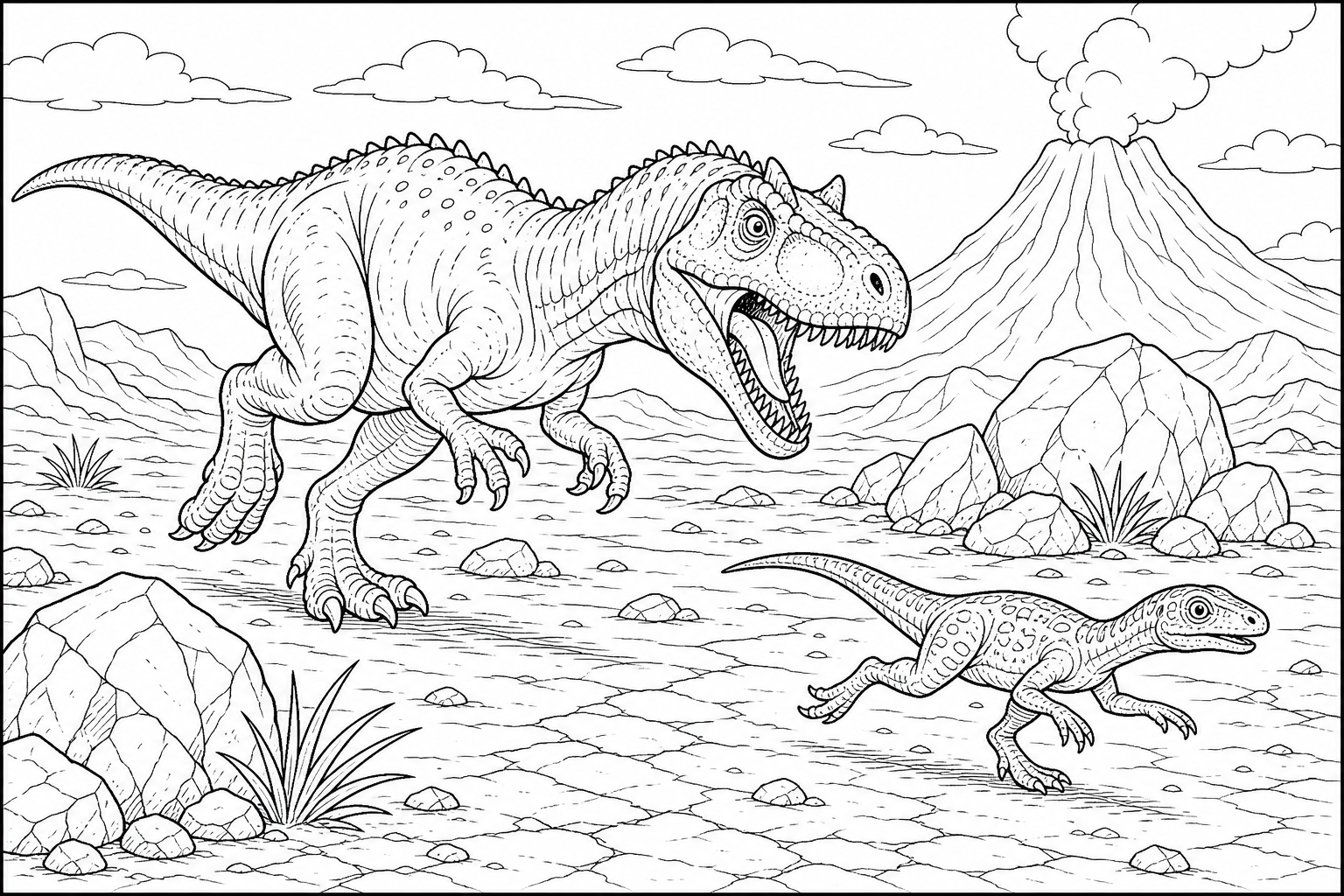
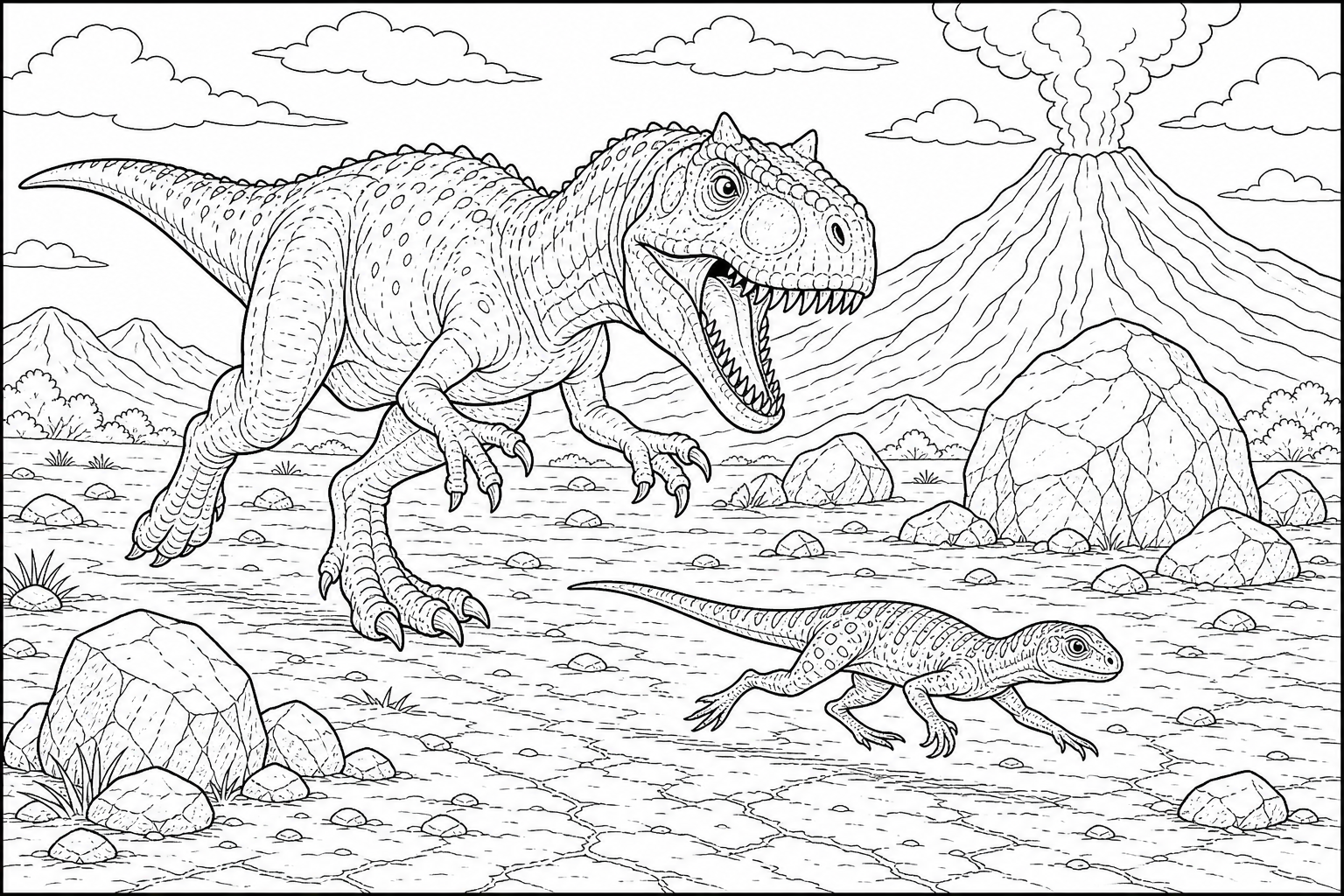
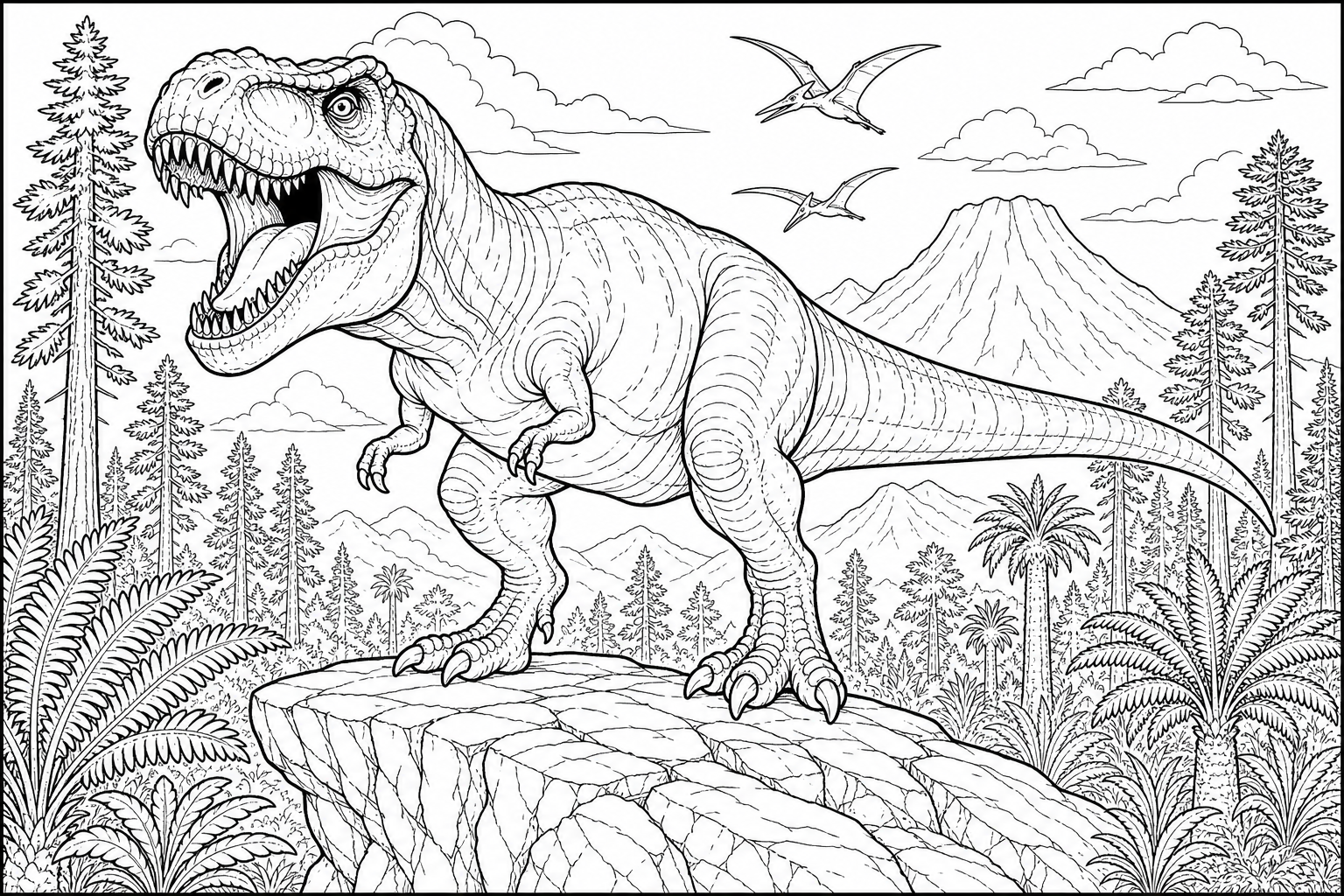
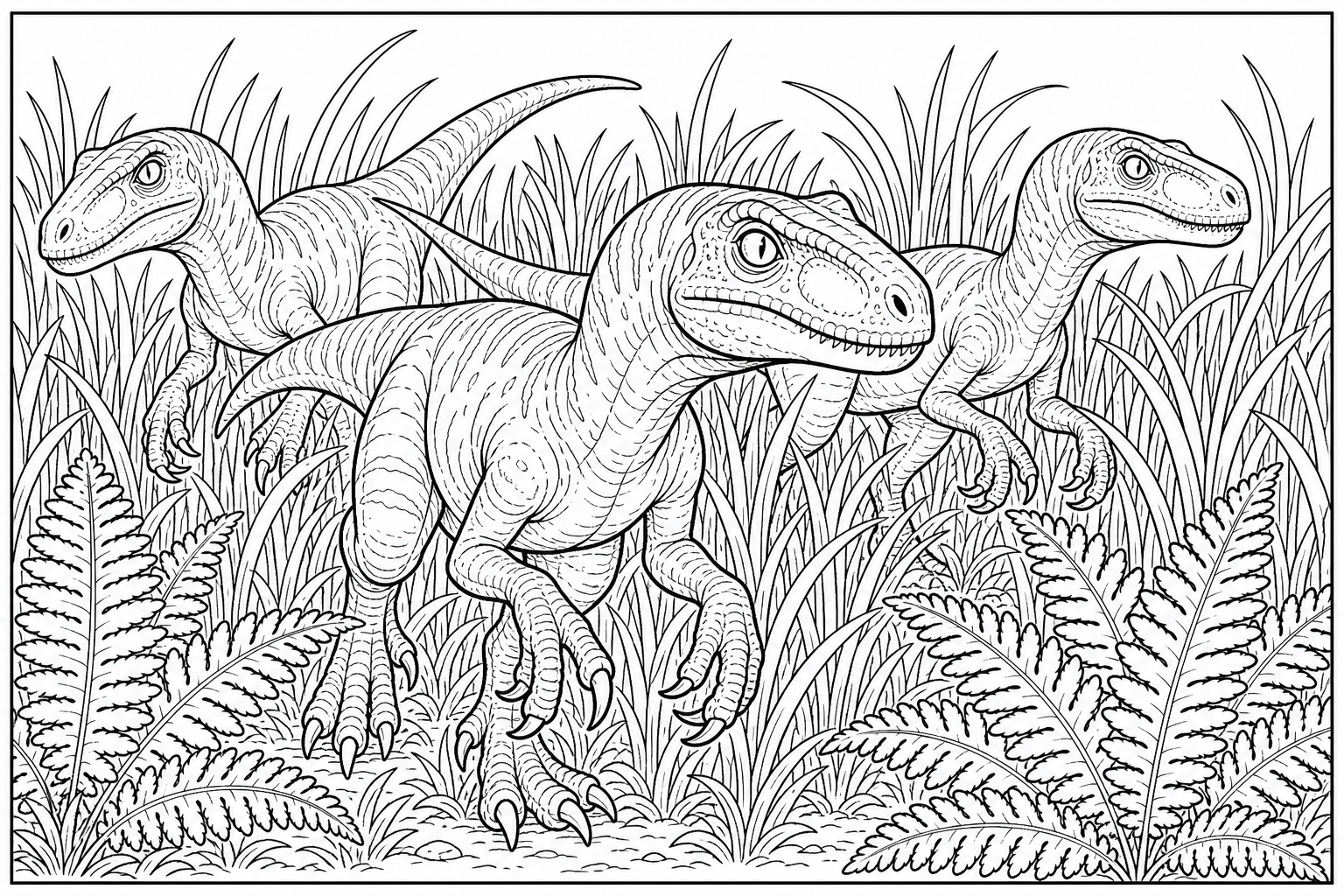
T. rex, allosaurus, velociraptor. Every kid picks one. The mouth alone is where careful colorers slow down. Younger kids fill teeth as blocks; older kids try gradients and shadows. Same page, two different afternoons.
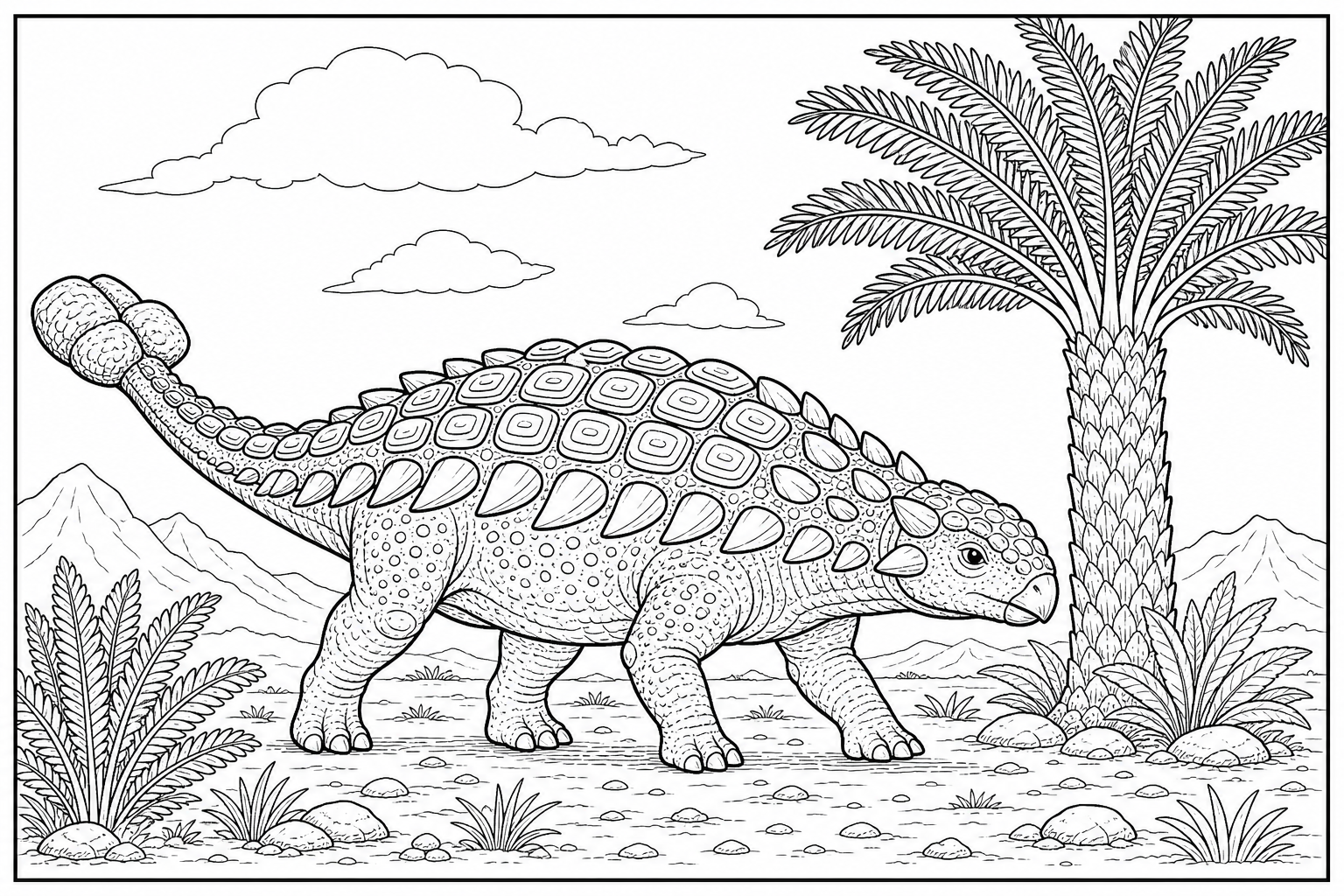
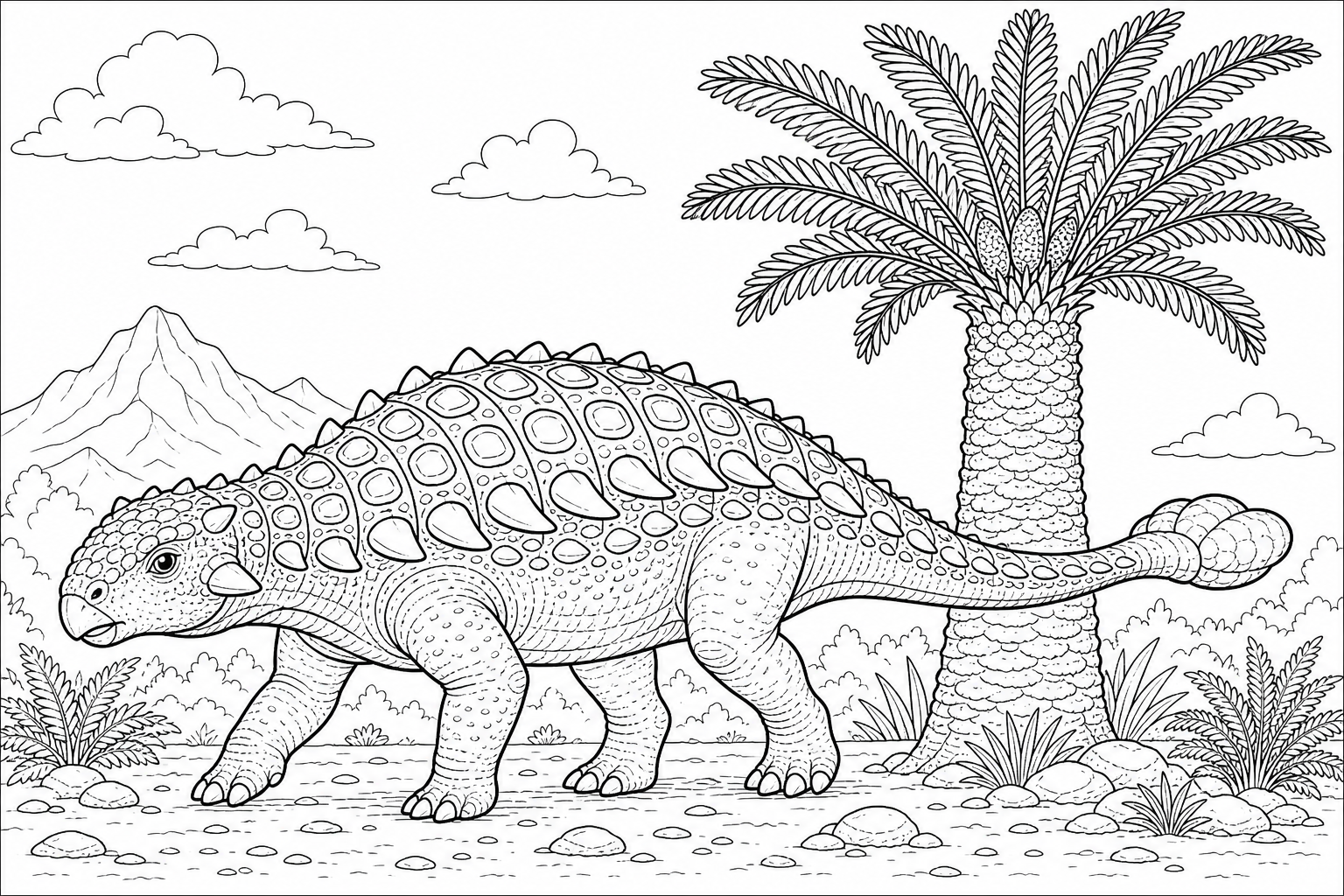
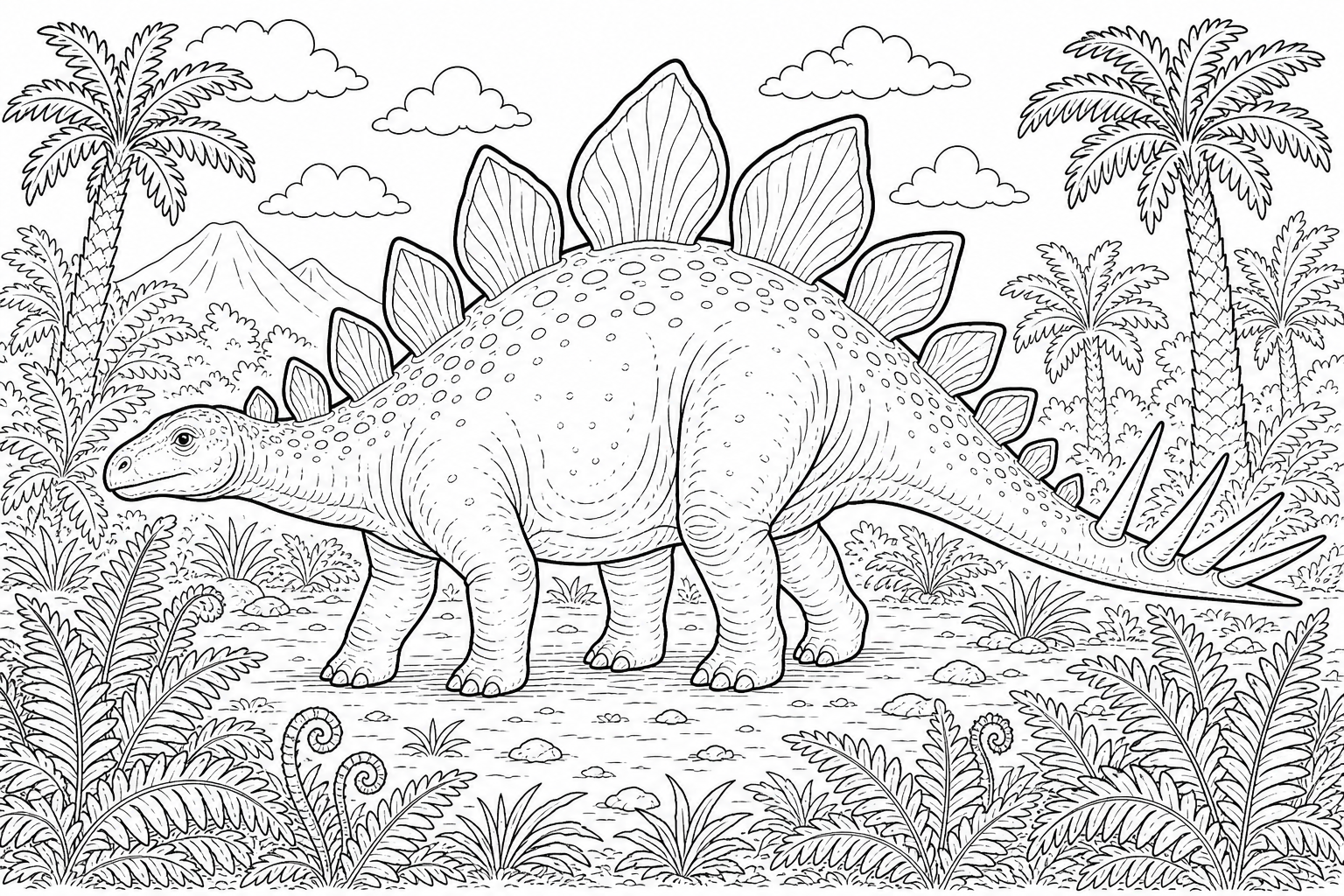
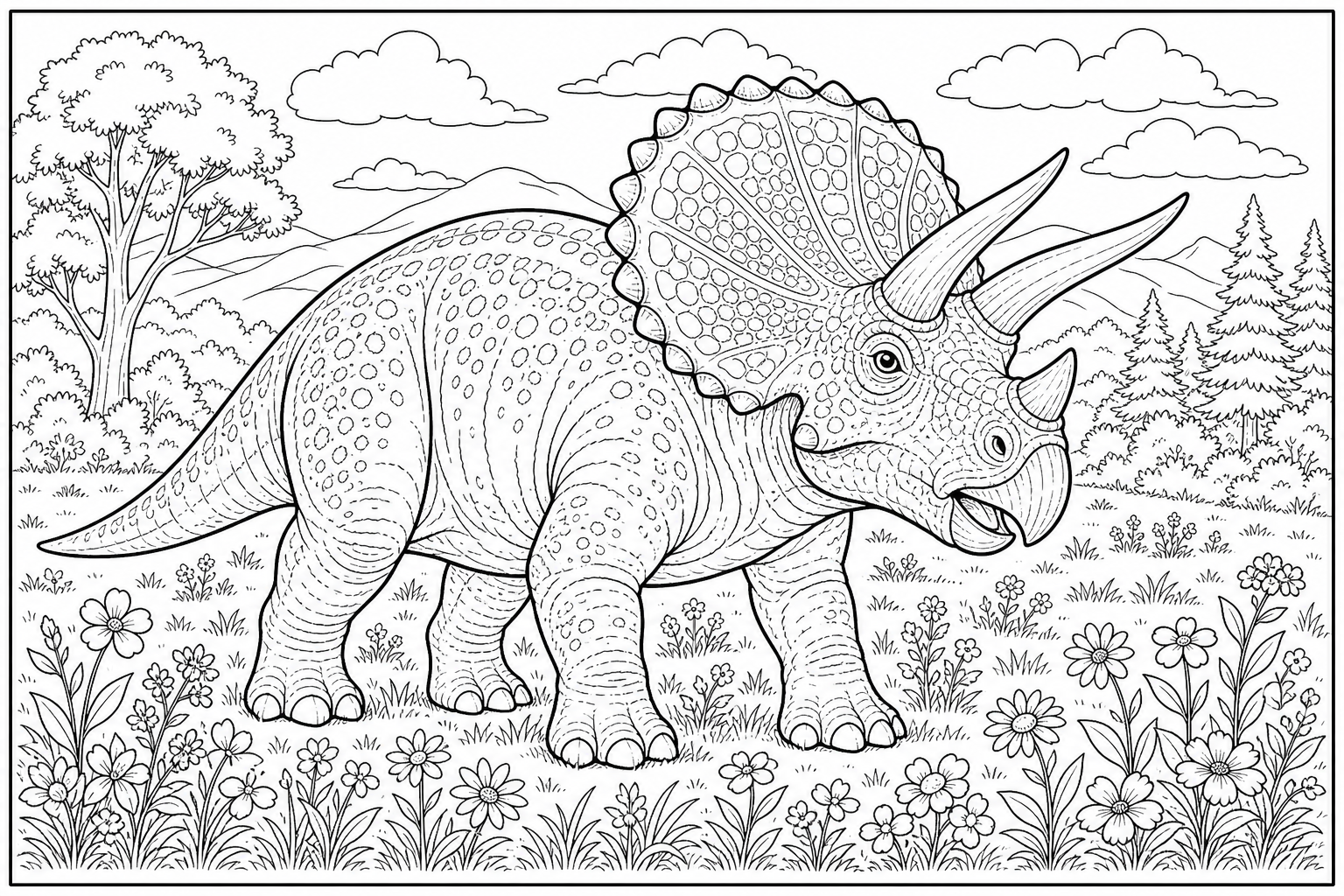
Stegosaurus, ankylosaurus, triceratops. These pages are for the kid who likes patterns and texture. Each plate, spike, and shield gets its own small decision. Forty minutes is normal. Quiet, focused, no chatter.
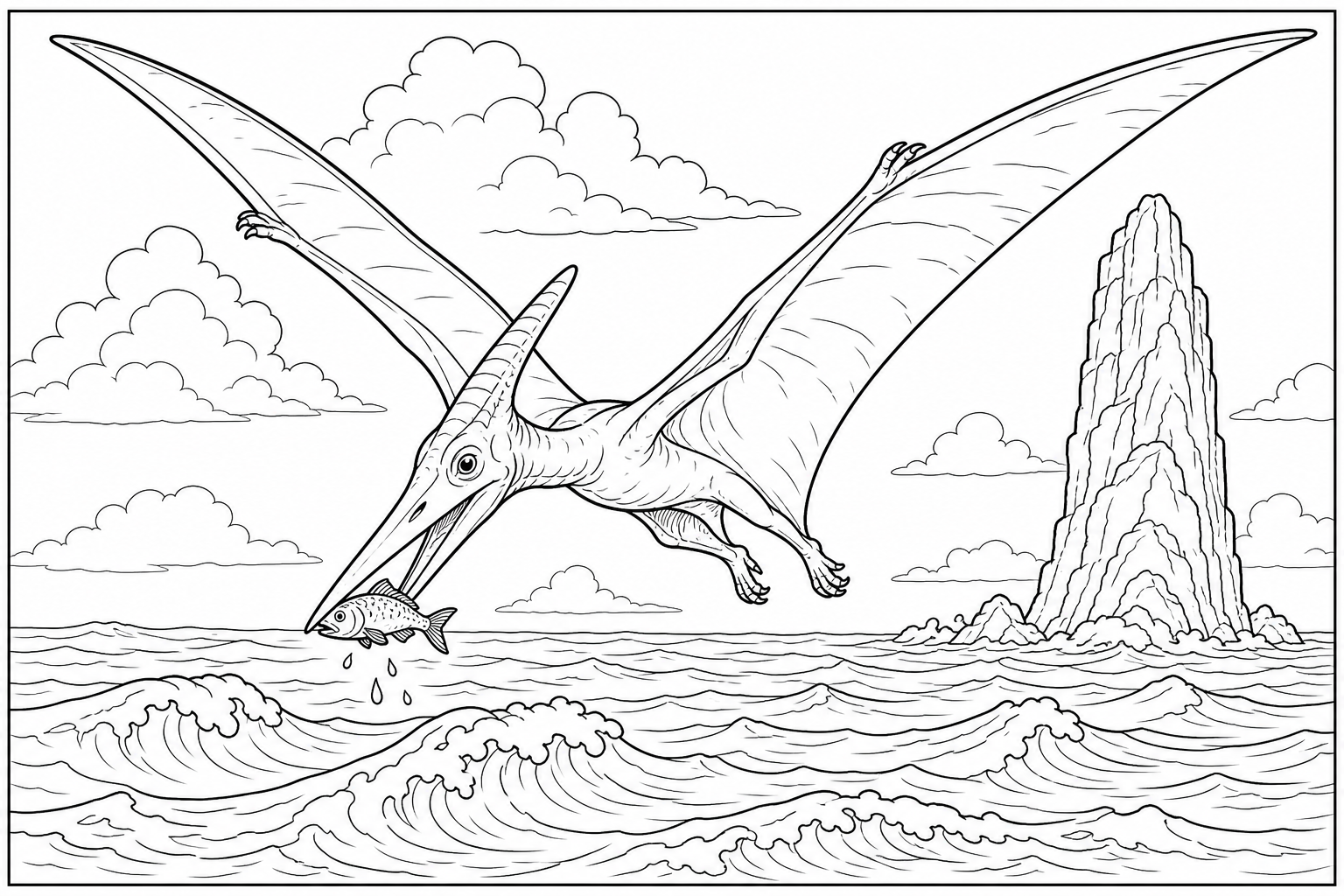
Pterosaurs are a great middle option. The wing membrane gives a big flat shape to fill; the head and crest reward detail. They also pair well with cloud backgrounds, which doubles the page time.
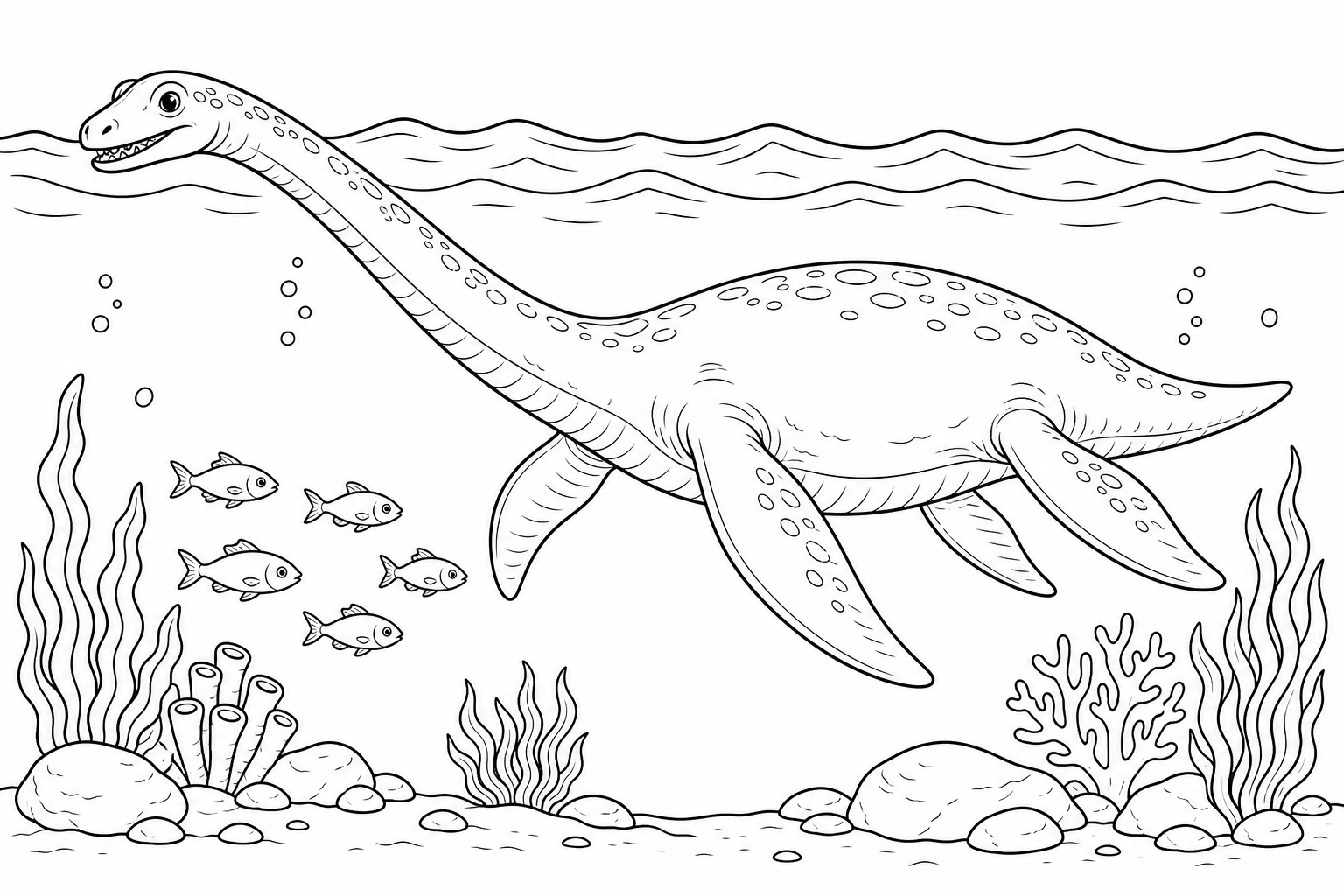
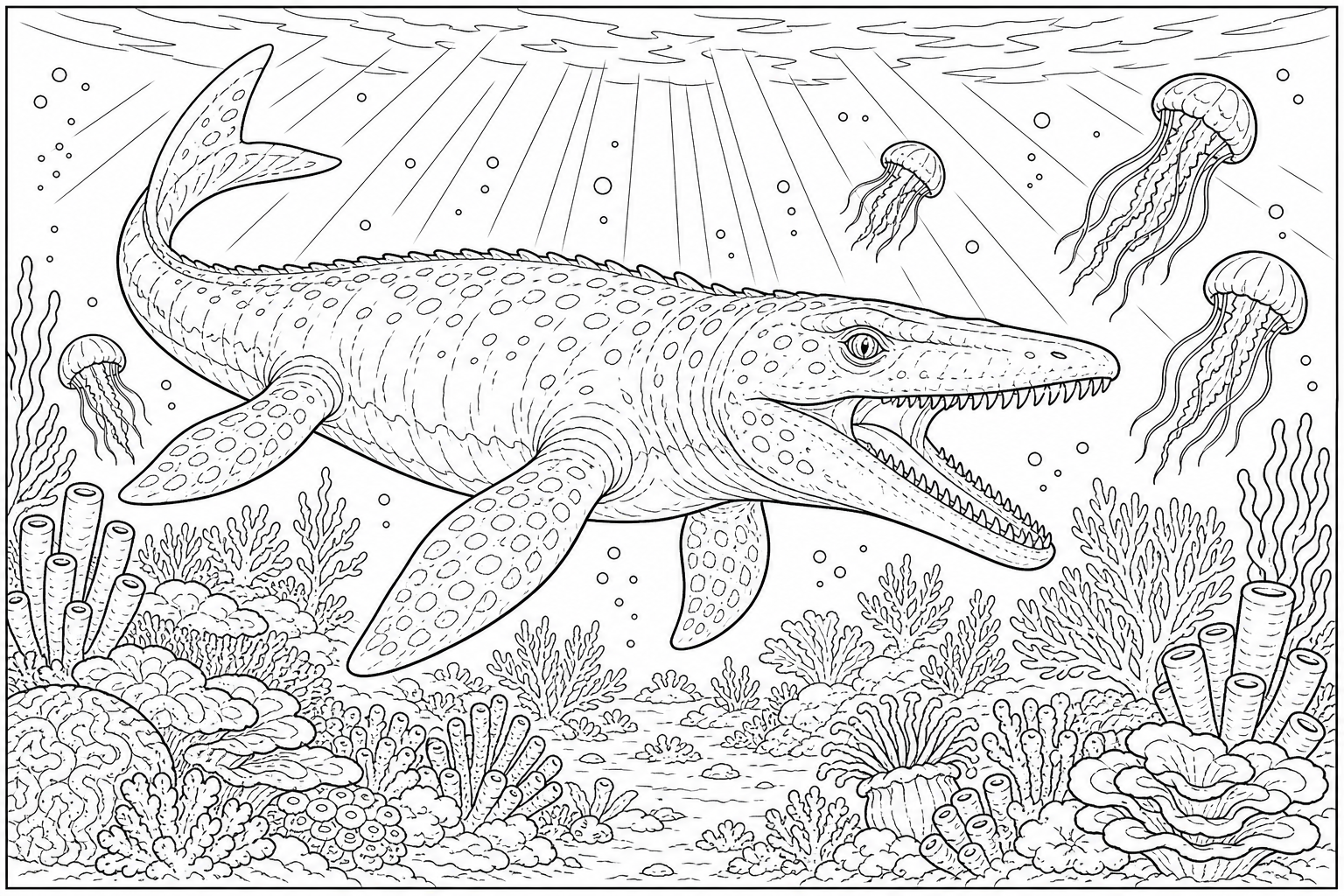
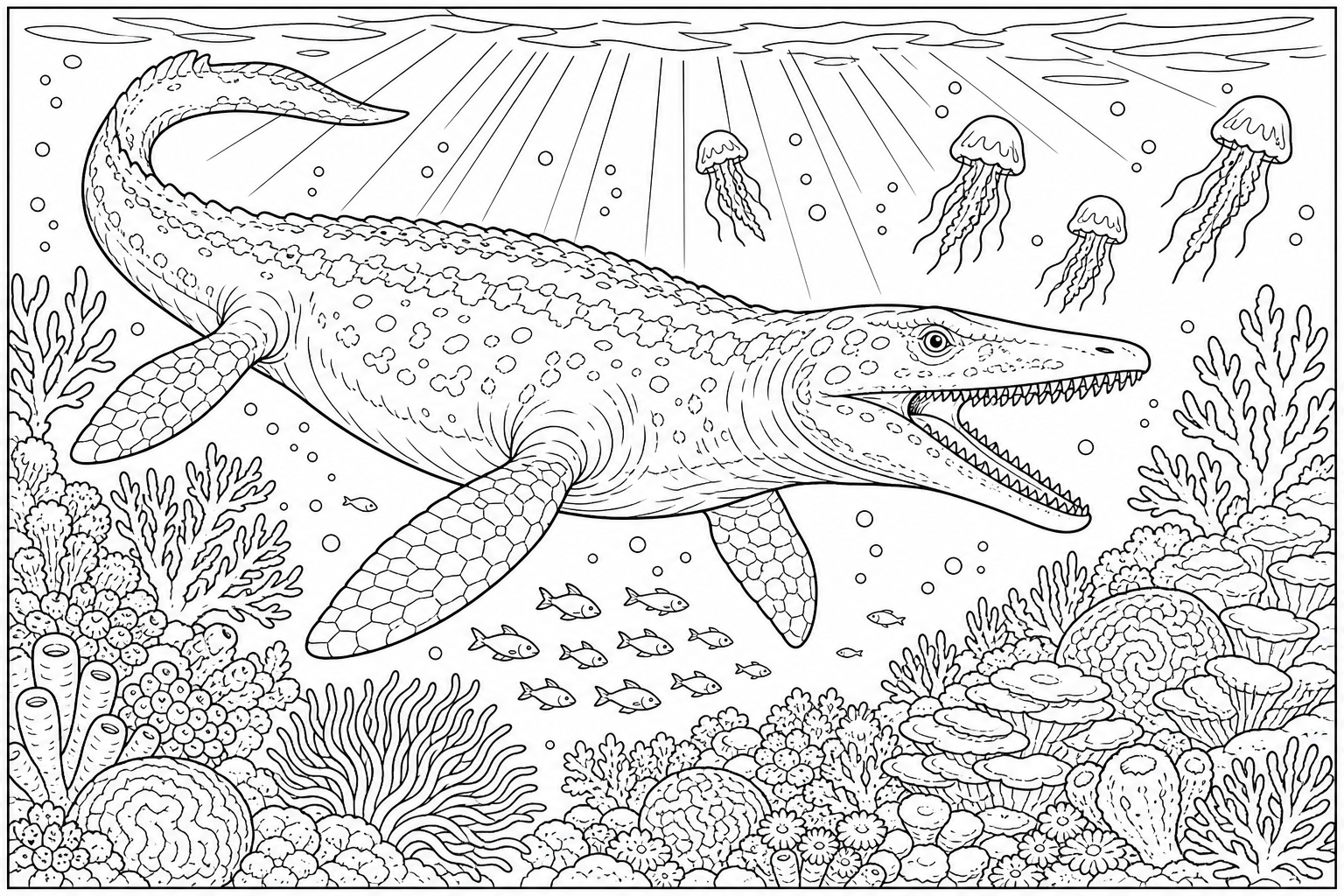
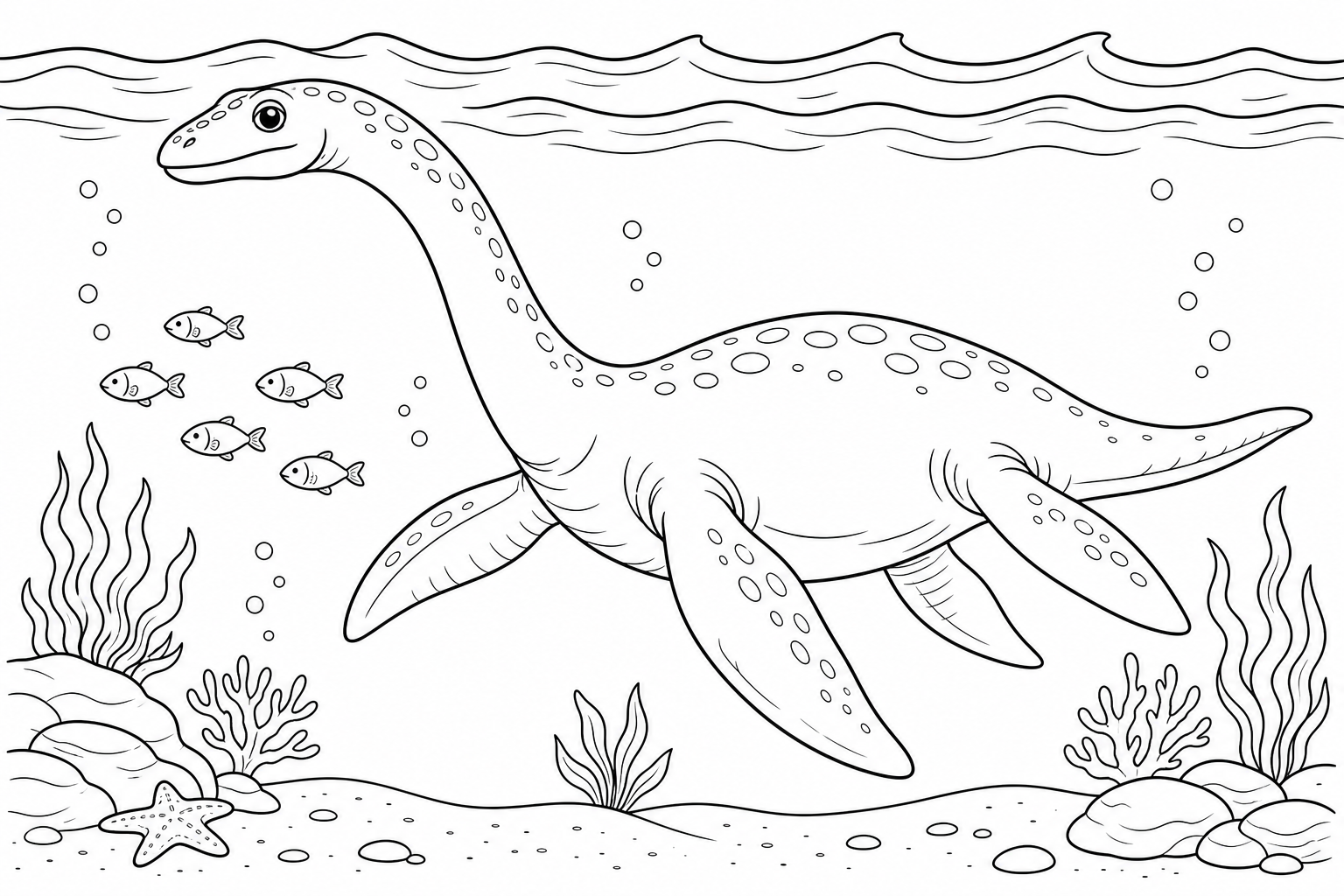
Plesiosaurs, mosasaurs, ichthyosaurs. Strictly, these are not dinosaurs. The kid does not care. They look like sea creatures with paddle limbs and tend to come back to the table again and again.
- 1Family sort. Hand out five different pages and ask the class to group them by feet, by teeth, or by where they lived. Coloring follows after the grouping.
- 2Size to scale. Pin the finished pages on a wall with a small label showing real adult length. T. rex at twelve meters, microraptor at less than one. The visual comparison teaches more than any worksheet.
- 3Habitat overlay. Hand out one dinosaur page plus a sheet of green tissue paper. Kids build a swamp, forest, or coastline around the dinosaur with cut-and-glue or markers.
- 4Story scaffold. A finished page becomes one panel of a four-panel story. Three more colored pages and the kid has a small comic.
Quick tips
- Print one. Wait. See if the kid finishes it before printing the next. The 80-page printable is what got us into this mess.
- Crayons for younger, markers or pencils for older. The mouth and the back plates reward fine tips.
- Save the finished page in a folder labeled by month. By the end of summer you have a small natural history book.
- If the kid loses interest mid-page, the page is not the problem. It will come back next week.
Ready to print? The full set
Six families, plenty of pages. Print what fits today. Print the rest when the rain comes back.
Is dinosaur coloring good for any age? Three to nine is the sweet spot. Younger kids gravitate to the long-necked easy outlines; older kids want anatomical detail and patterns.