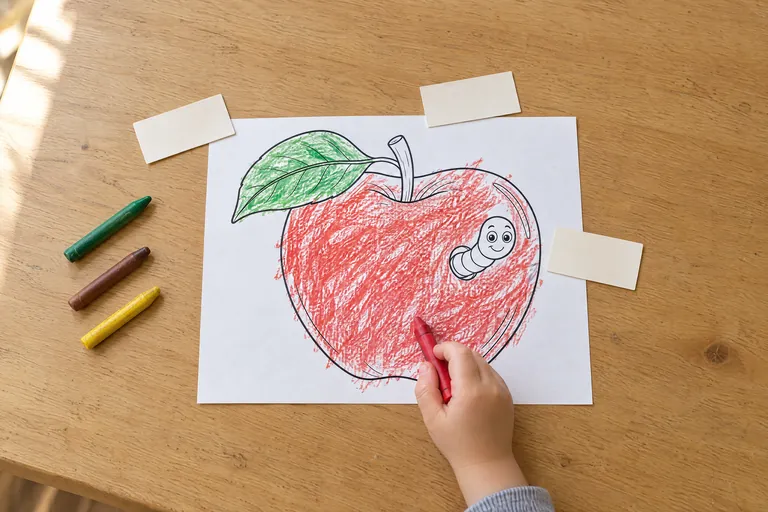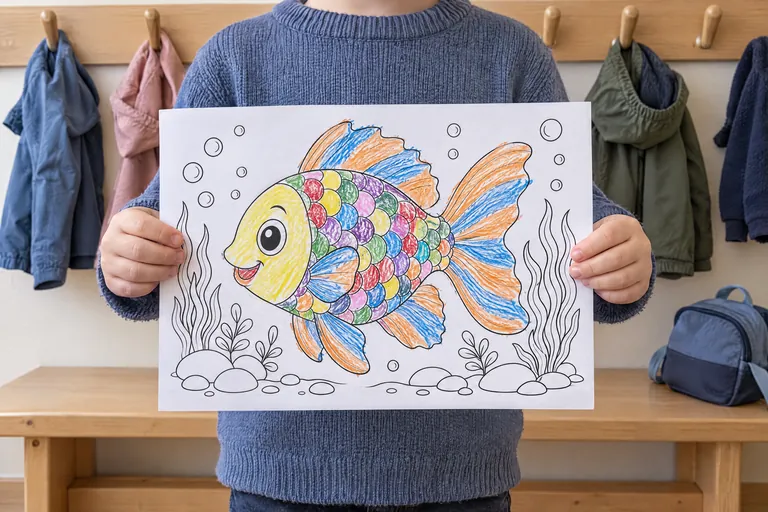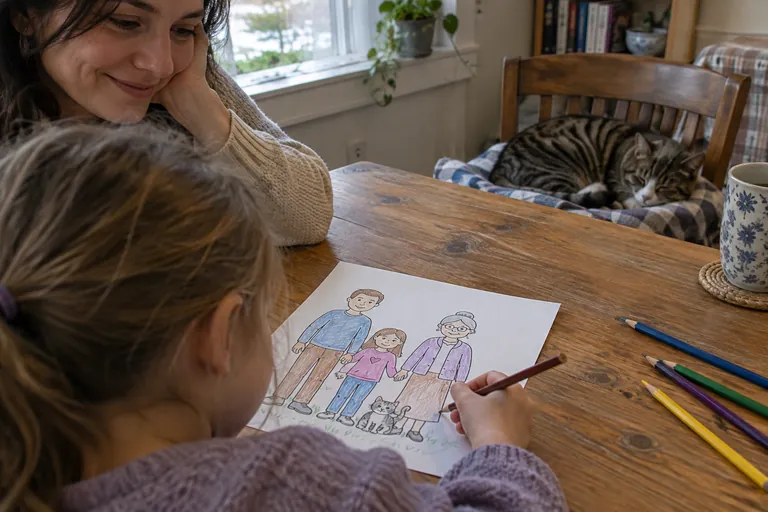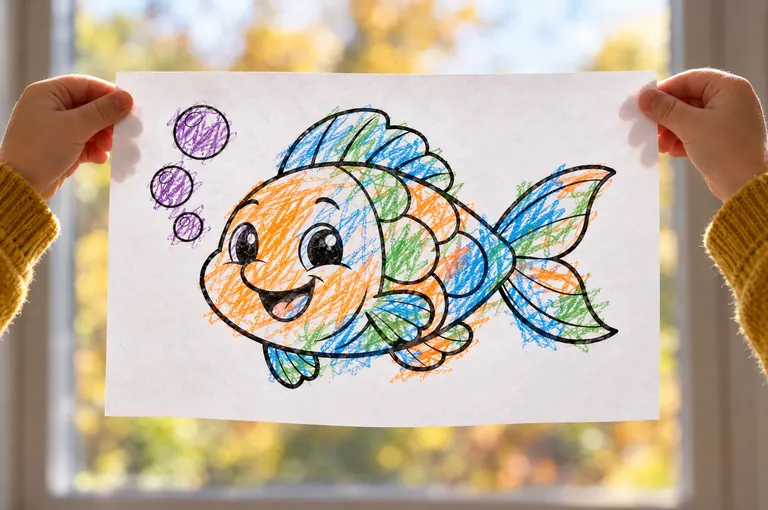
Should you worry that your four-year-old still scribbles straight across the fish, the sea and a corner of the table?
Probably not. Most worries about a child's coloring start with a comparison: a cousin's tidy page, a classmate's picture on the fridge at kindergarten, the neat example on the packet. The milestones that doctors actually use are wider and kinder than any of those, and they say very little about staying in the lines. Here are the five questions parents ask most, what is usually going on behind each one, and the short list of signs that deserve a closer look.
My child is four and still scribbles. Is that normal?
Yes. Scribbling is where coloring starts, and it lasts longer than most parents expect. The CDC lists "Scribbles" as a milestone by 18 months, and "Draws a circle, when you show him how" by three years. By four, most children draw a person with three or more body parts. Each of those lines names what most children, 75 percent or more, can do by that age. Read them as a floor to check.
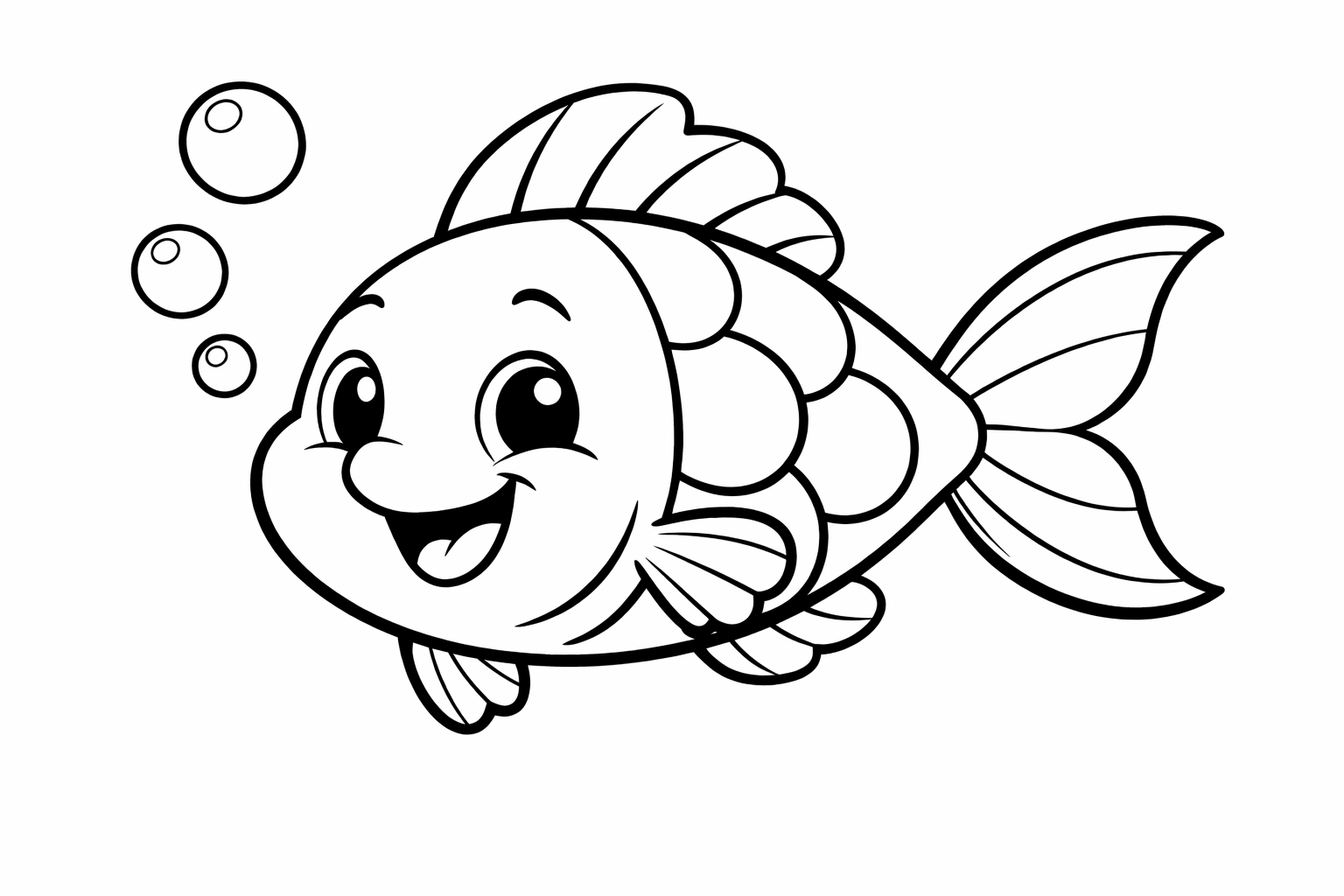
Filling someone else's outline is a different job from drawing your own shapes. So a four-year-old who scribbles across a printed fish and then draws a lopsided person with arms on blank paper is doing fine on both counts. What helps is a page with big shapes and few lines, so the scribble has somewhere to land.
If you want to know what each age is quietly building, the stage-by-stage view is in our guide to coloring by age.
Is it normal that they color outside the lines?
Before about five, crossing the lines is the normal case. One reason sits in the hand: by four, the CDC expects a child to hold a crayon or pencil between fingers and thumb, not in a fist. Until that grip settles, small controlled strokes are hard work, and a big movement makes a big mark.
Staying inside comes later, with practice and with pages whose spaces are wide enough for the hand your child has right now. A page full of tiny details asks for control that is not there yet, and it ends in frustration on both sides of the table. Whether staying in the lines will cost your child some creativity is its own question, answered in why coloring inside the lines won't limit creativity.



Coloring fun for kids — anywhere.
Free for iOS & Android. No ads, no sign-up, offline-ready.


Coloring fun for kids — anywhere.
Free coloring app for kids. iOS and Android, phones and tablets. No ads, no sign-up, even offline.
They only use one color, or refuse to color at all. Should I worry?
One color for weeks usually means your child has found something they like: a favorite color, or one crayon that glides better than the rest. It tells you about taste, and almost nothing about development. The small fixes, from a smaller crayon box to a page that asks for a second color, are in why your child only uses one color.
Refusing pages altogether is different, and it is often a refusal of the setup. The page is too detailed, the chair is too high, or coloring has turned into a task with a right answer. Change one of those before you decide your child "just doesn't like coloring". When your child refuses to color walks through what to change first.
They keep swapping hands. Should I pick one for them?
No need. Alberta Health's pediatric rehabilitation team describes the timeline plainly: up to two, children use both hands equally; a preference starts to show between two and four; and hand dominance is typically clear between four and six. Along the way a child may change hands for days or weeks, and will switch whenever the working hand gets tired.
So a three-year-old who colors the fish with the left hand and the bubbles with the right is trying both out. Put the crayon down in the middle, straight in front of them, and let them choose which hand reaches for it. A fist grip at two and three is the usual starting point too. A crayon broken in half is no loss here: a short stub leaves little room for a whole fist.
Normal, or worth a closer look?
Most of what parents notice falls in the left column. The right column is short on purpose.
| What you see | Usually normal | Worth a closer look |
|---|---|---|
| Scribbling | Scribbles at three or four, even straight across a printed outline | Has never scribbled at all by around 18 months to two years |
| Grip | A fist at two and three, fingers and thumb by about four | Still only a fist well past four, along with other hand tasks that seem hard |
| Hands | Swapping hands until about four to six, or when tired | Hand skills that stay hard and do not ease as one hand takes the lead |
| Colors and subjects | One favorite color, the same dinosaur every day | Not a developmental sign on its own |
| Any skill | Good weeks and flat weeks, uneven progress | Loses a skill they clearly had before |
For everything in the left column, the most useful thing you can do this week is boring: big shapes, short crayons, a chair at the right height, and no comments about the lines.
What else could you color?
Pick a prompt or type your own — opens in a new tab.
Where to go from here
This page answers whether to worry. The pieces linked above go one level deeper on each question, and they are written to be read on their own, on the evening the worry actually comes up. If the real question is what to say when the scribbled fish lands in your hands, start with what to say when your child hands you a finished coloring page.
Most of the time, the page in front of you is exactly the page a child of that age makes. Keep it.