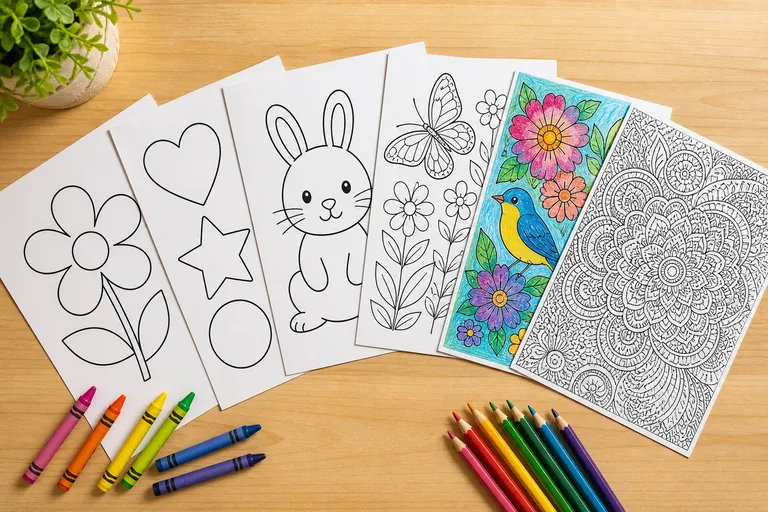
Some kids will color for an hour. Others push the crayons away before you have finished pulling the paper out. If yours is the second kind, it is easy to read it as stubbornness, or to quietly wonder whether something bigger is behind it. Most of the time it is neither. A refusal is usually a small piece of information: the task, the way it is set up right now, is asking for something your child cannot easily give yet.
That is good news, because a setup is far easier to change than a personality.
What a refusal is usually telling you
Coloring looks simple to us because our own hands stopped thinking about it decades ago. For a young child it is a stack of hard things happening at once: hold a thin crayon with a pincer grip, press hard enough to leave color, steer it around a shape, and sit still through all of it. If any one of those is still developing, the whole thing can feel like work instead of play. Occupational therapists who teach coloring skills point straight at this, the grip strength and fine motor control that simply have not caught up yet.
A few other reasons come up often, and none of them is a problem with your child:
- The hand is not ready. Until the pincer grip is comfortable, holding a crayon is genuinely tiring, and a tired hand quits early.
- Sitting still is the hard part. Some kids are movers, and a chair-and-table task fights their whole body before the coloring even starts.
- There is a "right way" in the room. If coloring has come with reminders to stay in the lines or use realistic colors, a child who senses they will get it wrong often just opts out. It is the same instinct behind a child who only reaches for one color, quiet control over a task that otherwise feels judged.
- It is not their play right now. Plenty of kids who ignore coloring at three drift back to it at five. Interest tracks the same developmental arc as everything else, which is why what coloring asks of a preschooler looks nothing like what it asks of a toddler.


Coloring fun for kids — anywhere.
Free for iOS & Android. No ads, no sign-up, offline-ready.


Coloring fun for kids — anywhere.
Free coloring app for kids. iOS and Android, phones and tablets. No ads, no sign-up, even offline.
Small changes that make coloring easier to say yes to
None of these is about talking your child into coloring. They are about lowering what the page asks, so that saying yes costs less.
- 1Offer one crayon, not the whole box. A full set of choices is its own small pressure. Hand over a single fat crayon and one big shape, and you remove the decision and the difficulty in a single move.
- 2Go vertical. Tape the paper to a wall, a window, or the side of the fridge, or set up an easel. A vertical surface puts the wrist in a stronger position and turns a sitting task into a standing, moving one. Occupational therapists suggest it for exactly that reason.
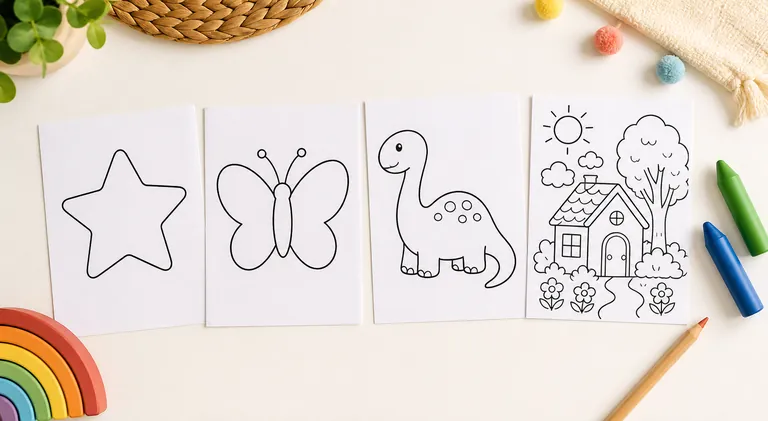
- 3Make the page bigger and the lines fewer. One large balloon beats a detailed scene. Big simple shapes give a fast sense of "done," which is the feeling a reluctant colorer is missing.
- 4Color next to them, not over them. Sit down with your own page and color badly on purpose, outside the lines, a purple dog. Watching a grown-up make cheerful mistakes quietly cancels the "right way" pressure.
- 5Let them choose the subject. A child who will not touch a worksheet flower will often color a dinosaur, a cat, or a favorite character without being asked twice. The subject does more work than any pep talk.
- 6Give it a reason. The page becomes a card for grandma, a sign for a bedroom door, a menu for a pretend restaurant. A small purpose turns a chore into a project.
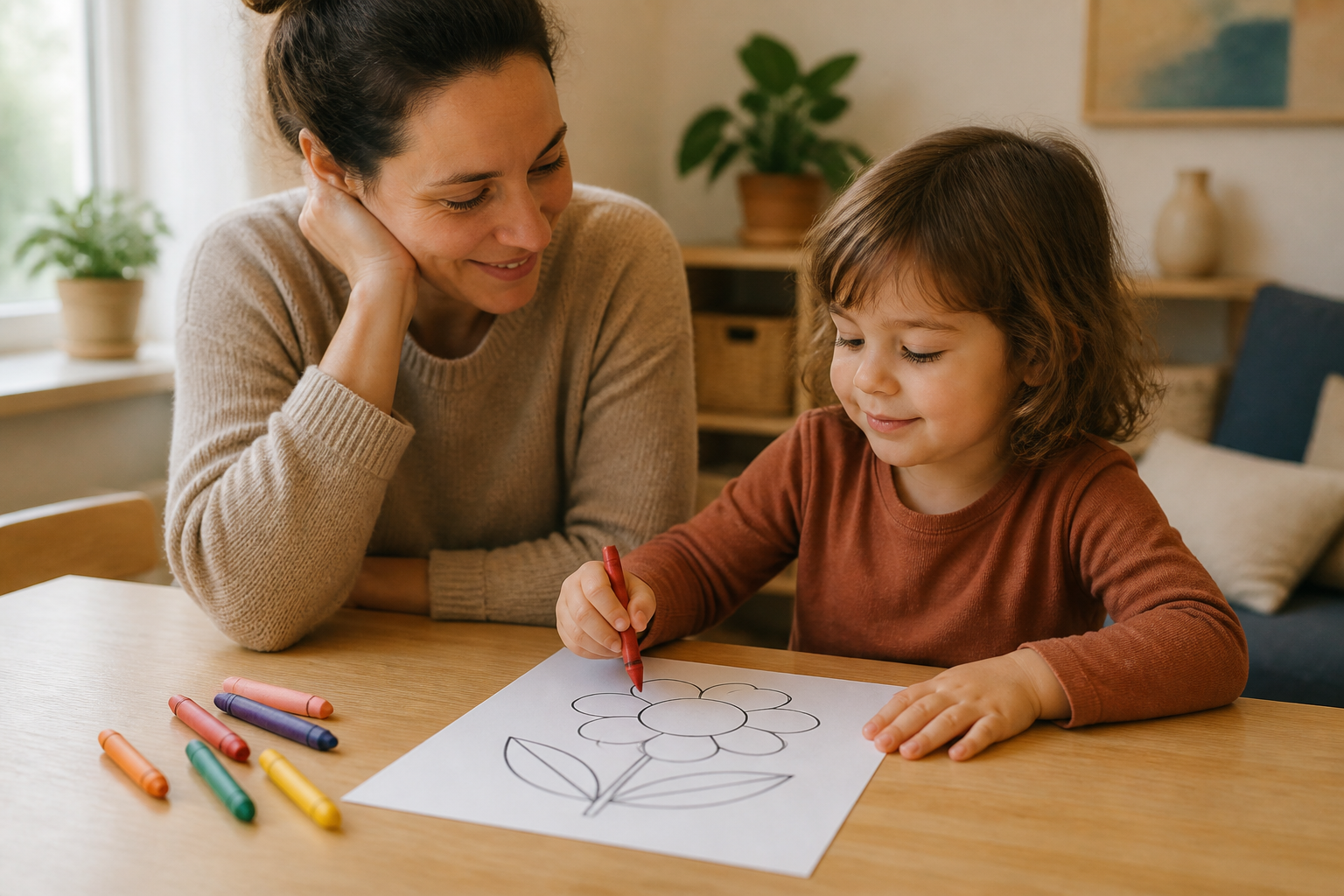
You will not need all six. One or two, matched to why your child is opting out, usually does it.
Let them start with something they already love
If you try only one thing, try this. Interest beats instruction almost every time, and the quickest route to a first yes is a subject your child already cares about. Let them pick it, print it big, and hand it over with no rules attached.
What else could you color?
Pick a prompt or type your own — opens in a new tab.
When it is just a phase, and when to check in
For most kids, on-and-off interest in coloring is completely normal and nothing to push hard against. It is worth a little more attention only when the reluctance sits inside a wider pattern, and even then the coloring is the clue, not the problem itself.
| Situation | What it usually means |
|---|---|
| Skips coloring but draws, builds, or paints happily | A preference, not a concern. Follow the interest they do have. |
| Wants to color but tires or gives up fast | Fine motor and grip are still catching up. Shorten it and make it easier. |
| Avoids most seated fine motor tasks, not just coloring | Worth a relaxed chat with your pediatrician or an occupational therapist. |
| Interest comes and goes with the mood or the week | Normal. It will most likely circle back on its own. |
What changes a reluctant colorer's mind is almost never more encouragement. It is a smaller ask, a subject they picked, and a grown-up nearby who clearly does not mind how it turns out. Lower the bar, hand over one crayon, and let the next yes be their idea.