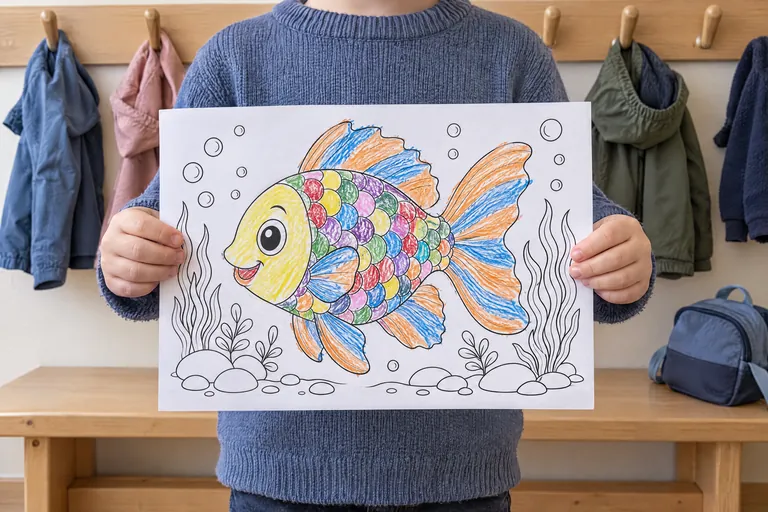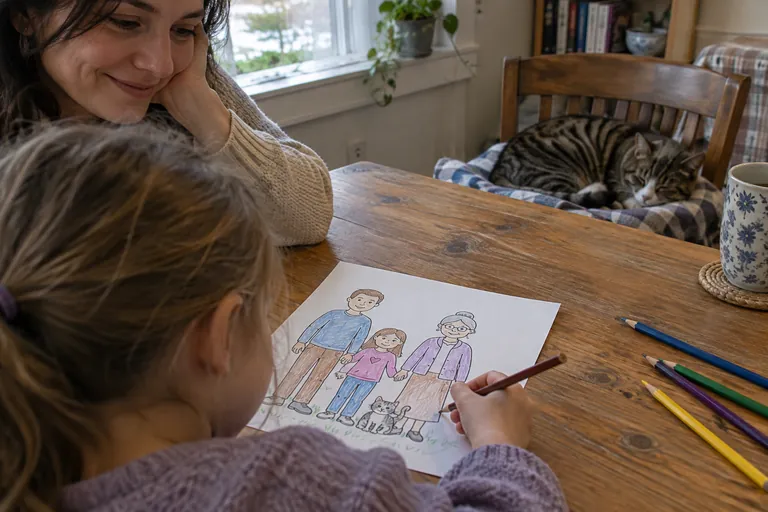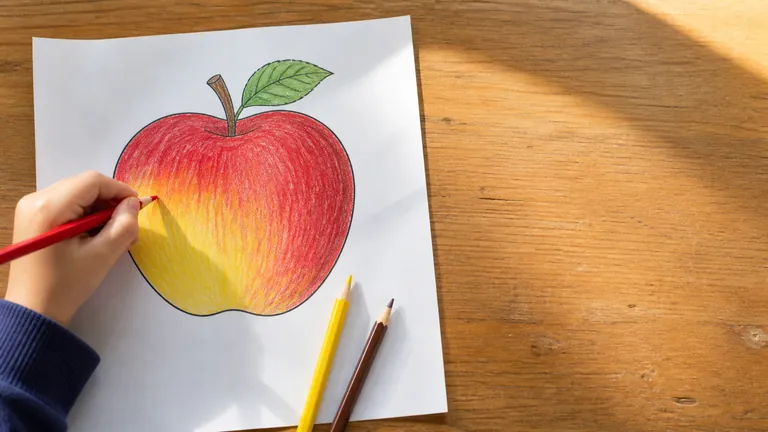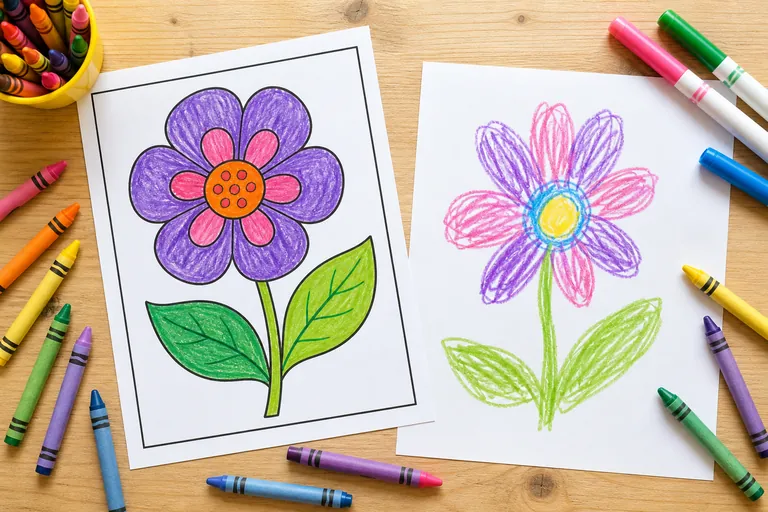
Ask a room of early childhood educators whether coloring pages belong in the classroom and you will start an argument. The worry underneath it is real and specific: if a child spends the afternoon filling in someone else's outline of a cow, are we quietly teaching them that there is a right way to draw a cow, and that theirs is not it?
It is a fair question, and it has a longer history than most people realize. Here is what the research actually says, where the worry is right, and the one habit that does the damage people tend to blame on the pages themselves.
Where the worry comes from, and why it isn't silly
The case against coloring books is almost eighty years old. In 1947, Penn State professor Viktor Lowenfeld, often called the founder of modern art education, wrote in Creative and Mental Growth that "there is general agreement that coloring books too are detrimental to children's creative expression." His reasoning was sharper than the slogan it later became. Working from a ready-made outline, he argued, makes children less sure of their own drawing, because they can see they will not draw a cow as cleanly as the printed one.
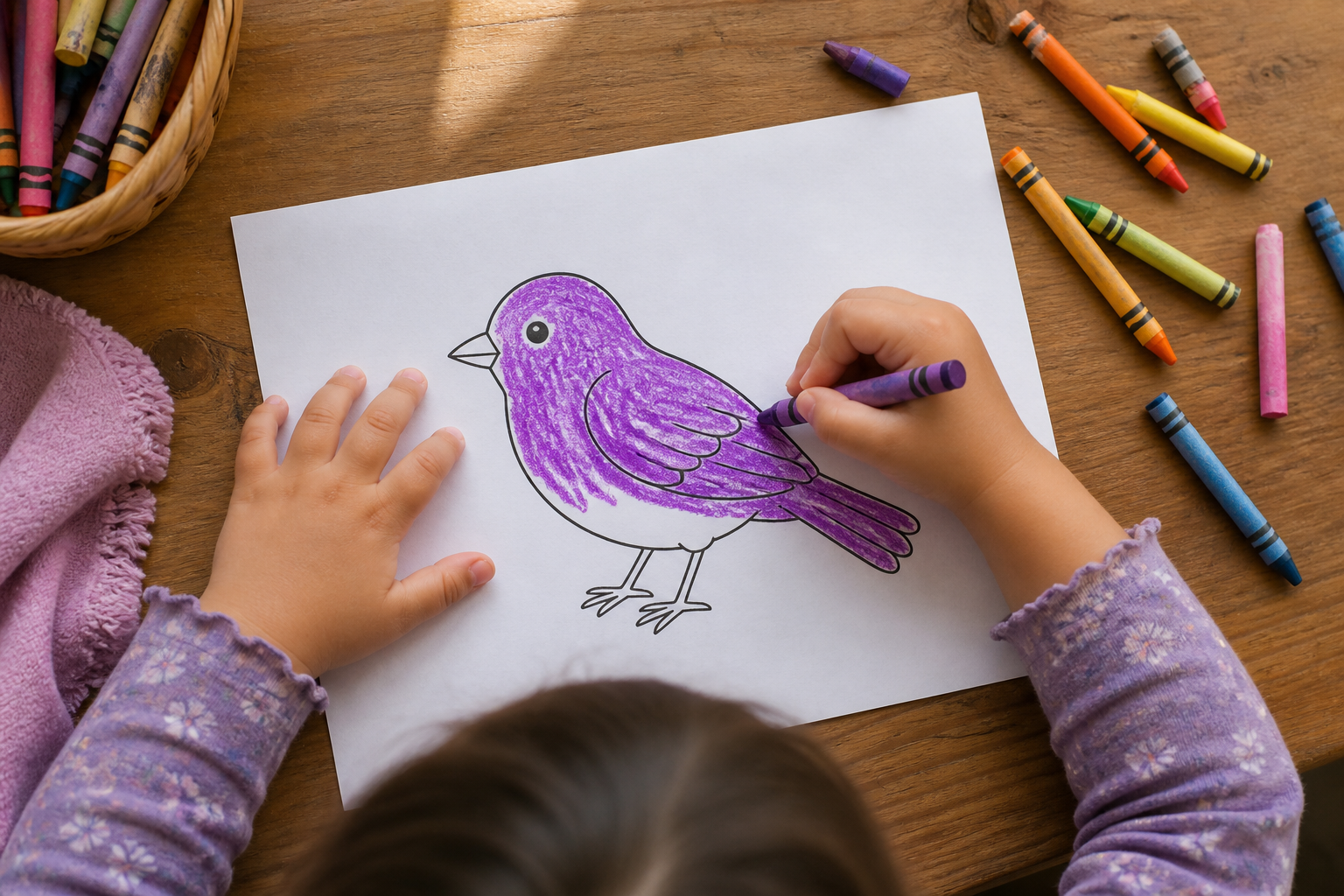
There is a well-known demonstration of this. Give children a blank sheet and ask them to draw a bird, and you get a whole aviary of strange, wonderful birds. Give the same children a coloring book where every bird is two tidy arcs, then ask again, and many of them start drawing that same simplified bird. Art educator Melody Milbrandt puts the real objection plainly: with a coloring page, the image is already there, with little room for the child to construct meaning. The decisions have been made before the child sits down.
So the concern is not nonsense. If coloring inside the lines were the only drawing a child ever did, it would be a genuine problem.
What coloring inside the lines actually builds
But "the only drawing a child ever does" is carrying a lot of weight in that sentence, and it is exactly where the slogan overreaches.
Coloring a defined shape is good practice for the hand. Gripping a crayon, controlling pressure, and steering a line toward a boundary all build the focus and fine motor control that later feed handwriting and, when the child decides they want it, staying inside the lines on purpose. It is calming, it is a shared quiet activity, and it gives a child who is not yet confident drawing freehand a way into making marks at all.
The honest caveat, which the best early years writing is careful to make, is that none of these benefits are unique to coloring sheets. Free drawing, painting, threading beads, and squashing dough build the same hand skills, and open-ended art does it while leaving every decision with the child. Coloring is one good tool. It is not a magic one, and nothing is lost by treating it that way.
| What it builds | Coloring a printed page | Drawing on blank paper |
|---|---|---|
| Fine motor control | Strong: steering to a boundary | Strong: forming the shapes too |
| Focus and calm | Strong, with low pressure to begin | Strong once a child feels confident |
| Color choices | The child's, if you let them be | Entirely the child's |
| Ideas and composition | Decided by the printer | Decided by the child |
| Best for | Easing in, quiet time, motor practice | Imagination, meaning, invention |



Coloring fun for kids — anywhere.
Free for iOS & Android. No ads, no sign-up, offline-ready.


Coloring fun for kids — anywhere.
Free coloring app for kids. iOS and Android, phones and tablets. No ads, no sign-up, even offline.
The one habit that actually limits creativity
Notice that the table has only one real gap: who decides what the picture is and how it looks. That gap is not caused by the page. It is caused by how the adult uses it.
Two adult habits turn a harmless activity into a limiting one. The first is making coloring pages the only art on offer, so a child never reaches the blank sheet where the ideas are theirs. The second is quietly policing the "right" colors: the small corrections that the sky is blue, the grass is green, the sun is a yellow ball in the corner. Do that often enough and, as Milbrandt notes, children adopt those symbols as the way things are supposed to look.
How to keep coloring open-ended
You do not have to pick a side. A few small moves keep coloring pages in the mix without letting them crowd out invention, whether you are running a classroom, a homeschool table, or a rainy Saturday.
- 1Put blank paper next to the printed page, every time. When both are always on the table, the child chooses, and most will move between them freely.
- 2Say nothing about the colors. A purple sun is a correct sun. Color recognition still happens when you talk about what they are using, not when you assign what they should use.
- 3Use a page as a runway, not a destination. A child obsessed with dragons who ignores the blank paper might warm up on a dragon coloring page and, ten minutes later, start drawing their own. Early years practitioners call this leading with the child's interest, and the printed page is often the thing that unlocks the freehand one.
- 4Rotate the subjects toward invention. Pages that invite a child to add, change, or finish something, like space scenes for kids who would rather invent than copy or deliberately silly prompts that start with one broken rule, keep the door to their own ideas open even inside the lines.
What else could you color?
Pick a prompt or type your own — opens in a new tab.
The real question isn't whether, it's how
Coloring pages were never the villain the slogan made them out to be, and they were never the developmental engine the packaging promises either. They are a calm, useful, ordinary activity that builds real skills, sitting one drawer over from the blank paper where a child's own ideas live. Keep both within reach, keep quiet about the colors, and the creativity takes care of itself.