"What's this?"
"Red."
"It's red, yes. And the red thing is an apple."
That exchange happens at every table where a child is learning a new language and a coloring page is out. The child answers with the color, because the color is the word they already have. Twenty minutes later the page looks lovely and the count of new words is zero. The fix is small: every area the child colors becomes a word they say first. Color it, say it, label it, in that order.
This guide is for the welcome-class teacher planning a morning word circle, and for the parent whose child has just started school in a language nobody speaks at home. It works from about age four, and it works best with very ordinary pages.
Pick a page with five things to name
Language teachers already lean on pictures. A German teaching blog for second-language classes calls word and picture cards especially well suited for introducing new words, and a coloring page is a picture card with more time built in. The page decides how well that time is used, so test it with three questions:
- Can you point at every part and name it with one everyday noun?
- Are there three to six of those parts, each big enough to color on its own?
- Is the page free of lettering, so the only words on the table are the ones you add?
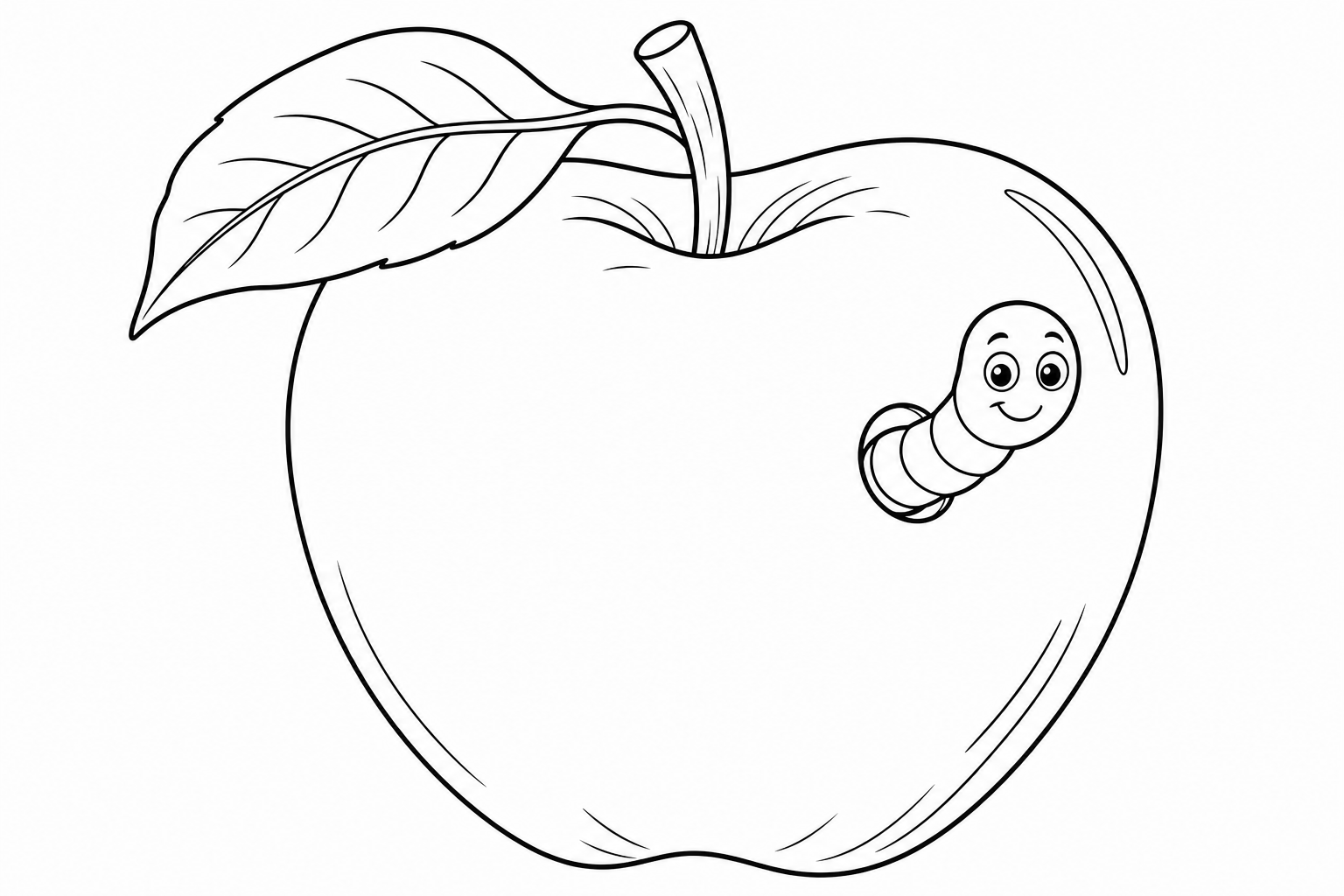
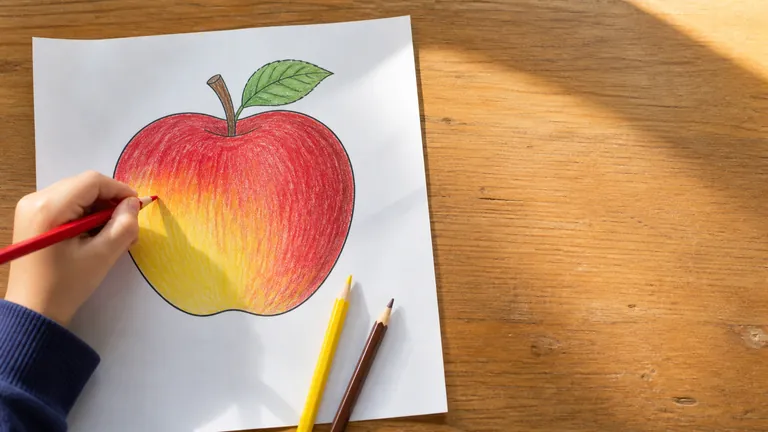
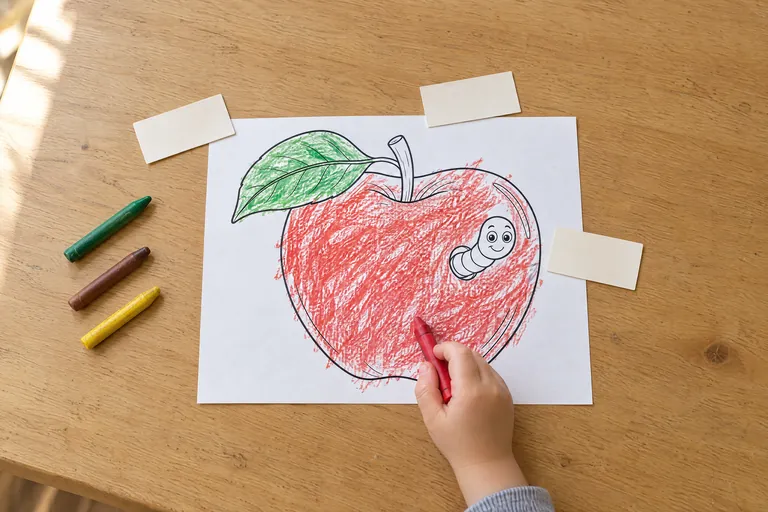
The apple above passes all three. Apple, leaf, stem, worm: four nouns, four separate areas, nothing else competing for attention. A busy market scene fails the second question, however lovely it is. Save it for later, when the child already knows most of the words in it.
The three steps: color it, say it, label it
Our piece on coloring in the classroom argues that a page needs a task to earn its place in a lesson. Here is the task, one step at a time.
- 1Say it before you color it. Point at one part, say the word, and let the child repeat it. Only then does a crayon touch that part. "Leaf." "Leaf." Green.
- 2Say it again while you color. Each time the child moves to a new part, they name it out loud first. You answer with a short sentence that uses the word once more: "The leaf is green. Your leaf is very green."
- 3Label it when it is finished. Write the word on a small slip of paper and let the child put it next to the part, or draw a line from the word to the part. Children who can write copy the word themselves; children who cannot yet match a slip you hand them.
The order is the method. A word said before the crayon moves gets tied to the part. A word said after the page is done gets tied to nothing in particular.



Coloring fun for kids — anywhere.
Free for iOS & Android. No ads, no sign-up, offline-ready.


Coloring fun for kids — anywhere.
Free coloring app for kids. iOS and Android, phones and tablets. No ads, no sign-up, even offline.
Three pages that work, and the words they hold
The first words a new arrival needs are the ones they meet every day: food, school things, the breakfast table. Each of these three pages holds four or five of them.
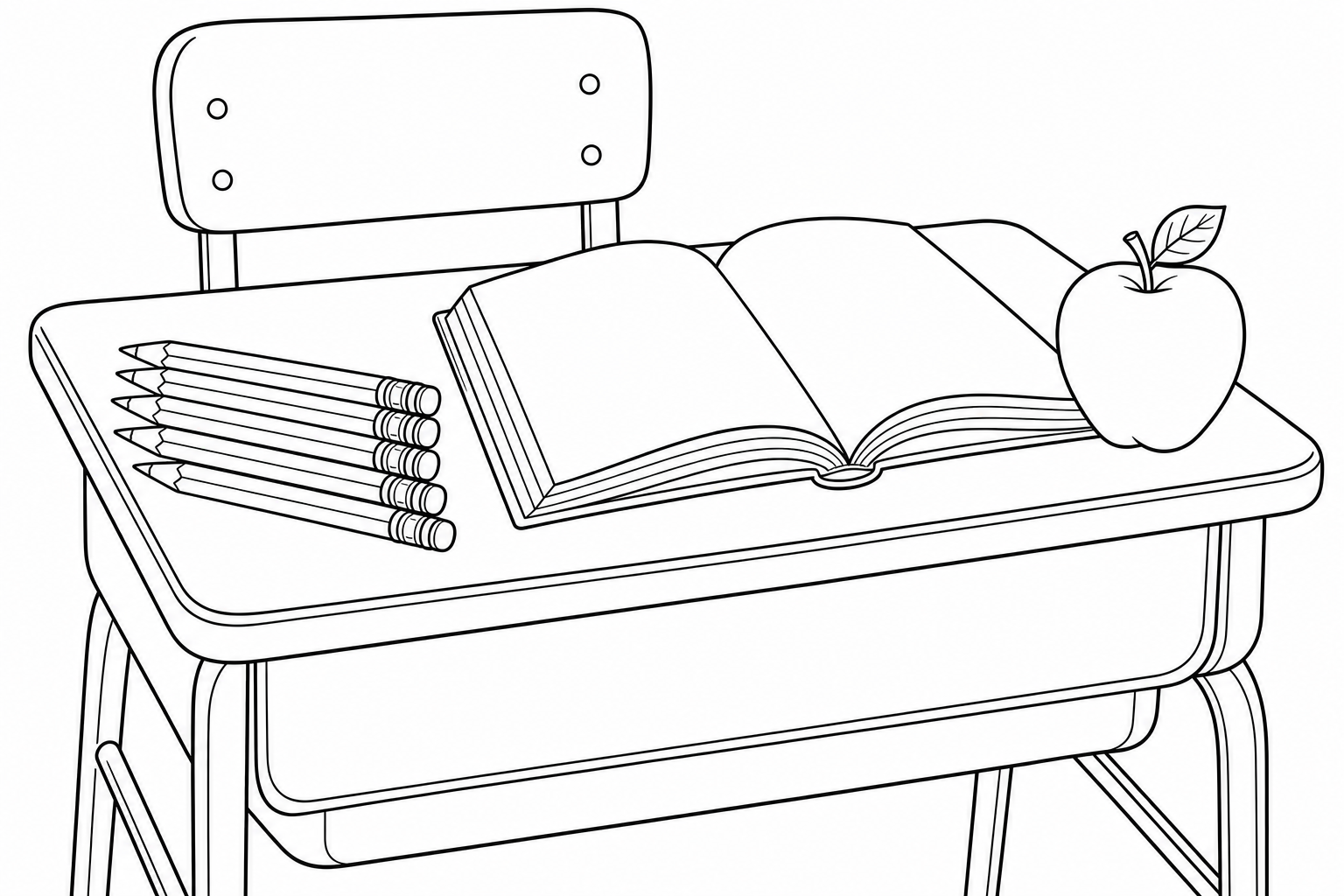


The desk gives you desk, chair, book, pencil and apple. The breakfast table gives you bowl, spoon, glass, milk and banana. The lunchbox gives you sandwich, apple, carton, straw and handle. When the child is ready for the next set, the apple pages that follow an orchard day add tree, basket, slice and pie.
Where it goes wrong
Most sessions that stall do so for one of four reasons.
- Too many words at once. Five new nouns in one sitting is plenty for a beginner. If the page holds more, color the rest without naming them.
- The color word takes over. Saying both is fine, but the color is usually the word the child already knows. Put the noun first: "the banana, yellow".
- Correcting mid-stroke. If a child calls the bowl a spoon, say the right sentence back ("Yes, the bowl, and here is the spoon") and keep going. Stopping to correct turns the page into a test.
- Labels the child cannot read yet. For a preschooler the slip is something to hold and place; reading comes later. Our guide to what preschoolers learn when they color explains why the talk around the page counts as much as the page.
For more pages with a few big, nameable parts, start with these:
What else could you color?
Pick a prompt or type your own — opens in a new tab.
The same page again, with the home language too
Repetition beats variety here. In a University of Sussex study, three-year-olds who heard the same storybooks three times in one week learned new words far better than children who heard the same words spread across different stories. A coloring page works the same way. Print the apple again on Thursday, and the child meets apple, leaf, stem and worm in a picture they already know. The second round goes faster, and the child usually starts naming before you point. Keep the finished slips in a box: dealt out the next morning, they become a matching game.
At home, add a second slip to every part in the language the family speaks. The US Head Start program puts it plainly: for children learning two languages, school success is tied directly to mastery of their home language. Two labels on one leaf tell the child that both words belong to them.
One page, five parts, five words said before the crayon moves: that is the whole lesson, and it fits on the fridge.