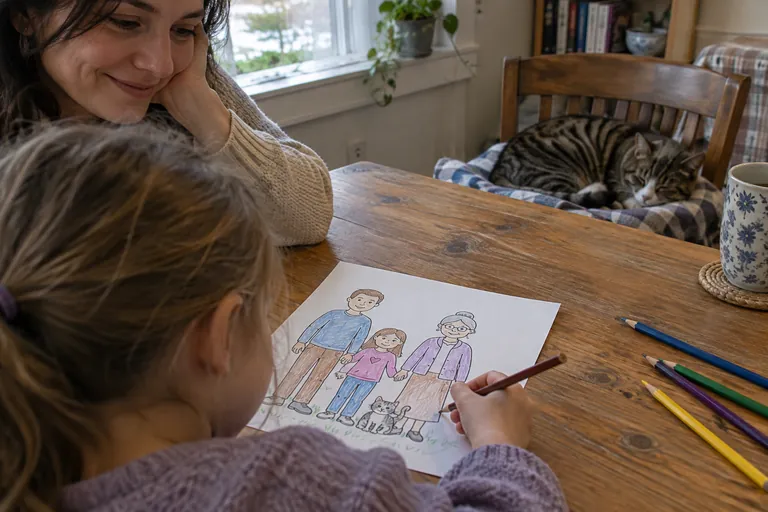
"There are four people on this page."
"And?"
"We're three. And Grandma on Tuesdays. And the cat."
That is the whole trouble with family coloring pages, and also the best thing about them. Most printed families come as a mother, a father, a boy and a girl, sometimes with a dog. Plenty of real families look different: in Germany, almost one family in five with children under 18 was a single-parent family in 2025, according to the Federal Statistical Office. Add grandparents who live in, half-siblings, a baby on the way and a cat with opinions, and the page on the table rarely matches the people sitting around it.
So treat the page as a starting point. Here is a small project for a quiet evening at the kitchen table: five steps, one pencil case, and at the end a picture of the family the way your child sees it.
Step one: count everyone who belongs
Ask your child who lives with you, and then who belongs even if they sleep somewhere else. Let the list be theirs. A four year old may put the goldfish first and forget an uncle. A seven year old may add the grandma who comes every Tuesday and the friend from next door. Write the names down in their order if they like, because the order is often the most interesting part.
Then look at a few pages together and count the people on each one out loud.
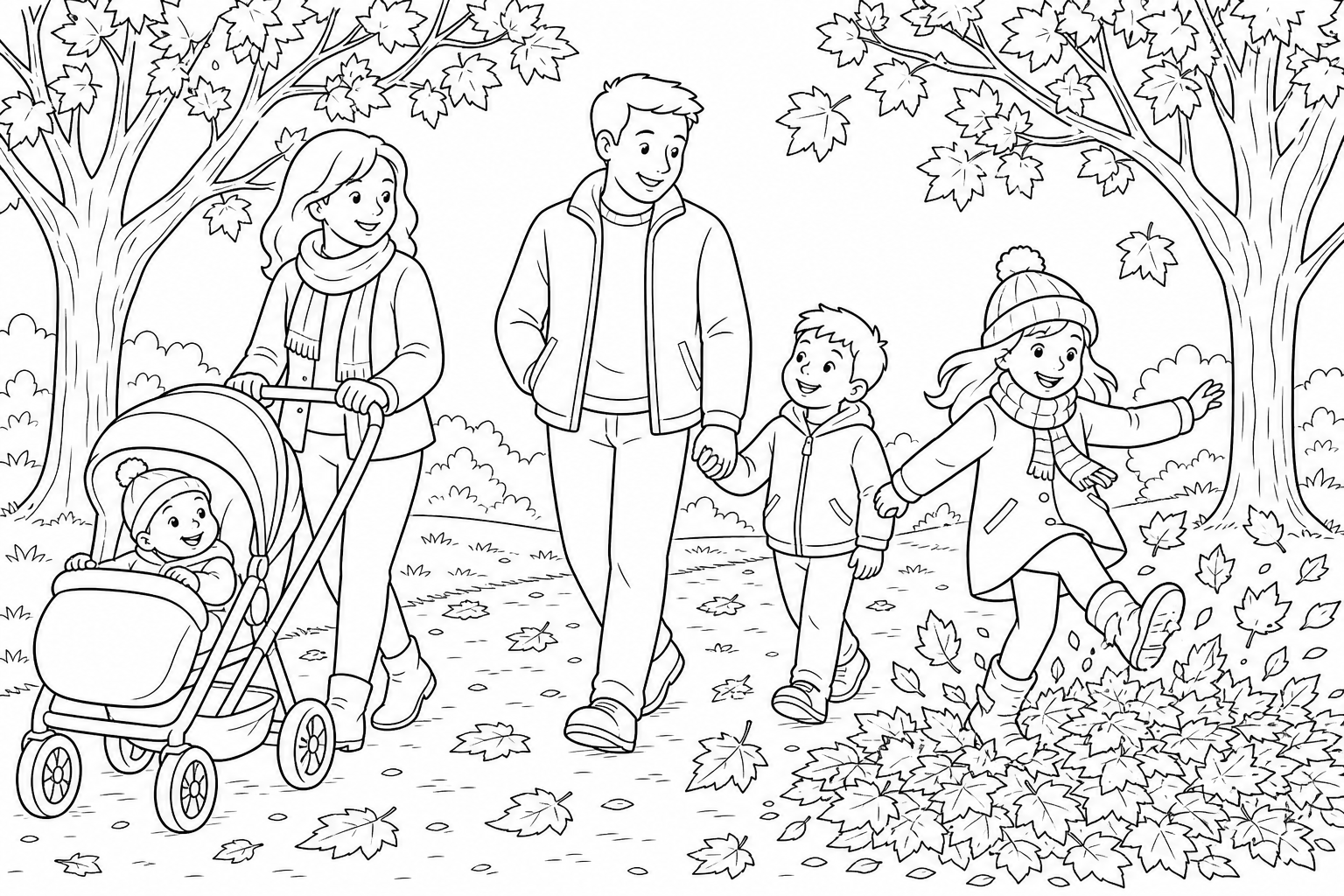
Step two: pick the page with the fewest people missing
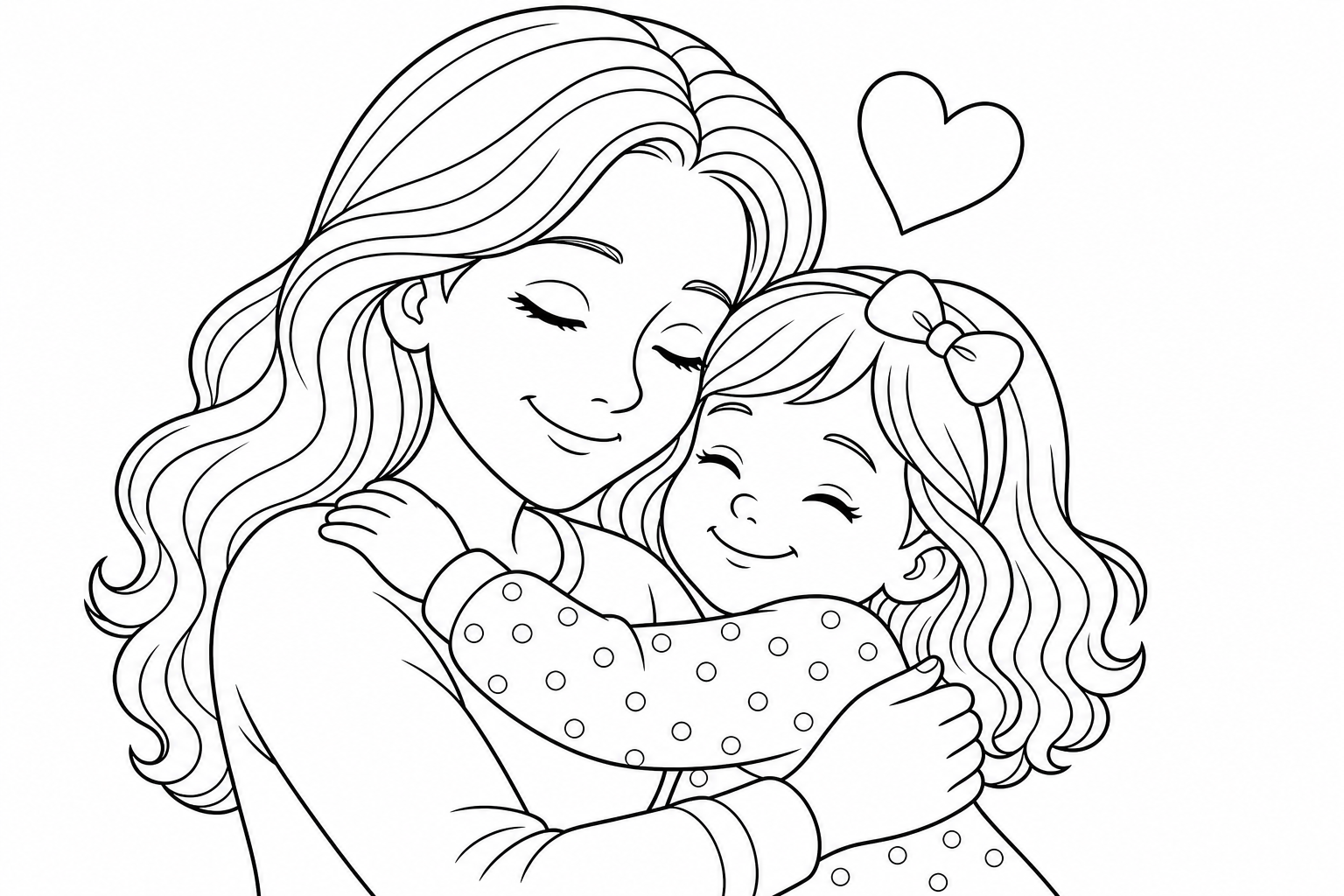
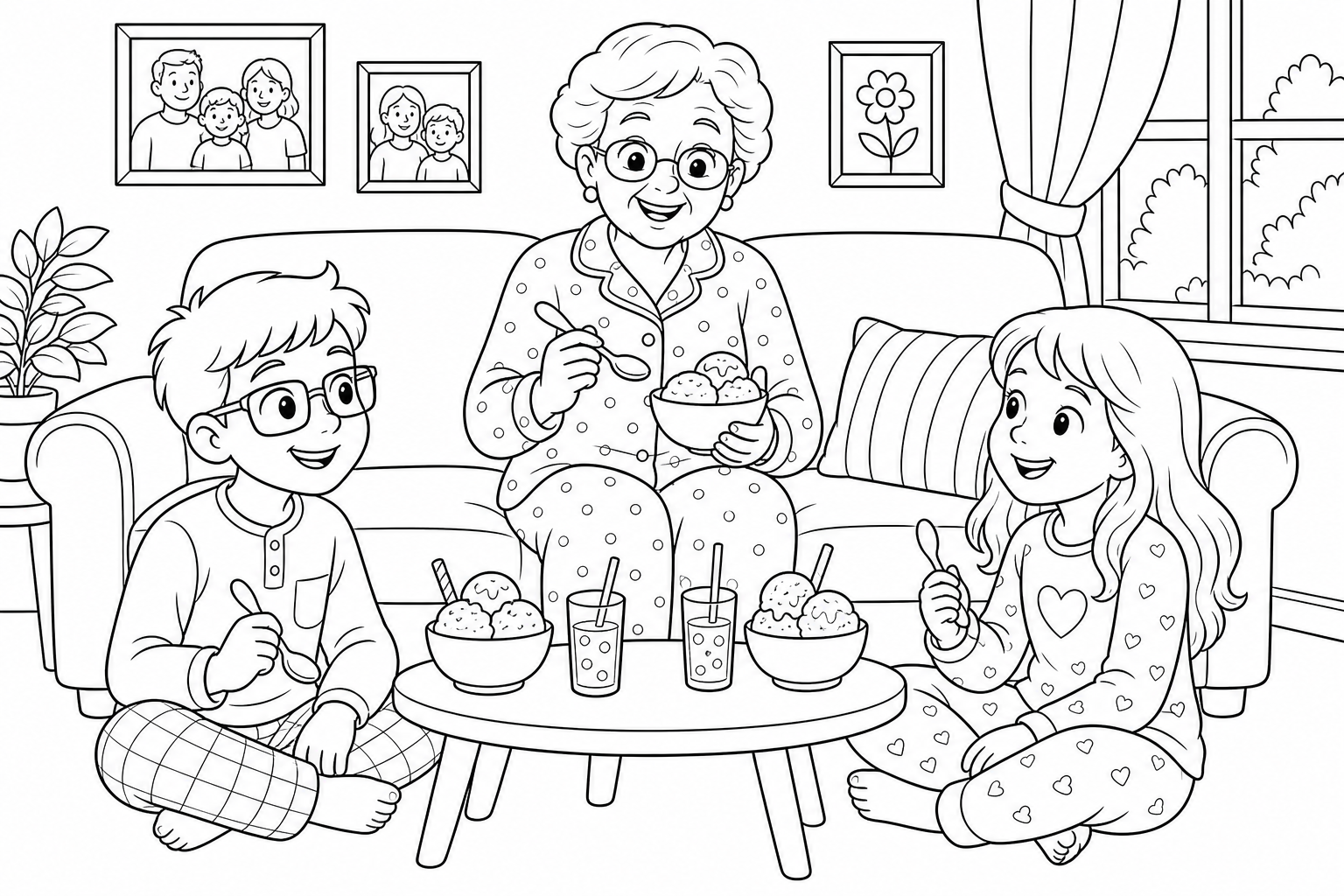
Choose the page that needs the least drawing in. A family of four on a sofa suits a family of three plus a grandparent: one face becomes Grandma, one gets new hair, and the job is almost done. A busy birthday table fits a big family with cousins around it. Let your child decide which person on the page is which person at home. Turning a dad into an aunt is allowed.
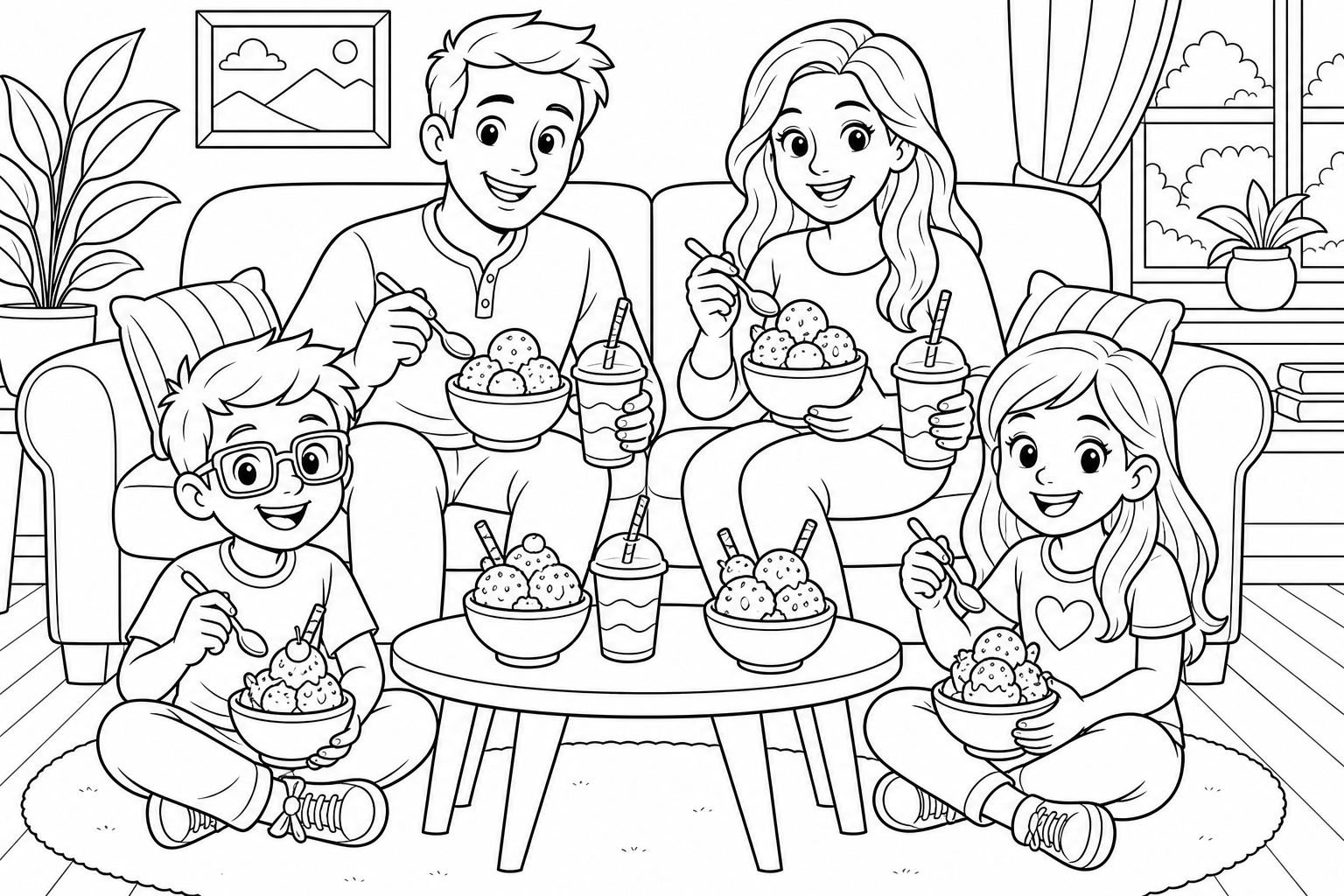
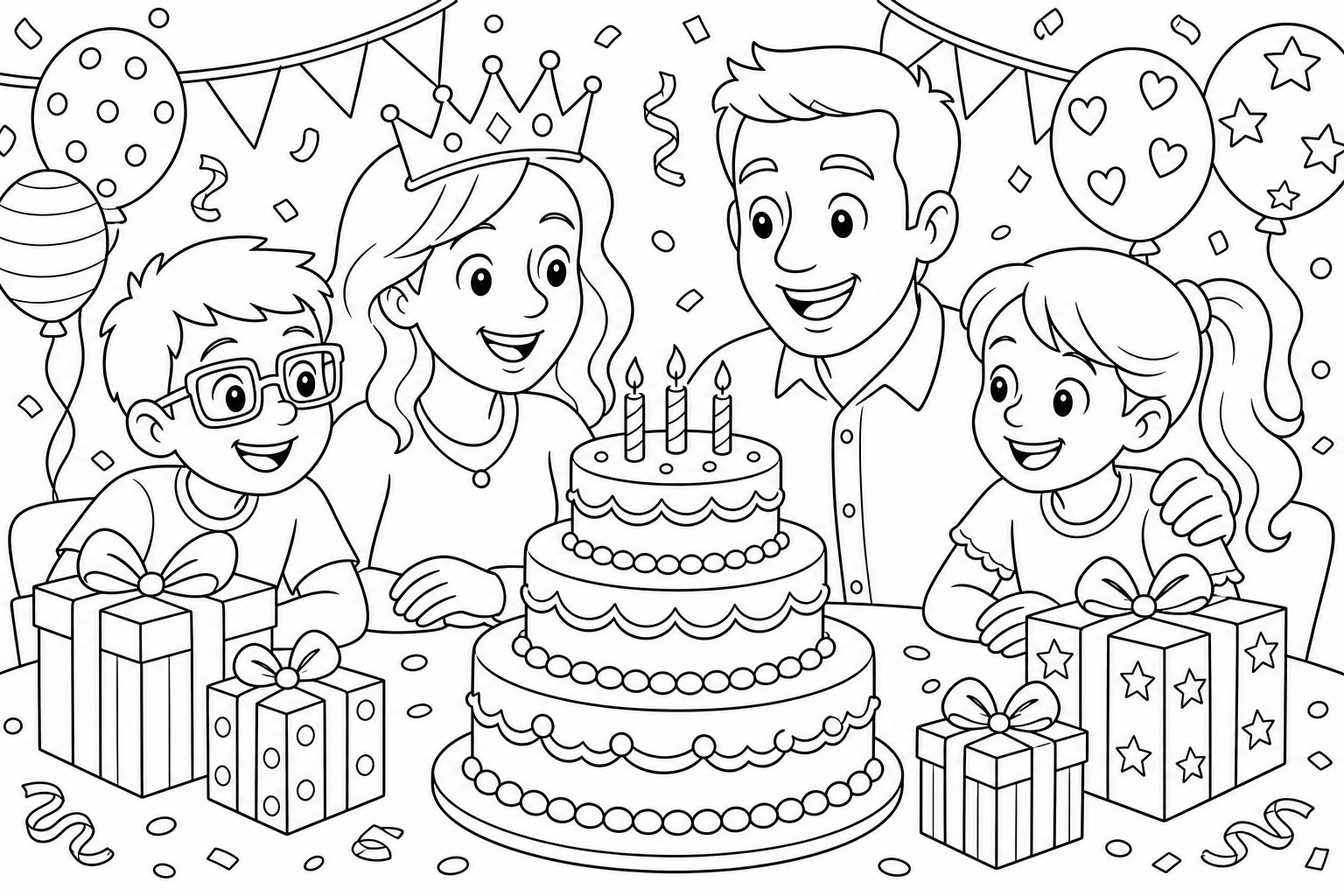
Step three: draw in whoever is missing
This is the step children like best, and it works when there is room. A page with a free sofa cushion, the open end of a bench or a patch of floor gives the extra person somewhere to sit. Pets go on the rug. A baby who is still on the way can be a small bundle in someone's arms, and if that is your house right now, the elephant pages for the kid who is about to be the big one belong to the same weeks. Someone who lives in another home can stand in a doorway or wave from a window.
Leave the drawing alone. If the new person is taller than the house, that may be exactly how big they feel.
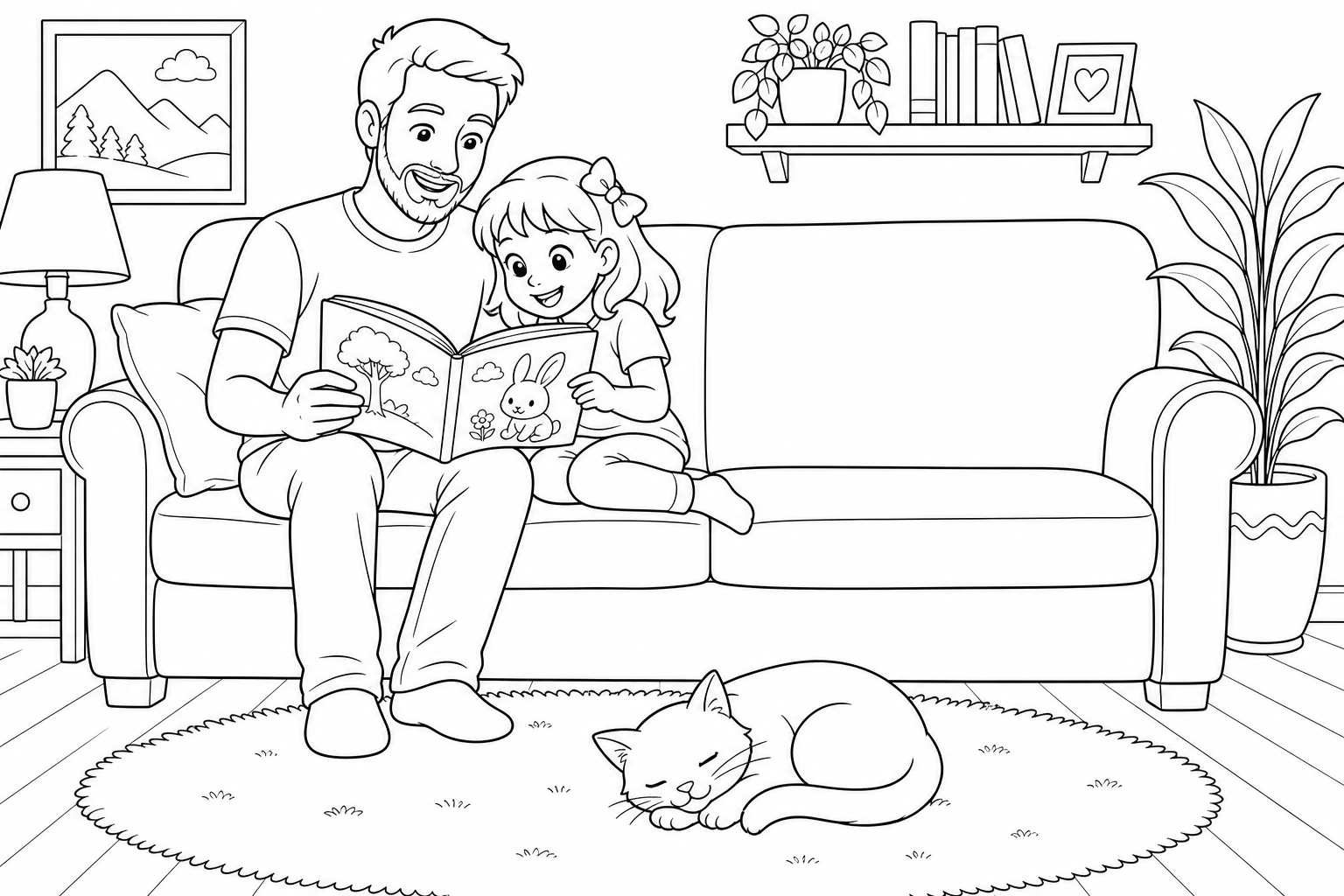
Step four: give everyone a color of their own
Before the first stroke, ask your child to pick one color per person: Mom's sweater, Grandpa's cap, the dog's collar. The page turns into a small key to the family, and it hands you an easy question afterwards: "Why is Grandpa purple?" The answer is usually better than the question. Older children often want a page with more detail, so they can match real clothes and real hair.
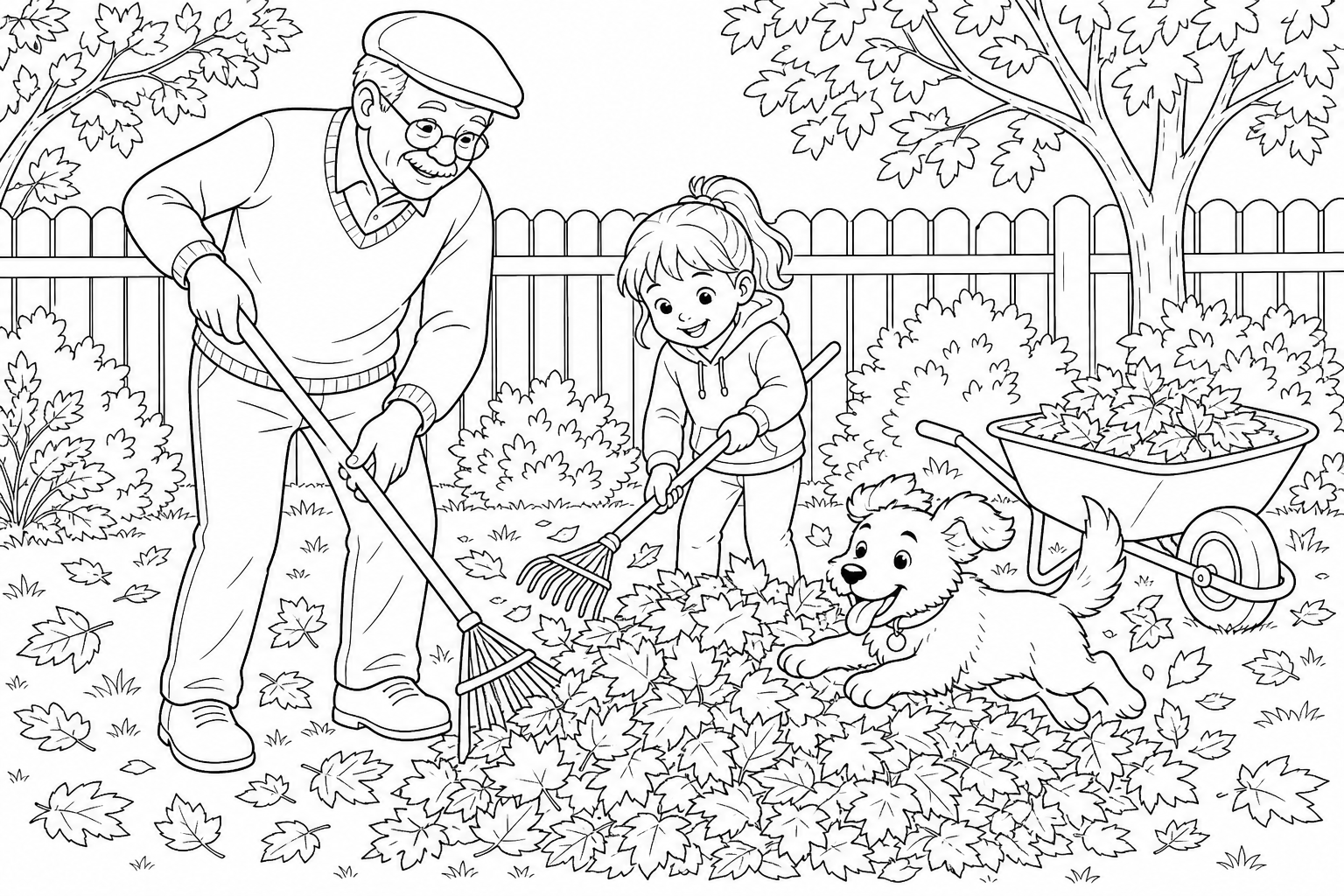
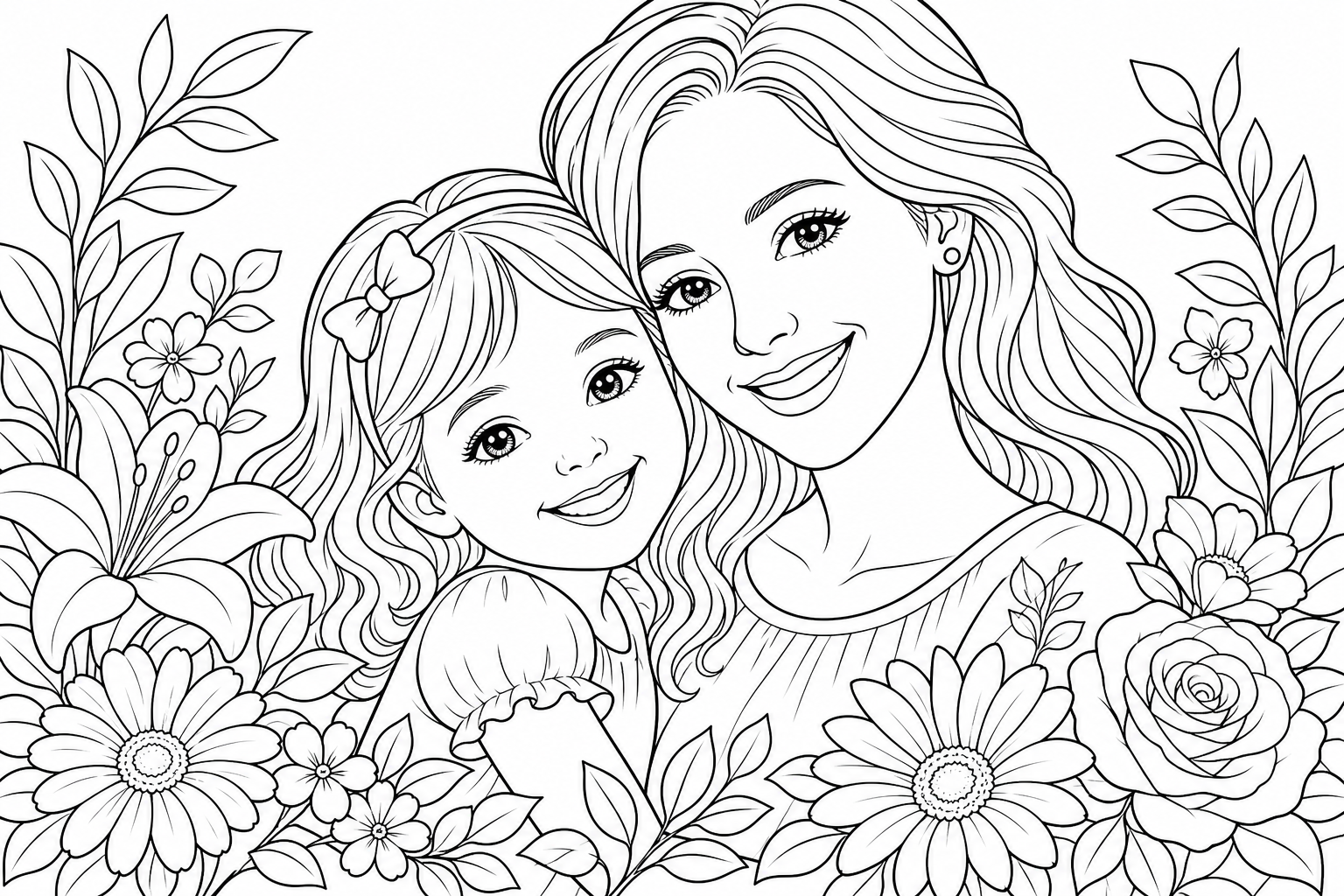
What else could you color?
Pick a prompt or type your own — opens in a new tab.
Step five: hang it where the family walks past
A family picture wants an audience. Tape it to the fridge at your child's eye level, or to the inside of the front door, where everyone on it passes twice a day. Write the date and your child's age on the back. In a year the same page will come out different, because the family will have moved on a little too. If a copy should travel to someone who lives further away, the Grandparents Day pages made to keep have a few ideas for pages that get posted.
Some evenings the list from step one will be longer than last time, and some evenings the cat will be drawn bigger than everyone else. Both are fine. The page is a record of who your child counted that evening, and a fresh copy costs one sheet of paper whenever the family changes again.