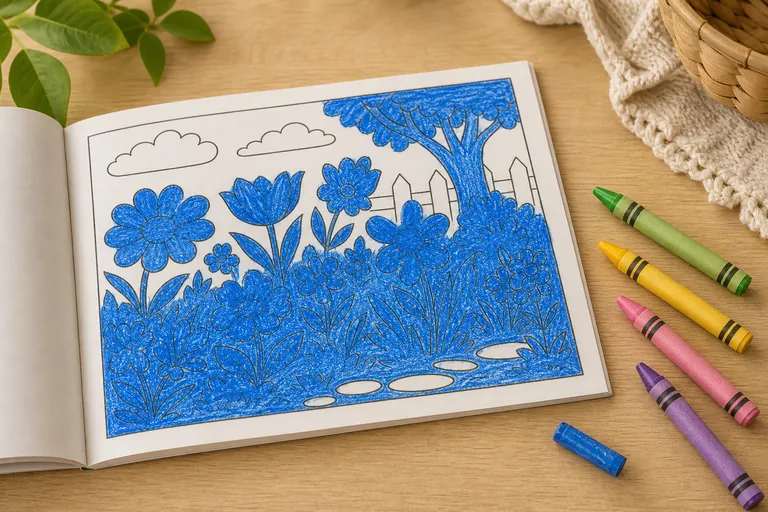
You hand your child a full box of crayons, and every single time, they reach for the same one. The green one. Only the green one. The sky is green, the dog is green, and the rest of the crayons stay in the box. If a small part of you has started to wonder whether something is wrong, take a breath. For most young children, reaching for one color again and again is a completely ordinary part of growing up, and it usually says more about how they think than about anything you need to fix.
What using one color actually means
A child who colors everything in a single shade is not being lazy or stubborn. They are doing what young children do best: repeating something that feels good and that they can control. Picking the same color is a small, reliable decision in a world where a lot is still out of their hands. People who study how children relate to color describe strong preferences as a normal and even healthy part of early development, tied to comfort and a growing sense of self rather than to mood or ability. You can read more in this overview of color and child development.
There is also a simpler explanation hiding in plain sight. Learning to name and choose colors is a skill that builds over a few years, not something that clicks into place all at once, and kids pick it up gradually. A toddler who grabs one bright crayon may just be drawn to the boldest thing in the box. Variety comes later, once the act of coloring itself feels easy. If you want a sense of how much this changes as kids grow, our guide to coloring at different ages walks through what to expect stage by stage.
Is one color normal at every age?
Usually yes, and what it means shifts as your child grows. Here is a rough map.
| Age | What you'll often see | What it usually means |
|---|---|---|
| Toddler (about 2 to 3) | Grabs one bold crayon, scribbles everything in it | Drawn to the brightest, easiest color; not yet matching colors to objects |
| Preschool (about 3 to 4) | Still a clear favorite, starts naming a few colors | Building color words; the favorite offers comfort and control |
| Early school age (about 5 to 6) | One color for people, more colors for a whole scene | Starting to match color to meaning, one context at a time |
| 6 and up | Sticks to one color and resists trying others | Usually a strong preference; once in a while worth a gentle closer look |
Notice that a single favorite is expected early and slowly gives way to variety on its own. Pushing rarely speeds this up. If you are curious what is developmentally typical for the youngest artists, our notes on coloring with toddlers and coloring with preschoolers go into more detail.



Coloring fun for kids — anywhere.
Free for iOS & Android. No ads, no sign-up, offline-ready.


Coloring fun for kids — anywhere.
Free coloring app for kids. iOS and Android, phones and tablets. No ads, no sign-up, even offline.
When one color is worth a closer look
Almost always, a one-color phase resolves quietly. There are a few situations where it is worth paying a little more attention, not to worry, but simply to notice.
Look a bit closer if your child is past five or six and:
- cannot name or point to other colors when asked, even in a relaxed, no-pressure moment
- the single-color habit shows up next to other things, like delayed speech or pulling away from playing with other children
The first can occasionally point to a color vision difference, which is worth mentioning to your pediatrician. The second is less about color and more about the bigger developmental picture. None of this makes a favorite green crayon a red flag. It just means color, like sleep or appetite, is one small signal among many, and you already keep an eye on all of them.
What you can do without making it a battle
The goal is not to talk your child out of their favorite color. It is to keep the door open to the others. A few low-key ways to do that:
- 1Follow their lead first. Let them finish the all-green masterpiece. Fighting it turns coloring into a chore and makes the favorite feel even more precious.
- 2Name colors out loud as you go. "I'm going to try orange for this pumpkin." There is no pressure to copy you, just more color words in the air.
- 3Offer, don't assign. Set two or three crayons within reach and let them choose. A choice feels very different from a correction.
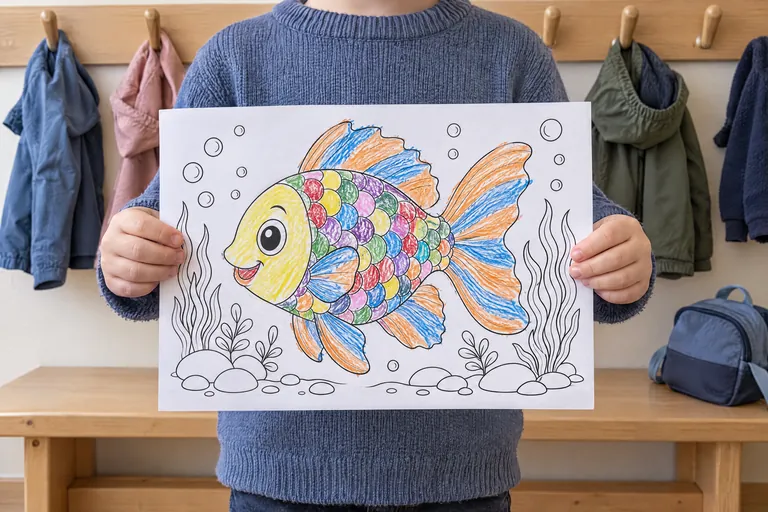
- 4Give color a reason to change. A rainbow, a butterfly, or a garden full of flowers quietly invites more than one shade, because the picture almost asks for it.
- 5Color alongside them. Kids borrow ideas from what they see. Your page, full of different colors, is a gentle example with no lecture attached.
Coloring is meant to be practice, not a performance, and the same is true here. The variety tends to arrive on its own once the favorite has done its job. And when the all-green page does land in front of you, here is what to say about a finished page.
If you would like a few pages that gently pull for more than one color, these are a good place to start:
What else could you color?
Pick a prompt or type your own — opens in a new tab.