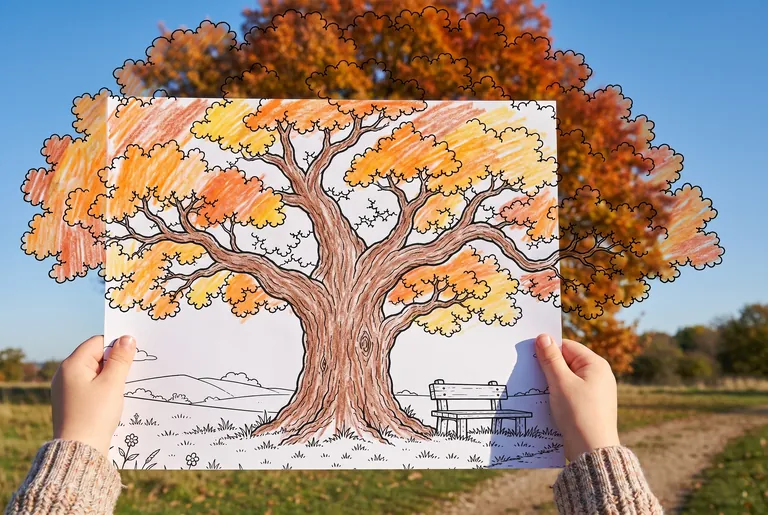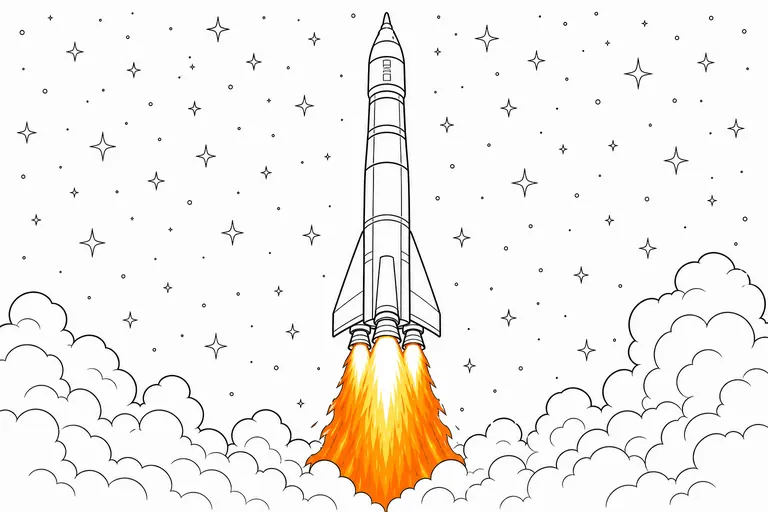
Here is something you cannot do wrong: color outer space. A leaf is green and a stop sign is red, but nobody has ever stood on Neptune to tell you what shade it should be. Out past the Moon, the usual rules fall away, and that makes a space page the best invitation a child can get to stop copying the world and start inventing one.
It helps to know what you are looking at, though, because space is not one thing. It is rocky little worlds, giant striped planets wearing rings, rockets, floating astronauts, and clouds of gas wider than whole solar systems. Here is a tour, one region at a time.
The rocky little worlds
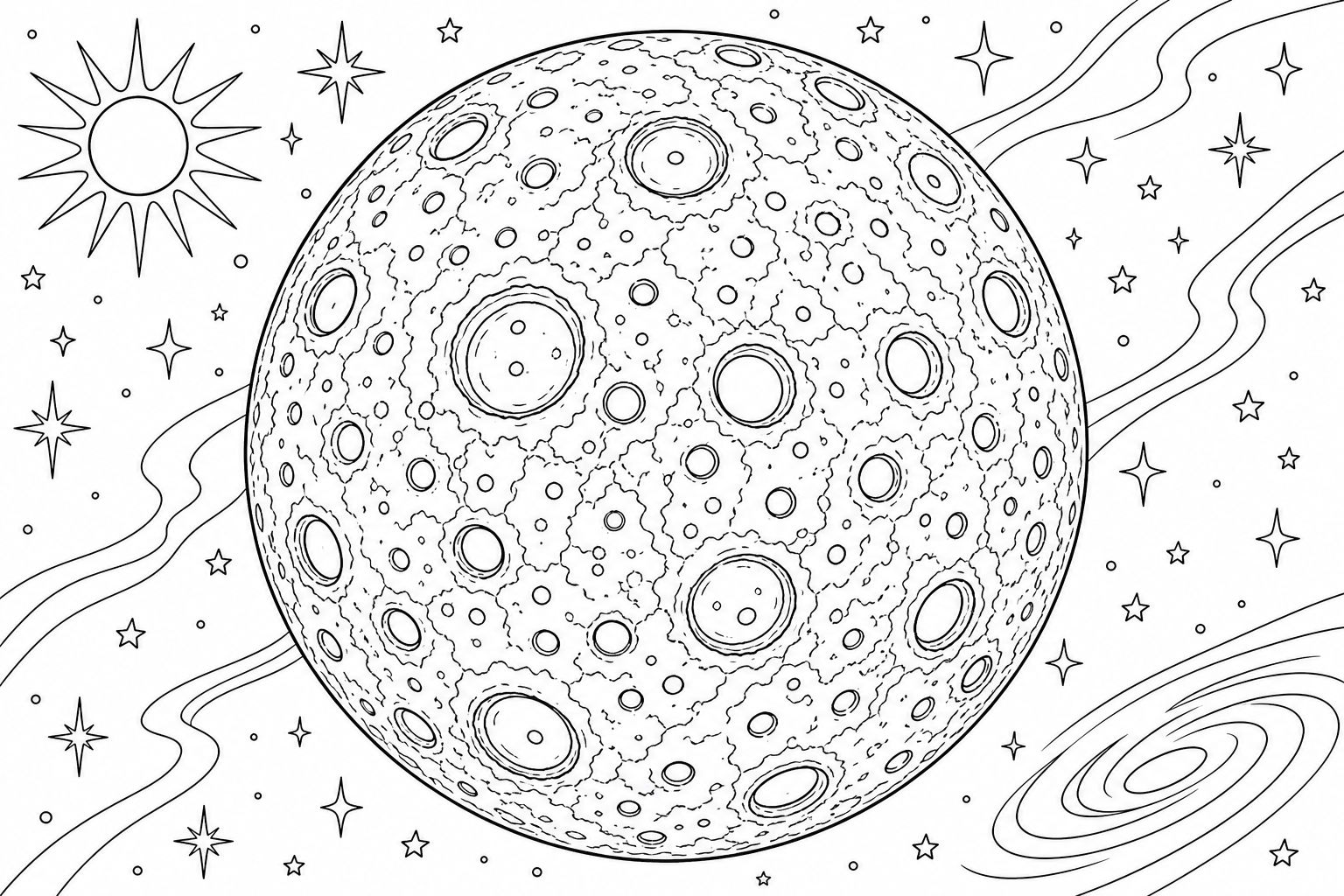
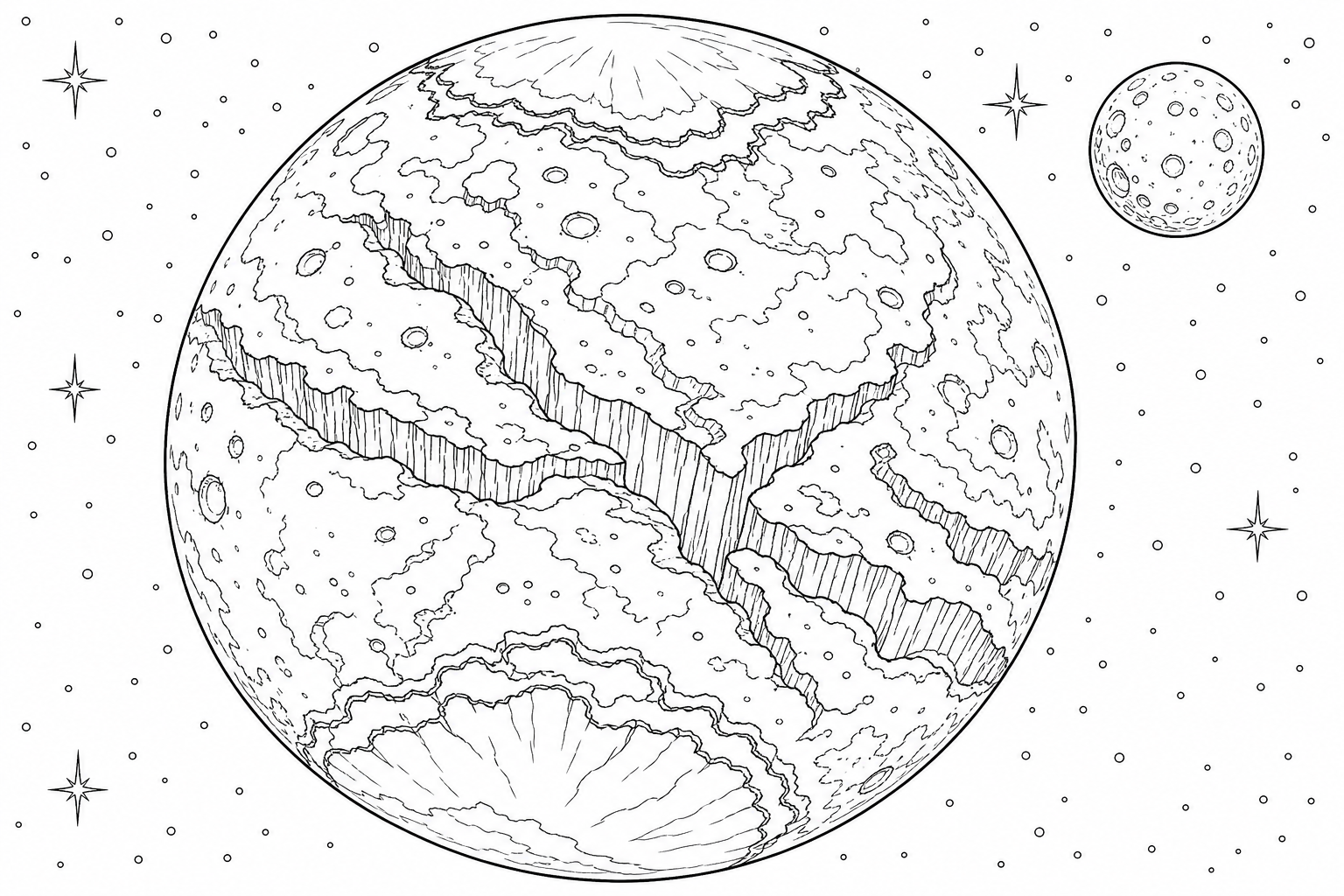
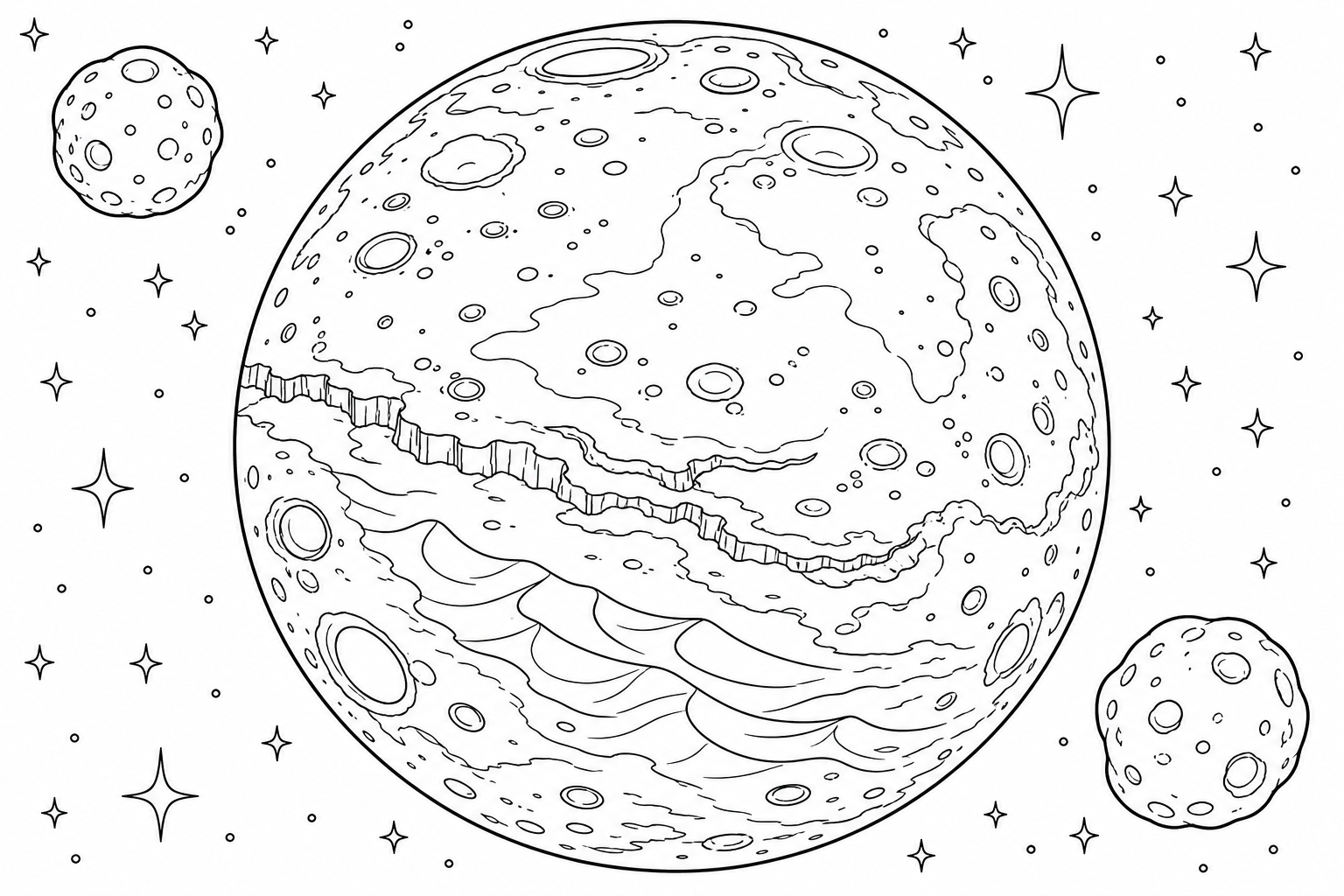
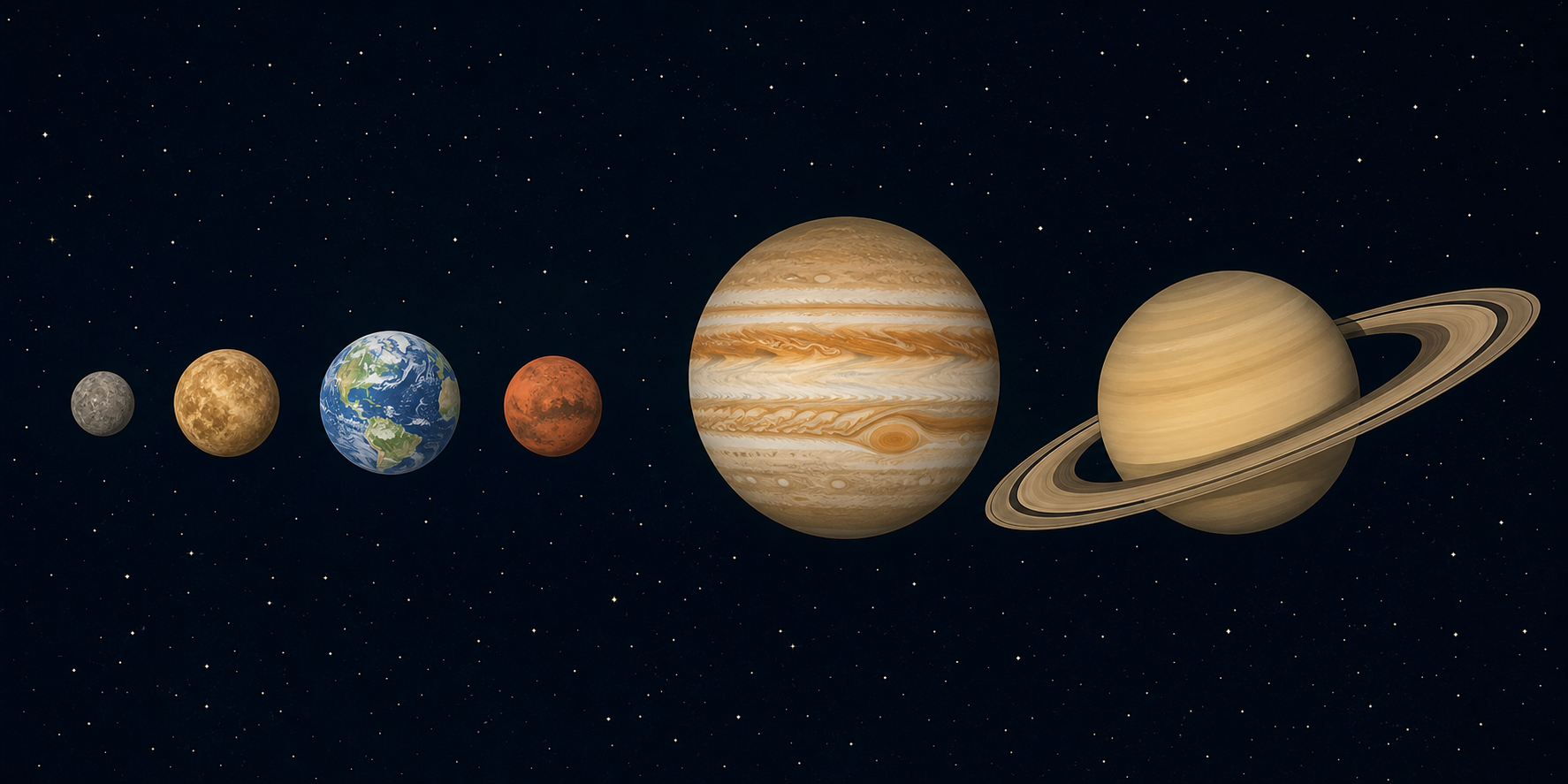
Start close to home, with the small hard planets: Mercury pocked with craters, rust-red Mars, and Earth itself, the one world we can check against a window. These pages reward a careful hand, because a rocky planet is really a map of craters, canyons, ice caps, and coastlines. Earth is the only one whose true colors we know, so let a kid get those blues and greens exactly right, then set them loose on Mars.
The giants and their rings
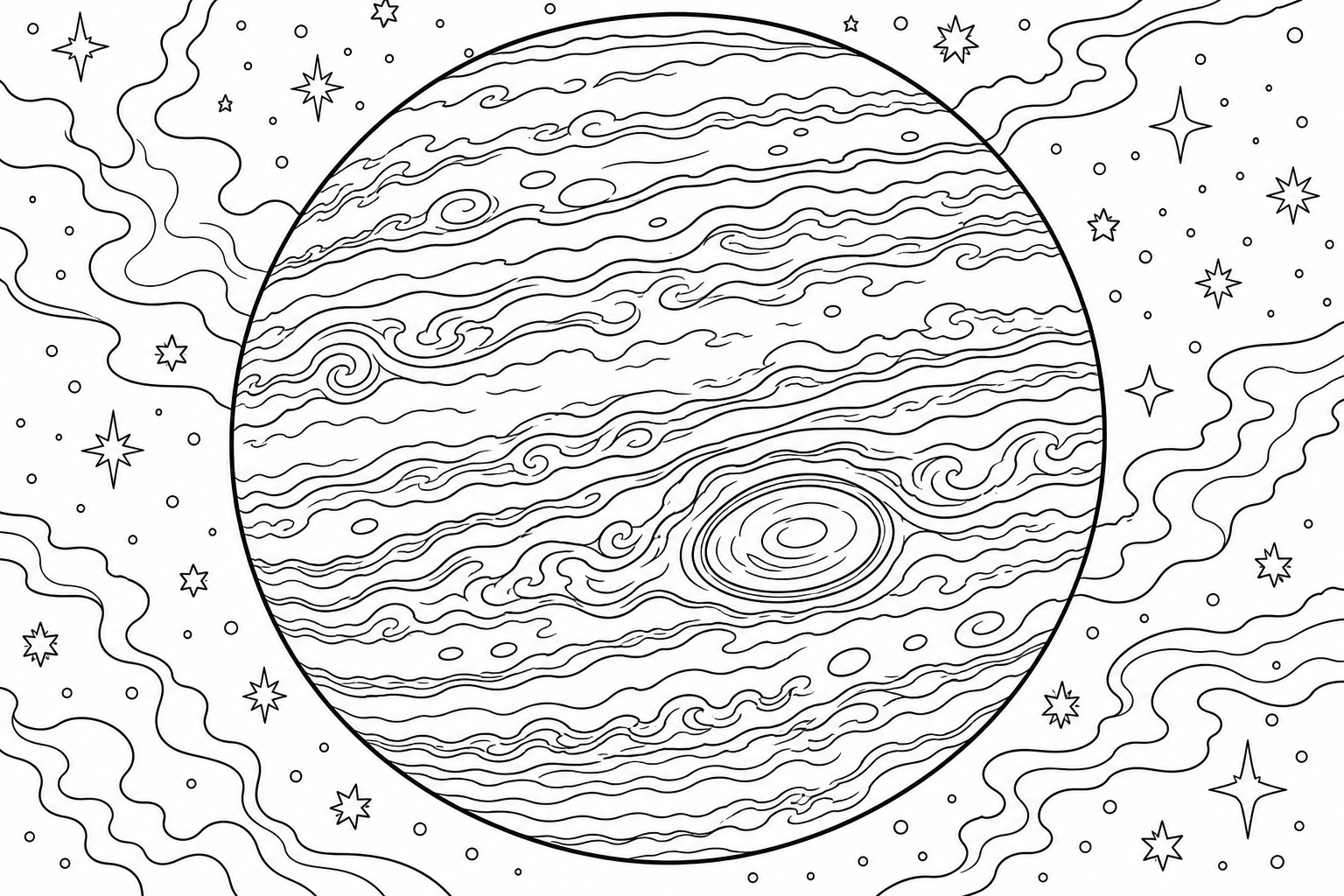
Then go big. Saturn is about nine Earths across and Jupiter about eleven, so wide that more than a thousand Earths would fit inside it. These are the show-offs of the solar system, with Jupiter's cream and rust bands and Saturn's rings lying flat like the brim of a hat. Rings are where color really opens up, since they are made of countless icy chunks catching the light. Stripe them, fade them, make them any color that pleases you.
| World | Size next to Earth | A color to start |
|---|---|---|
| Mars | About half as wide | Rusty red and orange |
| Earth | Our home, the yardstick | Blue seas, green land |
| Saturn | Nine Earths across | Pale gold and bright rings |
| Jupiter | Eleven Earths across | Cream and rust stripes |
Blast off
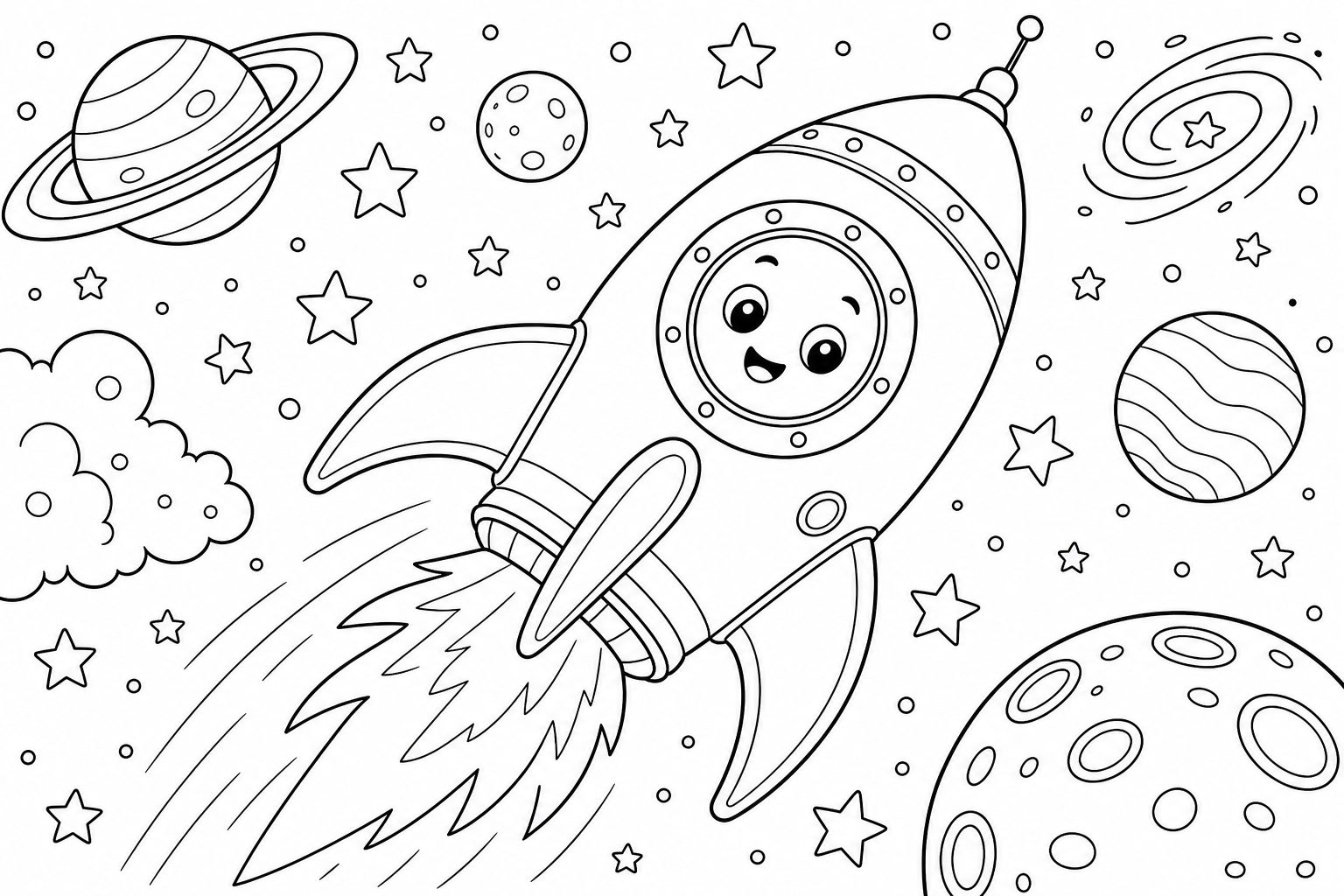
No space page is complete without the machine that gets you there. A rocket is a tall stack of tanks, fins, and a nose cone, and the best part to color is the flame: a roaring tail of orange, yellow, and white shoving the whole thing off the pad. Hand a kid a rocket and they will add windows, stripes, and a name down the side. Let them.



Coloring fun for kids — anywhere.
Free for iOS & Android. No ads, no sign-up, offline-ready.


Coloring fun for kids — anywhere.
Free coloring app for kids. iOS and Android, phones and tablets. No ads, no sign-up, even offline.
Out the airlock
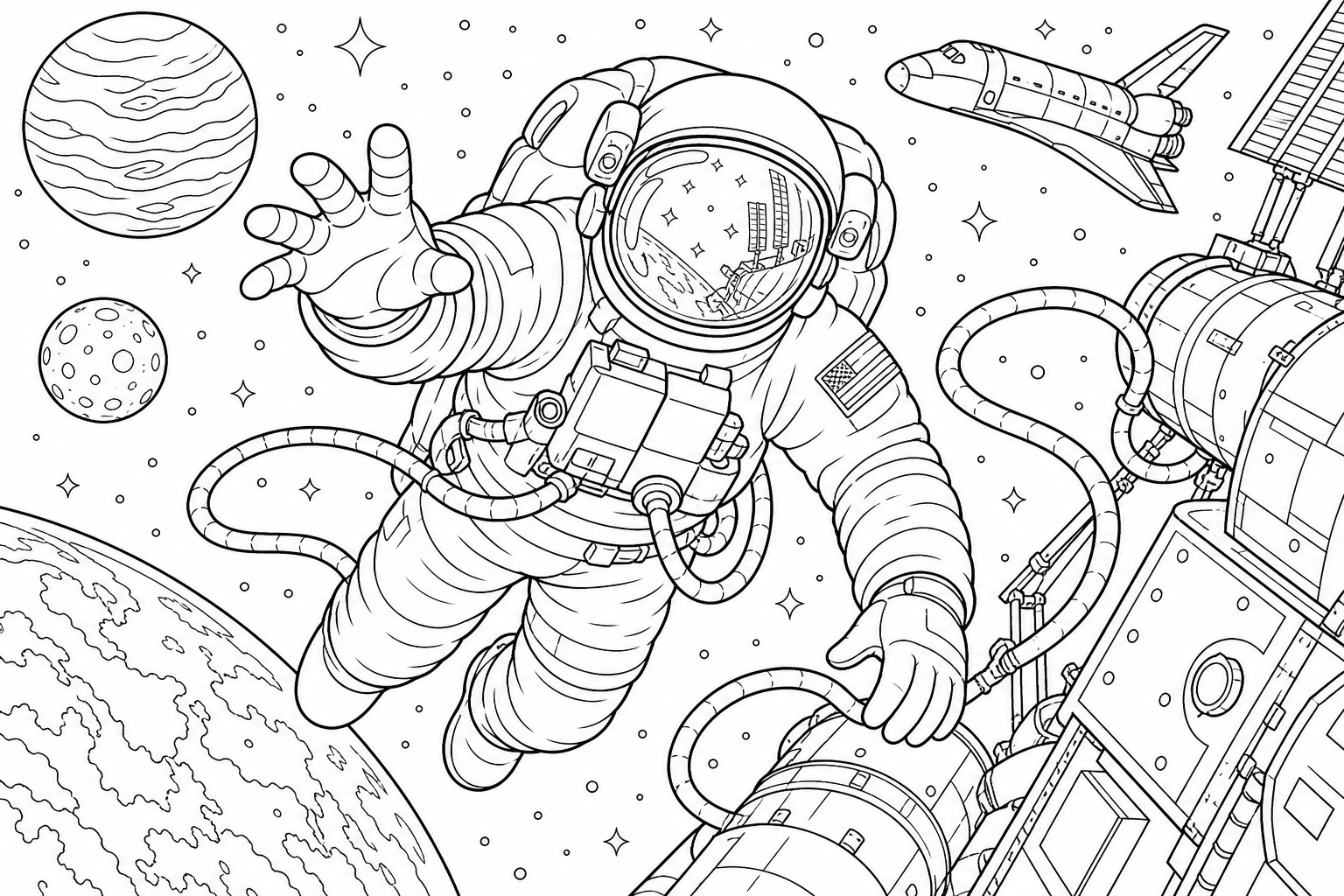
Once you are up there, someone has to float outside. An astronaut on a spacewalk is a bundle of white suit, gold visor, and tethers, drifting against pure black. This is a page about contrast: the bright suit, the dark sky, and the blue curve of Earth turning below. It is also a quiet reminder that a real person, about the size of the kid coloring, once hung in that emptiness on the end of a cord.
The deep sky, where you truly invent
Farthest out are the galaxies and nebulae, the great glowing clouds where new stars are born. This is where the no-wrong-colors idea becomes the whole point. If it is the pinpoint stars you are after, we have a whole page of those, but a nebula is a different animal: a swirl with no fixed shape and no fixed shade. Reach for the colors you never usually get to use, the electric pinks and deep teals, and fill the page edge to edge.
What else could you color?
Pick a prompt or type your own — opens in a new tab.
Print a whole universe
Here is the full set, ready to print. Start anywhere you like: a rocky planet, a ringed giant, a rocket on the pad, or a galaxy with no rules at all. There is no corner of this one you can get wrong.