"Adults should listen and take children seriously." That sentence comes from article 12 of the child-friendly version of the Convention on the Rights of the Child that UNICEF publishes, and it is a good test for every page in this piece.
World Children's Day on 20 November marks the day that convention was adopted, as the United Nations explains. The year was 1989, and the convention has since become the most widely ratified human rights treaty in history. This year the day falls on a Friday.
A treaty sounds like something for lawyers. For a five-year-old it turns small and concrete fast: I have a name. I go to school. I get to play. Someone listens to me. I have a safe home. So here is one ordinary school day, stop by stop, with a right waiting at each stop and a page to color for it.
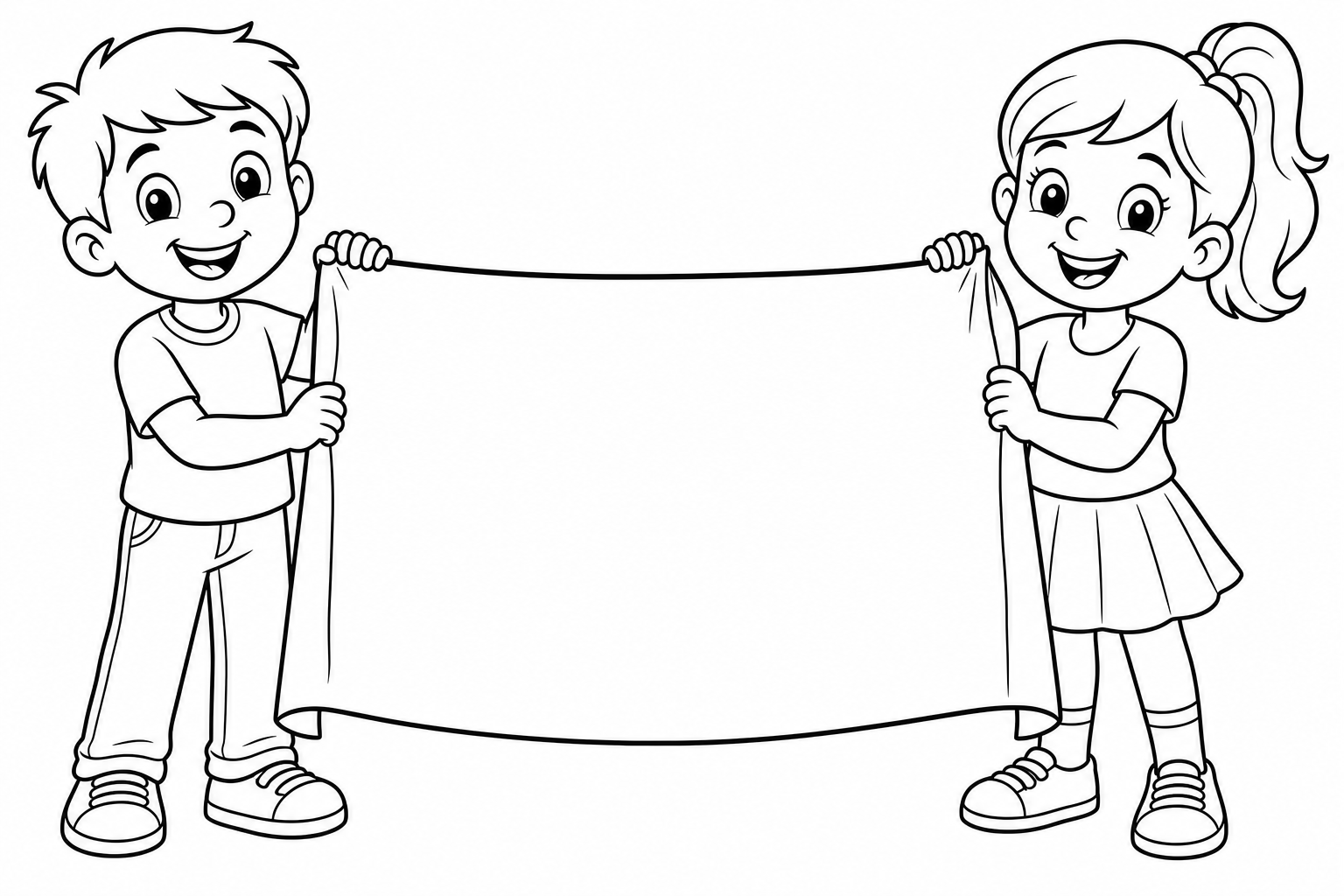
At the classroom door: a name
The day starts at the coat hook with your child's name above it. Article 7 says children must be registered when they are born and given a name which is officially recognized. A name is the first right a child already owns without knowing it.
This page leaves the banner empty on purpose. Your child writes their own name across it, as big as they like, then colors the two kids holding it up. If your child cannot write yet, you write the letters lightly in pencil and they trace over them.
At the desk: school
Article 28 says that every child has the right to an education, and that primary education should be free. For a child in the first school years this is the least surprising right of all, which is exactly why it is worth saying out loud.
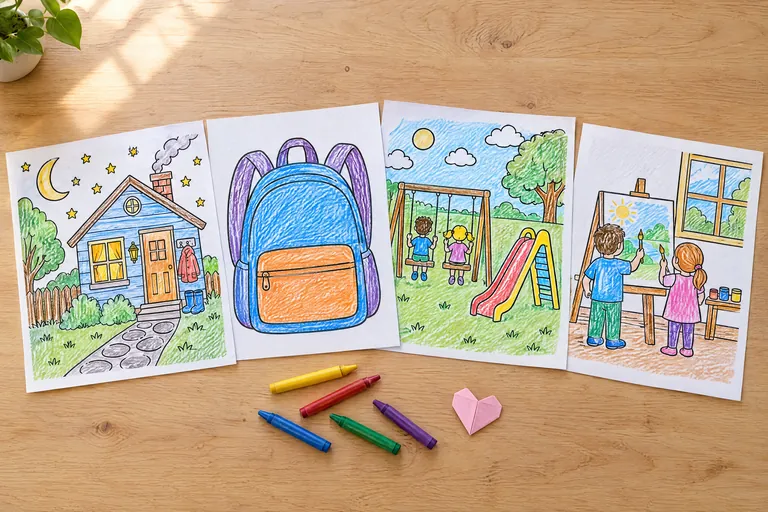
The three pages here are the school morning in objects: a backpack with every pocket zipped, a desk with an open book and a row of pencils, and a line of cubbies where each bag hangs under its own empty label. That last one links back to the name stop, because your child can write classmates' names on the labels.
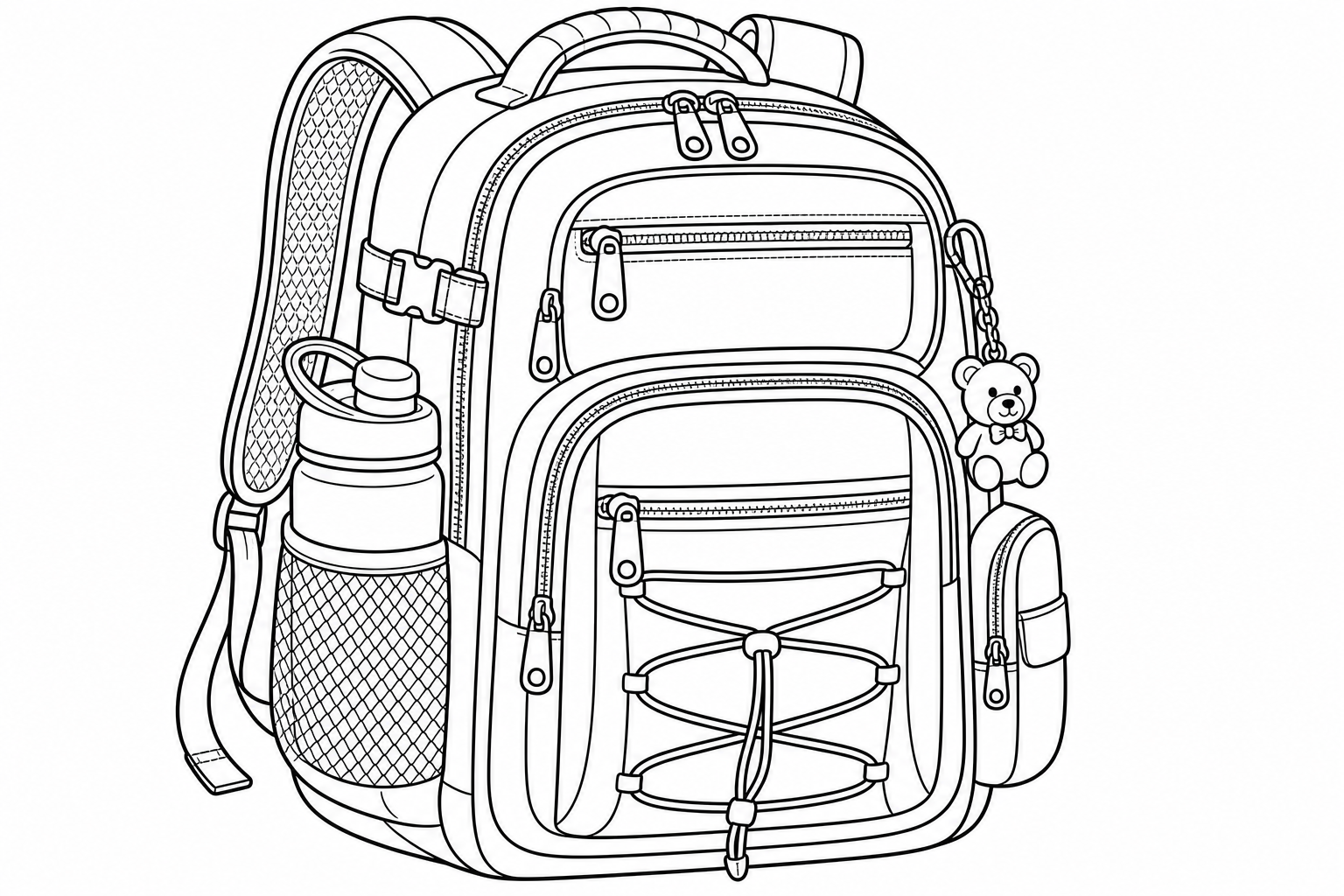
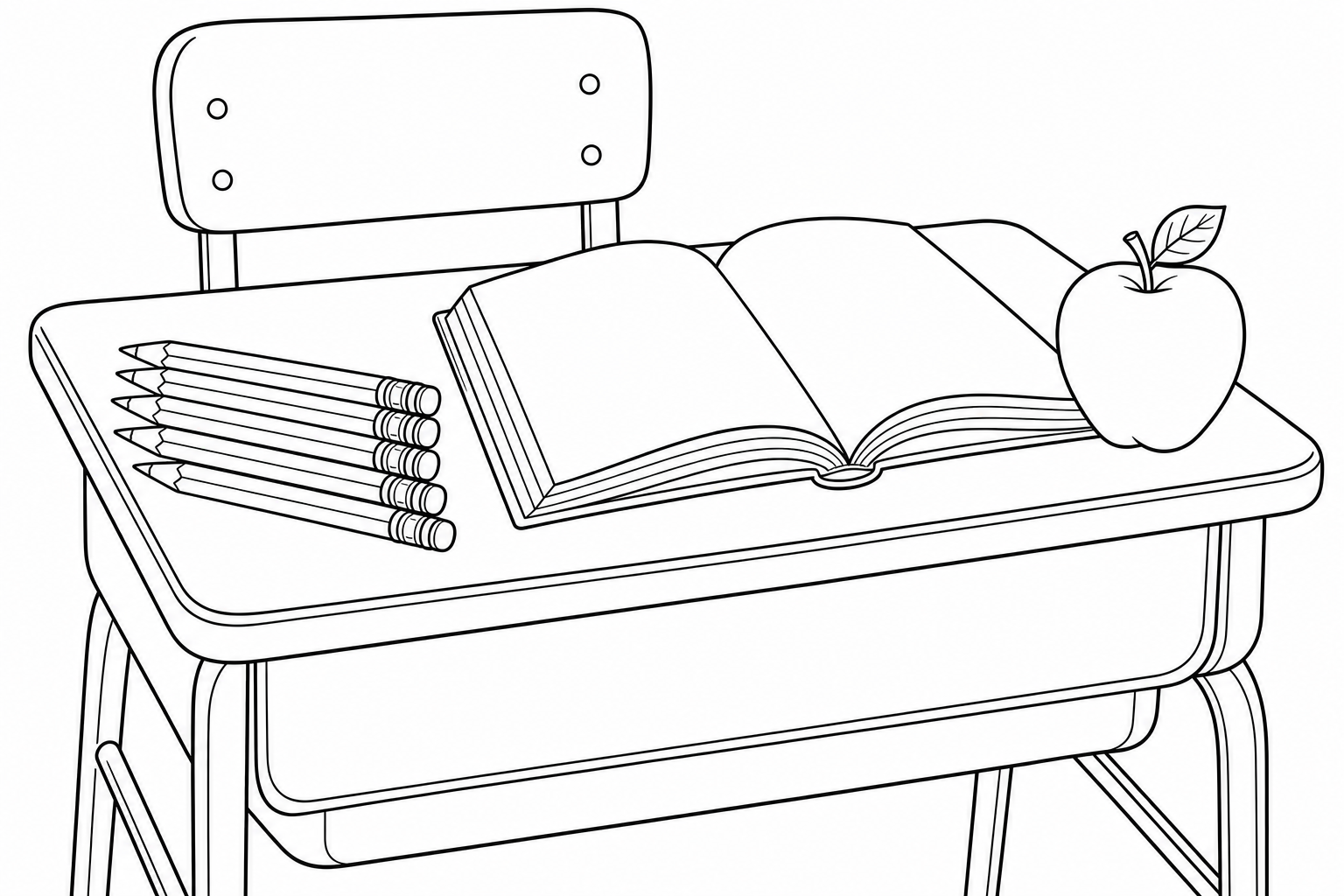

Ask while they color: what did you learn today that you did not know yesterday? Small answers count.



Coloring fun for kids — anywhere.
Free for iOS & Android. No ads, no sign-up, offline-ready.


Coloring fun for kids — anywhere.
Free coloring app for kids. iOS and Android, phones and tablets. No ads, no sign-up, even offline.
In the yard and at the easel: play
Article 31 is the one children like best when they hear it. Every child has the right to rest, relax, play and to take part in cultural and creative activities. Play sits in the convention as a right of its own, a few articles after school.
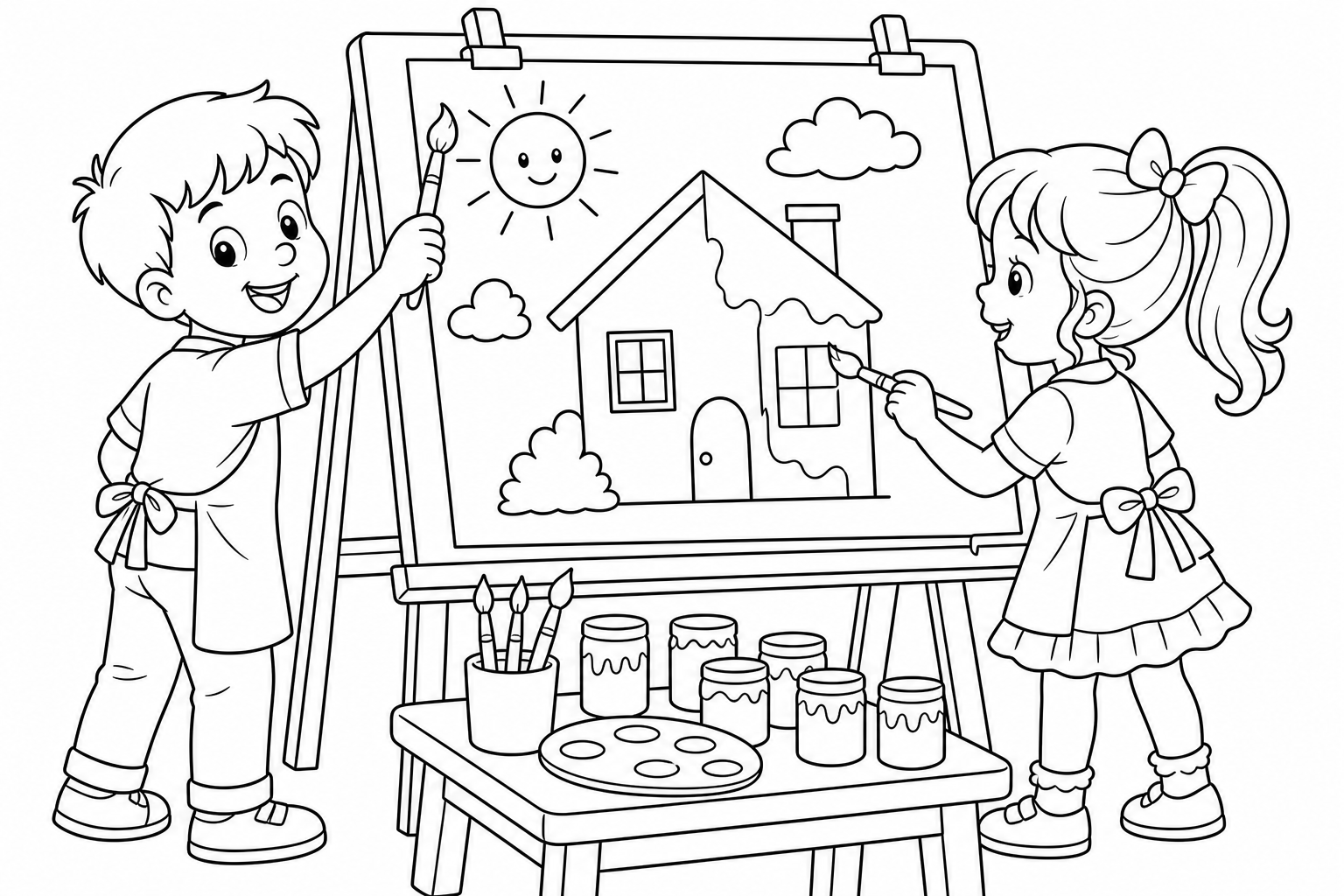
The first page is the playground in November: bare trees, leaves on the ground, one child on the slide, one on the swing and one waiting his turn at the ladder. The second is two children painting a house at an easel. Making things counts too, and the convention says so.
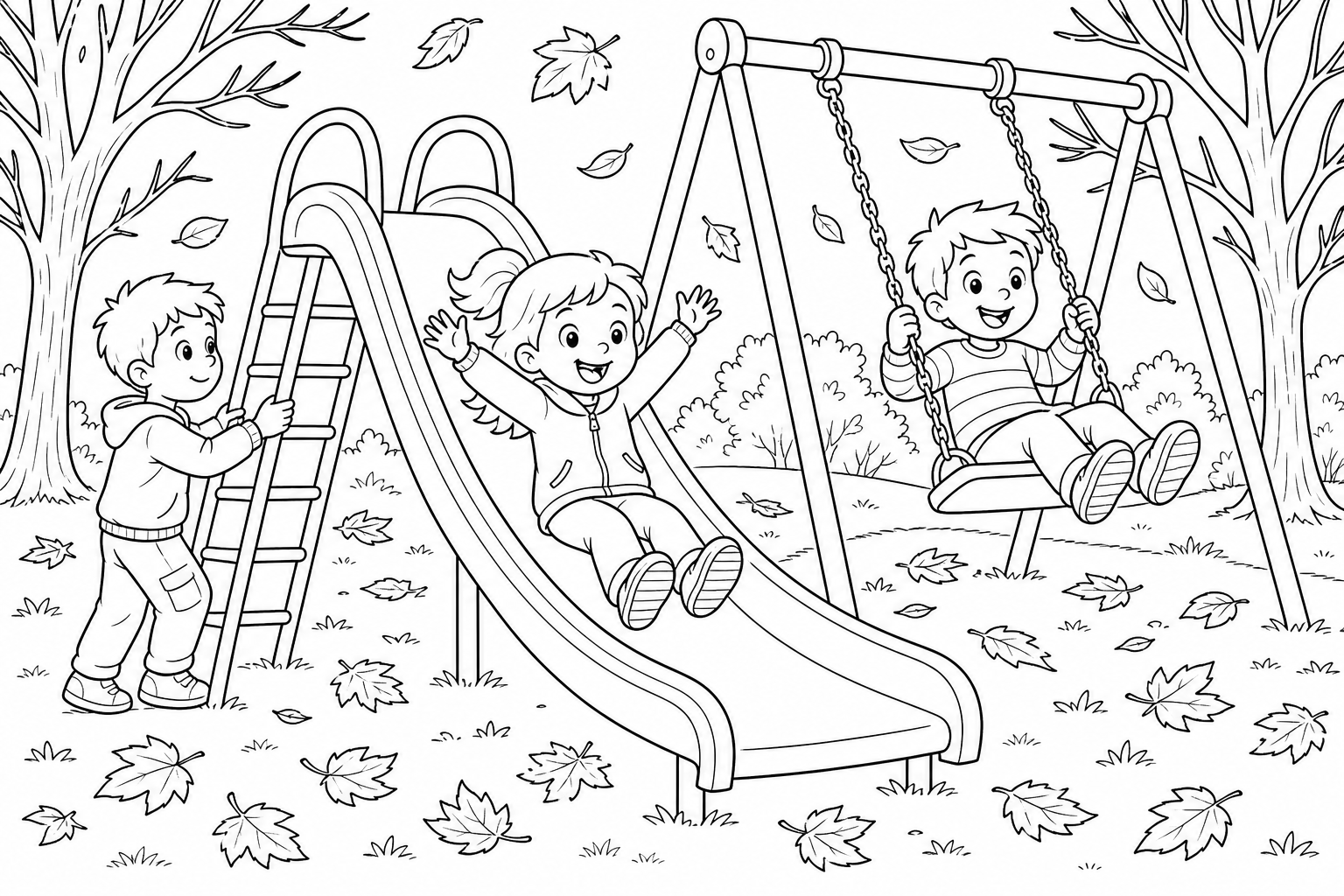
Let your child pick which one to start with. Choosing is part of playing.
At the kitchen counter: being listened to
Article 12 is where the opening line comes from: children have the right to give their opinions freely on issues that affect them, and adults should listen. In a family that rarely means a vote. It means kneeling down when a child comes in with a drawing and wants to tell you about it.
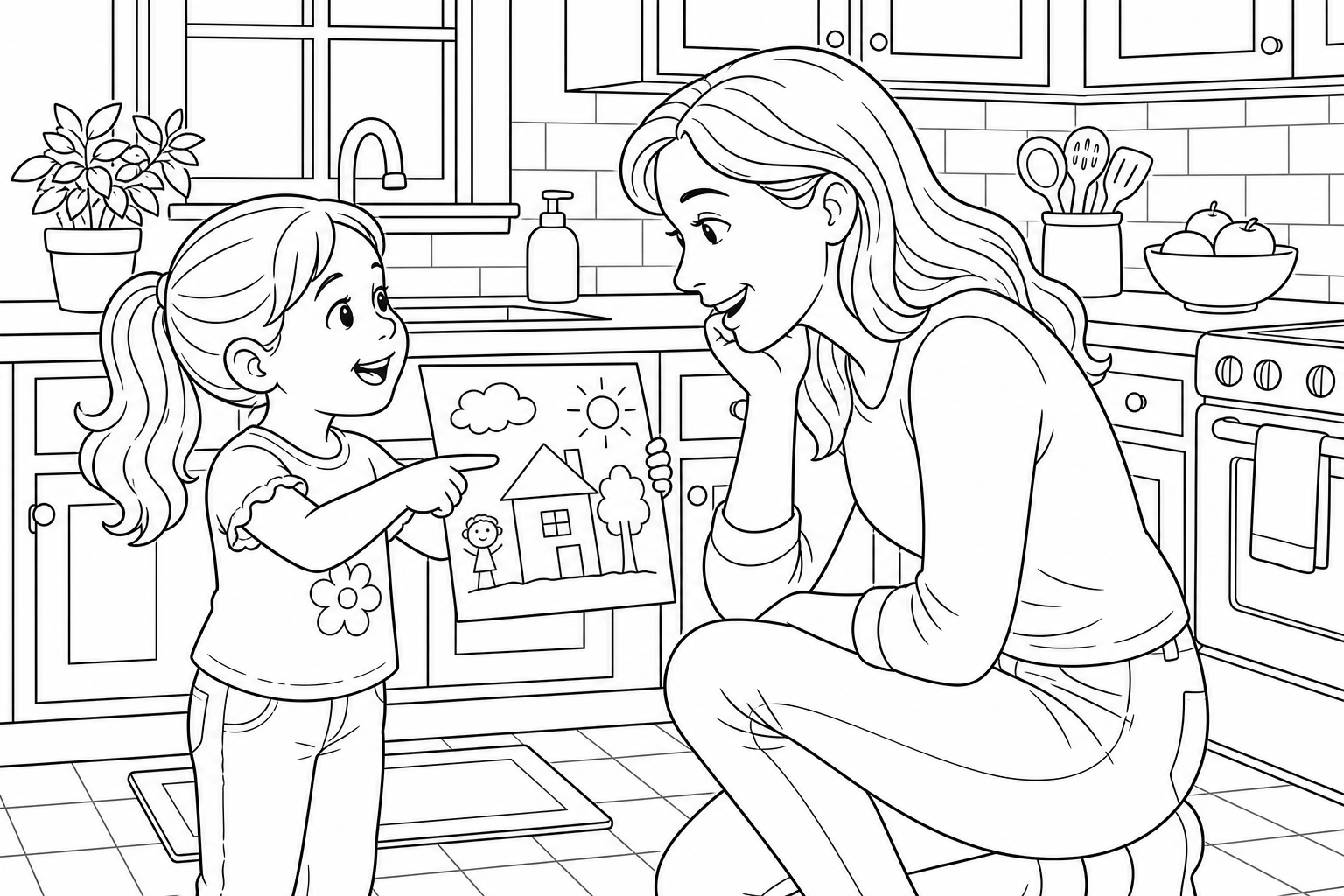
This is the right your child can hand straight back to you. When the page is finished, it is your turn to sit down and hear the whole story of it. If you are unsure what to say, our piece on what to say when your child shows you a finished page has a few lines that work better than a quick "beautiful".
Back home under the lit window: a safe place to live
Article 27 gives children the right to food, clothing and a safe place to live. In November that right looks like a small house with one warm window, a coat on the hook, boots by the door and tomorrow's breakfast already waiting on the table.
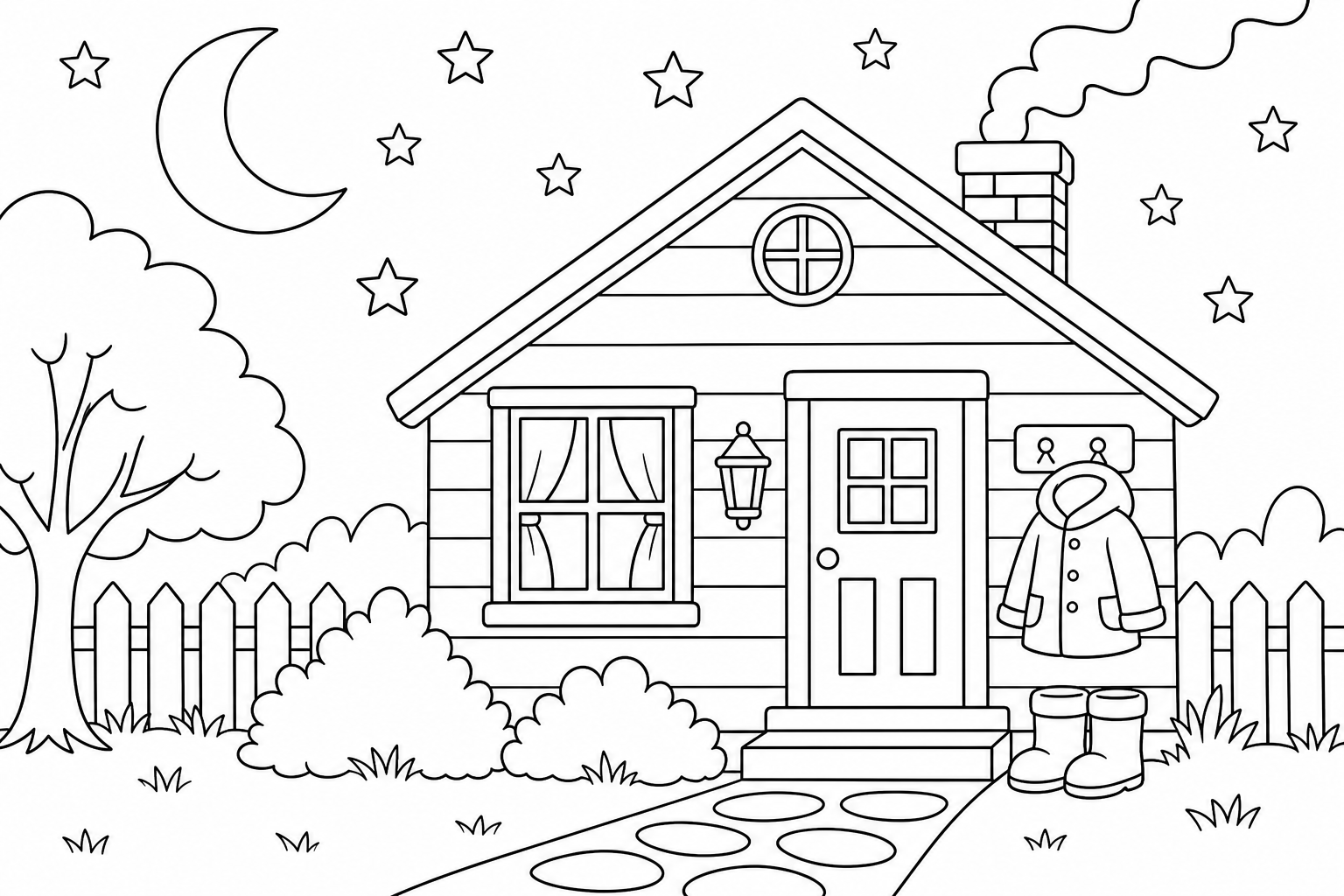

Let your child color the window whatever color home is for them. Yellow is only one answer.
What else could you color?
Pick a prompt or type your own — opens in a new tab.
On 20 November in class: one right per child
In a group, the pages work best shared out. Each child gets one right and one page, colors it, and then tells the class in a single sentence what it shows: "I have a name." "I can play." "Someone listens to me." With five pages, a class splits into five small groups, and the finished sheets make a wall display that explains itself. More ideas for coloring with a clear job in school are in our piece on coloring in the classroom.
At home it works the other way round: one child, five pages, one each evening in the week of 20 November.