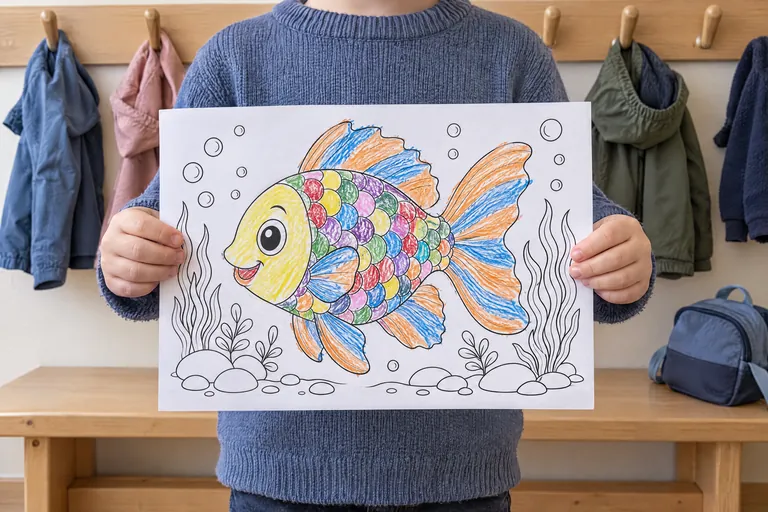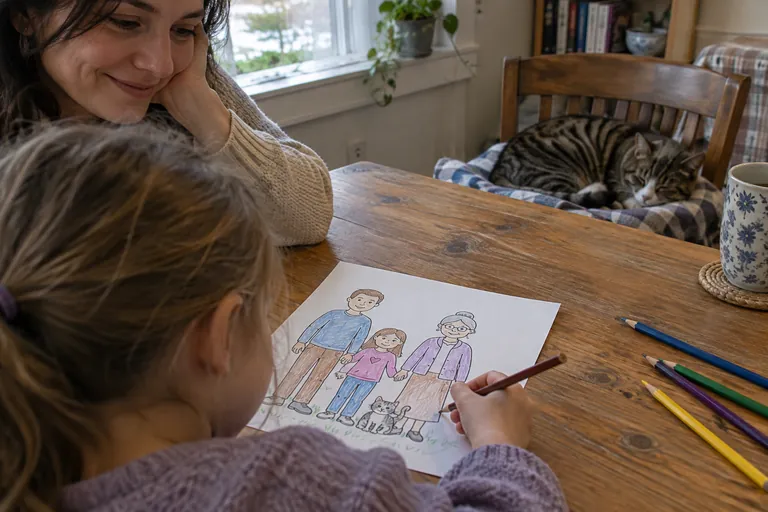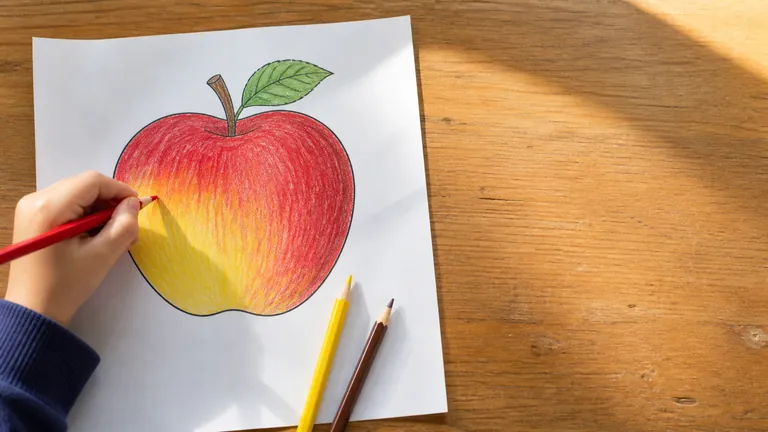
Around five or six, a lot of children suddenly want their coloring to look "right," and for most of them that means keeping the color inside the lines. It is a real skill that depends on hand control and attention arriving together, not a sign of how hard a child is trying. This guide walks through how to help, one small step at a time, with the adjustments that make the biggest difference. If your child is younger and still scribbling with happy abandon, that is exactly where they should be, and the steps below will keep until they are ready.
How to tell your child is ready
A few quiet signs say more than a birthday does. Your child holds a crayon between finger and thumb rather than in a full fist, can slow a movement down on purpose when you ask, and has started to care how the finished picture looks. Those three together mean the wiring for careful coloring is in place. If your child is still gripping with a whole fist and covering the page in big loops, that is healthy early mark-making, and pushing for precision now tends to take the fun out of it. Our coloring-by-age guide maps out when each stage usually arrives, and the toddler stage explains why staying in the lines is the wrong goal before about four.
What you'll need
You do not need much, but a few choices make this far easier:
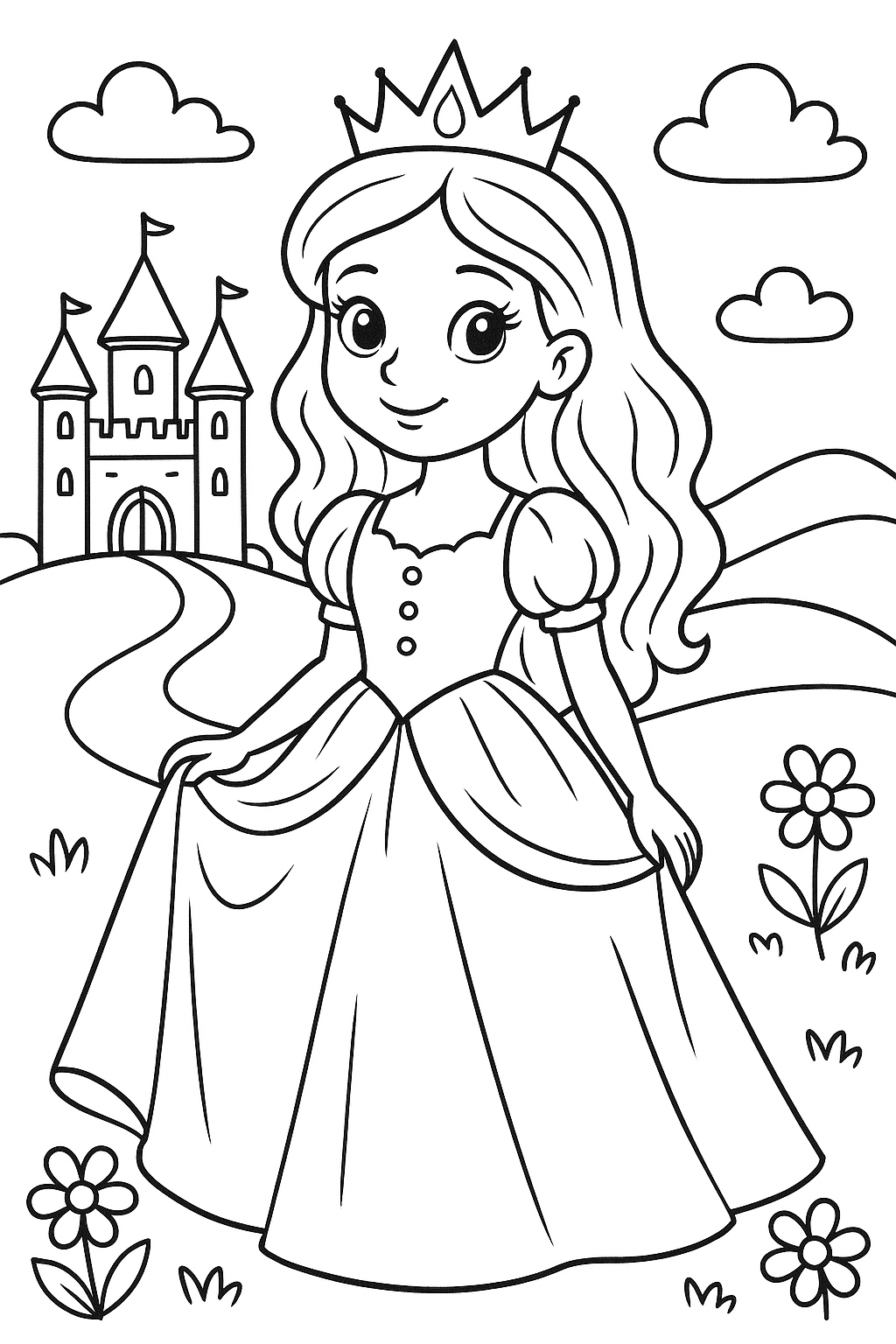
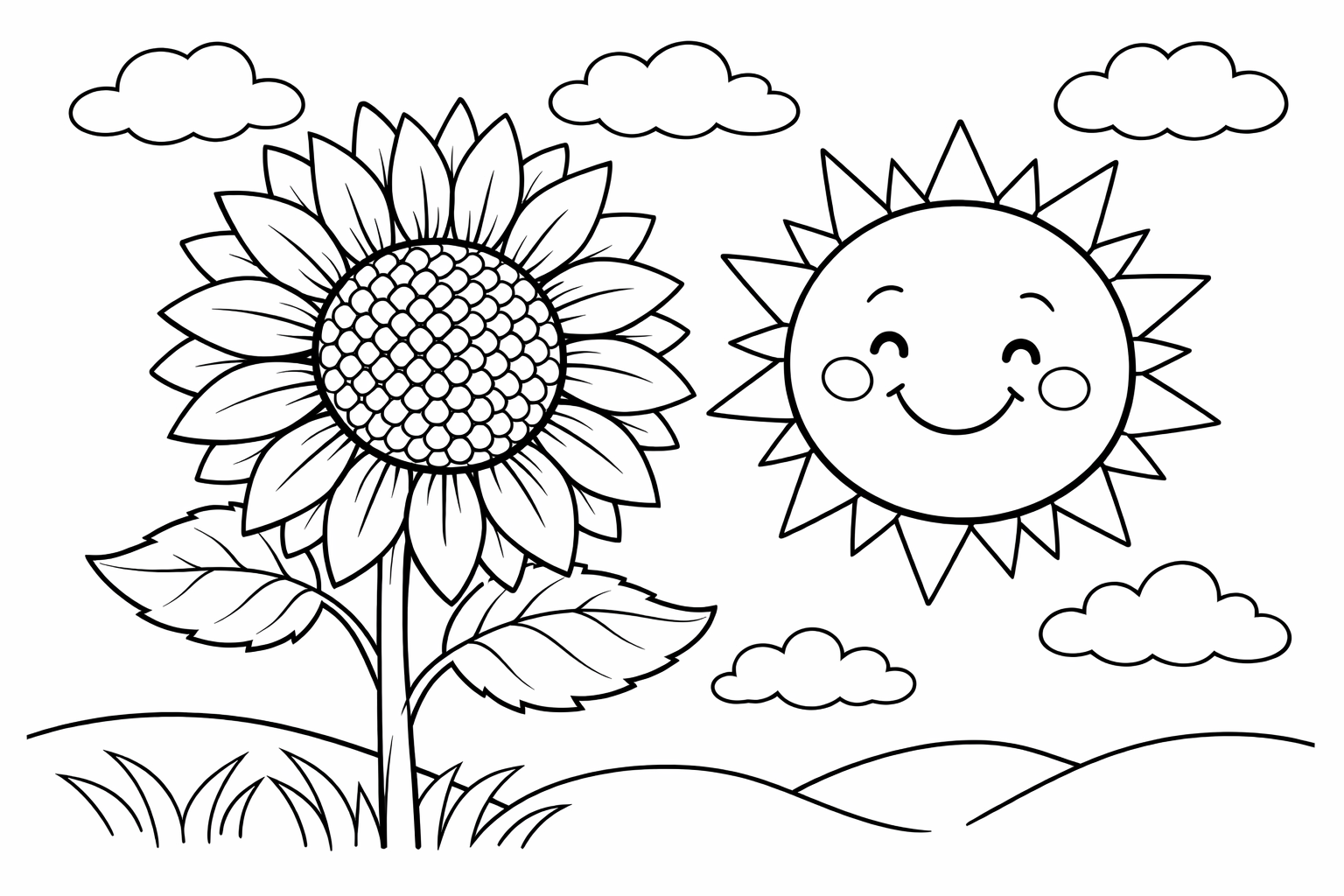
- Pages with thick, bold outlines and large open areas. Save the fine, detailed scenes for later.
- A few crayons or colored pencils, including one or two short, broken ones (more on why below).
- A flat, steady surface and a way to keep the paper from sliding around.
- A relaxed ten minutes, not a tired, hungry, end-of-the-day ten minutes.
The steps
- 1Start with a page of big, bold shapes. Thick outlines and large areas give a wide margin for error, so a stroke that drifts still lands inside the line. A single balloon beats a busy garden scene.
- 2Anchor the paper. A page that slides around defeats careful coloring before it starts. Tape one corner down, or remind your child to rest their free hand flat on the sheet.
- 3Color the outline first. Before filling anything in, have your child draw slowly around the inside edge of a shape, laying down a "fence" of color just inside the line. Once that border is set, the middle is easy to fill without going over.
- 4Use small strokes, not big sweeps. Little circular or short back-and-forth strokes stay under control. Long, fast sweeps are what shoot past the edge.
- 5Slow down at corners and curves. That is where most lines get crossed. A calm "pause at the turns" works far better than a tense "be careful."
- 6Finish one shape before moving to the next. Completing a single area keeps the hand and the eye working in the same place, which is easier than jumping around the page.




Coloring fun for kids — anywhere.
Free for iOS & Android. No ads, no sign-up, offline-ready.


Coloring fun for kids — anywhere.
Free coloring app for kids. iOS and Android, phones and tablets. No ads, no sign-up, even offline.
Common mistakes, and easy fixes
For a child who needs an extra cue, occupational therapists sometimes trace a shape's edge with a thin line of school glue and let it dry, leaving a raised ridge the crayon can bump against. It turns the line into something the hand can feel, not just see.
When not to push it
If careful coloring turns into a contest of wills, stop. Control arrives on its own schedule, and the surest way to slow it down is to make coloring feel like a test. Some children are coloring neatly at four, others not until seven, and both are completely ordinary. Much of the good that coloring does for focus and fine motor skills happens whether or not a single line is crossed, so let free, messy coloring keep its place right alongside the careful kind.
When your child does want to practice, big simple shapes are the friendliest place to start. A page of simple clouds or a single bold star gives a young hand plenty of room to succeed. Search a subject they already love and print a few:
What else could you color?
Pick a prompt or type your own — opens in a new tab.
Pages to practice on
These are about as forgiving as outlines get, which makes them a good first target: