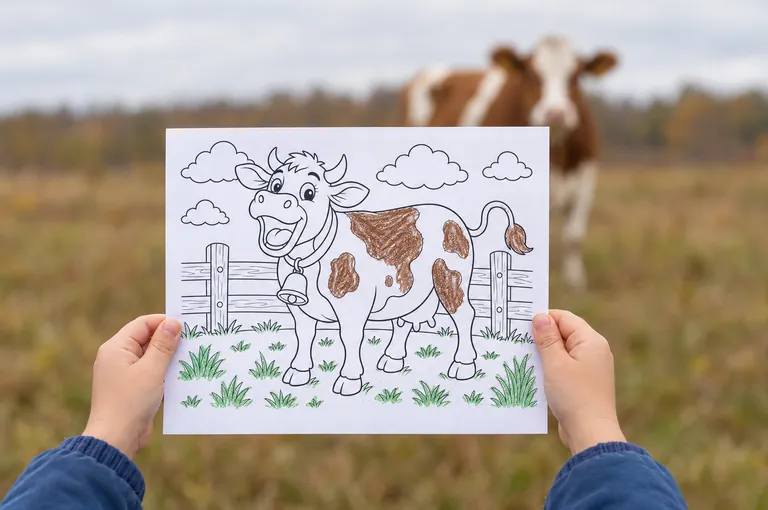
"What does the cow say?"
"Mooooo."
"And the rooster?"
"Moo."
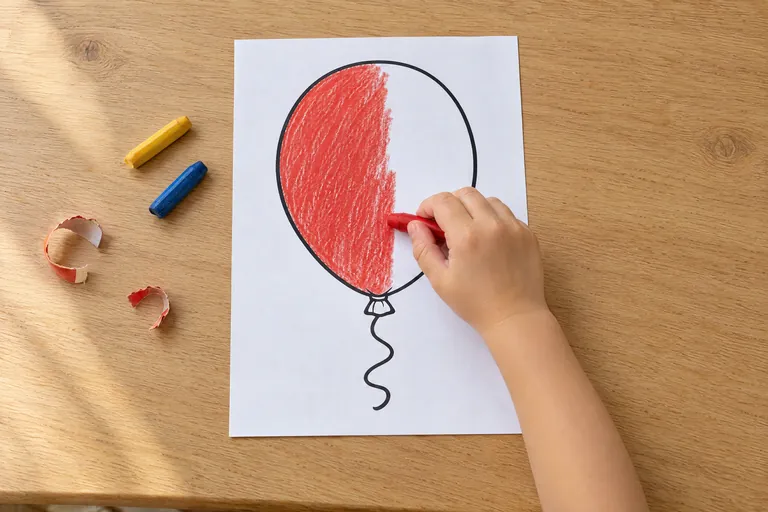
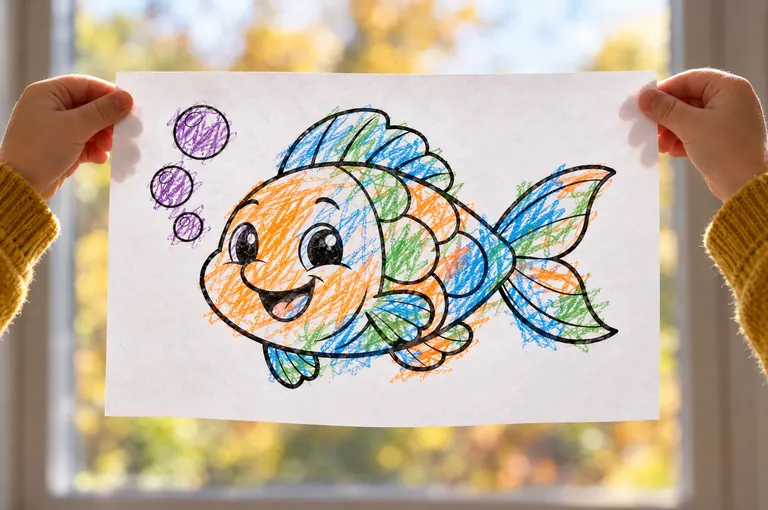
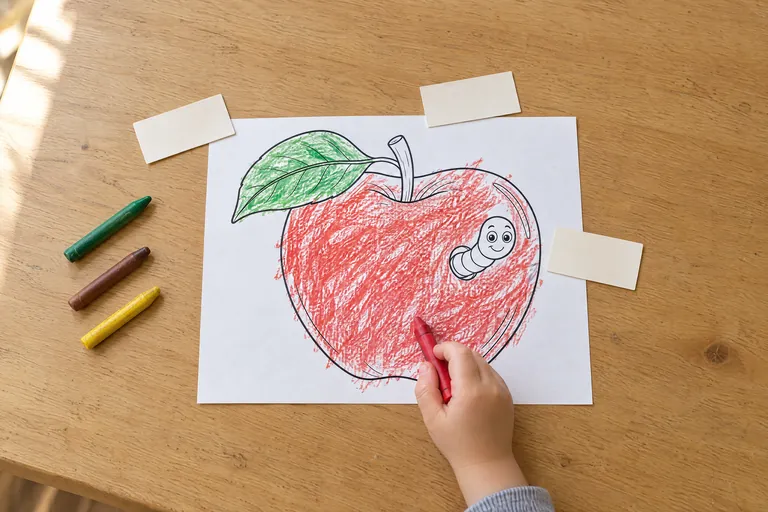
If that is your kitchen table right now, all is well. Your toddler is giving every animal the sound their mouth can already make. These farm animal coloring pages are sorted in that order: from the sound most children manage first to the one that usually comes last. Print them in order, and each page waits for the day its sound shows up.
Moo comes first, because it only needs the lips
Close your lips, hum, open them. That is the whole cow. The sounds made with both lips, m, p and b, are among the first a child says clearly. A speech therapy chart from the NHS lists m, p and w as usual between two years and two and a half (Kent Community Health NHS Foundation Trust). That is why the cow wins so early, and why every animal on the farm says moo for a while.
So the cow goes on top of the pile. One cow is mid-moo with her mouth wide open, the other is a mother licking her calf in the straw, a quieter page for the end of the day.
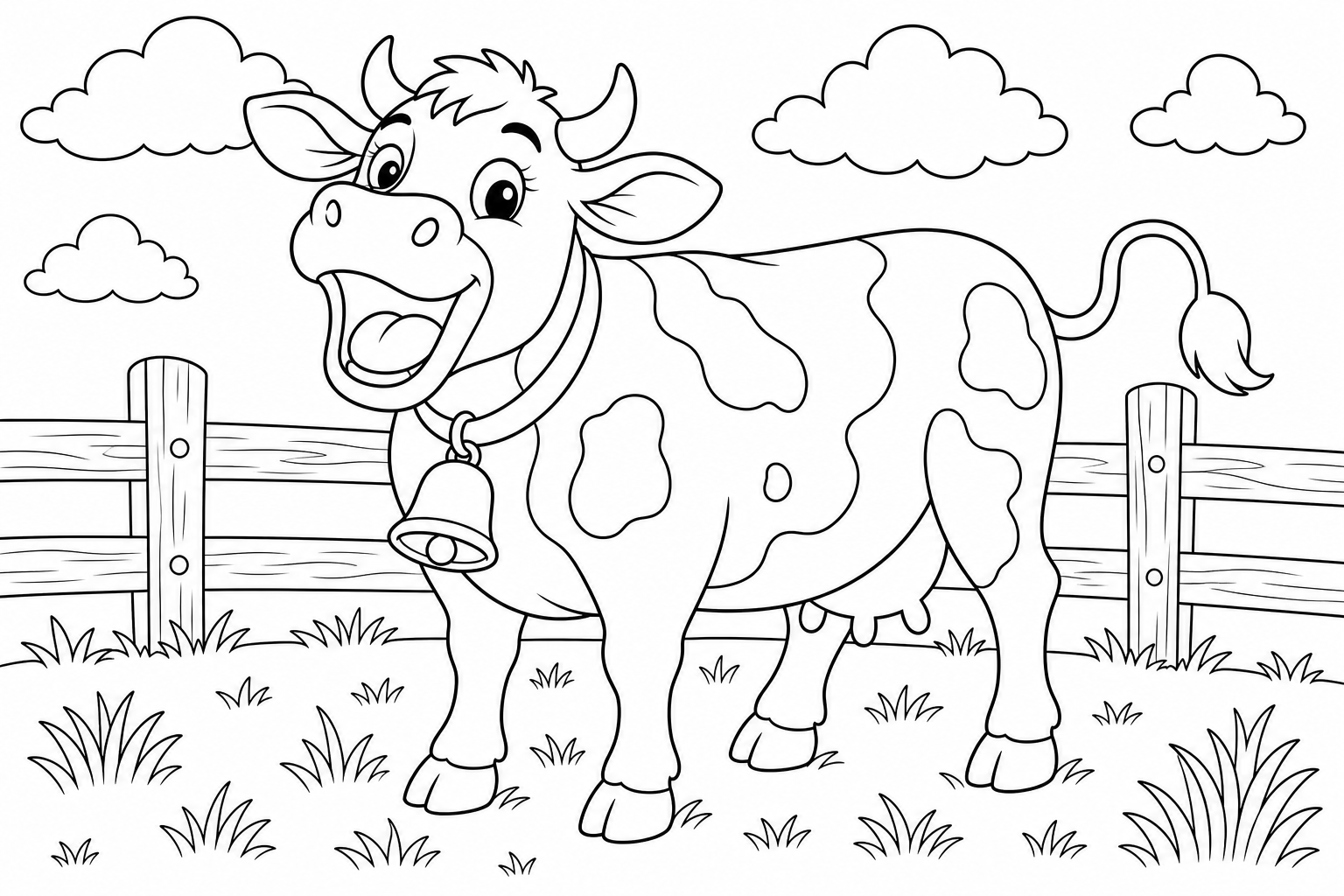
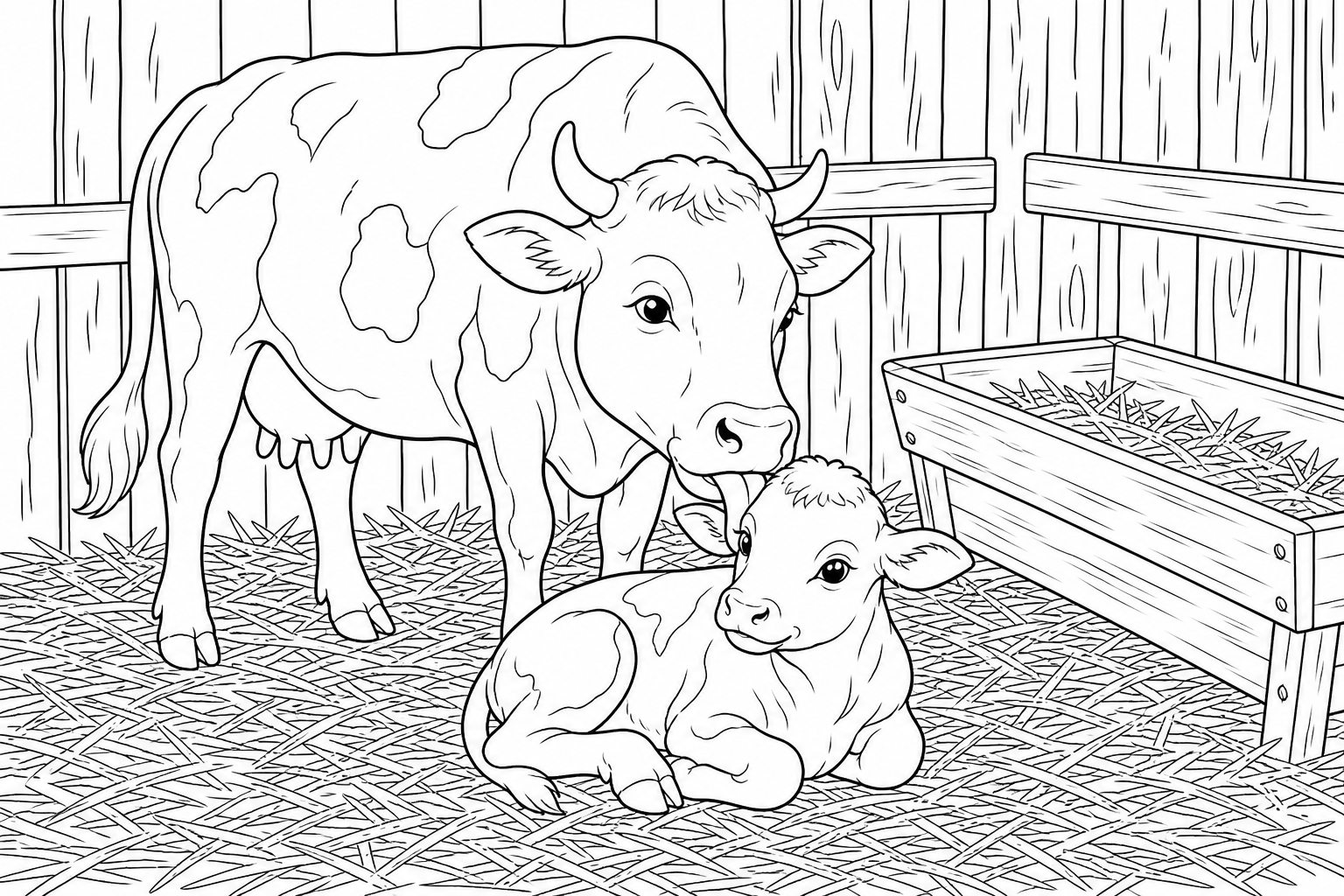
Let your child make the sound while coloring the spots. Big spots, big moos.
Baa is the next lip sound
The b of baa is made with the lips too, and the same chart has it in place by about two and a half. Many toddlers say "baa" before they can say the name of the animal that makes it, and that is fine. The sound is the word for now.
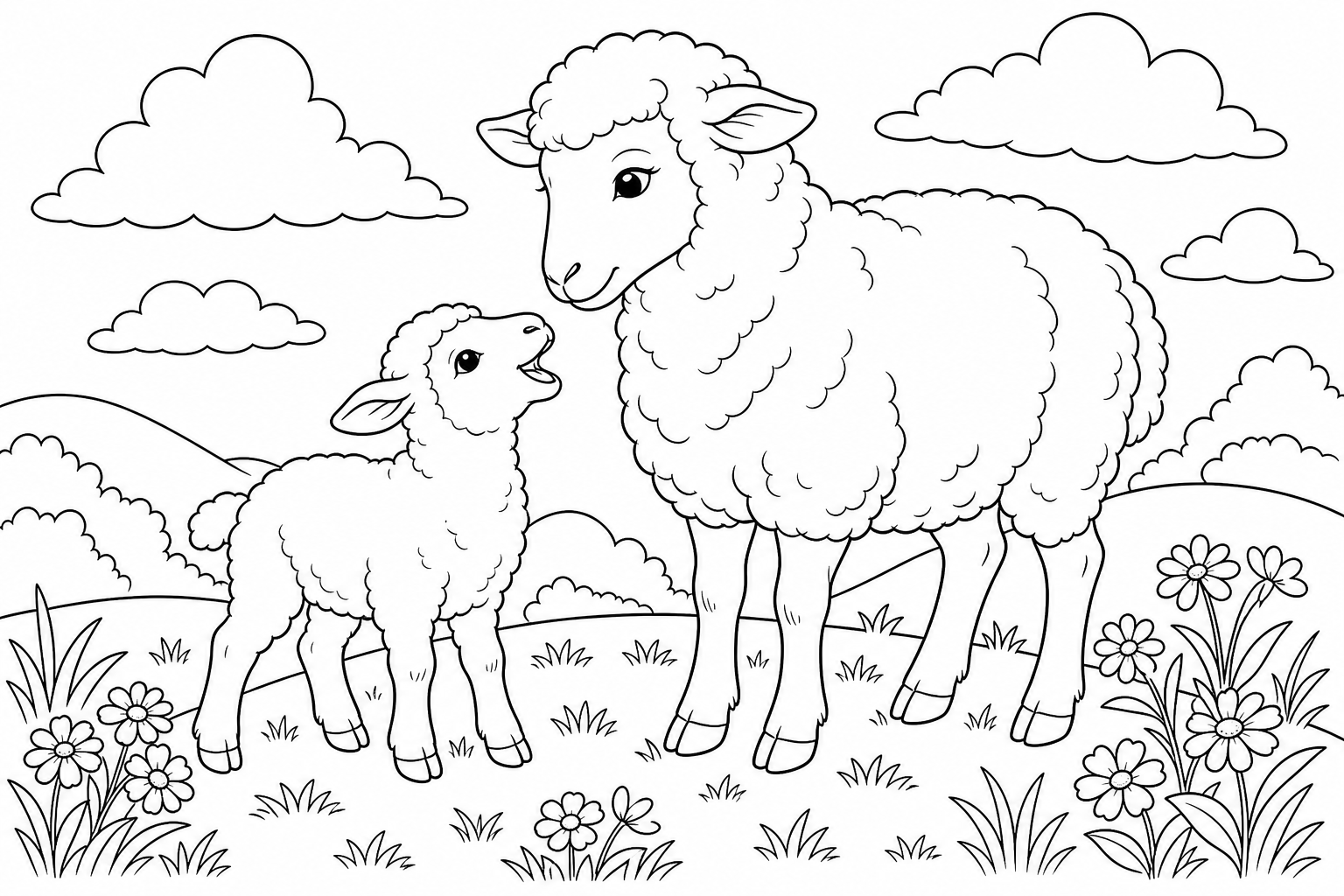
The lamb on this page has its mouth open, looking up at its mother. Ask your child which one is saying baa. There is no wrong answer: some children decide the big sheep is talking, some decide it is the little one, and some make both of them talk at once.
Quack and cluck need the back of the tongue
Now it gets harder. The k at the start of "quack" and "cluck" is made far back in the mouth, where a small child cannot see or feel much. On the same NHS chart, k and g appear in the band from three years. Before that, many children say "tack tack" for the duck, or skip the duck and quack with a vowel. Both are normal at two.
This is the busiest pair of birds on the farm, so this section gets three pages: a mother duck with her ducklings on the pond, three hens skipping rope, and a hen sitting on her eggs with two chicks peeking out.

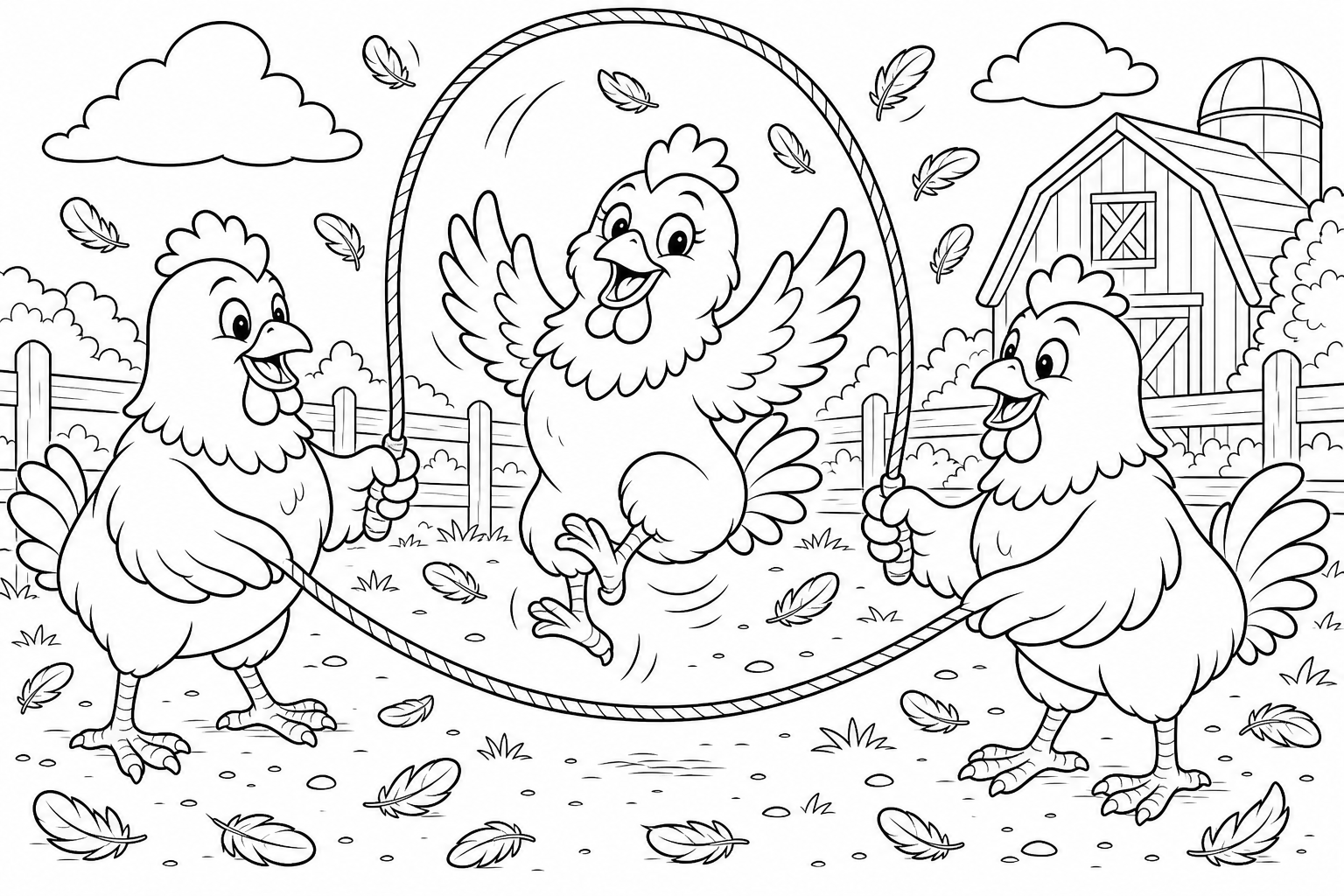
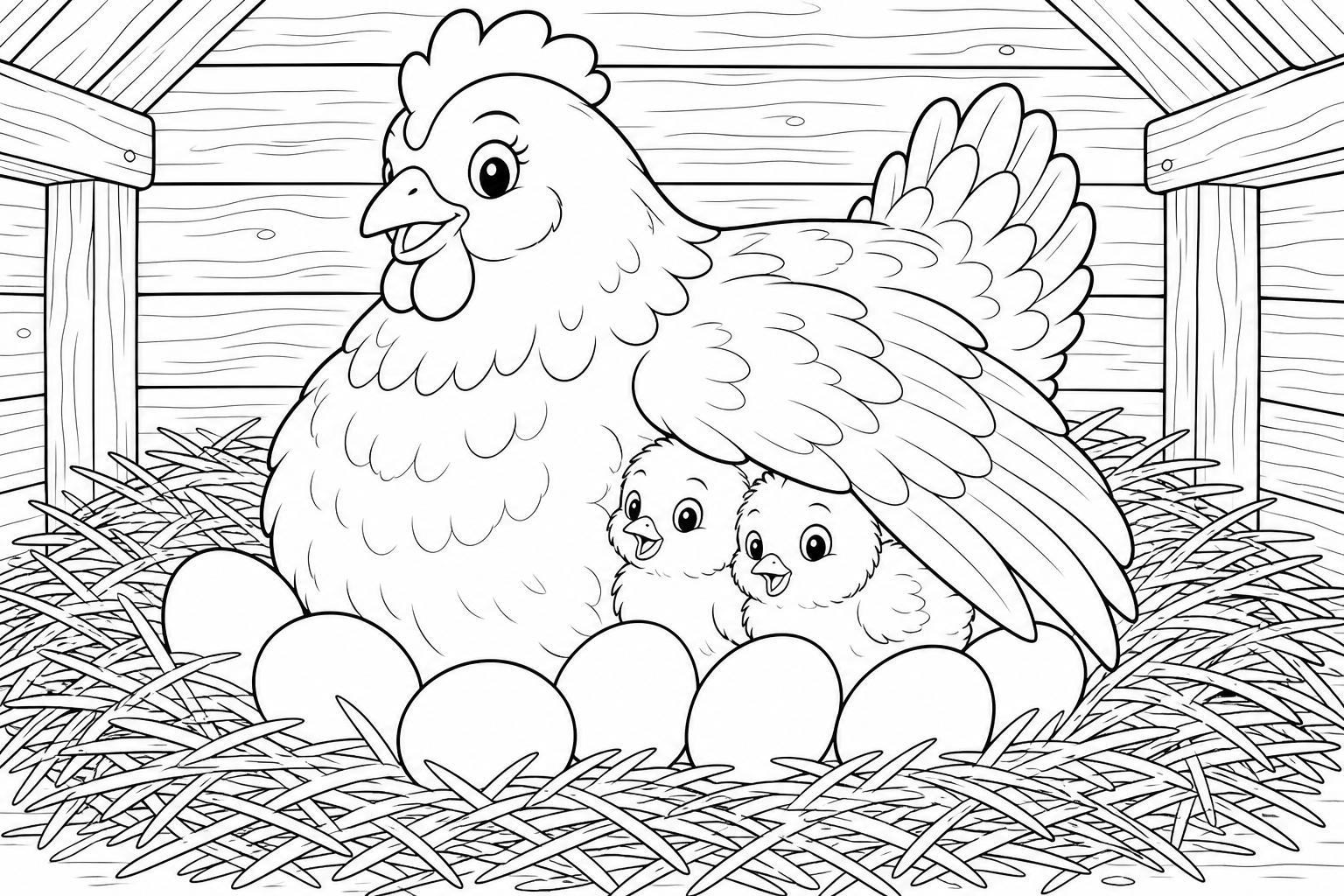
You do not need to correct "tack". Say "quack" back, once, while you color the duck's beak orange, and keep going.
Cock-a-doodle-doo comes last
The rooster is the hardest animal on the farm to say. Four syllables, a k at the back, a d at the front, and an l in the middle, which the NHS chart also places in the band from three. So it is often the last one to come out right, and that is the fun of it: a three-year-old who finally says the whole thing is very proud.
The rooster also sounds different in every language. A German child says "kikeriki", a French child says "cocorico", a Spanish one "quiquiriquí", a Hungarian one "kukurikú" and a Czech one "kykyryký" (Omniglot). If your family speaks two languages, your child may have two roosters, and both are right.
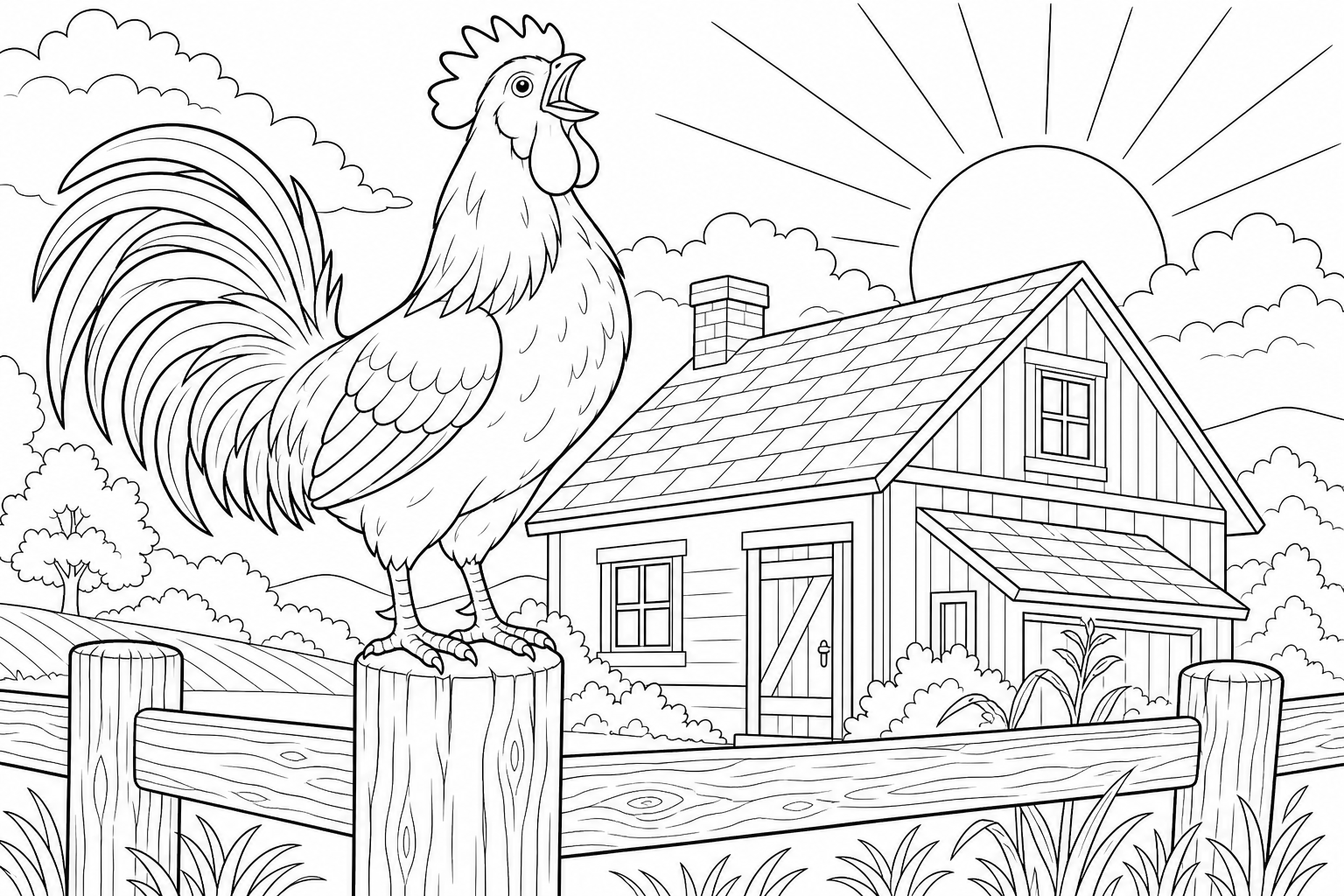

The second page is the whole farm at once: cows, a horse, hens and a few rabbits. Save it for the end, when your child knows enough sounds to fill it.
What else could you color?
Pick a prompt or type your own — opens in a new tab.
The sound game at the table
Here is how the pages turn into a game that lasts longer than one afternoon:
- 1Print the pages in the order above and stack them, cow on top.
- 2Make the sound of the top animal and let your child find the right page.
- 3Your child colors while you both make that sound. Silly voices welcome.
- 4When the sound comes out clearly on its own, the page goes on the fridge and the next one comes up.
Over a few weeks the fridge shows the order your child learned the farm. If you want more animals after that, our habitat tour for World Animal Day goes from the farm to the jungle and the sea.
One last question, the one every parent asks: what if my child still says moo for everything at two and a half? Then you have a child who likes cows, and a whole stack of pages still waiting.