About one child in ten colors with the left hand. A 2020 meta-analysis of handedness studies put the best estimate at 10.6 percent, so a class of 25 usually has two or three. If yours is one of them, you have probably seen the same thing at the coloring table: a grey shine along the side of the hand, and a page that looks smudged however carefully it was colored.
That smudge is the one real problem in left-handed child coloring, and it is a small one. Here are the questions parents ask most, with fixes that take a minute.
Is coloring with the left hand something to fix?
No. Hand preference usually shows between two and four, and swapping hands at that age is common, says the NHS Fife occupational therapy guide. By school age most children have settled on one side, and either side can learn to color and write well.
What does feel different is the paper, the light and the elbow. All three are easy to change.
Why does one side of the page end up grey?
A right-handed child colors with the hand trailing behind the crayon. A left-handed child working the same way, from left to right, pushes the hand across the part that is already done. Wax rubs off onto the side of the hand, fresh marker ink smears, and soft pencil turns into a grey film. The Cambridgeshire and Peterborough NHS hand skills team names smudging as a typical left-handed difficulty and asks parents to make allowance for it.
Some children find their own way out by curling the wrist over the top of the line, so the hand stays above the work. It looks awkward and it tires the hand. A tilted page usually makes the curl unnecessary, which is the first fix below.
Smudging is no sign of carelessness. If a sibling calls the page messy, the hand is simply doing what hands do when they travel over wax.



Coloring fun for kids — anywhere.
Free for iOS & Android. No ads, no sign-up, offline-ready.


Coloring fun for kids — anywhere.
Free coloring app for kids. iOS and Android, phones and tablets. No ads, no sign-up, even offline.
What helps at the coloring table?
Five changes, roughly in the order they make a difference:
- 1Tilt the page to the right. Turn the top of the sheet clockwise, so the left hand sits below the line it is coloring. The NHS team also suggests a slanted surface; a ring binder lying on the table does the job.
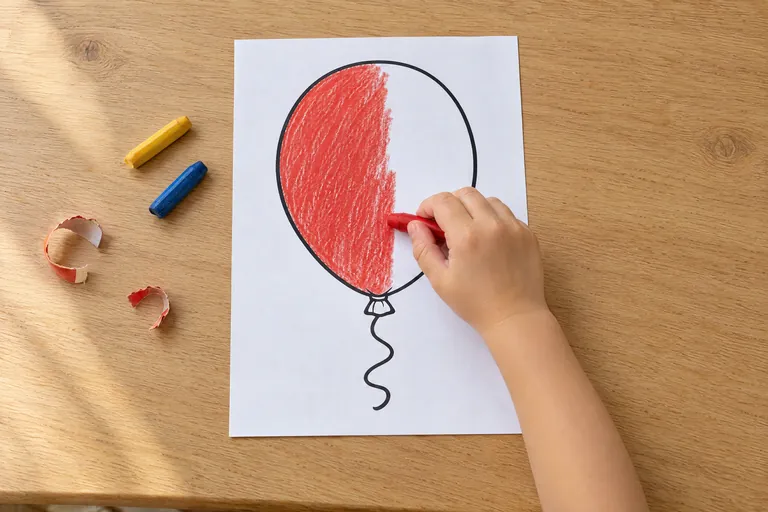
- 2Color from right to left. A coloring page has no reading direction, so let the hand start on the right and move away from the finished parts. Nothing gets dragged through.
- 3Light from the right. A lamp or window on the left throws the hand's shadow onto the very line the child is following. The NRW family portal asks for light from the right side.
- 4Sit at the left end of the table. The left-hander on the left, a right-hander on the right, and two elbows stop bumping.
- 5Chunky crayons before markers. Oversized triangular crayons help build the tripod grip left-handers need to avoid smudging and a cramped hand, according to the Left Handers Club tip sheet. Felt tips can wait until the tilt and the stroke direction feel natural.
If cutting is part of the activity, give real left-handed scissors, which the same tip sheet recommends for all craft work.
Normal, or worth a closer look?
Most of what parents worry about here is ordinary. The table sorts it.
| What you see | Usually normal | Worth a closer look |
|---|---|---|
| Switching hands | Under five, back and forth between pages | Still switching all the time in the second school year, or mid-stroke whenever the hand tires |
| Smudged edges | The side of the hand turns grey | Tears of frustration every time, even with the page tilted |
| Curled wrist | The page lies straight and the child curls to see the line | The curl stays on a tilted page, and the hand aches |
| Slower than a sibling | A few extra minutes for the same page | Refuses to color at all and avoids writing too |
For the wider picture, our guide on whether your child's coloring is normal goes through five other worries and the one sign that really matters.
Which pages make it easier?
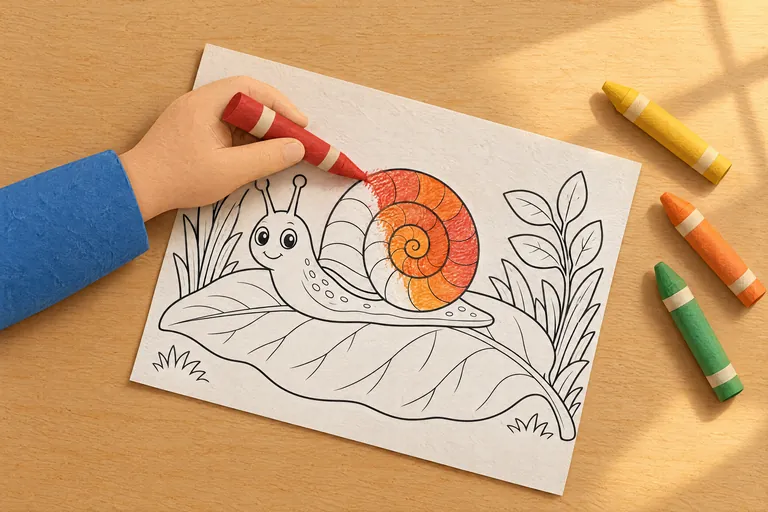
Big, open shapes with few small details are the kindest start. The hand travels less, there are fewer tiny areas to cross, and a tilted page still fits on the table. A snail on a wide leaf, a whale among bubbles and a round snowman are good first pages for practicing right-to-left coloring.
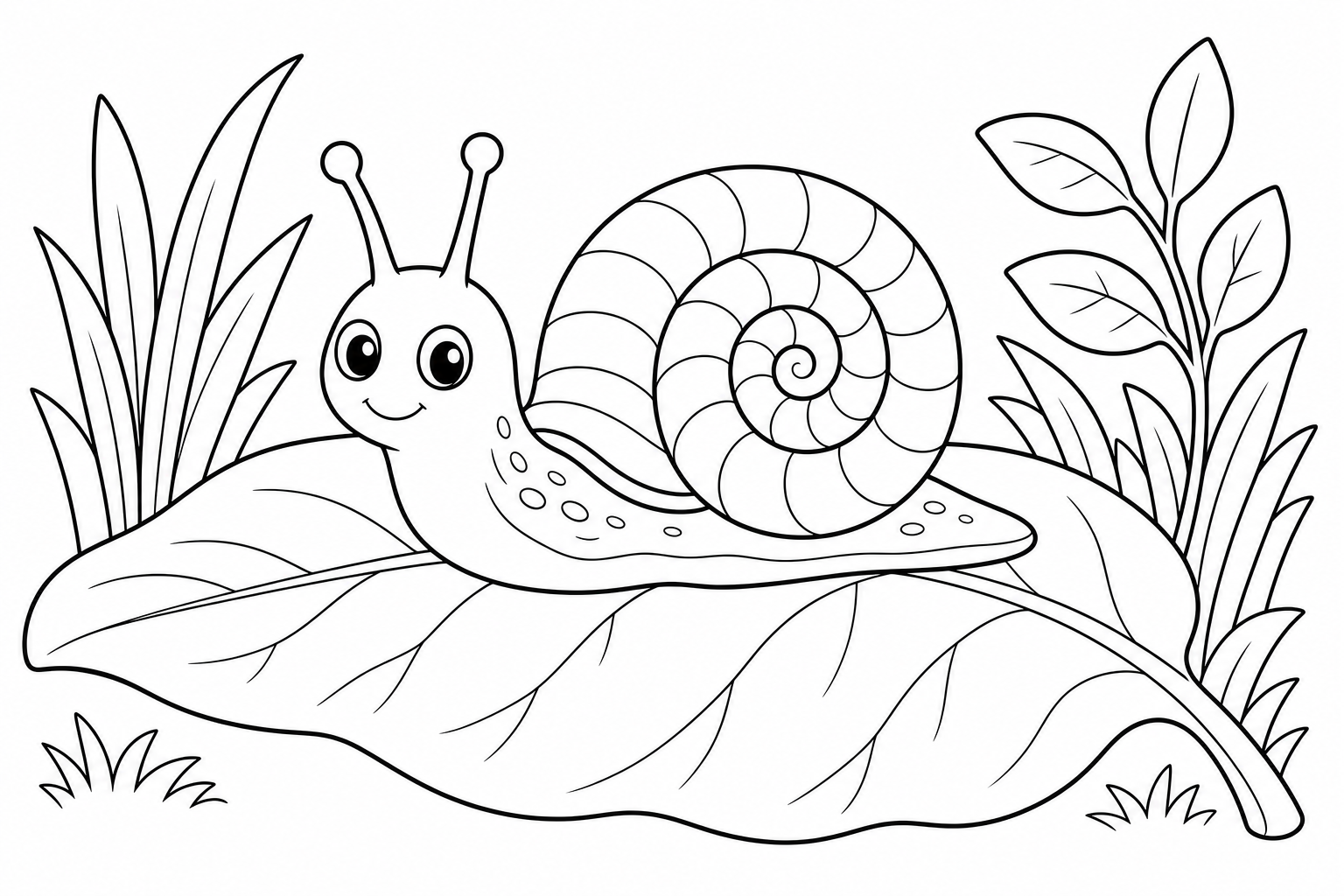

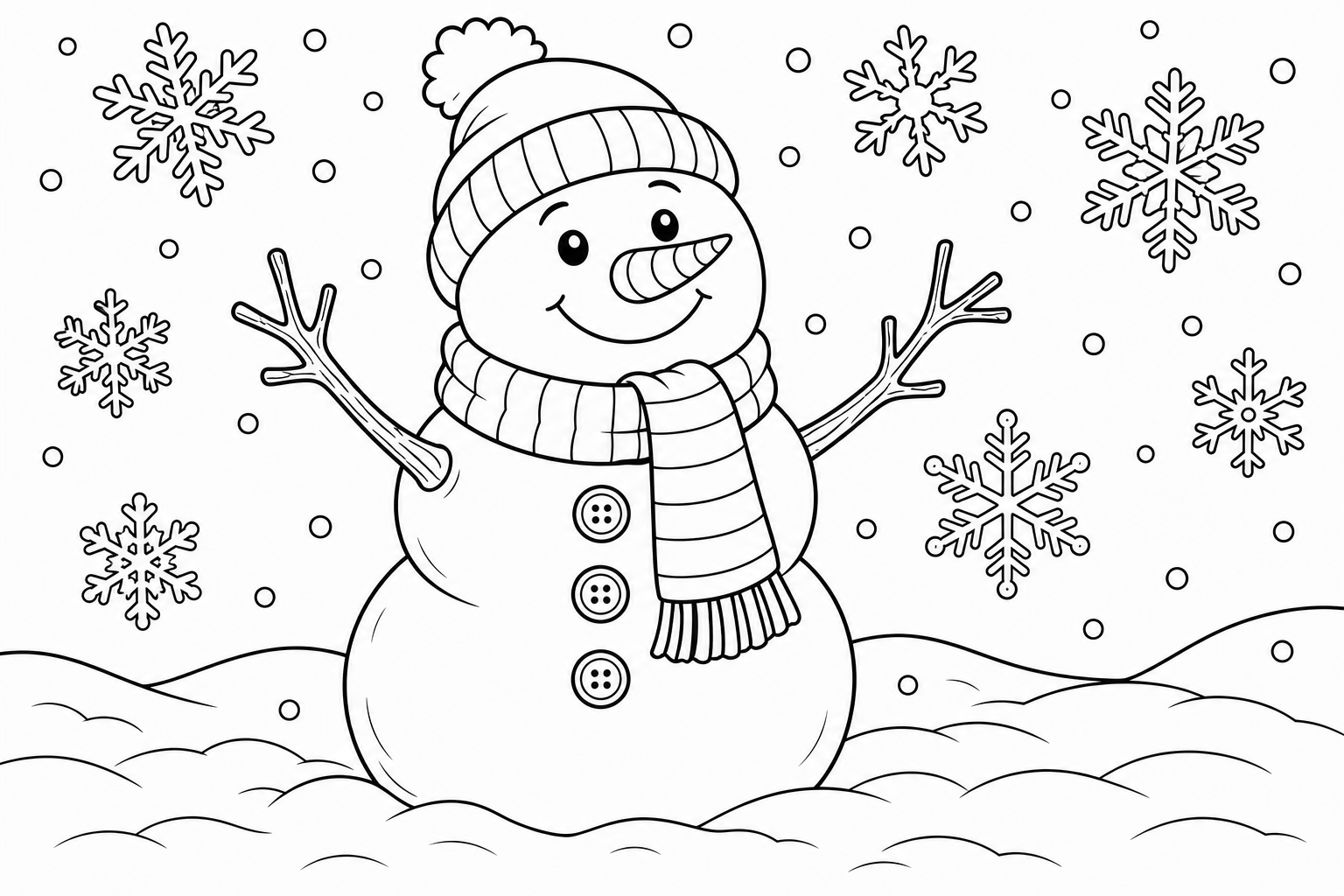
For the whale's big body, lay a crayon on its side, the trick from our guide to coloring big areas without streaks: a wide, light stroke leaves less wax for the hand to pick up. And if you are buying new crayons anyway, the best coloring tools by age sorts them by hand size.
What else could you color?
Pick a prompt or type your own — opens in a new tab.
Seat the left-hander at the left corner and the right-hander beside them, so their elbows point away from each other and the crayon box can sit in the middle. If a sibling teases about the grey hand, say it plainly: that is what happens when a hand moves this way, and a tilted page fixes most of it. When the worry is really about neatness, our piece on whether coloring inside the lines limits creativity is the better next read. Give it a week of tilted pages and a lamp on the right, then see whether the hand is still the topic at your table.