Hand a five-year-old the big box of crayons and ask for green. If there is a green crayon in there, that is the end of the story. Take the green one away and something better happens, because now they have to build it. That is what the color wheel is for. It is not a poster to memorize. It is the map that turns a box of colors into a machine with rules, and a child can use it long before they can spell it.
The whole wheel comes from three colors
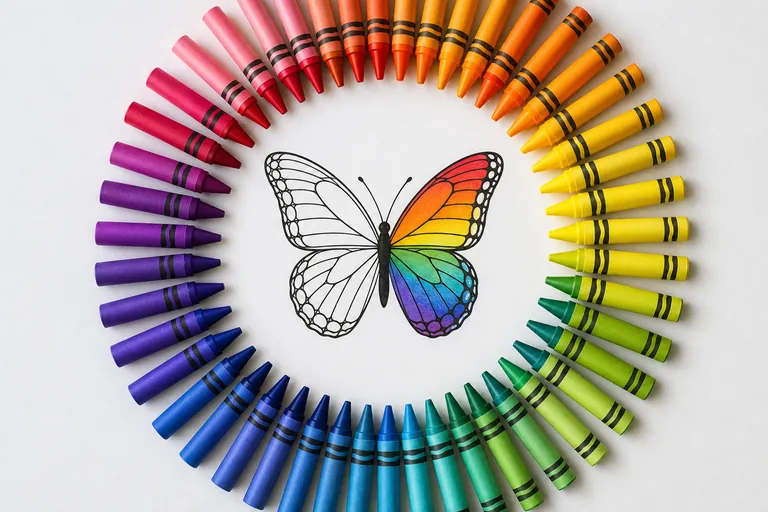
Red, yellow and blue sit on the wheel because you cannot mix your way to them. Everything else on it is something you can make. Orange sits between red and yellow because that is literally what it is made of. Green sits between yellow and blue. Purple sits between blue and red. Artists call the first three primary colors and the ones you build from them secondary colors, but the vocabulary is the least useful part of this.
The idea worth handing a child is smaller than the words: on this wheel, where a color sits tells you what it is made of. Position is a recipe. Every color has its two parents sitting on either side of it.
Try it: the two crayon test
You need two crayons and the back of any page. It takes about four minutes and it does the explaining for you.
- 1Start with two colors that sit next to each other, like yellow and orange. Color a patch of the first, then go over half of it with the second, pressing lightly.
- 2Look at the overlap. It should look like a color that belongs. Something you could probably find a crayon for.
- 3Now take two colors from opposite sides, like blue and orange. Same patch, same light pressure.
- 4Look again. It has gone brown, and pressing harder only makes it browner.
Ask your child what happened instead of telling them. Most get there by themselves, and the version they say out loud is the version they keep.
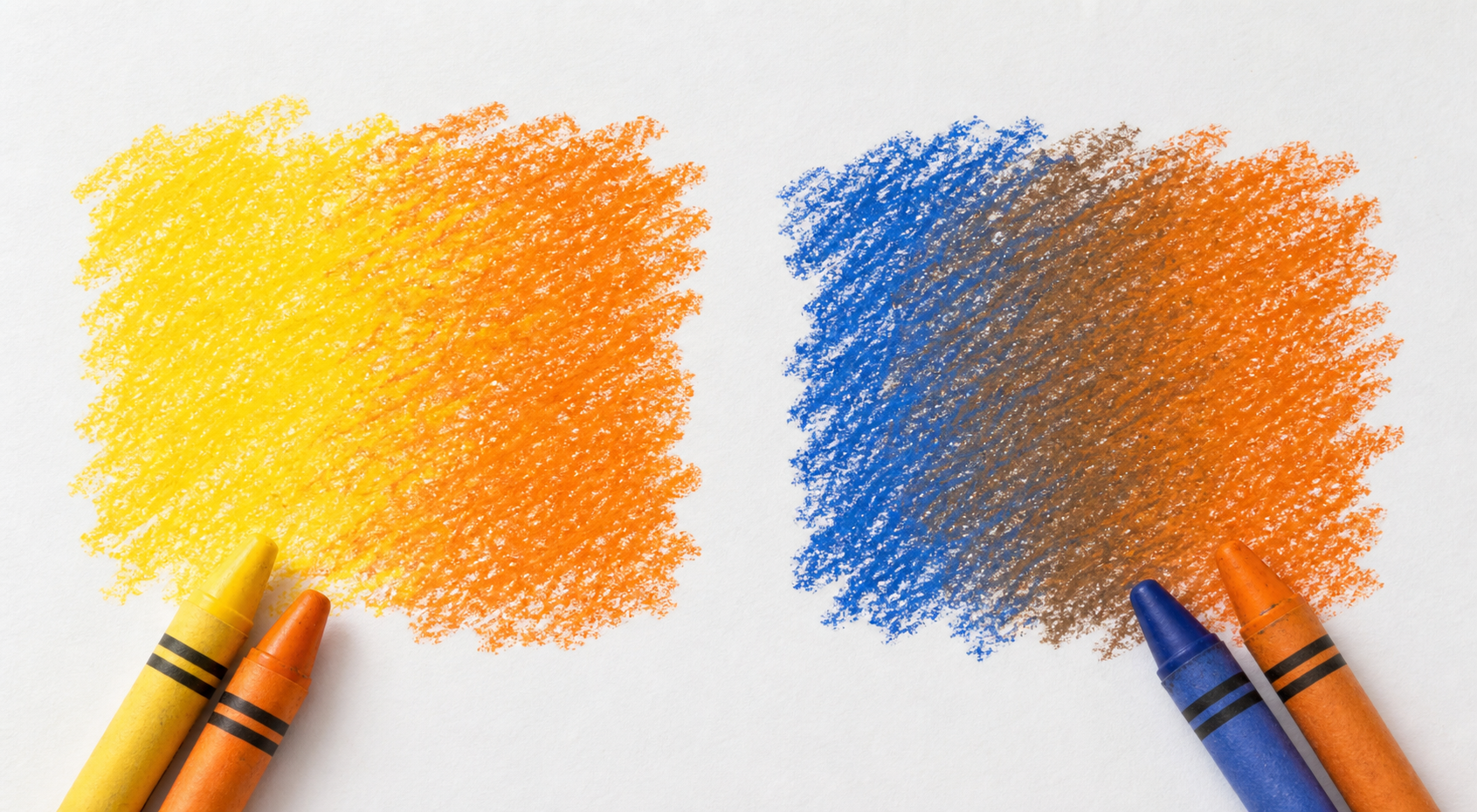
Neighbors blend, opposites fight
Those two results are the whole practical lesson, and they are worth naming.
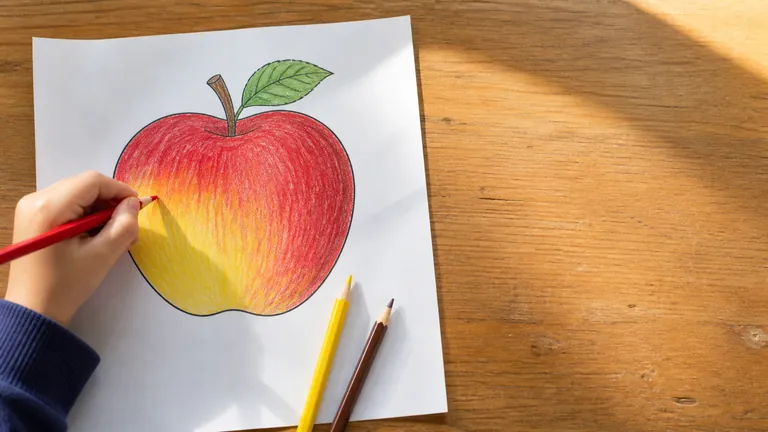
Colors that sit next to each other share a parent. Yellow and orange both have yellow in them, so laying one over the other only shifts the mix a little. Nothing argues. This is why neighbors are the safe choice for anything that should look smooth: fur, petals, a sky, a sunset.
Colors from opposite sides of the wheel share nothing at all. Artists call these complementary colors, which is a confusing name for a pair that behaves like this. Side by side, they make each other louder. A blue butterfly on an orange flower is doing exactly that. On top of each other, they wreck each other.
Side by side is the trick. On top of each other is the trap.
Why mixing opposites always ends in brown
That is why it is so reliable, and why pressing harder never rescues it. Your child is not doing it wrong. They have found the one thing the wheel guarantees. Knowing the reason turns an annoying mess into something they can use: if you want a color to stay clean, keep its opposite off it.
Kids do not learn colors in the wheel's order
Here is the part that catches most adults out. The wheel has an order, and children ignore it completely.
The old assumption was that primary colors come first, that red, yellow and blue are somehow more basic to a small child's mind. When researchers tested that with 2- to 5-year-olds, they found only very limited support for it. Instead, nine of the eleven basic color words, among them yellow, blue, black, green, white, pink, orange, red and purple, arrived in more or less any order between roughly 36 and 40 months. Two lagged well behind: brown and gray (Pitchford and Mullen, Journal of Experimental Child Psychology).
The reason had little to do with eyesight. The same work found that children liked brown and gray noticeably less than the other colors, and that those two words turn up far less often in books for small children and in the way adults speak to them. The colors we barely mention are the ones that arrive last.
Which leaves a small irony worth enjoying. Brown is the color your child learns last, and it is also the first one they will manufacture entirely by accident.



Coloring fun for kids — anywhere.
Free for iOS & Android. No ads, no sign-up, offline-ready.


Coloring fun for kids — anywhere.
Free coloring app for kids. iOS and Android, phones and tablets. No ads, no sign-up, even offline.
What this changes on an actual coloring page
Not much theory survives contact with a real page. Two things do.
When your child wants something to look smooth and solid, steer them toward neighbors. A fox is red and orange and yellow, and those three sit in a row on the wheel, which is exactly why a fox is easy to make look real. Layering neighbors is also the groundwork for shading, and our guide to shading with colored pencils picks up where this leaves off.
When they want something to jump off the page, put opposites next to each other and never over each other. This is the part that makes older kids suddenly care.
The tool matters more than most people expect, because any of this only works if one color can physically sit on top of another. Crayons and colored pencils layer, so the wheel applies. Many markers do not layer so much as flood, which is why marker mixing reaches the brown outcome faster. Our comparison of crayons, markers and colored pencils goes through which does what. And if you are wondering whether your child is ready for any of this, what to expect at each age has the shorter answer. Somewhere around five to eight, when they start caring whether it looks right.
Pages to try it on
The wheel is easiest to believe on a page with room to test it.
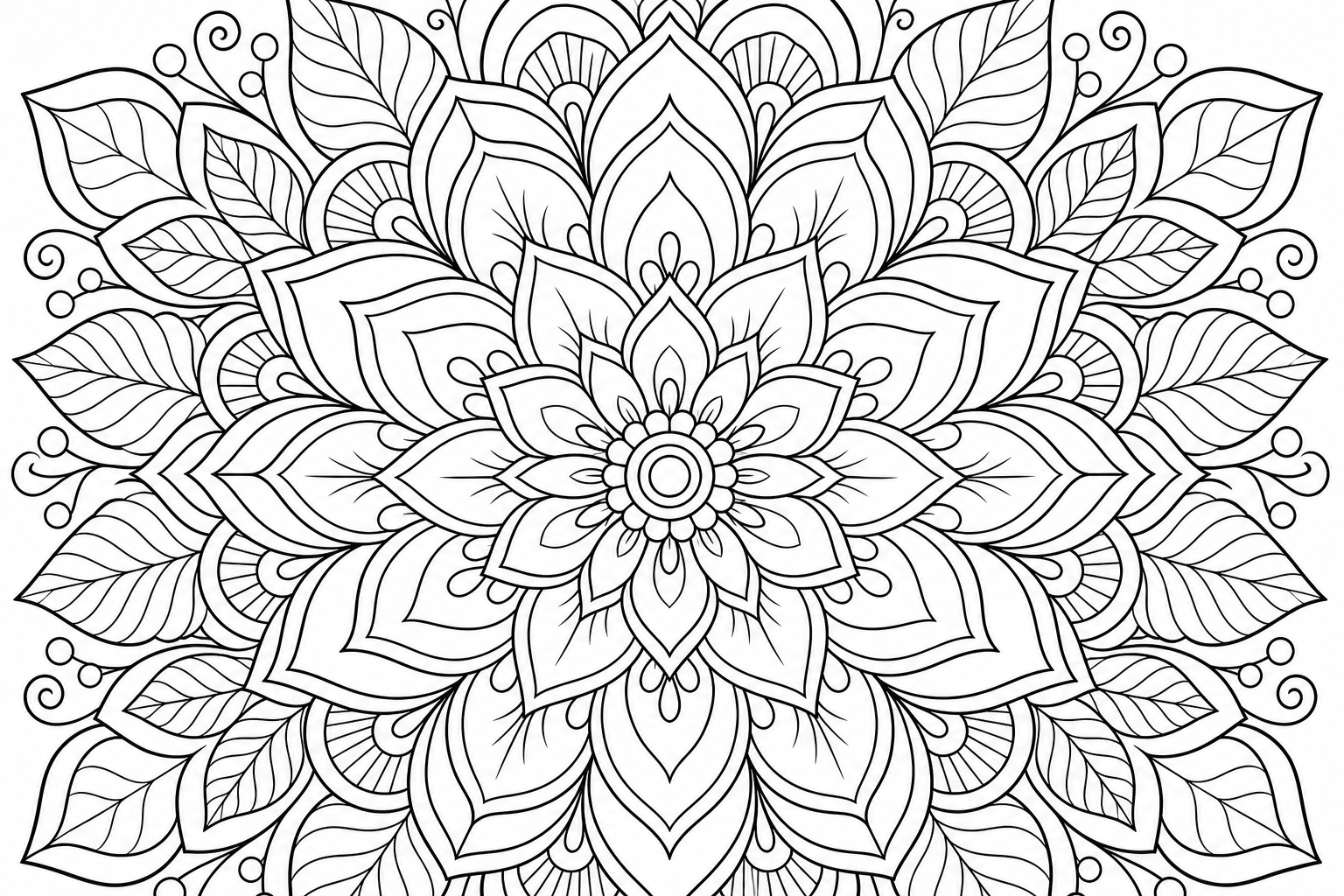
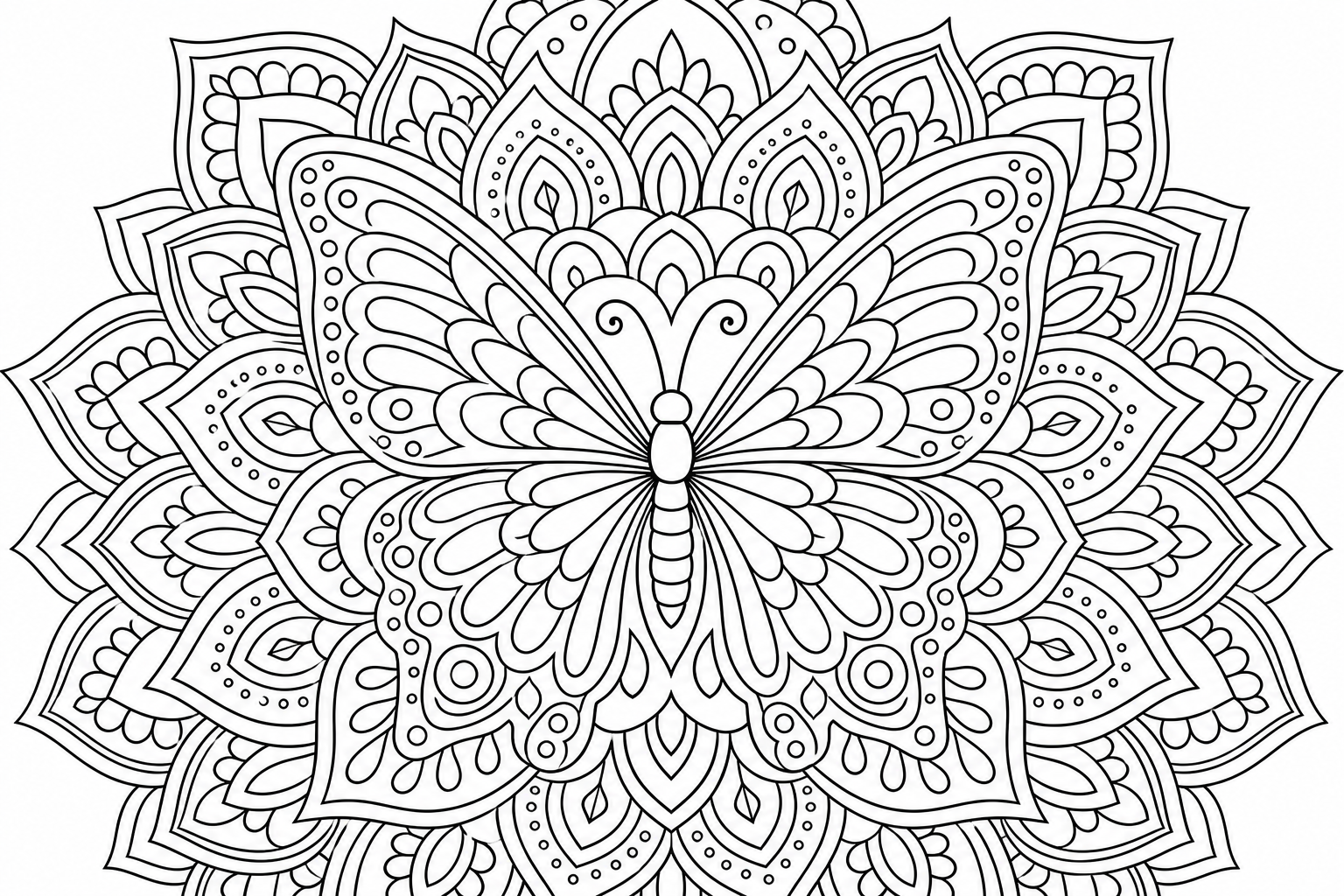
A rainbow is the color wheel unrolled into a straight line, which makes it the most honest place to start, and rainbow pages put all the neighbors in order for you already. Mandala pages are the sneakier choice, because the repeated segments let a child run the same experiment several times on one sheet. Neighbors in one ring, opposites in the next, and the difference sitting right there to compare.
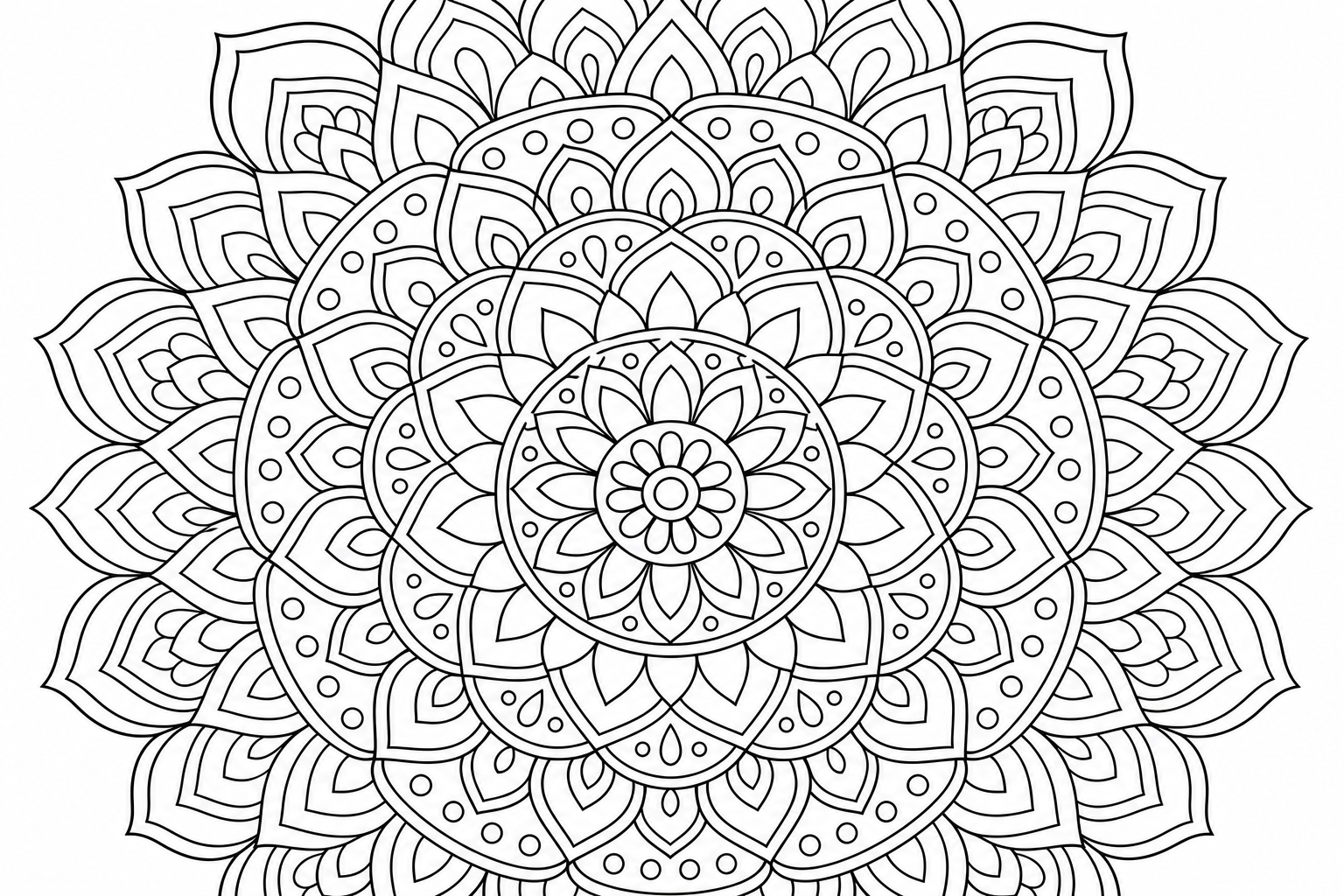
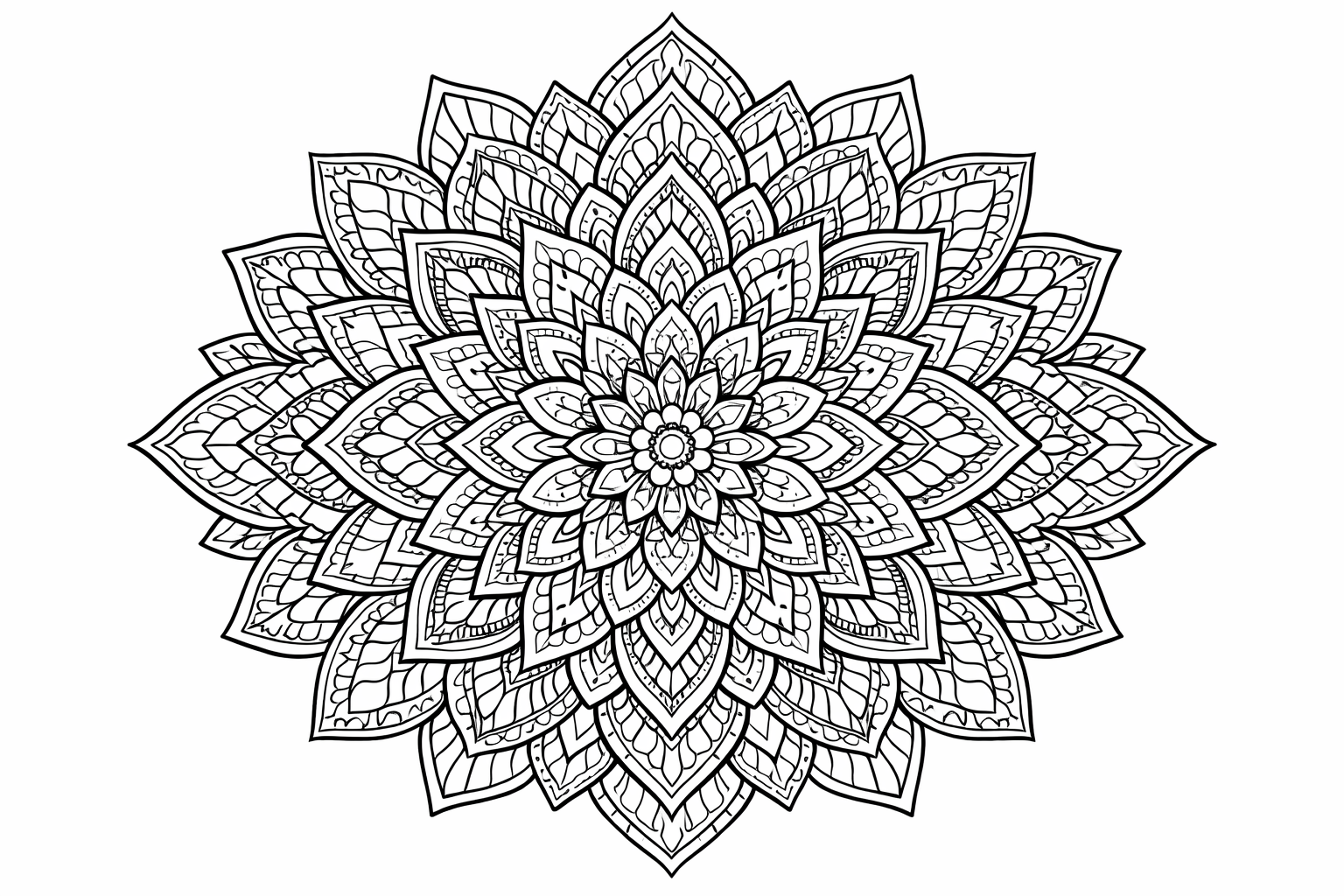
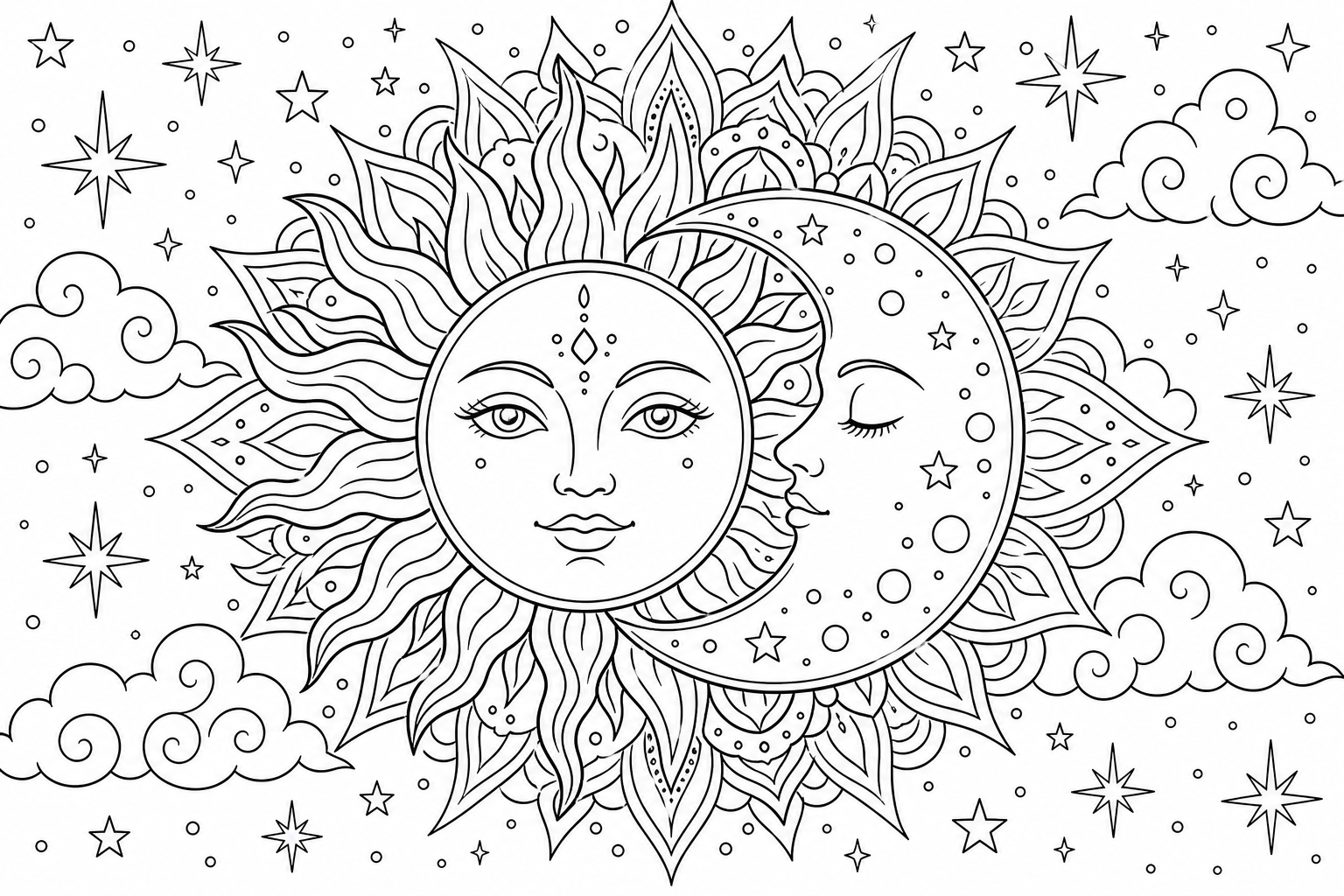
Then let them go looking for something worth testing it on.
What else could you color?
Pick a prompt or type your own — opens in a new tab.