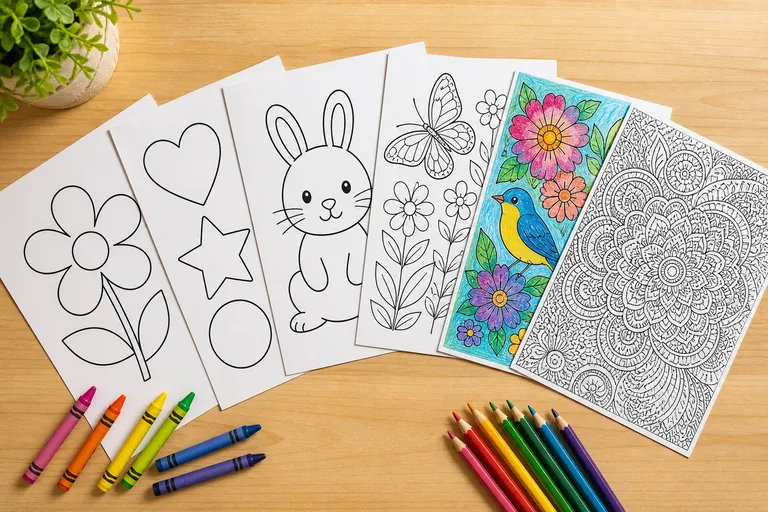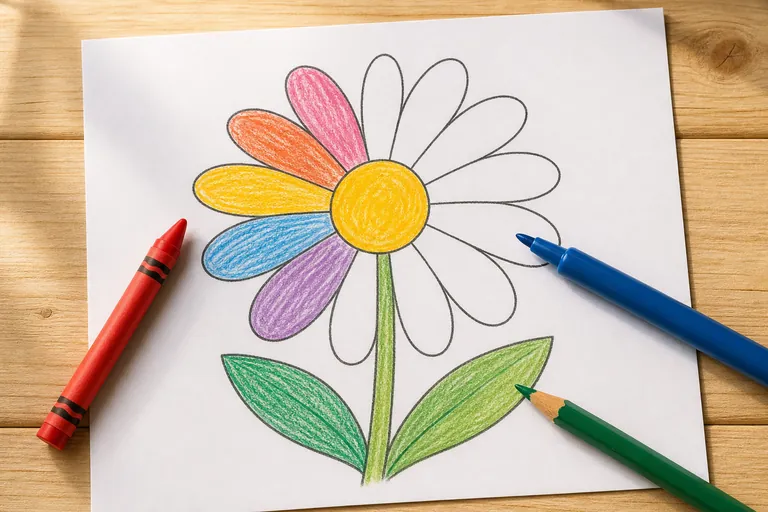
Open any kid's coloring box and the same three tools end up rattling around inside: crayons, markers, and colored pencils. Parents often ask which one is best, but that is the wrong question. Each tool is good at something the others are not, and the right pick depends on your child's age, the page in front of them, and the mood of the moment. Here is how the three actually compare, and how to know which one to hand over.
The three tools at a glance
Before the detail, a quick side by side. Read down the column that matters most to you today, whether that is mess, control, or the age that each tool starts to make sense.
| Tool | Grip and control | Color payoff | Blending | Cleanup | Best starting age |
|---|---|---|---|---|---|
| Crayons | Easiest, very forgiving | Soft and waxy | Limited | Wipes off, no spills | About 1 to 2 years |
| Markers | Glide with no pressure | Bright and instant | Streaky | Can bleed and stain | About 3 years, with help |
| Colored pencils | Needs a steadier hand | Light, builds in layers | Excellent | A few shavings | About 5 to 6 years |
Crayons: the first tool, and a quiet workout for little hands
Crayons are where almost every child starts, and for good reason. They need very little pressure, they do not roll far, and a toddler can wrap a whole fist around one and still make a mark. That forgiving grip is exactly what a one or two year old needs while the small muscles in the hand are still waking up.
There is a developmental bonus hiding in the humble crayon. As children grow, their grip travels from the whole hand toward the fingertips, and most do not settle into a mature three finger pencil grasp until around five or six, according to The OT Toolbox. A clever trick speeds that journey along: hand your child a short, broken crayon. A stub is too small to grab with a full fist, so it nudges the thumb and first two fingers into position, which is why occupational therapists recommend snapping crayons in half. The same hand strength that coloring builds is the strength your child will lean on later for writing, which is worth keeping in mind as you watch them scribble.
Where crayons fall short is detail and depth. The color sits light and waxy, fine lines are tough, and an enthusiastic three year old will snap a few. None of that is a problem at this age. It is the point.
Markers: instant, bright, and the washable question
Markers are the crowd pleaser. They glide across the page with no pressure at all, the color lands bright and saturated on the first pass, and that instant reward is gold for a child who gets discouraged when crayons look pale. If you have a reluctant colorer, a fresh set of markers often gets them to the table.
The tradeoffs are real, though. Color can bleed through thin paper, so slide a spare sheet underneath. Caps left off mean dried out markers within a week. And control is harder, because there is no friction to slow a young hand down, so staying inside the lines takes more practice with a marker than with a crayon.


Coloring fun for kids — anywhere.
Free for iOS & Android. No ads, no sign-up, offline-ready.


Coloring fun for kids — anywhere.
Free coloring app for kids. iOS and Android, phones and tablets. No ads, no sign-up, even offline.
Colored pencils: control, blending, and the step up
Colored pencils are the tool a child grows into, usually somewhere around five or six. They reward a steadier hand and a bit of patience, and in return they offer something the other two cannot: real control. A child can color a tiny petal without straying, press lightly for a whisper of color or harder for something bold, and lay one shade over another to blend. That layering is the gateway to shading and more grown up looking artwork.
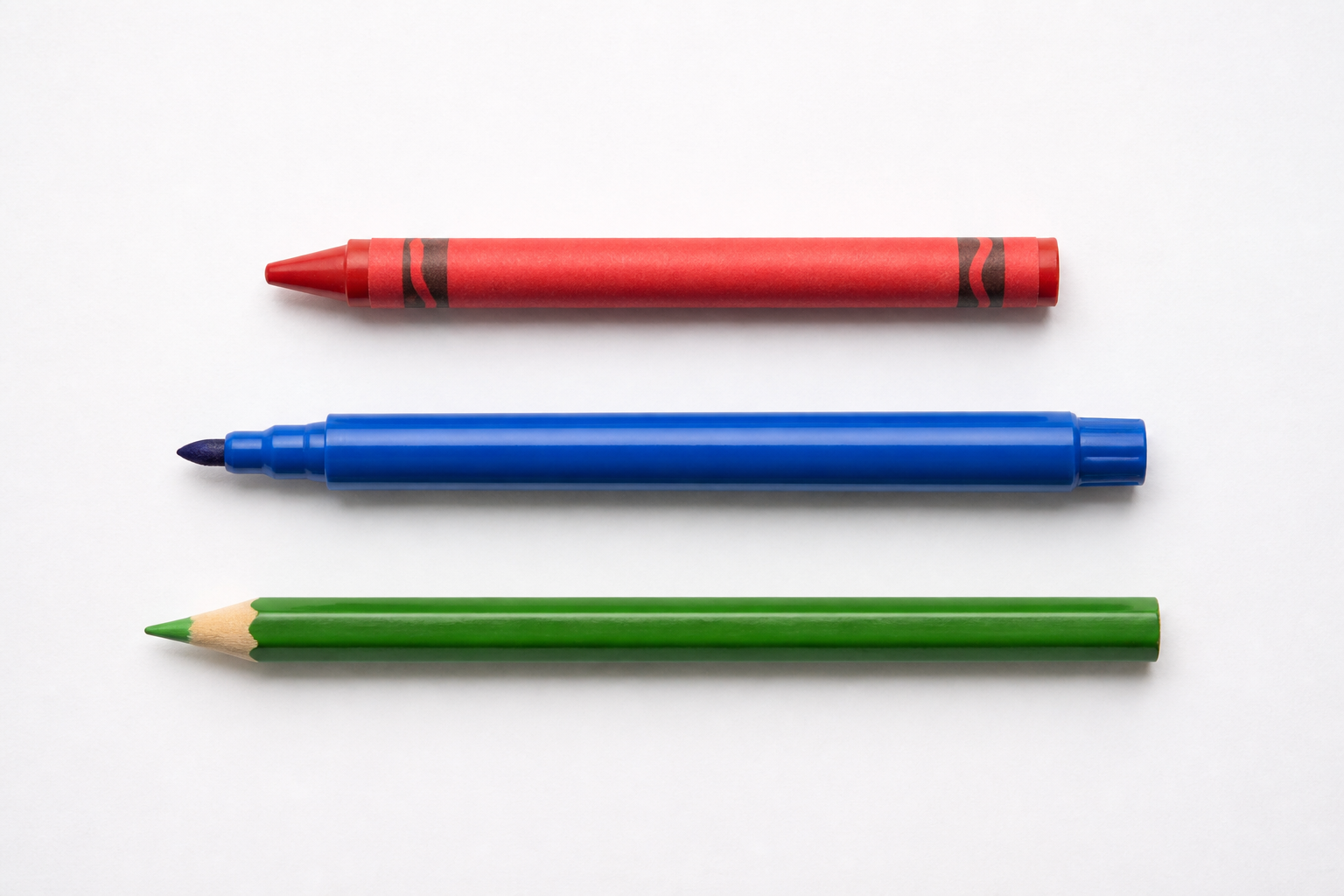
They ask more in return. Colored pencils need pressure and the occasional sharpening, and a child expecting marker brightness may find them frustratingly faint at first. There is a neat bridge here too: a colored pencil is about the same thickness as the pencil your child uses for writing at school, so the control they practice while coloring carries straight over to the page. When they are ready for that precision, a detailed page like a symmetrical mandala gives those layering and blending skills somewhere to go.
Which one, when
The honest answer is that most homes want all three, rotated by age and by moment rather than ranked best to worst.
By age, the rough progression looks like this: chunky crayons for toddlers and young preschoolers, a mix of crayons and washable markers once they are three or four, and colored pencils added in around five or six as control sharpens. If you want the full picture of what to expect at each stage, our guide to coloring by age walks through it from toddler to tween.
By moment, think about the job. Want a quick win for a child who is losing interest? Markers. A calm, focused stretch with fine detail? Colored pencils. Something durable for the car or a restaurant table? Crayons, every time. And if you are simply trying to build hand strength and steadiness in a young child, the slow work of coloring does that quietly, whichever tool ends up in their fist.
Building a simple set without overbuying
You do not need the giant bin. One solid box of jumbo crayons for the youngest years, a set of washable markers when bright color starts to motivate them, and a basic twelve or twenty four count of colored pencils once they are coloring with intent will cover almost everything. Skip the fifty color marker towers; a tired child cannot tell teal from turquoise, and half will dry out before they are touched. Upgrade one tool at a time, when your child outgrows the last, rather than all at once.
Whichever tools end up in the box, the pages are what matter. Pick a subject your child loves and let the tool follow the page.
What else could you color?
Pick a prompt or type your own — opens in a new tab.
Hand them the box, pick a page, and see which one their hand goes for first.