There is a particular stillness that comes over a small child at a construction fence. Fingers hooked through the wire, hard hat sliding off, eyes locked on a yellow arm swinging a bucket of dirt. Every machine back there is doing one thing, and doing it with its whole body. That is the appeal. A digger digs. A roller rolls. Once a kid learns which machine does what, the noise behind the fence turns into a crew they can name.
These pages meet that crew one member at a time, roughly in the order a real building goes up. First the hole, then the flat ground, then the pour, then the tower, then the smooth finish. Here is the whole team on one card, so you can match each shape to its job before the first crayon comes out.
| Machine | Its job | How to spot it |
|---|---|---|
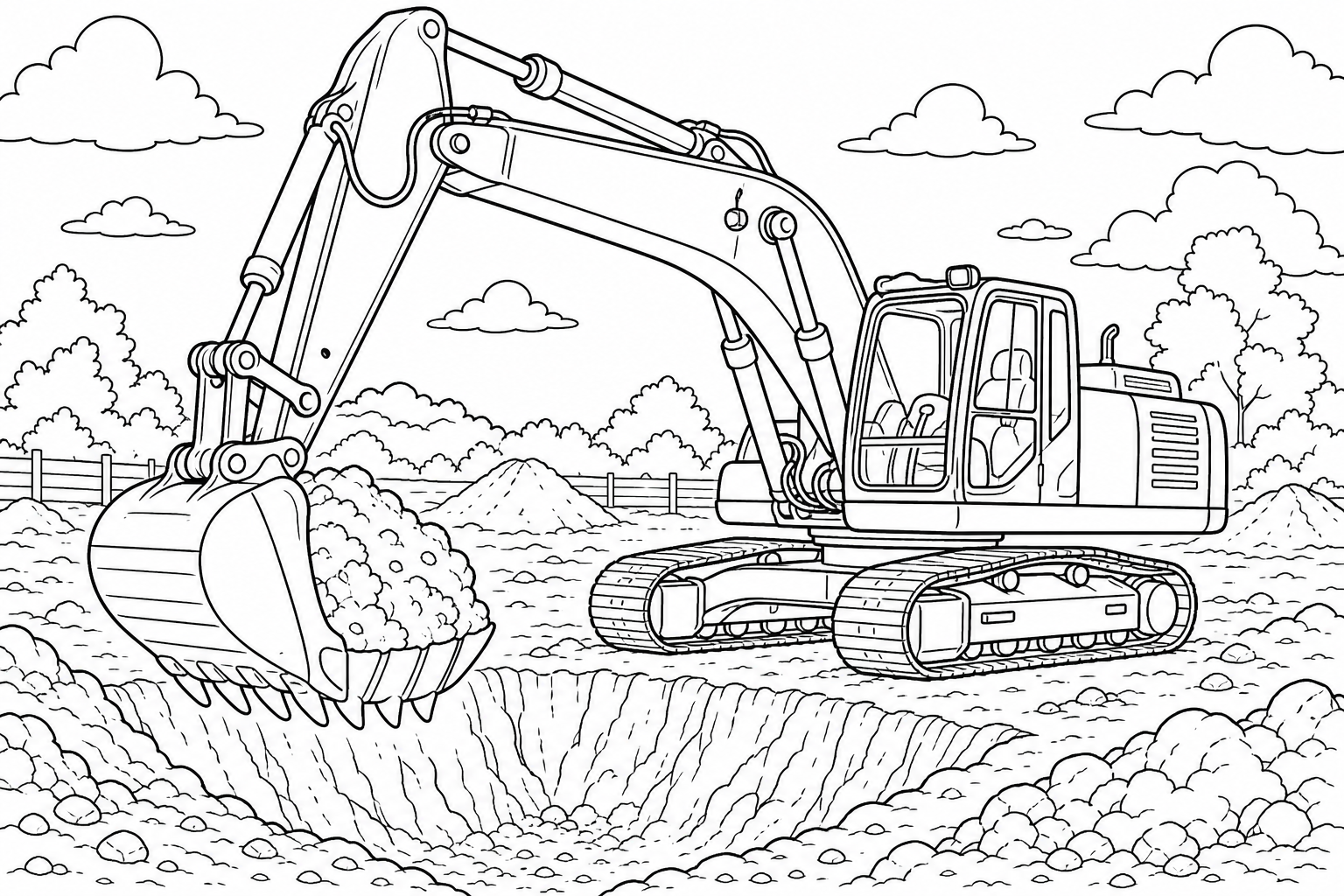
| Excavator | Digs the hole | A long arm and a toothed bucket |
| Bulldozer | Pushes and levels | A wide blade up front, tracks below |
| Dump truck | Hauls dirt and gravel | A big bed that tips up at the back |
| Cement mixer | Pours the foundation | A fat drum that turns as it drives |
| Crane | Lifts things up high | A tall thin boom with a hook |
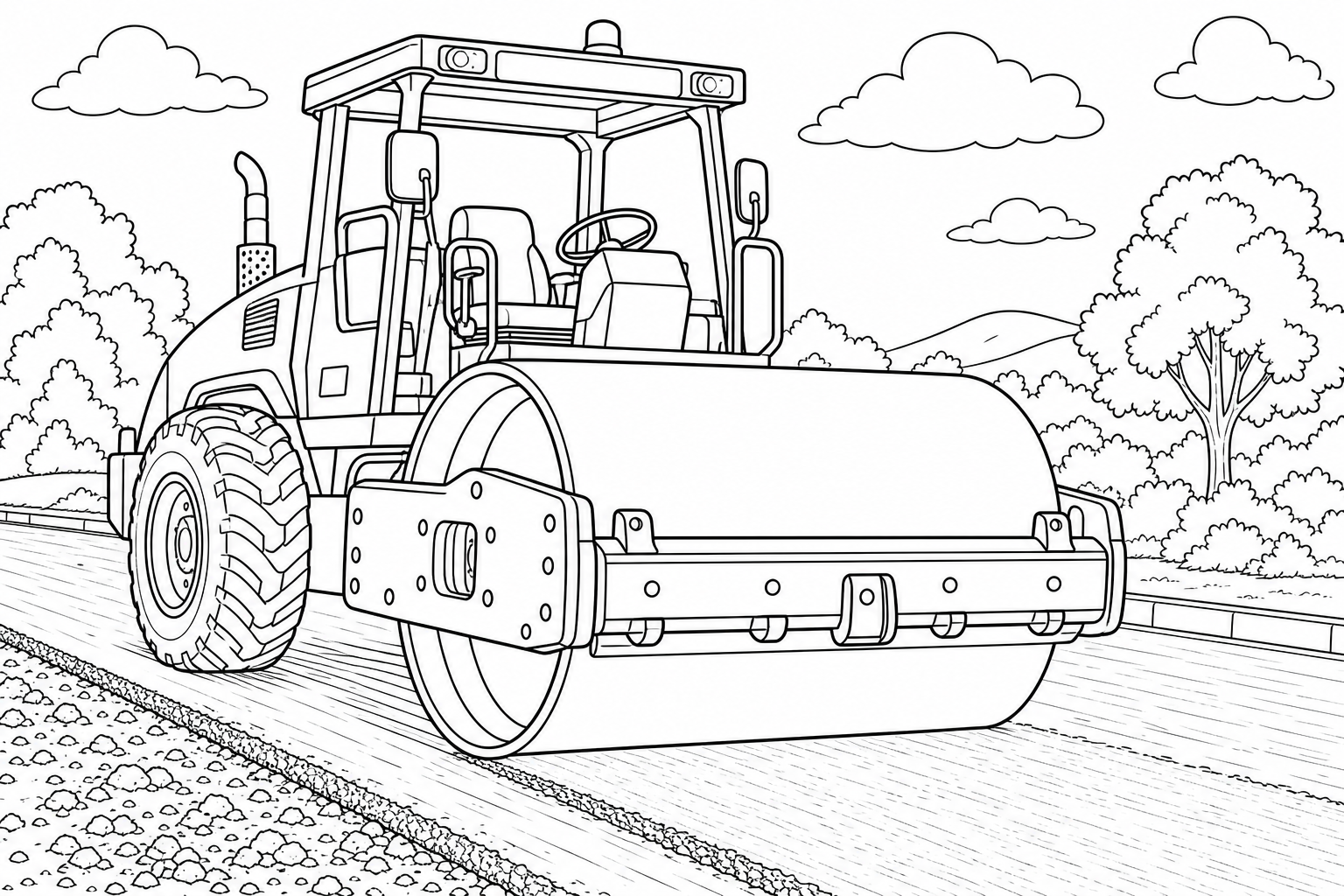
| Road roller | Presses it all flat | One heavy drum rolling at the front |
The excavator digs the first hole
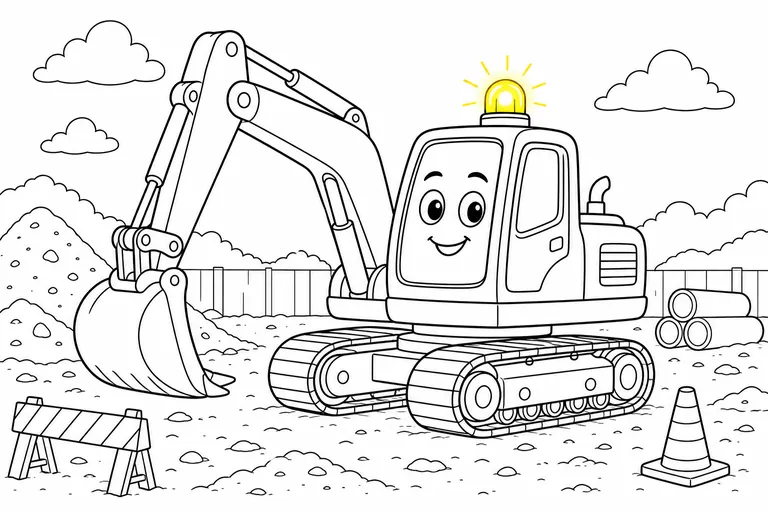
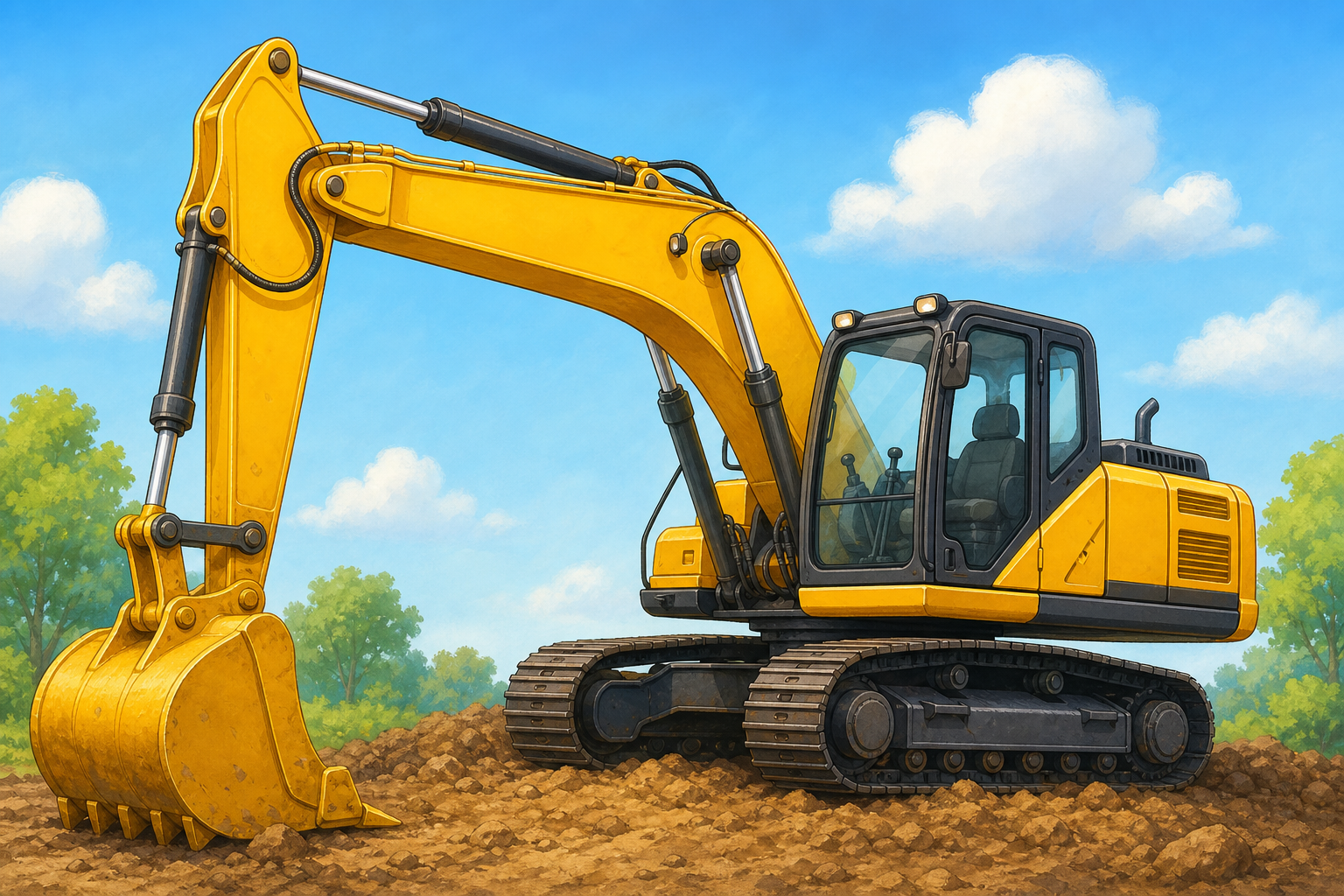
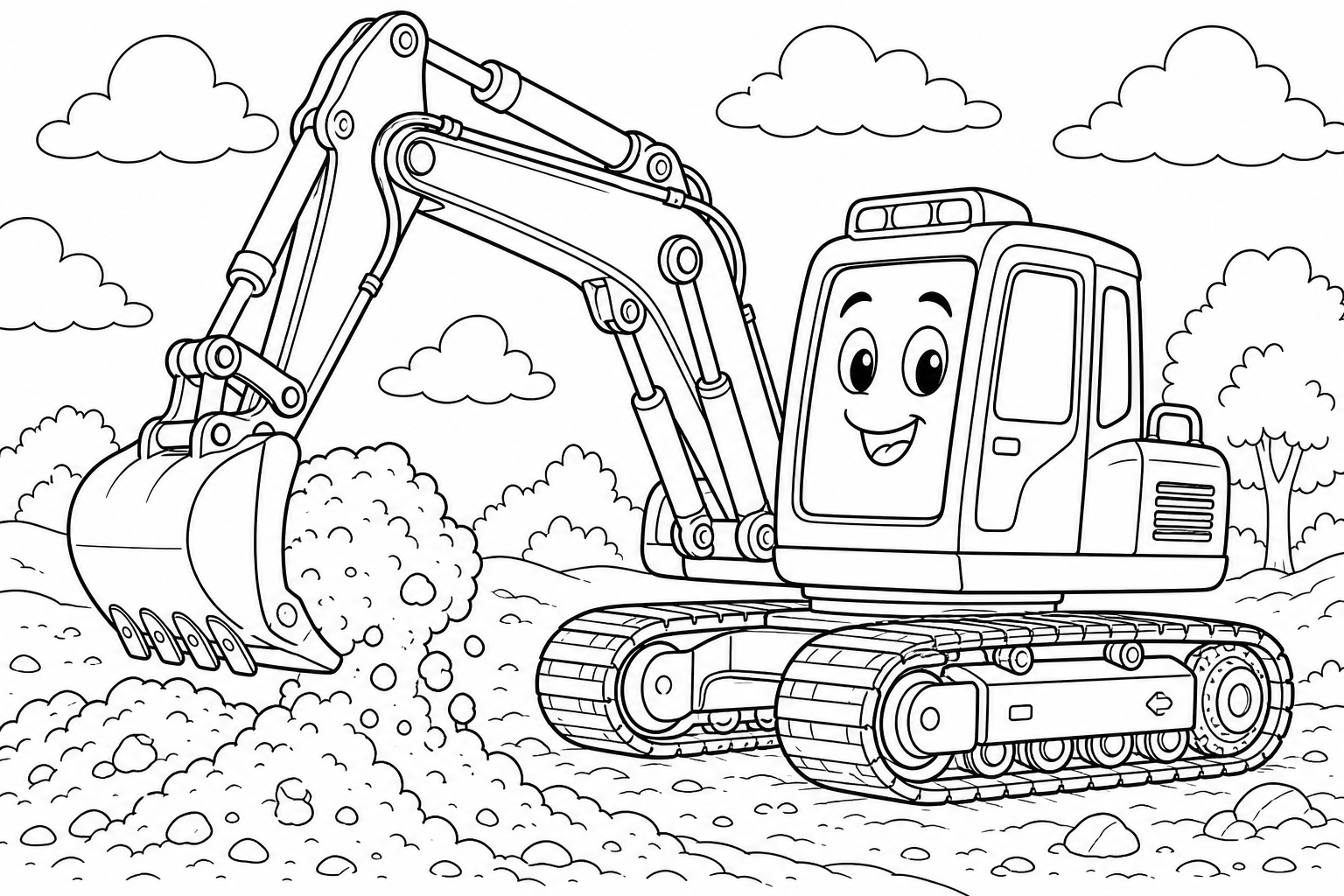
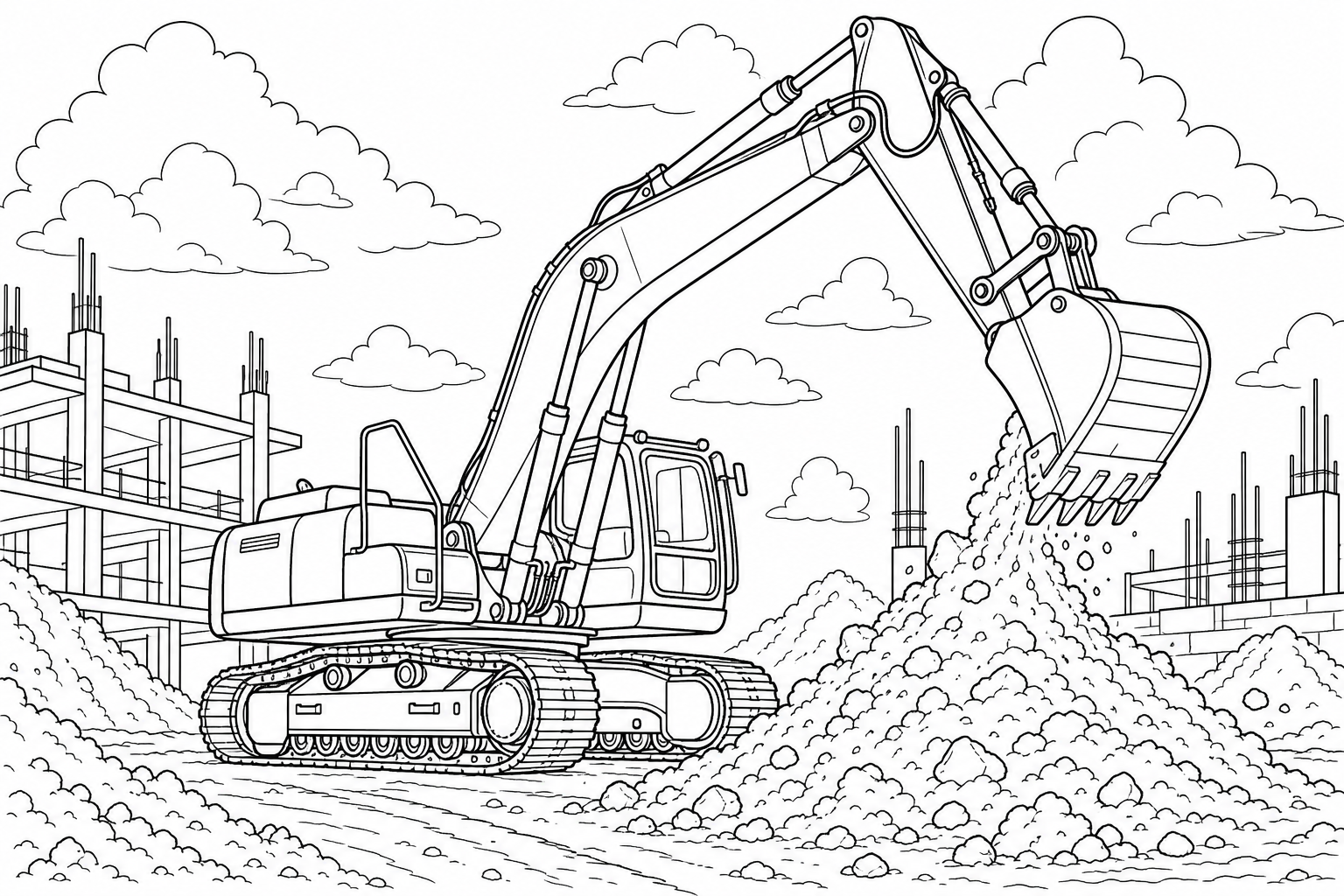
Ask a three year old and they will tell you it is a digger. They are half right. The machine with the long jointed arm and the toothed bucket is an excavator, and it is usually the first one on site. It swings that arm to scoop out the hole where the building will sit, then spins its whole cab around to drop the dirt in a pile behind it. The bucket bites, lifts, turns, dumps, and comes back for more.
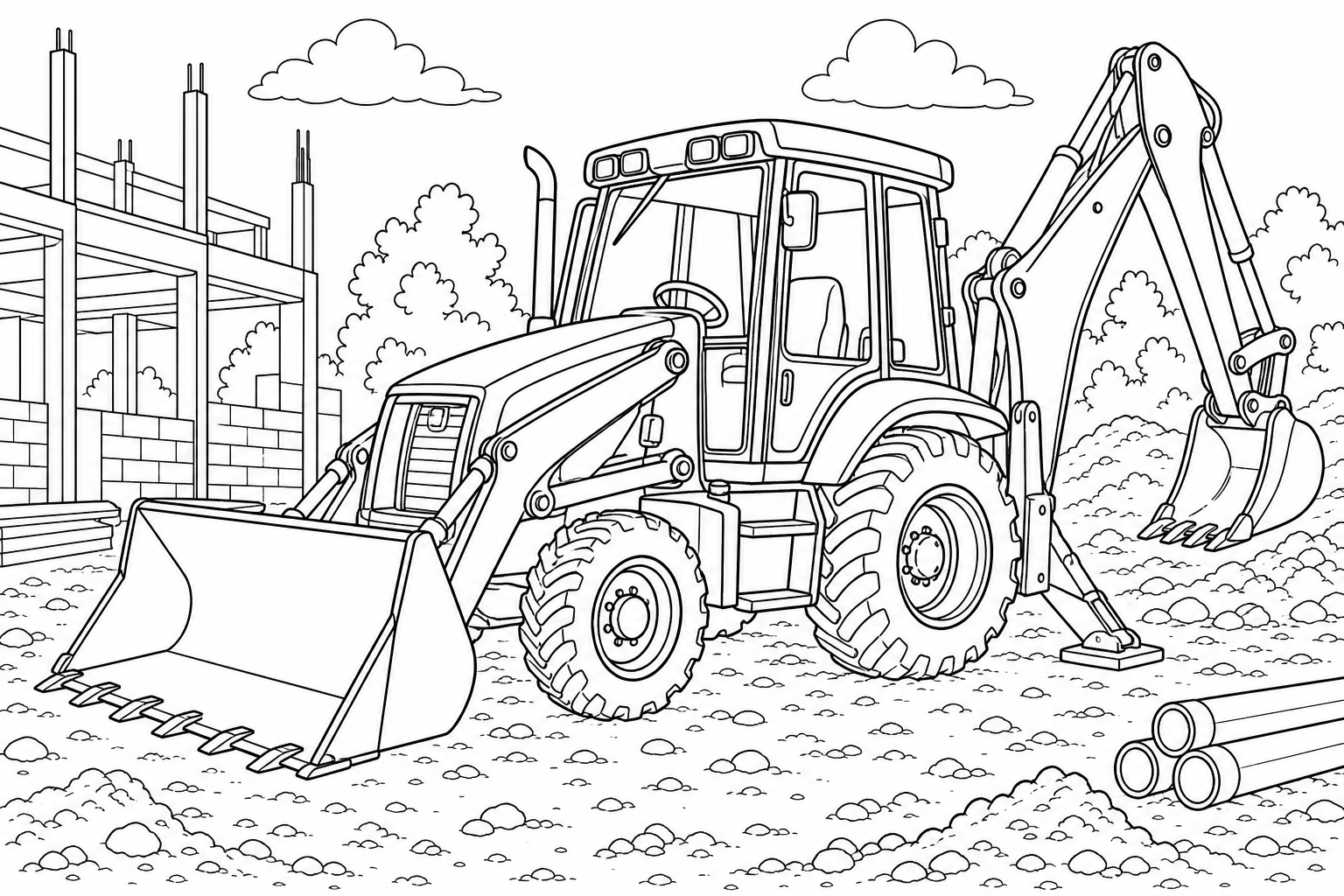
Worth teaching alongside it: the smaller machine with a loader scoop on the front and a digging arm on the back is a backhoe, the one that both scoops and digs. Kids love getting these names right, and naming what they see is one of the quiet ways coloring works on the youngest kids.
The dump truck carries it all away
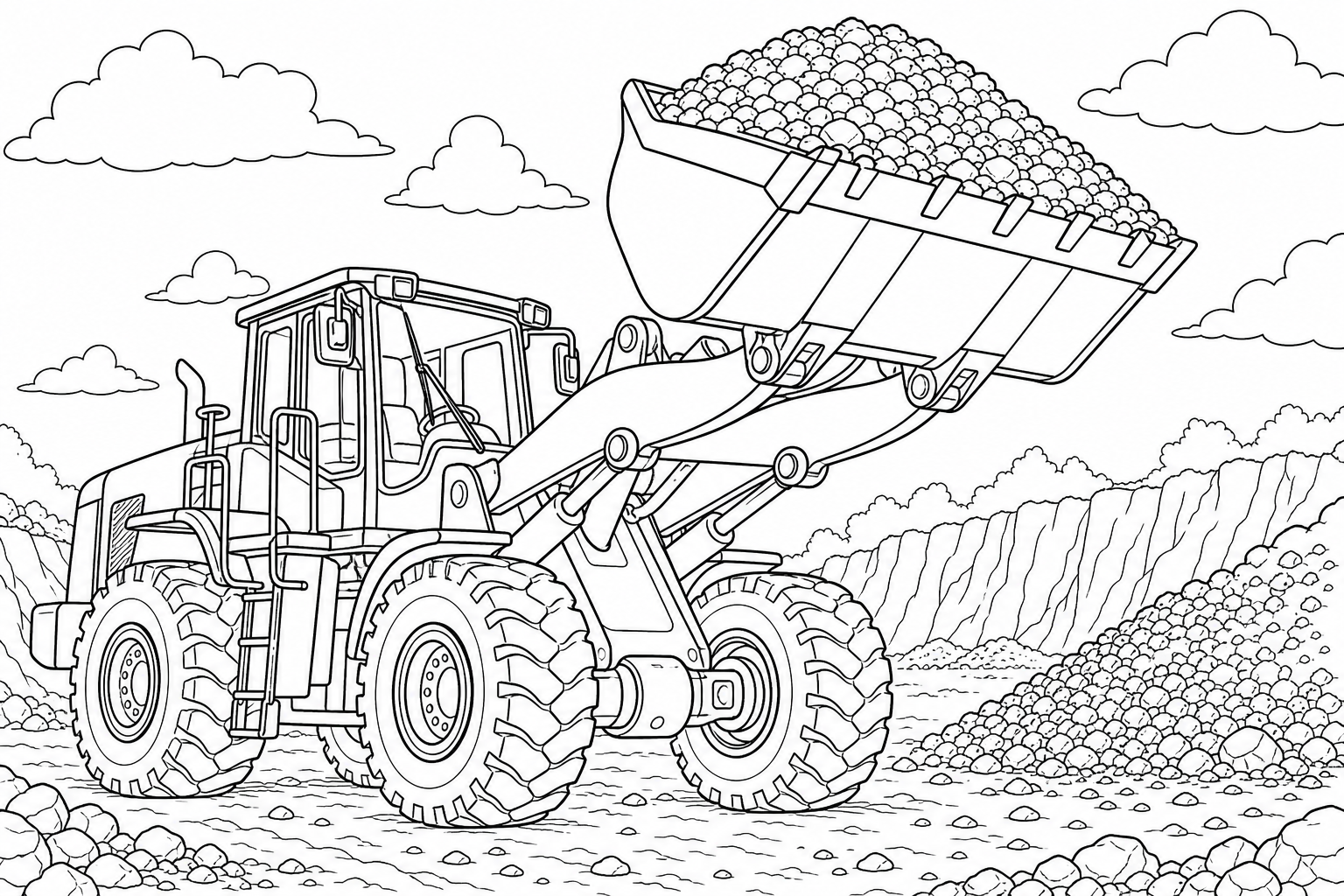
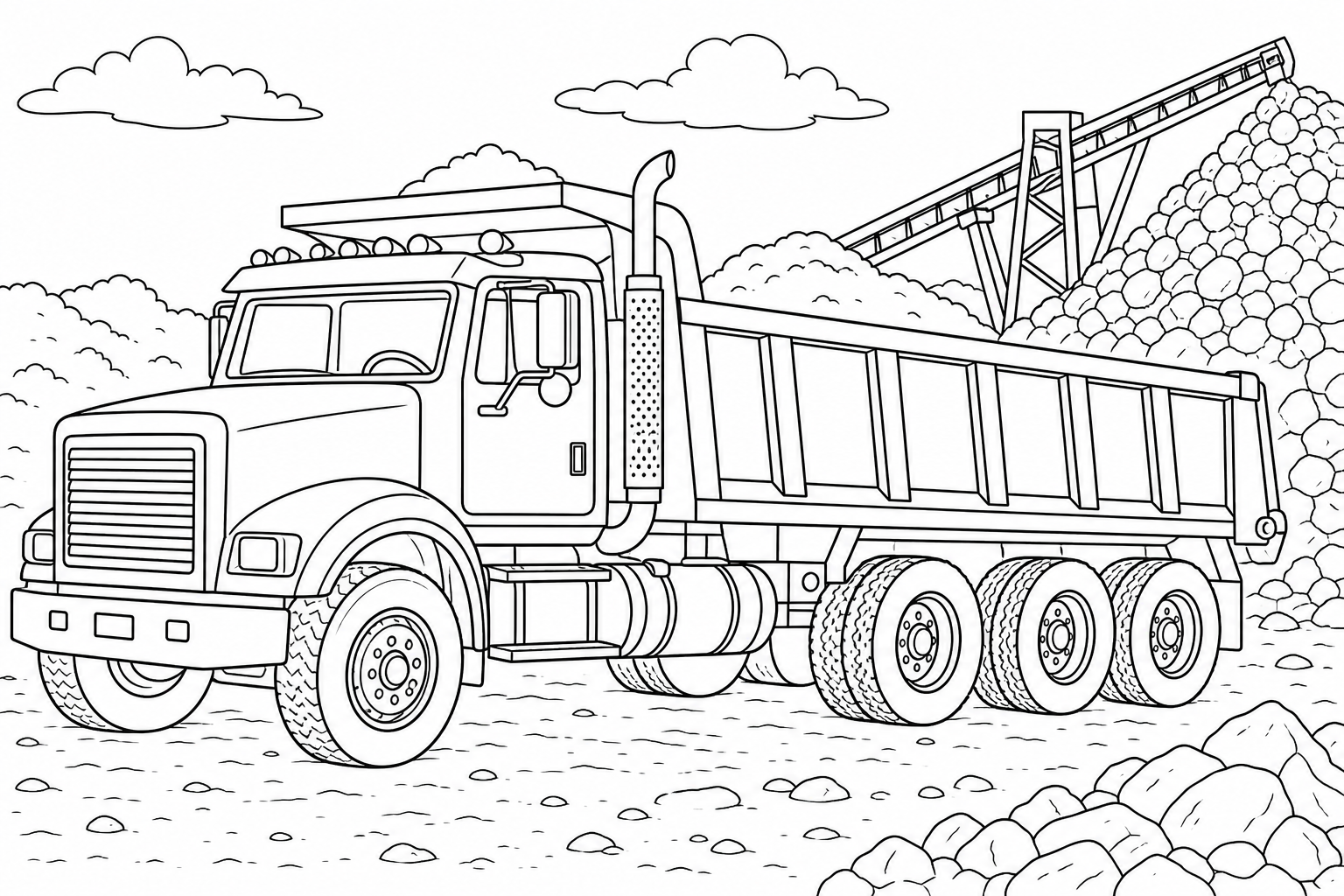
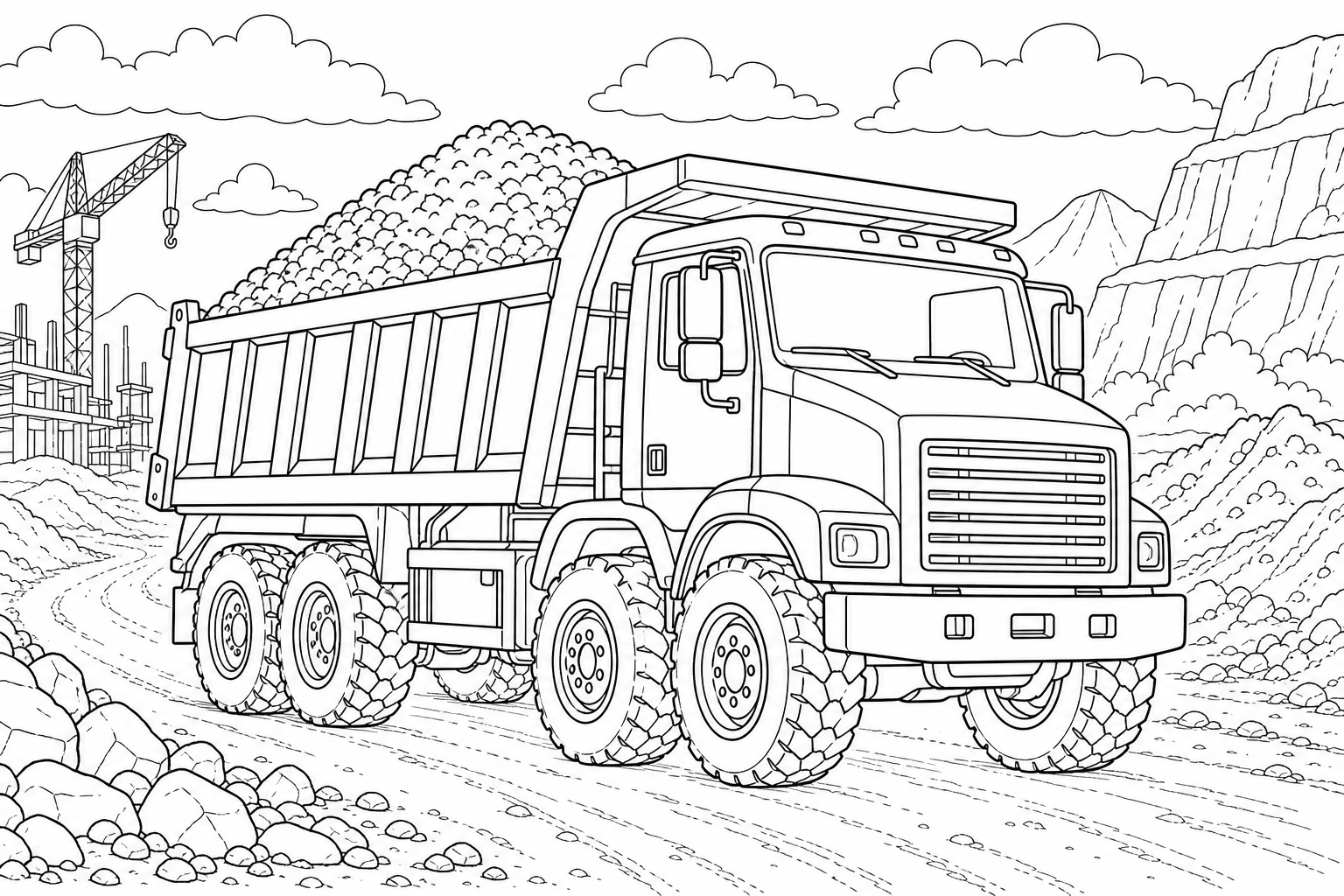
Every scoop the excavator digs has to go somewhere, and that is the dump truck's whole reason for being. It backs up, waits to be filled, drives the load away, then tips its huge bed toward the sky until the dirt slides out the back. On the way in it brings the new stuff too, gravel and sand and stone. It is the busiest machine on any site, always coming or going.



Coloring fun for kids — anywhere.
Free for iOS & Android. No ads, no sign-up, offline-ready.


Coloring fun for kids — anywhere.
Free coloring app for kids. iOS and Android, phones and tablets. No ads, no sign-up, even offline.
The cement mixer pours the foundation
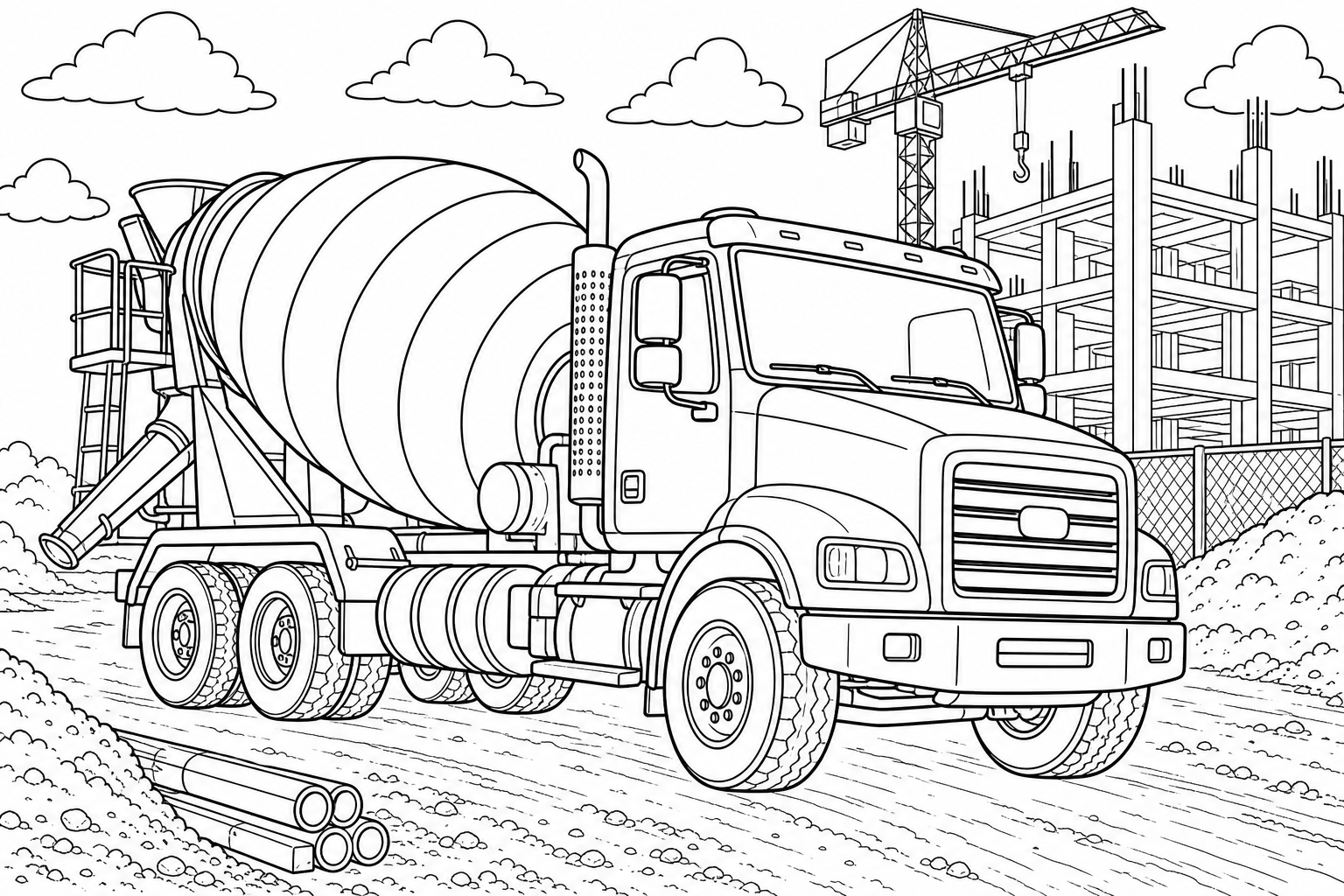
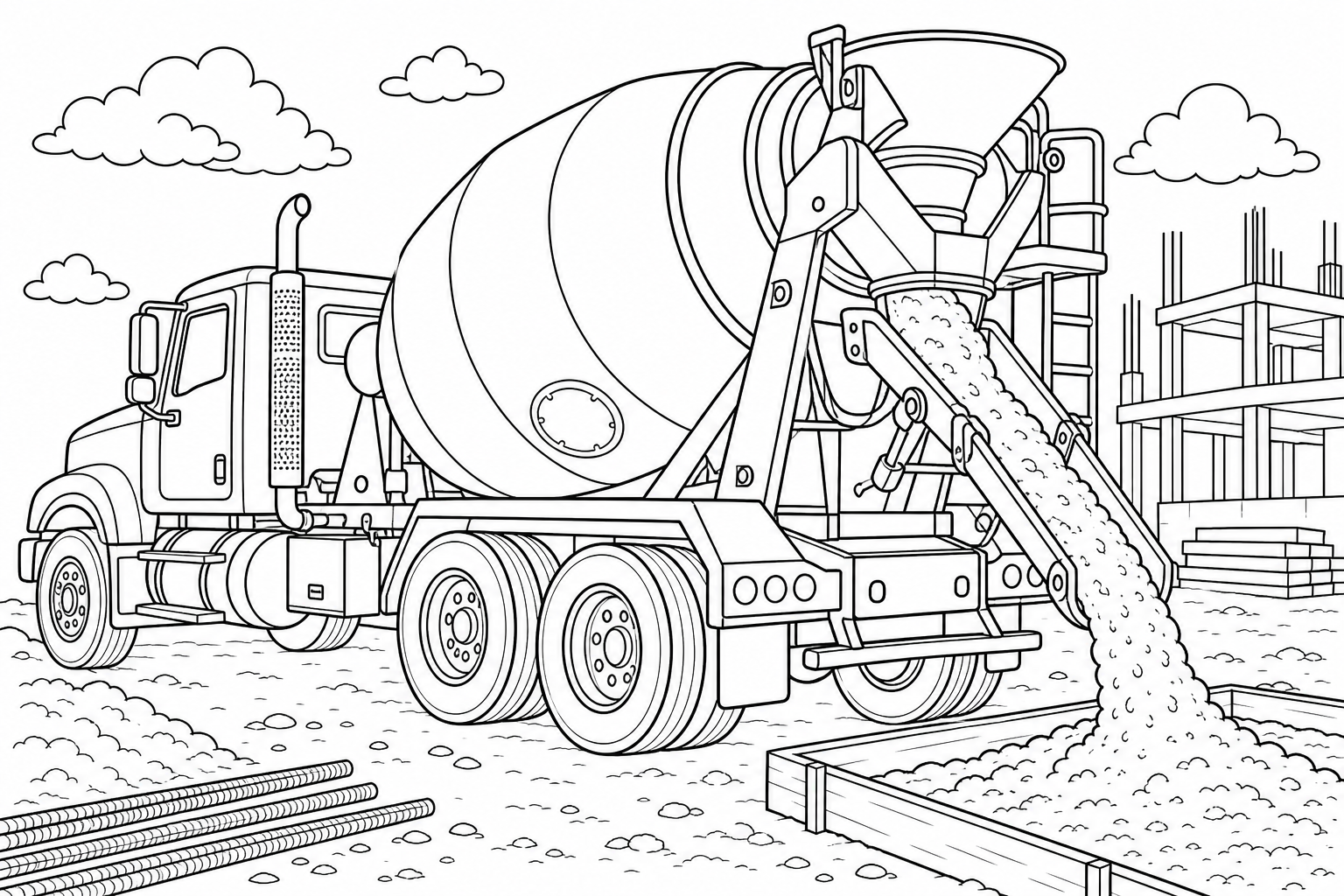
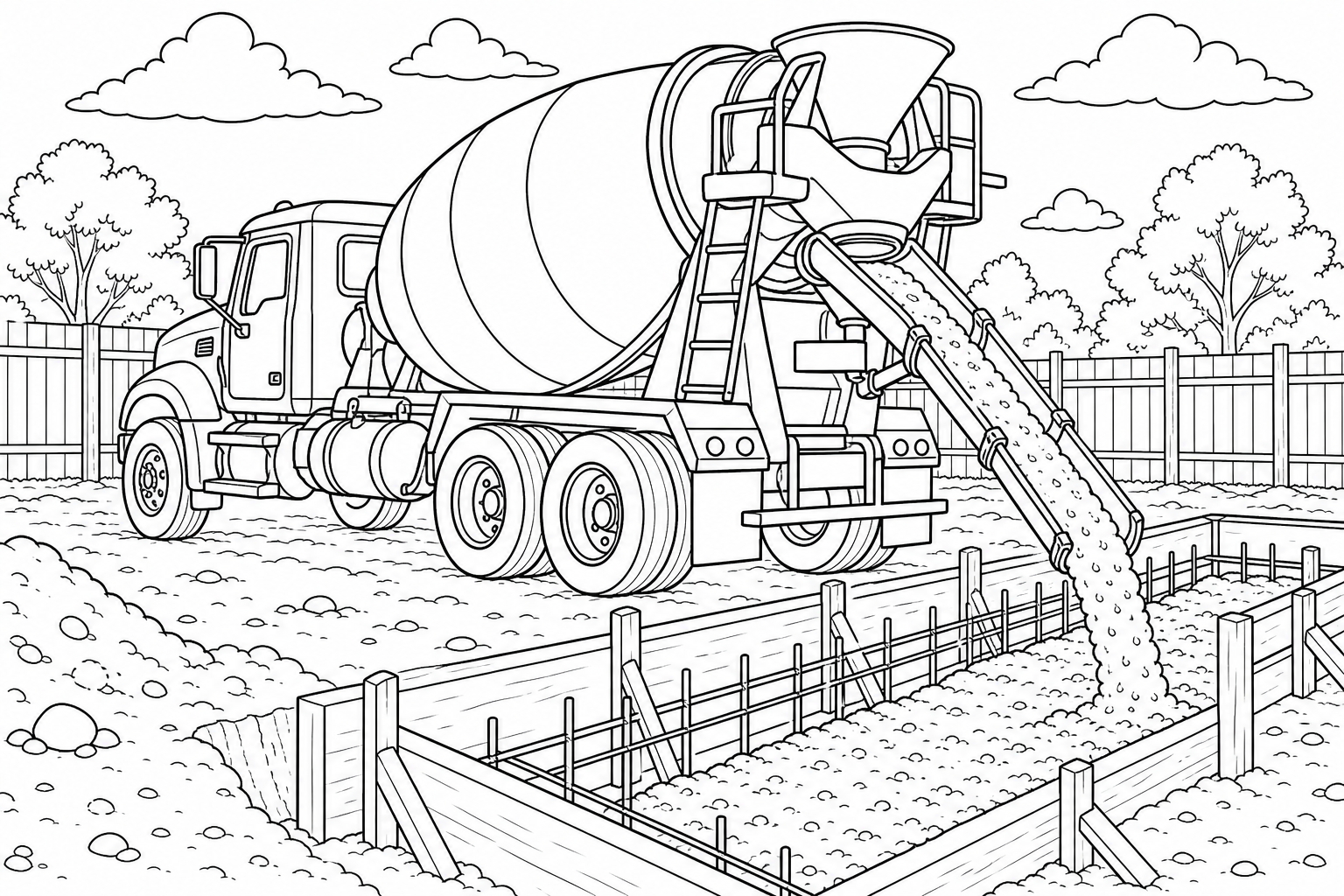
The mixer is easy to spot by the fat drum on its back, the one with the spiral stripe that keeps slowly turning. That spin is not for show. It keeps the wet concrete moving so it does not harden on the drive over. When the truck reaches the hole, a chute swings out the back and the gray soup pours in to become the solid floor everything else stands on.
The crane lifts the building up
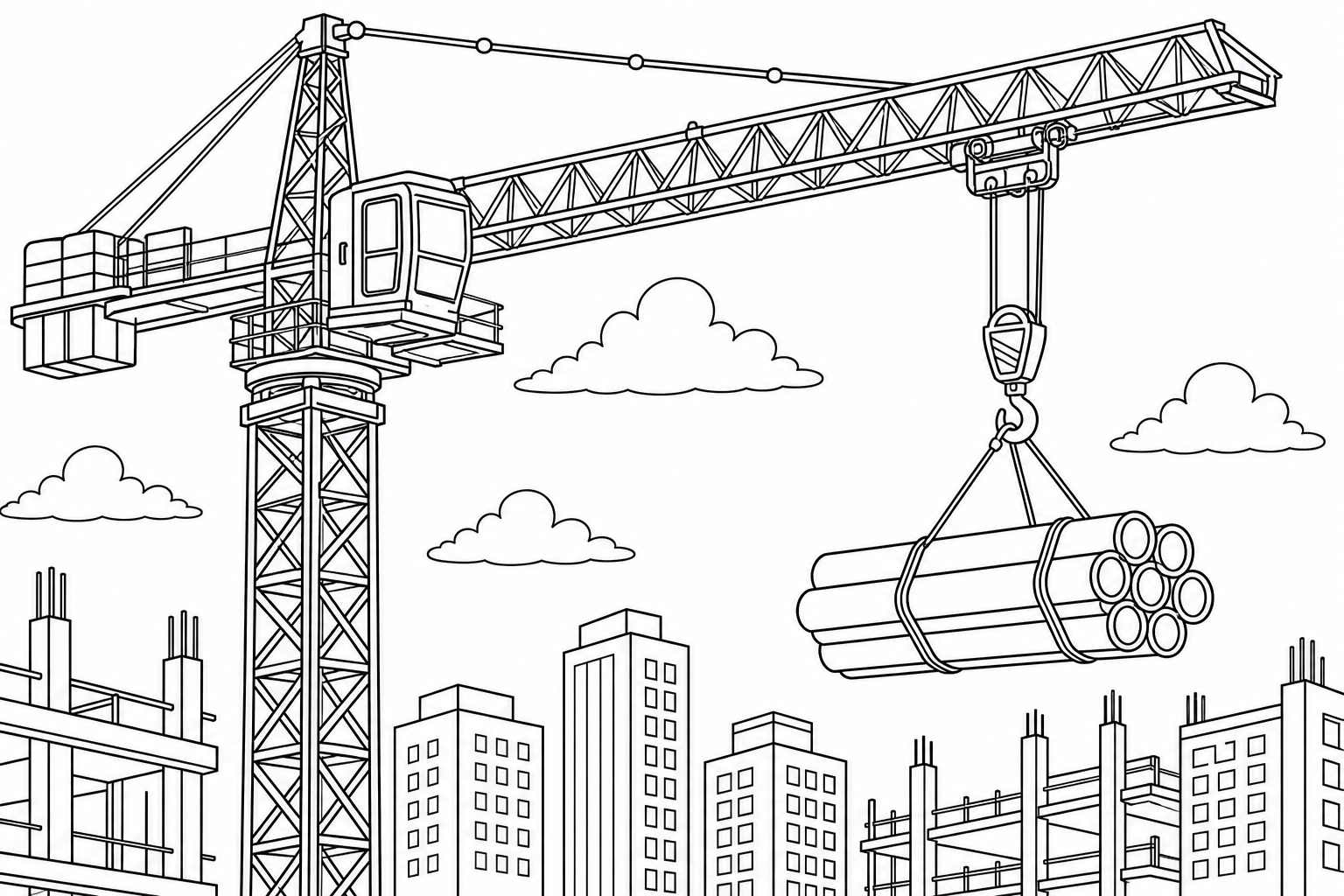
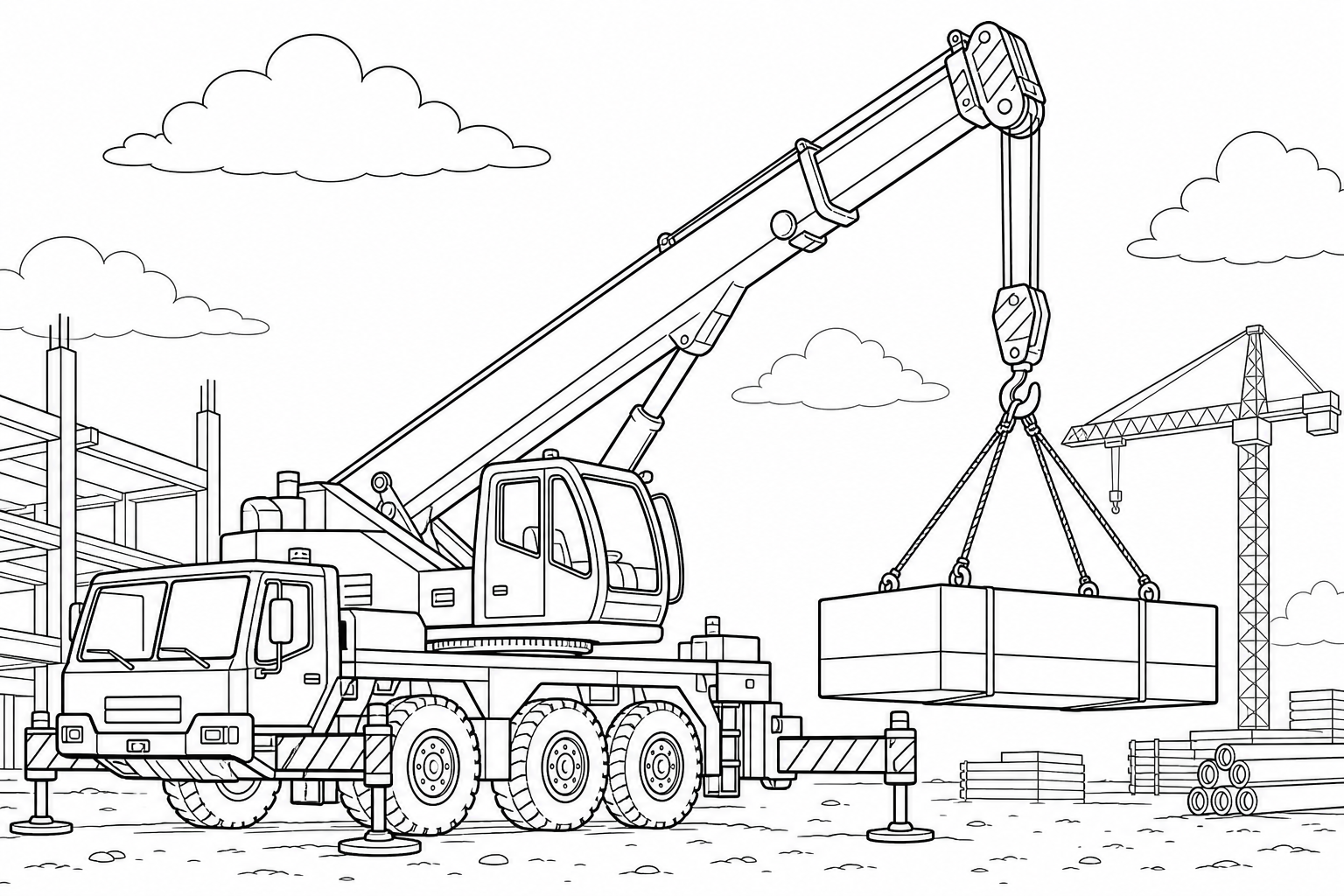
Once the floor is set, the site starts growing upward, and only the crane can reach that high. A tall thin boom, a hook on a long cable, and a heavy block of counterweight at the back so it never tips. It lifts steel beams, concrete panels, and bundles of pipe up to the workers waiting on the floors above. On the biggest sites the crane is the last machine to leave, because it has to lower itself down piece by piece.
And the machines that finish the job
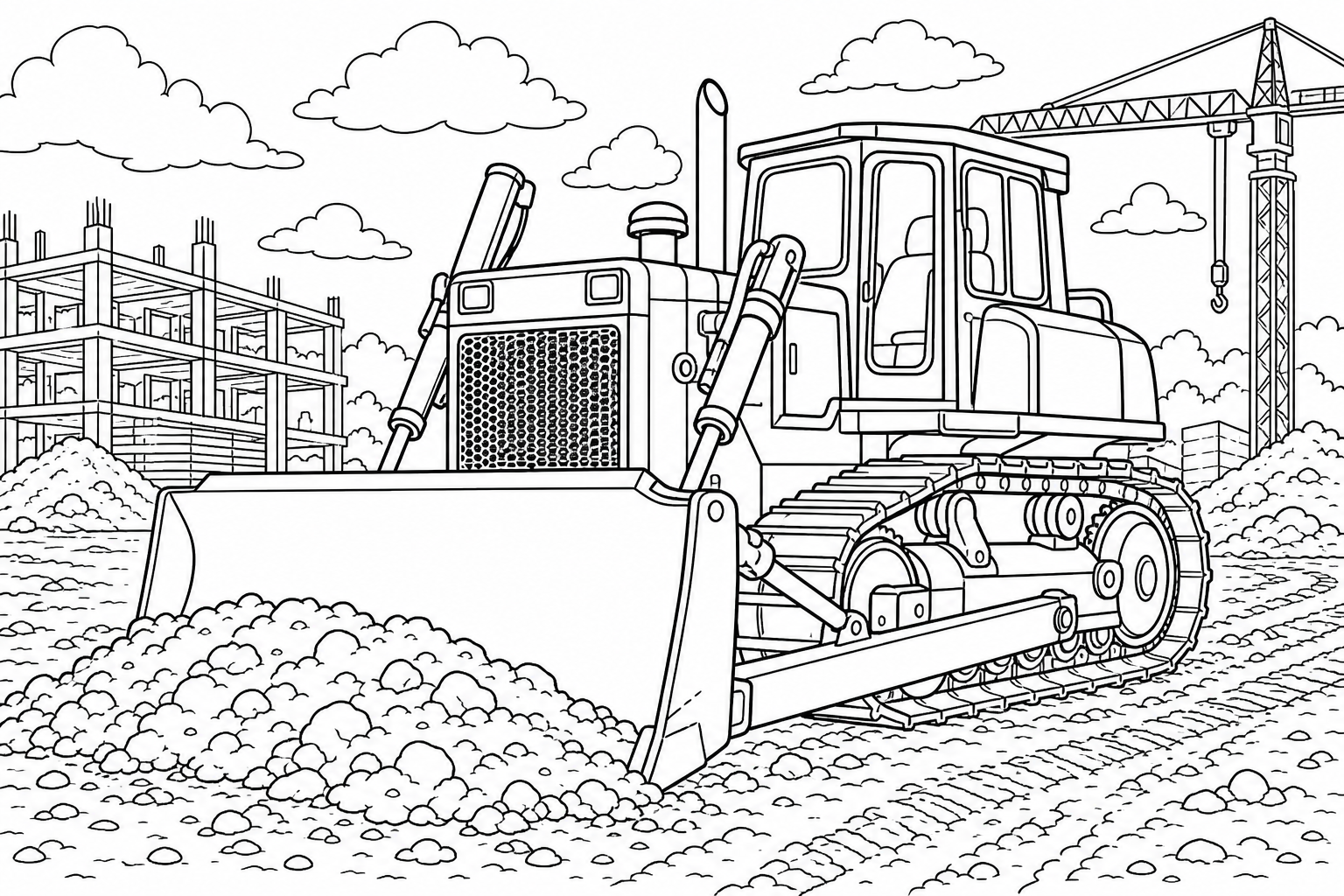
Two more quietly do the tidying. The bulldozer pushes the leftover piles into place with its wide front blade, shoving earth around until the ground is level. Then the road roller creeps back and forth on its heavy smooth drum, pressing the dirt and fresh asphalt down until the surface is hard and flat enough to drive on. When those two are done, the site is finished, and the fence finally comes down.
That is the whole crew, from the first scoop of dirt to the last smooth pass. Want to look closer at any one of them?
What else could you color?
Pick a prompt or type your own — opens in a new tab.
Print the whole crew
Line them up on the kitchen table and build the site page by page: dig the hole, haul the dirt, pour the floor, raise the crane. Here is the full set, ready to print.