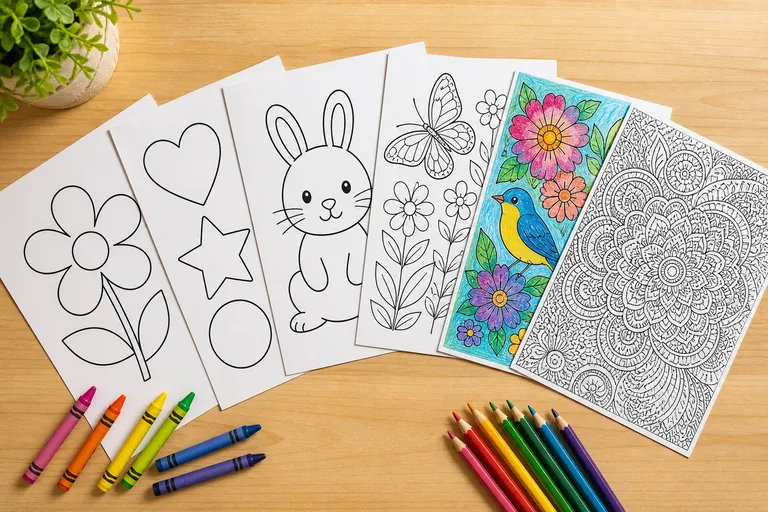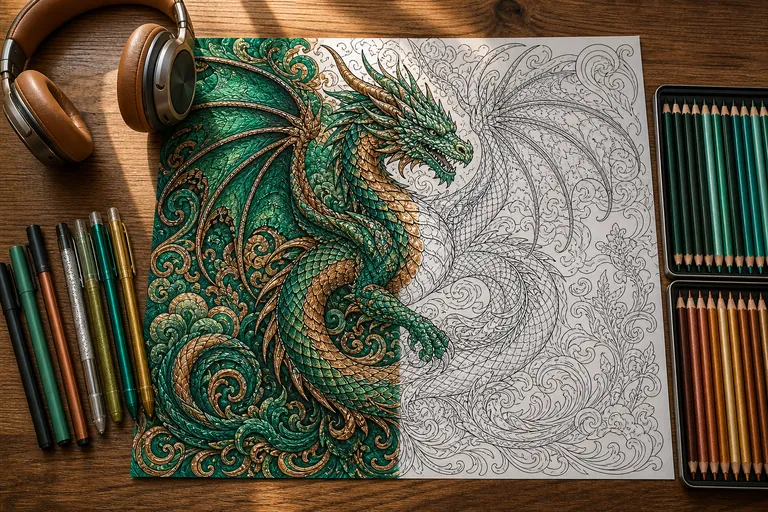
Somewhere around fourth or fifth grade, a lot of parents notice the coloring just stops. The crayons get pushed to the back of a drawer, the folded-up printouts stop coming home from school, and it starts to feel like one more thing your kid has quietly grown out of. Here is the part that catches people off guard: most tweens have not lost interest in coloring. They have lost interest in little-kid coloring. Hand a ten-year-old a chunky cartoon puppy and yes, they will be bored in about ninety seconds. Hand the same kid an intricate mandala, a dragon covered in a thousand scales, or a manga-style face, and something switches back on.
What is actually going on at nine to twelve
By the tween years, the fine motor skills that coloring used to build are mostly finished developing. A nine-year-old can already stay inside a hairline border without thinking about it, so the real point of coloring quietly moves somewhere new. It becomes a low-pressure way to make something that looks genuinely good, and a way to settle a head that is suddenly a lot busier than it used to be.
This is also the age when self-criticism arrives. Tweens start measuring their work against everyone else's, they notice the gap between what they pictured and what they actually made, and a fear of messing it up can creep into anything creative. Coloring sidesteps that fear neatly, because the hard part, the drawing, is already finished. The lines are there. What is left is the forgiving part, and the result almost always looks good. When researchers had adults make art for forty-five minutes, most came away feeling more capable and more confident, no matter how "artistic" they were to begin with (Drexel University study). For a tween quietly wondering whether they are any good at anything, that quick route to a good-looking result is the whole appeal.
| From 5 to 8 | To 9 to 12 | What it means for you |
|---|---|---|
| Staying in the lines | Already automatic; now it is about detail and technique | Offer more intricate pages, not simpler ones |
| Bright primary colors | Shading, blending, deliberate palettes | Upgrade the tools, not just the pages |
| Wanting your praise | Wanting your respect, and some privacy | Comment less, hand over more control |
| Coloring to play | Coloring to unwind and to make something | Treat it as a real hobby, not a time-filler |
Why tweens do not outgrow coloring, the pages just grow up
There is a solid reason coloring keeps working long after the toddler years. Detailed, structured designs give the mind one narrow, absorbing thing to hold onto, which is exactly what calms a person down. In one well-known experiment, people who colored a patterned mandala after a stressful task felt noticeably less anxious afterward than people who colored on a plain blank sheet (Curry & Kasser, 2005). The structure is doing the work, and the busier the page, the more of that structure there is. That is precisely why tweens reach for the most complicated designs on the shelf rather than the simplest.
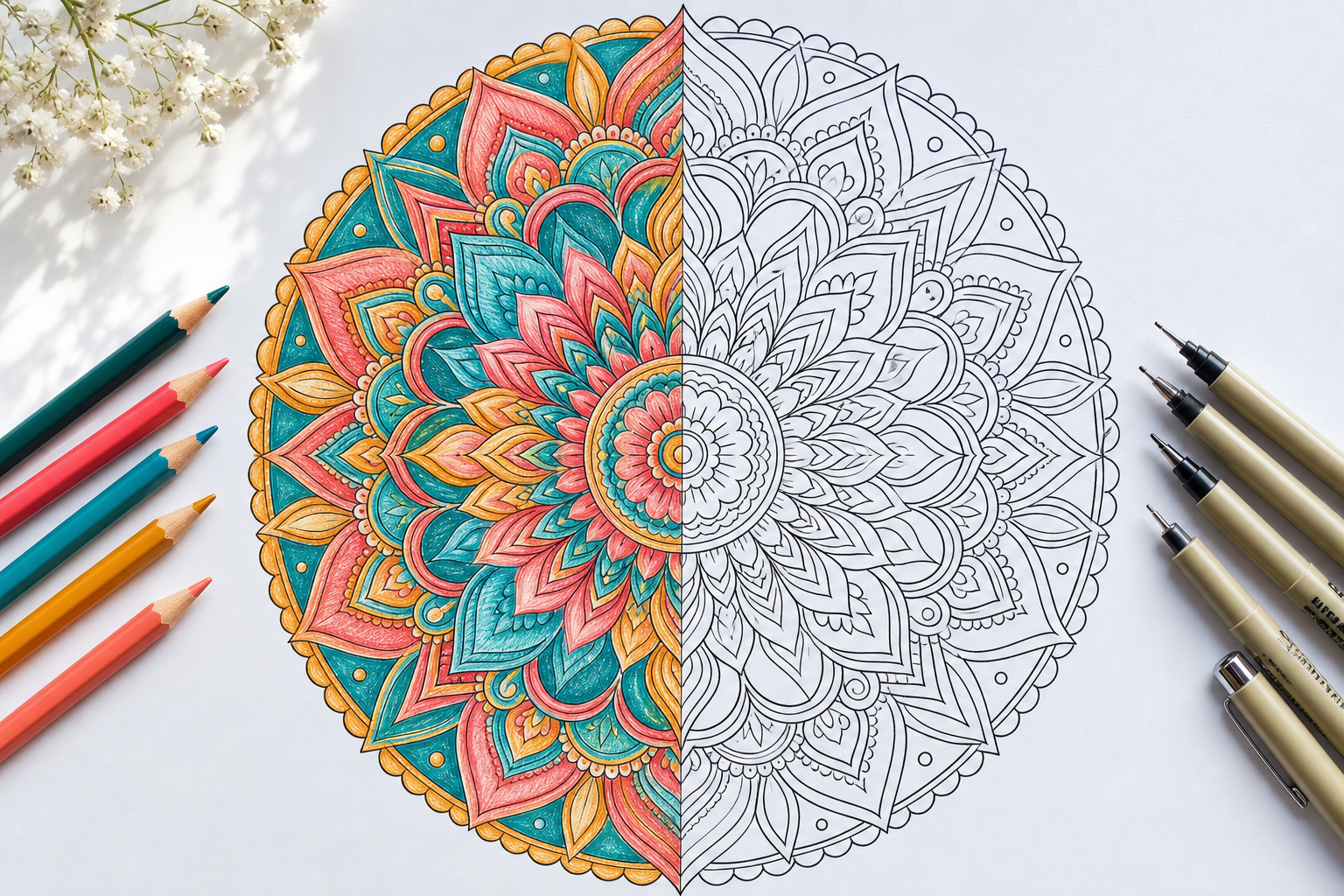
For a lot of preteens this turns into a genuine wind-down ritual: something to do with their hands while a podcast plays, a way to decompress after a rough day, a screen-free option that does not feel like a punishment for being off a screen.



Coloring fun for kids — anywhere.
Free for iOS & Android. No ads, no sign-up, offline-ready.


Coloring fun for kids — anywhere.
Free coloring app for kids. iOS and Android, phones and tablets. No ads, no sign-up, even offline.
How to keep it something they actually want to do
The quickest way to shut a tween down is to treat them like a much younger child about it. A handful of things that help:
- 1Hand them harder pages, not easier ones. If a design looks almost intimidating, it is probably right. Tweens want to be met at their level, not managed down to a safer one.
- 2Upgrade the tools. A set of blendable colored pencils, a few fine-liners, and a couple of gel pens do more for motivation than any new page. Better tools make the finished work look the way they hoped it would.
- 3Let them ruin it. If they want neon-green skin and a purple sky, that is their call. This is one of the few low-stakes places a tween gets full creative control, so protect it.
- 4Ease off the running commentary. Constant praise starts to feel like being watched. A quiet "that turned out great" once they are done lands far better than narrating every choice.
- 5Make it parallel, not supervised. Color alongside them on your own page instead of hovering over theirs. Shared quiet beats a performance.
Where to take it from here
If you want to see how this stage fits the bigger picture, our full guide to coloring by age runs through every phase from scribbling toddler to independent tween, and the stage just before this one, coloring for school-age kids, covers the years when staying in the lines still felt like the main event.
For pages that genuinely suit a nine-to-twelve-year-old, start with something intricate. Mandala coloring pages are the classic tween wind-down, and dragon coloring pages give the detail-hungry ones plenty to disappear into.
What else could you color?
Pick a prompt or type your own — opens in a new tab.