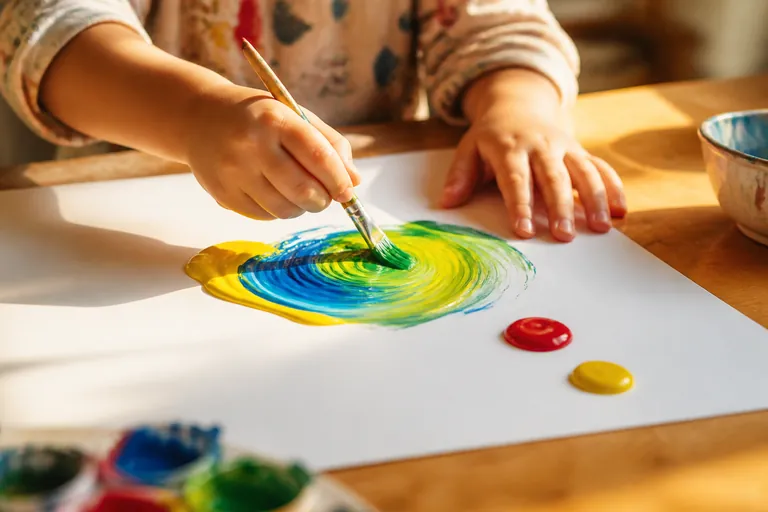
Your child dips a brush in yellow, then in blue, and swirls. The green that appears on the paper looks like magic. It isn't. It is one of the most useful things they can learn about color, and it all starts with just three colors.
Three colors you can't make
Red, yellow, and blue are called primary colors. They are the starting point for every other color, and here is the part kids love: you cannot mix anything to make them. There is no recipe for red. You either have it, or you don't. That is what makes these three special. Everything else on the page can be built from them.
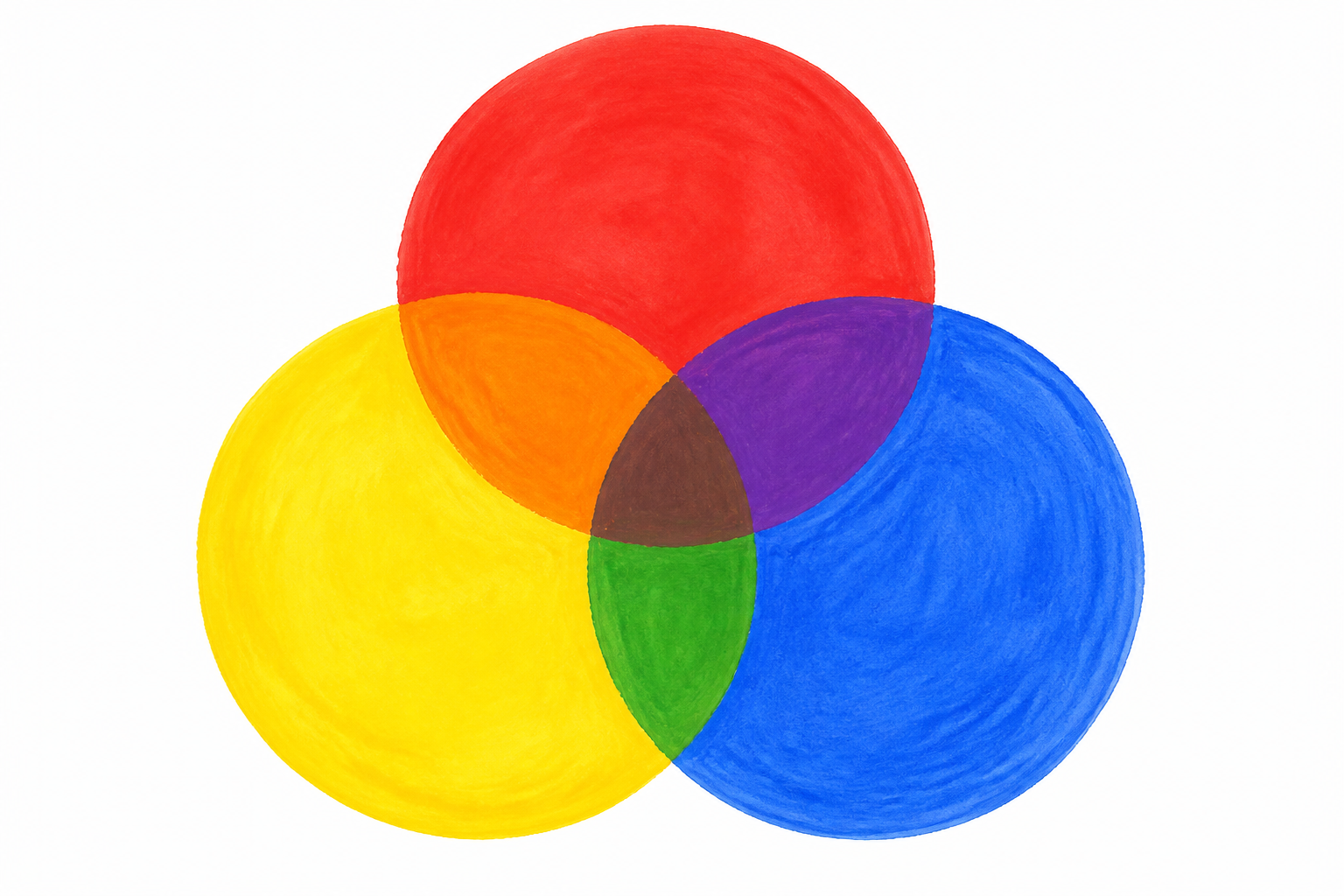
Mix two, and a third appears
When you mix two primary colors, you get a secondary color. There are three of them, and each one has a simple recipe. Once a child knows the three mixes, they can guess a color before it even lands on the paper.
| Secondary color | Mix these two | Where to spot it |
|---|---|---|
| Orange | Red and yellow | A pumpkin, a sunset |
| Green | Yellow and blue | Grass, a leaf |
| Purple | Red and blue | Grapes, a violet |
Point these colors out in the world for a day or two. A child who has spotted the orange in a sunset remembers the recipe far better than one who only saw it in a chart.


Coloring fun for kids — anywhere.
Free for iOS & Android. No ads, no sign-up, offline-ready.


Coloring fun for kids — anywhere.
Free coloring app for kids. iOS and Android, phones and tablets. No ads, no sign-up, even offline.
Try it: one messy, happy activity
You don't need a color wheel or a lesson plan. You need two colors and something to mix them on.
- 1Give your child two primary colors. A dab of yellow paint and a dab of blue, side by side on a plate, is plenty. A zip-top bag with two blobs sealed inside works too, and stays clean.
- 2Let them mix with a finger, a brush, or a squish. No stirring instructions. The point is to watch one color turn into another.
- 3Name the new color together. "You made green!" Then try the other pairs: red and yellow, then red and blue.
- 4Keep the surprises. Put a page of their mixes on the fridge so they can see all three secondaries they made.
What this changes when they color
Knowing how colors mix quietly makes a child a better colorer. When they reach for green to fill a leaf, they now know green is really yellow and blue, so they can lay down a little yellow first and blue on top for a richer, living green instead of one flat shade. It is the first step toward blending two colors into one and toward reading a color wheel as a mixing map. The same thinking tells them why a sky can be pale blue or deep blue, and why warm and cool colors feel so different side by side.
What else could you color?
Pick a prompt or type your own — opens in a new tab.
Keep the discovery going
The best color lessons don't feel like lessons. Leave the primary colors within reach, let the mixing happen at its own pace, and follow your child when a new color surprises them. When they are ready to put all six colors to work at once, a page full of color, like these rainbow coloring pages, is the natural next step, one stripe at a time.