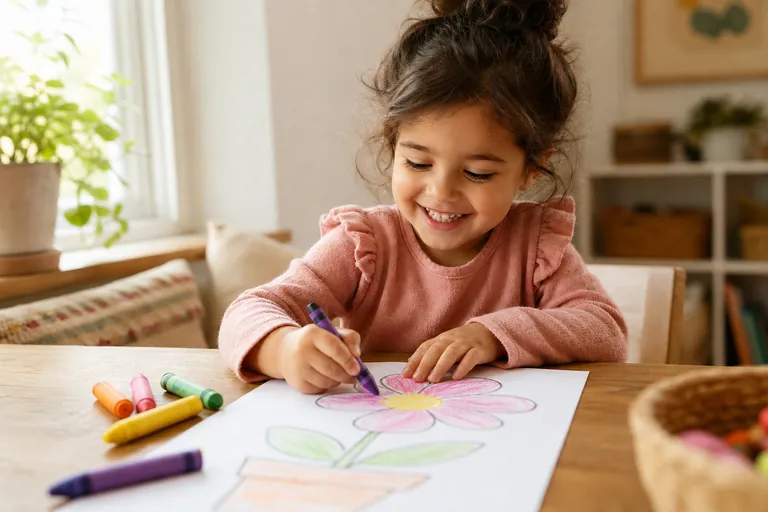
Somewhere around three, the scribble starts to mean something. The same child who covered a whole page in one furious color a year ago now hands you a drawing and announces, "that's a dog." It may look nothing like a dog. That is not the point. What just happened is one of the biggest leaps of early childhood: a preschooler has worked out that marks on paper can stand for real things in the world.
This is the preschool stop on the full coloring-by-age guide, picking up where coloring for toddlers left off. Between three and five, coloring quietly turns into more than a way to keep small hands busy. It becomes the place where finger control, color words, and a child's first real ideas about pictures all meet.
What changes between three and five
Two things grow at once during the preschool years, and coloring sits right where they meet.
The first is in the hands. A three year old often still grips a crayon in a loose fist and presses hard. Over the next two years that grip migrates toward a tripod hold, with the crayon resting between the thumb and first two fingers, and the movement shifts from the whole arm to the wrist and fingers. The U.S. Centers for Disease Control's developmental milestones mark a few familiar points along the way: many children can draw a circle when shown how around age three, and draw a person with several body parts during the preschool years.
The second change is in the head. Around three and four, drawing becomes representational, which means the marks start to stand for something even when the resemblance lives only in the child's mind. Color recognition and naming sharpen at the same time, and attention stretches from a restless minute or two toward five, ten, sometimes fifteen quiet minutes on a single page.
| Around this age | What you will often see | What is still developing |
|---|---|---|
| Three years | Draws a circle when shown how, names a few colors, says what a drawing "is" after finishing | A steady grip; lines that wander well past any edge |
| Four years | Tripod grip firming up, draws a person with a few body parts, plans "I'm making a..." out loud | Keeping color inside an outline; even pressure |
| Five years | Forms some letters, fills larger shapes, chooses colors on purpose | Fine detail and small, tidy spaces |
The moment they start noticing the lines
Somewhere around four, a lot of preschoolers notice for the first time that the picture has edges, and that their color sailed straight past them. This is often when the first real frustration arrives too, the "I messed it up" that can end a session in seconds.
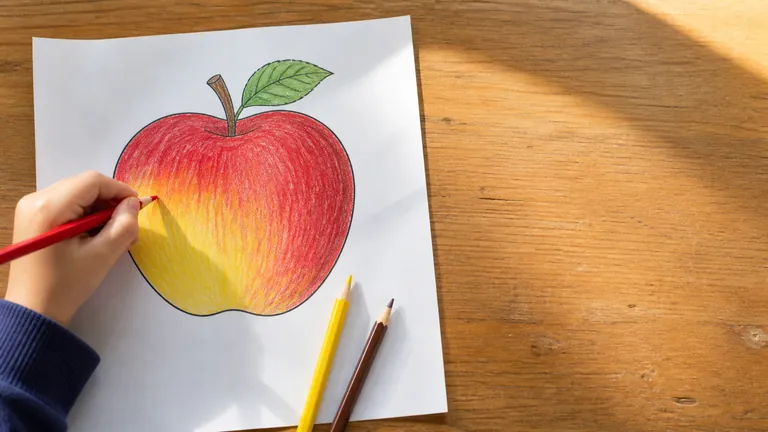
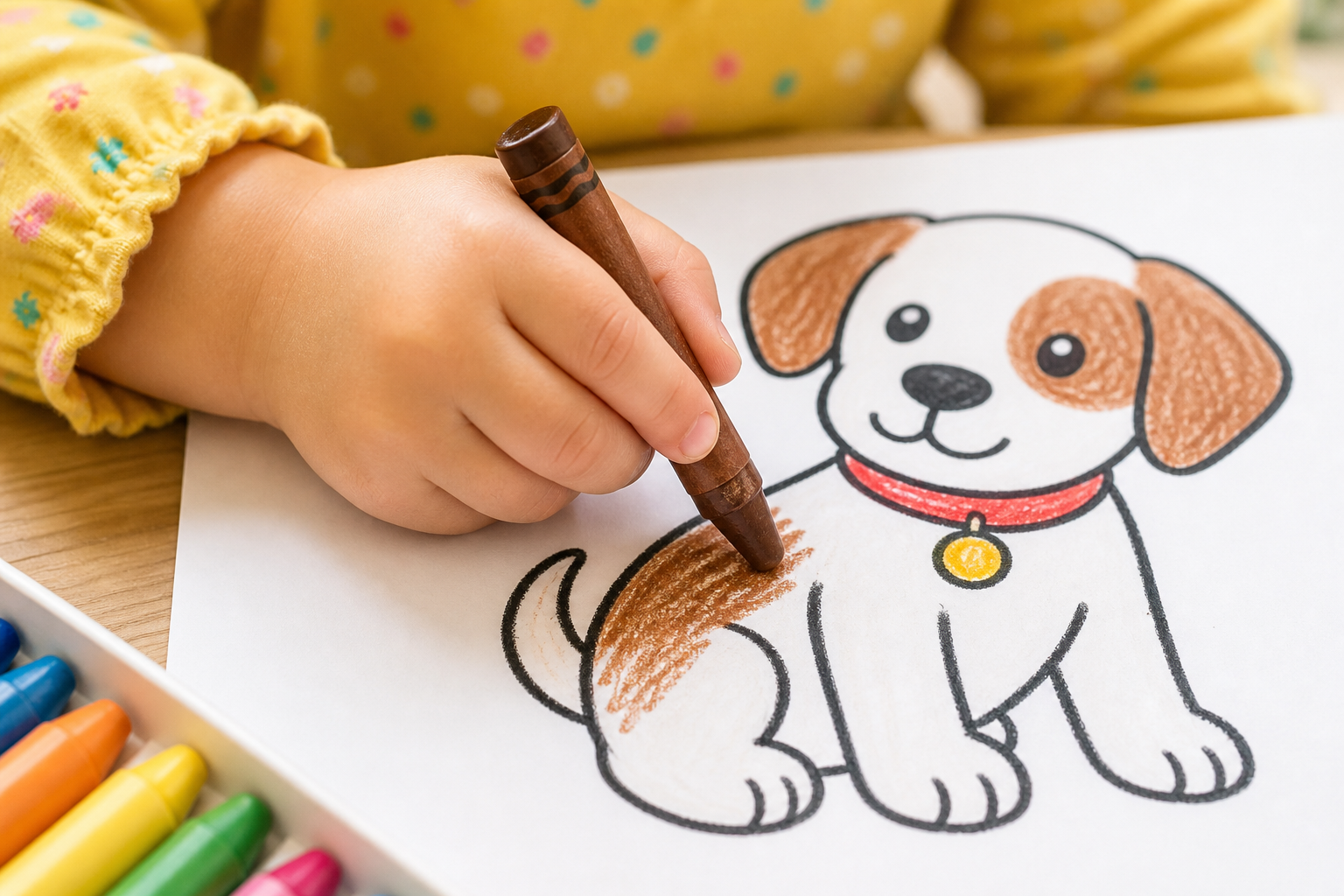
A light touch wins here. Going over the lines is still completely normal at this age, and pushing for neatness tends to make a child put the crayon down. When staying inside the outline genuinely becomes their goal rather than yours, a few gentle tricks for staying in the lines help far more than correction does.
Colors get names now
The preschool years are prime time for color words. A child who could only point last year can now ask for "the green one," sort crayons into rough piles, and tell you the sky should be blue before filling it in. Coloring turns that growing vocabulary into something they do with their hands, instead of something they are quizzed on.
You can feed it without making it a lesson. Name colors out loud as your child reaches for them, talk about the colors already in the picture, and let surprising choices stand. A purple dog is a perfectly good dog.
How to keep it fun, and gently stretch it
Support at this age is less about teaching and more about setting the table and stepping back. A few things that tend to help:
- 1Put a few outlines and some blank paper out side by side, and let your child pick.
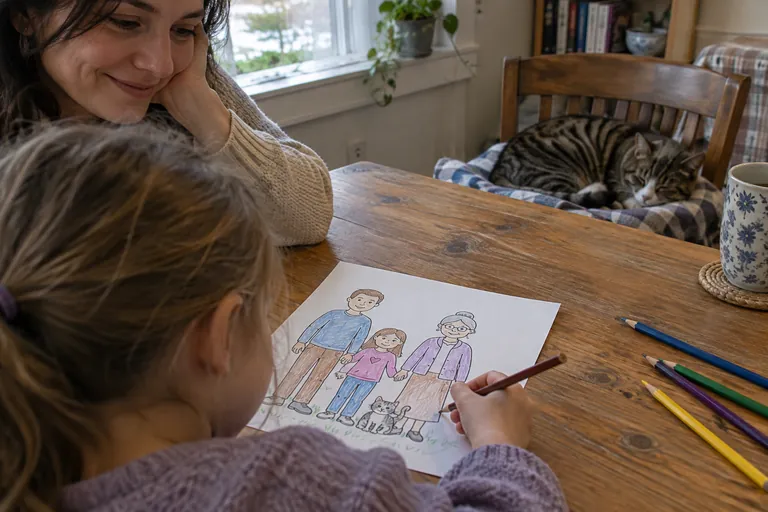
- 2Ask about the picture, not the neatness. "Tell me about your dog" beats "stay inside the line."
- 3Name colors as they are chosen, without steering the choices themselves.
- 4Keep sessions short, and stop while they still want one more page.
- 5Show the finished page somewhere they can see it. Finishing a page matters far more than filling it perfectly.



Coloring fun for kids — anywhere.
Free for iOS & Android. No ads, no sign-up, offline-ready.


Coloring fun for kids — anywhere.
Free coloring app for kids. iOS and Android, phones and tablets. No ads, no sign-up, even offline.
Signs it is going well, and when to check in
For most preschoolers, going well looks ordinary. They enjoy it, they narrate what they are making, they try new colors, and they come back to it on their own. None of that has to be neat to count.
A quick word with your pediatrician is reasonable if, by four or five, a child still cannot hold a crayon at all, shows no interest in drawing or mark-making of any kind across many months, or clearly loses skills they used to have. These are worth a calm conversation, not a panic, and a doctor who tracks your child's development is the right person to ask.
Pages that fit a preschooler's hands
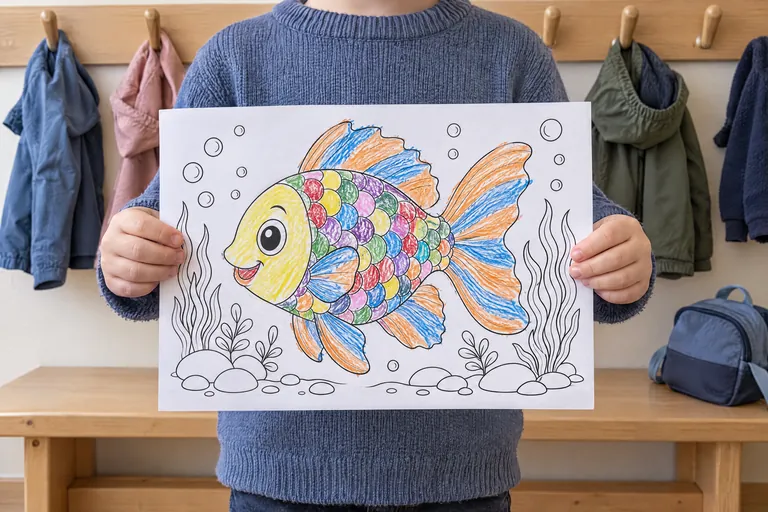
When you are ready to print something, reach for bold, simple outlines with subjects a preschooler can recognize at a glance: a butterfly, a cat, a rainbow, a fish. Plenty of white space and a thick line give a developing grip room to work.
What else could you color?
Pick a prompt or type your own — opens in a new tab.
And when you want the bigger picture of how all of this shifts from one year to the next, head back to the coloring-by-age guide and follow the stages as your child grows.