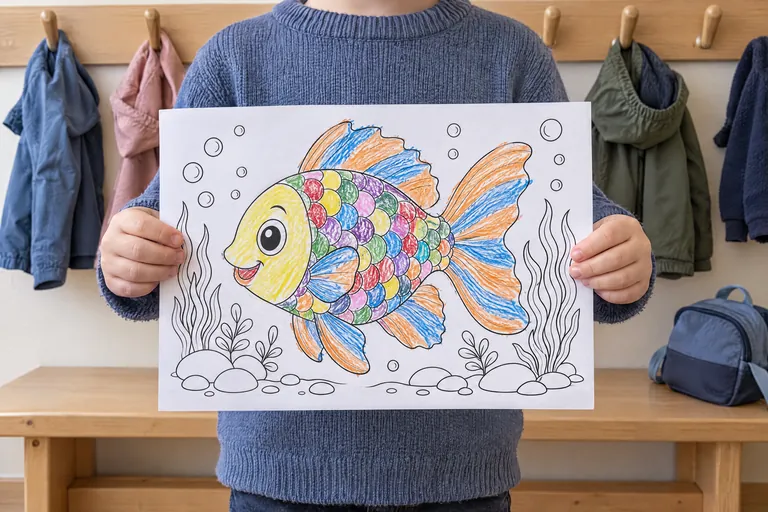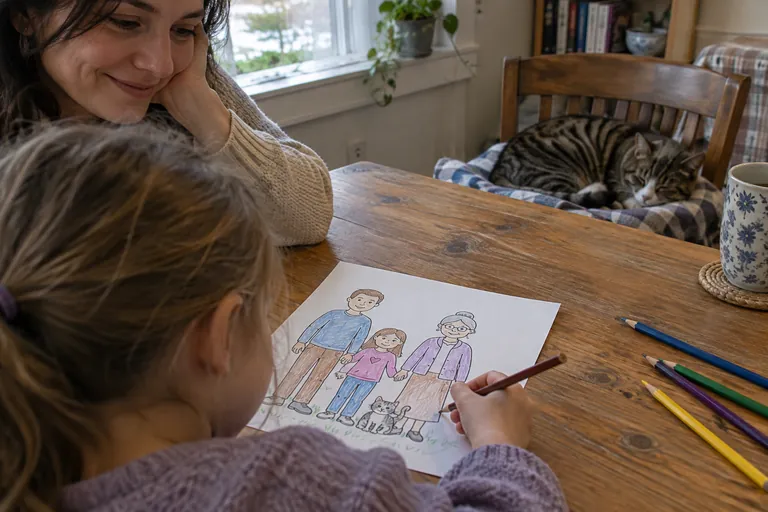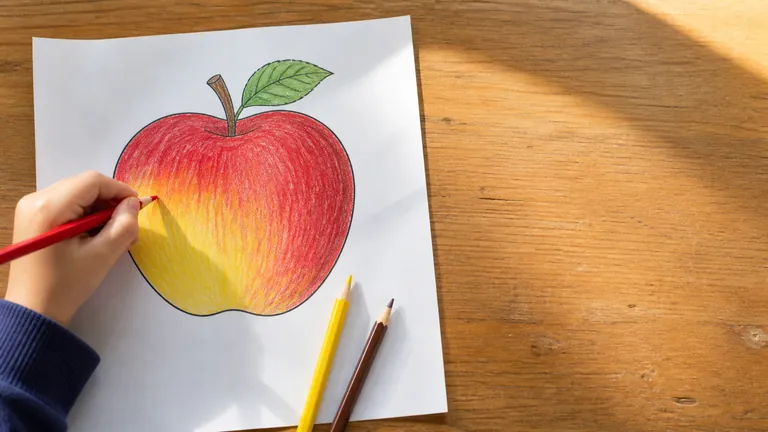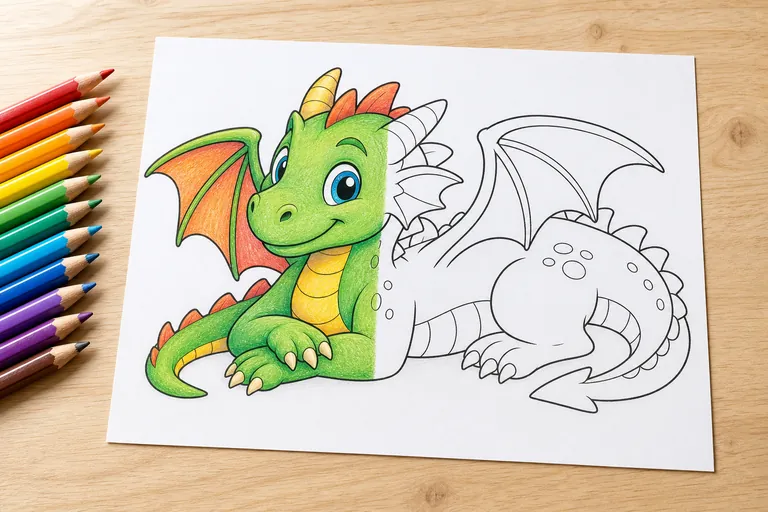
Somewhere around kindergarten, coloring quietly changes jobs. For a toddler it was a whole-arm workout. For a preschooler it was practice at aiming. For a five to eight year old it turns into something closer to a small project, one they can plan, finish, and have real opinions about.
That last part catches parents off guard. The same year a child can finally keep the crayon inside the outline is often the year they start frowning at their own page and asking whether it is any good. School-age coloring is two stories running at once: a new set of skills arriving, and a new inner critic arriving right behind them. Here is what is going on, and how to keep the whole thing fun.
What changes when a child hits school age
Between five and eight, the gap between what a child pictures and what their hand can actually produce shrinks fast. They can hold a pencil the grown-up way, control how hard they press, and keep a plan in mind long enough to carry it out. Coloring shifts from something they do to something they make.
If you want the wider arc, from the first toddler scribble to a tween shading a portrait, the full coloring-by-age guide walks through it stage by stage. And if your child was making careful little suns and rainbows not long ago, what coloring looked like at preschool age is the chapter right before this one.
Here is the short version of what tends to shift:
| Aspect | Preschool (3 to 5) | School-age (5 to 8) |
|---|---|---|
| Grip | Getting there, often a whole fist | A mature three-finger hold |
| Lines | Aiming for them, missing often | Mostly staying inside, on purpose |
| Focus | A few minutes at a stretch | A quarter hour or more on one page |
| The goal | The doing itself | The finished piece, and whether it is good |
The hand is finally ready for the lines
The reason a six year old can suddenly fill a small shape without overshooting is not patience, it is plumbing. The little muscles of the hand and the coordination between eye and fingers have matured enough for fine, controlled movement. Occupational therapists point out that this is the same machinery handwriting runs on, which is why coloring, cutting, and drawing show up so often in early handwriting support (see the OT Toolbox).
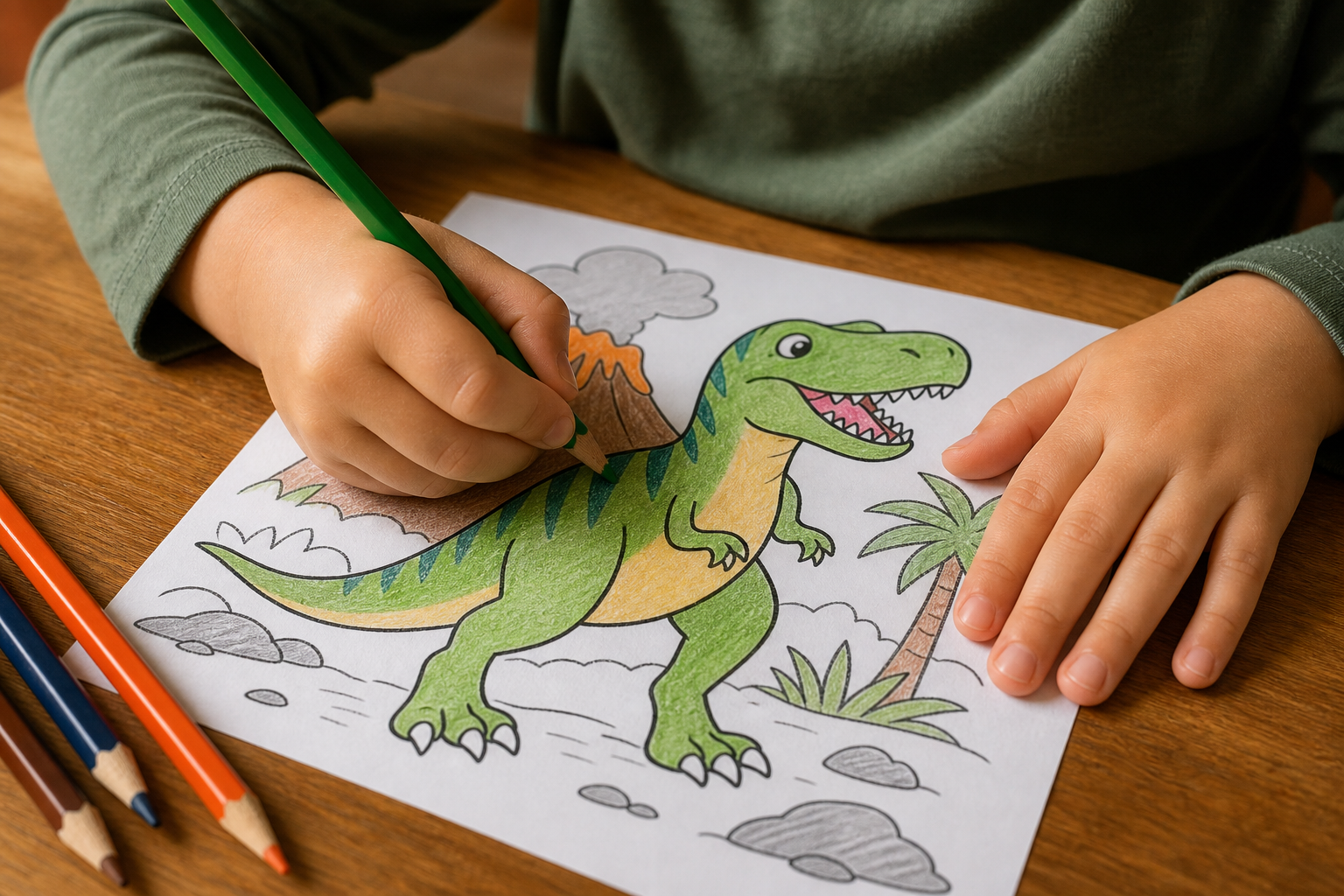
So when your child colors a page, they are also rehearsing the grip, the pressure control, and the stop-at-the-edge precision that letters will soon ask for. You do not have to explain any of that to them. A dinosaur with neatly colored scales is doing the quiet work on its own.
The new voice that asks, is it good?
The flip side of all this new skill is a new standard. Younger children tend to love whatever they make. Somewhere around seven or eight, kids start measuring their work, sometimes against a sibling's, sometimes against the picture in their head, and the easy love affair with their own art can cool. Researchers who study this find that judging yourself by comparison, rather than just enjoying the doing, tends to switch on around this age (one research review traces the shift).
In practice it can look like a child balling up a page because one line went wrong, or refusing to start in case it comes out badly. It is not fragility. It is a brand-new ability to evaluate, aimed inward before they know what to do with it. Coloring happens to be a low-stakes place to help them make peace with it.
Finishing what they start
Something else clicks into place around now: the patience to see a thing through. A school-age child can choose colors, work section by section, and reach the satisfying moment of done. That sense of completion is worth guarding, because it is the same muscle behind finishing homework, chores, and everything else with a last step.
You can feed it without pushing. Notice the finish rather than the polish, so "you colored the whole thing" beats "that is beautiful," and let them decide when a page is done, even when you would have kept going.



Coloring fun for kids — anywhere.
Free for iOS & Android. No ads, no sign-up, offline-ready.


Coloring fun for kids — anywhere.
Free coloring app for kids. iOS and Android, phones and tablets. No ads, no sign-up, even offline.
The tools grow up with them
As control improves, the toolbox can grow too. Chunky crayons give way to standard crayons, thinner markers, and especially colored pencils, which suit a steadier hand and open the door to the first real technique: shading. A school-age child is ready to discover that pressing lightly and then harder can turn one flat green into a whole leaf. If yours is curious, walk them through shading with a colored pencil in small, easy steps.
You do not need a big kit. A decent set of colored pencils, a sharpener they can work themselves, and pages with enough room to experiment will carry them a long way.
Pages that fit a school-age hand
The sweet spot at this age is a page with real detail but not overwhelming density: a dinosaur set in its landscape, a dragon with scales to pick out, a robot full of panels and dials, a mandala simple enough to finish in one sitting. Enough to invite care, not so much that it defeats them.
For the bigger picture of where your child is now and where they are headed next, keep the coloring-by-age overview close. And when they are ready to actually color, these subjects tend to land well with five to eight year olds:
What else could you color?
Pick a prompt or type your own — opens in a new tab.
Follow their lead on difficulty. The right page is the one they finish and feel good about, wonky lines and all.