Standing in the marker aisle while a five-year-old tugs your sleeve, the choice rarely comes down to brand. It comes down to one thing: do you want the easy cleanup of washable markers, or the bolder, longer-lasting color of regular ones? Both belong in a kid's art box. Knowing what actually separates them makes the call simple.
What "washable" actually means
The word sounds like a promise, but it really describes chemistry. Washable markers use water-based ink, so the color is a water-soluble dye that a damp cloth can lift back off skin and many surfaces. Regular markers, often sold as permanent, suspend their pigment in a solvent that dries fast and grips whatever it touches, which is exactly why water leaves it alone. The Children's Museum of Indianapolis explains it simply: washable ink stays water-soluble and never fully bonds to the page. That one difference drives everything else below.
Washable vs regular markers, side by side
Here is how the two stack up on the things parents actually weigh.
| What you are weighing | Washable markers | Regular markers |
|---|---|---|
| Cleanup from skin | Lifts with water and a little soap | Needs scrubbing, or waits to wear off |
| Clothes and furniture | Usually comes out in the wash | Often sets for good |
| Color payoff | Softer, slightly muted | Bold, saturated, even |
| Bleed-through | Mostly stays put on decent paper | Soaks through thin pages |
| Odor | Mild to none | Often noticeable, sometimes sharp |
| Best ages | Toddler through early school | School-age and up, supervised |
| Typical price | Low | Low to moderate |
How to read the safety label
Color that ends up on fingers, and sometimes near mouths, makes the safety label worth a glance. Look for the AP seal from the Art and Creative Materials Institute. As ACMI describes it, AP stands for Approved Product: a toxicologist has reviewed the formula and certified it non-toxic when used as intended. The Northern New England Poison Center recommends that children in grade six and under use only art materials carrying that seal. Most major kids' markers, washable and regular alike, already have it, so the check takes two seconds.



Coloring fun for kids — anywhere.
Free for iOS & Android. No ads, no sign-up, offline-ready.


Coloring fun for kids — anywhere.
Free coloring app for kids. iOS and Android, phones and tablets. No ads, no sign-up, even offline.
Which to choose, by age
The right marker shifts as your child's control and habits grow.
- Toddlers and preschoolers (about 2 to 5): Washable, every time. The mess radius is wide, hands find faces and walls, and fine control is still arriving. Easy cleanup matters more than perfect color.
- School-age (about 5 to 8): Washable for everyday coloring. A set of regular markers is fine for a special piece, with a covered table and a quick reminder to keep them on the paper.
- Tweens (about 9 to 12): Regular markers earn their place here. The richer color suits display-worthy work, and a tween can handle the cleanup trade. Keep washables nearby for quick, low-stakes coloring.
- A classroom or group: Washable, for every reason above multiplied by the number of kids in the room.
If you are matching tools to a stage more broadly, our guide to coloring by age walks through what to expect from toddler to tween.
Getting the best of both
Most homes do not need to pick a side. A box of washables for daily coloring, plus a small set of regular markers for keepsakes, covers nearly everything.
For the fuller picture that adds crayons and colored pencils to the mix, see crayons vs markers vs colored pencils and how each one fits a different moment.
Ready to put them to work
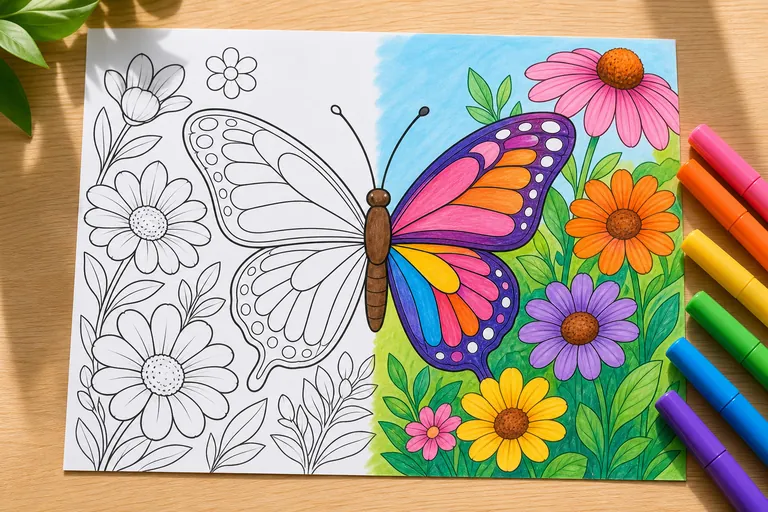
Markers shine on big, open shapes and bold outlines and struggle with fine detail, so start your child on simple pages and let them graduate to busier ones. Bold, simple subjects like rainbows are a forgiving place to begin. Pick a few favorites below and hand over the markers.
What else could you color?
Pick a prompt or type your own — opens in a new tab.