The squirrel in the park is digging again. It pushes something into the ground under the oak, pats the leaves flat with both front paws, looks around once and runs off. Your child stops on the path and wants to know two things: what did it hide, and will it ever find it again?
This is the story of that hazelnut, told in five small scenes. Each scene has a page to color, the facts come from people who study squirrels, and the ending has a tree in it.
One nut at a time
In autumn, squirrels bury seeds and nuts so they have something to eat in winter, when food is scarce, says the Woodland Trust. Red squirrels like pine seeds best. They also take hazelnuts and the seeds of larch and spruce, and every one of them is carried somewhere, one trip at a time.
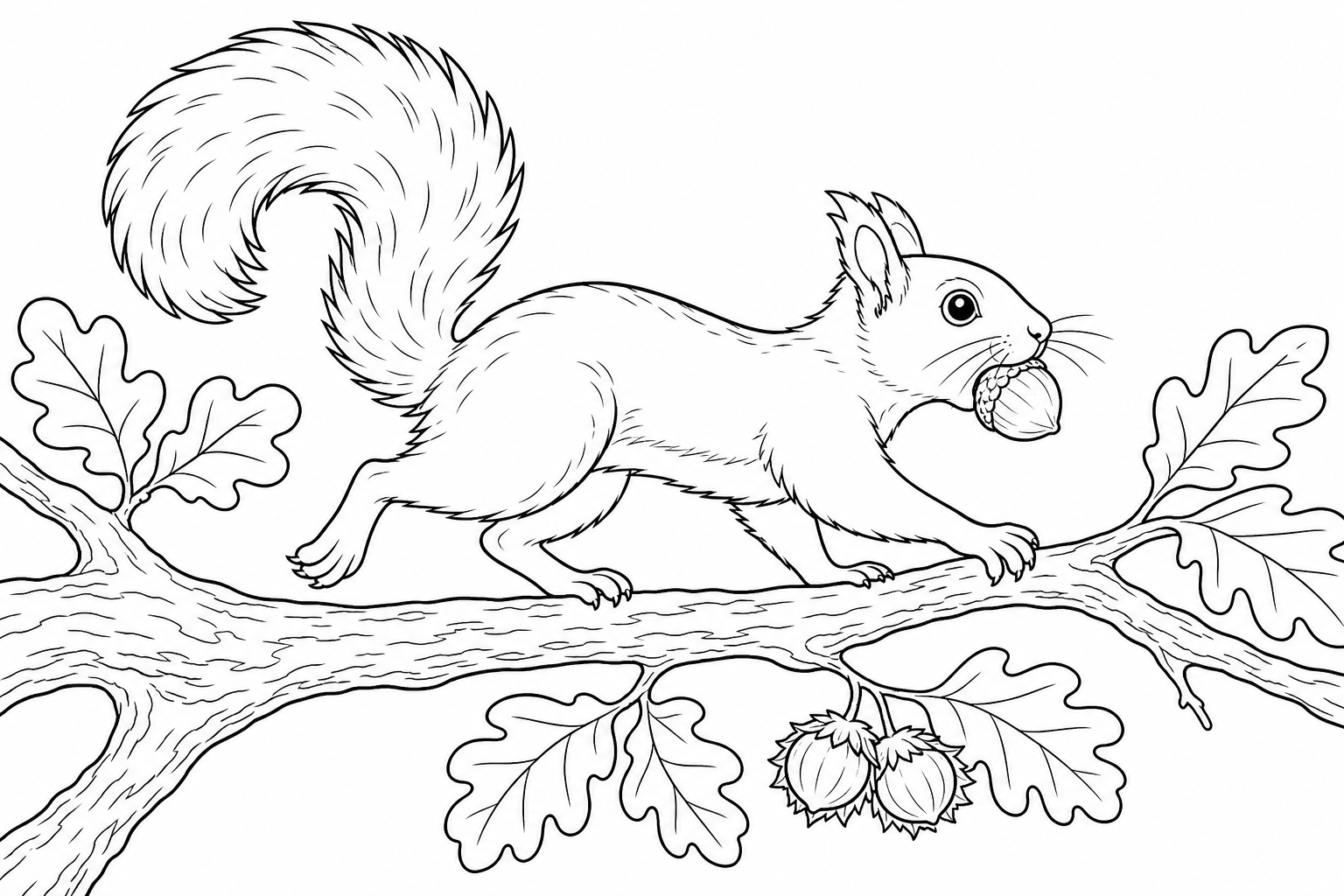
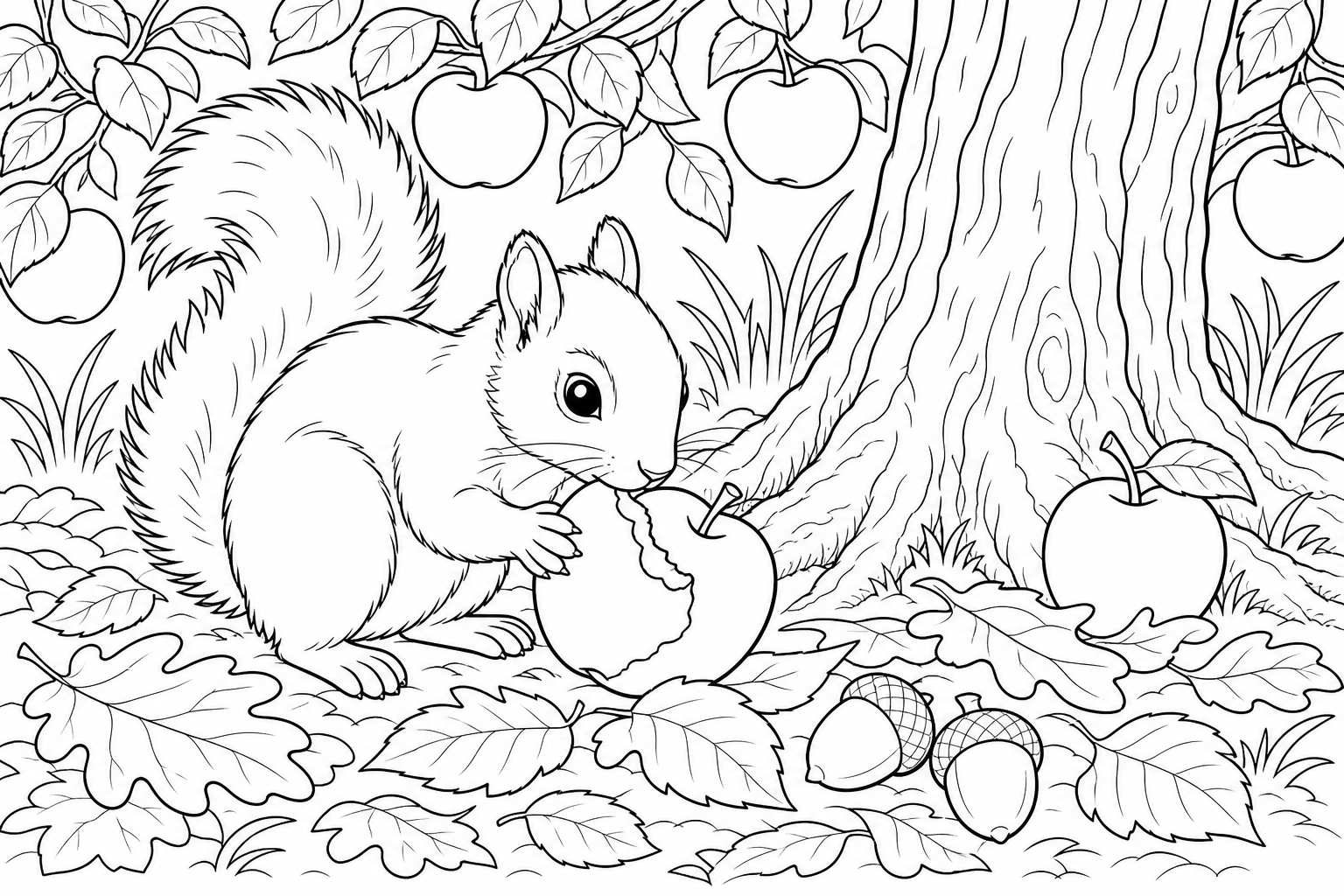
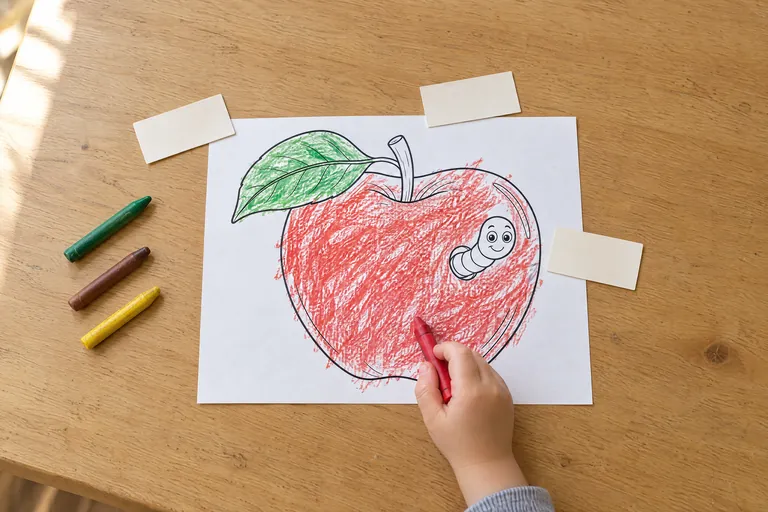
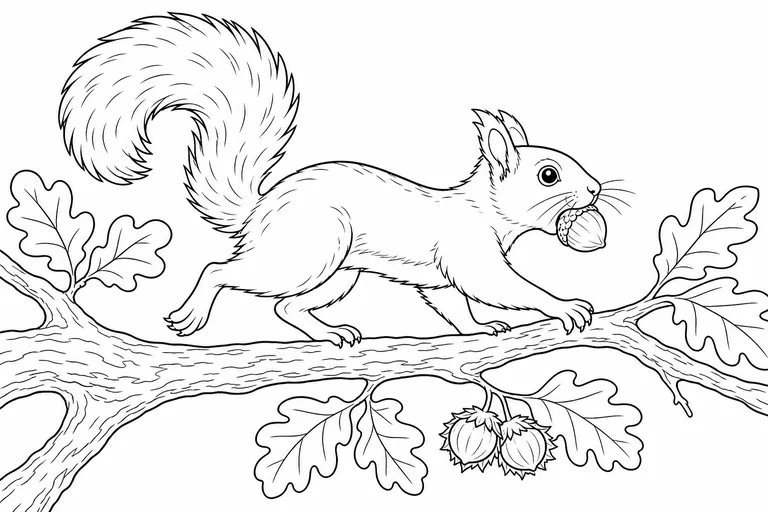
The squirrel on the branch is the easy one for a three or four year old: a big tail, a fat branch, lots of open space. The apple tree page has more small parts to find, so it suits the child who likes to keep the tiny acorns for last.
Ten thousand hiding places
Here is the number that makes children gasp. According to Naturschutzbund Österreich, a squirrel can keep up to 10,000 hiding places for its seeds and nuts. To find them again, the part of the brain that remembers places, the hippocampus, grows for a short time, and the brain can get up to 15 percent bigger.
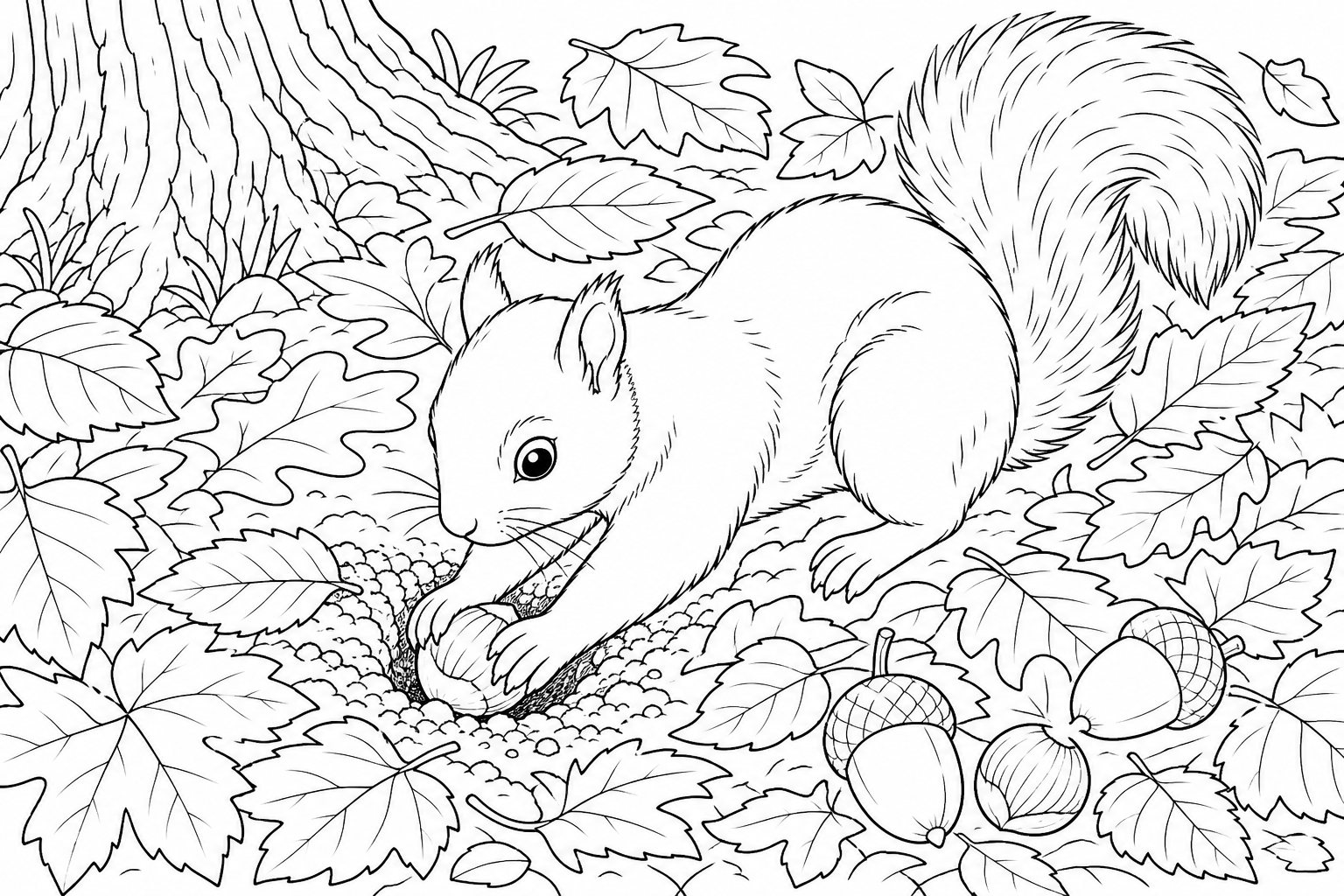
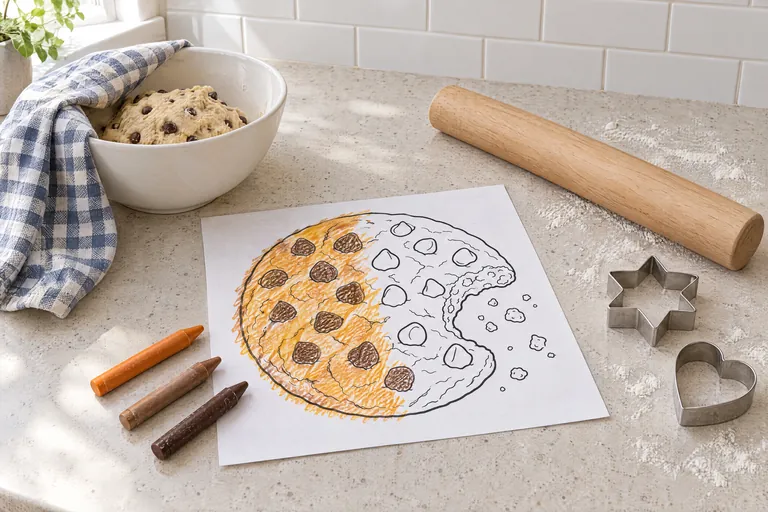
The digging page turns into a game. Your child colors the hazelnut in the squirrel's paws, then hides a real nut or a button somewhere in the room while you look away. Tomorrow at breakfast, can they still find it? One hiding place is easy. Ten thousand starts to sound like a lot.
Older kids can draw a little map of the room on the back of the page and mark the spot with a cross. Squirrels have no map, which is part of the fun of the comparison.



Coloring fun for kids — anywhere.
Free for iOS & Android. No ads, no sign-up, offline-ready.


Coloring fun for kids — anywhere.
Free coloring app for kids. iOS and Android, phones and tablets. No ads, no sign-up, even offline.
Asleep in the drey, for a while
A squirrel's nest is called a drey. Red squirrels build it high in a tree from twigs, leaves and strips of bark, say The Wildlife Trusts, and the Woodland Trust adds that it is lined with moss, leaves and other soft things.
Hedgehogs and marmots sleep deeply through the winter. A squirrel's winter rest is much lighter: it wakes up more often, when it is thirsty or hungry, and goes out to dig up one of its stores, Naturschutzbund Österreich explains. That is why you can still meet a squirrel in the park on a cold, bright morning in January.
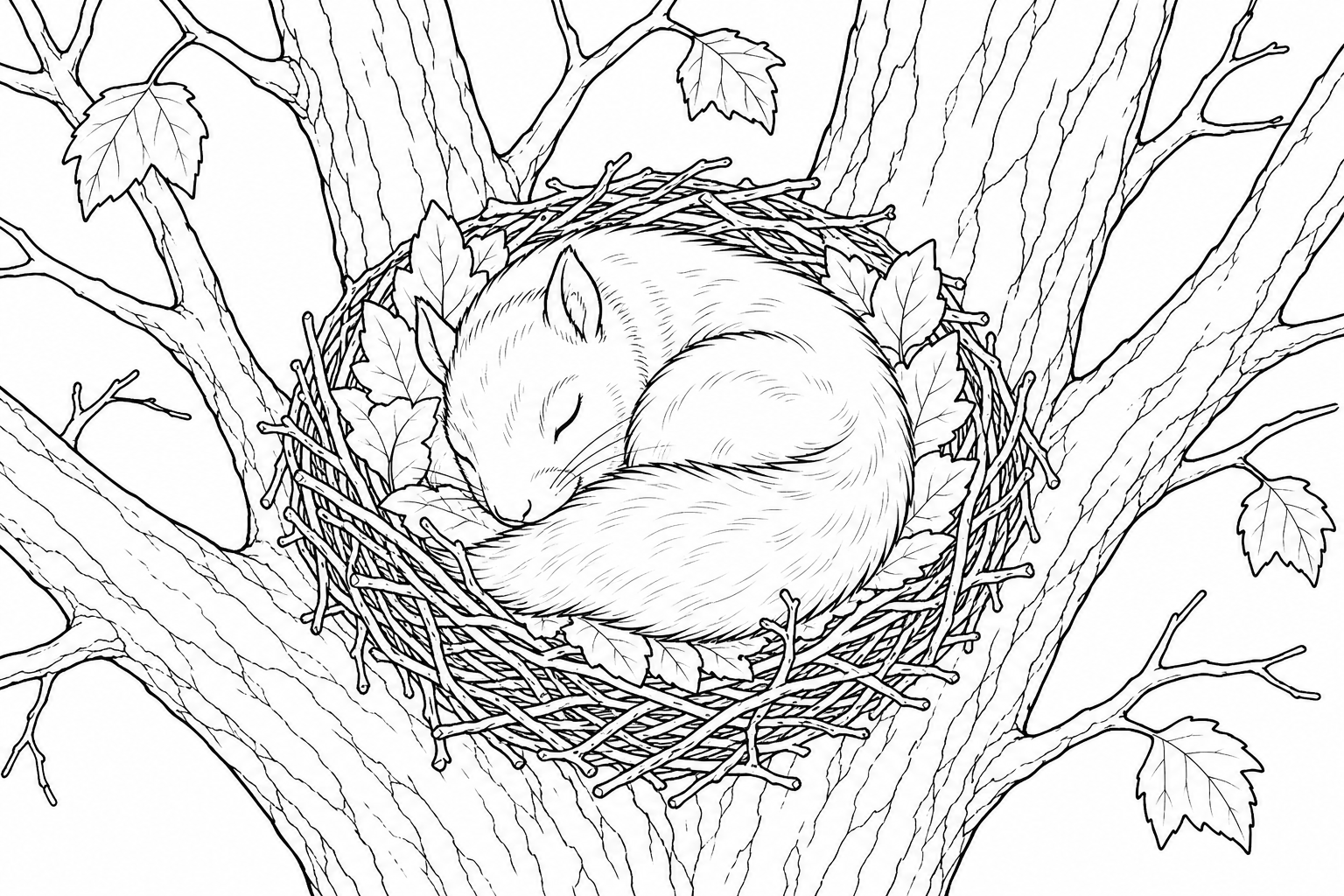
This is the quiet page of the set, good for the last ten minutes before bed. There is not much to decide on it, just brown twigs, a few last leaves and one sleepy squirrel.
The nut nobody came back for
Now the turn in the story. A squirrel's memory is excellent, and still it misses a few. Saving Scotland's Red Squirrels puts it this way: some of the seeds they bury will sprout in spring, with an excellent chance of growing into giants. Naturschutzbund Österreich says the same about the forgotten stores, and adds that squirrels, much like jays, help keep natural forests alive.
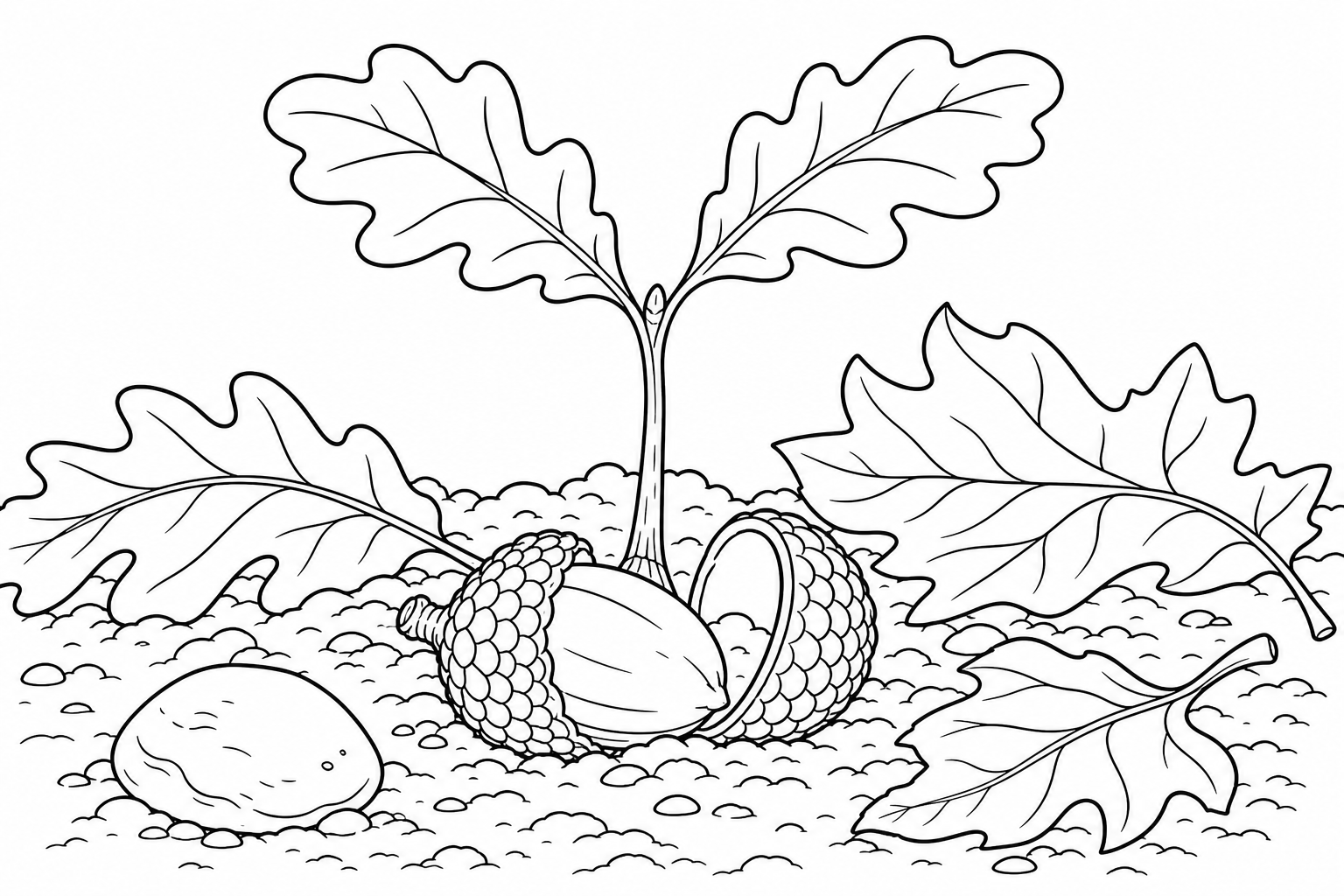
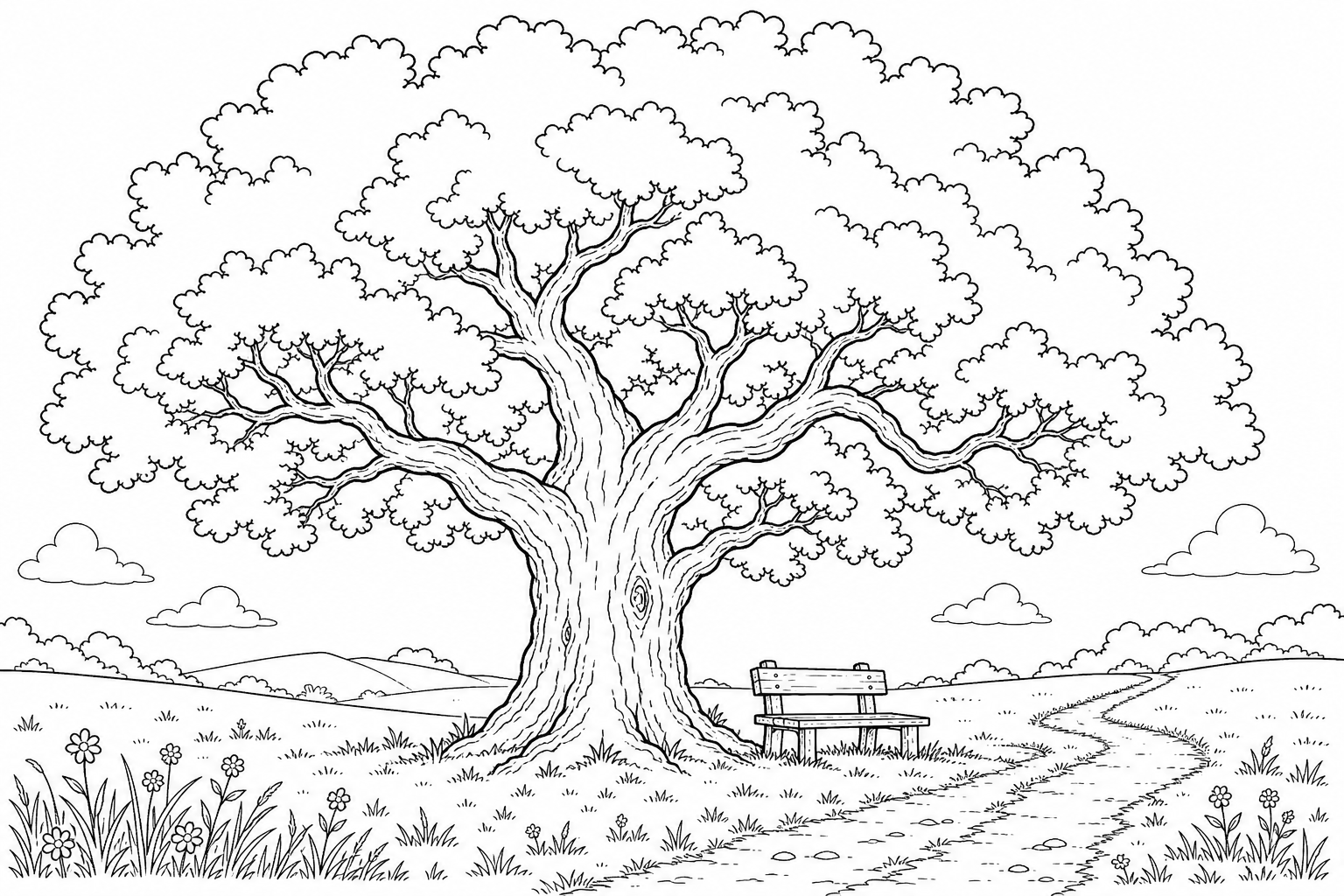
Color the seedling first, small and green, with the acorn cap still lying beside it. Then color the big oak and tell your child they are the same tree, many years apart. If there is a tree your child walks past every day, the pages for the one tree on the way to school carry the same idea through the seasons.
What else could you color?
Pick a prompt or type your own — opens in a new tab.
Squirrel clues on your next walk
You do not have to see a squirrel to know one was there. The Wildlife Trusts name two clues to look for: hazelnut shells cracked neatly in half, and pine cones nibbled down until they look like an apple core. Take the finished pages along on the next walk, and let your child hold up the right page when they find a clue.
A five year old will happily hunt for the split shells. An eight year old can keep a tally in the margin of the drey page: how many squirrels did you see, how many nests high in the bare branches? Anything you bring home, a split shell or a chewed cone, has a place on the autumn nature table.
Somewhere in your park, a nut a squirrel forgot this week may be the start of a tree your grandchildren climb.