Two hundred and fifty grams of flour. A block of butter that has been sitting out since lunch, one egg, a bowl, a star cutter and a heart cutter. And a five year old on a kitchen stool who has just heard that the dough now goes into the fridge for half an hour.
Half an hour is a long time at five. It is the point where a baking afternoon tips: fingers back in the bowl, a tablet on the counter, "is it ready yet?" every ninety seconds. This is a cookie recipe built around that moment. It has three waits in it, and each wait gets its own page to color, so the waiting becomes part of the baking and stops being the hole in the middle of it.
Why the dough has to wait at all
Children take a wait much better when it has a reason they can repeat. The reason here is butter. Cold dough holds its shape in the oven because the fat in it is solid, and solid fat takes longer to melt than soft fat. The bakers at King Arthur tested it and put it plainly: chilling cookie dough for just 30 minutes makes a big difference, and the longer the fat stays solid, the less the cookies spread.
A small student study at the University of British Columbia went further and baked thirteen batches of the same dough, chilled for anywhere from zero to 240 minutes. The longer the dough had been in the fridge, the less the cookies spread. For a child, that turns into one sentence worth saying out loud at the fridge door: cold butter melts slowly, so the stars stay stars.
That sentence is the whole science lesson. Nobody needs more than that at the counter, and it gives the wait a job. The dough is busy getting cold. Your child is busy too.
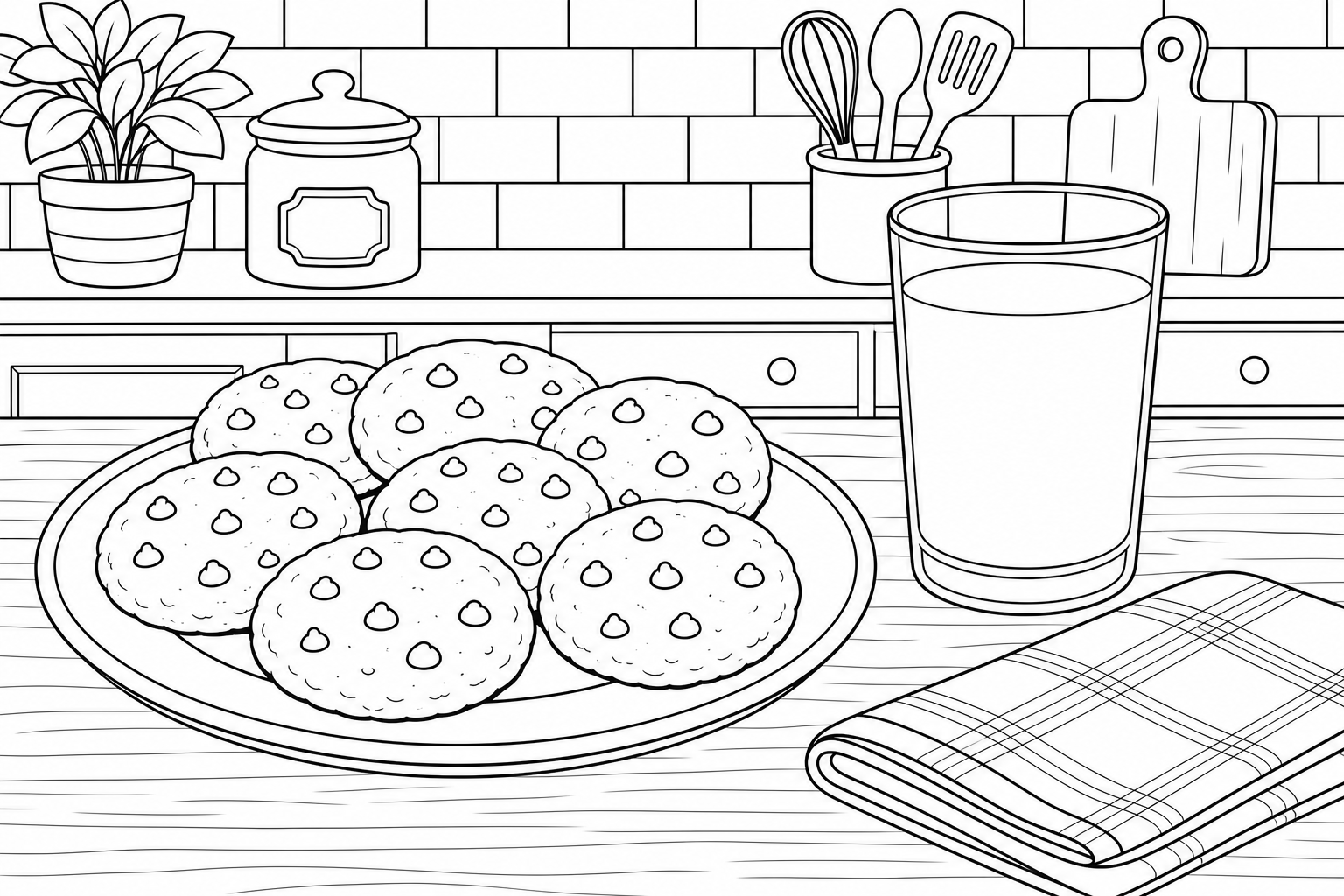
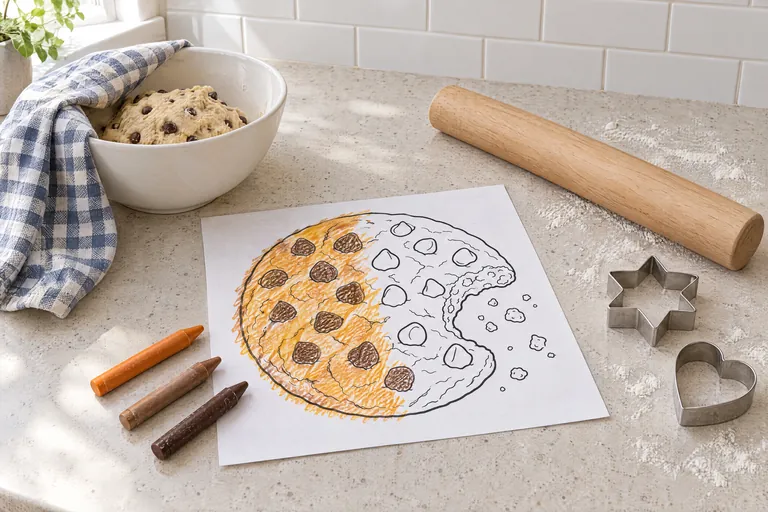
Print this one first and stick it to the fridge door with a magnet before you start. It is the finish line. Every time someone opens the fridge to check on the dough, the plate is right there, still waiting for its colors, and still waiting for the real cookies that will sit next to it at the end.
The recipe is a plain butter cookie that holds a cut shape well. It uses nothing a normal kitchen does not already have, and it forgives a child who stirs too long.
For the cookies
- 250 g plain flour, plus a little for rolling
- 125 g soft butter
- 100 g sugar
- 1 egg
- a pinch of salt and, if you like, a teaspoon of vanilla
- two or three cookie cutters, baking paper, a rolling pin and a wire rack
For the waits
- four printed pages: the plate, the dough bowl, the cutters and the oven (the big cookie is a spare for the youngest)
- crayons in yellow, orange, light brown and dark brown, plus one wild color for whoever wants a blue cookie
- a clear corner of the counter, an arm's length away from the flour
- a kitchen timer your child can see from the stool
Print the pages before the butter comes out, while your hands are still clean. If your printer tends to make thin grey lines, our guide to printing coloring pages at home has the two settings that fix it.



Coloring fun for kids — anywhere.
Free for iOS & Android. No ads, no sign-up, offline-ready.


Coloring fun for kids — anywhere.
Free coloring app for kids. iOS and Android, phones and tablets. No ads, no sign-up, even offline.
The recipe, with the waits marked
The steps below are short on purpose. Each one is something a child can watch or do, and the three waits are marked so you can see them coming.
- 1Beat the soft butter and the sugar together for about two minutes, until the mix looks paler. Your child can take turns with the spoon.
- 2Beat in the egg, the salt and the vanilla.
- 3Add the flour and stir, then press it together with clean hands until it holds as one dough.
- 4Flatten it into a thick disc, wrap it and put it in the fridge. Wait one: 30 minutes.
- 5Heat the oven to 180 °C (350 °F, or 160 °C with a fan). Roll the dough about half a centimetre thick on a floured counter, cut your shapes and lay them on a tray lined with baking paper.
- 6Bake for 8 to 10 minutes, until the edges just start to turn golden. Wait two: the oven.
- 7Leave them on the tray for five minutes, then lift them onto the rack. Wait three: cooling.
Wait one: thirty minutes while the dough chills
The fridge door closes, the timer starts, and this is where the pages earn their place. Wash hands, move to the clean corner of the counter and lay out the first page. Start with the bowl. It is the same bowl that just went into the fridge, with a cloth over it and two eggs beside it, so the drawing and the real thing are a few steps apart.
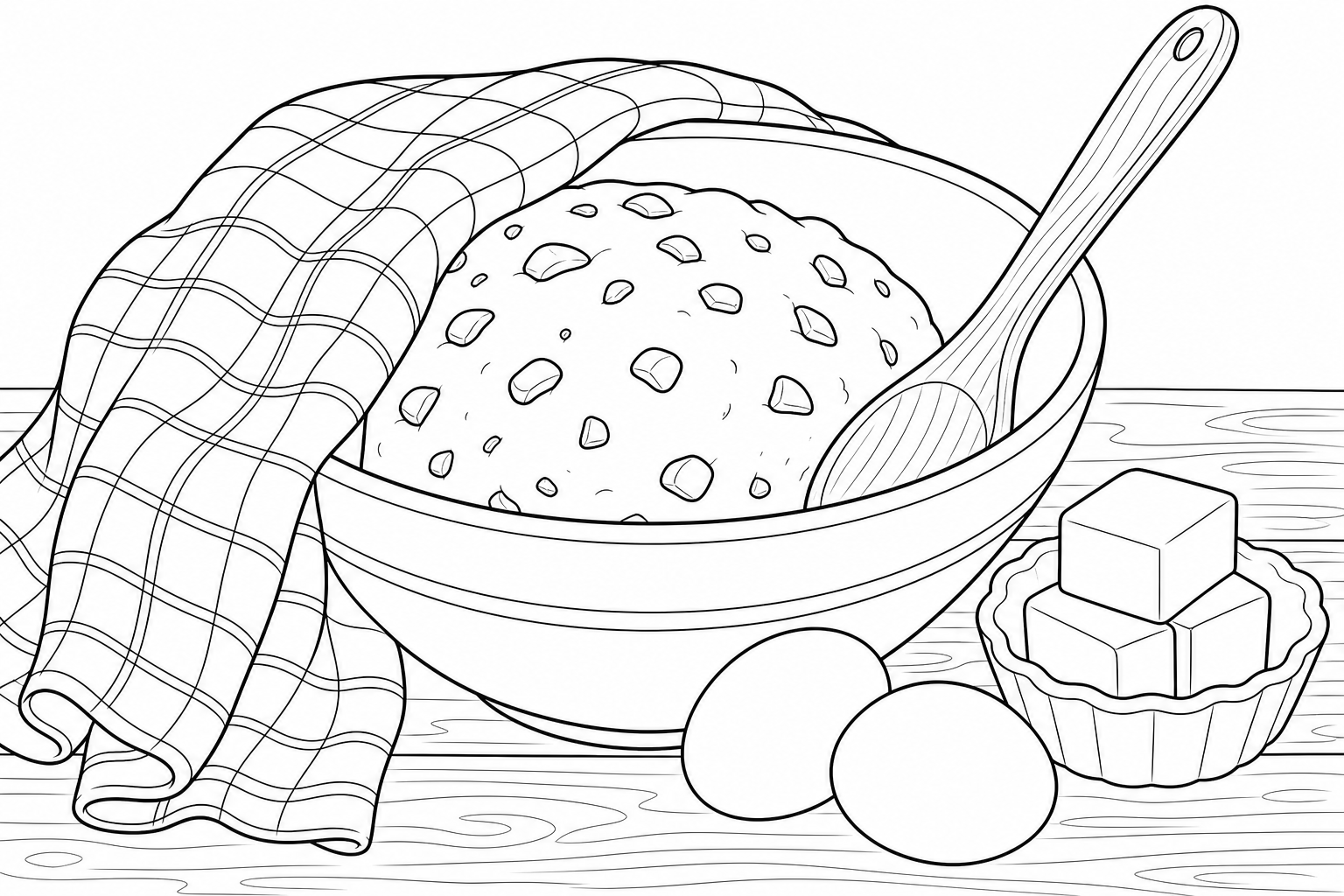
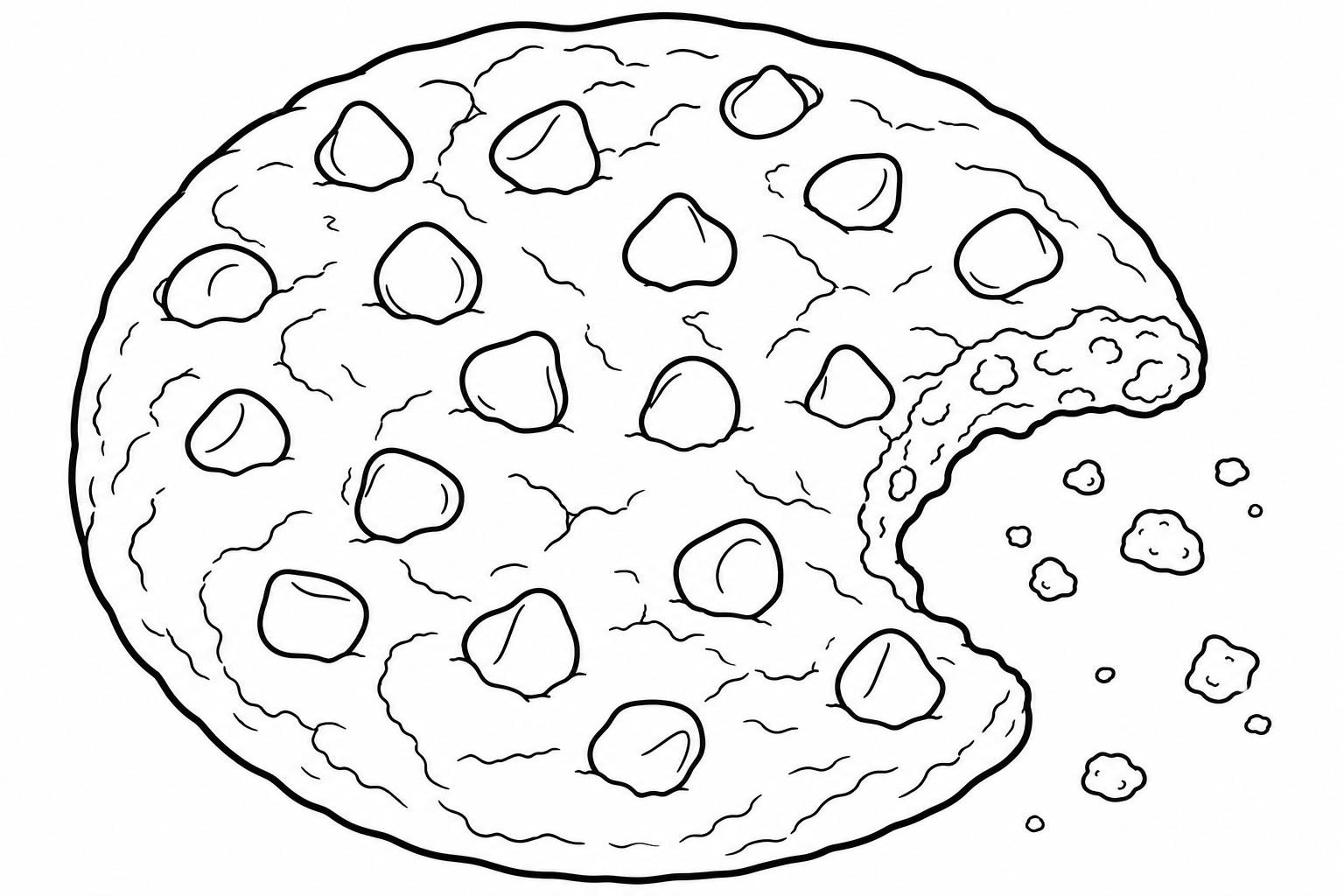
For 3 to 5 year olds
The big cookie with the bite missing is made for small hands. It is one shape, the chips are large, and there are only two jobs: one color for the cookie, another for the chips. Most children this age will color the chips first, because they are the fun part. Let them. A cookie with purple chips is still a cookie, and a page finished in fifteen minutes is worth more than a careful one abandoned halfway.
For 6 to 10 year olds
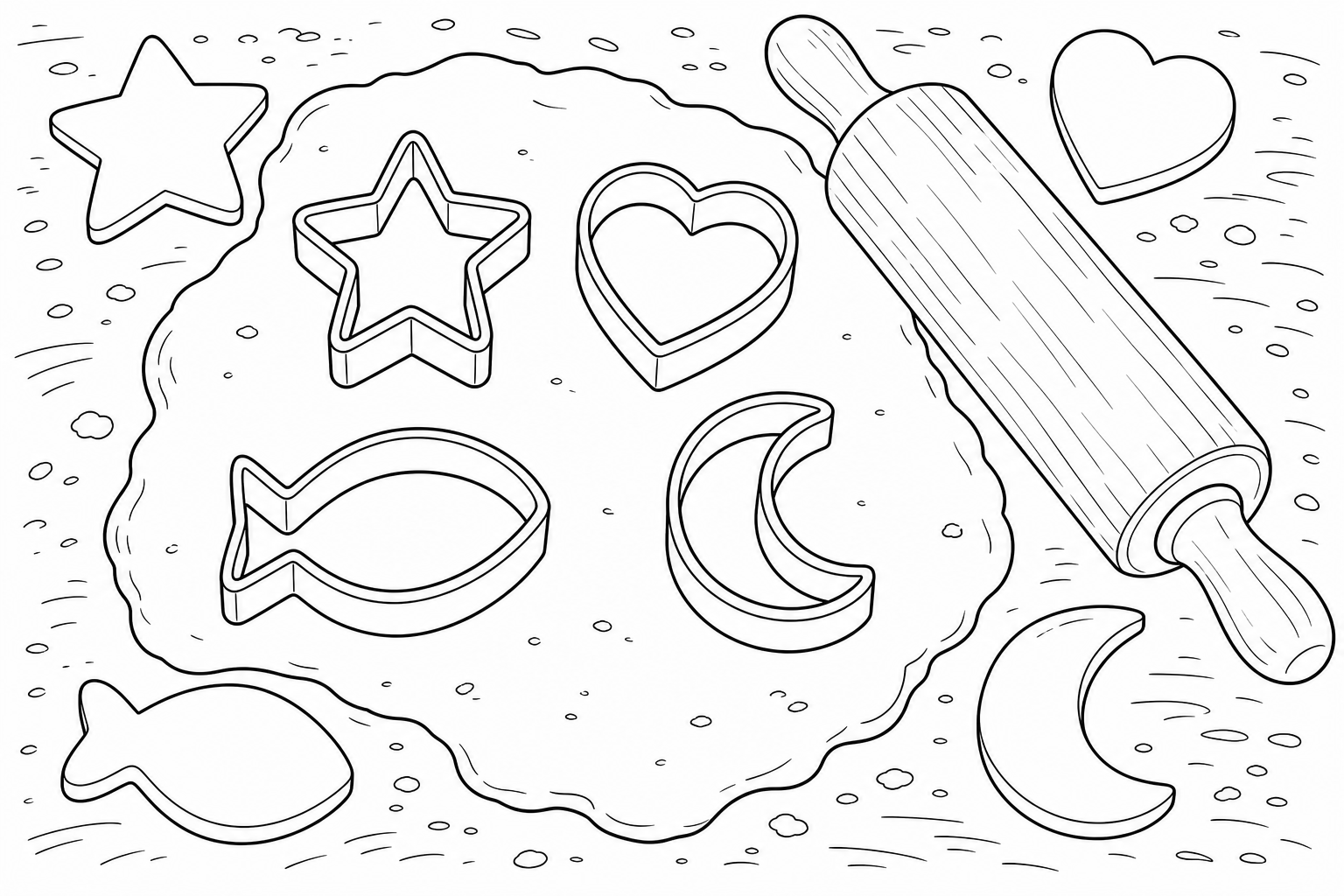
The cutters page has a second job, and older children like it once they hear it. The shapes they color are the shapes you will cut. A colored star means stars, an uncolored fish means no fish today. Suddenly the page is a plan, and the child coloring it is the one deciding what comes out of the oven. If two siblings share the page, each gets two shapes, and the rule holds for both.
Thirty minutes is about one and a half pages for most children. If the timer goes off in the middle of a page, leave it. It will still be there for wait two, and having something half done to come back to makes the next wait easier.
The cutters page is the plan: whatever shape gets colored is the shape that gets cut.
Wait two and wait three: the oven window and the rack
Ten minutes in the oven is the hardest wait of the afternoon, because there is finally something to watch. Children want to stand with their nose at the oven door, and the glass on many ovens gets hot. Put a chair one big step back from the oven, angled so your child can still see the light inside, and put the oven page on their lap with a book under it. The drawn tray and the real tray are now side by side, and the drawn one can be colored any shade of golden your child likes, while the real one gets there on its own.
The tray comes out with an oven mitt, held by the adult. Children can watch, but the hot tray is a grown-up job every time, and saying so before it happens saves the argument later. Five minutes on the tray, then the cookies move to the rack. They are soft when they come out and firm up as they cool, which is the second sentence worth saying out loud: warm cookies bend, cool cookies snap.
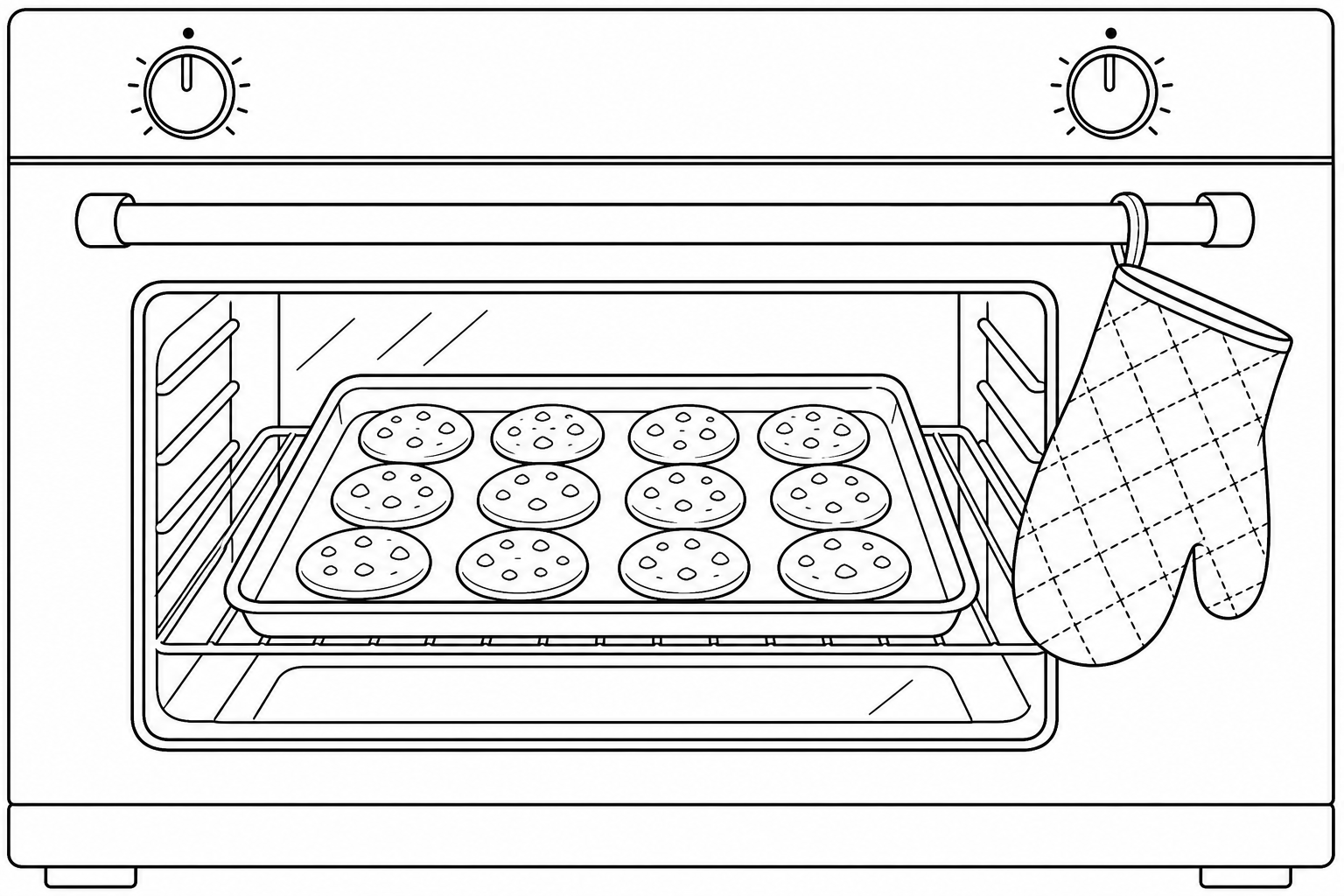
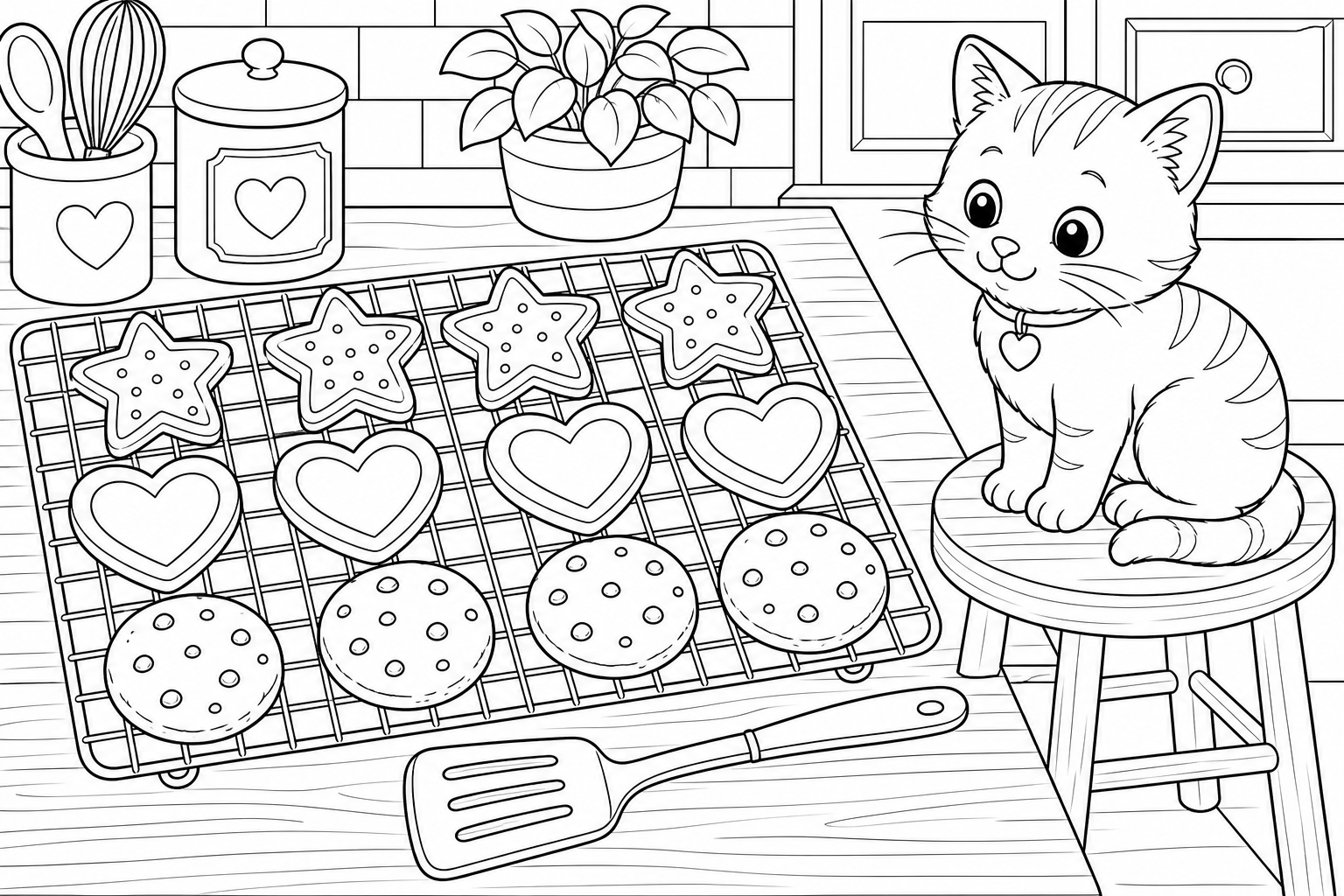
The rack page has a cat on a stool, watching the cookies with the same face your child has been making all afternoon. Older children usually notice this before you say anything, and it gets a laugh. It is the last page of the day and also the busiest one, so it suits the cooling wait, which has no fixed end: the cookies are ready when a fingertip on the back of one comes away cool.
If there are cookie fans in the house who want more, the catalog has more baking pages to print for the next rainy weekend.
What else could you color?
Pick a prompt or type your own — opens in a new tab.
By the end, you have a plate of real cookies and a small stack of colored ones. Put them together. Take the plate page off the fridge, put it on the counter, and put the first real cookie on top of the drawn plate. It takes ten seconds and it is the photo grandparents ask for.
A few things tend to go wrong, and all of them are easy. If a child loses interest halfway through wait one, swap pages instead of insisting: the big cookie is there for exactly that. If flour gets onto the paper, it brushes off once the page is dry, and a little dusting looks right on a baking page anyway. If the cookies spread more than you hoped, the fridge was probably short on time, which is worth knowing for next time. They still taste exactly the same.
Siblings of different ages can share the whole afternoon. The younger one takes the big cookie and the dough bowl, the older one takes the cutters and the rack, and each of them gets one job in the real recipe: the stirring for the younger one, the cutting for the older one. For a class or a group, the cutters page works as a vote. Everyone colors one shape, and the shape with the most colors wins the first tray.
The pages keep after the cookies are gone. Stacked with the date on the back, they turn into a small record of every time you baked together. On a grey Saturday when nobody wants to bake at all, the same pages still work on their own, next to the other ideas in our piece on rainy days before the tablet comes out.
"Are the cookies ready yet?"
"They're cooling. Is your cookie ready?"
"Mine has more chips."