Every morning on the way to kindergarten there is a stop nobody planned. The big tree at the corner of the park, the one with the bench under it, and a child who has to put a hand on the bark before the walk can go on.
You can hurry that stop along. Or you can turn it into a project that runs until next autumn: one tree, one coloring page, four visits. A year from now there are four sheets on the wall that show something a child cannot see in a single morning, the same tree slowly changing.
Pick the tree you already walk past
The right tree is the one on the route. A tree you see every day gets noticed in passing, and the project lives on that noticing. A tree in a forest you visit twice a year does not.
Choose one that loses its leaves in winter, an oak, a maple, a chestnut, a lime, so each visit looks different. A pine stays green and makes a very calm series. Then let your child give it a name. Trees with names get greeted.
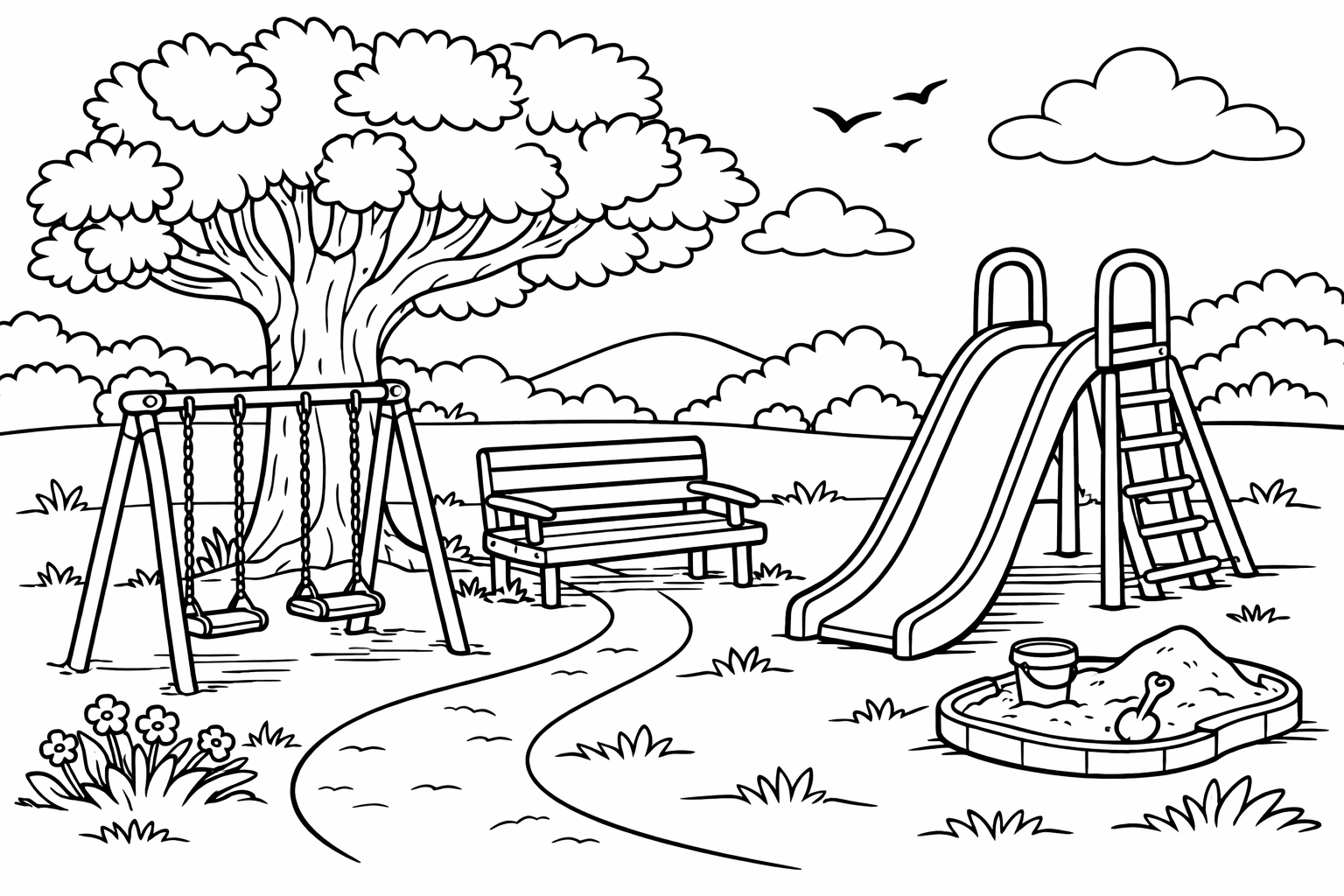
Print the same page four times
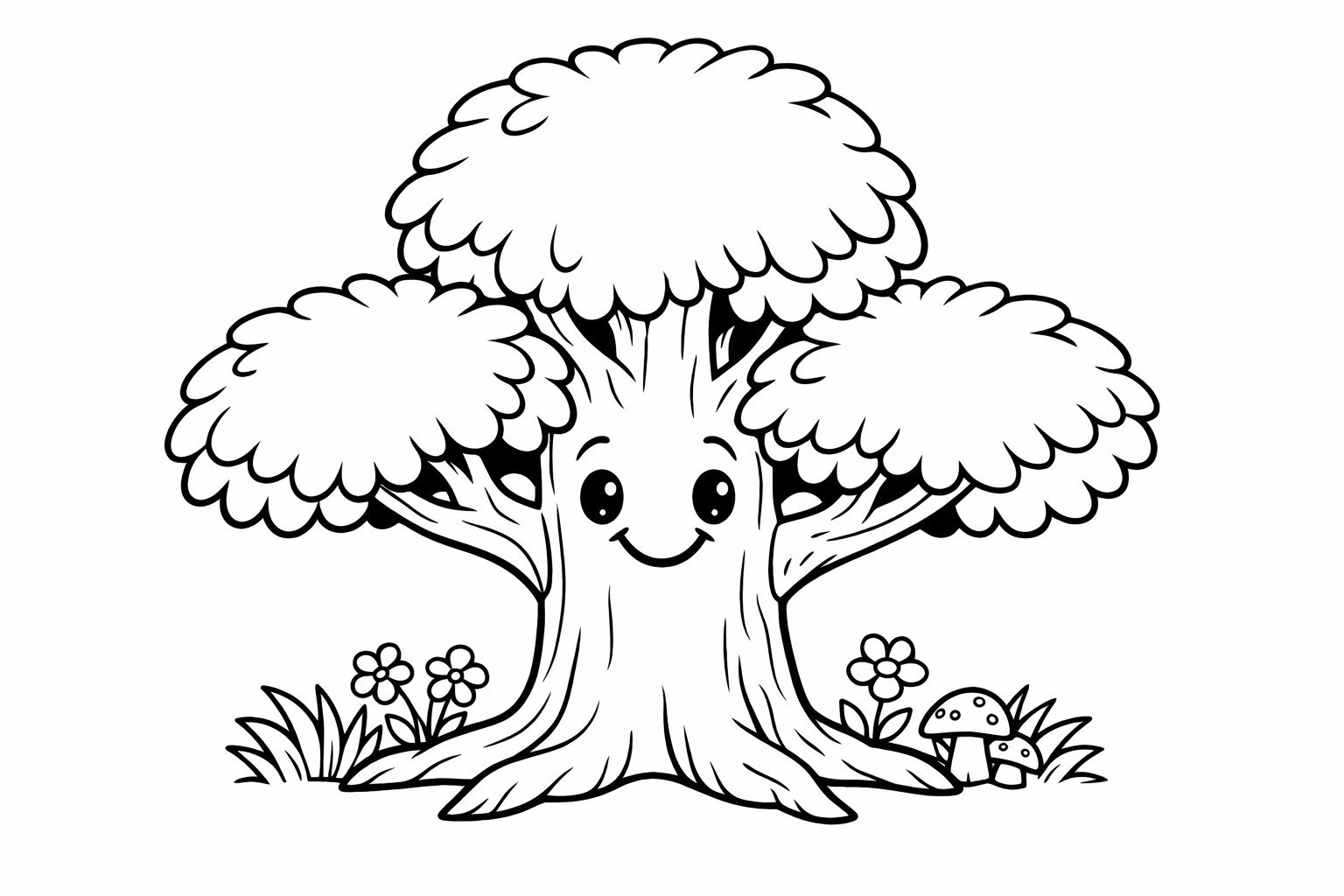
Here is the whole trick: every season gets the same picture. A single big tree with a wide, open crown, a bench and a path. Print it four times now and put three of the copies in an envelope by the front door, where the boots are.
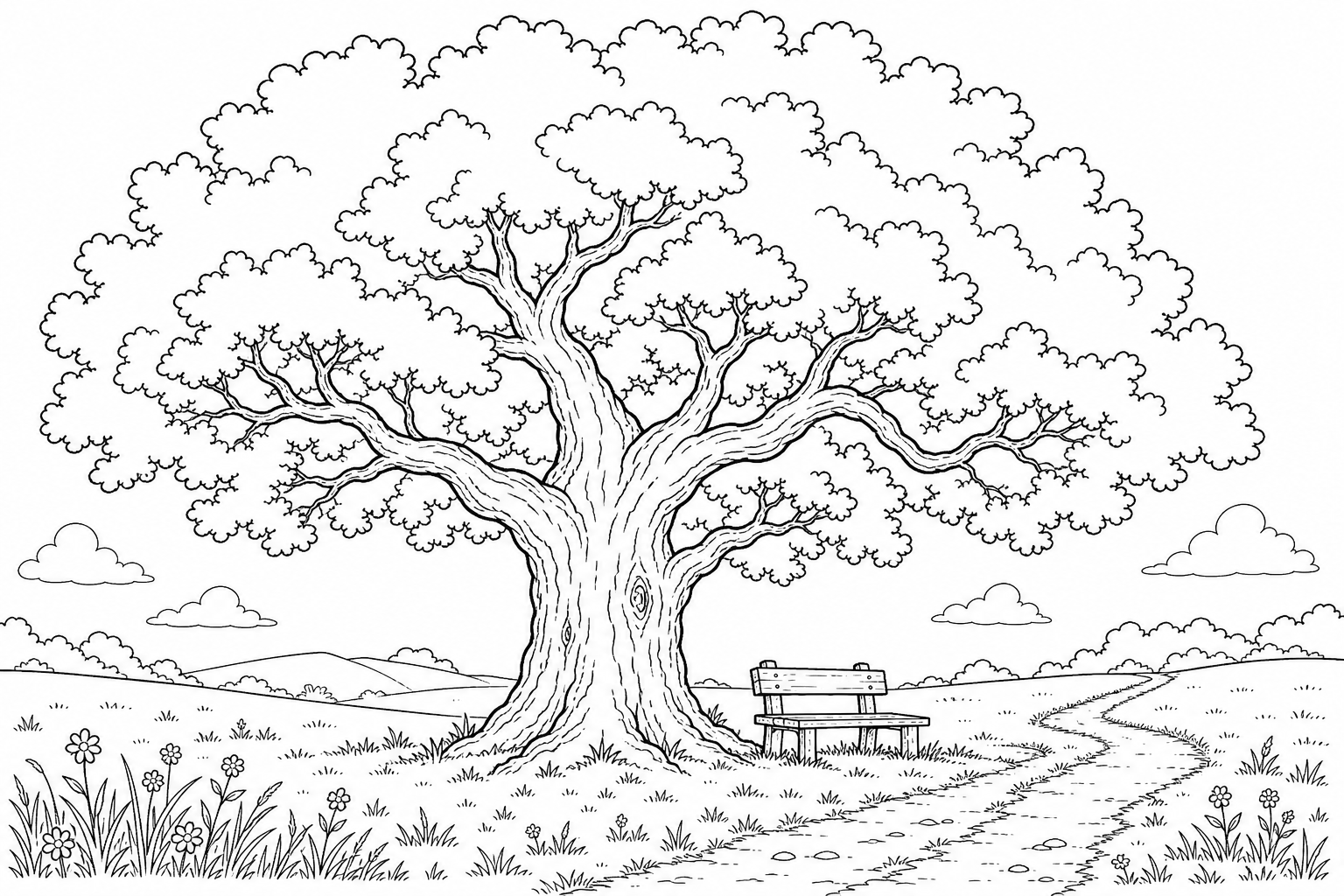
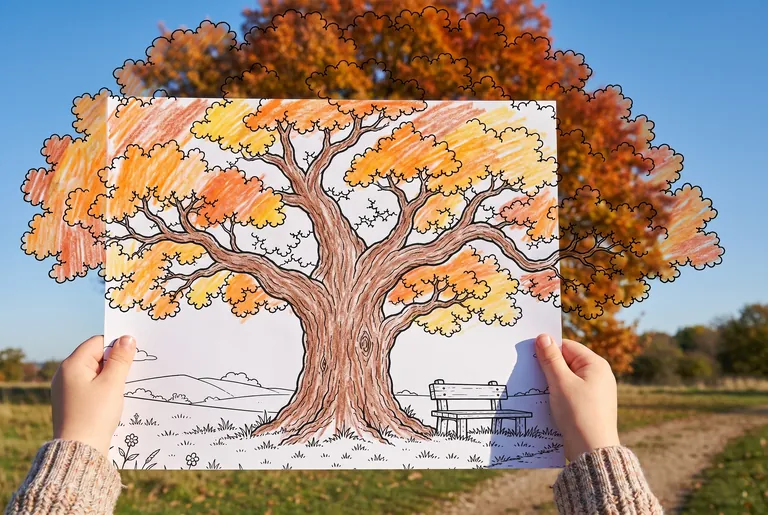
The open crown matters. A page with every leaf drawn in leaves no room for snow, for blossom or for a bare branch. A crown with a simple outline can hold whatever the real tree is wearing that day.
Color October while you are standing there
Take the first sheet and a few crayons on a dry afternoon and sit on the bench. The only rule is to color what the tree shows today. If half the crown is still green, half the crown stays green. If one branch is already rust, that branch gets rust.
Then look at the very end of a twig. The small, pointed bud there is next spring's leaf, packed and waiting. Trees make these buds at the end of summer, while they still have the energy to grow, so the tree in October is already holding April. Show your child the bud, and it becomes the thing to check on every visit after.
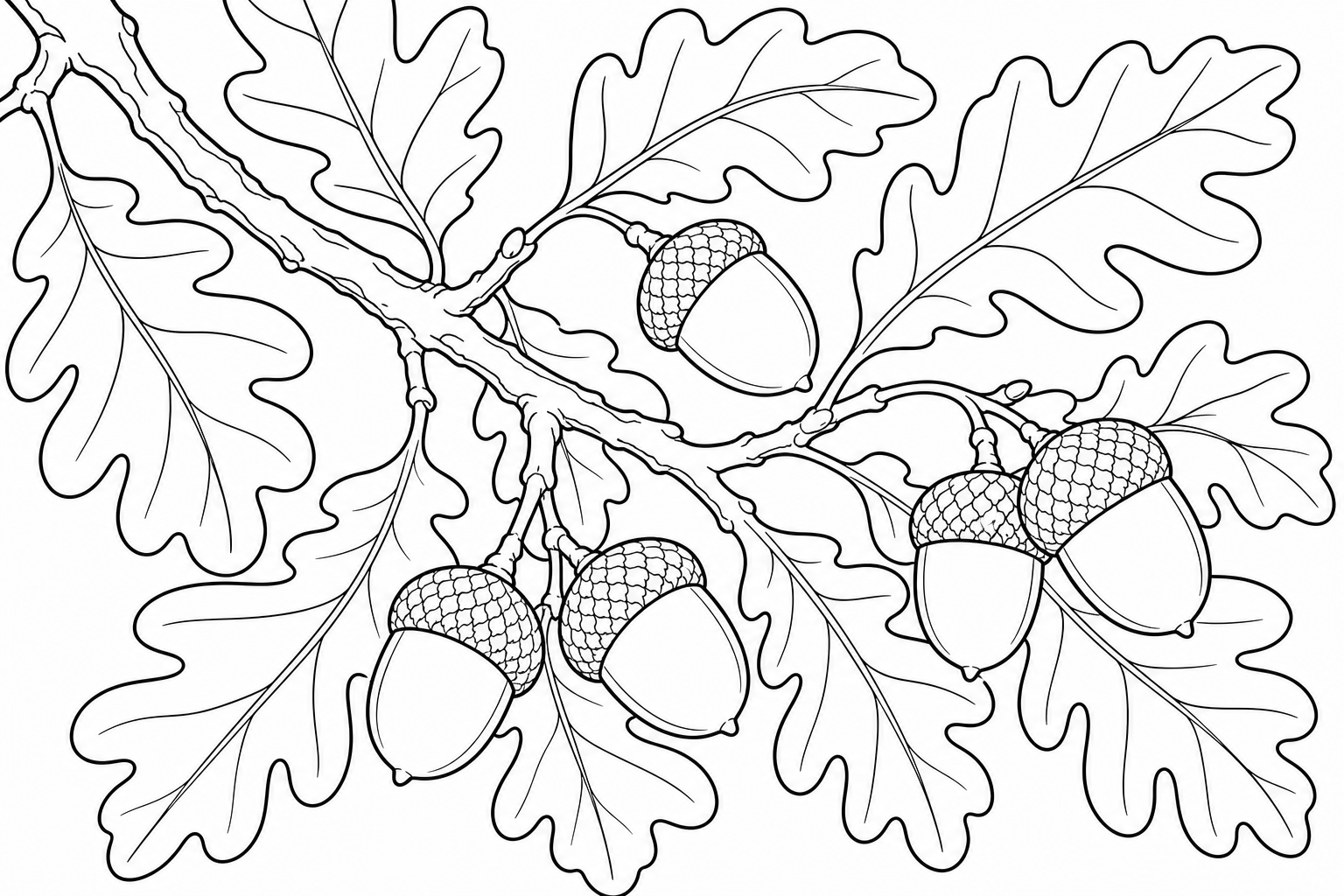
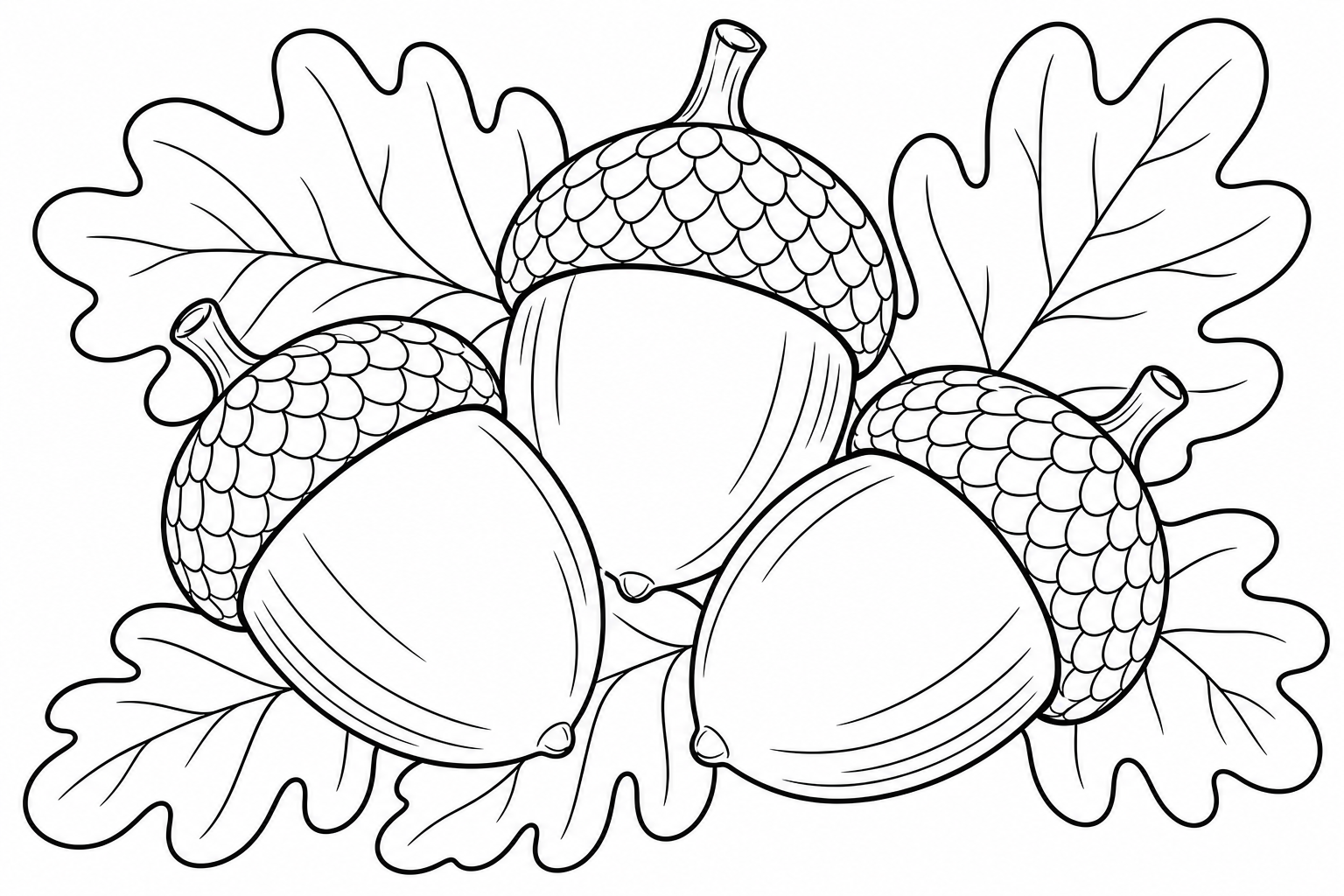
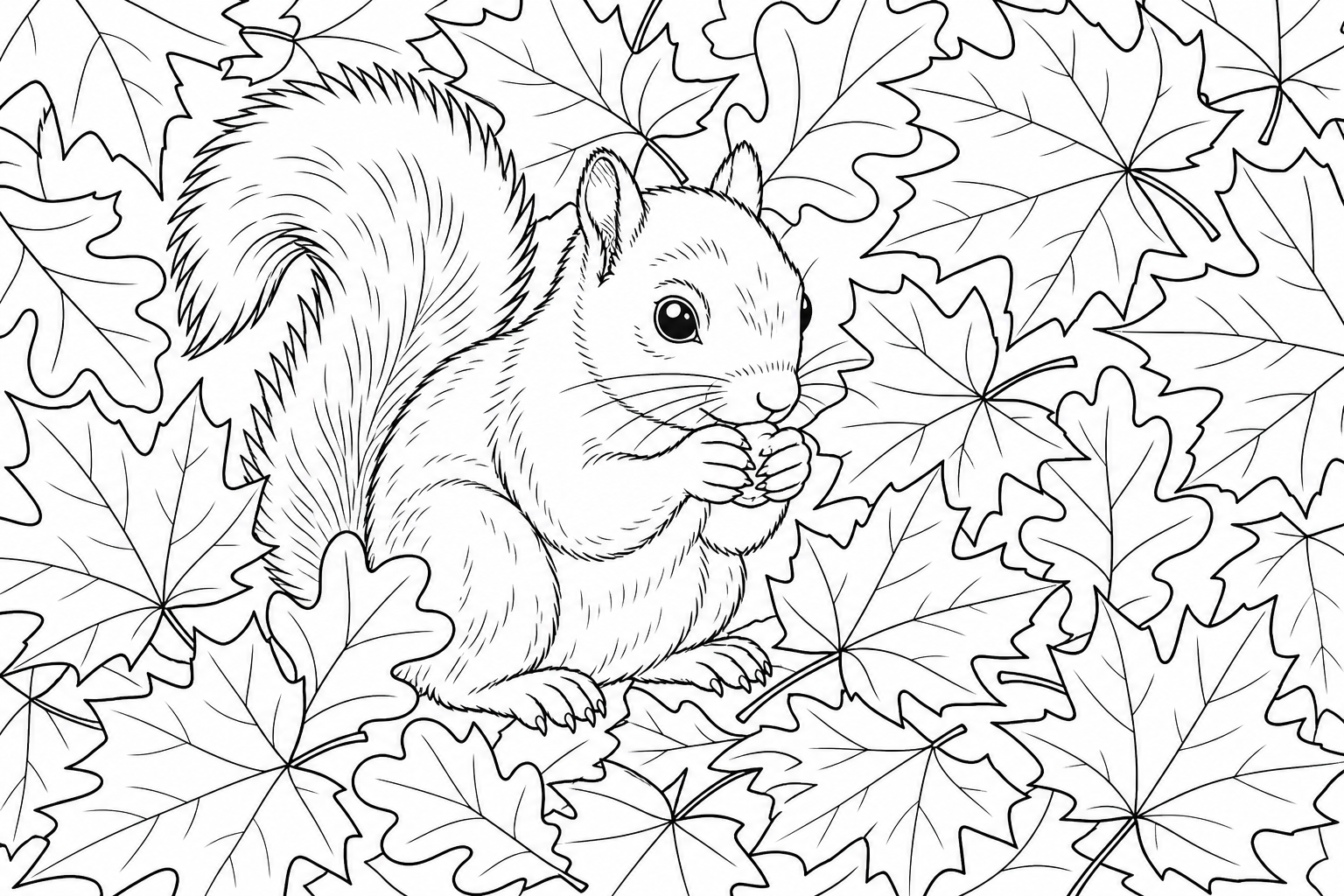
Whatever falls under the tree belongs to the project too. Acorns, a fallen leaf, a squirrel that will not sit still: these pages are for the crayons that are still out when you get home. Acorns and conkers can ride home in a pocket and end up on the autumn nature table; they are never for eating. If you also want to know which tree a leaf came from, the leaf pages sorted by the tree they fell from pair well with this one.
Come back three more times
In 2019 the Woodland Trust followed one single oak, the Grantham Oak, for a whole year and wrote down the days it changed: the buds bursting, the first leaf, the autumn color, the bare tree. Their oak stood bare by early December. Your child is doing the same thing, with crayons instead of a notebook.
Pick three moments to come back. The first morning with frost or snow on the branches. The week the buds from October finally open. The first properly hot day, when the shade under the crown is the best place in the park. Take the envelope, sit on the bench, and color the sheet you brought.
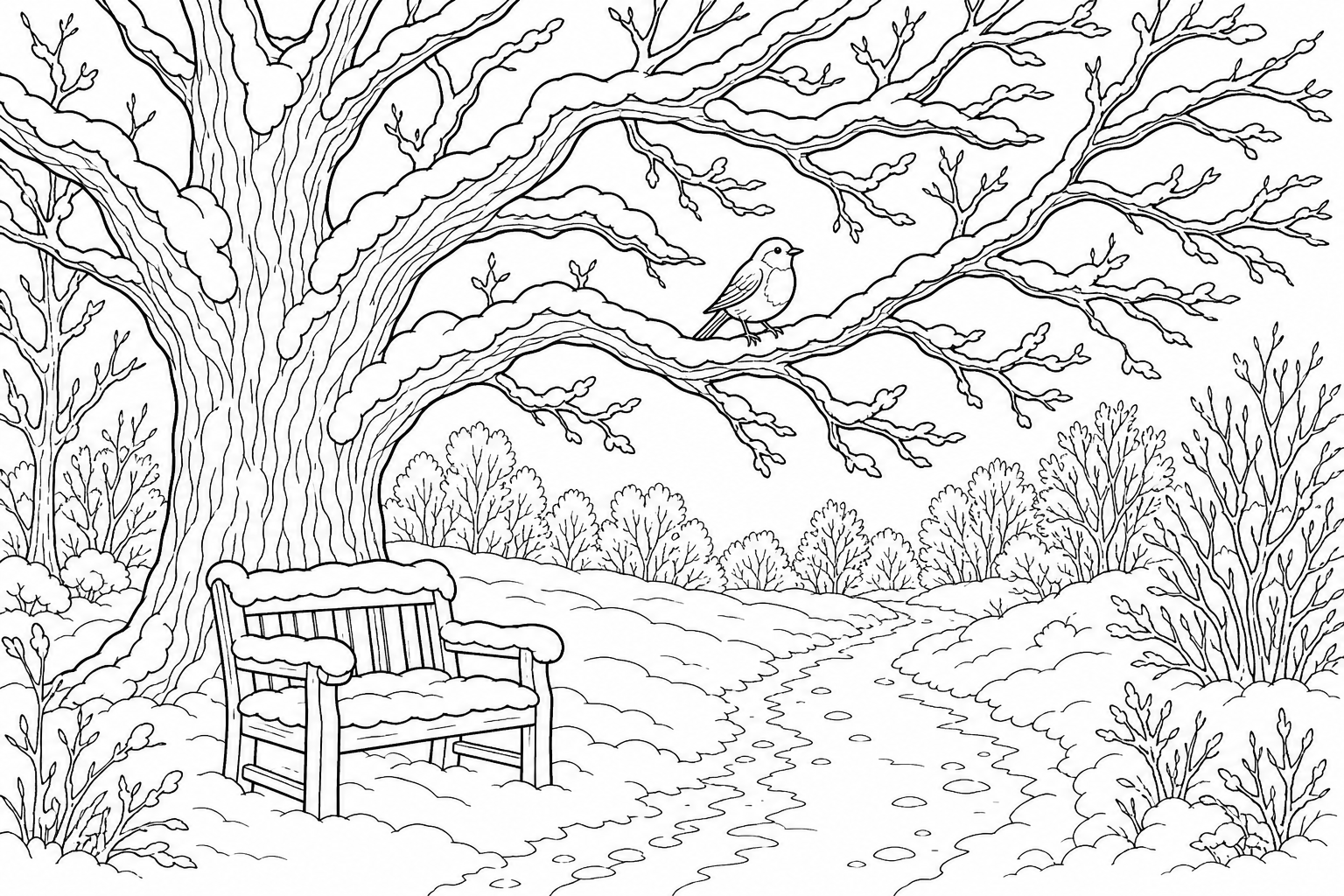
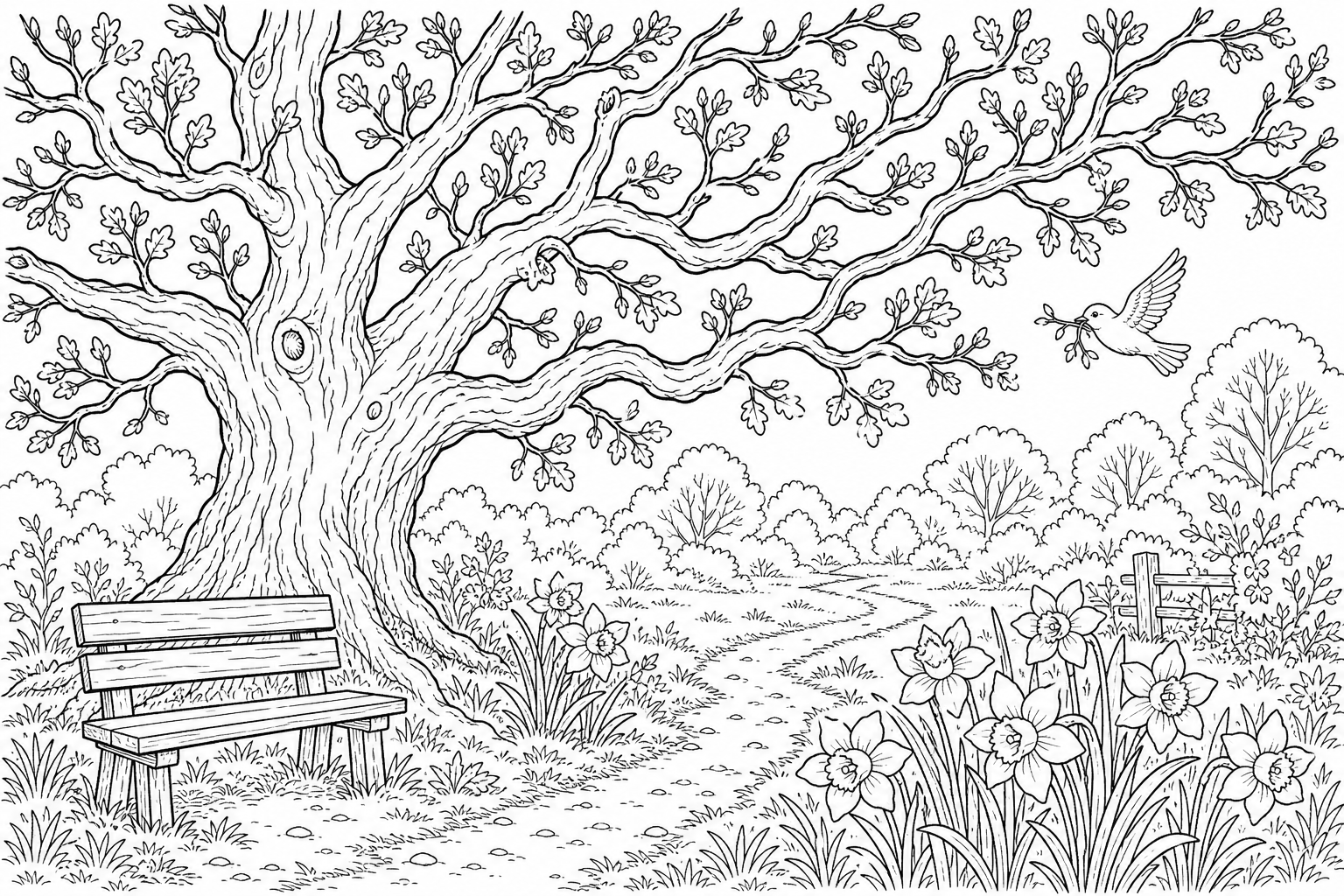
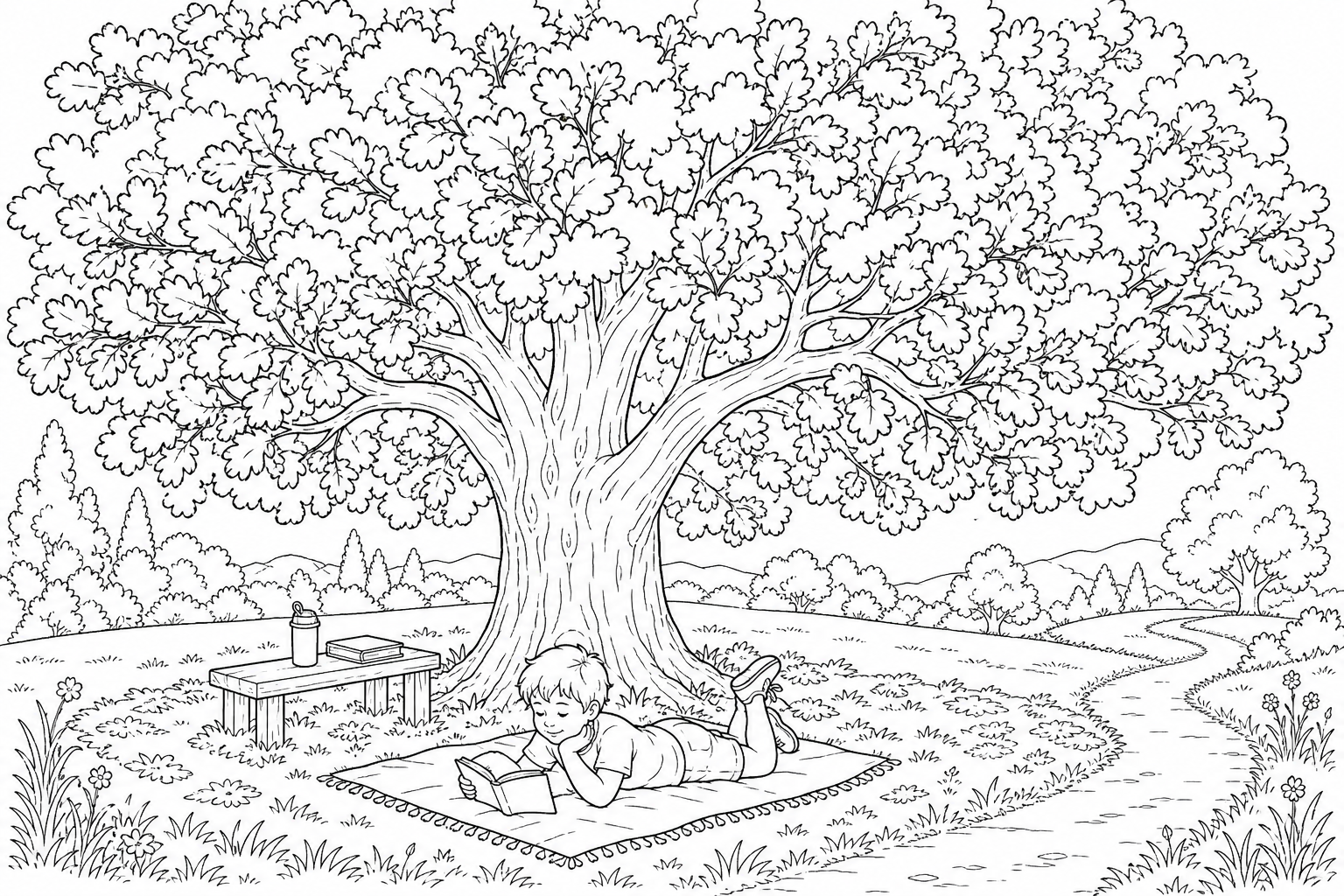
Some children would rather start fresh each time. These three show the same kind of tree in winter, spring and summer, and they work as a reminder of what to look for on the next visit.
What else could you color?
Pick a prompt or type your own — opens in a new tab.
Hang the four in a row
Next September, line the sheets up at your child's eye level, from October on the left to summer on the right. Then ask which page has the most colors, which one has none on the branches, and where the bench was hiding in July. Let your child do the explaining. They were there for all four.
And when the first leaves turn again, take the October sheet back to the tree and hold it up. Is the project finished? Only when the tree looks like the first page again.