It is the first week of November and the windowsill is still bare. Somebody in your house has just asked what Diwali is, because a classmate celebrates it, or your own family does, or the teacher sent home a note about a festival of lights. These Diwali coloring pages follow that child's questions in the order they usually come, with one short, sourced answer and something to color for each.
This year the main day falls on Sunday 8 November, the evening of Lakshmi Puja (Haindavam festival calendar).
Why is it called the festival of lights?
The name says it. Diwali comes from the Sanskrit word Dipavali, which means "a row or series of lights" (Wikipedia). Hindus, Jains, Sikhs and Newar Buddhists celebrate it, and the celebration runs for five days (Wikipedia).
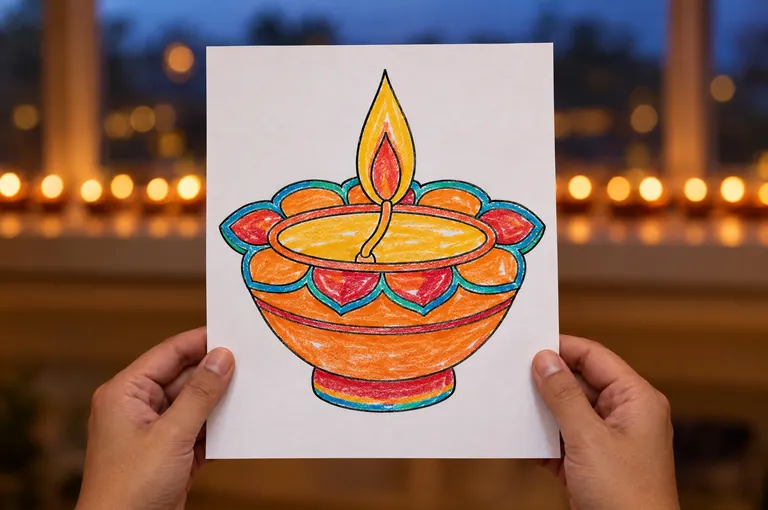
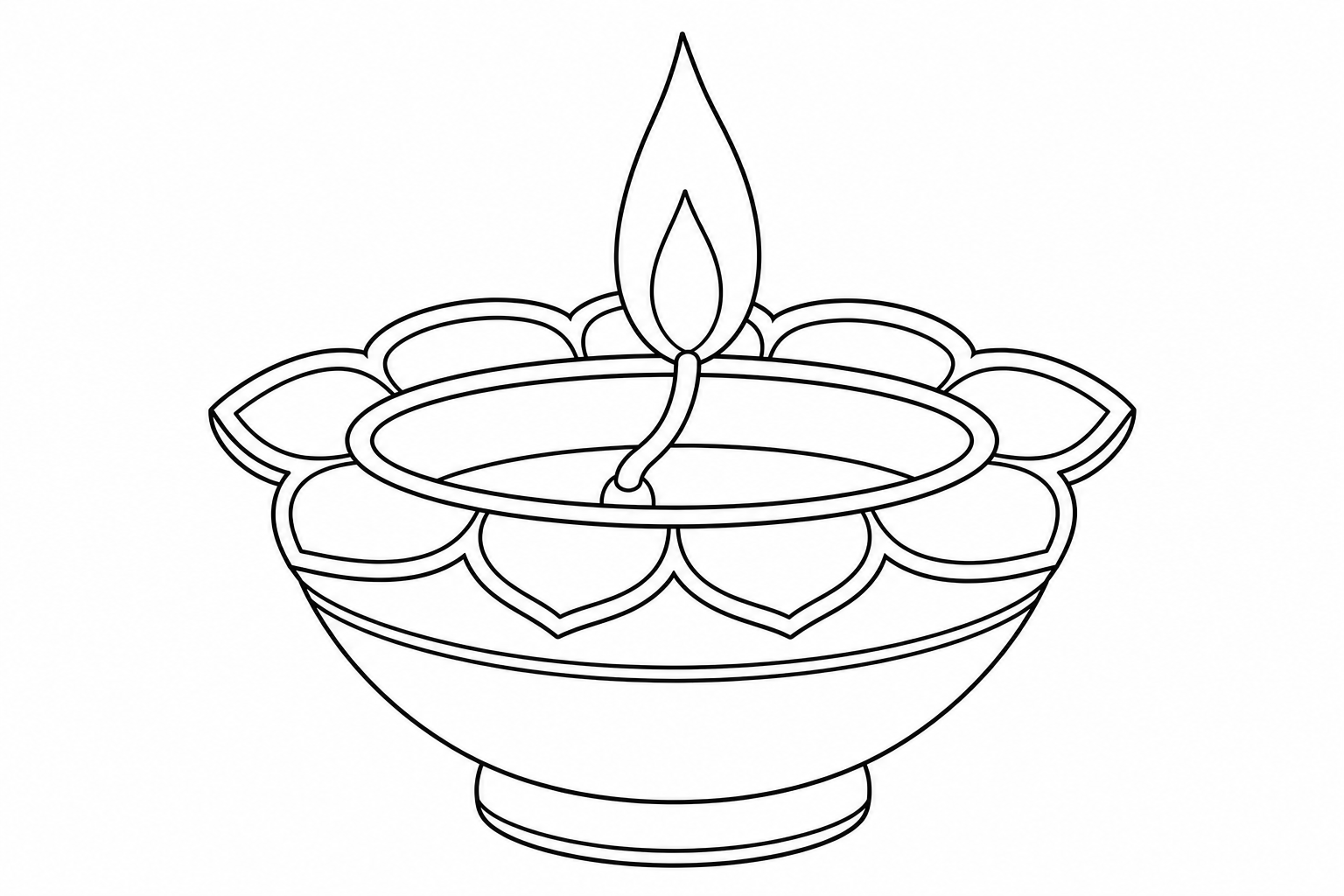
The light in that row is a diya: a small earthen lamp filled with oil. Families light them and keep them burning through the five days (Wikipedia). For a child, that is the first answer, and it fits in one hand.
Start with one lamp. The petal rim is big enough for a four-year-old, and the flame has two layers for anyone who wants to put yellow inside orange.
Why do families put lamps everywhere?
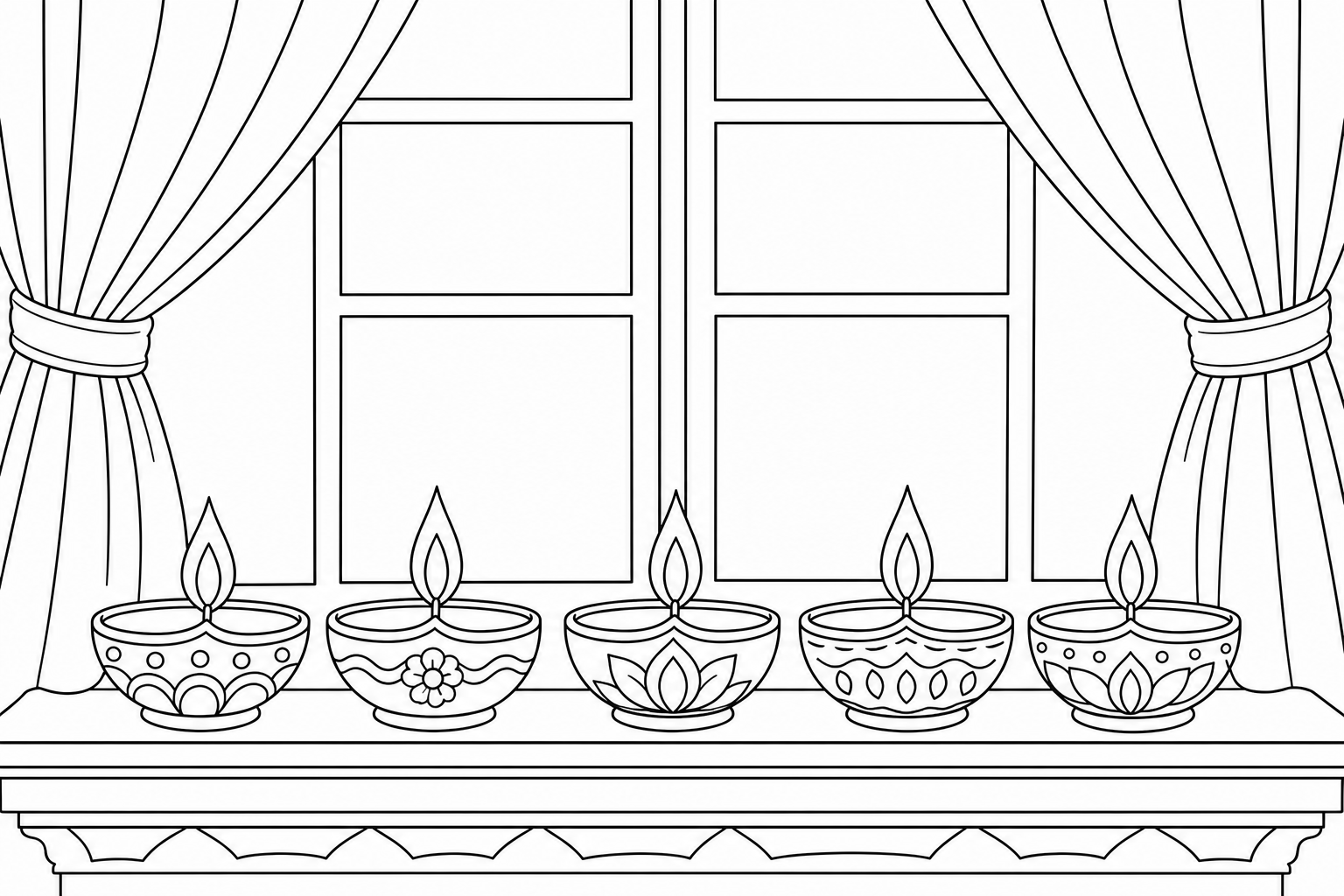
One lamp is a lamp. A whole house of them is Diwali. "Every corner of the house is illuminated with oil lamps and colorful lights to guide the Goddess," says the festival calendar (Haindavam). The goddess is Lakshmi, whom many Hindus link with the festival as the goddess of wealth and prosperity (Wikipedia).
The bigger idea under all those lamps is easy to hand to a child: light over darkness, good over evil, knowing over not knowing (Haindavam). A five-year-old can say it as "the lights win", and that is close enough.
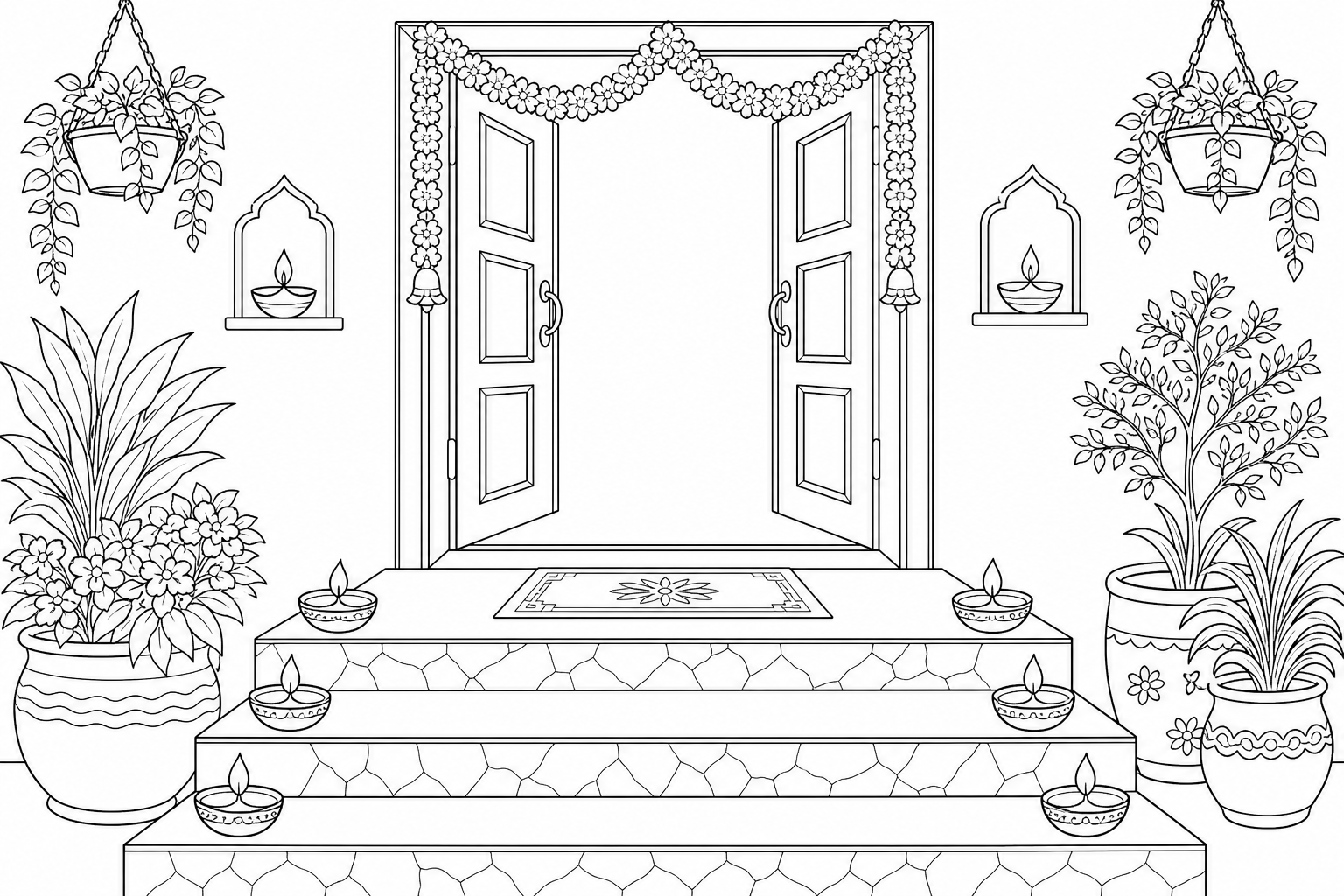
These two pages put the lamps where families put them, in a row along the window and on every step up to the door.
What is the pattern at the front door?
That is a rangoli. Women and children decorate doorways with rangolis, colourful designs made from rice flour, flower petals, coloured rice or coloured sand (Wikipedia). The pattern sits on the floor at the entrance to welcome guests and the divine (Haindavam).
On paper, a rangoli works best colored from the middle outward. Pick three colors and repeat them ring by ring, so the pattern stays a pattern even when small hands drift.
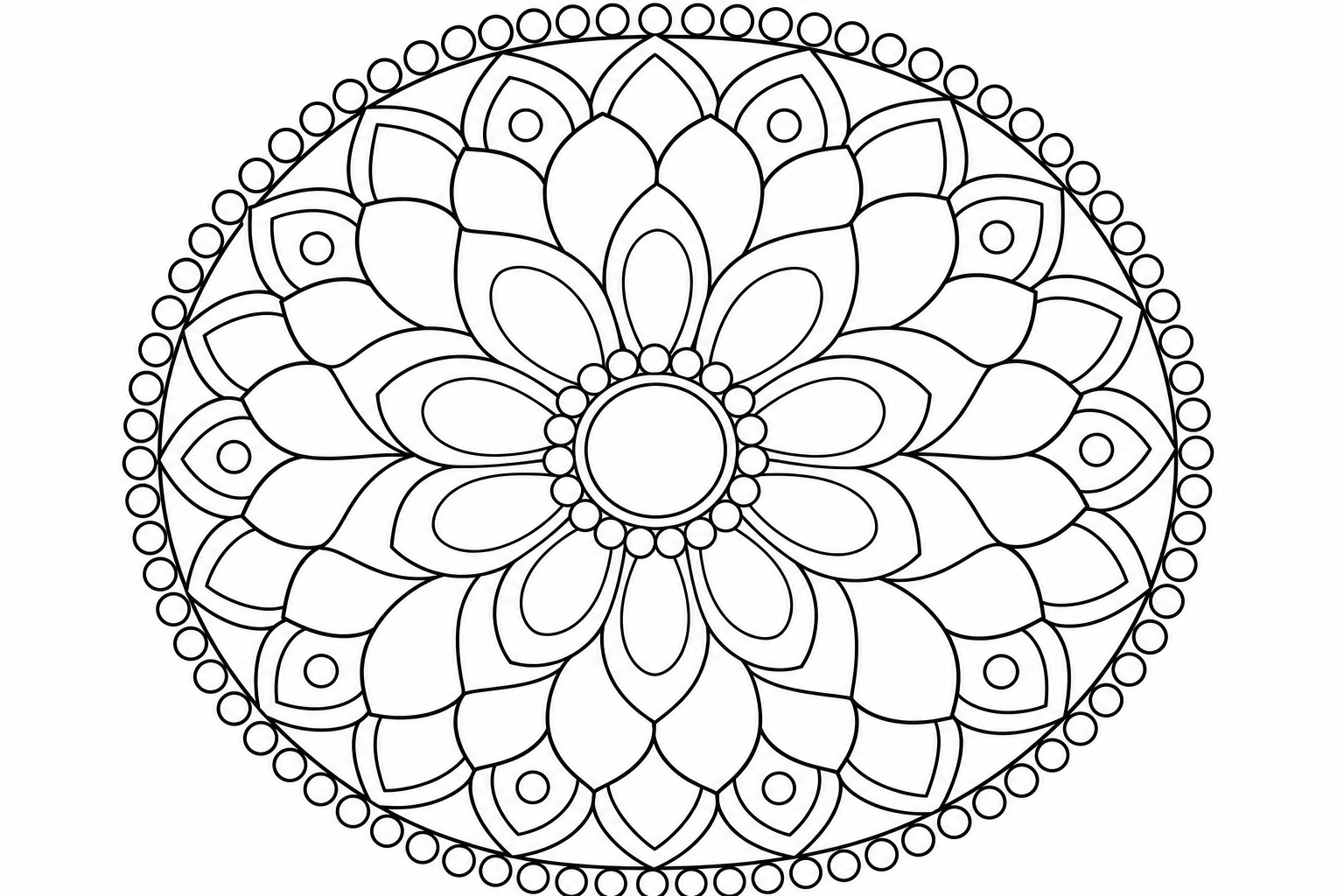
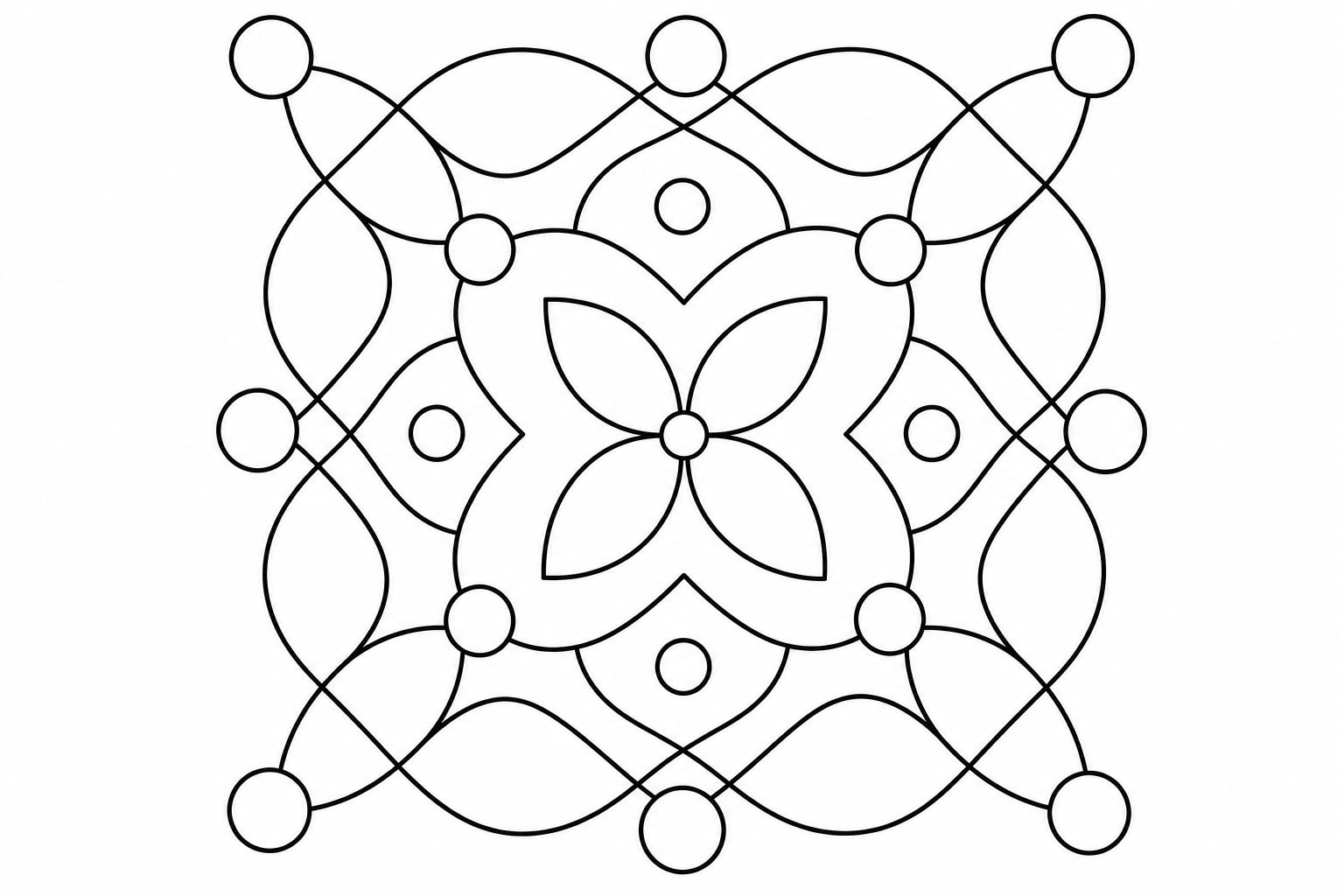
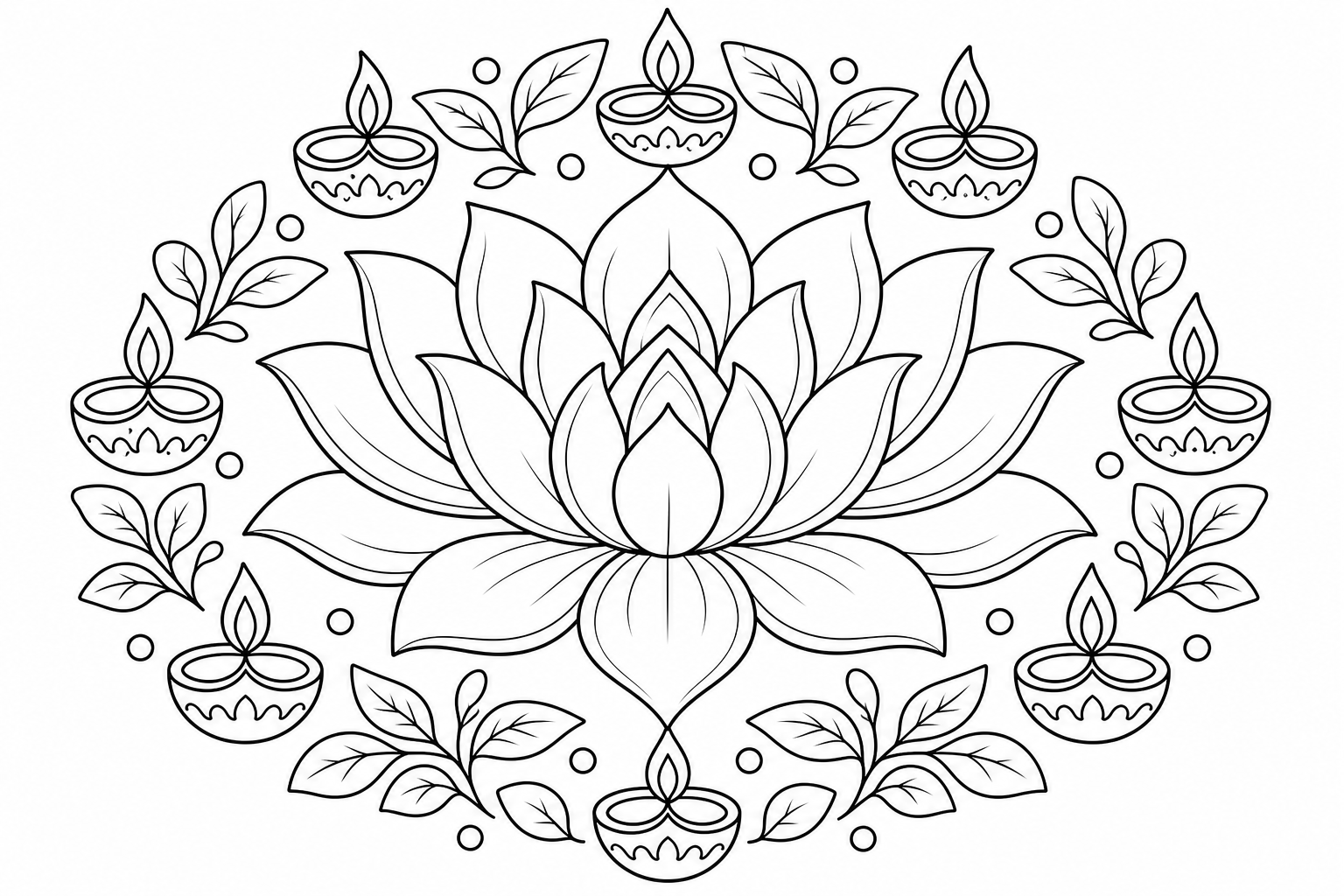
The dotted square is the easiest of the three, the lotus ring the one an eight-year-old will want. If round patterns are a hit, our mandala pages for slowing down use the same trick of one ring at a time.



Coloring fun for kids — anywhere.
Free for iOS & Android. No ads, no sign-up, offline-ready.


Coloring fun for kids — anywhere.
Free coloring app for kids. iOS and Android, phones and tablets. No ads, no sign-up, even offline.
What story do families tell?
Different families tell different stories, and that is worth saying out loud in a classroom. One that many Hindu families tell is about Rama, Sita, Lakshmana and Hanuman, who reached the city of Ayodhya after fourteen years away, once the demon king Ravana had been defeated (Wikipedia).
For a small child the whole story fits in two lines: a prince who had to leave home for a very long time came back, and the bad king did not win. Jain and Sikh families have stories of their own for these days, so if a family in your class celebrates, ask them which one they tell.
What happens on the other days?
Five days is a long party, and children notice the parts around the lamps. Before it starts, families clean and decorate their homes. On the day, people wear their finest clothes, share family feasts, and pass round mithai, sweets, and gifts (Wikipedia).
So the last two pages are the plate and the parcel.
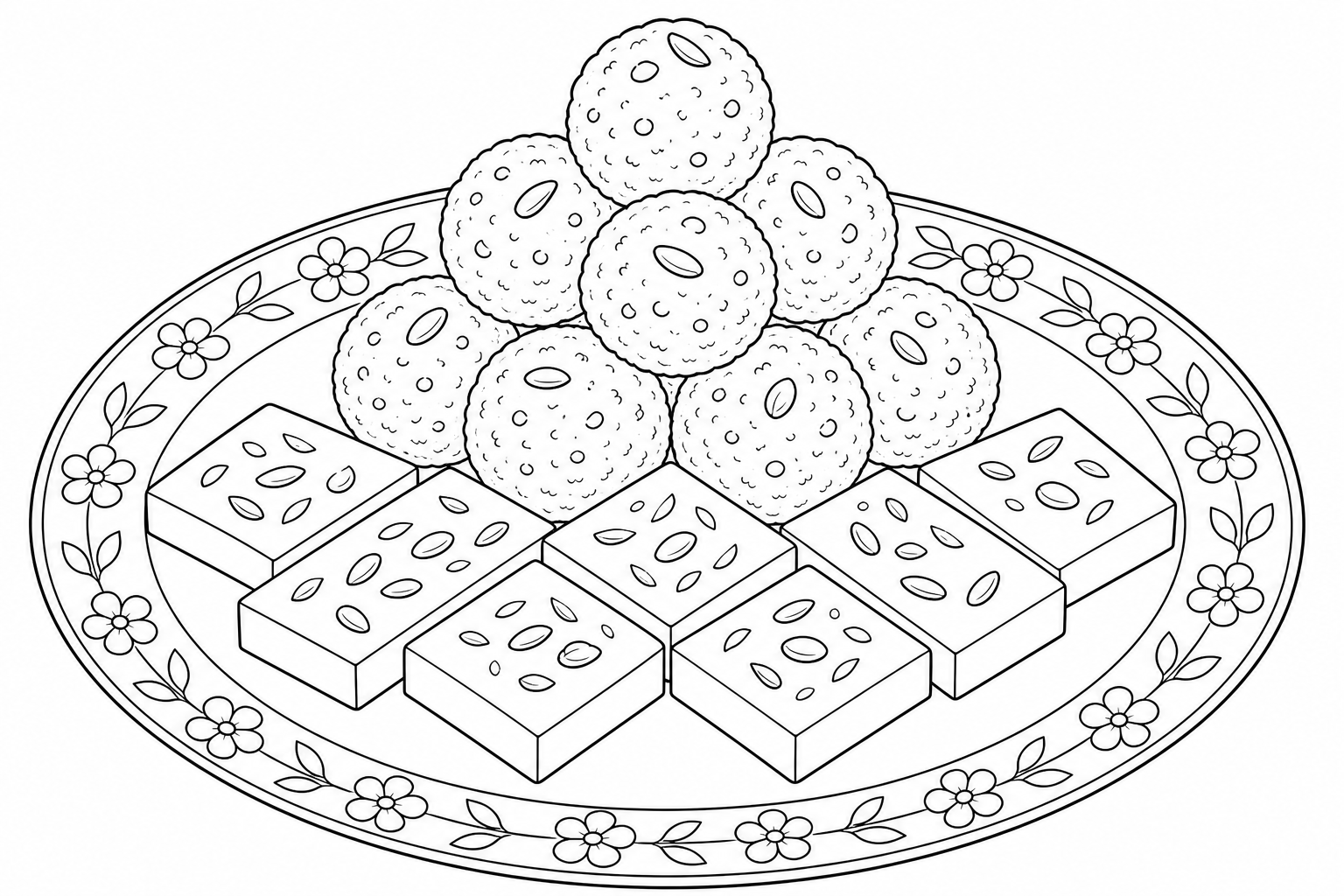
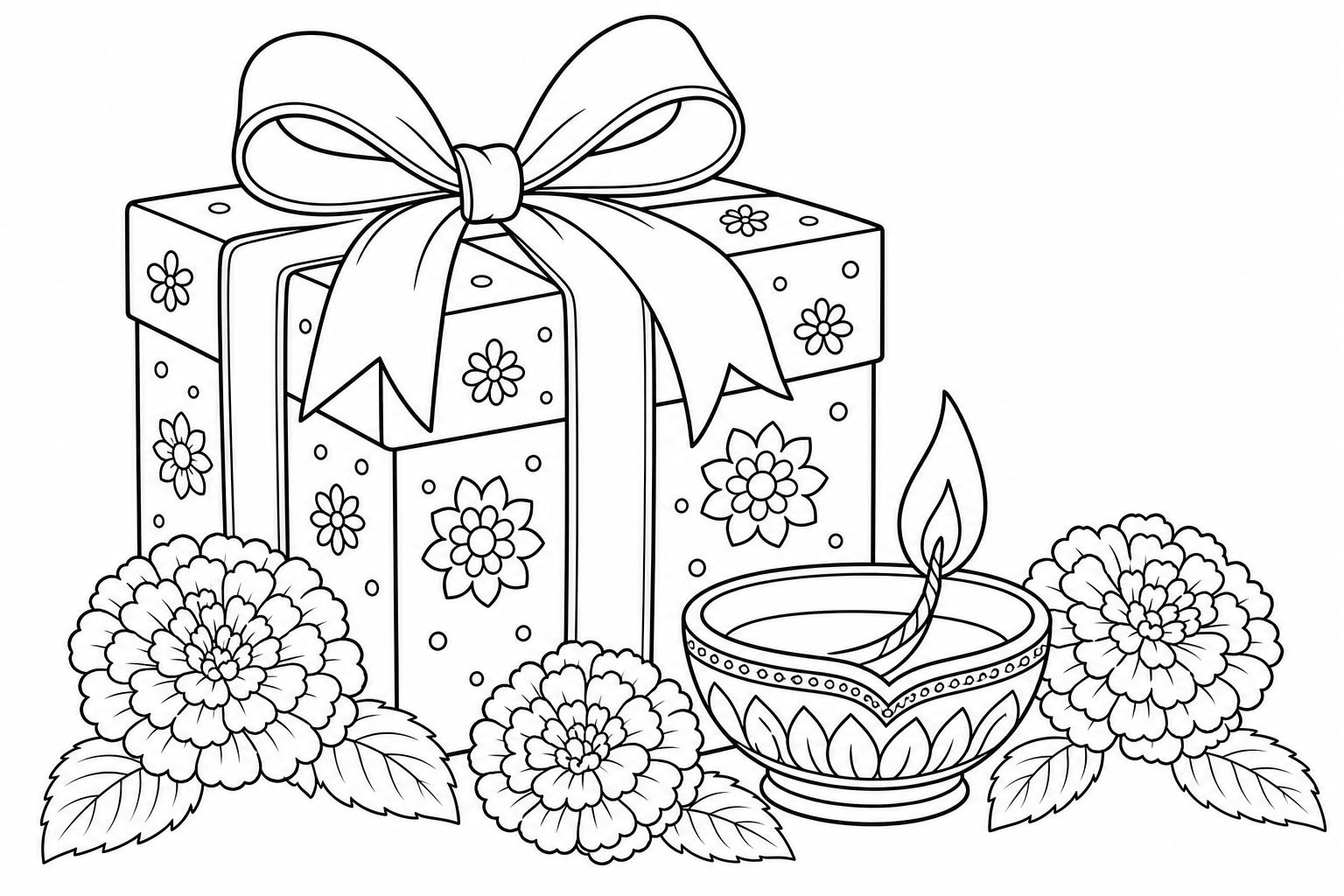
The round sweets are ladoo and the diamond ones barfi, and a child who wants to can give every almond on top its own color. For more round shapes to finish the week, try these:
What else could you color?
Pick a prompt or type your own — opens in a new tab.
Can a paper lamp do the job?
It can, and on a windowsill a child can reach it is the better lamp. Color the diya page, cut around the lamp, and fold a strip of card into a stand behind it. Line up three or four and you have your own row of lights. Real oil lamps stay with a grown-up.