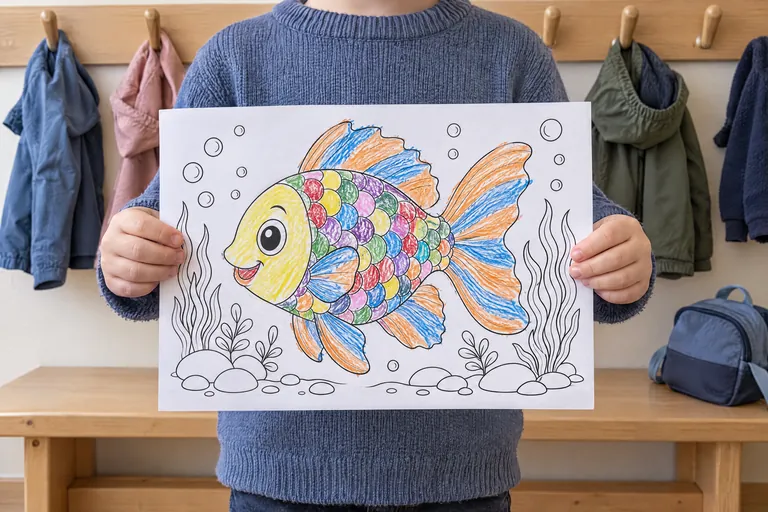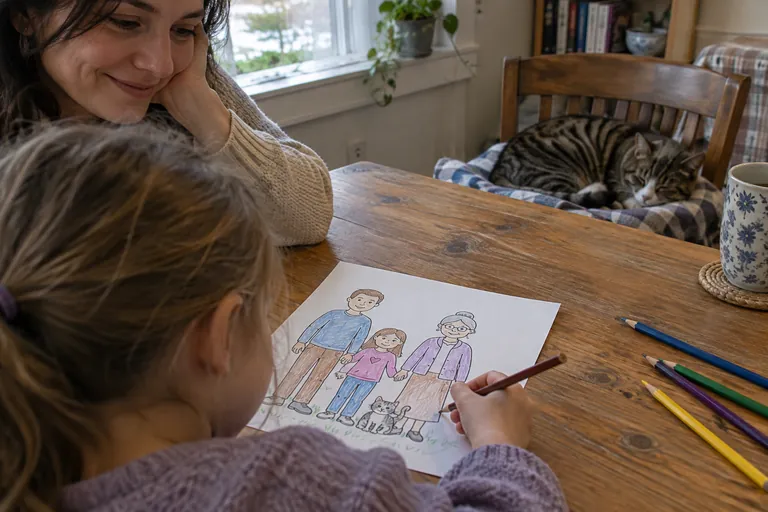
The forecast said rain all day, and by ten in the morning the walls already feel closer. Someone is bored, someone is loud, and the tablet is sitting right there, promising an hour of quiet. It is a fair thing to want. But there is a version of a rainy afternoon that ends with everyone calmer instead of more wound up, and it does not take a craft cupboard or a plan you made the night before.
This is that version: a short menu of screen-free things to do, built around what you almost certainly already have, and matched to the kid in front of you rather than to a perfect afternoon you saw online.
Why a wet afternoon feels harder than it should
Rain takes away the easiest reset a family has, which is going outside. The energy that would have burned off at the park has nowhere to go, so it turns into wrestling on the couch or the fourth "I'm bored" in ten minutes. None of that means anything is wrong. It just means the usual pressure valve is closed, and the day needs a different shape.
A screen will absolutely quiet the room. The catch is what tends to happen after: plenty of kids come off a tablet more irritable and less able to settle into anything slower. Reaching for it first also skips over the thing that actually helps a restless, cooped-up kid, which is getting their hands busy on something open-ended.
What screen-free time is quietly doing
When a child picks their own activity and runs it themselves, they are practicing more than "keeping busy." The American Academy of Pediatrics describes this kind of unstructured, child-led play as one of the main ways young children build self-regulation, focus, and independent decision-making, the same skills that let them ride out a boring afternoon without melting down. So the rainy day is not only something to survive. It doubles as decent practice.
It is also the honest case for keeping screens the exception rather than the default. Current pediatric guidance has moved away from a single magic number of minutes toward a simpler question: is the screen crowding out sleep, movement, family time, and free play? On a long indoor day, the free play is the easiest of those to lose, so it is the one worth protecting first.
Start with the one that always works
If you only set out one thing, make it coloring. It is the lowest-effort activity on this whole list: no setup, no mess to speak of, and it works for a three-year-old and a ten-year-old at the same table, each doing their own version. It also does the specific job a rainy day needs, which is to slow a wound-up kid down without asking them to sit still and do nothing.
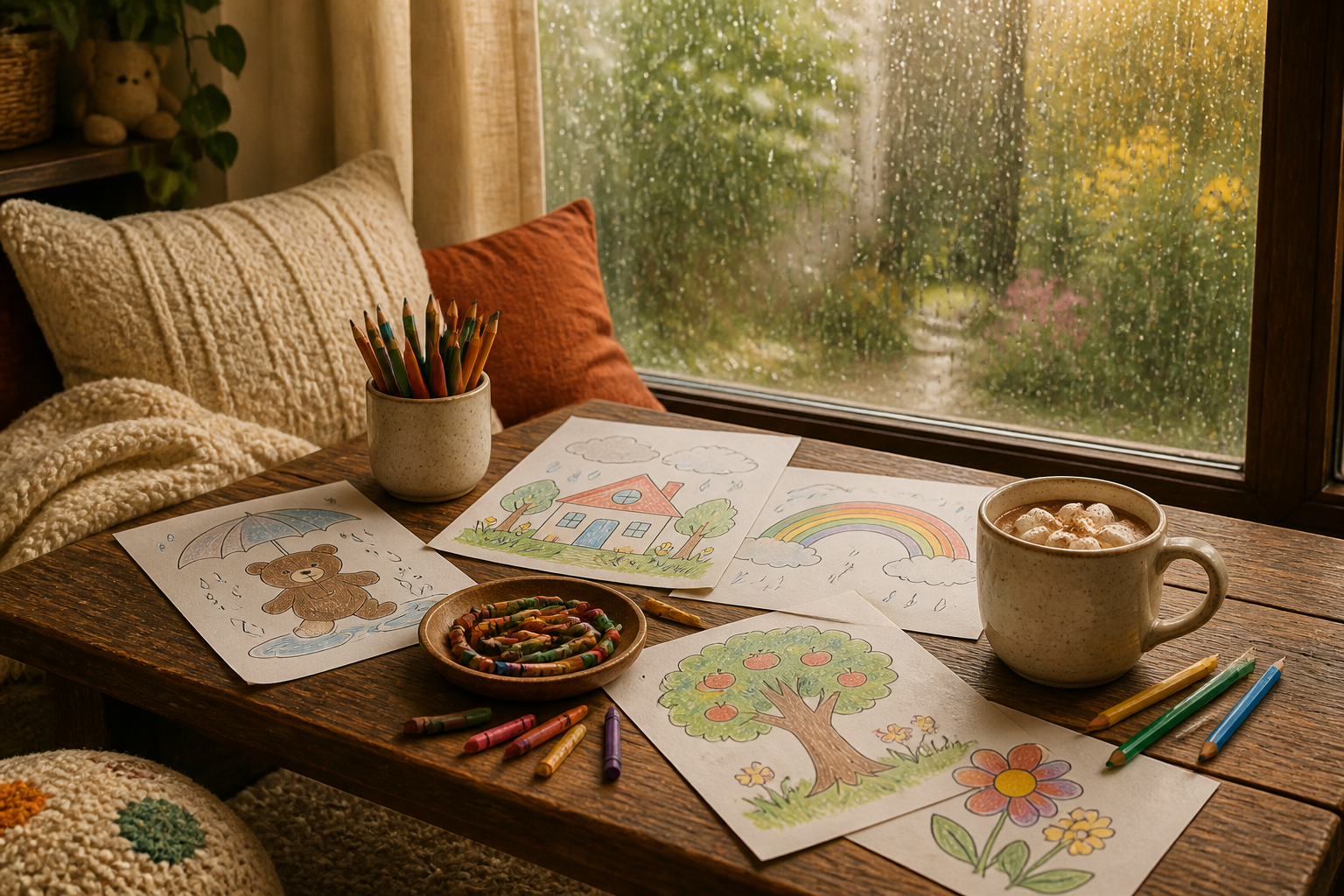
The trick that keeps it going past the first ten minutes is a fresh page they did not expect. Print a couple that match whatever they are into this week, or let them pick, and the activity restarts itself. For the calm end of the day, mandalas and repeating patterns pull kids into a steady rhythm; for the opposite, hand over something busy and detailed they can disappear into.
Once coloring is running, you rarely need everything below at once. Pick one when the room needs a new gear.
Build a den, then move the coloring into it
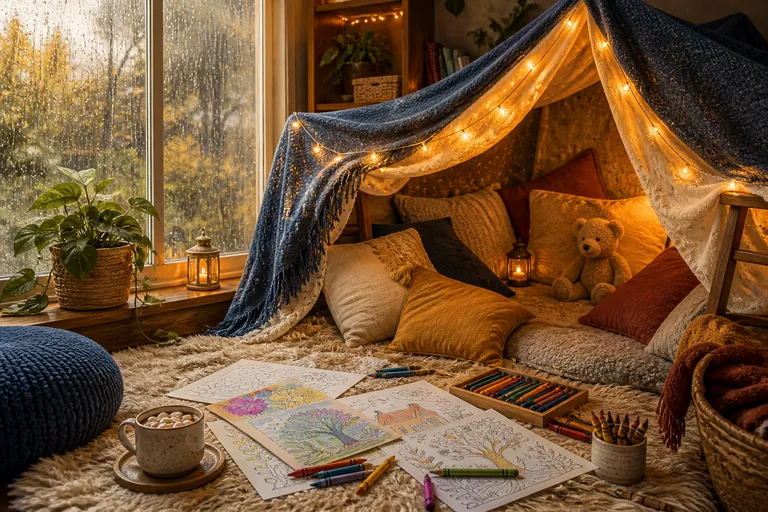
A couch-cushion or blanket fort is half the fun of a rainy day, and it doubles as the best reading and coloring spot in the house. Give it a job beyond "fort" and it lasts longer: it is the drawing studio, the campsite, the secret library.
Tape a town on the floor
A roll of masking tape and a marker turns the living-room floor into roads, a car park, a river. Kids color the buildings and vehicles on paper, cut them out, and drive the whole thing around for an hour. It is the same idea that saves a long car trip, stretched across the carpet.
Run a small treasure hunt
Five hidden objects and five clue drawings is enough. Older kids can write the clues for younger ones, which quietly turns one activity into two and buys you a coffee's worth of peace.
Make an afternoon craft out of finished pages
Colored pages do not have to go in the recycling. Cut them into a paper chain, a card for a grandparent, or bunting to string across the den. The making-something-from-it step often holds a kid's attention longer than the coloring did.
Set up a spot for the crash
Every long indoor day has a moment where someone needs to come down rather than gear up. A quiet calm-down corner with cushions and a small stack of pages is the softest landing you can offer, and it asks almost nothing of a tired kid.
Match the activity to the mood
The mistake is offering a loud game to a kid who is already over-stimulated, or a quiet page to one who needs to move. Read the room first, then pick.
| Right now they are | Reach for | Why it fits |
|---|---|---|
| Wired and loud | Taped-floor town, treasure hunt | Gives big energy somewhere to go before you ask for calm |
| Bored and drifting | A surprise page on their current obsession | A fresh, specific page restarts attention faster than "go play" |
| Melting down | Calm corner, mandalas | Slow, repetitive coloring lowers the temperature without a standoff |
| Wanting you | Color side by side, build the den together | Ten minutes of company resets more than an hour of nagging |



Coloring fun for kids — anywhere.
Free for iOS & Android. No ads, no sign-up, offline-ready.


Coloring fun for kids — anywhere.
Free coloring app for kids. iOS and Android, phones and tablets. No ads, no sign-up, even offline.
Keep it going without more setup
The afternoon holds together better if you change one small thing rather than starting over. Move the same coloring to a new spot: the kitchen table, then the fort, then the windowsill to watch the rain. Rotate the subject instead of the activity, with clouds and rainbows while it is actually pouring, then something completely different once they have settled. And let them lead when they take an idea somewhere strange. A treasure map that becomes a comic that becomes a fort rulebook is exactly the point.
If you want a quick way to line up the next round of pages, these suit a rainy day.
What else could you color?
Pick a prompt or type your own — opens in a new tab.
A calmer default
The tablet will still be there, and there is no medal for a screen-free day. But most rainy afternoons do not actually need one. They need a first thing that is easy to start, a few backups for when the room turns, and permission to let the kids carry it from there. Keep a small stack of printed pages in a drawer for exactly these days, borrow the backseat trick that works on road trips when the floor town runs its course, and trust that a wet afternoon spent making things, rather than watching them, is a good one even when it is loud.