"Is it coming?"
"Not yet. Watch the corner by the bakery."
"I'm watching."
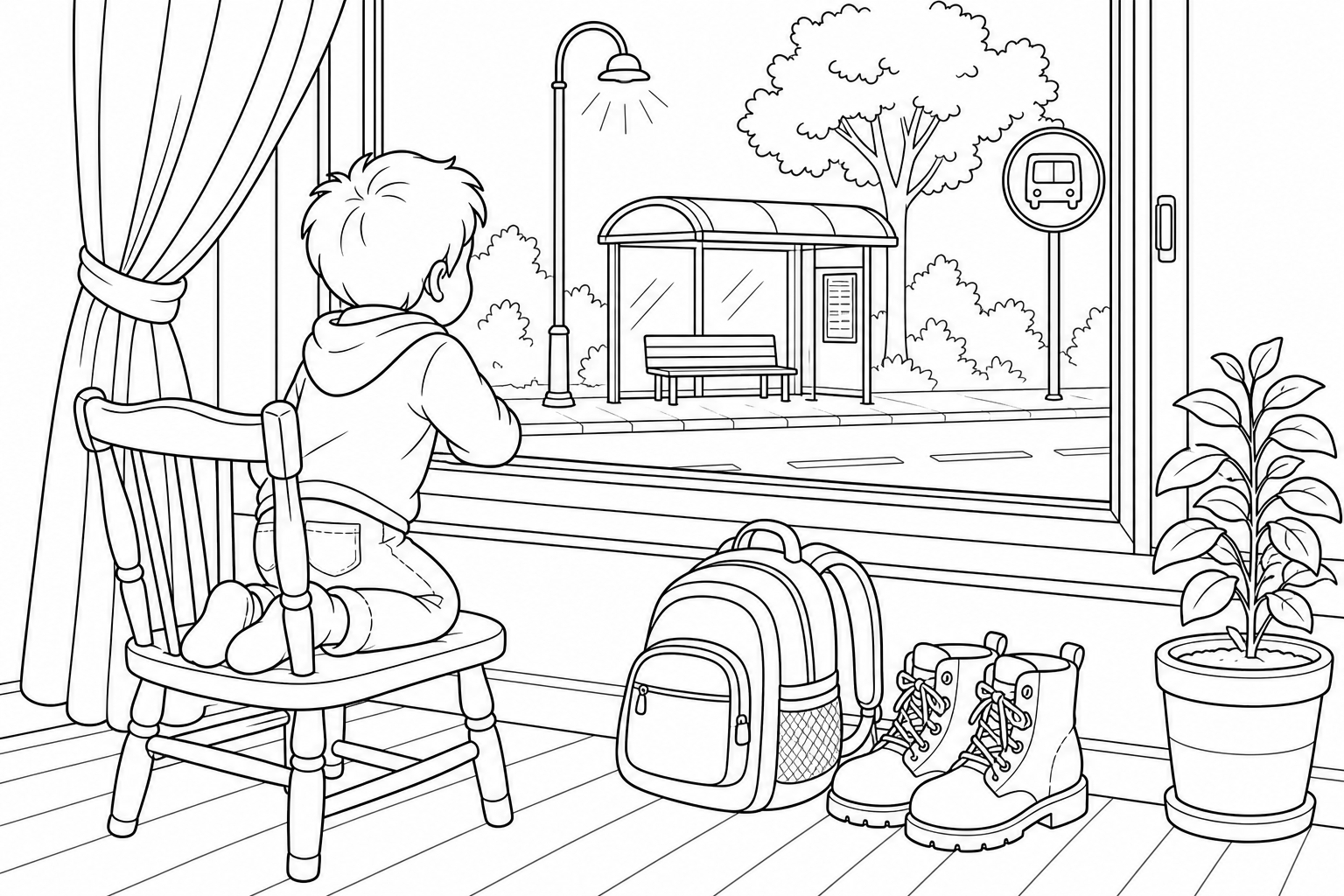
It is ten past seven in October, the sky is still the color of ink, and a five year old in a half-zipped coat has her nose on the window glass. She has been dressed for twenty minutes. Her boots are on the wrong feet and nobody has the heart to say so yet.
The school bus is the hinge of her day. Before it comes she belongs to home; once she climbs the step she belongs to school. These school bus coloring pages follow that one morning from the window to the school gate and back again, a stop at a time, with a page for each place and something useful to do at every one.
Ten past seven, at the window
The wait is the longest part of the morning for a small child, and the hardest to fill. A tablet makes the bus a surprise that interrupts something; a coloring page keeps her eyes going between the paper and the street, which is exactly where you want them.
Start with the bus. Here is a small thing worth telling her: the yellow bus from picture books was chosen on purpose. In April 1939 a professor named Frank Cyr gathered school transport experts at Teachers College in New York, and they settled on one shade of yellow because black lettering on it is easiest to see in the half-dark of early morning and late afternoon (Teachers College, Columbia University). Cyr himself always thought the color was more orange than yellow.
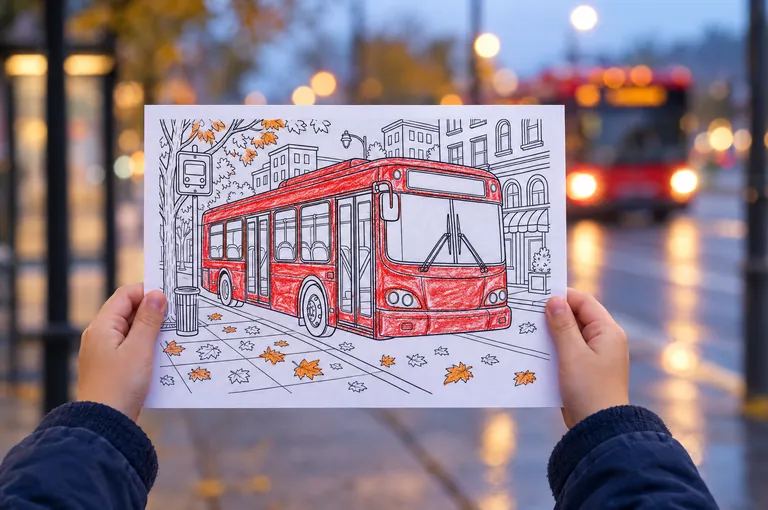
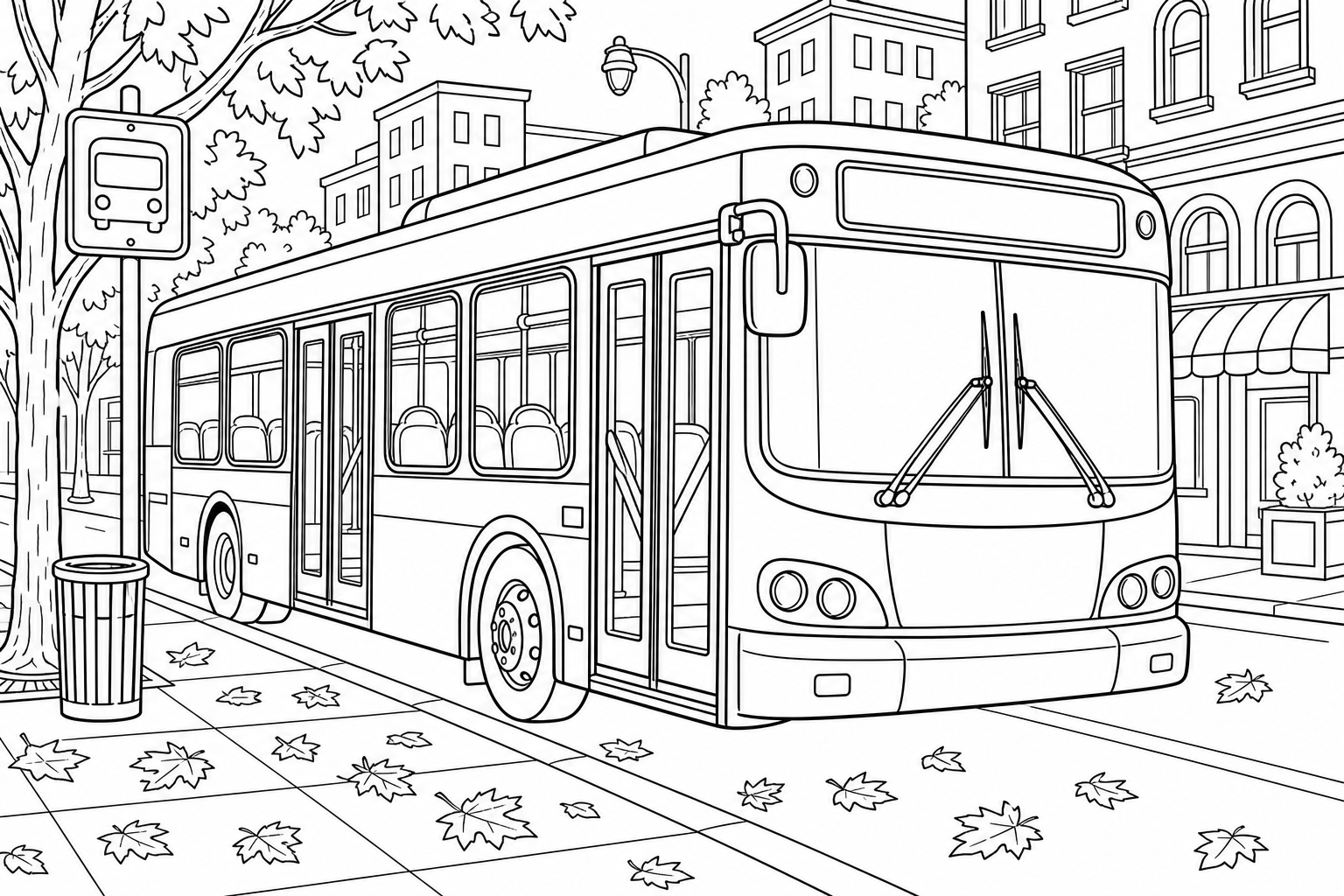
Your bus may look nothing like that. In a lot of towns the bus to school is a city bus in the local colors: red and white, green, blue, a cream one with a stripe. So make that the game. Print the city bus page, then ask her to color the bus the color of the one that will turn the corner. When the real one appears, she checks her work against it through the glass.
For three to five year olds, one big color for the body and a dark one for the wheels is a finished page. Do not ask for windows.
For six to ten year olds, the empty panel above the windscreen is where the line number goes. Let her write her own bus number and the name of her stop into it, and add the driver in the front seat if she knows who drives on Mondays.
The night before, by the door
A calm wait at seven starts at seven the evening before. The window only works if nothing is missing when the bus appears, because a lost glove at the moment the headlights come round the corner turns a good morning into a sprint.
Make the door the place where tomorrow gets ready. Lay things out together after dinner, in the same order every night, and let her tick them off out loud:
- the school bag, packed and closed, leaning against the wall
- boots side by side, the left one on the left
- the coat on its hook, with the reflector already clipped to it
- the bus pass or ticket in the outside pocket, where small hands find it
- tomorrow's coloring page and two pencils on the windowsill, ready for the wait
That last item matters more than it looks. A page chosen the night before is a promise: there will be something to do at the window. It works like the evening routine in coloring before bed, small, the same every night and finished before anyone is tired.
If she rides with an older sibling or a neighbor, put a second page on the sill for them. The bus stop is calmer when the big ones have a job too.
The walk to the stop in the dark
In autumn and winter the walk to the bus often happens in the half-dark, and that changes what a driver can see. A child in a dark coat on a dim street is hard to spot until a car is very close.
That gap is the whole argument for the reflector on the coat hook. Clip-on reflectors, reflective bands on sleeves and a bag with reflective panels all count; the ADAC suggests looking for the EN ISO 17353 label on reflective gear.
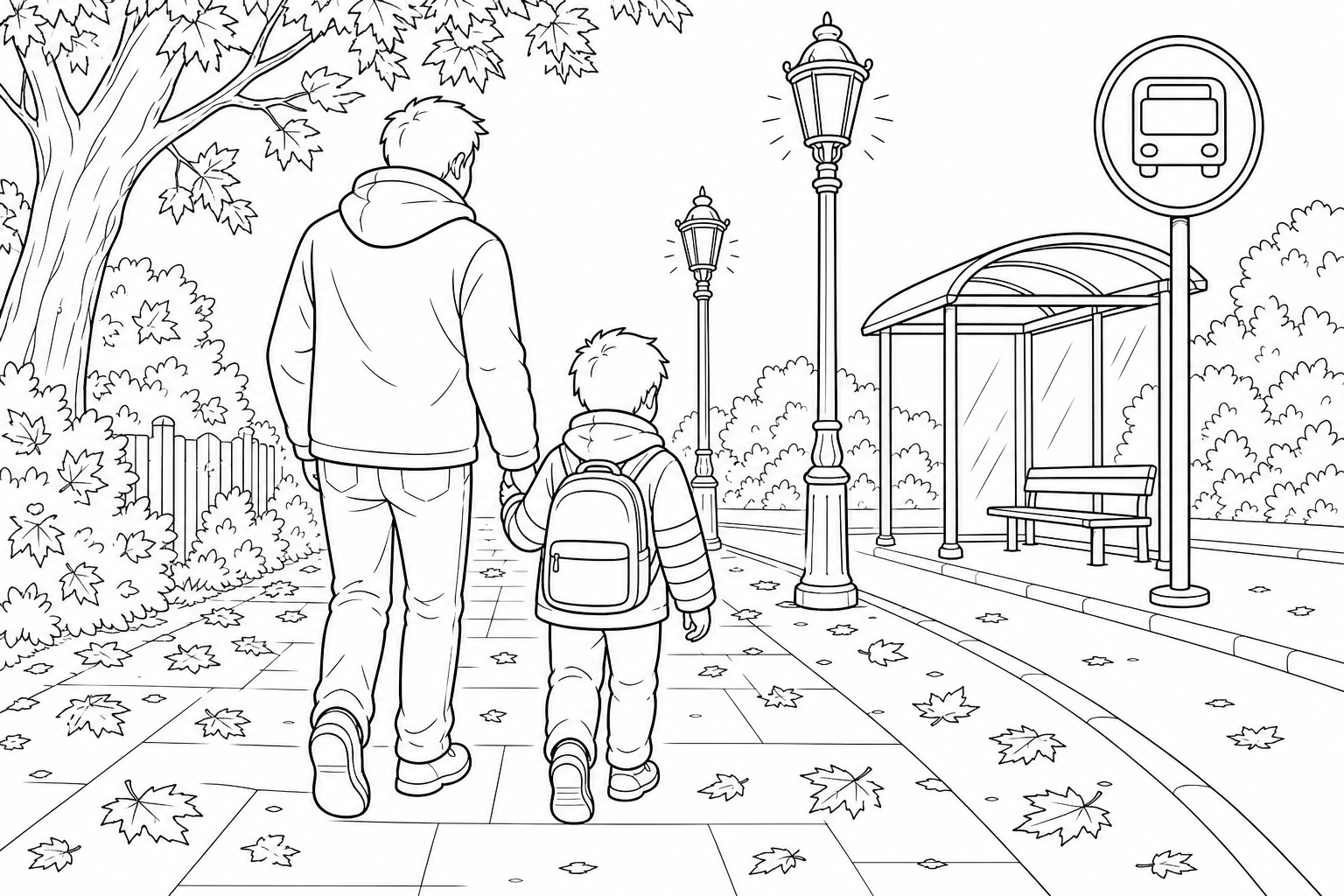
Here is where coloring can help without any lecture. The page below shows a parent and child walking to the shelter under the streetlamps. Ask her to find everything on it that would shine when headlights hit it, and color those parts in the brightest color she has: the bands on the jacket sleeves, the buckles, the zip pull on the backpack. Then do the same check on her real coat in the hallway. A five year old will happily inspect her own sleeves for "shiny bits" when she has just hunted for them on paper.
For six to ten year olds, add a counting game for the walk itself: who can spot the most reflectors on the way, on bikes, on bags, on the posts by the road. It keeps eyes up and moving, and it turns the dark walk into the part of the morning they look forward to.
At the stop
The stop is where the rules live, and children like rules that are short and the same every day. The ones below come from road safety bodies on both sides of the Atlantic. Say them in the same order each morning until she can say them for you:
- 1Leave home so you reach the stop about five minutes early, so nobody has to run for the bus (NHTSA).
- 2Wait back from the edge of the road, about two big steps away, and keep the games for later.
- 3Step forward only when the bus has stopped completely, the door is open and the driver says it is okay.
- 4Hold the handrail on the steps going in and coming out.
- 5After getting off, wait until the bus has pulled away before crossing the road, so you can see the traffic and the traffic can see you (ÖAMTC). Where yellow school buses with a stop arm run, the local rule is different: cross in front, at least five giant steps ahead of the bus, after making eye contact with the driver (NHTSA).
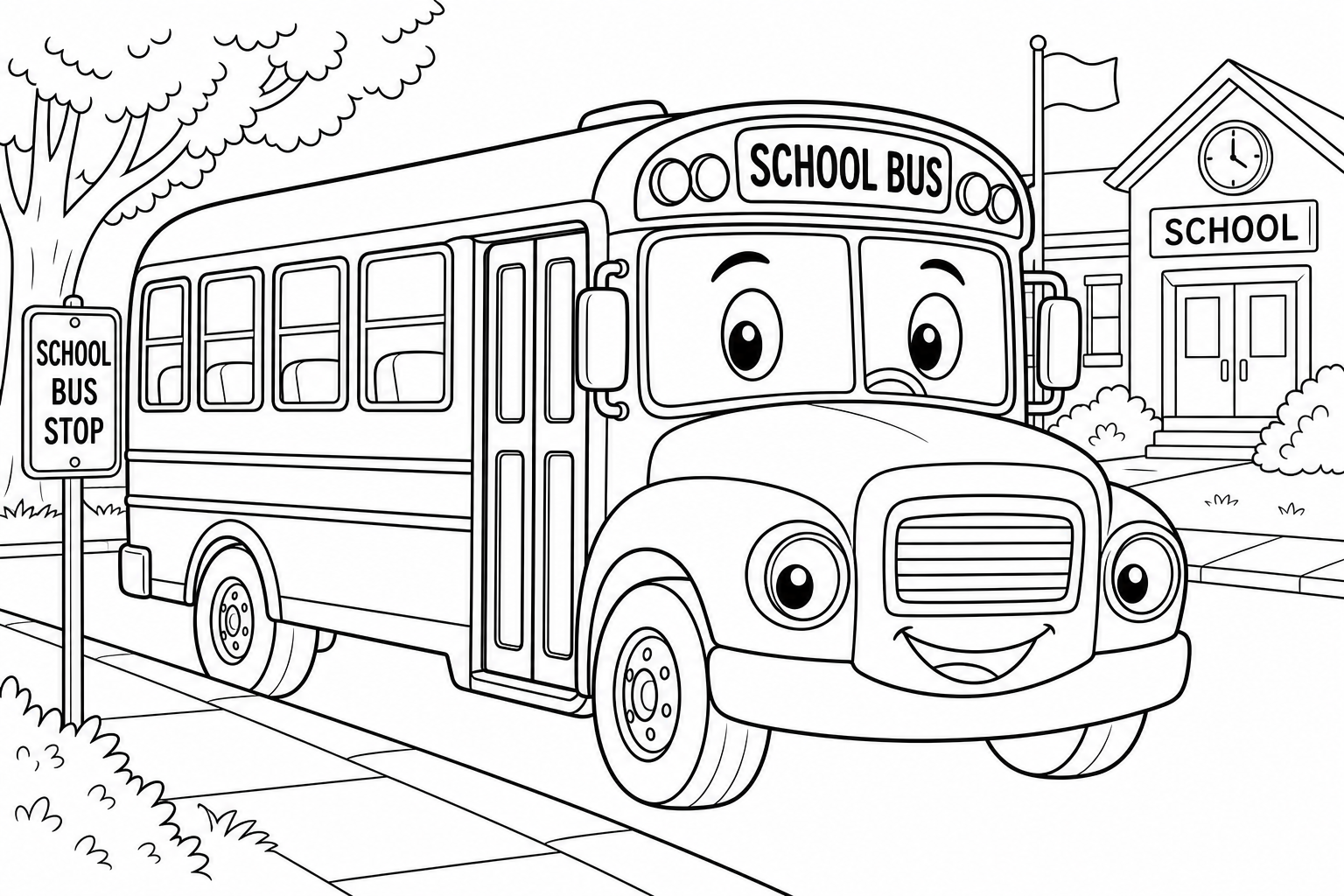
The two pages here belong to this moment. One is the empty stop with a bag leaning on the bench, the other a bus with its door folded open. Younger children can color the stop first and then the bus, and you can ask where the child in the picture should stand while it waits. Older ones can draw themselves into the empty stop, two big steps back from the curb.
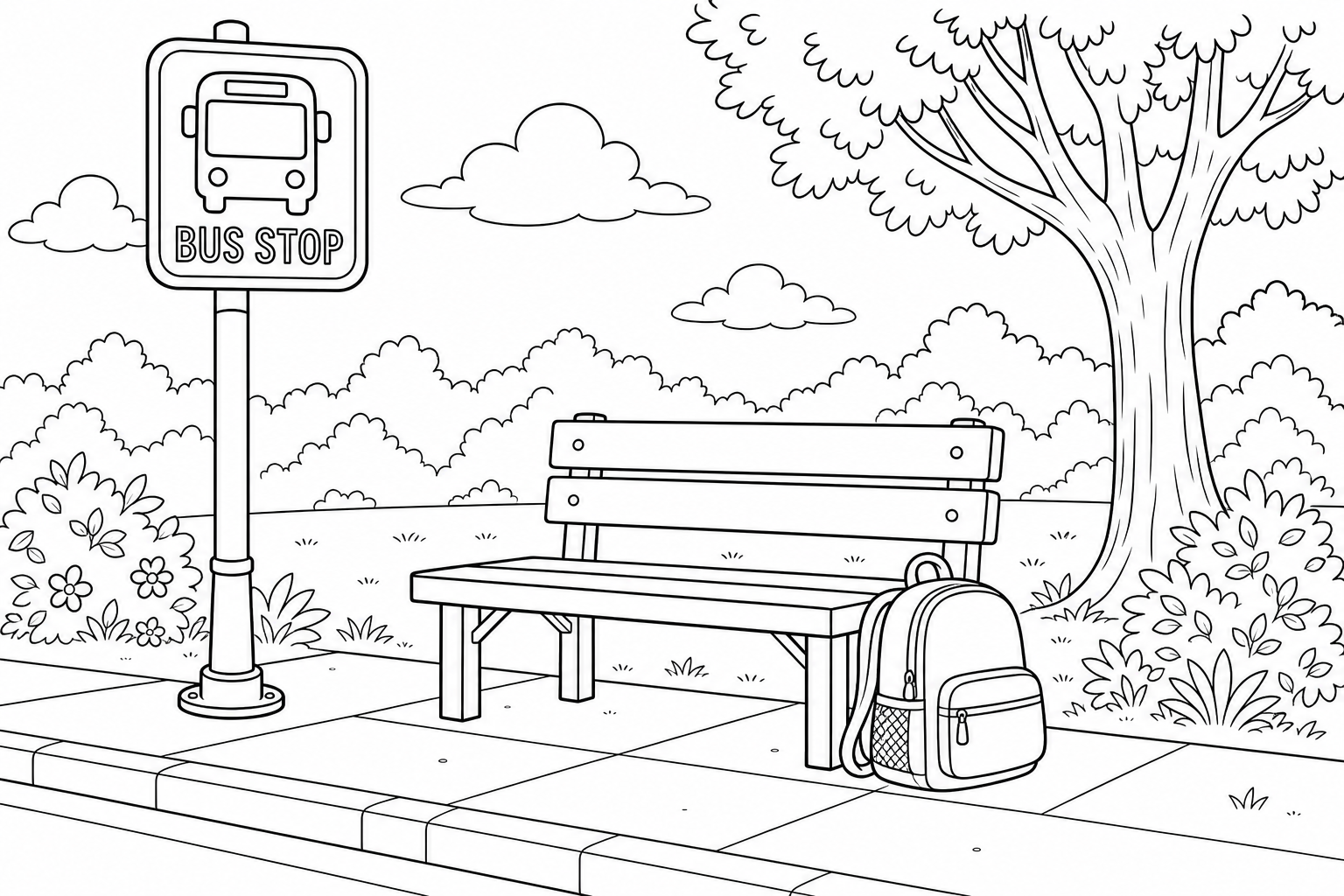
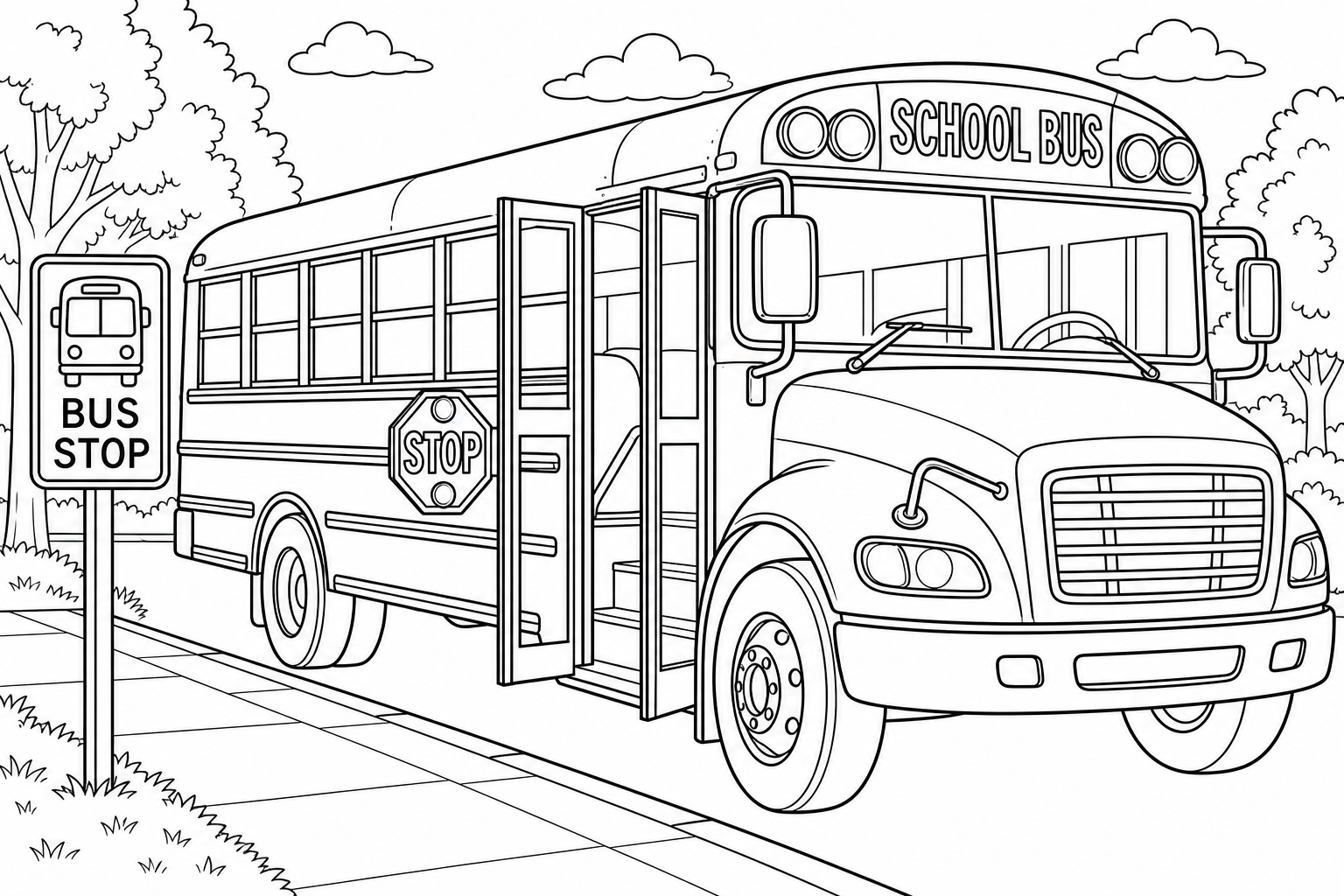
If the stop is new this school year, walk there together once on a weekend, when nothing is at stake. Stand where she will stand. Look at the corner the bus comes round. A place she already knows is much less frightening on a dark Tuesday.
The window seat
Once she is on, the bus does something no car does: it gives her a high seat, a big window and nobody asking her questions. Some children love it from day one. Others find the first weeks loud, and the window is the quiet place to look at.
Give the window a job. A short game she can play alone, for as long as the ride lasts, works better than a toy that can roll under a seat:
"How many dogs today?"
"Four. One had a coat on."
"Tomorrow, count the red doors."
Change the thing to count every few days: red cars, people with umbrellas, trees that have lost all their leaves. On the way home she tells you the number, and you have a conversation that is not about how school was. The same window games travel well on longer drives, as in what works in the back seat on a road trip.
For the evening, a page of the thing she counted makes a good end to the loop. If it was dogs, find a dog page; if it was trees, a tree page. The showroom has a page for nearly anything she will spot through the glass:
What else could you color?
Pick a prompt or type your own — opens in a new tab.
The bus home
The afternoon bus runs the morning backwards. She gets off at the stop, waits until the bus has gone, and walks to the door where her boots will be lined up again tonight. At this time of year it may already be getting dark on the way home too, so the reflector earns its place twice a day.
Keep the colored bus page somewhere she can see it, on the fridge or by the coat hooks. Children like proof that the bus they colored is the bus they ride. Some families start a little row of them: the bus in October, the bus in the snow, the bus on the last day before summer, each one colored at the same window.
A few weeks in, the wait at the window changes. She stops asking whether it is coming and starts telling you how many minutes are left. That is the moment the bus has become hers.
The bus is the first part of the day she does on her own, so give her the wait, the walk and the window seat as small jobs of her own, and the morning starts to belong to her.