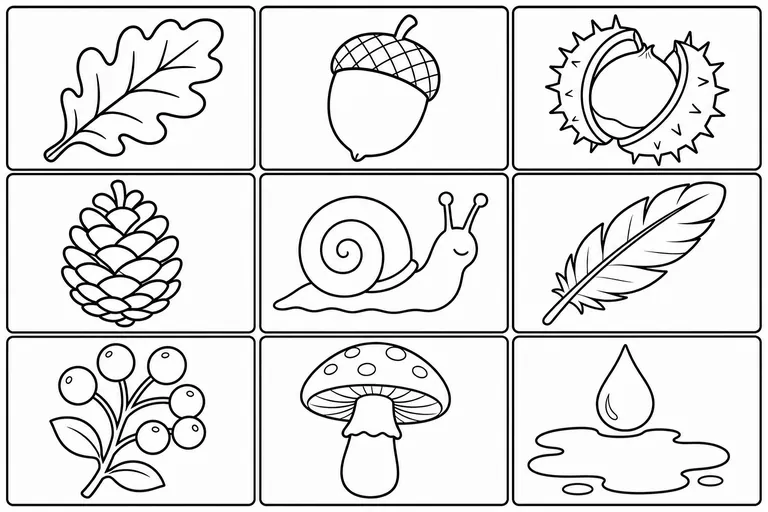
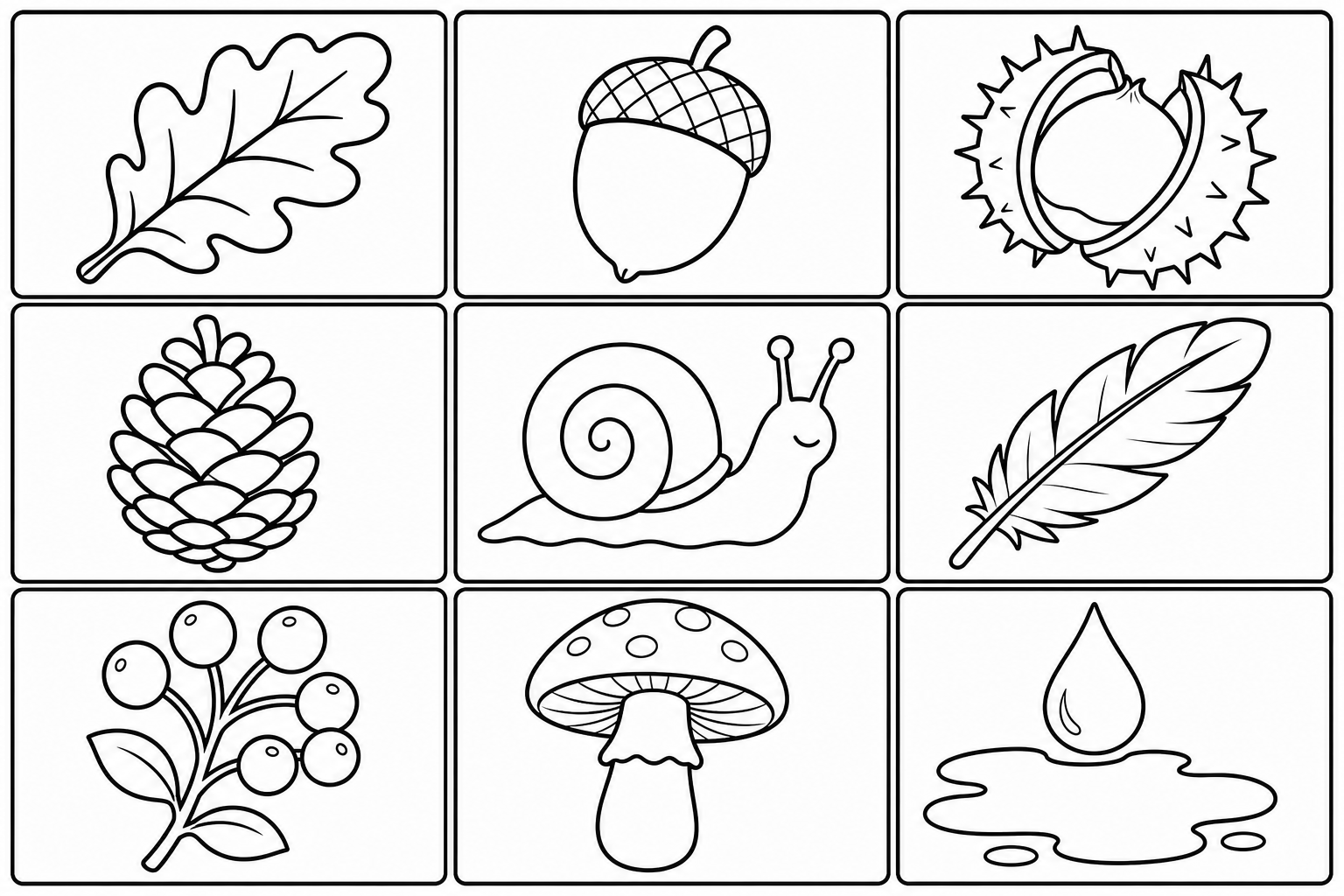
Nine squares on one sheet, and one rule: a square gets colored only when you find the real thing. A real acorn in a real hand, and then the acorn on the page gets its brown. That is the whole fall scavenger hunt printable, and it turns a Sunday walk in October into something with a finish line.
It works for a three year old who cannot read a list yet, and for an eight year old who wants to win. Take a clipboard, three pencils (orange, brown and green cover almost everything) and the sheet. The page is finished when the walk is.
Below, the squares are ordered the way they usually fall on a real walk: from the ones you will have colored before the end of the street to the ones that need luck.
Two cards, one for the woods and one for the park
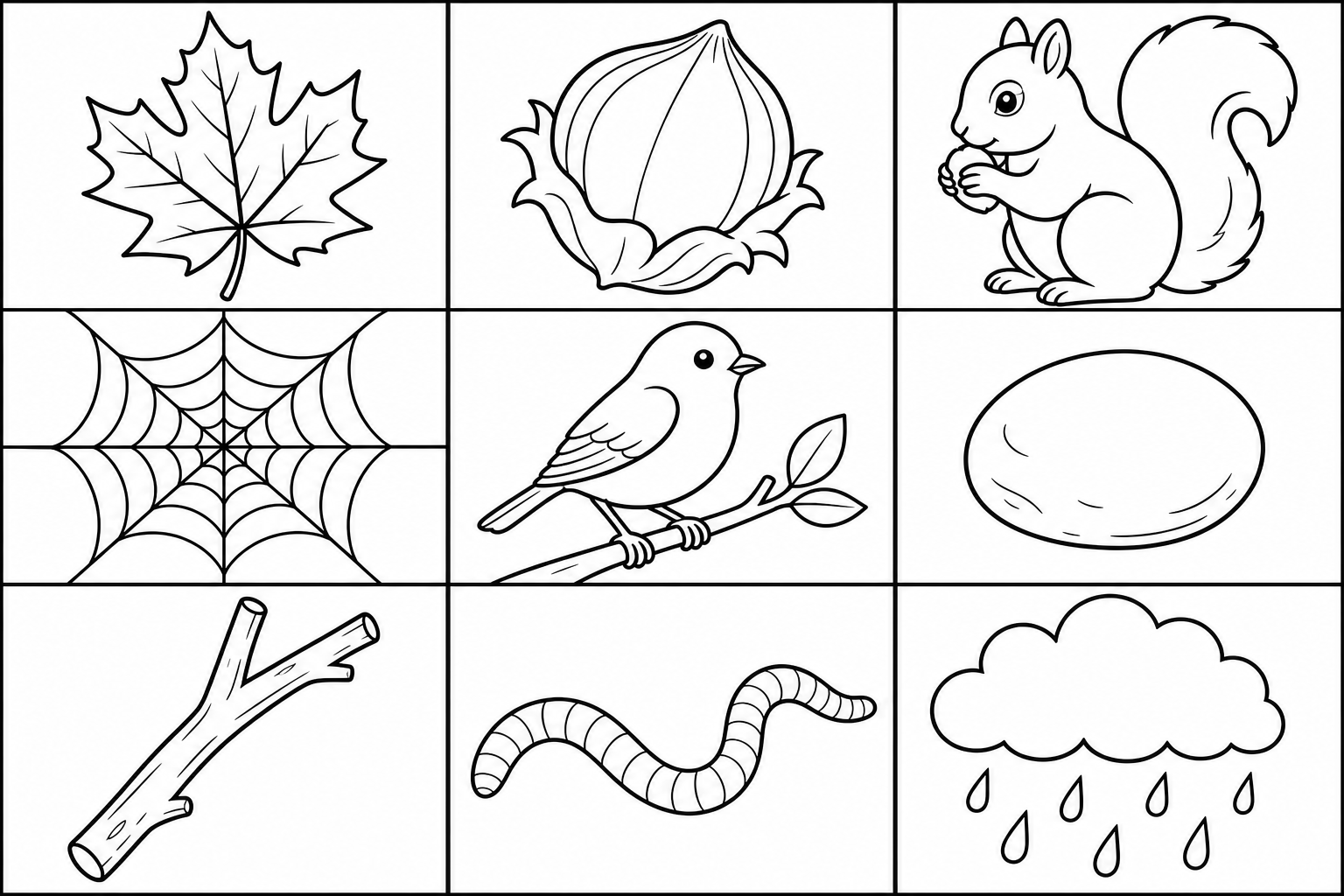
The first card has nine woodland finds: an oak leaf, an acorn, a chestnut, a pine cone, a snail, a feather, berries, a mushroom and a puddle. The second card is for a town park, with a maple leaf, a hazelnut, a squirrel, a spider web, a bird, a smooth stone, a forked stick, a worm and a rain cloud. Print the one that matches where you are going, or both, back to back.
Found before the end of the street: leaves and acorns
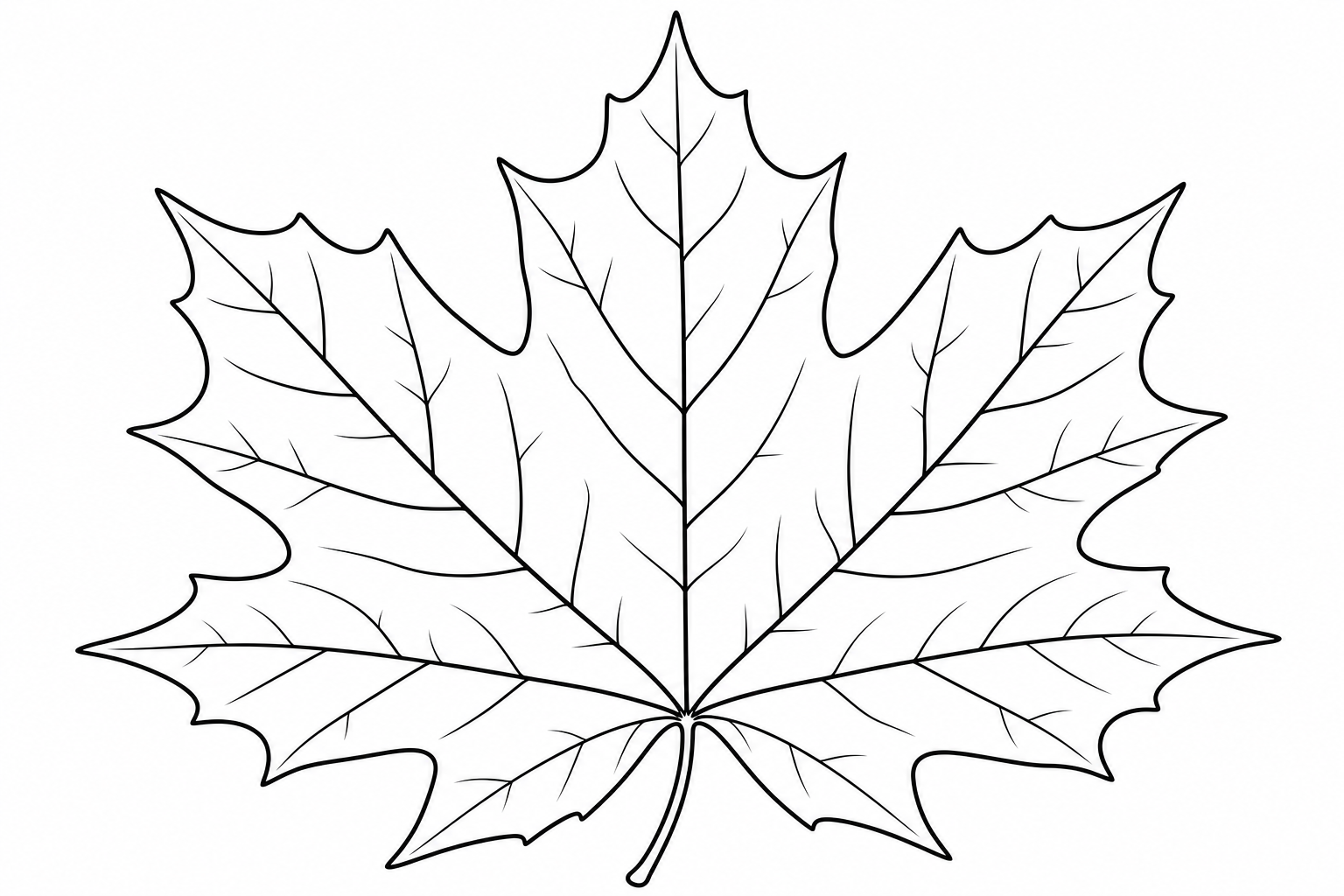
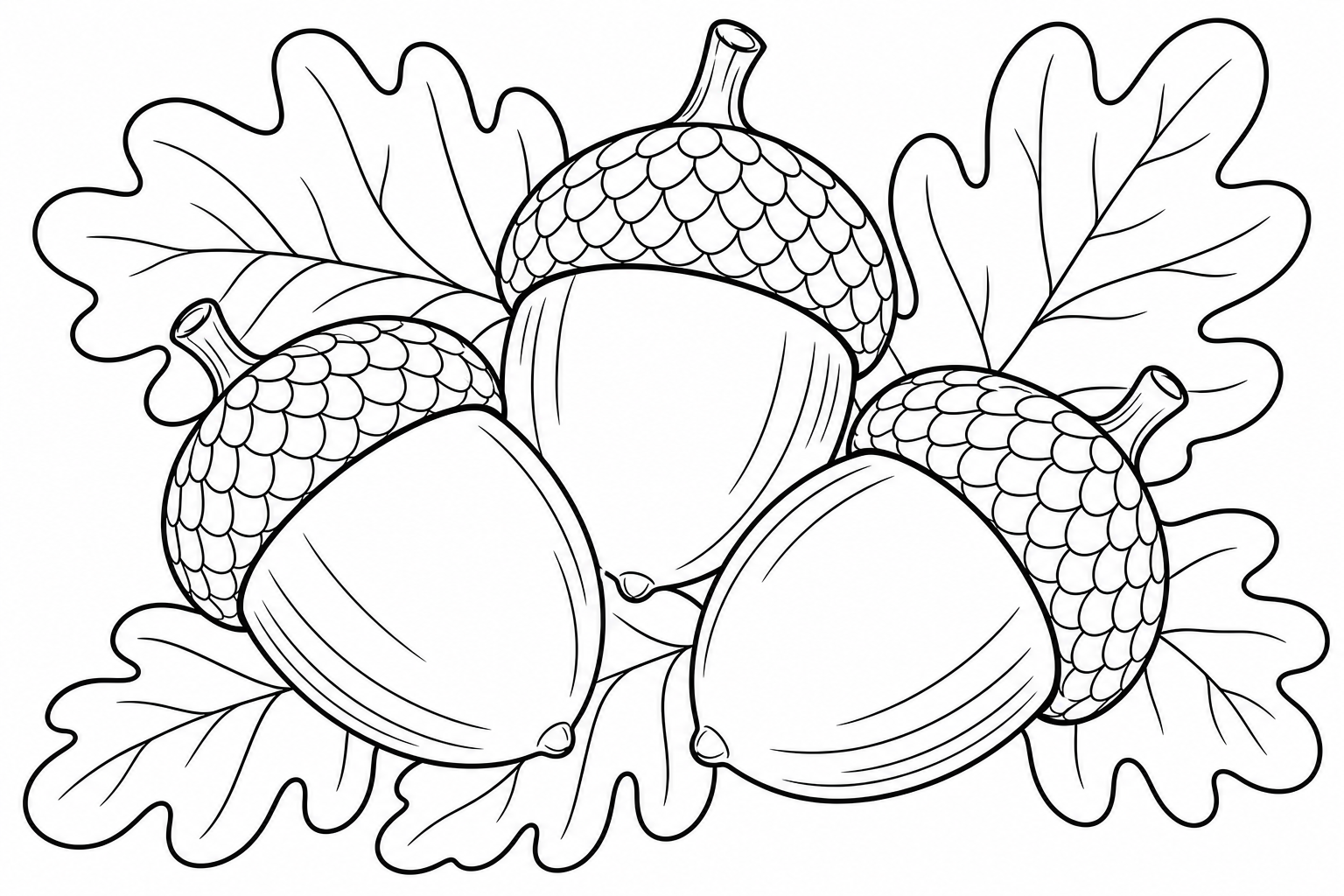
In October the leaf square is usually colored within the first minute. Let the child choose which leaf counts, and let them hold it against the page while they color, so the orange on the paper is the orange in their hand. Acorns come next wherever there is an oak. Children tend to find one, and then suddenly see forty.
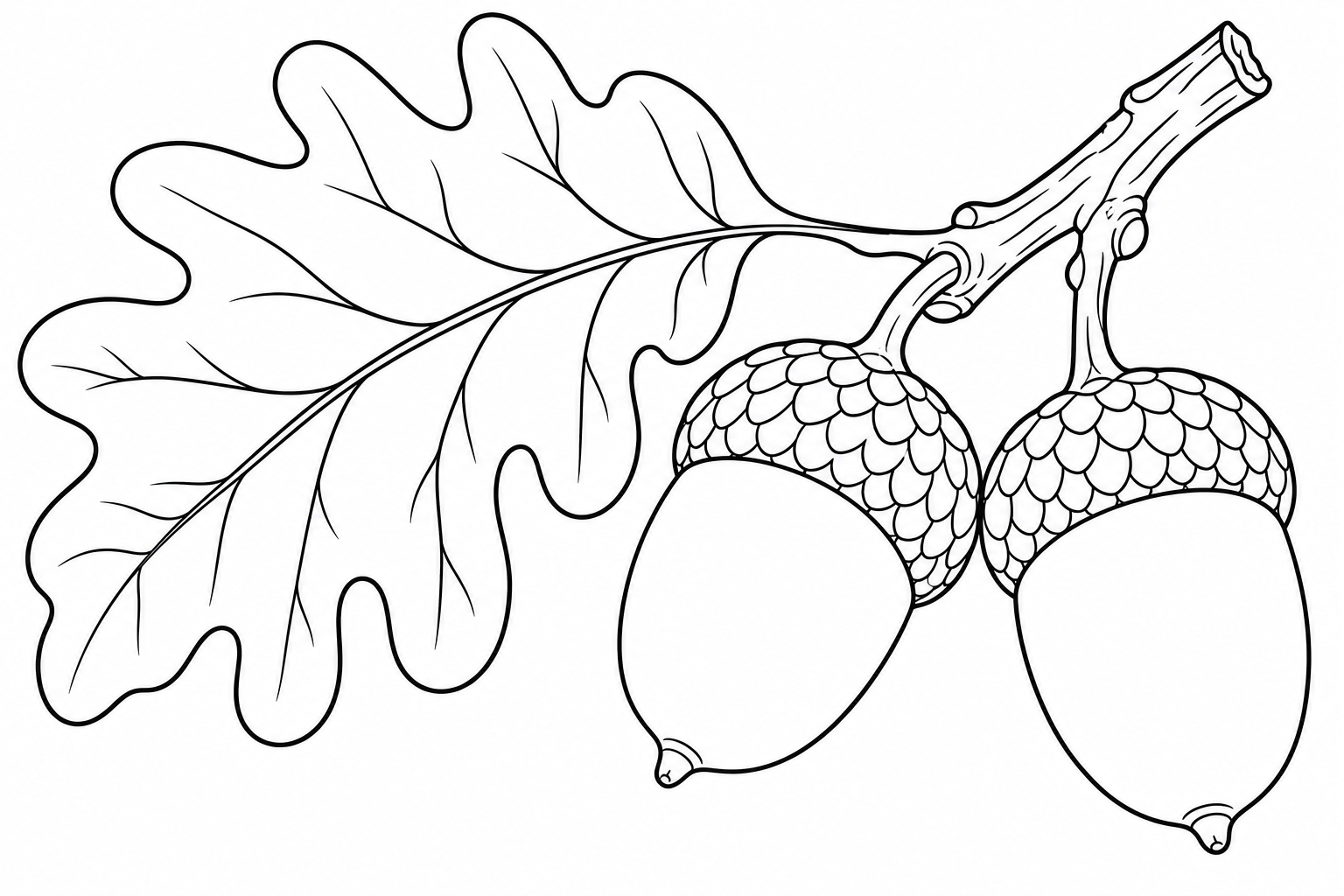
These first squares matter more than they look. A walk that starts with two colored squares in five minutes has momentum, and momentum is what gets a four year old past the bench where they usually want to turn back.
Found if you look down: chestnut, pine cone, snail
The middle squares need a slower walk and a lower head. Chestnuts drop out of their spiky cases, and an empty case is a find in its own right. Pine cones lie under the conifers, and snails come out after rain, on the undersides of leaves and along damp walls.
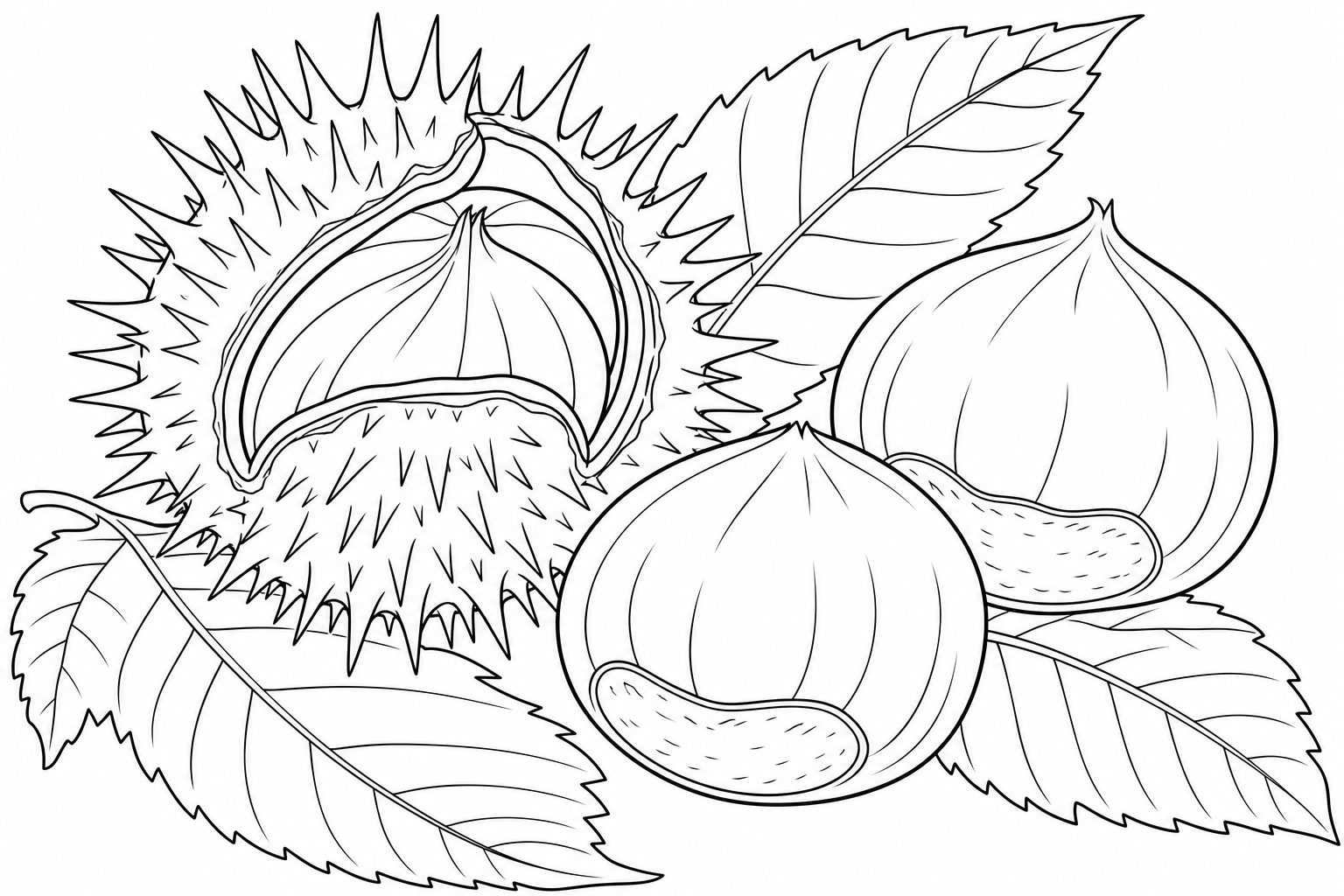
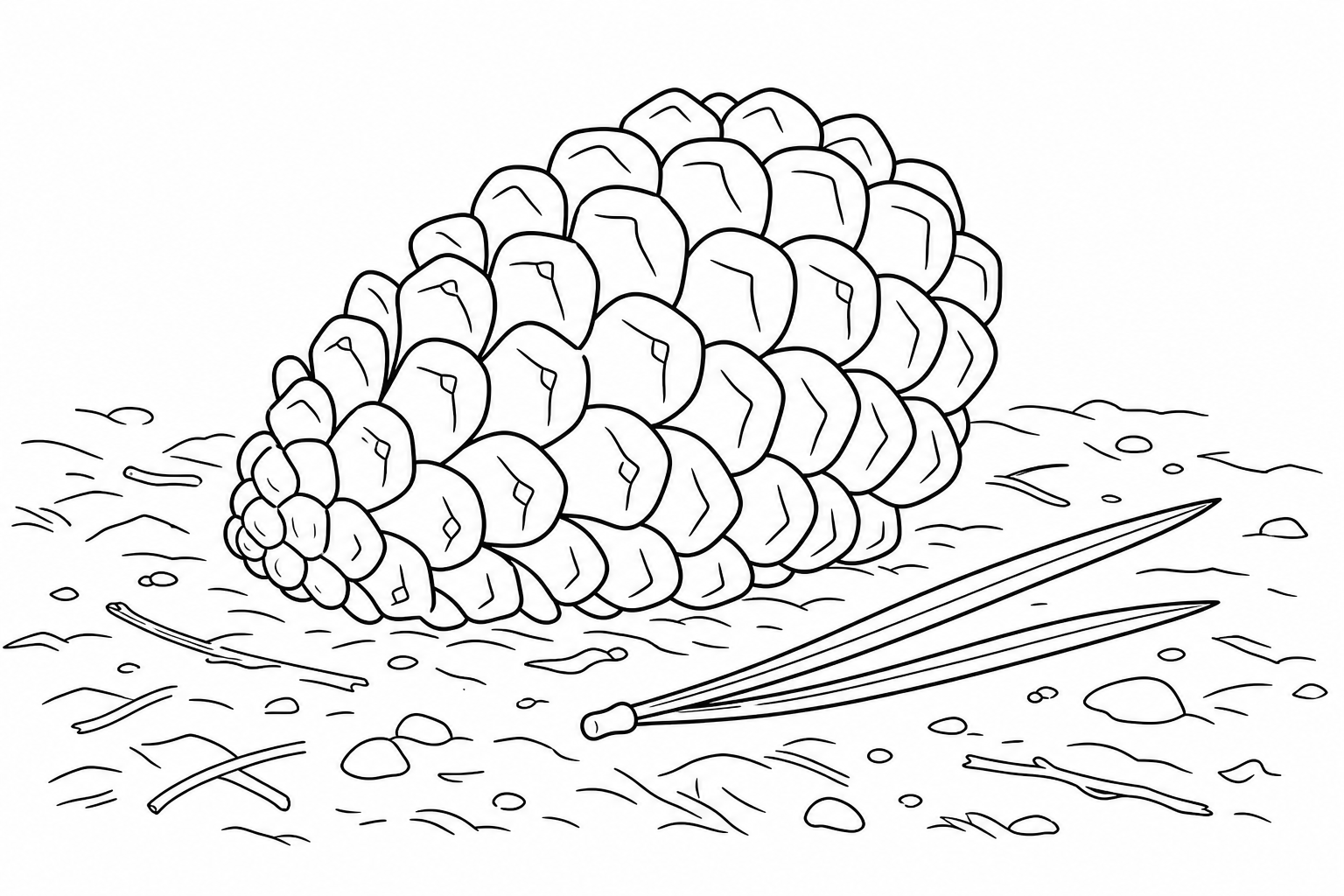
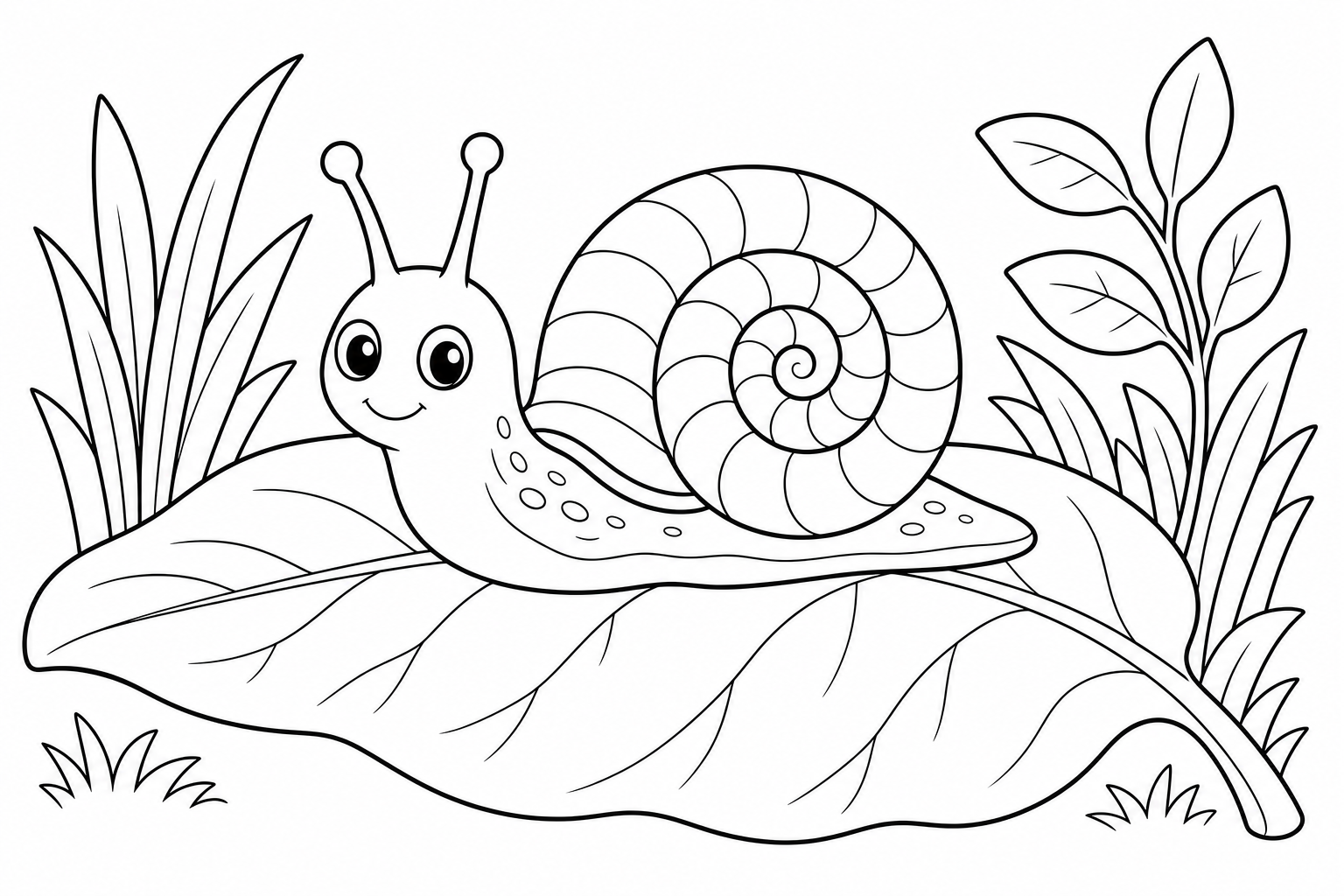
This is the part of the walk where the child starts scanning the ground on their own. You stop being the guide and become the person holding the clipboard.



Coloring fun for kids — anywhere.
Free for iOS & Android. No ads, no sign-up, offline-ready.


Coloring fun for kids — anywhere.
Free coloring app for kids. iOS and Android, phones and tablets. No ads, no sign-up, even offline.
Look, don't touch: berries and mushrooms
Two squares on the woodland card follow a different rule. Berries and mushrooms are found with the eyes only, and they get colored the moment someone points at them.
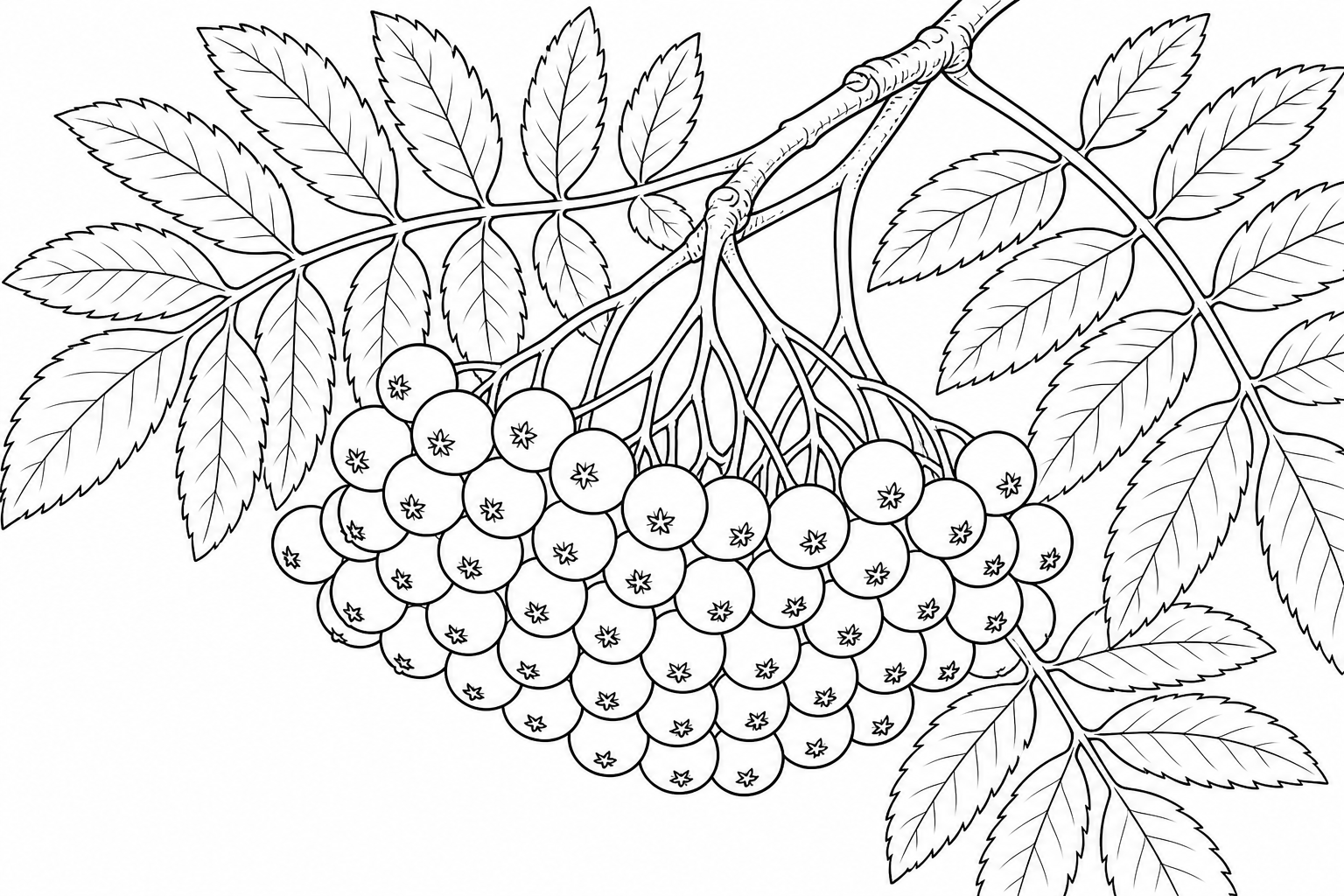
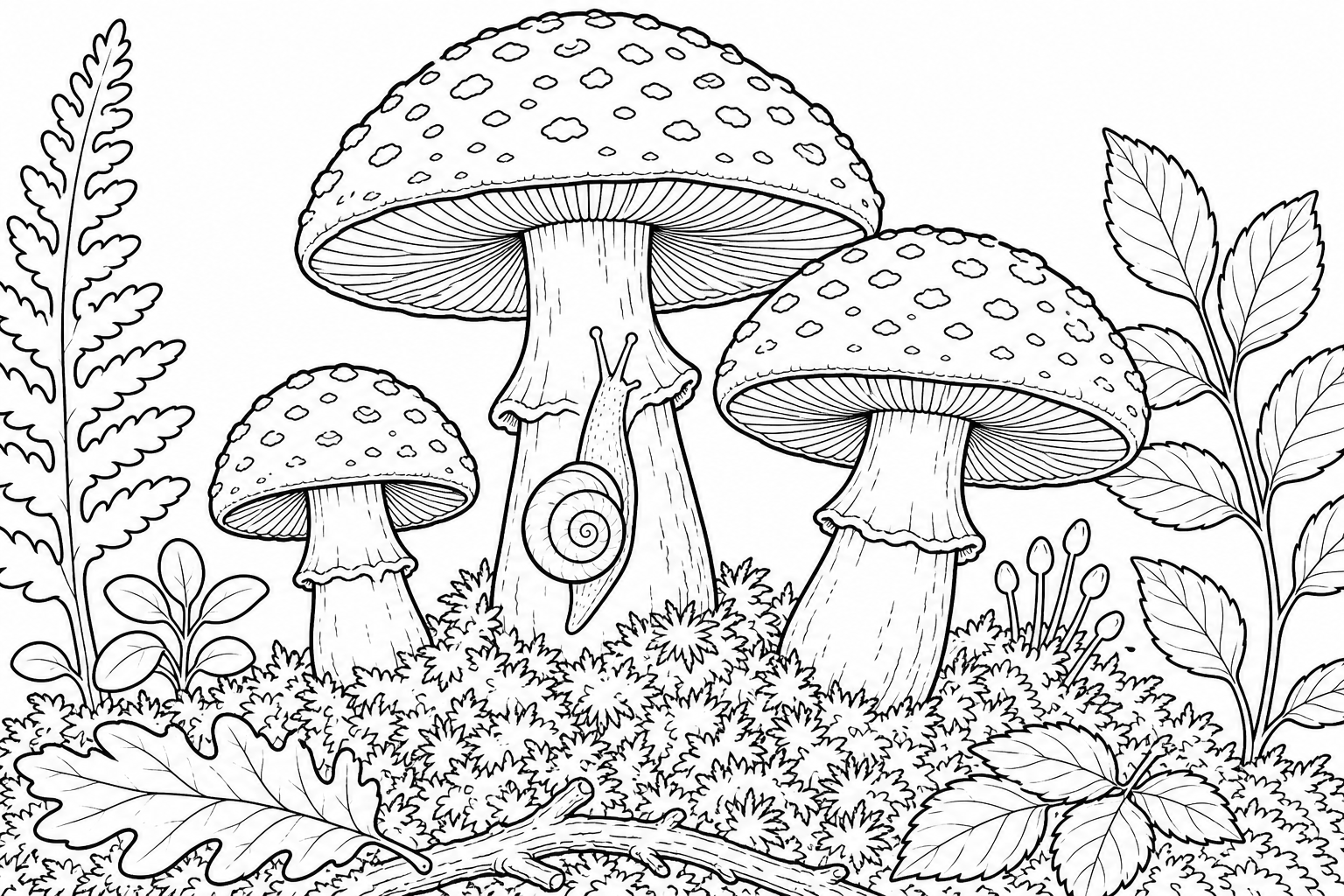
Children often like this rule more than you would expect. A square won by pointing feels a little like a secret.
The lucky squares: a feather and a puddle
Every good bingo card needs squares that might not happen. A feather is pure luck: some walks turn up three, most turn up none. The puddle depends on the weather of the last two days. On the park card, the squirrel and the spider web play the same part, and a web is easiest to spot on a misty morning, when it holds drops of water.
Leave these squares open without fuss when the walk is over. An unfinished card is a reason to go out again next weekend, and it keeps the game honest. If every square were guaranteed, the coloring would stop being proof.
What else could you color?
Pick a prompt or type your own — opens in a new tab.
After the walk
At home, the finds that are allowed to come home (leaves, acorns, a pine cone, a clean feather) can go straight onto a nature table, and the autumn nature table shows how to set one up with its own pages. Pin the card next to it, as the record of where each thing came from.
Next Sunday, swap three squares. Cross out the ones that were too easy, the leaf and the acorn, and let the child draw three new finds of their own choosing into the gaps: a conker, a beech nut, a red rosehip to look at. A card the child has edited is a card the child wants to finish.