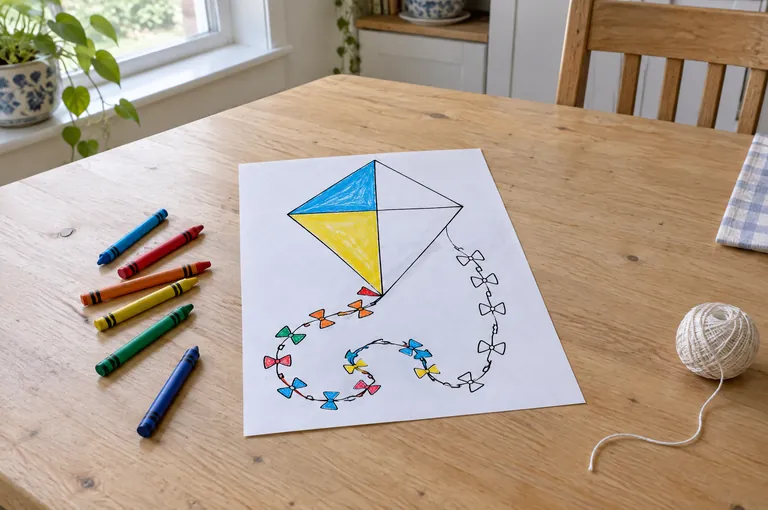
The kite is out of its bag, the string is wound around somebody's fist, and nothing is happening.
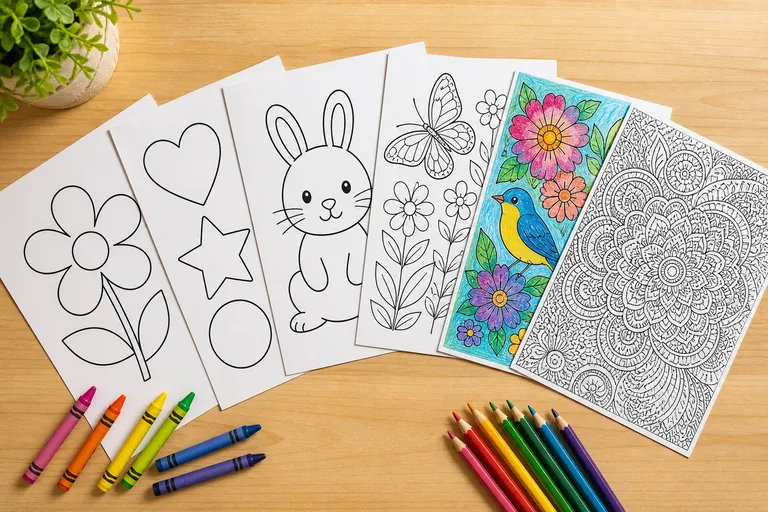
That is how most kite afternoons start, and it is also when the questions arrive. Why is it not going up. Why did it climb for two seconds and then dive into the grass. Why do you have to run. This set is built for both halves of the day: the pages you colour at the kitchen table in the morning, and the one that answers the question out on the field after lunch.
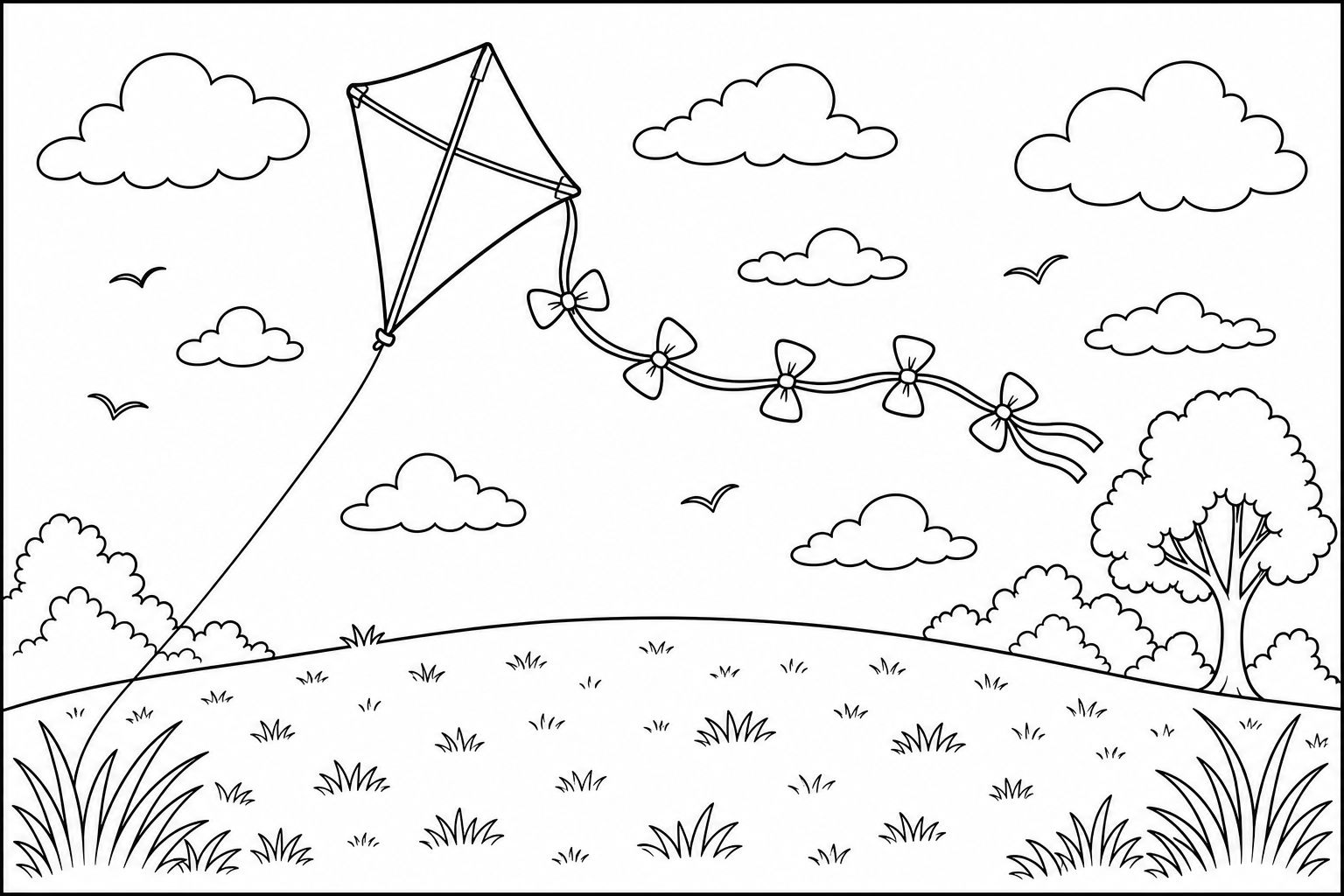
Why does a kite go up at all?
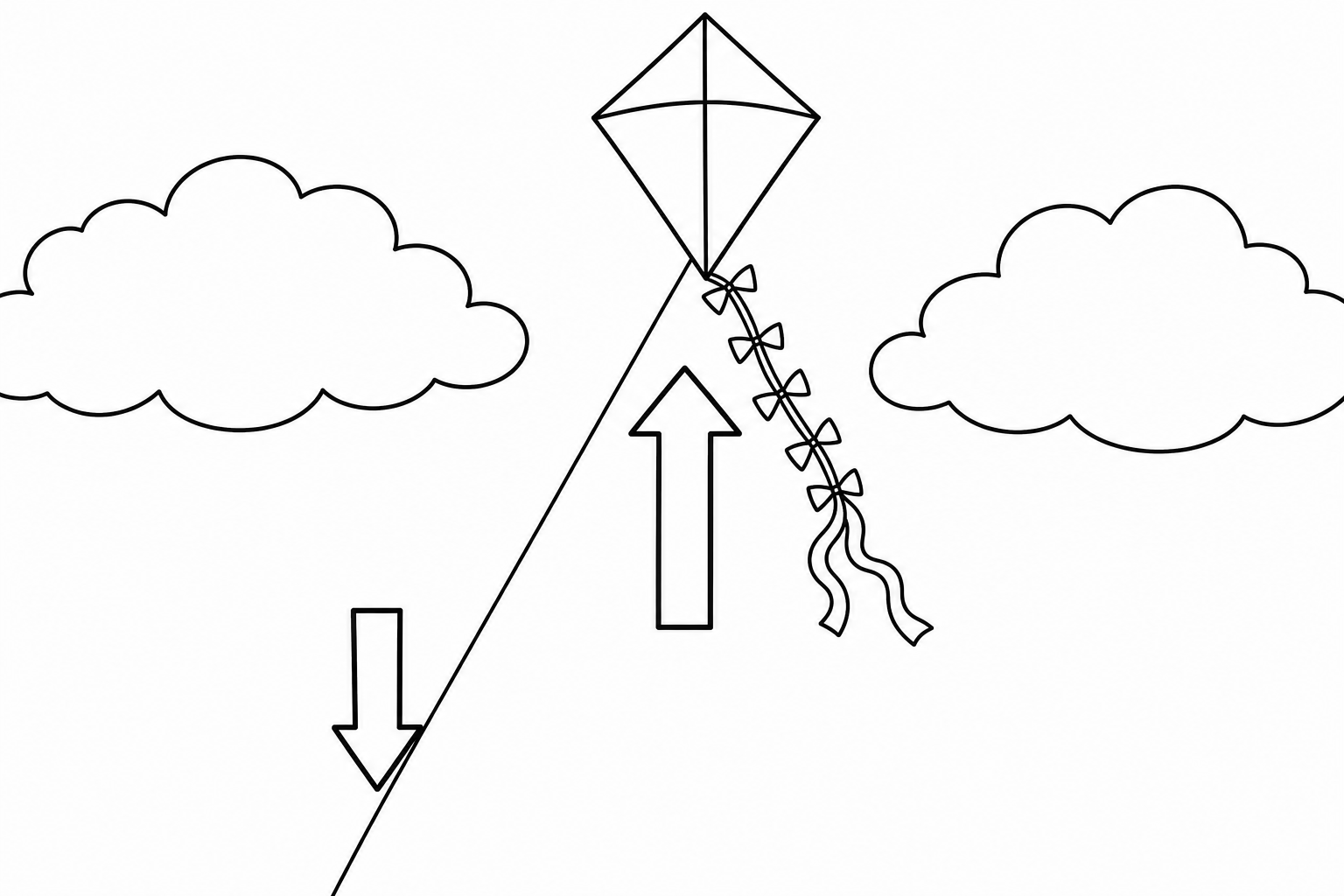
Three things pull on a kite at the same time, and NASA's Forces on a Kite lays them out plainly: the weight of the kite pulling it down, the push of the air, and the tension in the string in your hand.
The air is the part worth explaining. A kite hangs at a slight angle to the wind instead of facing it flat on, so the moving air meets the front of it and gets turned downwards. The air pushes back in return, upwards and a little backwards, and NASA's aerodynamics of a kite splits that push into lift and drag. Lift is the half that holds the kite up. Drag is the half that tries to carry it off downwind, and the string is what stops that happening.
A five-year-old will take the short version: the kite leans, the wind slides off the underneath of it, and the shove that comes back is what keeps it up there.
What is the string actually doing?
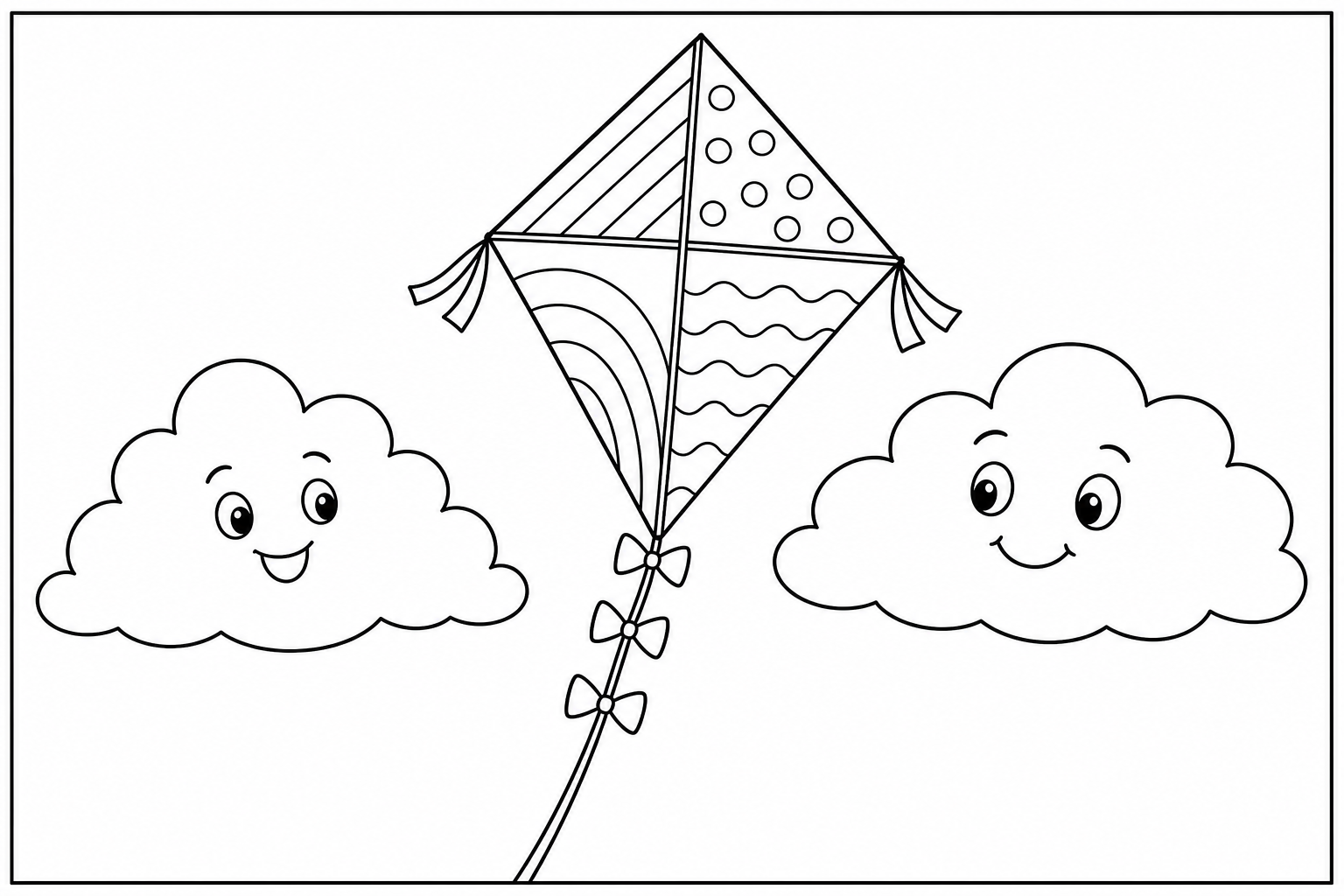
Most children assume the string is a leash, there to stop the kite running away. It is doing something more useful than that. Without it, a kite does not fly at all. It travels along with the wind like a carrier bag, and then it drops.
The string holds the kite in one place while the air keeps rushing past it. That steady flow across the surface is the thing making lift, and the moment the string goes slack the flow stops and the kite falls out of the sky. It is also why running works on a still day. You cannot order up wind, but you can pull a kite through motionless air fast enough that it cannot tell the difference, which lasts exactly as long as your child can keep sprinting.
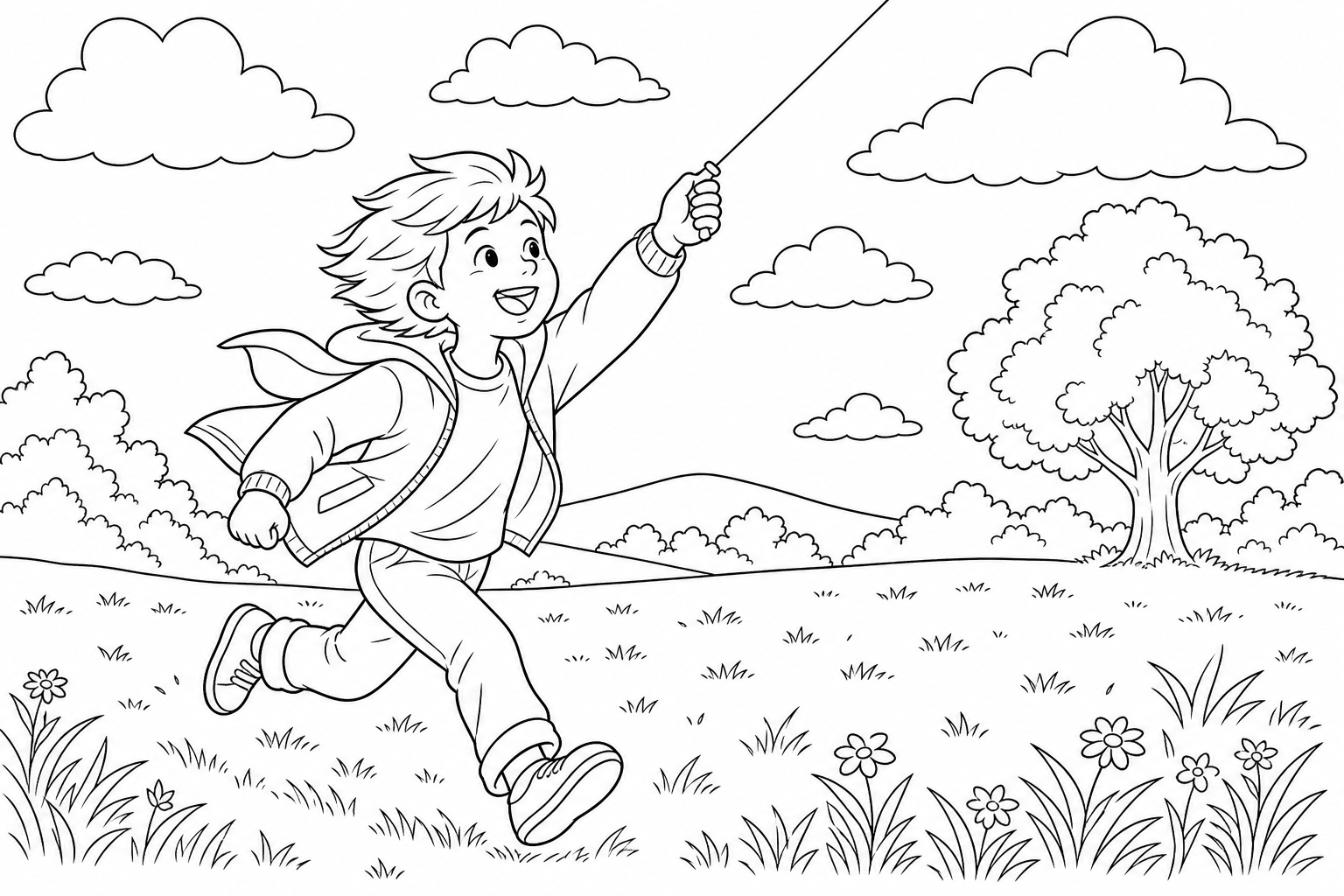
How do you know there is enough wind?
Look at a tree, not at a weather app. The Beaufort scale is more than two hundred years old and still the fastest reading you can take without an instrument. At force 2 the leaves rustle and you feel the air on your face. At force 3 leaves and small twigs are moving the whole time and a flag stands out straight. That band is kite weather.
Below it the leaves hang still and you will spend the afternoon running. Above it the branches start swaying, and a child holding a large kite in that much wind is a child being towed.
Which shape should you make first?
The flat diamond is the one everybody draws, and it is the right place to begin: two sticks, a sheet, a tail. The tail is not decoration. It hangs at the bottom and adds drag down there, which keeps the nose pointed into the wind instead of letting the whole thing spin. A diamond that keeps rolling over usually wants a longer tail, and that is a repair a six-year-old can make without help, using a strip cut from a carrier bag.
A box kite is the other one worth colouring, because it looks so unlikely. Four open panels and a lot of empty air, and it flies steadier than the diamond does. Print both and let your child argue about which one will win before anybody goes outside.
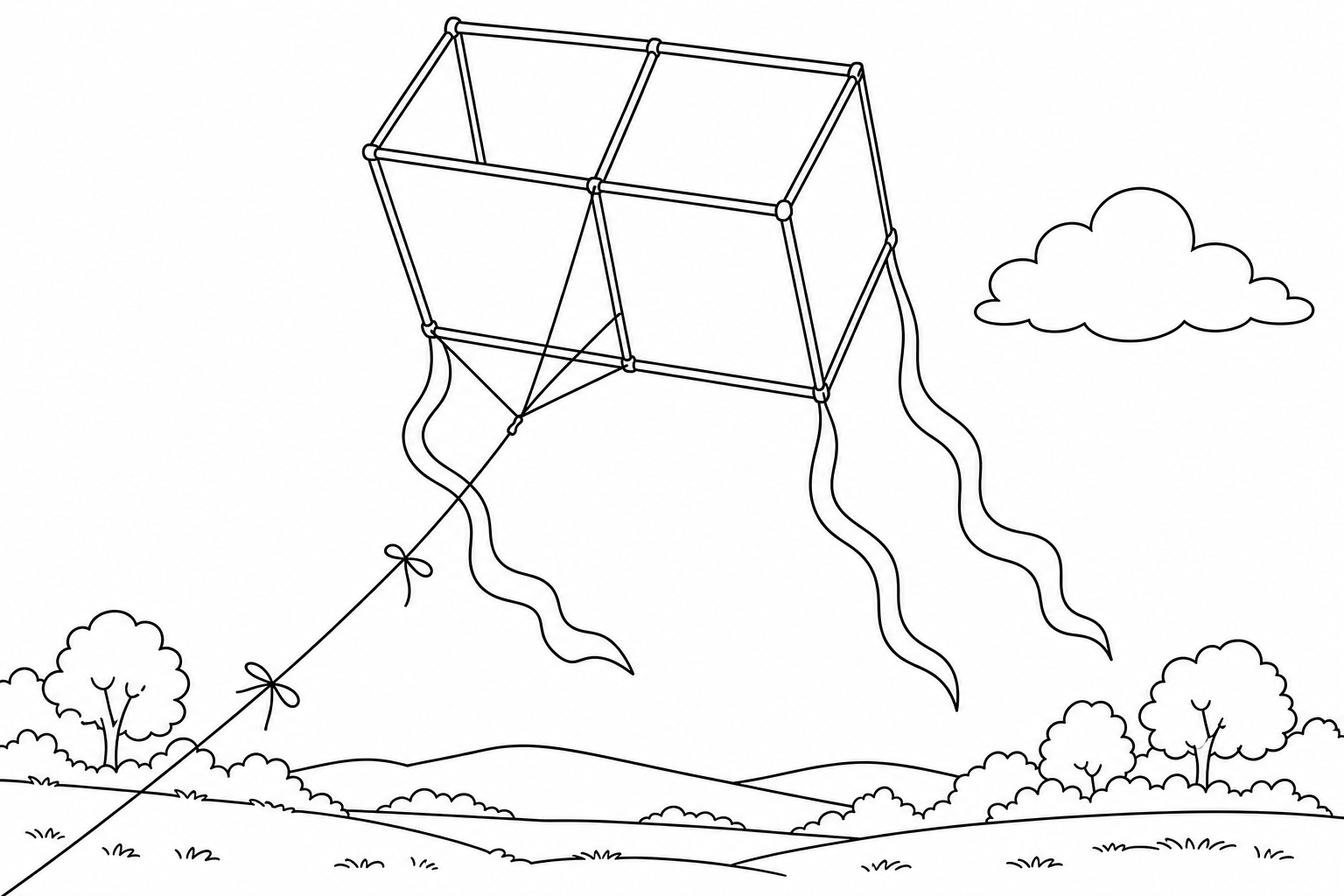
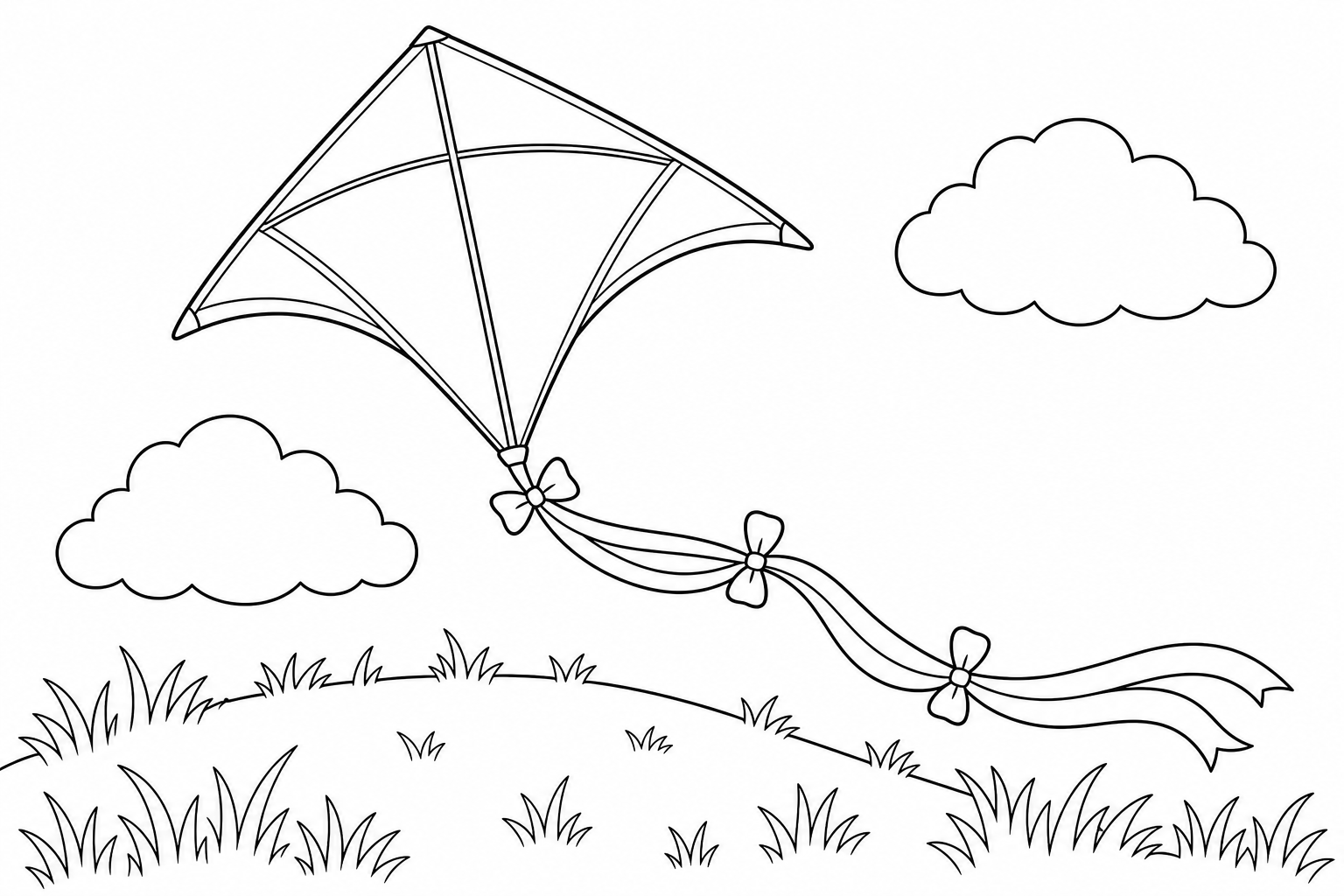
What to print while you wait for the wind
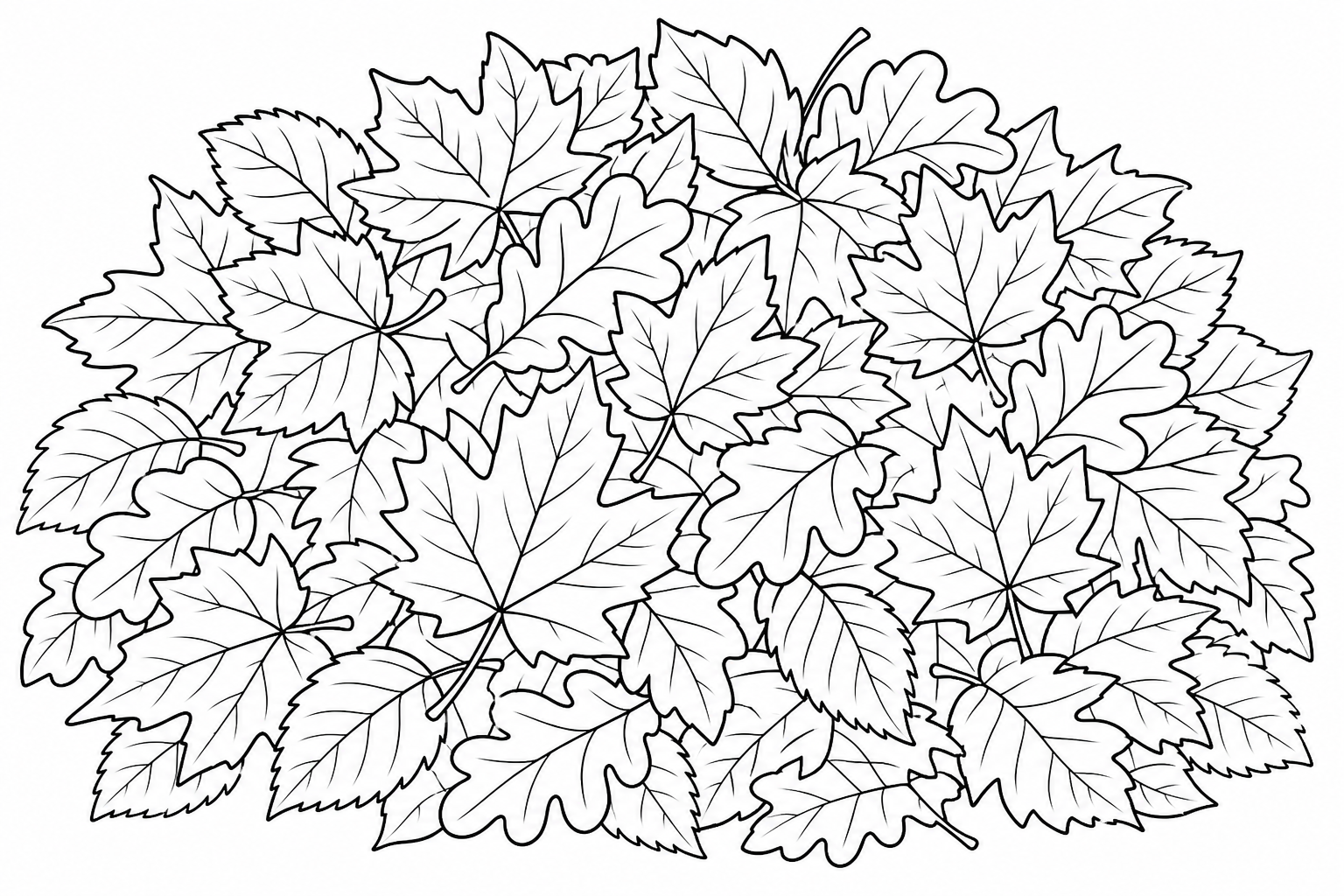
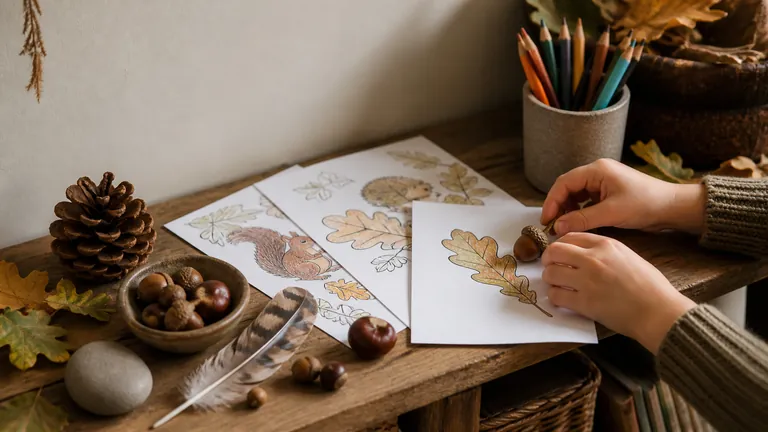
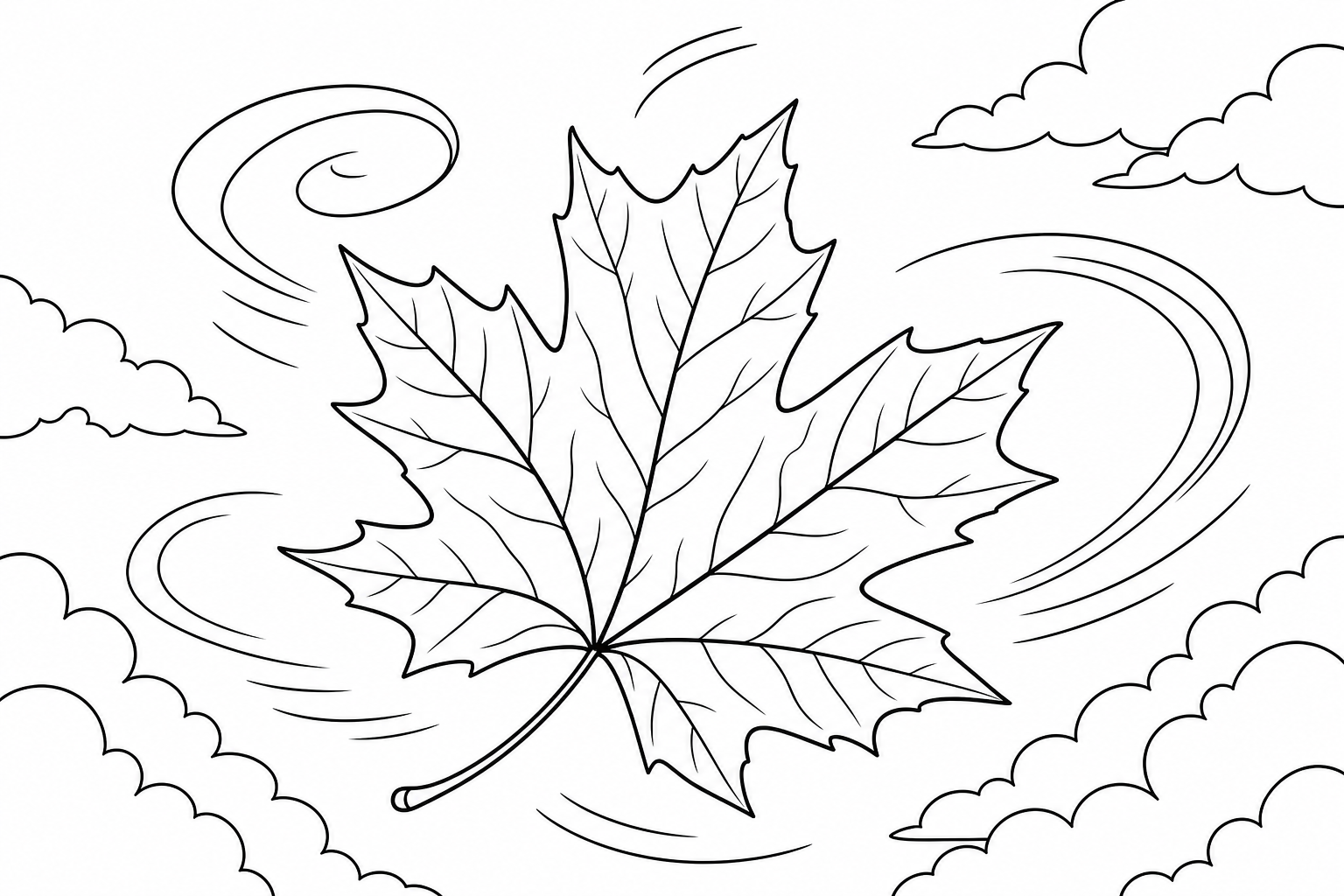
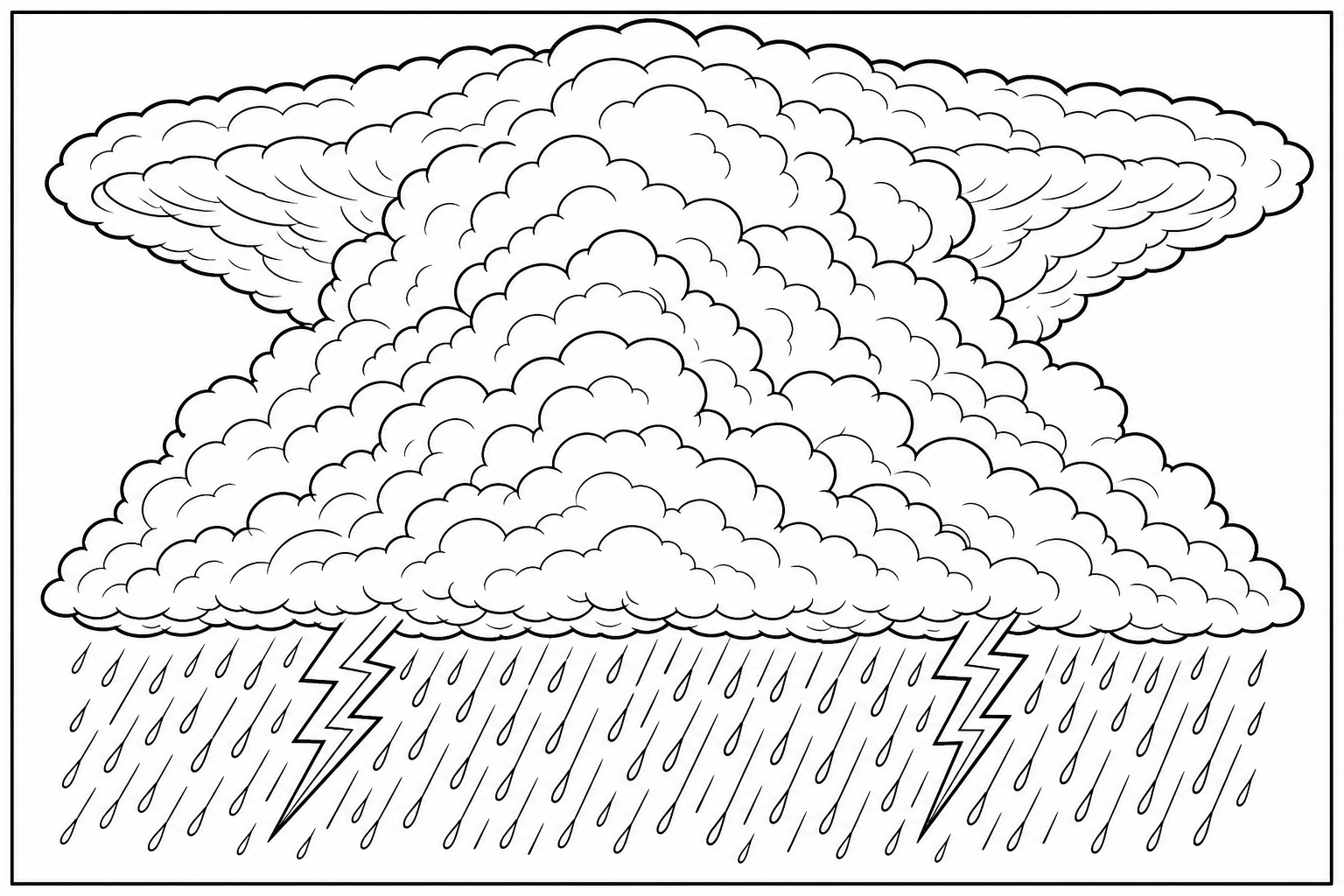
Some days there is no wind at all and the afternoon needs a different shape. The sky itself is worth colouring: the clouds that show you which way the air is moving, the dark one that means pack up now, the leaves that gave you the reading in the first place. If a few of those leaves come home in a pocket, the autumn nature table is where they belong. If the sky opens instead, the rainy day list is the indoor version of this same afternoon.
One last thing, for anyone reading this in German, Hungarian or Czech: your language uses one word for this kind of kite and for the fire-breathing kind. It is a good joke and a terrible search result. If it was the other one you were after, the Michaeli dragon pages are over here.
What else could you color?
Pick a prompt or type your own — opens in a new tab.
Cute Cloud and Rainbow Coloring Page for Kids
Try these coloring pages!
Cute Cloud and Raindrop Coloring Page for Kids
Try these coloring pages!
Happy Cloud with Wings Coloring Page
Try these coloring pages!
Maple Leaf Coloring Page for Kids
Try these coloring pages!
Maple Leaf Coloring Page for Kids
Try these coloring pages!