There is a stretch in the last weeks before a baby arrives when the older child has run out of questions. How big is it now. Does it hear me. Can it come out today. The answers run out long before the waiting does, and the real question underneath them rarely gets said out loud: what happens to me.
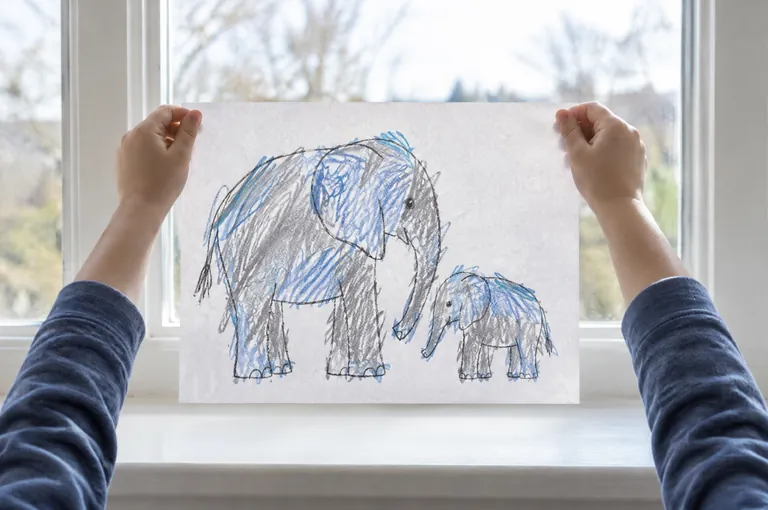
Elephants answer that one without meaning to. A calf arrives into a group of females who have been waiting as long as its mother has, and the young ones in that group are handed something to do on the first day. That is a story with a beginning, a turn and an end, which means a child can color it in order.
The long wait
An elephant carries a calf for 21 and a half to 22 months, the longest pregnancy of any animal. Nearly two years of the herd walking around with a secret. Say that number out loud to a four year old who has been waiting since the summer and watch their shoulders come down half an inch. Their wait is short. Somebody else's is worse.
Start with the one who is doing the waiting. Big ears, big open sides, nothing fiddly in it. This is the page for the afternoon when nothing is happening yet and the pencil case has already been reorganized twice.
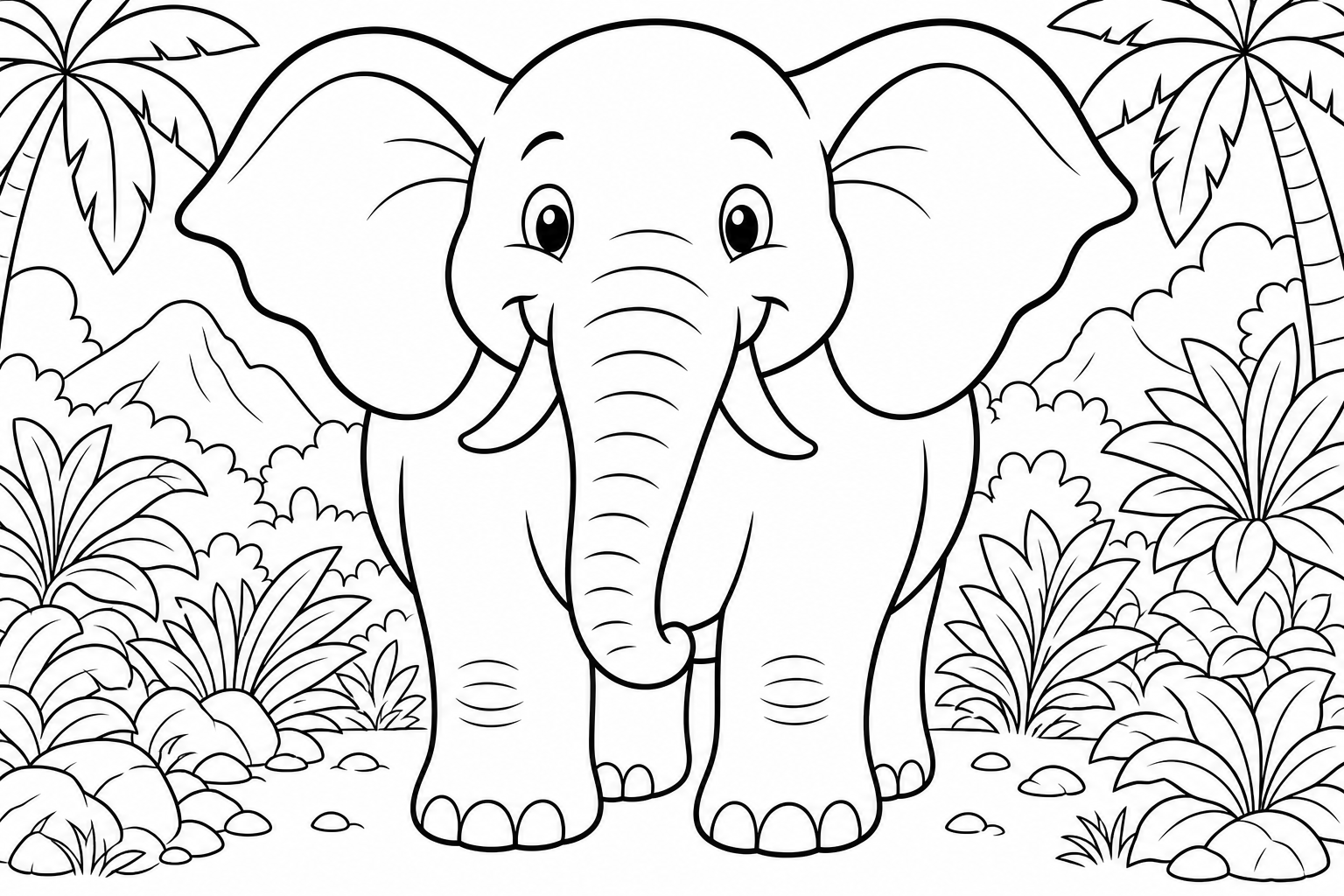
The night the calf arrives
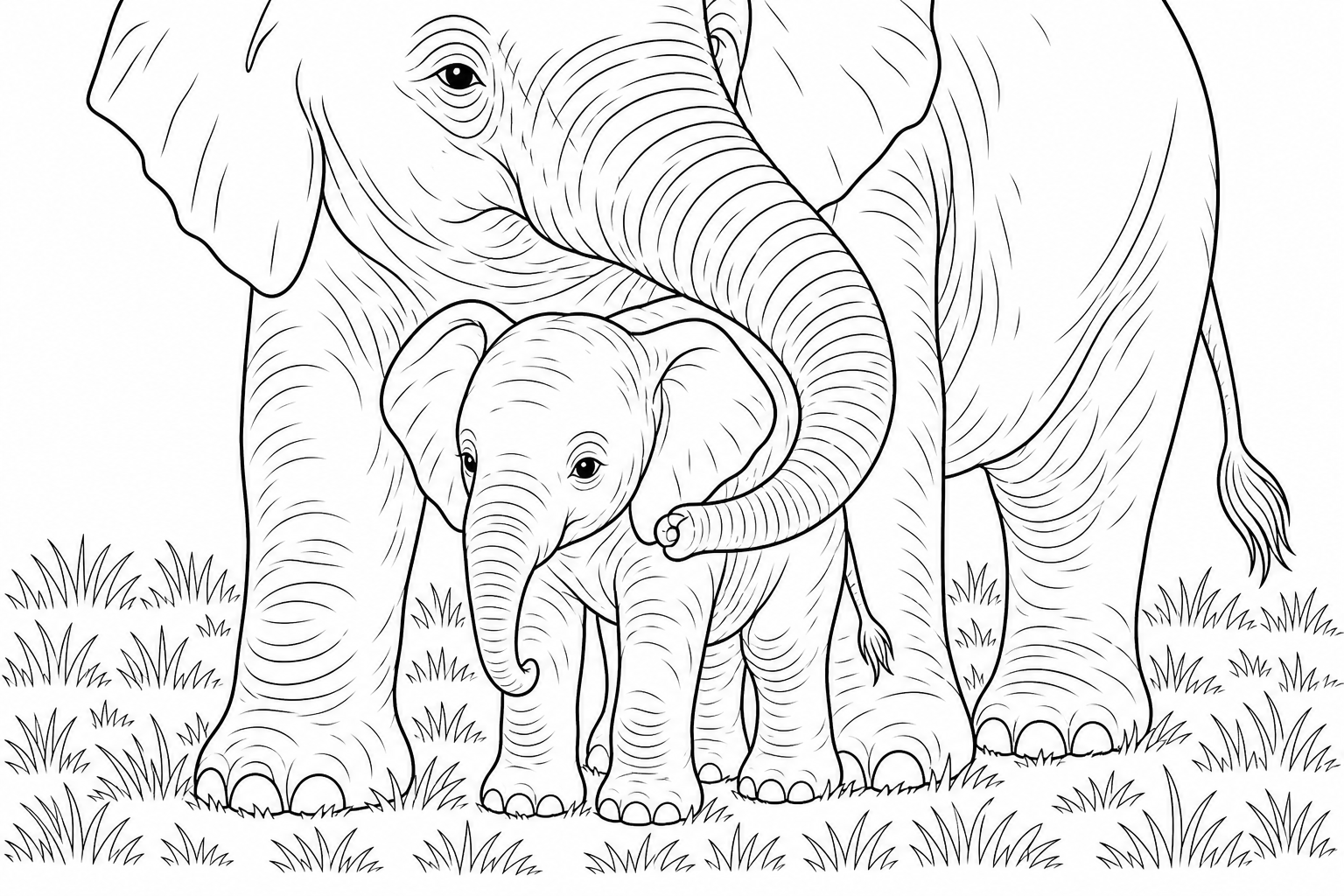
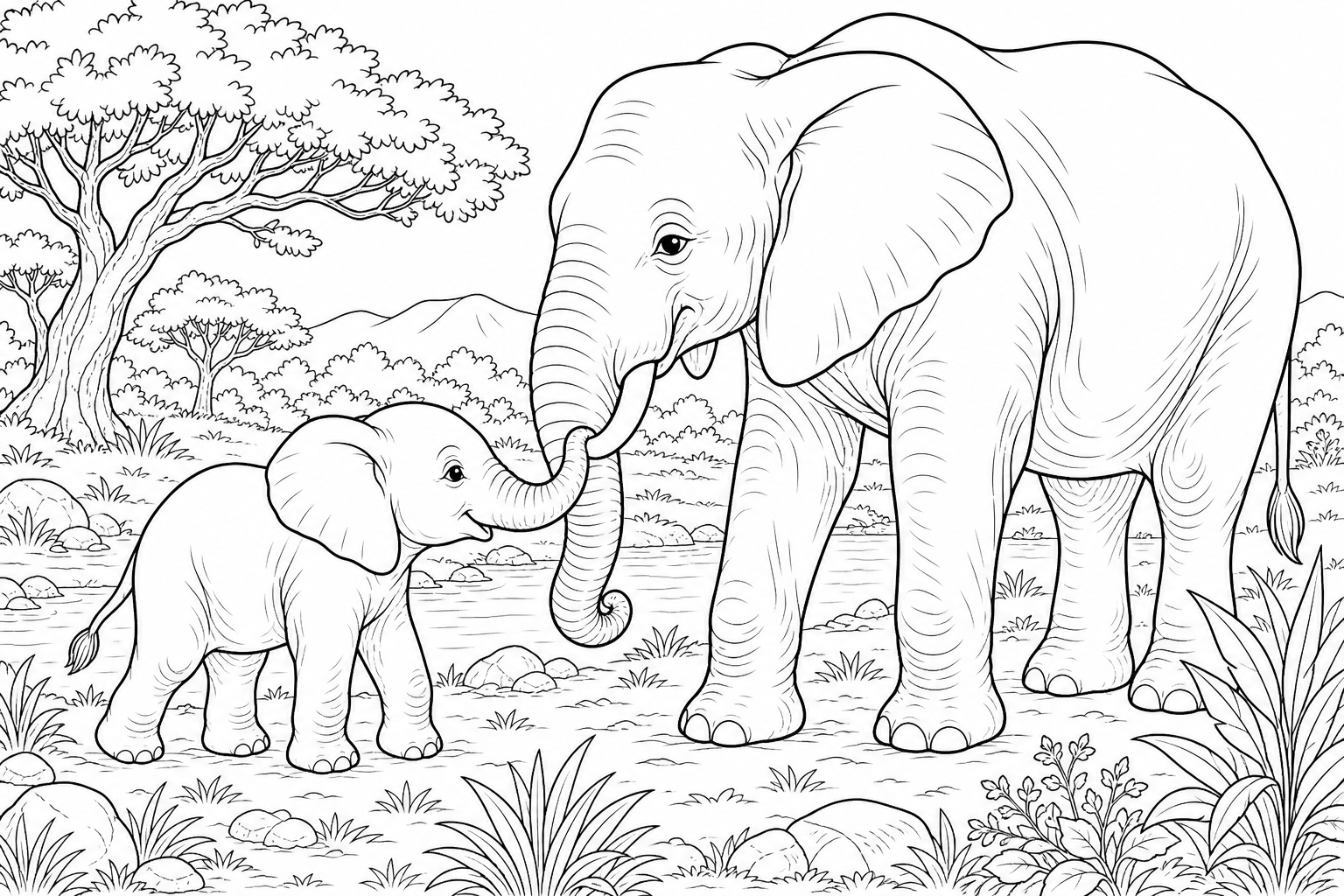
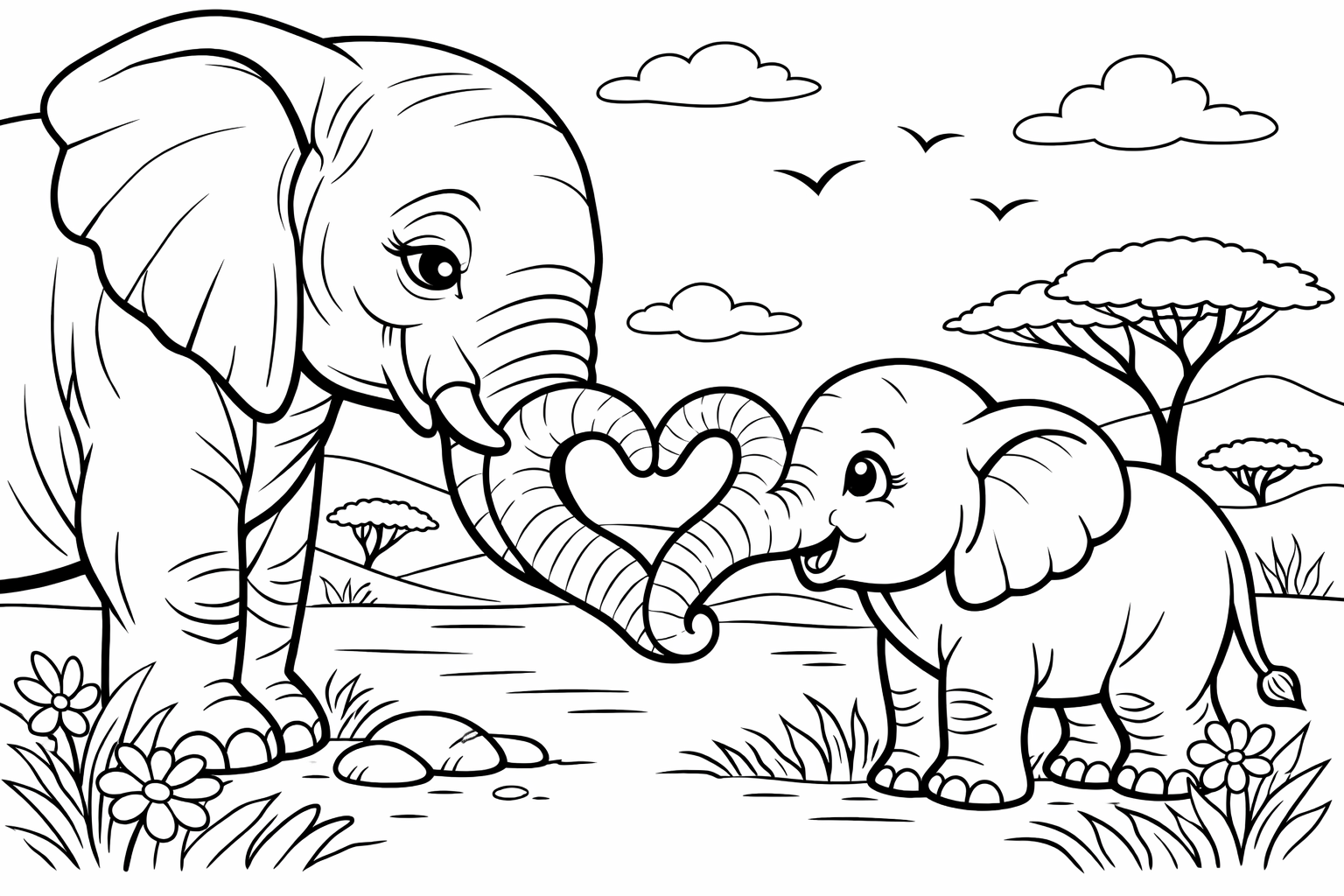
A newborn calf gets up on its own legs within about an hour and then spends a good while being smelled, touched and inspected by everyone present. The first page in that row is the one your child will want to color grey, and grey again, and then grey. The other two are the hugging pages. A child who is about to be moved over usually wants to draw the hug some days before they are ready to say anything about it.
Three pages, one evening. Let the calf be purple if that is where the evening goes.
Nobody raises a calf alone
An elephant family is run by its females, and the calf belongs to all of them. The San Diego Zoo Wildlife Alliance puts it exactly: "sisters, aunts, and cousins provide cooperative calf care, in a rearing approach known as allomothering". The Smithsonian's National Zoo describes the same herd from the outside, as related females working together to raise their young.
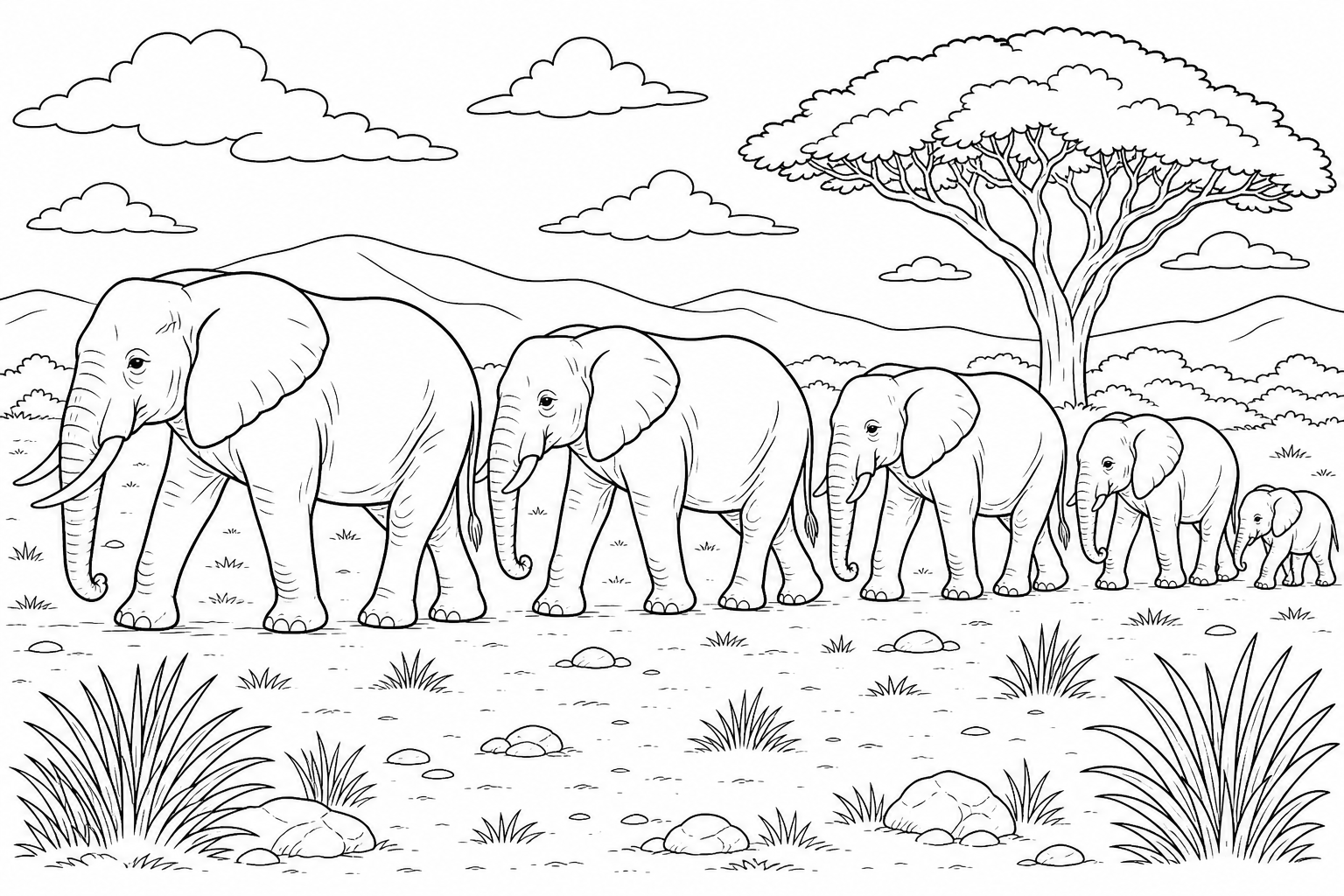
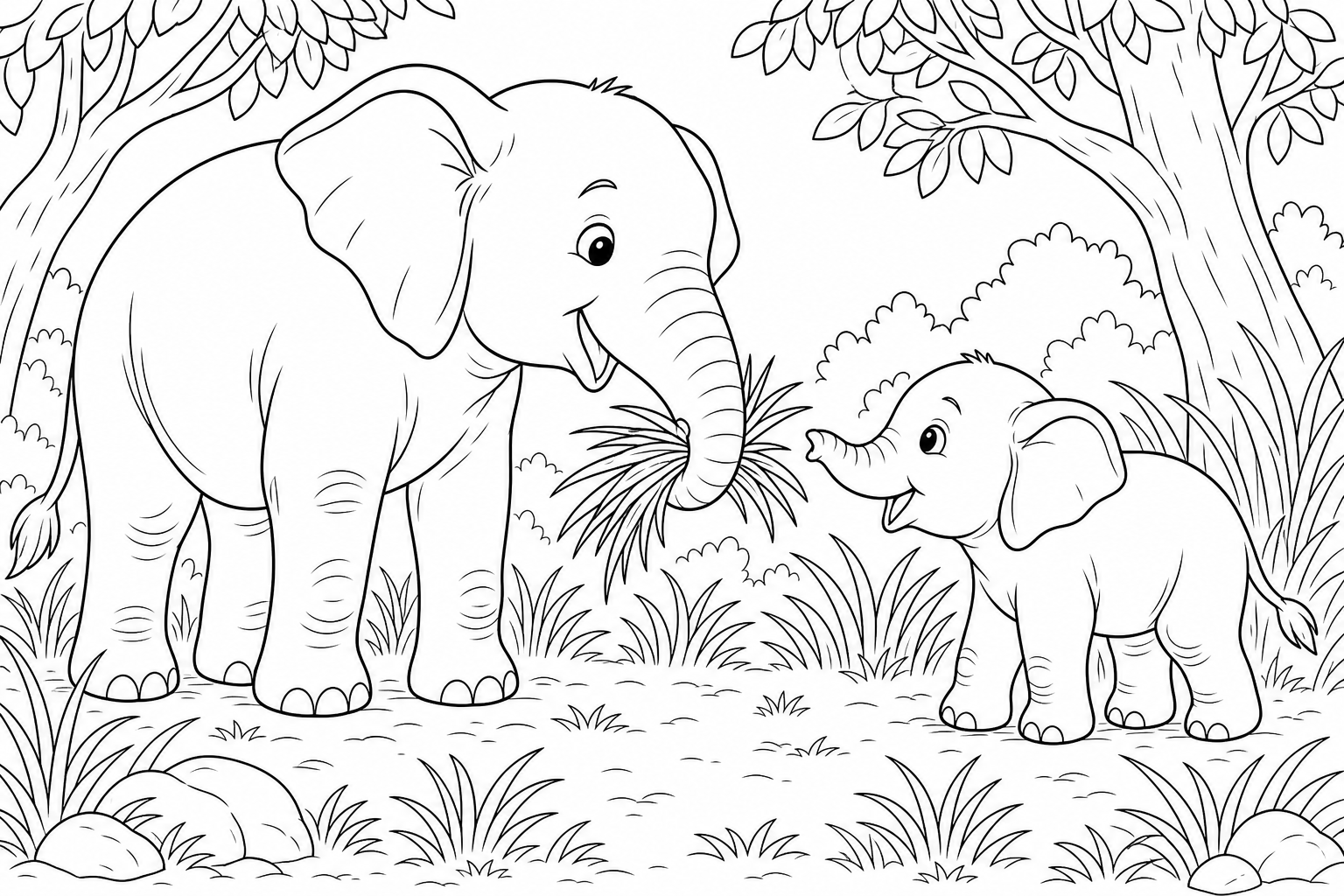
The part worth telling your child is the part about the young ones. The half-grown elephants walk right beside the calf while the adults get on with the rest of it. They are practicing, and everyone lets them.
A trunk takes years to learn
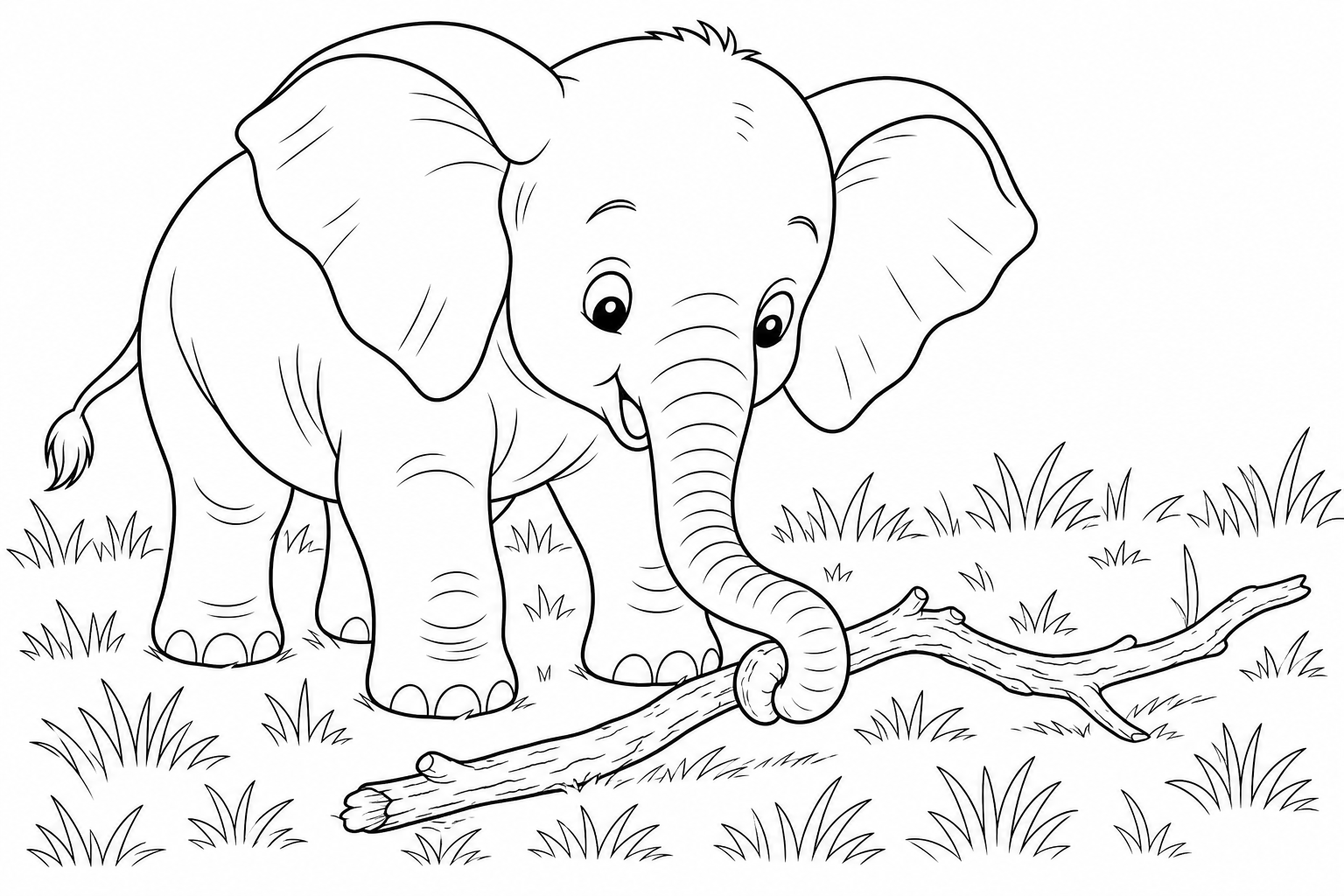
A trunk carries eight major muscles on each side and around 150,000 muscle fascicles along its length, and a calf can drive almost none of it at first. It swings. It trips over it. The clever tube on the front of its face is still a stranger. Keepers describe calves as clumsy with their trunk until they grow into it.
Hand that fact to your child, because it is the first true thing anyone has told them about the baby. The small one will be able to do nothing at all for a long time. They can already do plenty.
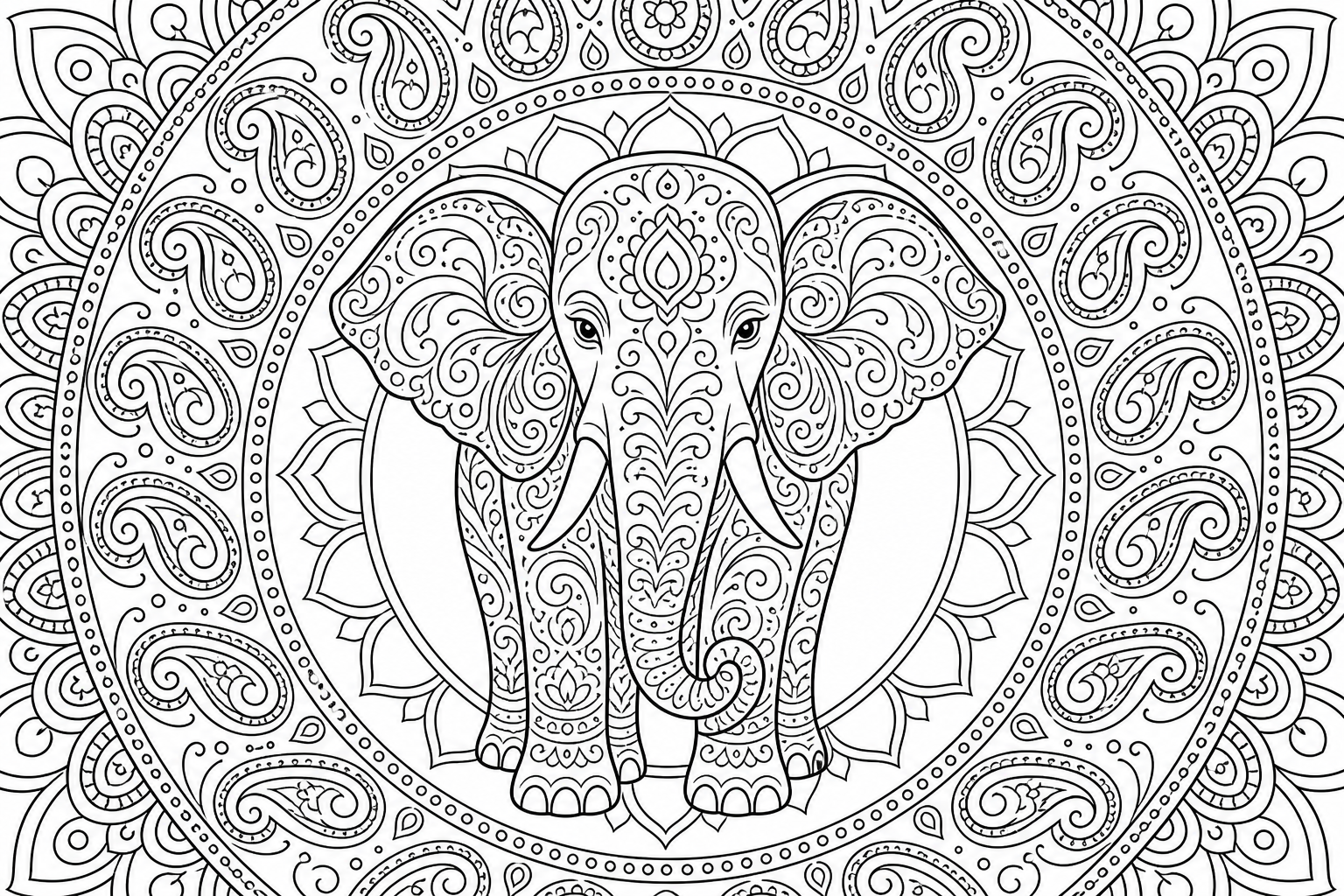
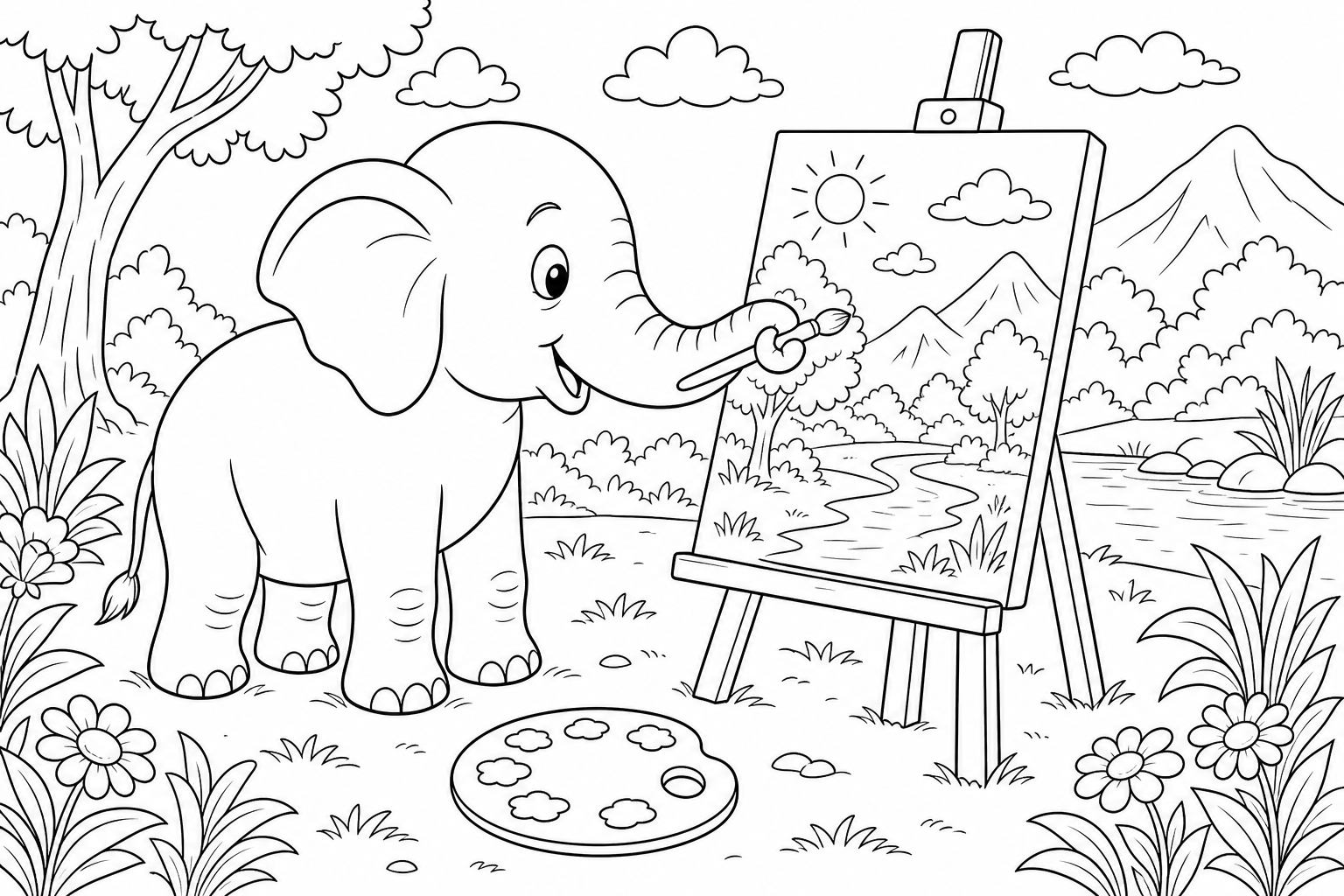
So the pages change here. The calf with the floppy trunk is for the little one, later, when there is a little one to give it to. The other two belong to the child holding the crayons tonight: a mandala elephant with every ring different from the last, and an elephant who has taken up painting. If the patterned one lands well, there is a whole set of mandalas built for the same kind of evening.
What else could you color?
Pick a prompt or type your own — opens in a new tab.
The morning after
Somewhere in the first week the herd closes around the calf and carries on walking. Nothing gets announced. The older ones simply have a smaller one beside them now, and the walking speed quietly changes to suit.
Your house will do a rougher version of the same thing at four in the morning, and no coloring page prepares anyone for that. What the pages give you is the evenings before it: an hour with an elephant in it, spent with the person who is about to stop being the only one. Keep the finished ones. Tape the best of them where the feeding chair will go, at the height your older child can see. And for the weeks when the noise is constant and they need somewhere to be quiet, a corner with almost nothing in it does more for them than a new toy.
The older one keeps their place in the herd and gets a smaller elephant to walk beside.