Two children sit down to color. One fills a corner, hops up for water, drifts back, starts a second picture, wanders off. The other picks a page, leans in, and does not look up until the last scrap of white is gone. Same age, same crayons. The difference is not talent. It is focus, and focus is something a child builds with practice, not something they are born already holding.
Around five to eight, that practice starts to count. School begins asking a child to stay with a task after the fun has worn off, and parents start to wonder whether their kid can. A coloring page turns out to be a low-stakes place to work on exactly that, because it asks for steady attention on something the child actually wants to finish.
Why a coloring page holds a child longer than it should
Child development sources tend to put a young child's attention span at roughly two to five minutes per year of age, which would give a six-year-old somewhere between twelve and eighteen minutes on a task. There is a catch that matters here, though: that figure is for grown-up-directed work, the kind of thing a child would never pick for themselves. When a child is genuinely absorbed in something, attention stretches well past the rule of thumb.
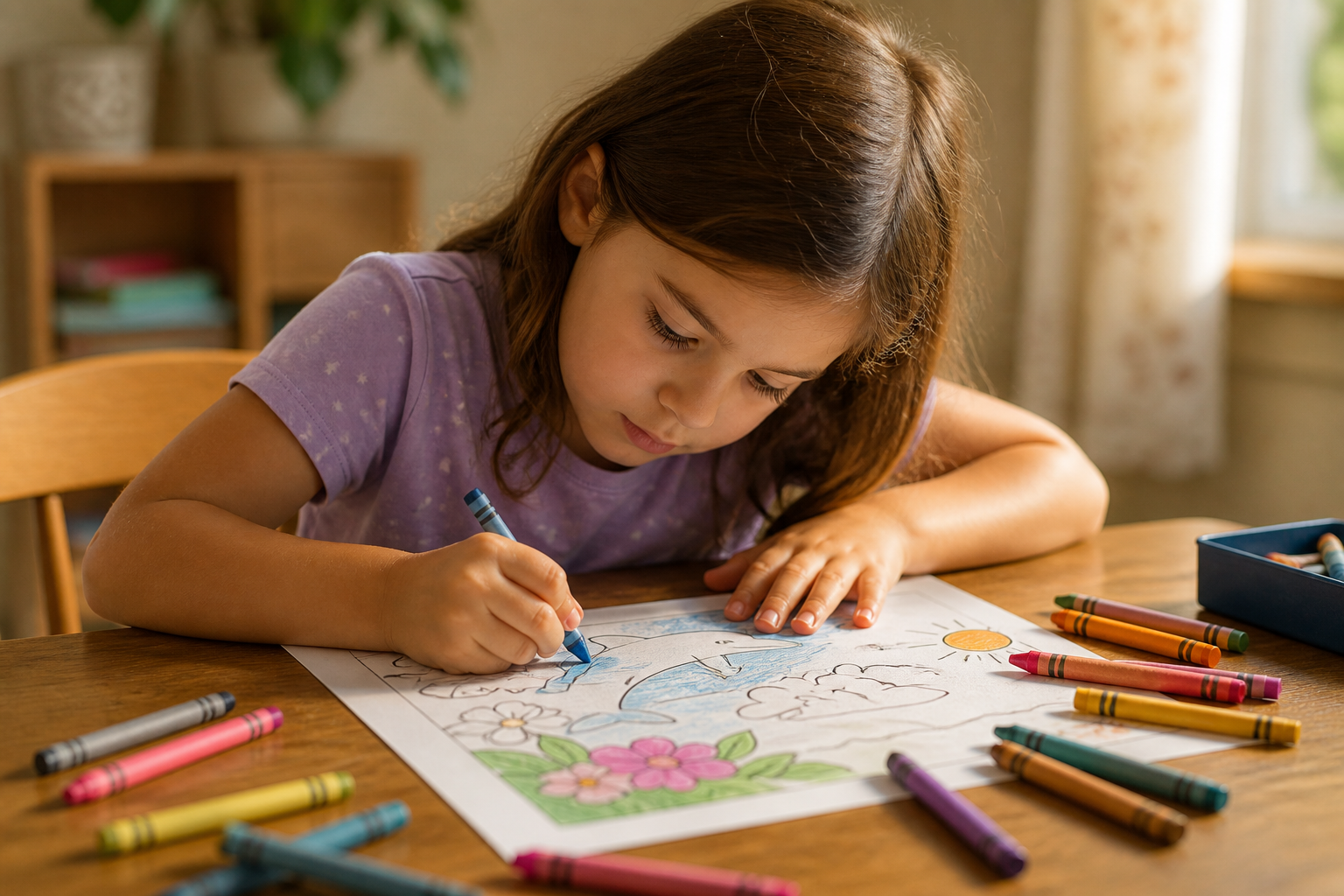
Coloring lands on the friendly side of that line. The child chose the page, they decide the colors, and the goal is right there in front of them. Nothing gets marked, and no adult is standing over the result. So a coloring session quietly asks for the one thing focus is actually made of, which is staying with a task after it stops being new, and the child gets to practice it without ever noticing that is what they are doing.
What focus really looks like from five to eight
Attention at this age is a moving target, and knowing the rough shape of it stops you from expecting a marathon from a kid who is right on track.
| Age | A realistic stretch on a page they picked | What you tend to see |
|---|---|---|
| Age 5 | Ten to fifteen minutes | Starts strong, may abandon a busy page halfway, happiest with big simple shapes |
| Age 6 to 7 | Fifteen to twenty-five minutes, longer when hooked | Pushes to finish a page they like, starts to care about staying inside the lines |
| Age 8 | Twenty-five minutes or more on the right page | Chooses harder pages on purpose, plans colors ahead, spots their own mistakes |
How to help without turning it into a drill
- 1Let them choose the page. The focus comes from wanting to finish, and wanting starts with picking. A page you handed over is a page they are coloring for you.
- 2Match the page to the day. Big simple shapes for a wound-up afternoon, a busier page for a calm morning. A page that is too hard ends in a walk-away, not a stretch.
- 3Protect the finish. Guard the last ten minutes the way you would guard a nap. Interruptions teach a child that tasks are things other people end for you.
- 4Sit near and say little. Your quiet company keeps a child at the table longer than any amount of encouragement, and it does not turn the page into a performance.
- 5Let one page be enough. Finishing a single picture beats half-coloring five. The skill you are after is completion, and completion needs a small enough target to reach.



Coloring fun for kids — anywhere.
Free for iOS & Android. No ads, no sign-up, offline-ready.


Coloring fun for kids — anywhere.
Free coloring app for kids. iOS and Android, phones and tablets. No ads, no sign-up, even offline.
When to relax, and when to look a little closer
Most of what looks like a short attention span at this age is simply the age. A child who cannot sit still for twenty minutes is not behind; twenty minutes is already the top of the range for plenty of six-year-olds. Hunger, tiredness, a page that is too hard, or a room full of louder options will shorten anyone's focus, and none of it says anything worrying about the child.
What is worth a gentle closer look is a child who cannot stay with anything they enjoy, at home or at school, across weeks rather than the odd rough day, or who seems genuinely distressed by their own inability to settle. That is a conversation for a teacher or a pediatrician, not a coloring problem. A coloring page is a lovely place to notice focus. It is not the place to diagnose it.
What else could you color?
Pick a prompt or type your own — opens in a new tab.
The finish matters more than the neatness
If you keep one thing, let it be that the goal is the finish, not the neatness. A page colored messily all the way to the edge did more for a child's focus than a tidy quarter-page did. The neat lines arrive later, and they grow out of the same slow habit of staying with a task, which is also the hand control that coloring quietly builds one stroke at a time.
It helps to know what else your five to eight year old is working on, so the coloring sits inside the bigger picture of what school-age kids are actually ready for. And on the days when the real need is a child who has to settle rather than concentrate, that is the calm a coloring page can bring to a heavy feeling, which is a different job the same page happily does.
Put a stack of pages somewhere they can reach, let them pick, and let them finish. The focus takes care of itself.