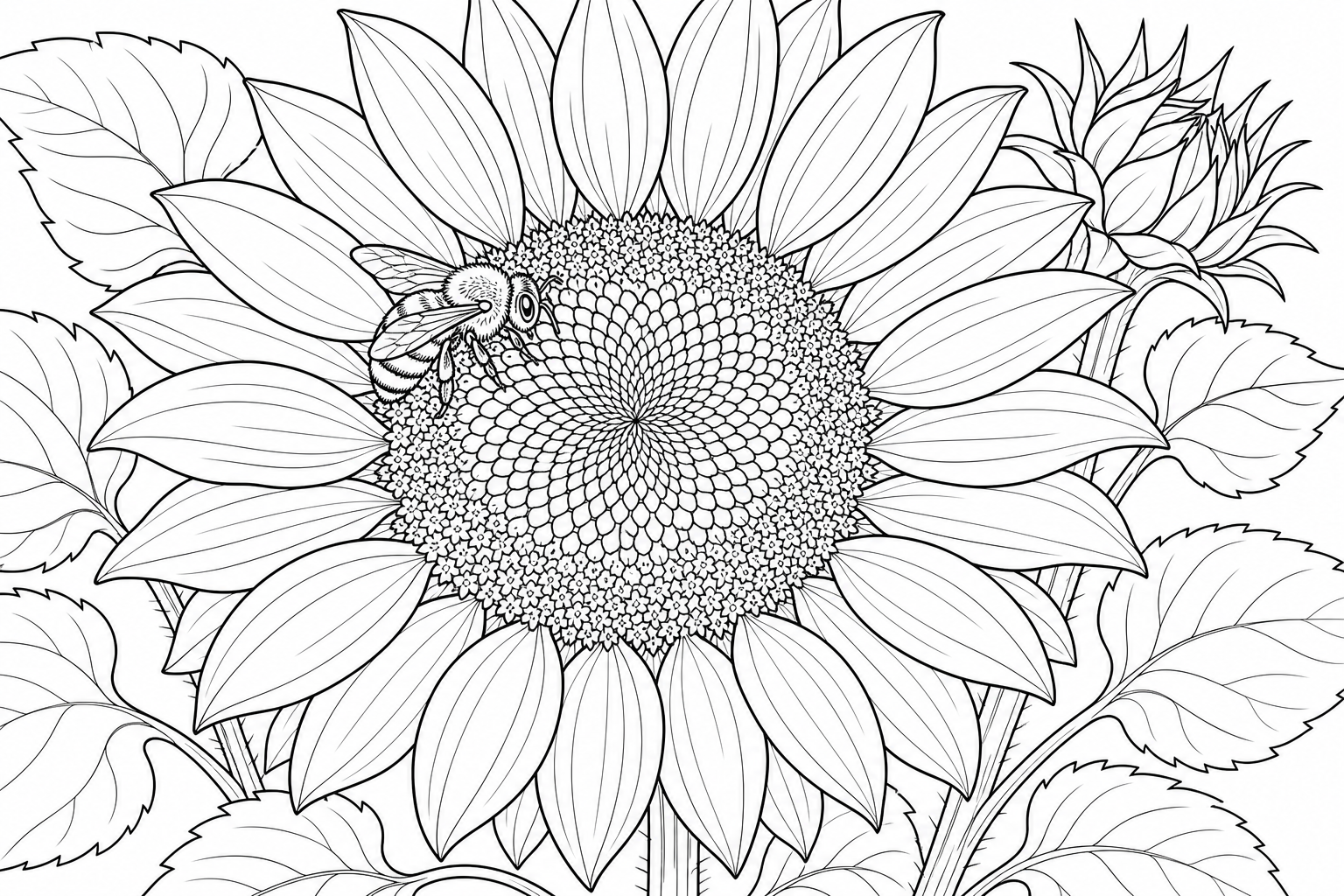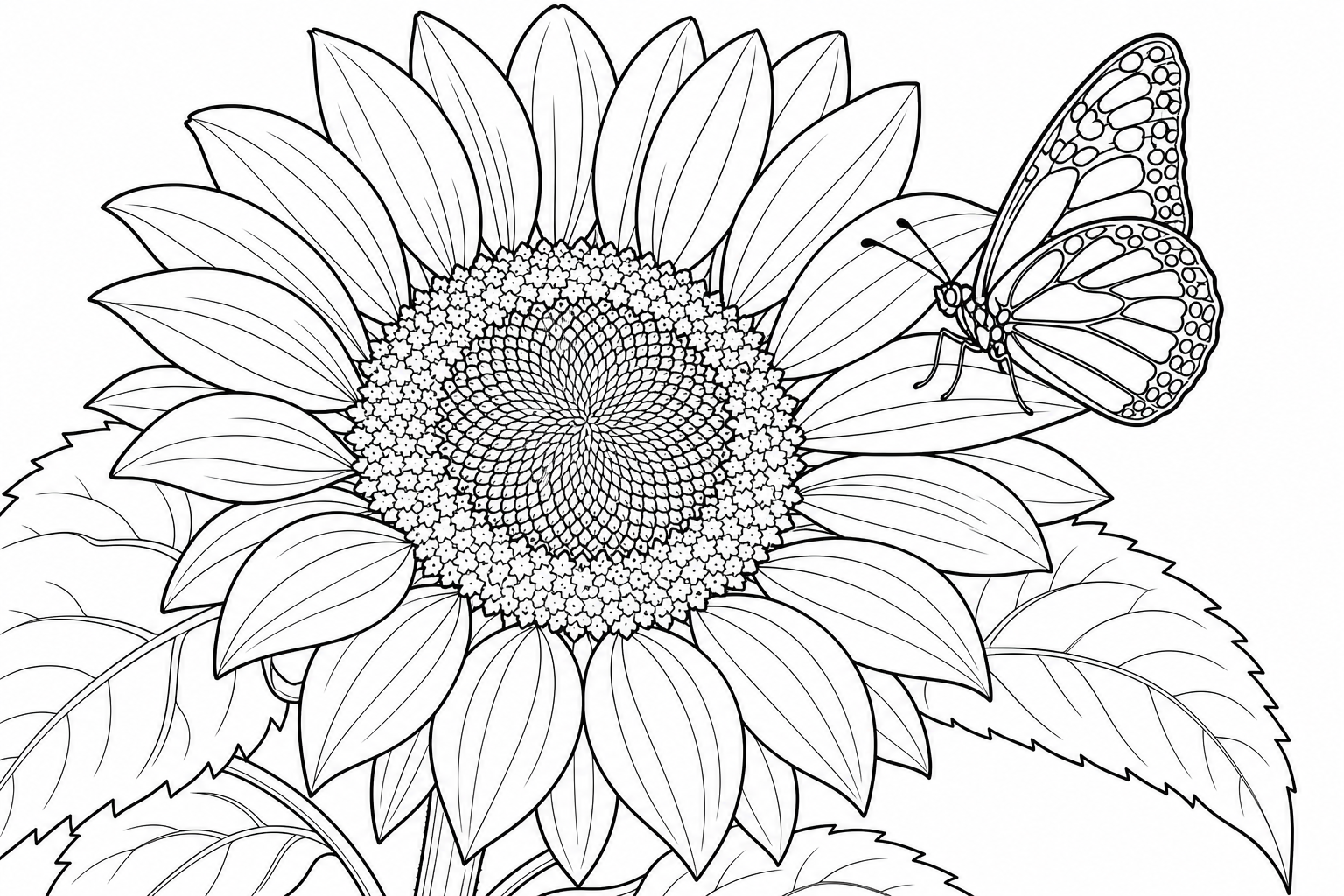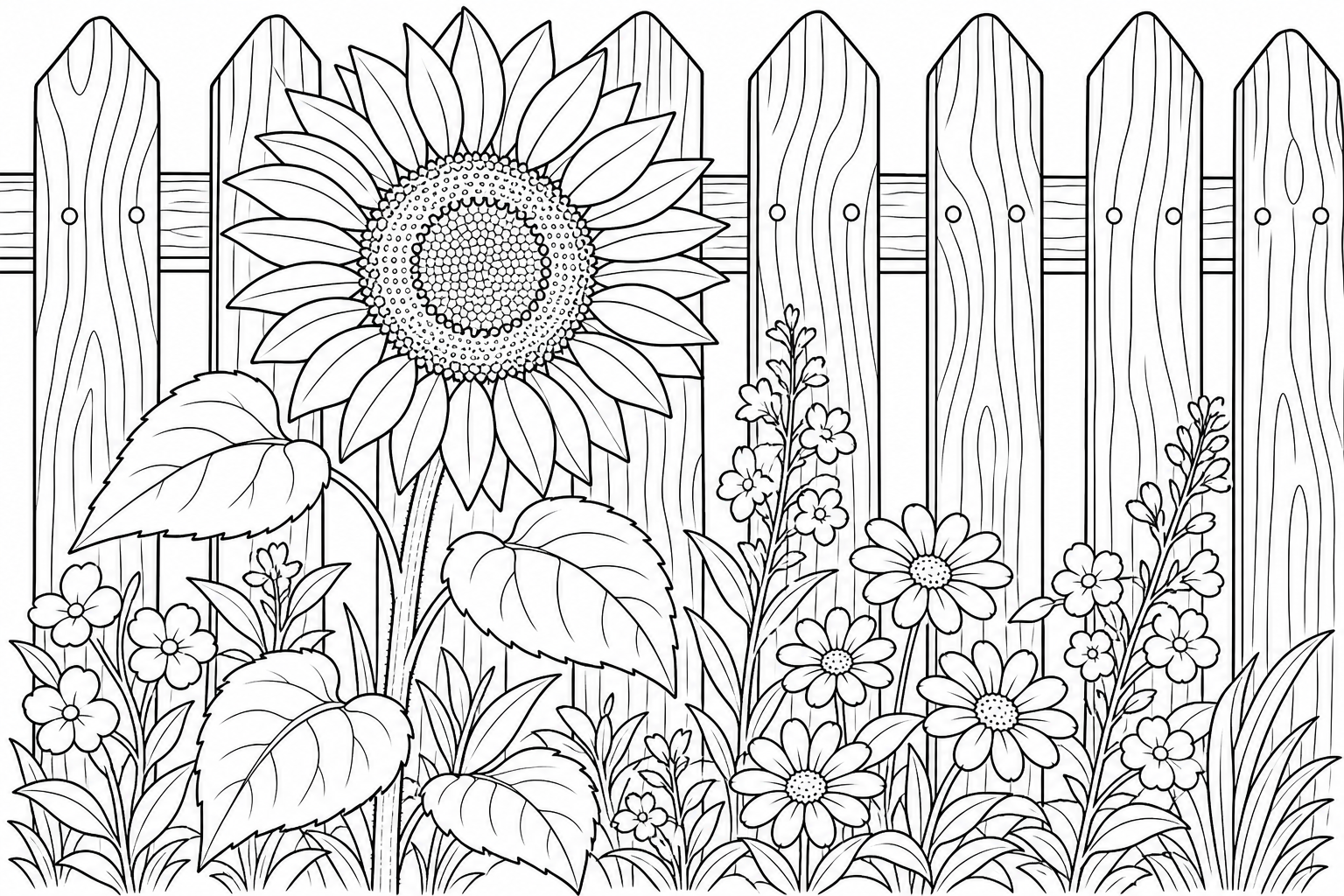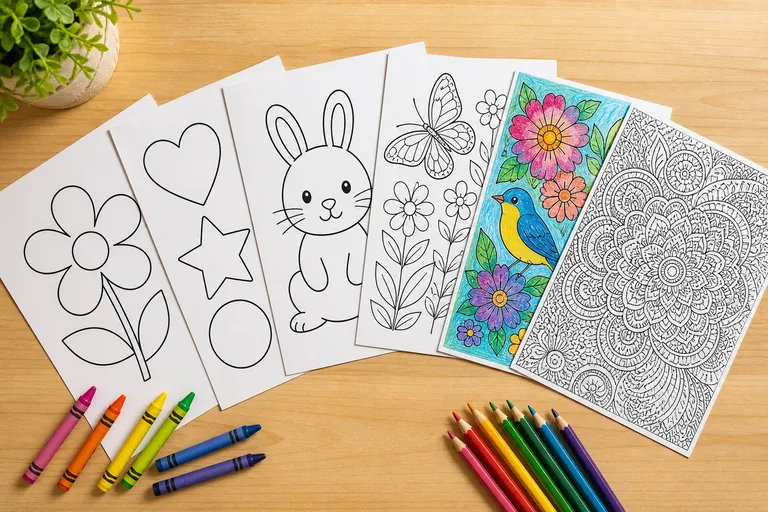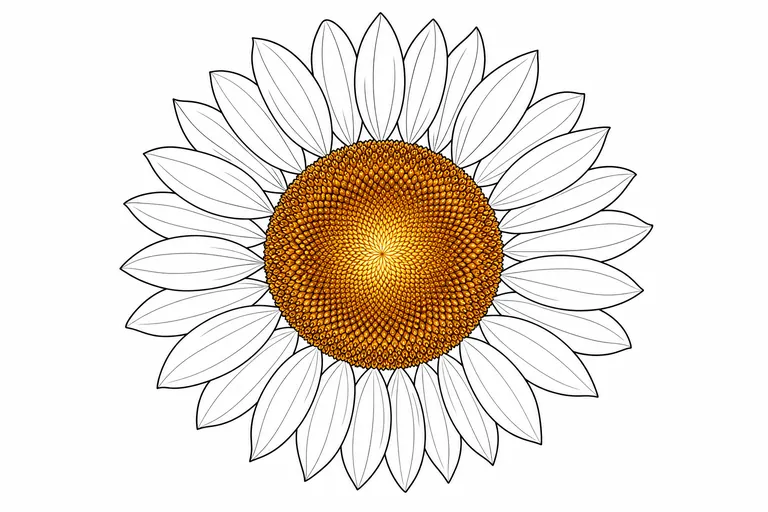
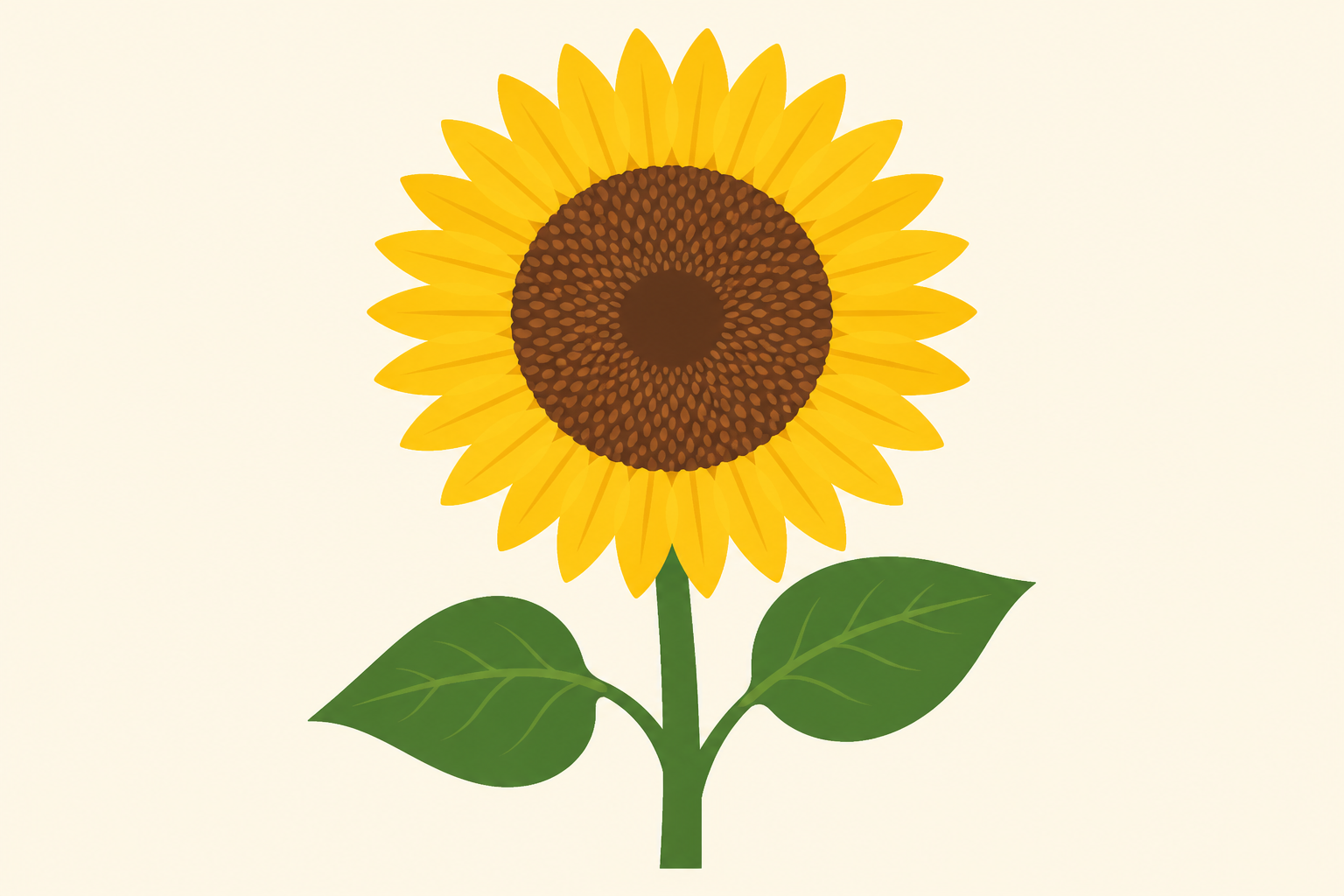
Stand next to a full-grown sunflower in July and it looks back at you from higher up. The stalk is rough, the leaves are as wide as your hand, and the face is a brown disc ringed in yellow. Most kids go quiet for a second, then ask if they can pick one.
A sunflower is a good first flower to color, for a simple reason. It hands you most of its colors already: yellow petals, a brown middle, a green stalk. A three-year-old can finish one and feel proud. Yet there is more tucked inside that brown middle than it lets on, and an older child who slows down will find it.
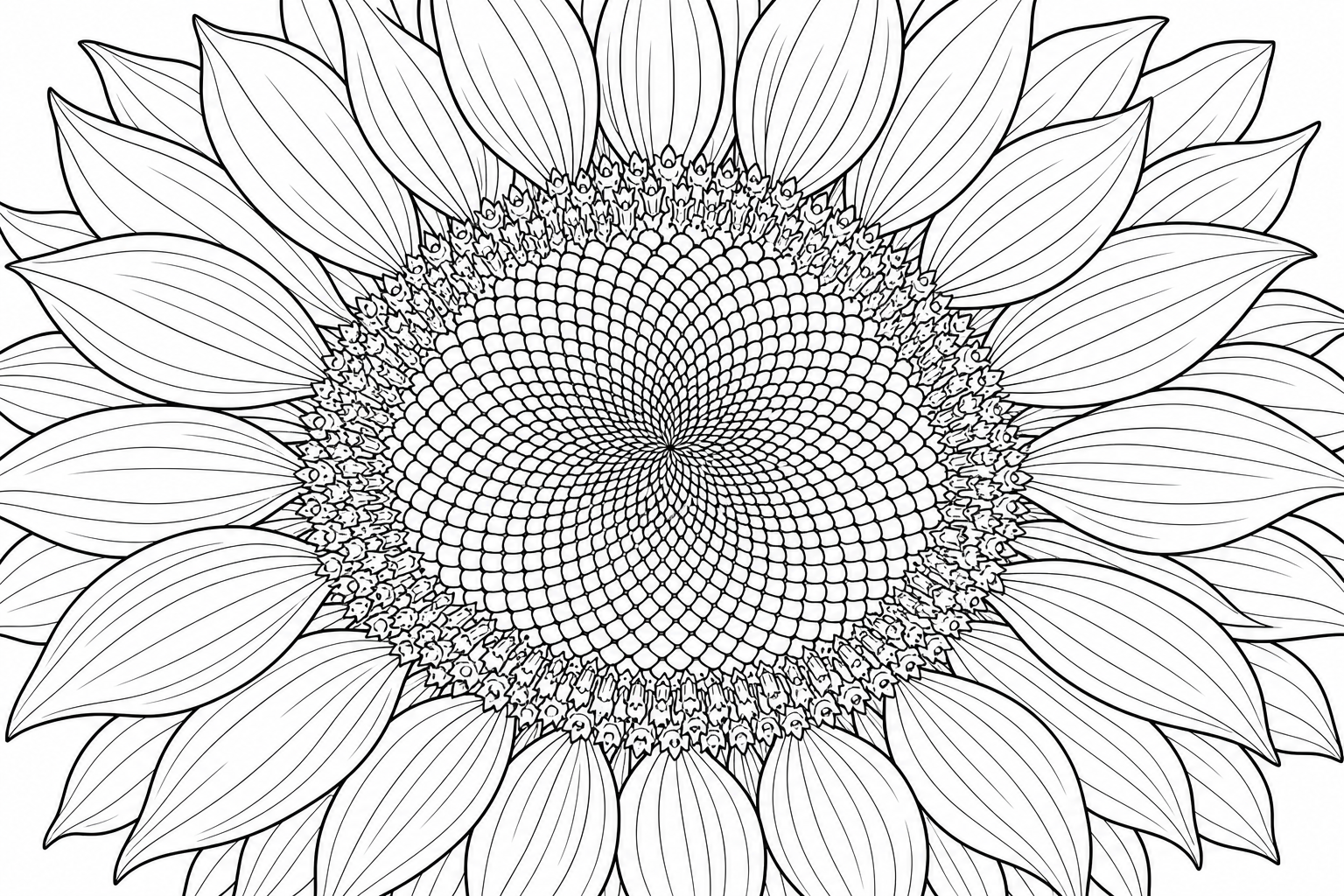
The face is doing math
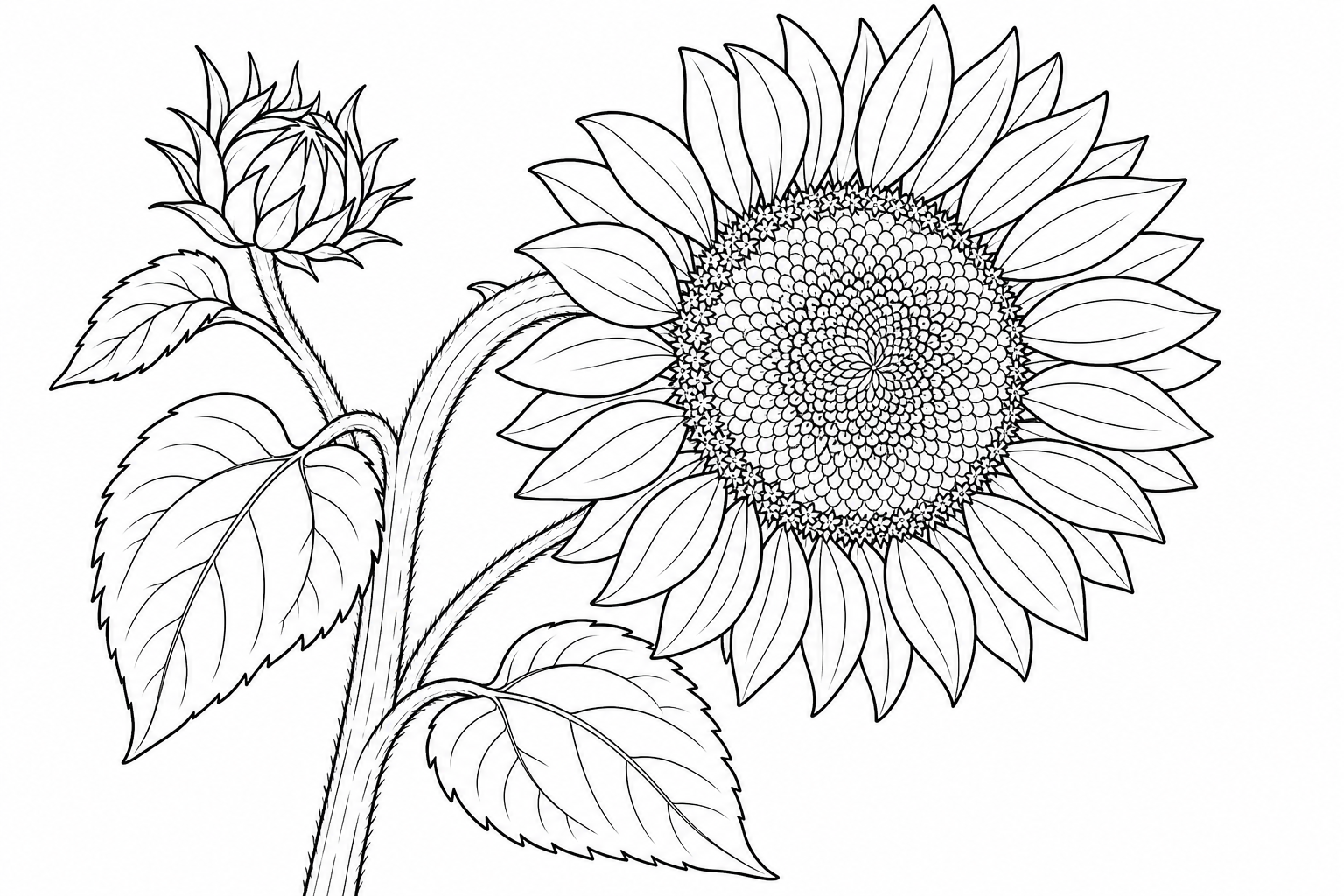
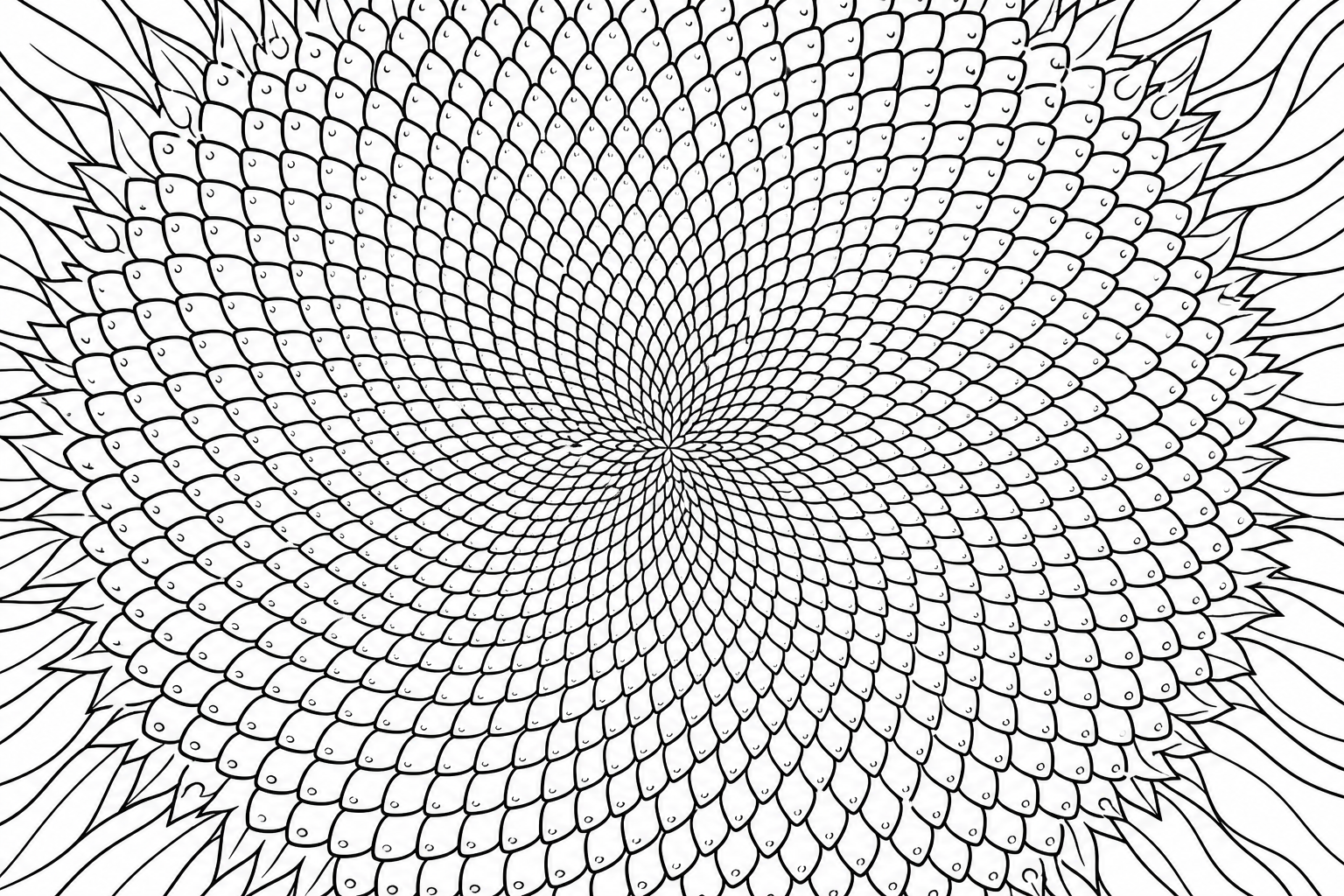
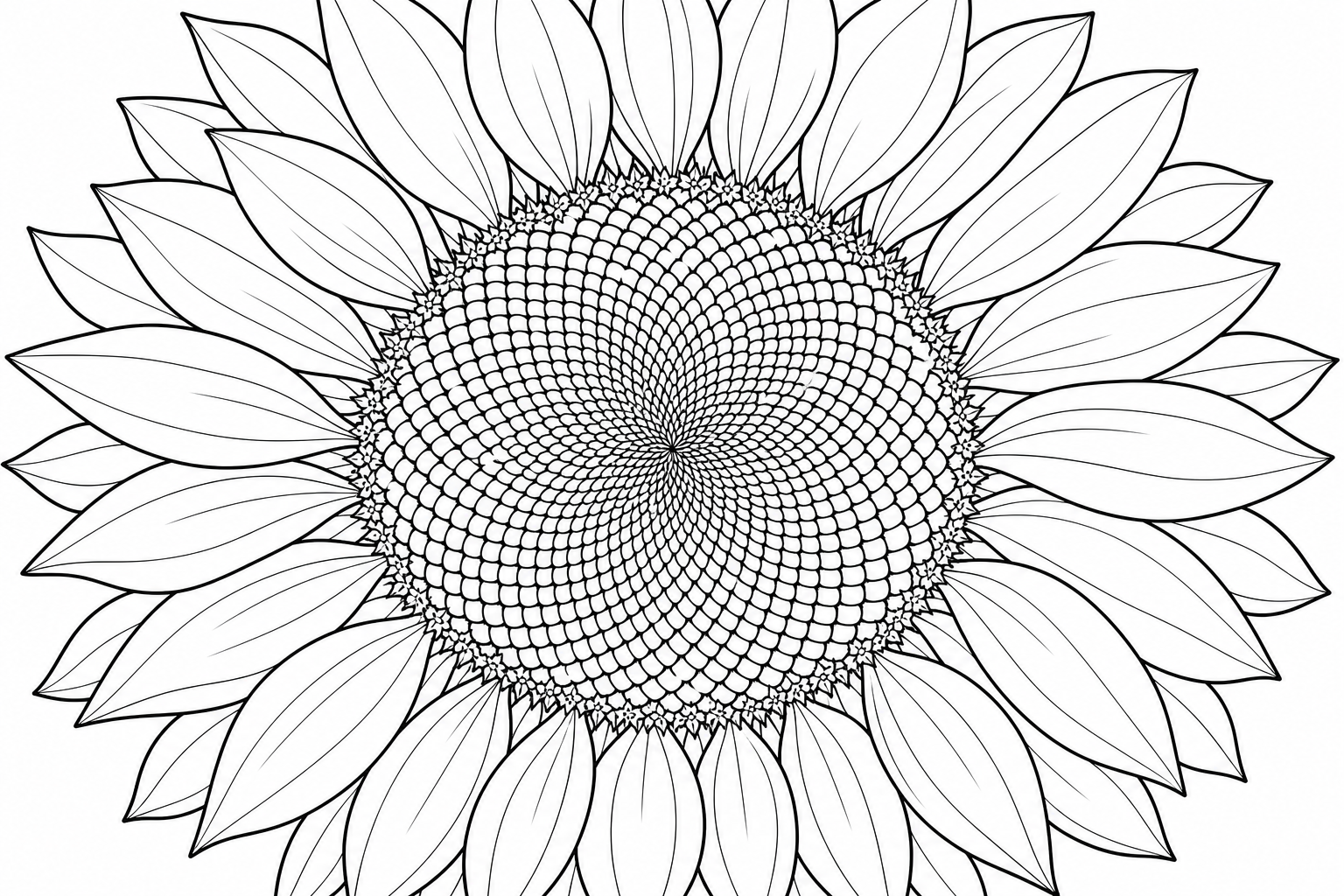
Look closely at the center and the seeds are not scattered around. They sit in two sets of curving lines that spiral out from the middle and cross each other, one set winding left, the other right. Count the spirals each way and you usually land on numbers like 34 and 55, neighbors in the Fibonacci sequence.
That slow, looping pull is the same thing that keeps people coloring mandalas. A sunflower's face is a mandala the garden grew on its own.
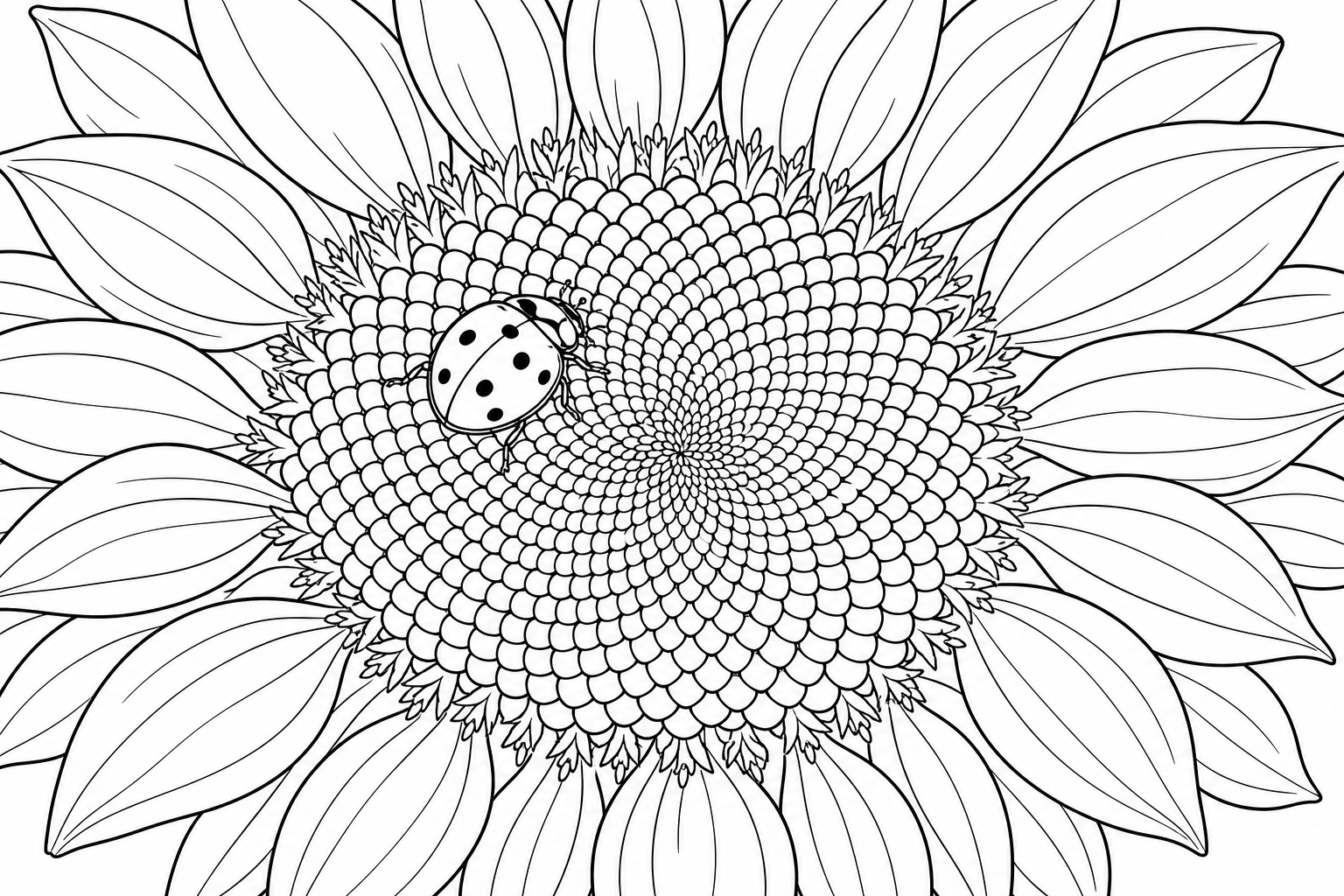
The petals are the easy part
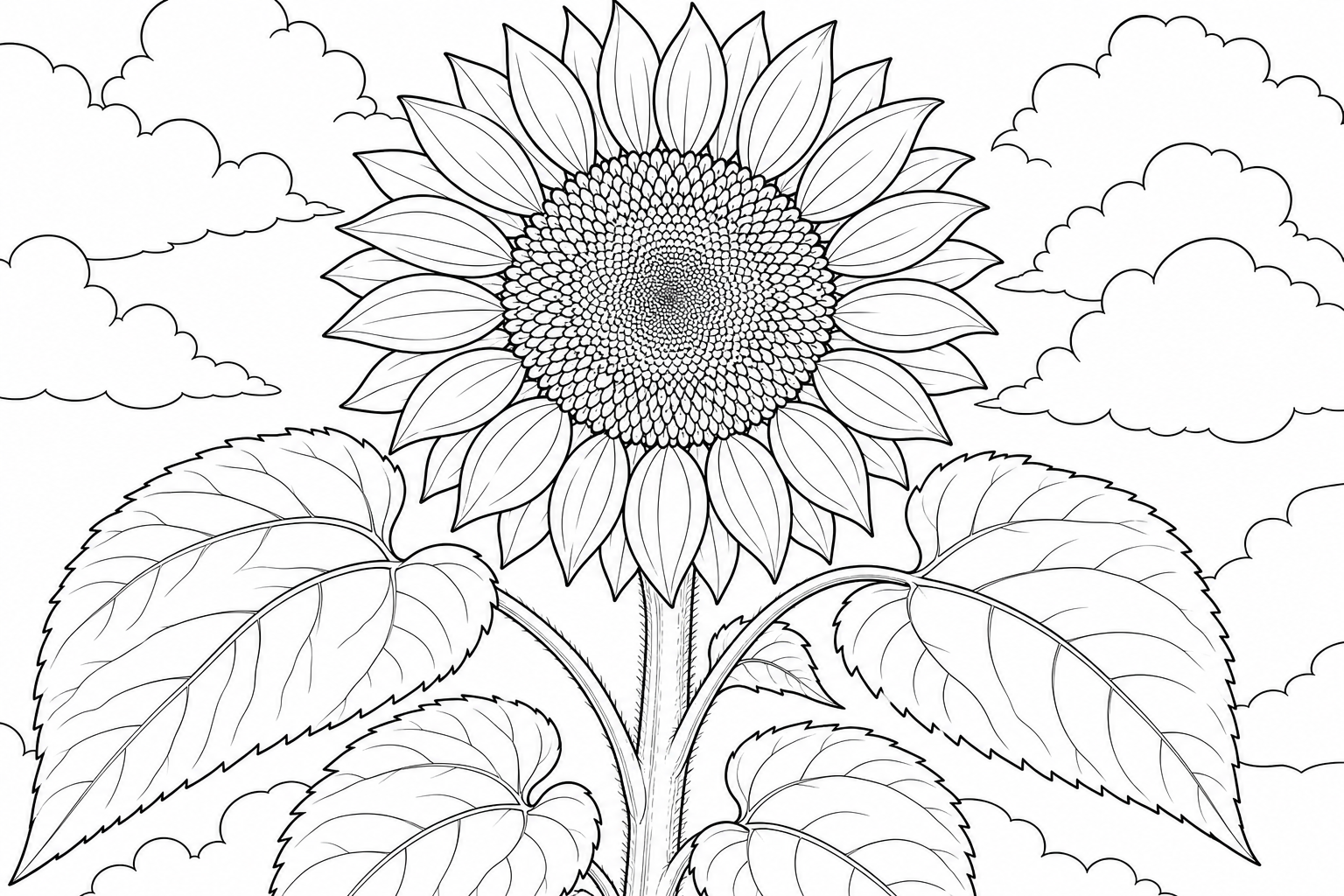
Around the face sit the ray petals, the long yellow blades most people picture first. This is the forgiving part of the page. They are big, they all point outward, and they are hard to get wrong. For a small hand, they are the whole flower. One confident stroke of yellow on each, and the sunflower reads from across the room.


Coloring fun for kids — anywhere.
Free for iOS & Android. No ads, no sign-up, offline-ready.


Coloring fun for kids — anywhere.
Free coloring app for kids. iOS and Android, phones and tablets. No ads, no sign-up, even offline.
Which way does it look
There is a story that a sunflower always turns to face the sun. It is half true. A young sunflower bud really does swing from east in the morning to west by evening, chasing the light. Once it matures and the seeds begin to set, it stops and settles facing east, where it catches the first warmth of the day (Forest Preserve District).
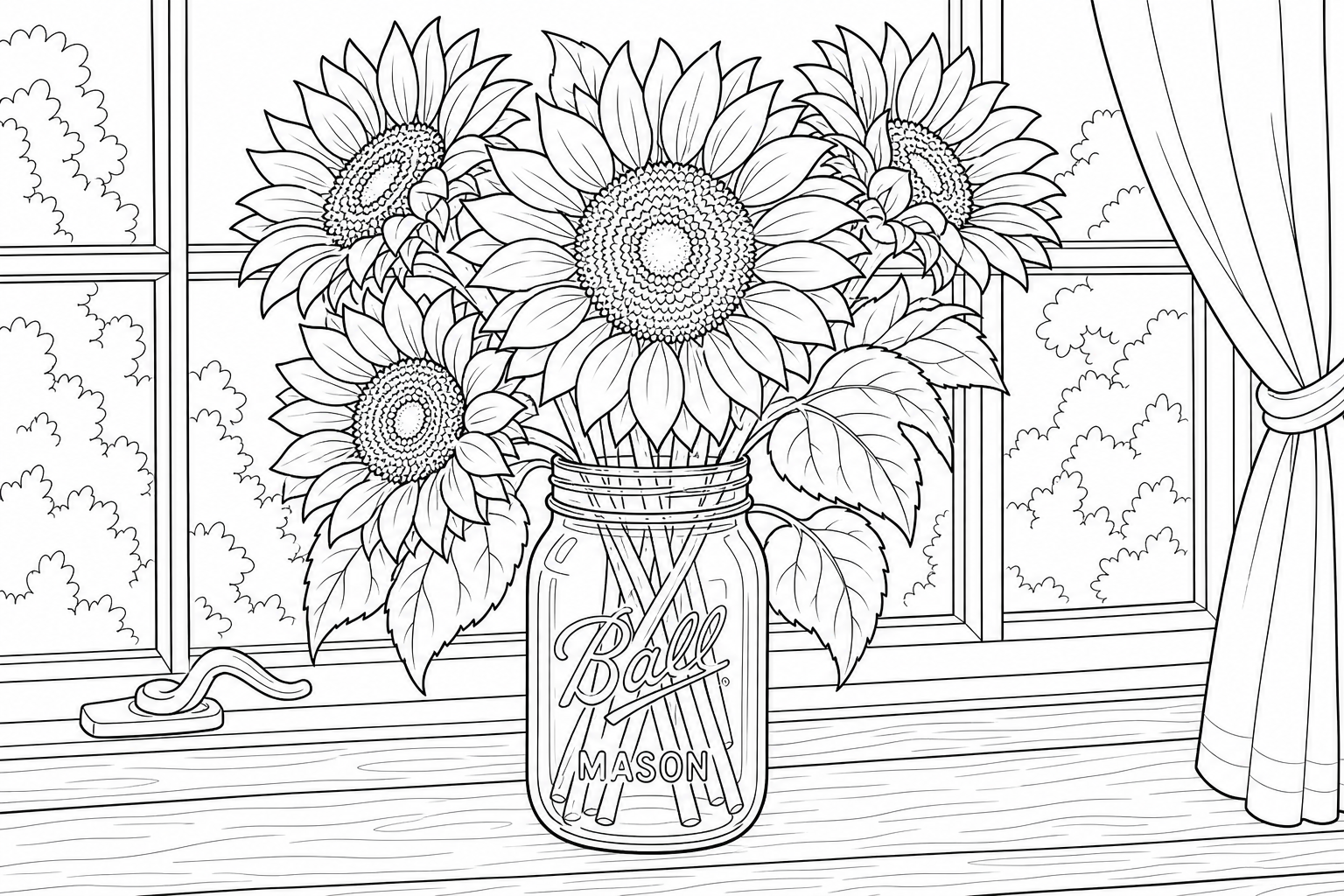
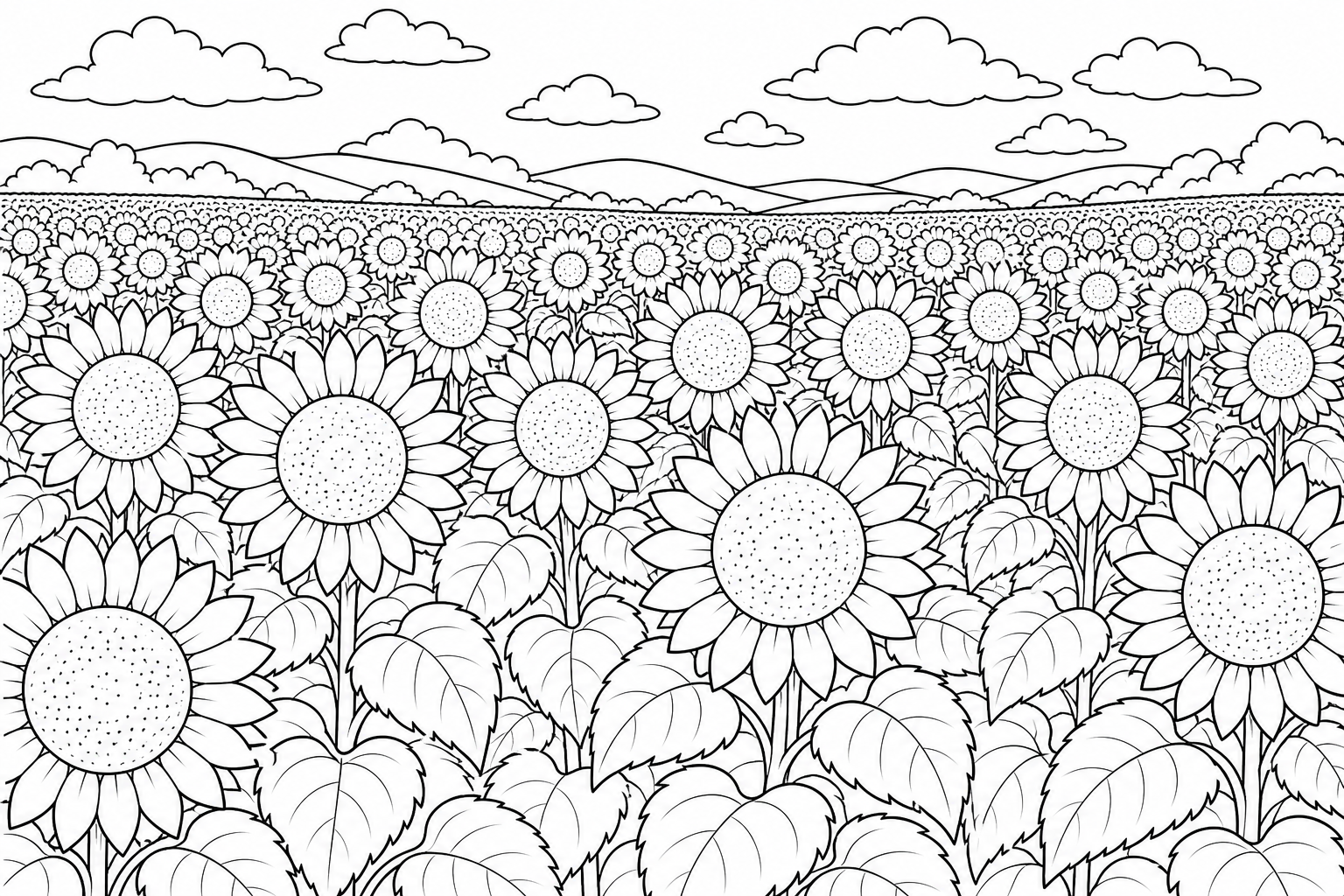
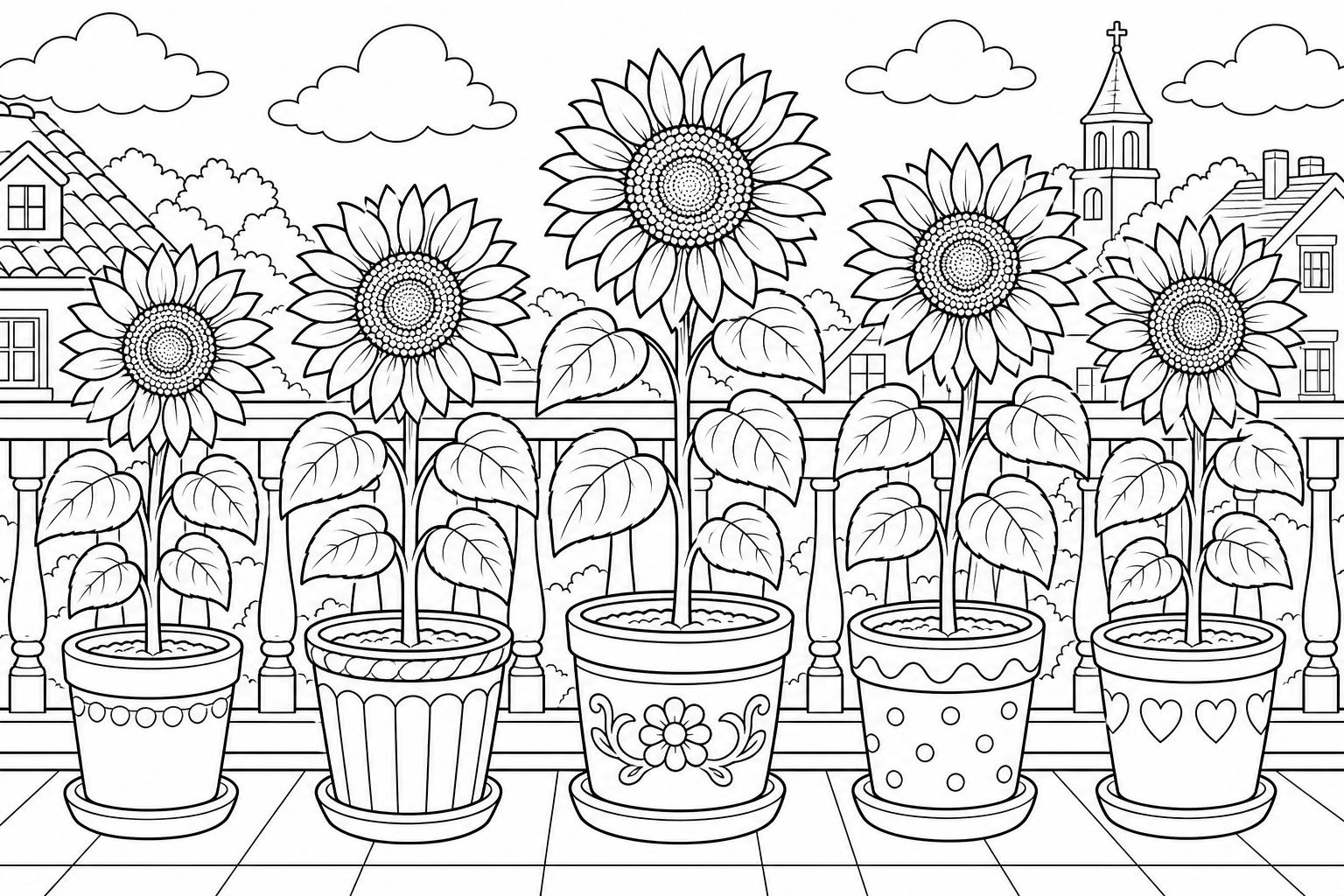
That fixed, east-facing stare is why a whole field of grown sunflowers all look the same way at once. Rows of identical faces, every one turned toward you, make a strange and satisfying thing to color.
Color it three ways
The quickest way to make a sunflower page your own is to skip the obvious yellow at least once. The flower can carry more than one mood.
| Palette | Petals | Center | The feeling |
|---|---|---|---|
| Sunny | Bright yellow | Warm brown | A July afternoon |
| Sunset | Orange and red | Deep maroon | Late evening light |
| Storybook | Pink or violet | Teal | A sunflower from a dream |
Pick one, or color the same flower three times and pin all three in a row. They will not look like the same page twice.
What else could you color?
Pick a prompt or type your own — opens in a new tab.
Print a whole garden
Start with the spiral, fill in the petals, or print the field and color a row of faces all turned the same way. However tall the real ones grow, these fit on the kitchen table.