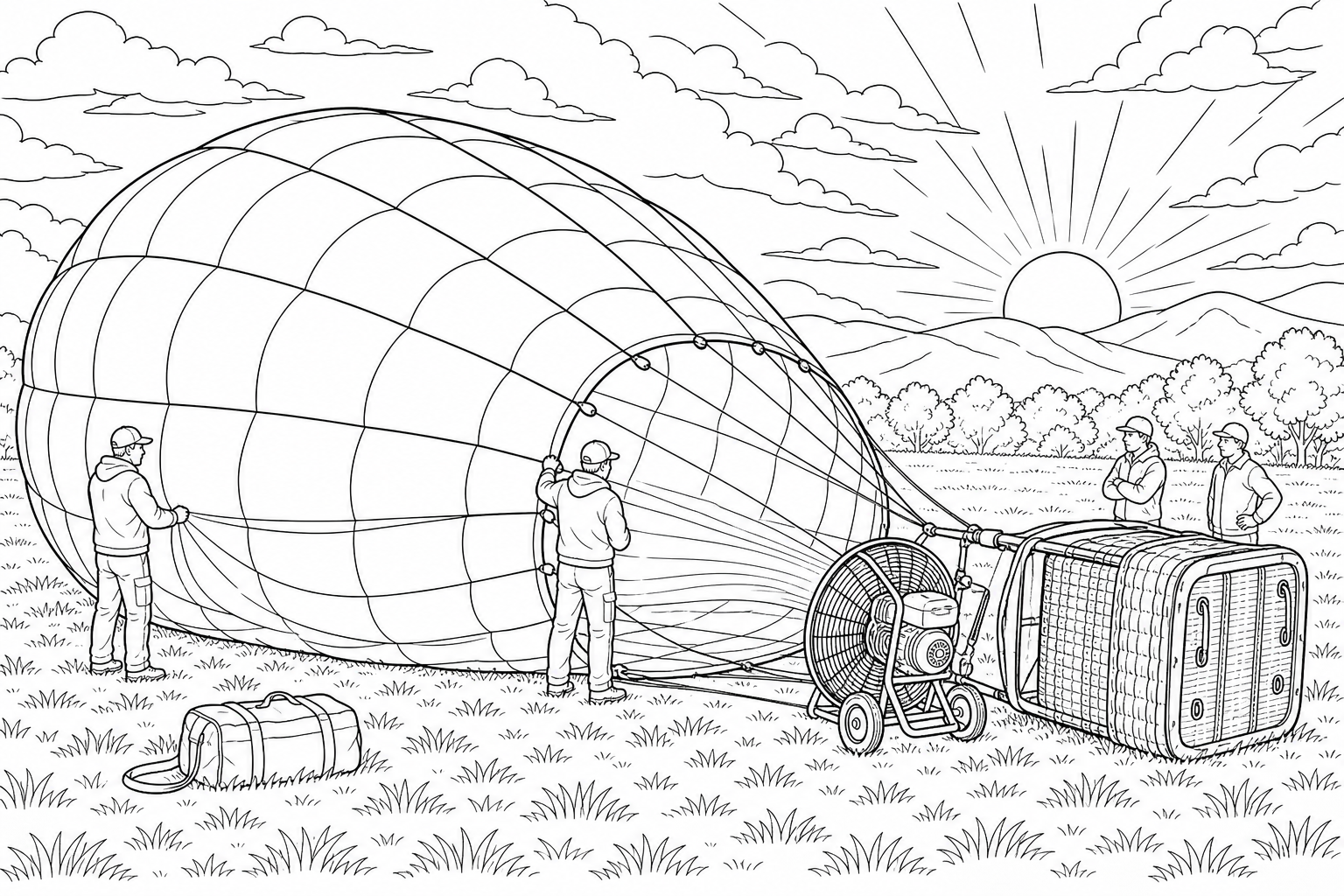
It is still dark when the crew arrives at the edge of the field. Someone unrolls a huge folded envelope across the wet grass, a fan starts up, and slowly a giant balloon breathes itself full. There is maybe an hour before the sun. This is how a hot air balloon flight begins, and it is one of the calmest kinds of adventure a kid can picture. Nobody rushes. The balloon will go wherever the wind goes.
Here is what makes a balloon such a good thing to color. The tall panels that run down the envelope can be any colors at all. There is no correct answer. A real balloon might be red and orange, or every shade of the rainbow, or one deep blue with a single yellow star. A child coloring a balloon is really designing one. So we laid this out the way a flight actually happens, one part at a time, with pages to print for each.
The field before the sun
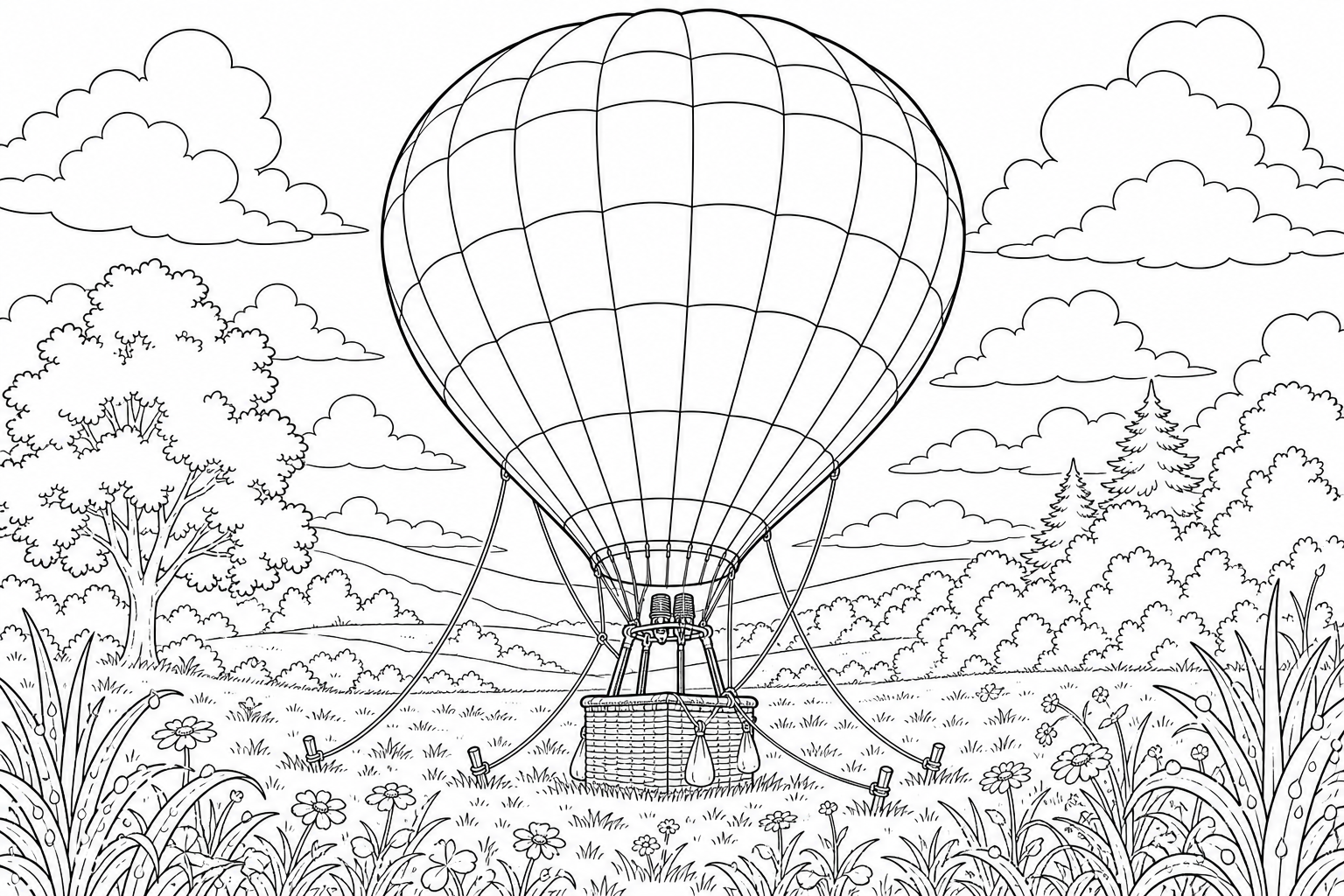
Balloons fly at dawn for a simple reason. The wind is usually gentlest just after sunrise, before the day warms up and the air gets busy. So the crew comes out in the dark. They spread the envelope flat on the grass, point a big fan into the mouth of it, and fill it with ordinary cold air first, until it lies on its side like a sleeping whale. Only then does the burner come on.
This first beat is all waiting. Nothing flies yet. It makes a good page for a child who likes to take their time, because there is a lot of empty envelope to fill with any pattern they dream up.
One roar, and up
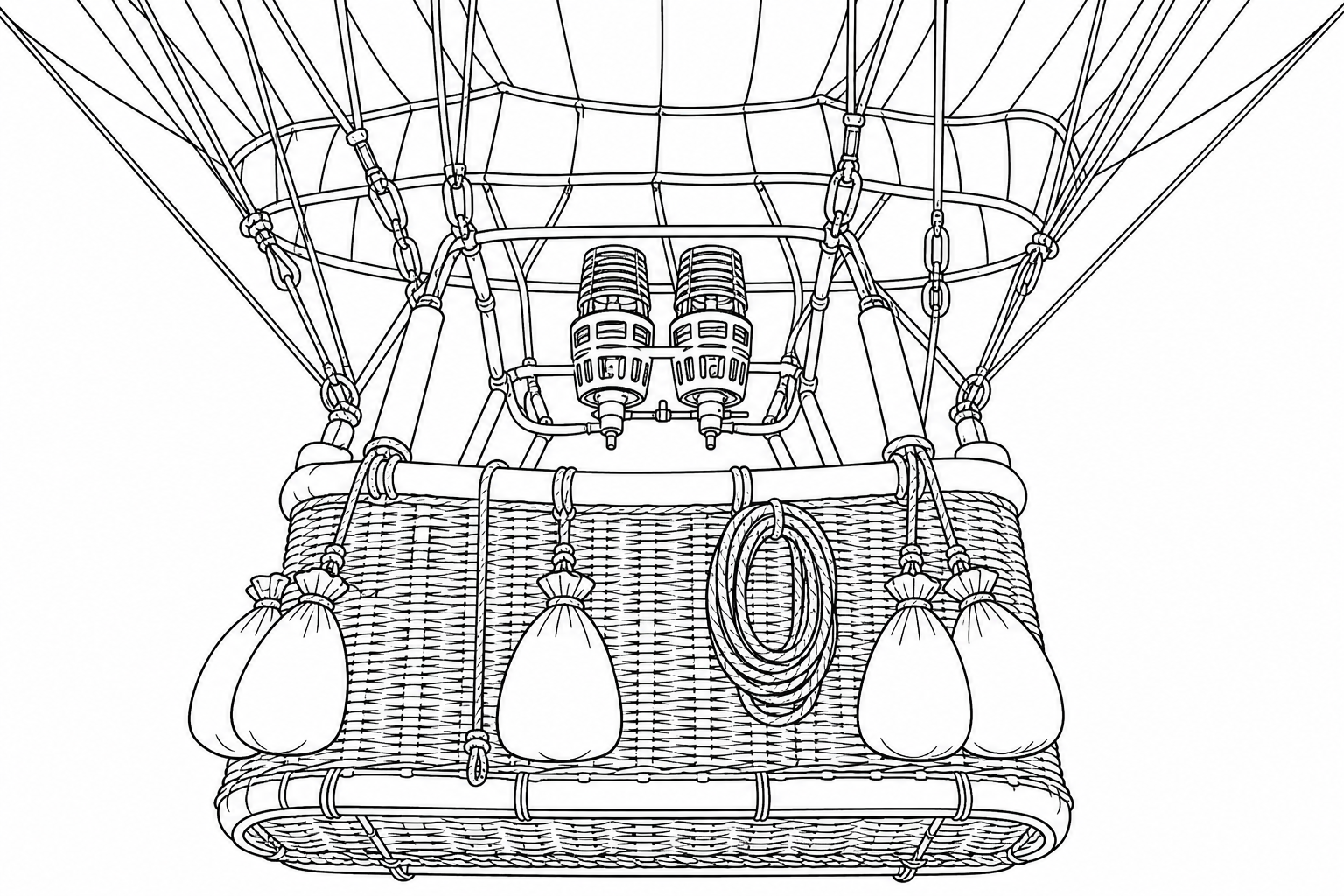
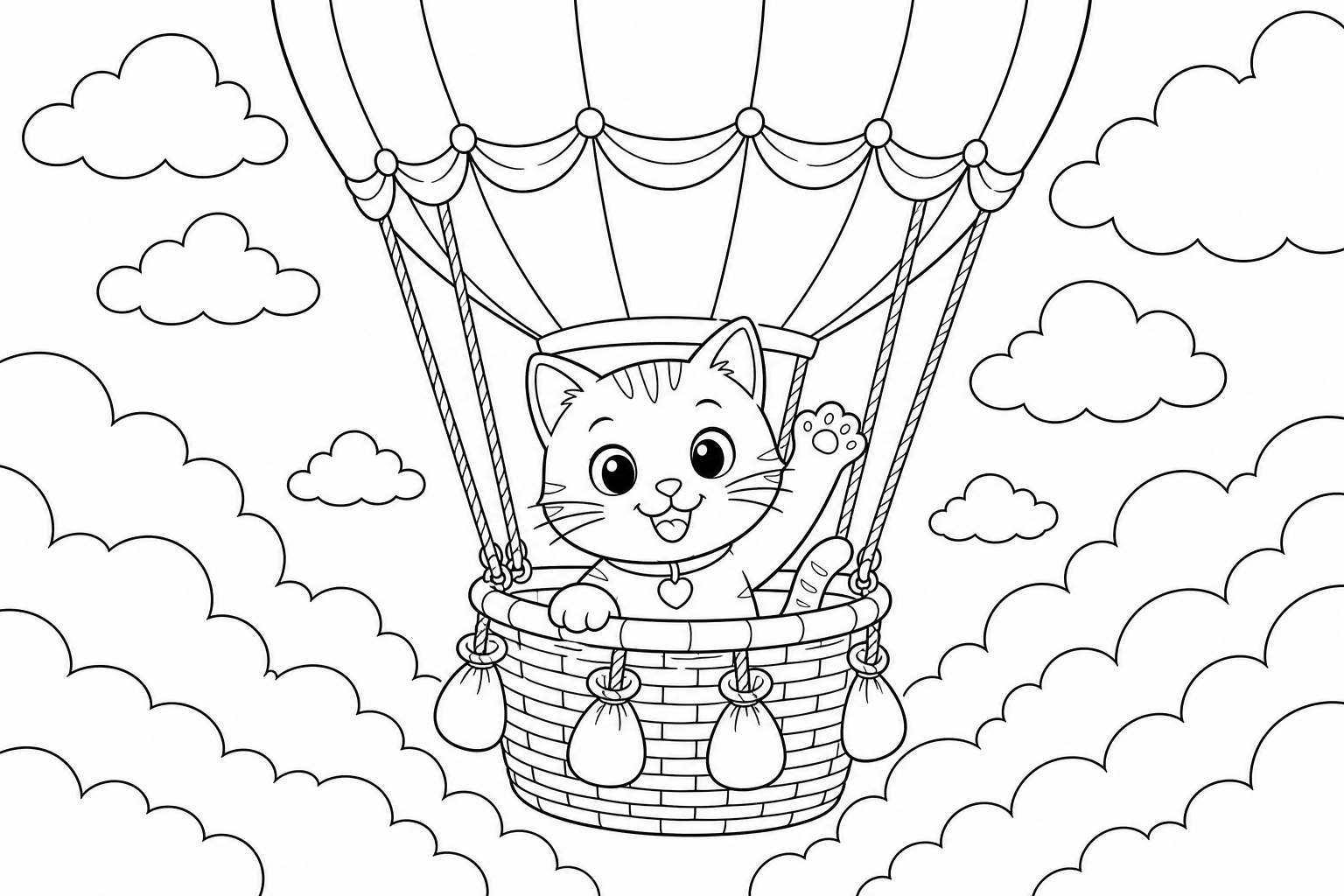
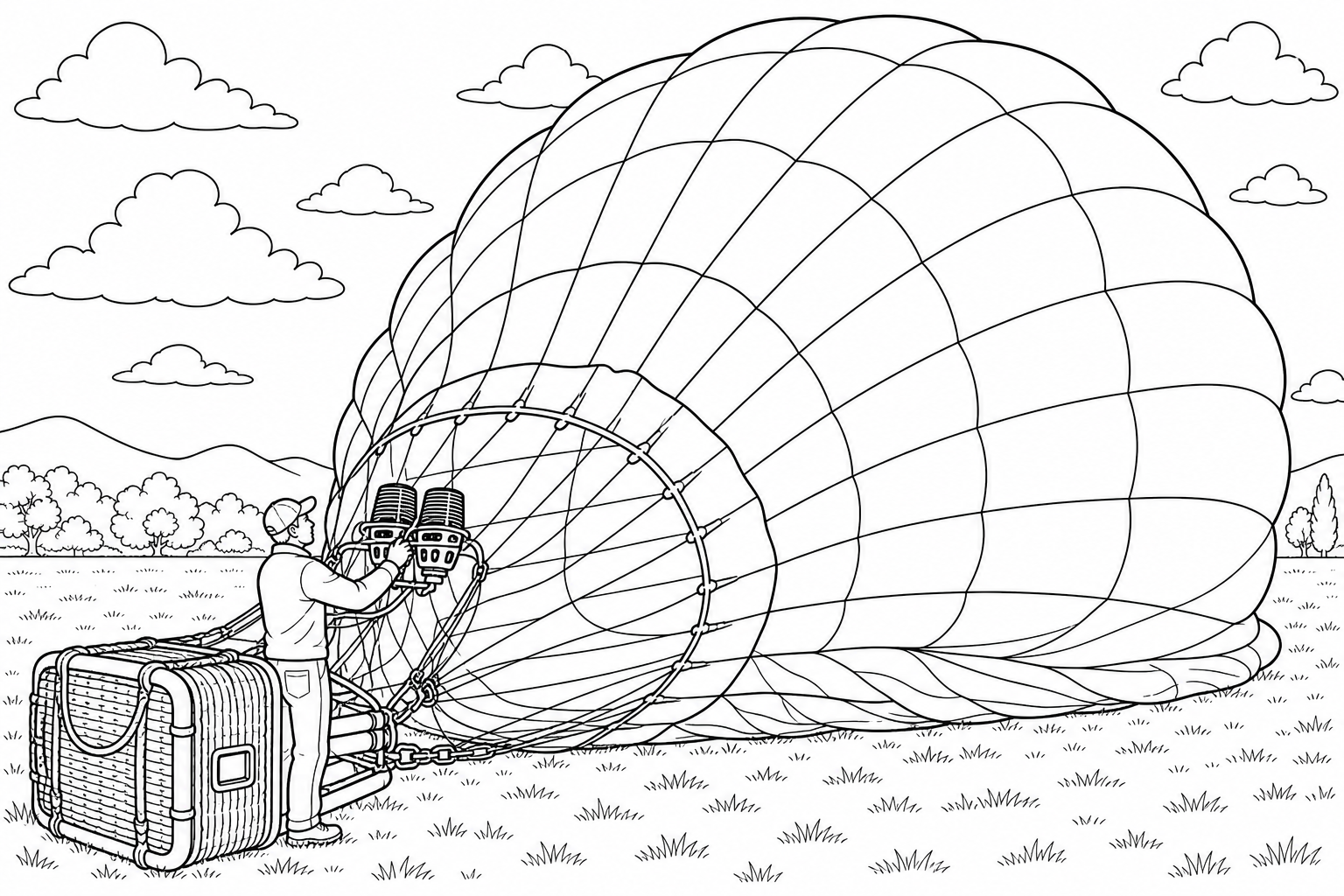
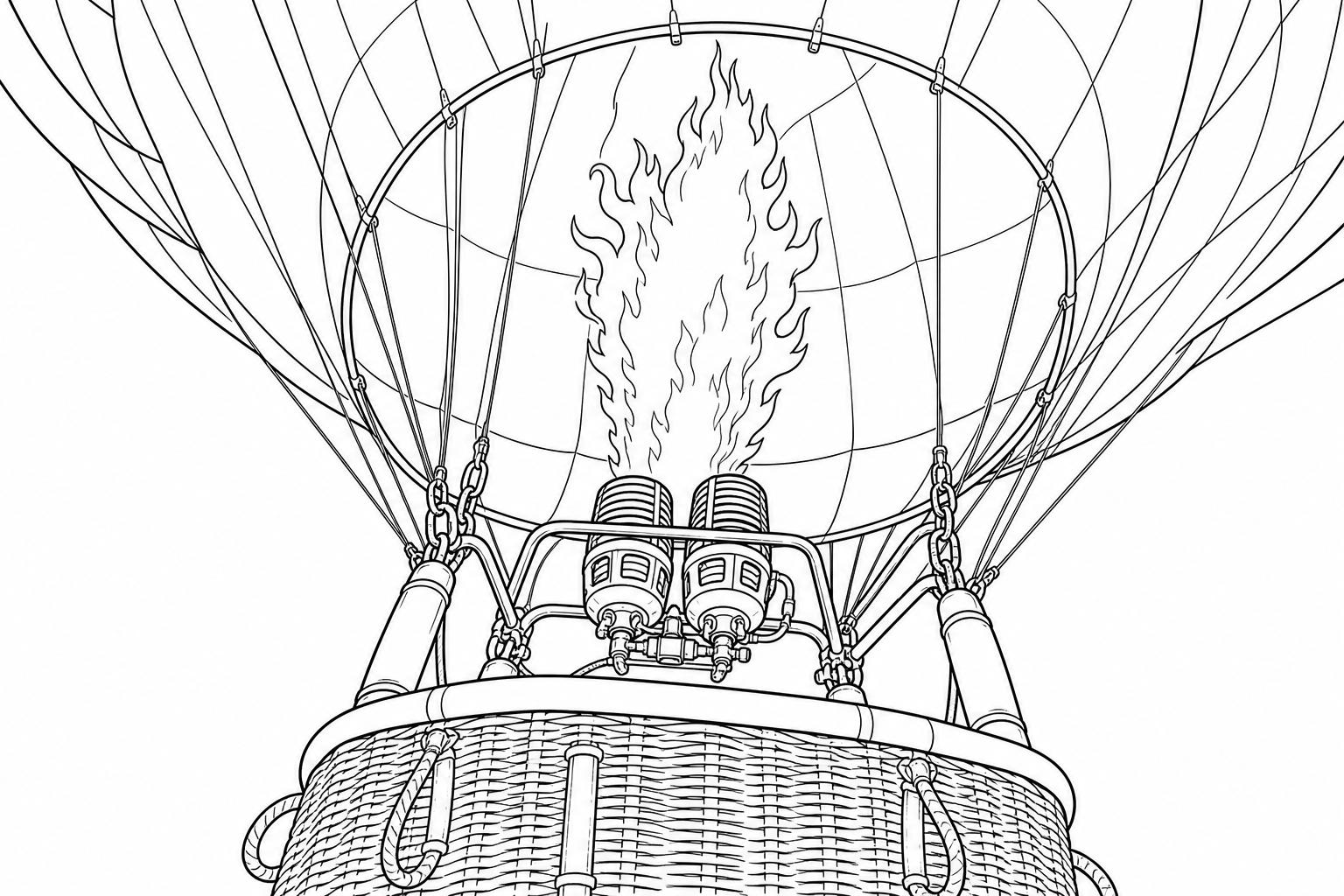
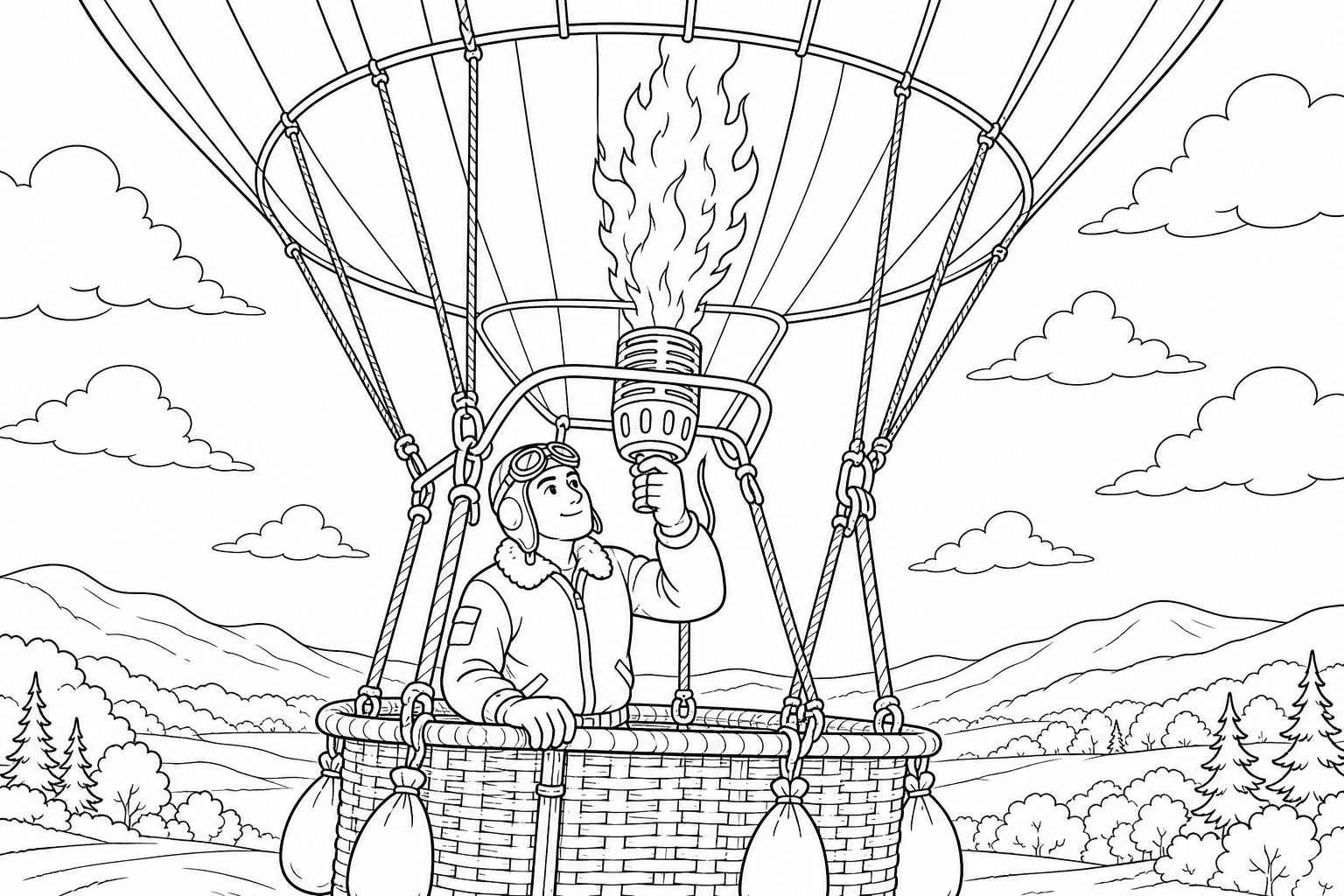
Then the pilot opens the burner, and a column of flame climbs into the mouth of the balloon. The envelope stops lying down. It stands up tall and round and starts to tug at the basket. A hot air balloon really has only three parts, and they are easy to remember.
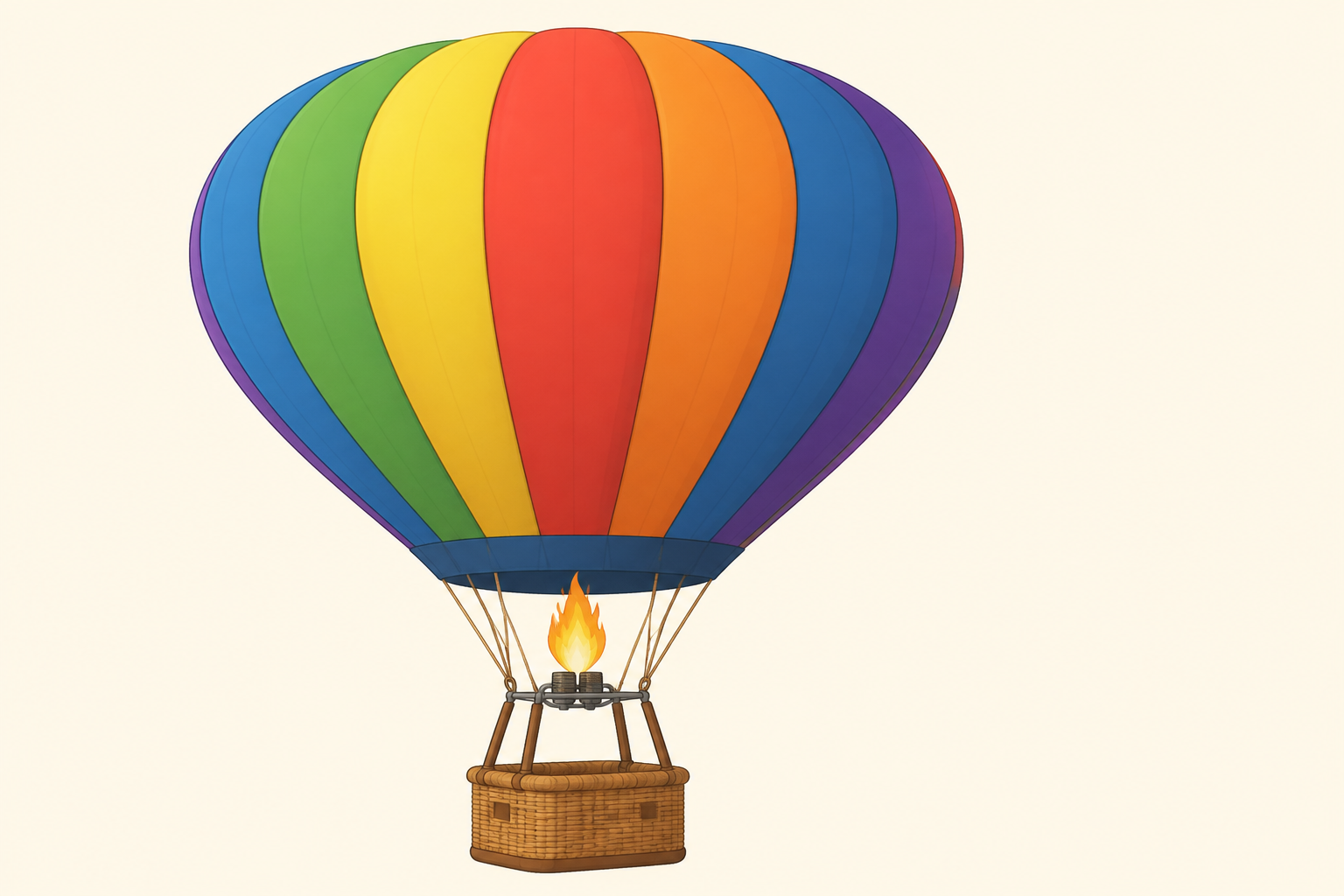
The trick behind all of it is something your kid already knows from a warm room: hot air rises. When the burner heats the air inside the envelope, that air grows lighter than the cooler air outside, and the whole balloon floats upward, basket and all. Let the air cool, and it settles back down. That is the entire system for going up and coming down.



Coloring fun for kids — anywhere.
Free for iOS & Android. No ads, no sign-up, offline-ready.


Coloring fun for kids — anywhere.
Free coloring app for kids. iOS and Android, phones and tablets. No ads, no sign-up, even offline.
The whole world turns to patchwork
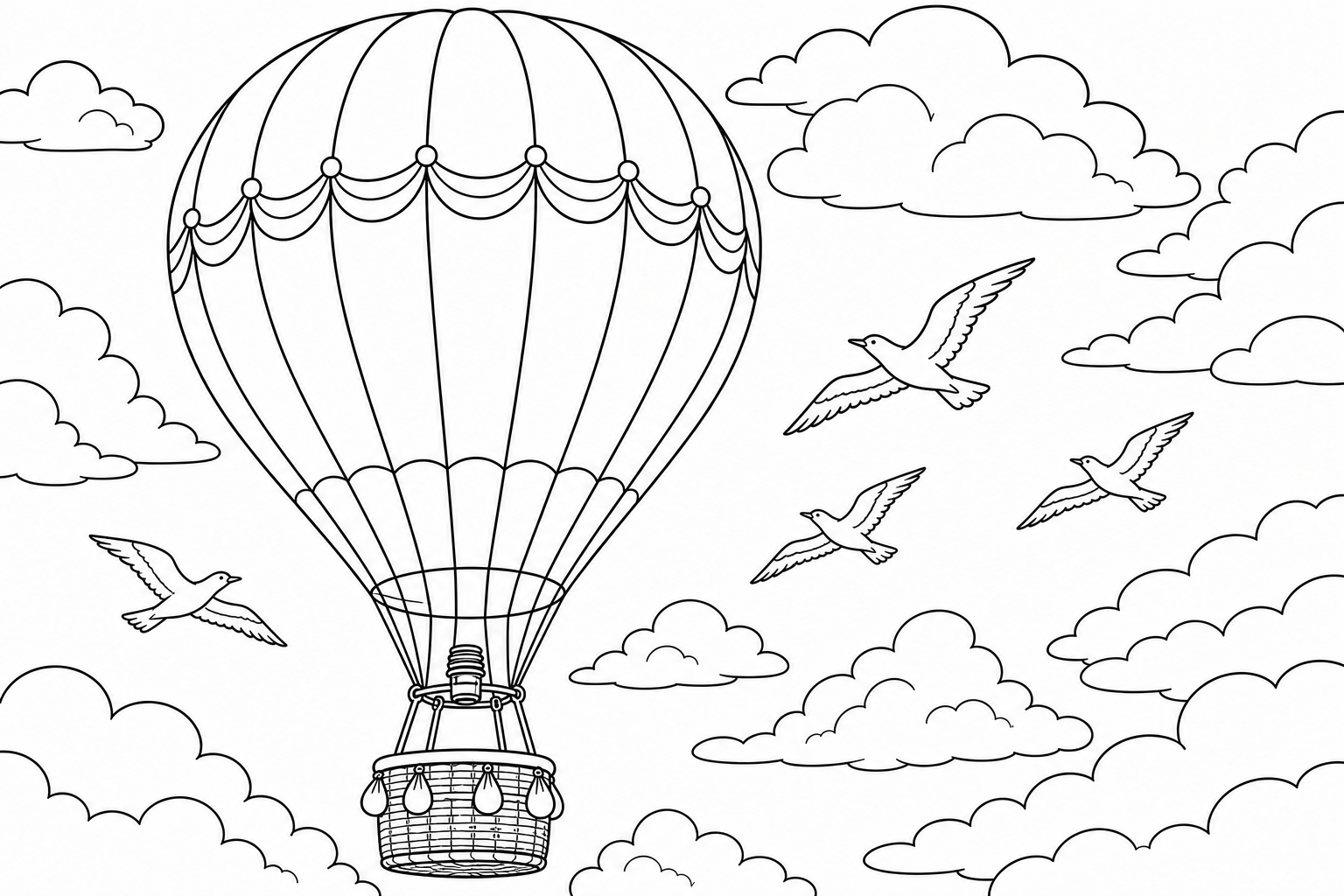
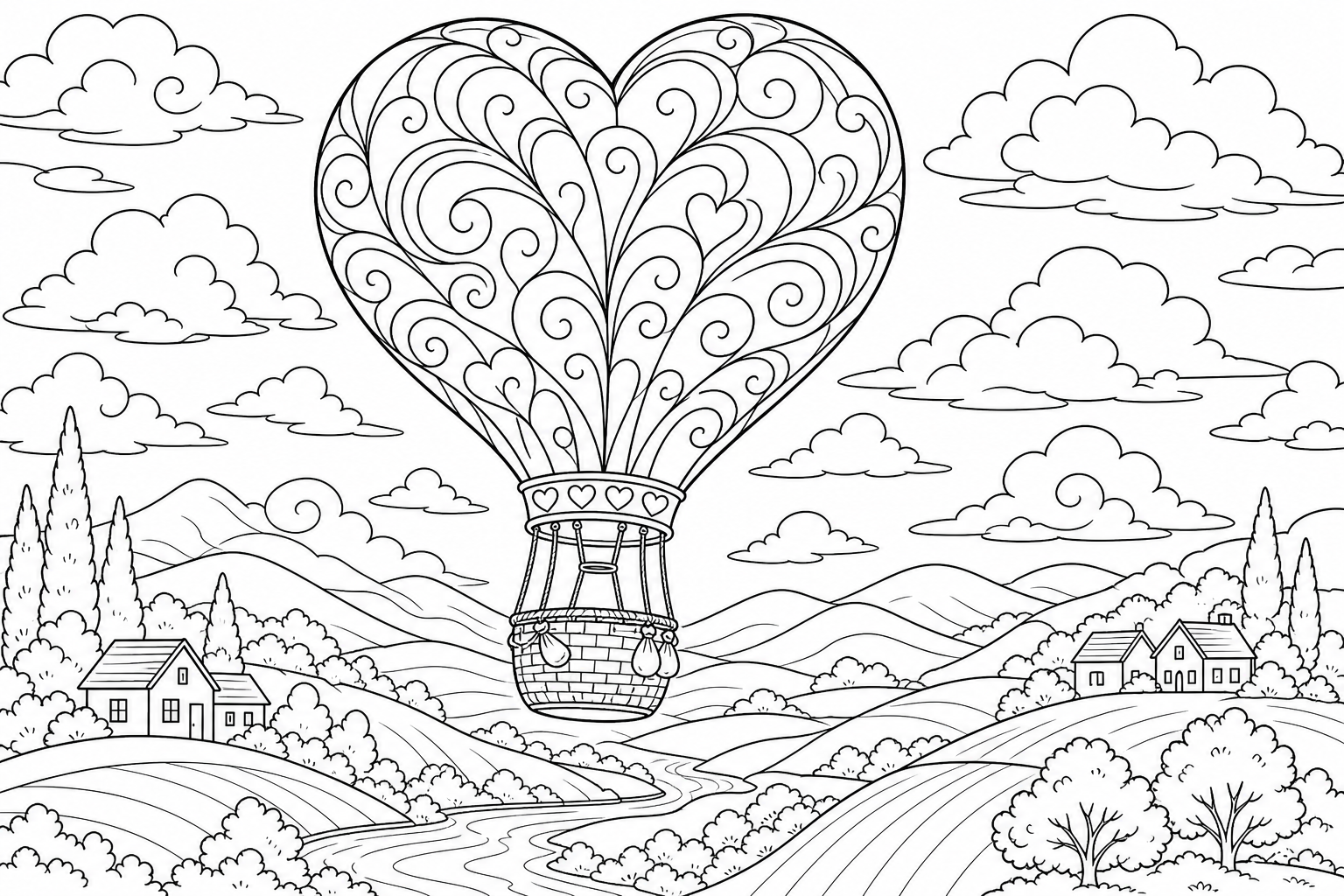
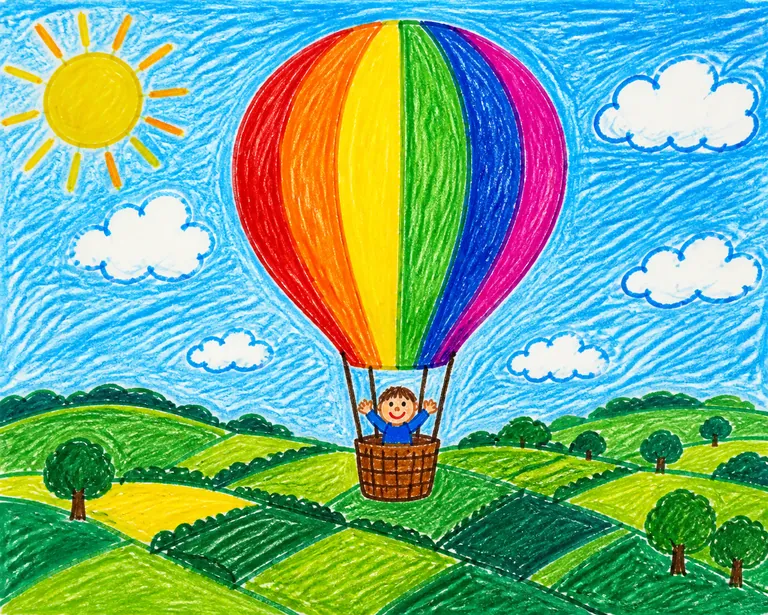
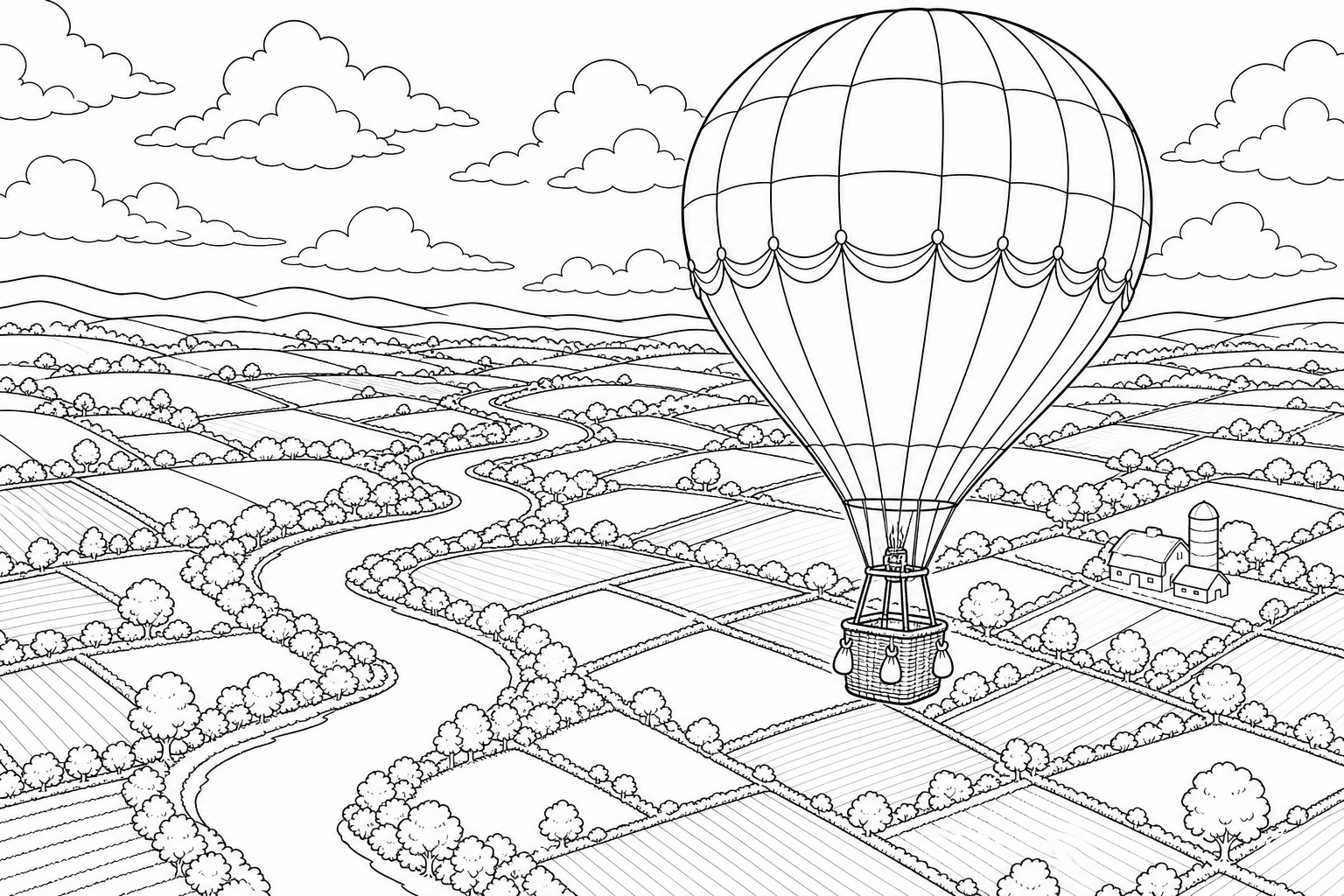
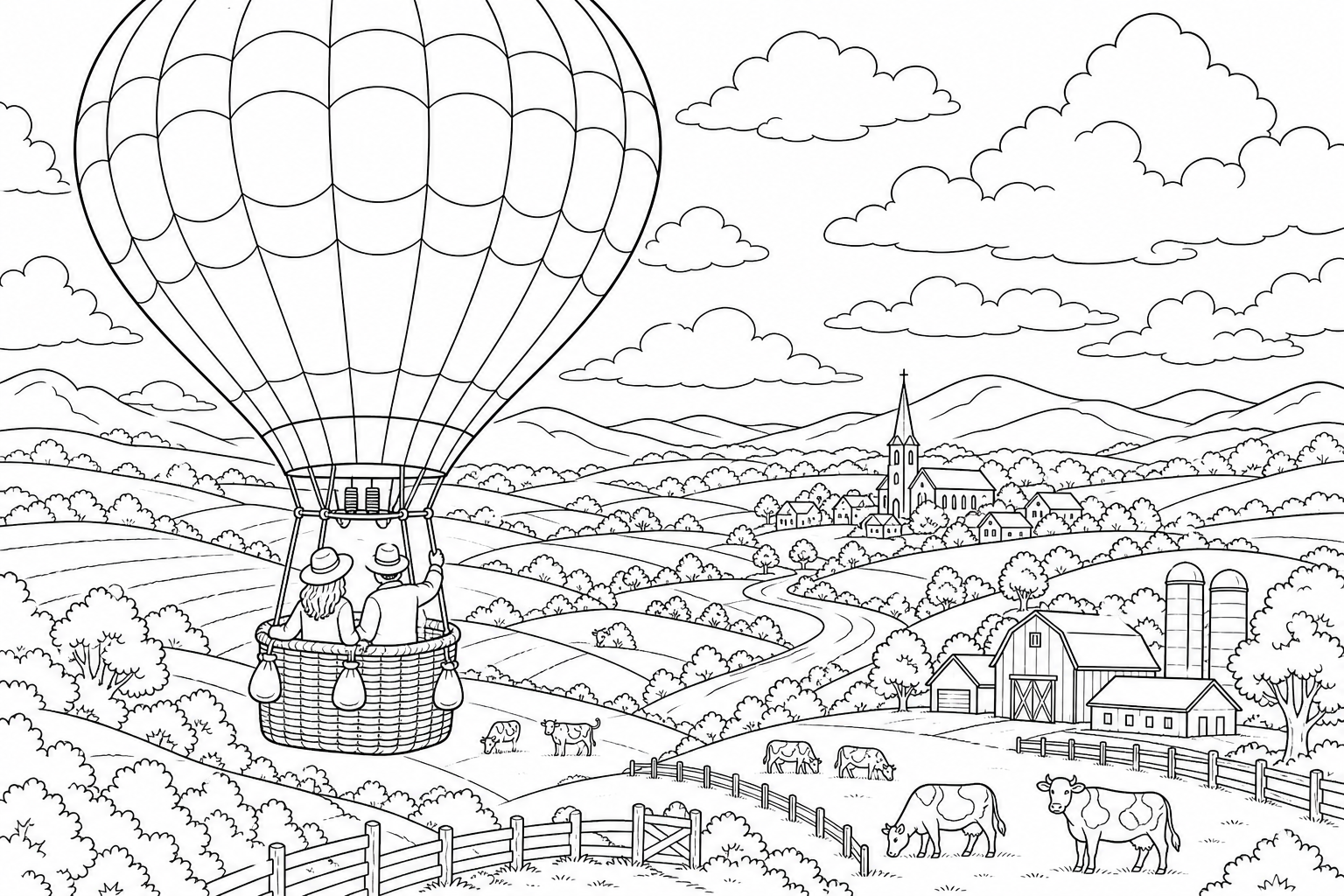
Once you are up, the strangest thing is how quiet it is. There is no wind in your face, because you are moving with the wind instead of against it. Between blasts of the burner it is almost silent. Below, the farms turn into a patchwork quilt, green squares and brown squares and the thin silver thread of a river. Cows look like toys. People come out and wave.
This is the dreamy middle of the flight, and it colors beautifully as a wide scene: one balloon, and a whole tiny world underneath it. Color choices really show here, since warm colors on the envelope seem to leap toward you while a cooler sky falls away behind.
When the sky fills with balloons
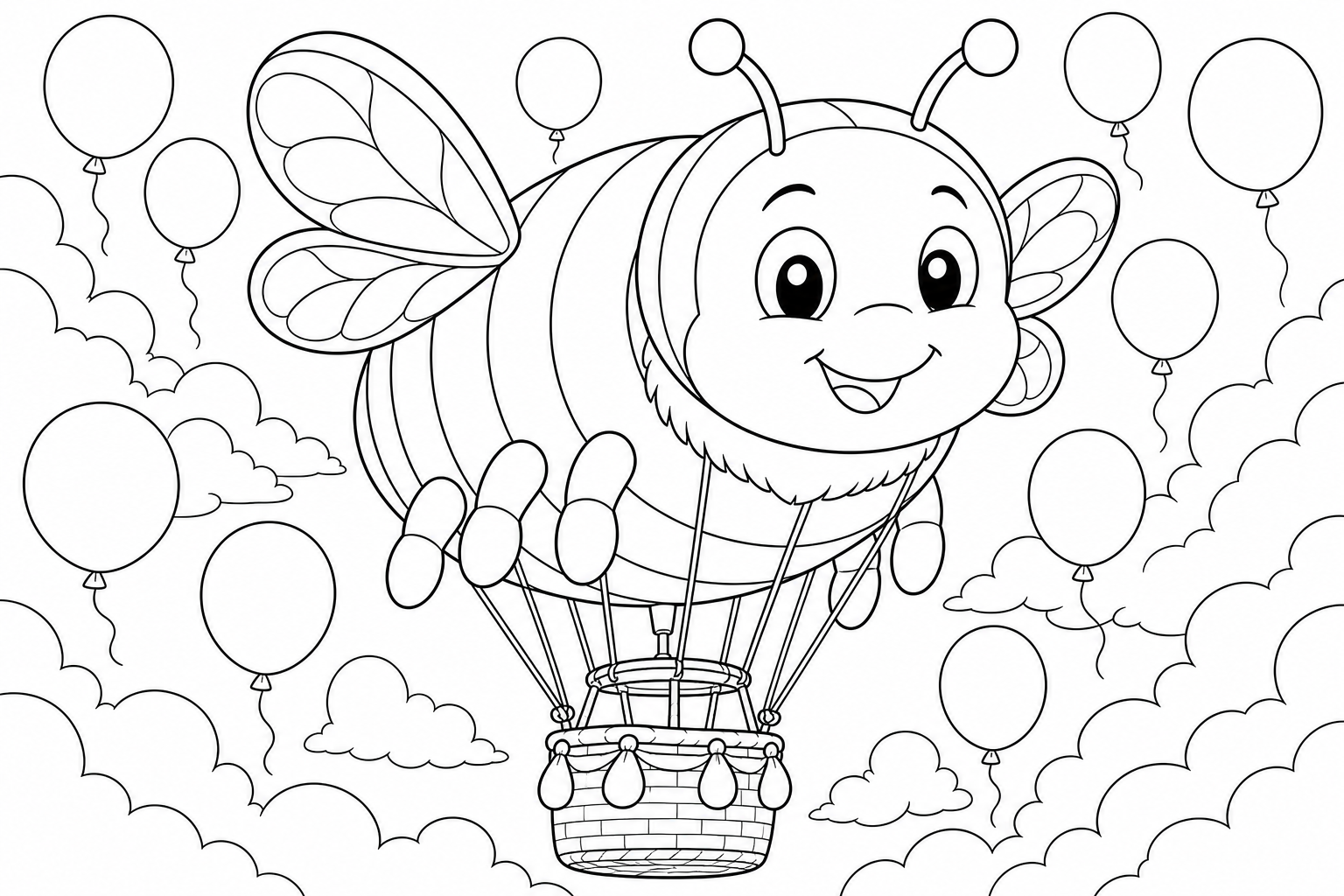
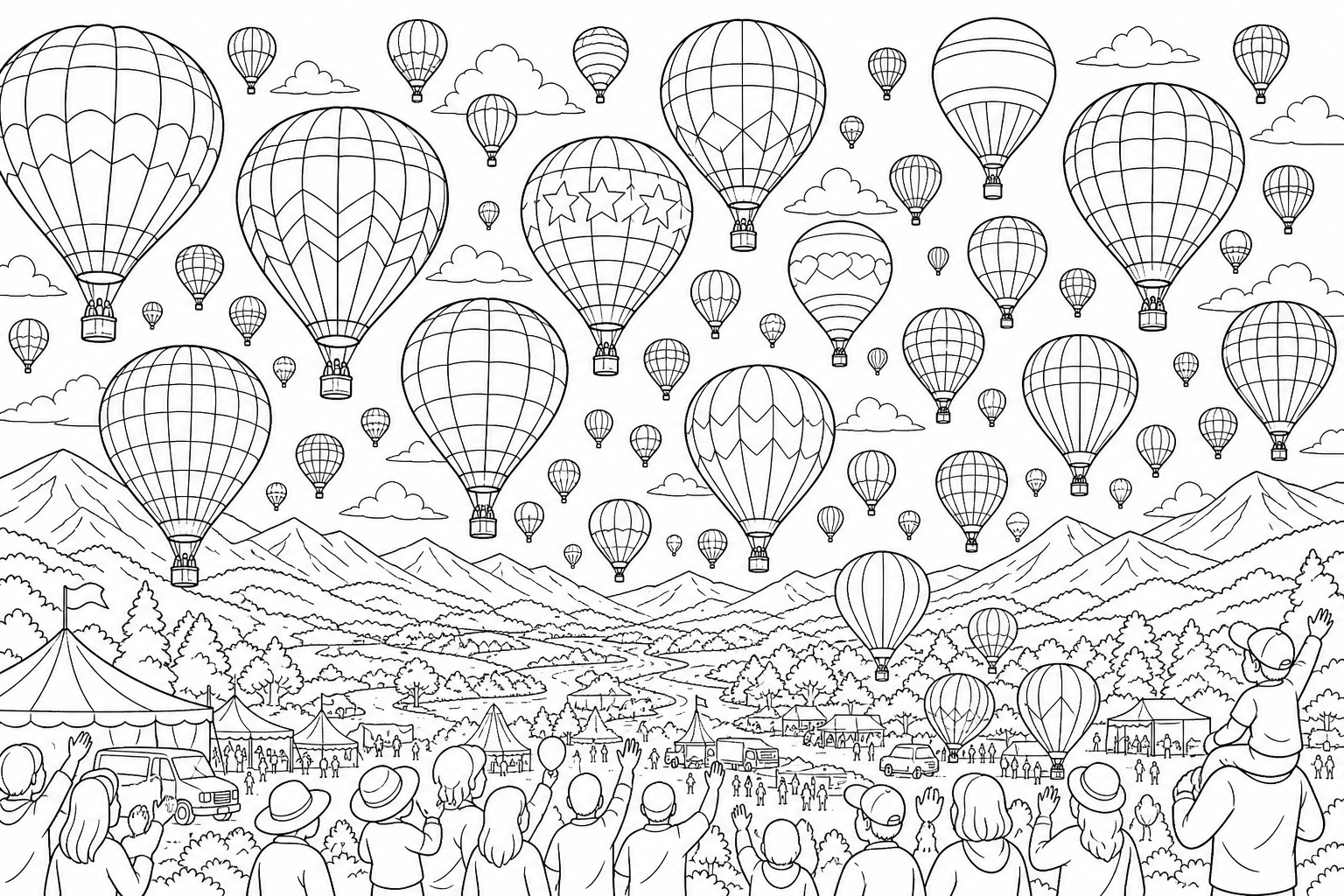
A single balloon is lovely. A hundred of them is something else entirely. At balloon festivals, crews launch dozens or hundreds at once in what pilots call a mass ascension, and the sky fills with color from one edge to the other. Some of them are not even balloon shaped. Festival teams build special shapes: a giant bee, a cottage with a door, a cartoon character, a dragon curled in the air.
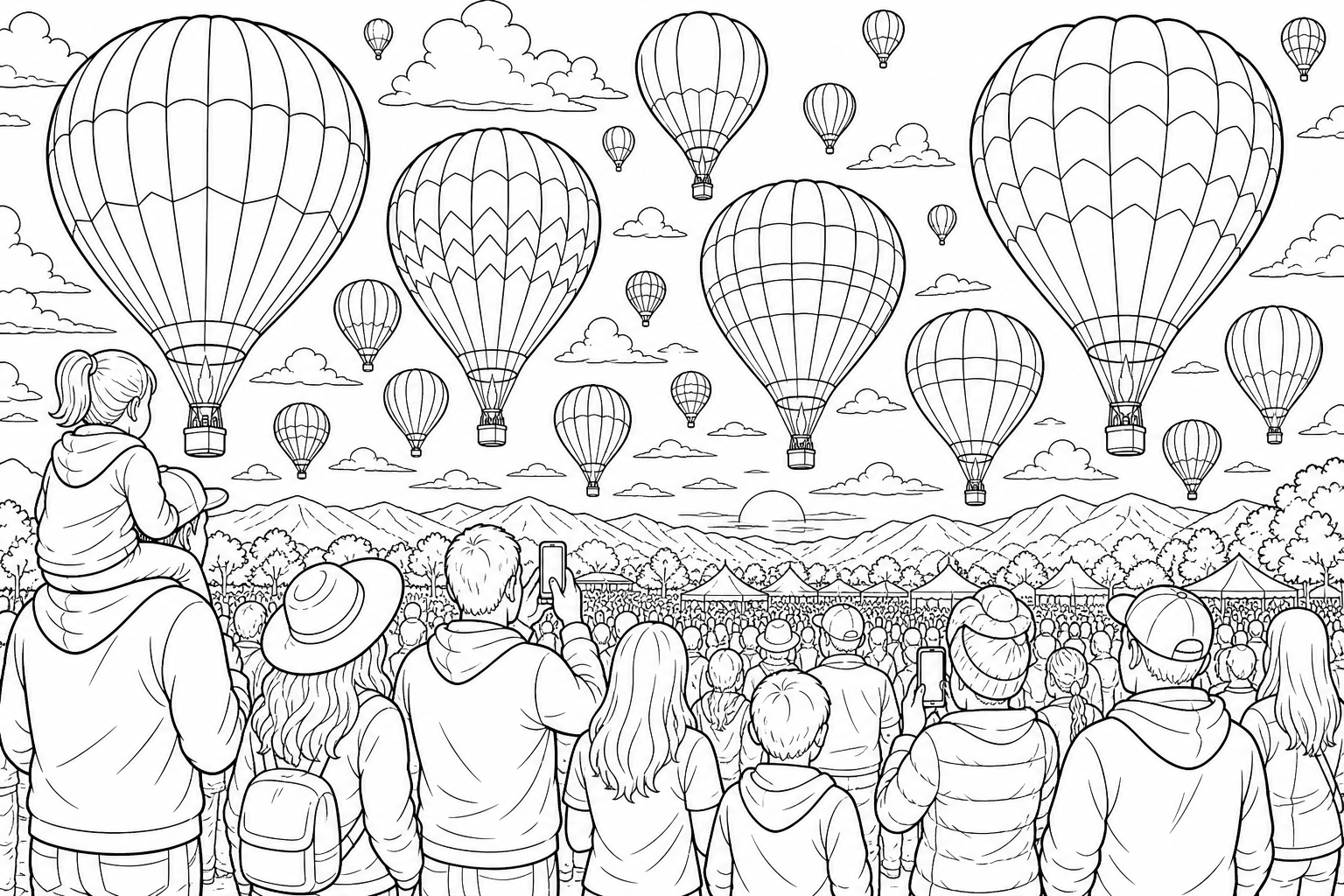
And when the sun goes down, the best part happens back on the ground. Crews tie their balloons down in a field and fire the burners together, so each envelope lights up from the inside like a paper lantern the size of a house. Pilots call it a balloon glow.
| When | What you see |
|---|---|
| Morning flight | Balloons drift low over quiet fields while the air is still calm |
| Evening glow | Balloons stay tethered and light up from the inside like lanterns |
What else could you color?
Pick a prompt or type your own — opens in a new tab.
Print your flight
However your child likes to fly, slow and dreamy or a whole festival at once, the pages are ready. Little ones can fill one big envelope with fat, happy stripes. Older kids can give every panel its own pattern and its own reason. Print one for a quiet ten minutes, or the whole set for a rainy afternoon.
Ready to lift off? Here is the full flight.