A child at home with a cold does not need an activity. They need a blanket, something warm to drink, and a grown-up who stops asking whether they are bored. Most sick-day lists jump straight to crafts and projects, as if the day had to produce something.
It is a quarter past nine on a Tuesday. The call to school is made, the laptop is open on the kitchen table, and a five year old is on the sofa under the striped blanket, watching the rain run down the window. The coloring kit in this piece is for that sofa. It is sorted in one order: one huge shape for the first morning, a tray page for when your child sits up, company for the long afternoon, and a blanket fort for the last day, when your child is nearly well and starts climbing the furniture. You match the page to the energy in the room, and your child moves up or down the line without anyone deciding for them.
Pack the kit before anyone needs it
The kit only works if it already exists on the morning you need it. Nobody wants to stand at the printer with a tired child on one arm. Pack it on an ordinary weekend and put it on a high shelf.
- A shoebox with a lid. It only comes down on sick days, which is what keeps it special.
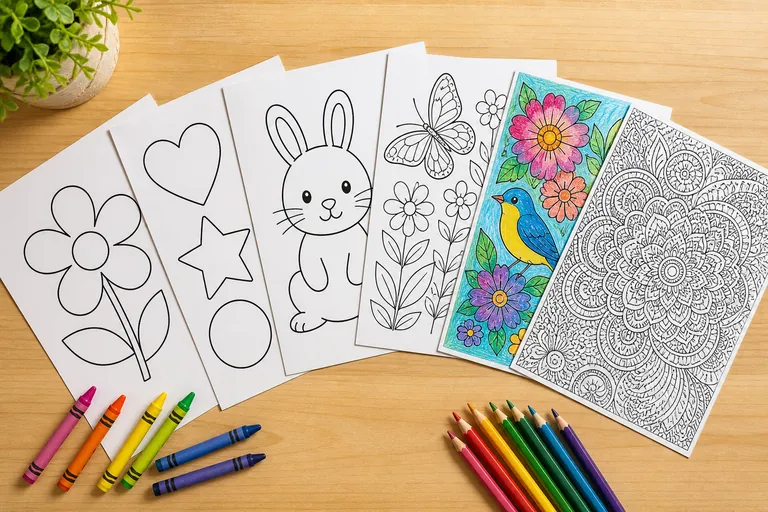
- Eight to ten printed pages, sorted into the four piles of this article, with a paper clip on each pile.
- Chunky crayons. They work lying down and they leave nothing on the sheets.
- Felt-tip pens, kept for later. They come out once your child sits at a tray, because a lost cap in the duvet turns into a blue stain by evening.
- Something hard to lean on: a clipboard or a big picture book. A soft blanket makes a terrible desk.
- A roll of tape for the window or the wall beside the sofa.
- One new thing your child has never seen: a fresh box of crayons, a sheet of stickers. You hand it over on the worst morning.
The piles matter more than the pages. A tired child shown fifteen pages turns them over one by one and gives up. Shown one page, they pick up a crayon. The piles do the choosing, so you never have to ask "what do you feel like?" to someone who feels like nothing.
For a three to five year old, the first two piles are most of the kit, and the same page can come back three days in a row. A six to ten year old moves through the piles faster and usually reaches the fort by the second day, so give that child two fort pages and a long one in reserve.
Day one: one big shape, lying down
On the first morning a child holds a crayon the way they hold a spoon, lying on one side with the paper half on the cushion. The page for this hour is a single shape that fills the paper: one sleeping animal, curled up, no background, no small parts.

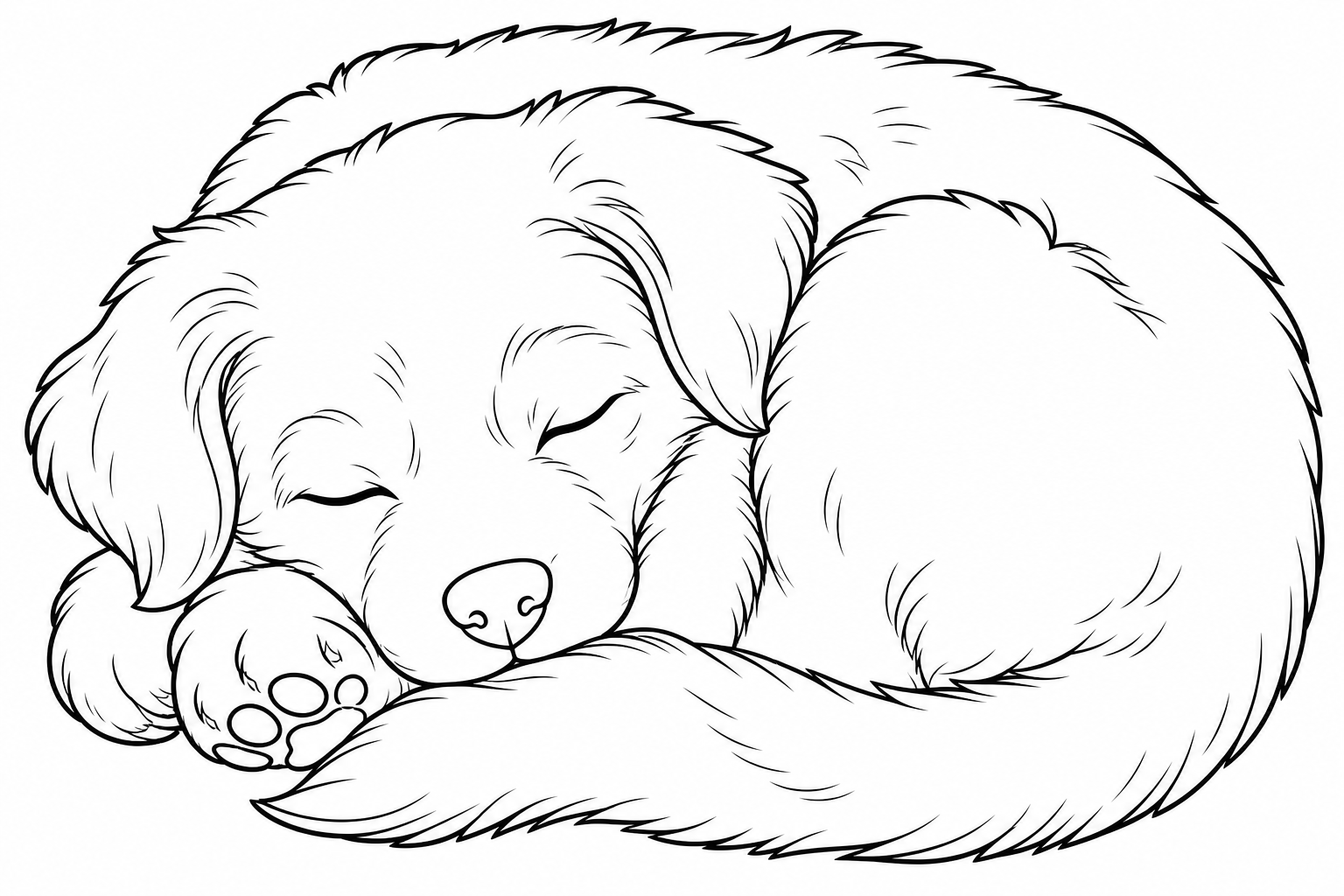
A curled-up animal does two jobs. It is one closed outline, so three or four big strokes make it look finished. And it is doing exactly what your child is doing, which a small child notices at once. "The cat is tired too" is a sentence you will hear.
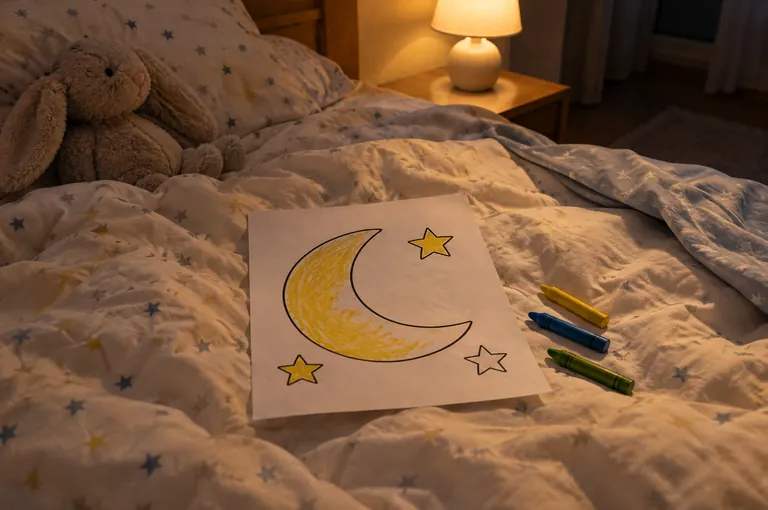
Finishing counts for more than neatness here. A page that is done in five minutes feels like something achieved on a day when nothing else is. It is the same rule that makes coloring before bed work: the page has to be small enough to finish before the energy runs out.
A three year old may color the whole cat in one color and call it done. That is a finished page; tape it up. A seven year old may give the puppy spots, a name and a collar. Both are right for day one.
What goes wrong: your child falls asleep halfway through the cat. That is the page working. Slide it off the blanket, put the crayon back in the box, and leave the half-colored cat on the table where it can be finished later. It will be.
On the first morning, a finished page beats a beautiful one.
Sitting up: the tray page
Somewhere around the second day, your child sits up. The tea arrives on a tray, with toast cut into triangles and an apple in slices, and the tray on the lap becomes a desk. This is when the felt tips come out of the box, and when the page can carry a little more.
The tray page shows exactly that: a cup on a saucer, a slice of toast, a bowl of apple slices, a folded napkin. Your child colors what is on their own tray. The game is to copy the real thing, so the cup on the page gets the colors of the real cup and the toast gets as brown as the real toast, which leads to a serious discussion about how brown toast really is.
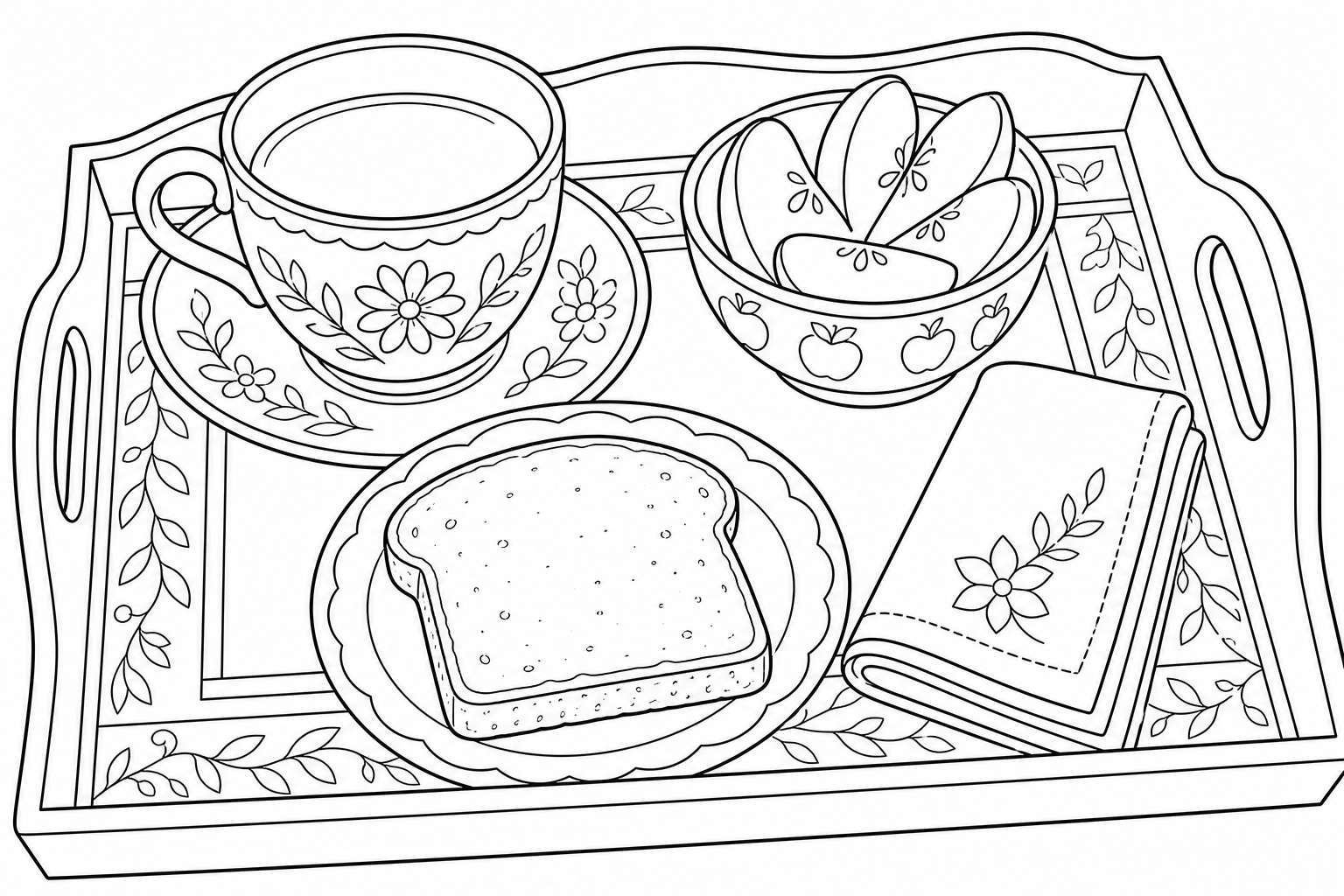
A three to five year old will mostly name things while coloring: cup, apple, bread, napkin. Let the naming be the activity, and the coloring follow it. A six to ten year old can design the pattern: invent a flower for the cup, a border for the napkin, a stripe for the tray. That is where the page turns into a small piece of design work without anyone calling it that.
Keep the felt-tip caps on the tray, in the saucer of the real cup if need be. And keep the drink on the far side: a sitting-up child with a pen in one hand reaches across the page with the other, and the tea always loses.
If your child slides back down under the blanket after ten minutes, they were not ready for the tray. Put the big cat back on top of the pile. Moving down a step is part of the plan, and it is why the piles stay in the box together.
The sofa afternoon: someone else needs looking after
Afternoons are the long part. Your child has slept, eaten something, and now lies there with energy for not very much and a strong wish for company. You still have the laptop, and the hours between two and five stretch.
The third pile turns the tables: the pages show someone else resting, and your child gets to look after them. A cat settled into a basket with a blanket. A kitten asleep with one paw over the edge. A grandparent and a child reading under a checked blanket.


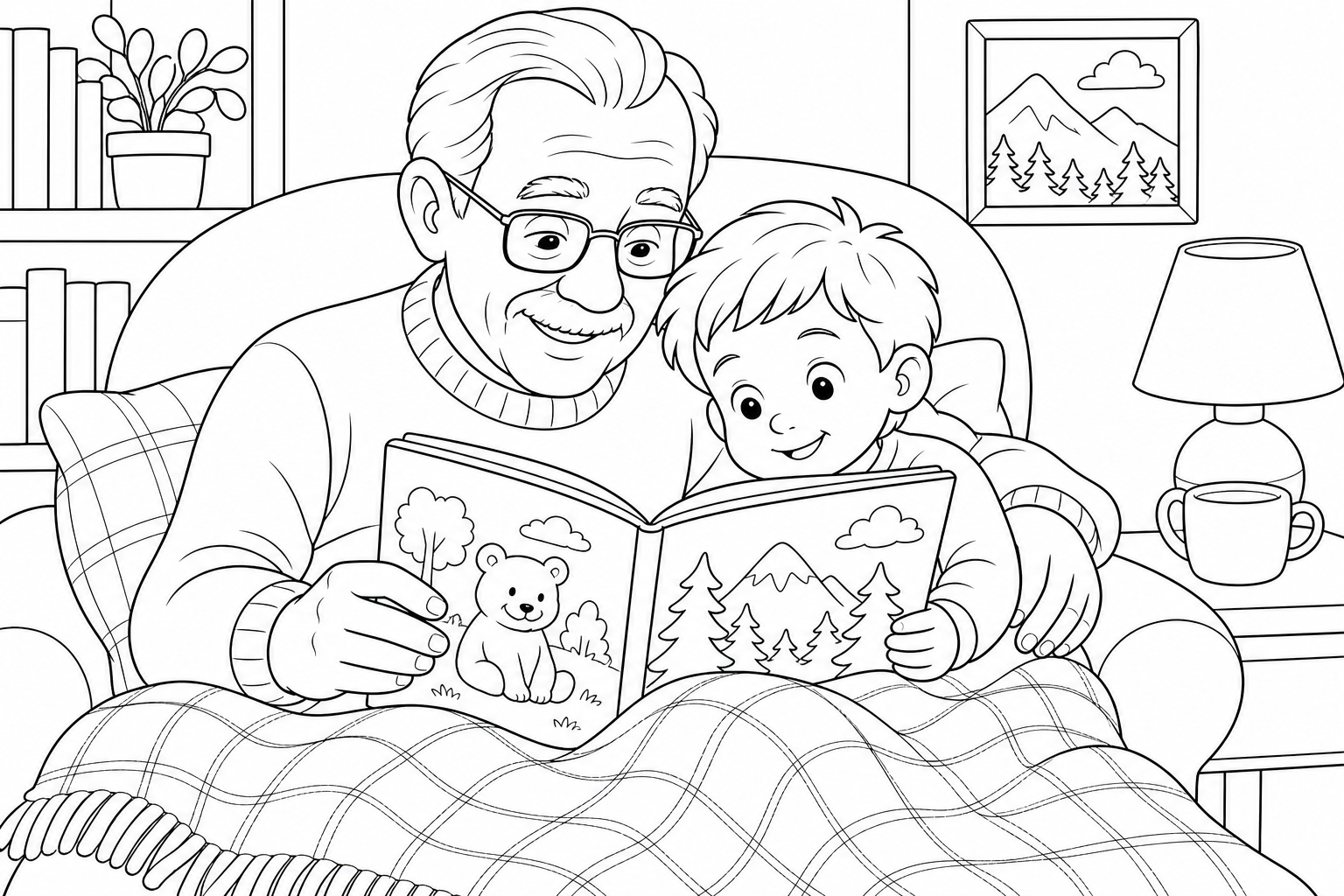
The idea is care. The cat's blanket gets the same colors as the sofa blanket. The kitten's basket gets a pillow drawn in. Your child decides who is warm enough. A conversation from a real sofa:
"Is the kitten sick?"
"No. She is just having a quiet day, like you."
"Then she needs my blanket colors."
The grandparent page has the most detail of the three, so it suits a six to ten year old, or a younger child working next to you for ten minutes. It also travels well: a photo of the finished page sent to the real grandparent gets an answer within the hour, which is a small event in a long afternoon.
If there is a healthy sibling, they come home from school at three and want in. Give them a page from this pile too and sit them at the other end of the sofa. Two children coloring the same cat in two different colors is the most peaceful half hour a sick day has. The healthy one keeps their own crayons, so the box stays the patient's box.
The fort day: nearly better
You know the day. The mood in the room has changed, and your child is suddenly upside down on the armchair, asking what there is to do. They are well enough to be bored and not yet well enough for school. This is the day the kit was saving its best pile for.
Build the fort first, then color inside it.
- 1Put two chairs back to back, a little apart, and throw a big sheet over them. Clip the corners to the backrests with clothes pegs.
- 2Push cushions inside and put the shoebox in the far corner, so the kit lives in the fort today.
- 3Hand over a flashlight. Even in daylight, a fort has a dark corner, and coloring by flashlight is a different thing altogether.
- 4Color the fort page inside the fort, then tape it to the outside of the sheet as the fort's own picture.
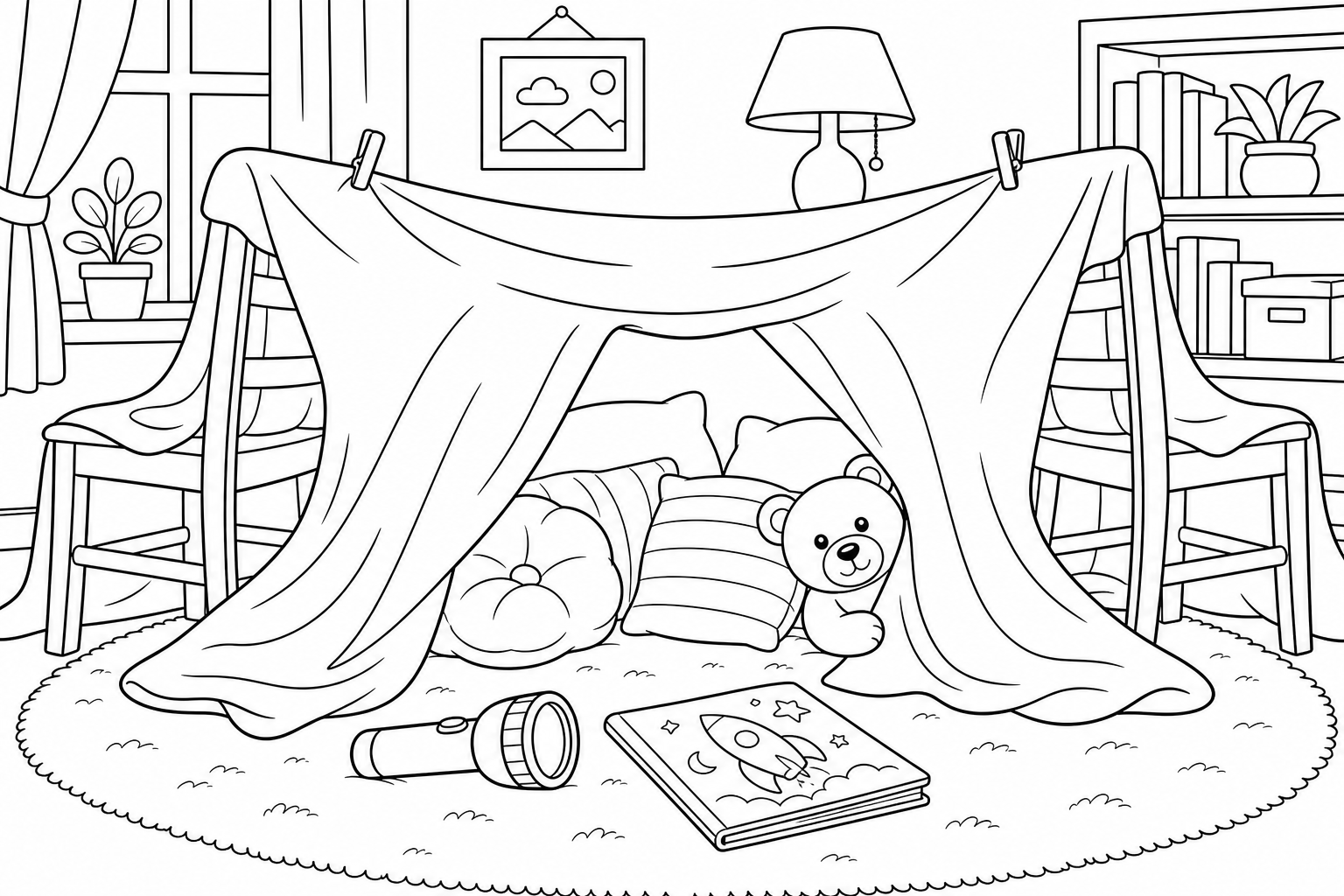

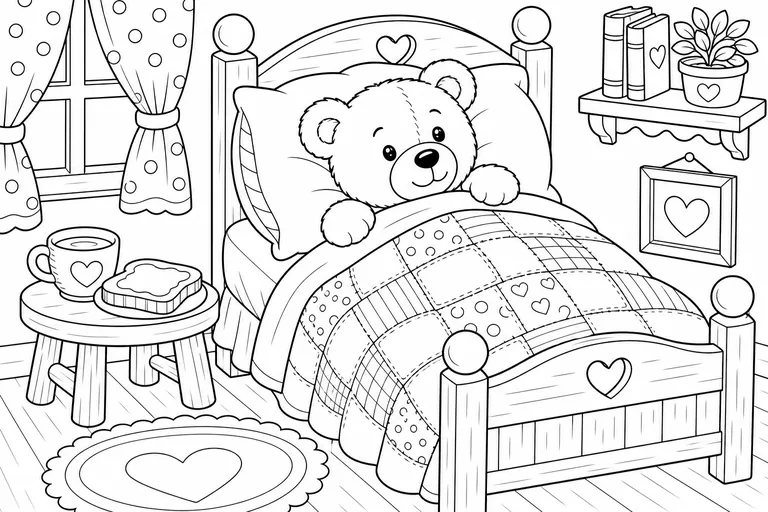
The fort page has a teddy peeking out of the entrance, which three to five year olds tend to recognize as their own teddy, so make sure the real one is inside the real fort too. Six to ten year olds want more on this day: more detail, longer pages, a page that takes an hour. That is a good sign, and it is where the kit can borrow from the rest of the catalog.
What else could you color?
Pick a prompt or type your own — opens in a new tab.
Pick one long page for the last afternoon and let it run. A child who spends forty minutes on the scales of a dragon has found the end of the sick day on their own.
When the kit goes back in the box
On the last evening, the box gets restocked. Colored pages go on the wall by the sofa or on the fridge for a few days, then into a folder. The empty piles get fresh prints. The new thing that came out on the worst morning gets replaced by another new thing, so the next sick day starts with a surprise too.
Leave the kit for sick days only. Rainy afternoons have their own tricks, and a box that comes out every week stops being the sick-day box. Put it back on the high shelf, lid on.
"Do I have to go to school tomorrow?"
"Yes. The cat stays here and keeps the blanket warm."