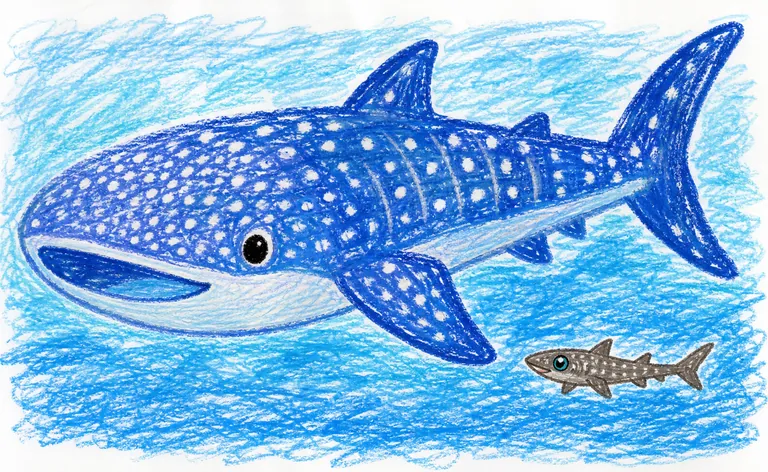
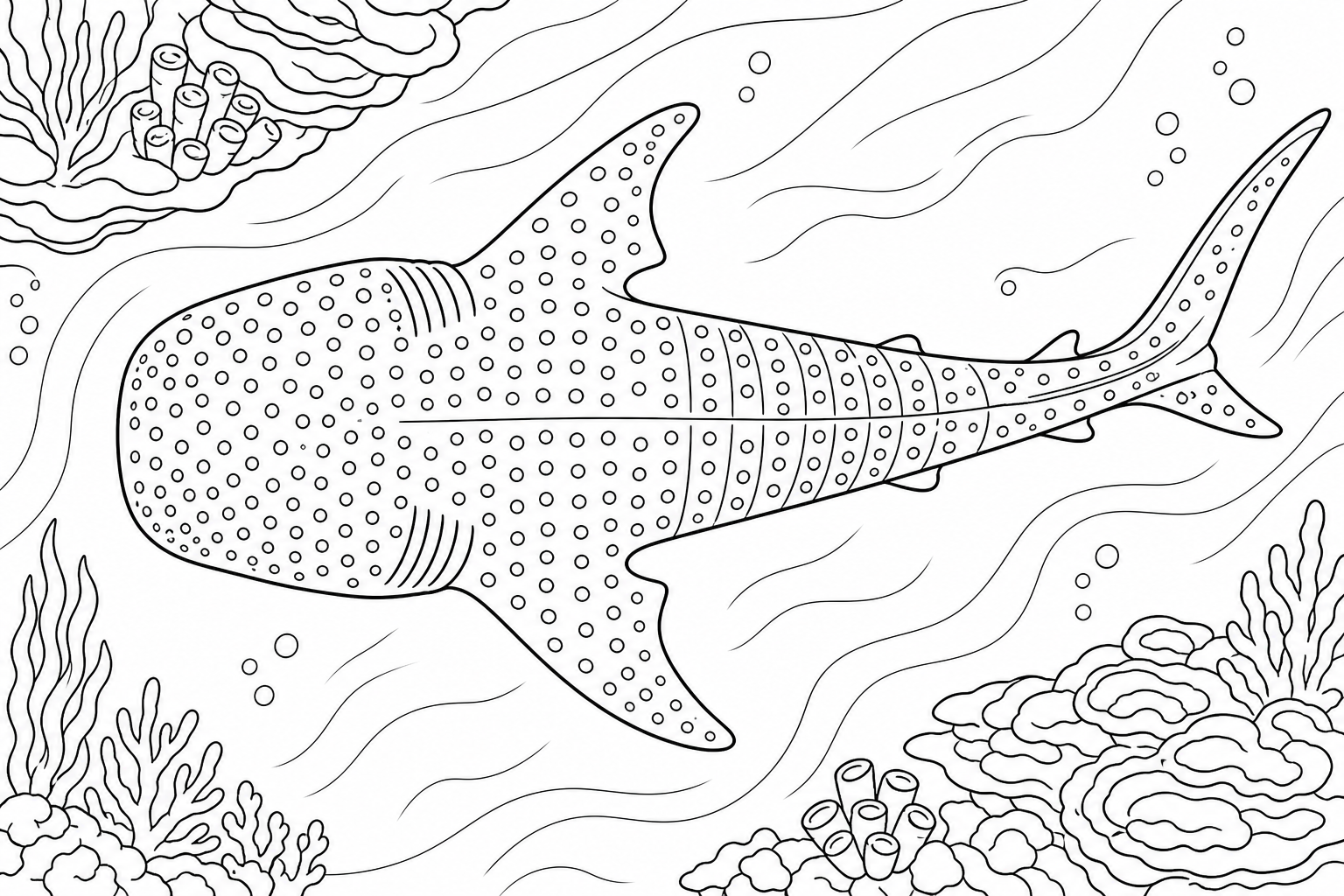
The biggest shark in the ocean is longer than a school bus, and it eats things smaller than your fingernail. The whale shark reaches around 12 meters and feeds by drifting through clouds of plankton with its mouth wide open. No teeth doing any real work. Just a slow, spotted giant minding its own business.
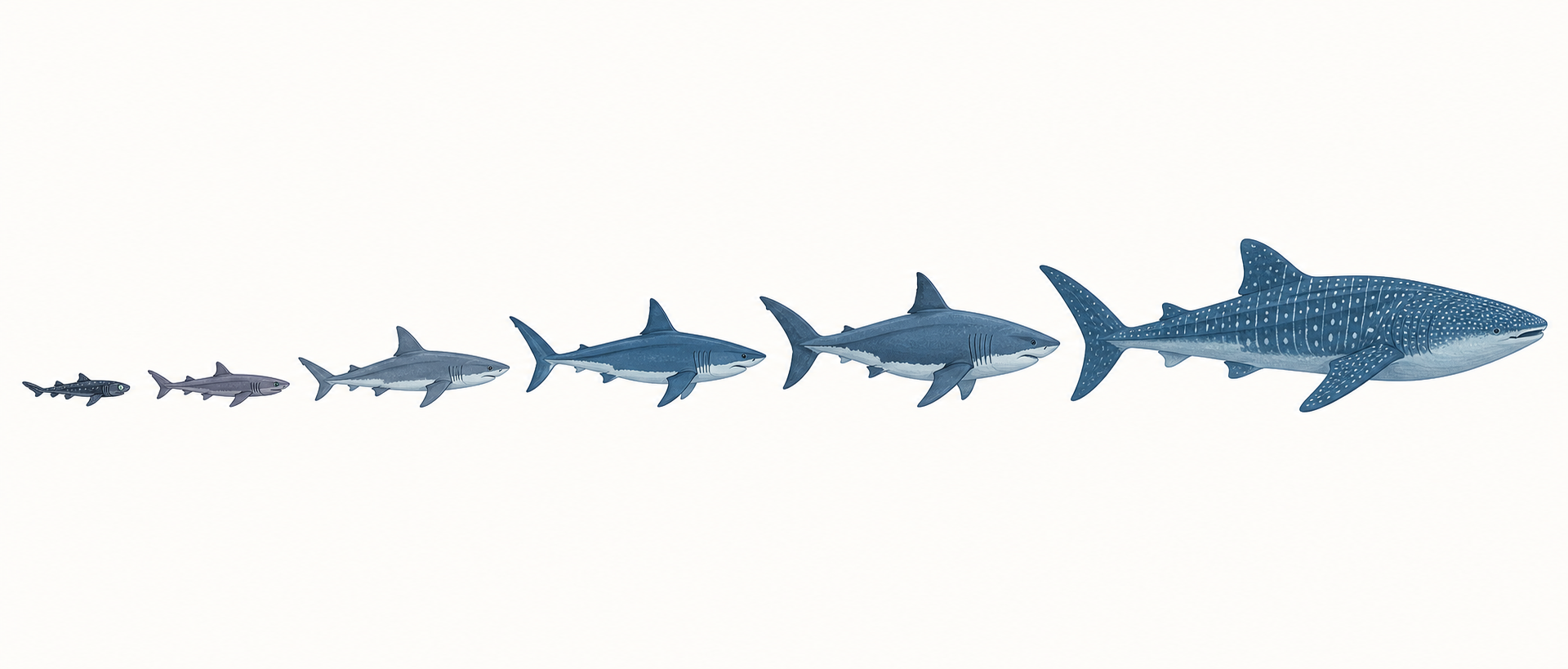
That gap is the whole fun of sharks. Say the word and most kids picture one snapping mouth, all teeth. "Shark" actually covers a long ladder of animals, from that bus-length filter feeder down to one that would curl up in your palm. These pages walk down that ladder, biggest to smallest, so coloring becomes a way to feel the range.
The giants that barely notice you
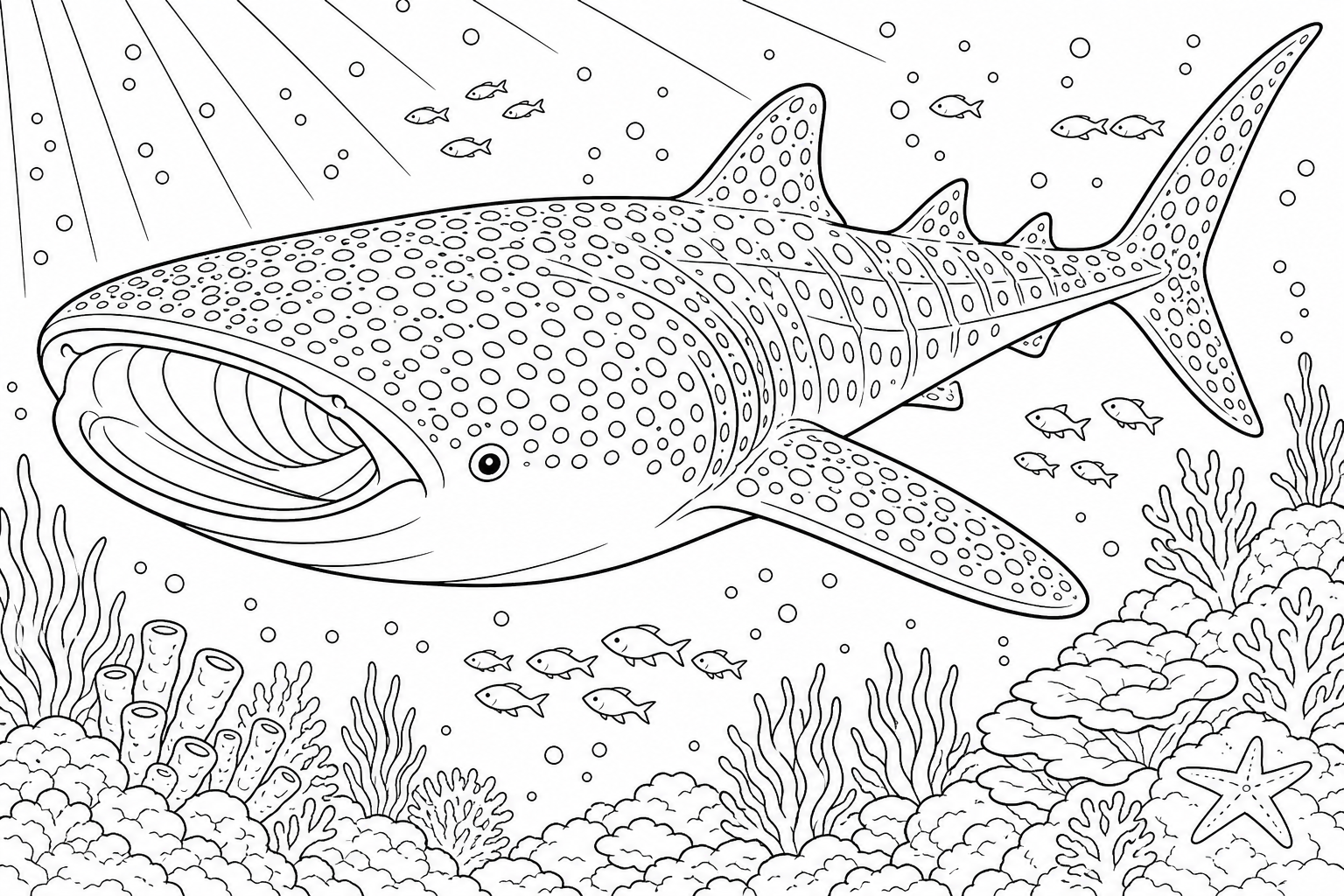
At the top of the ladder sit the filter feeders. The whale shark leads, a broad body scattered with pale spots, cruising along with a wide flat mouth. The basking shark comes next, mouth gaping like a scoop as it strains the water for tiny food. Both are huge. Neither has any interest in you. Coloring them lets kids make something enormous feel calm: soft blues down the back, a spray of light spots, a wash of green water around the fins.
The ones everyone draws first
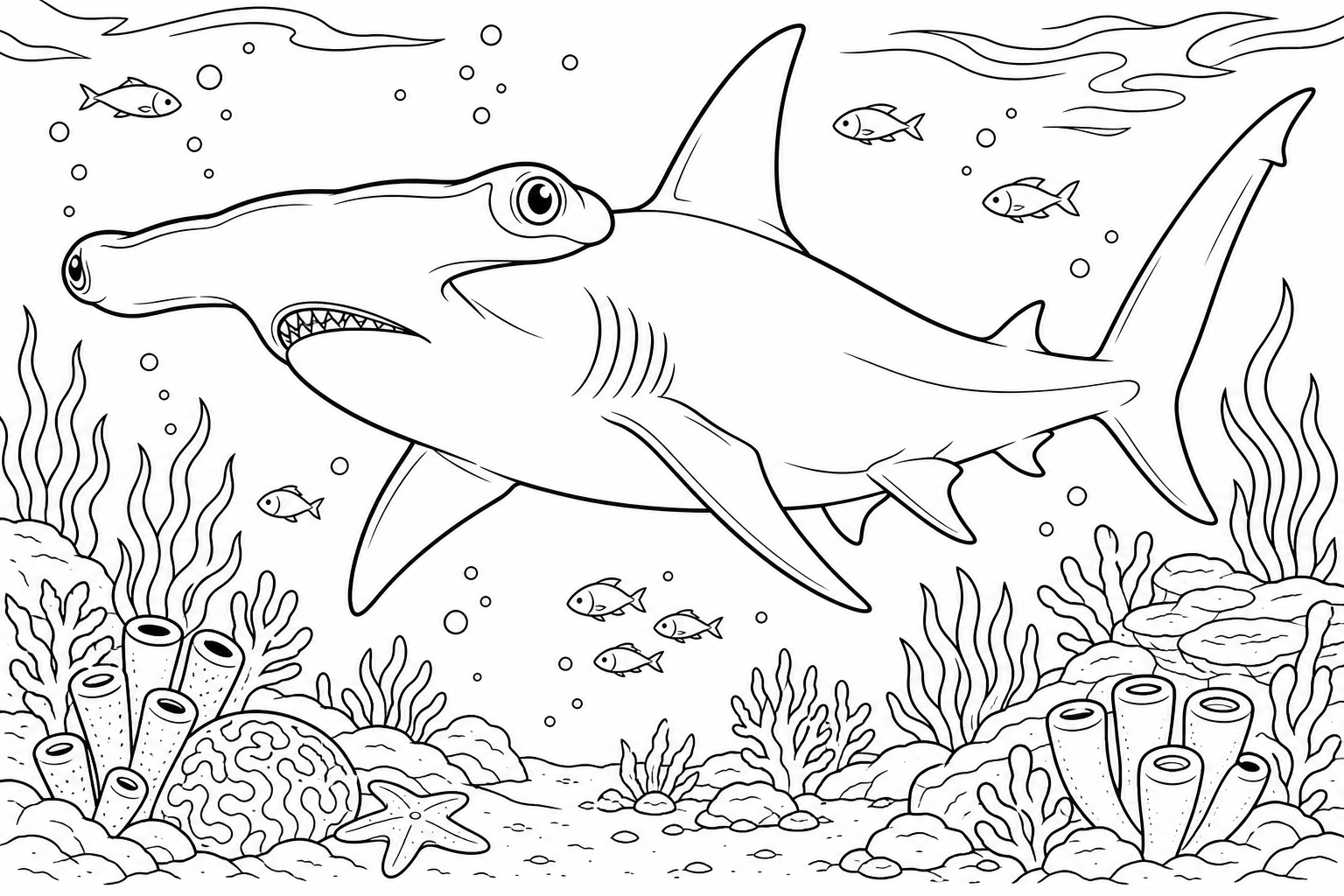
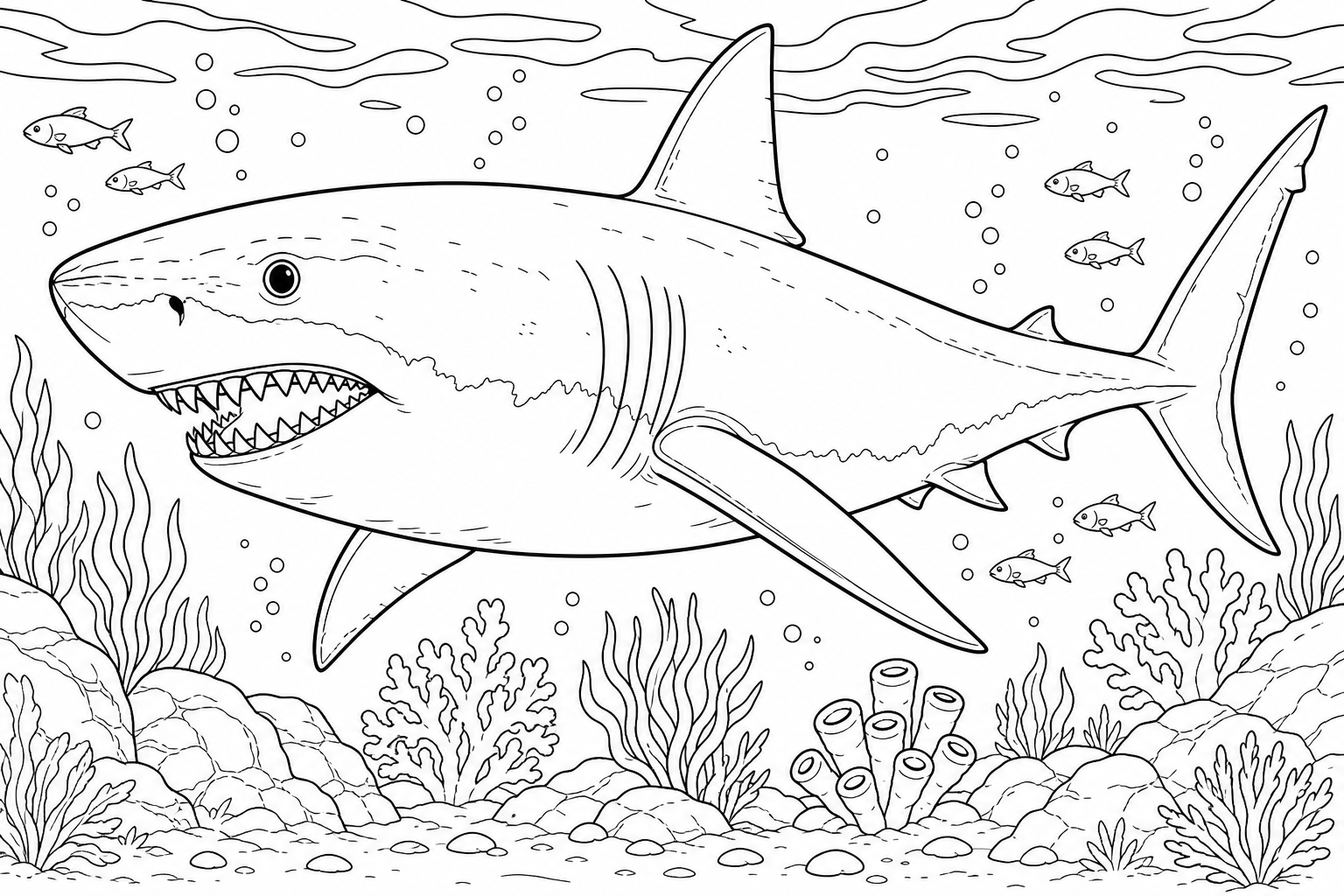
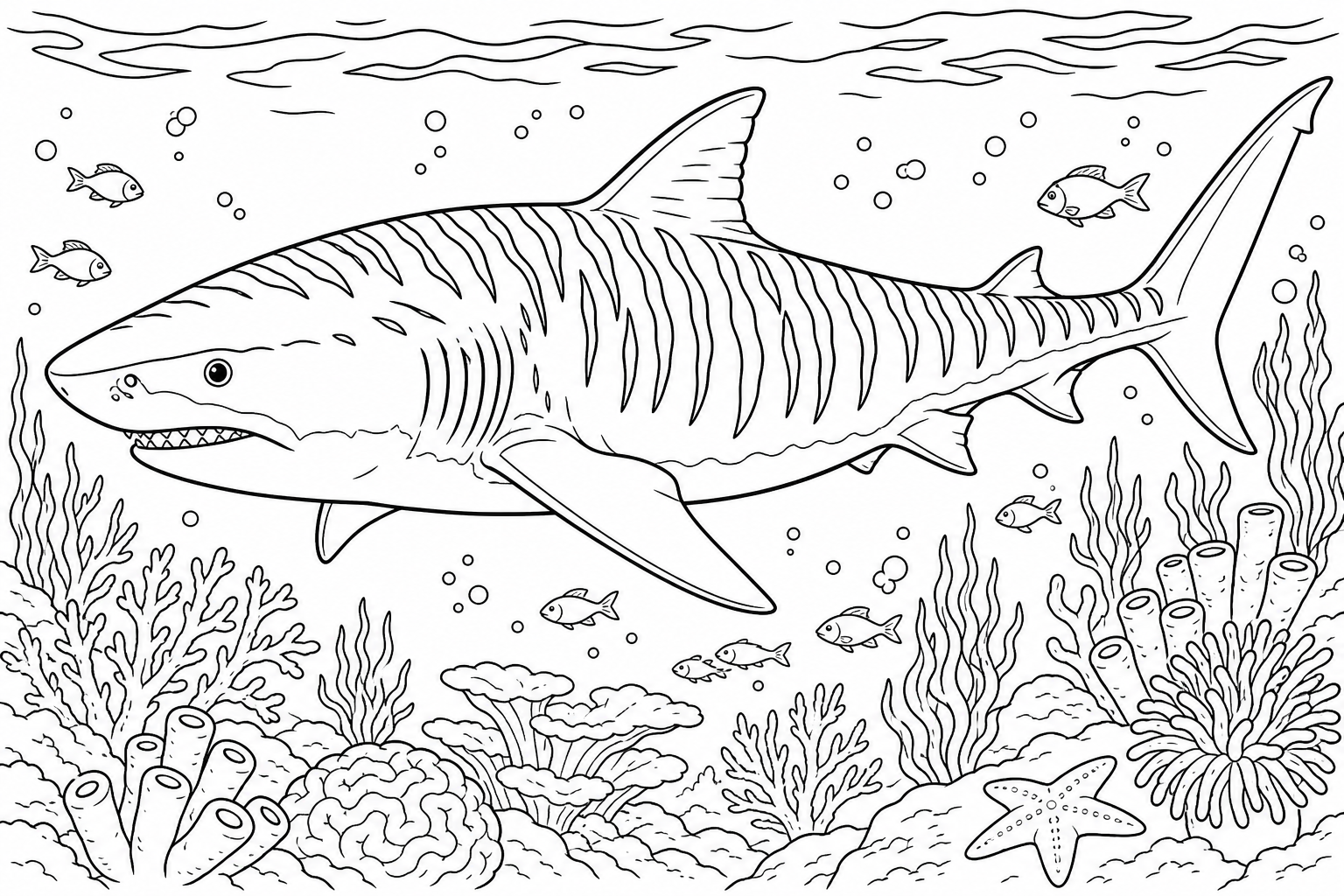
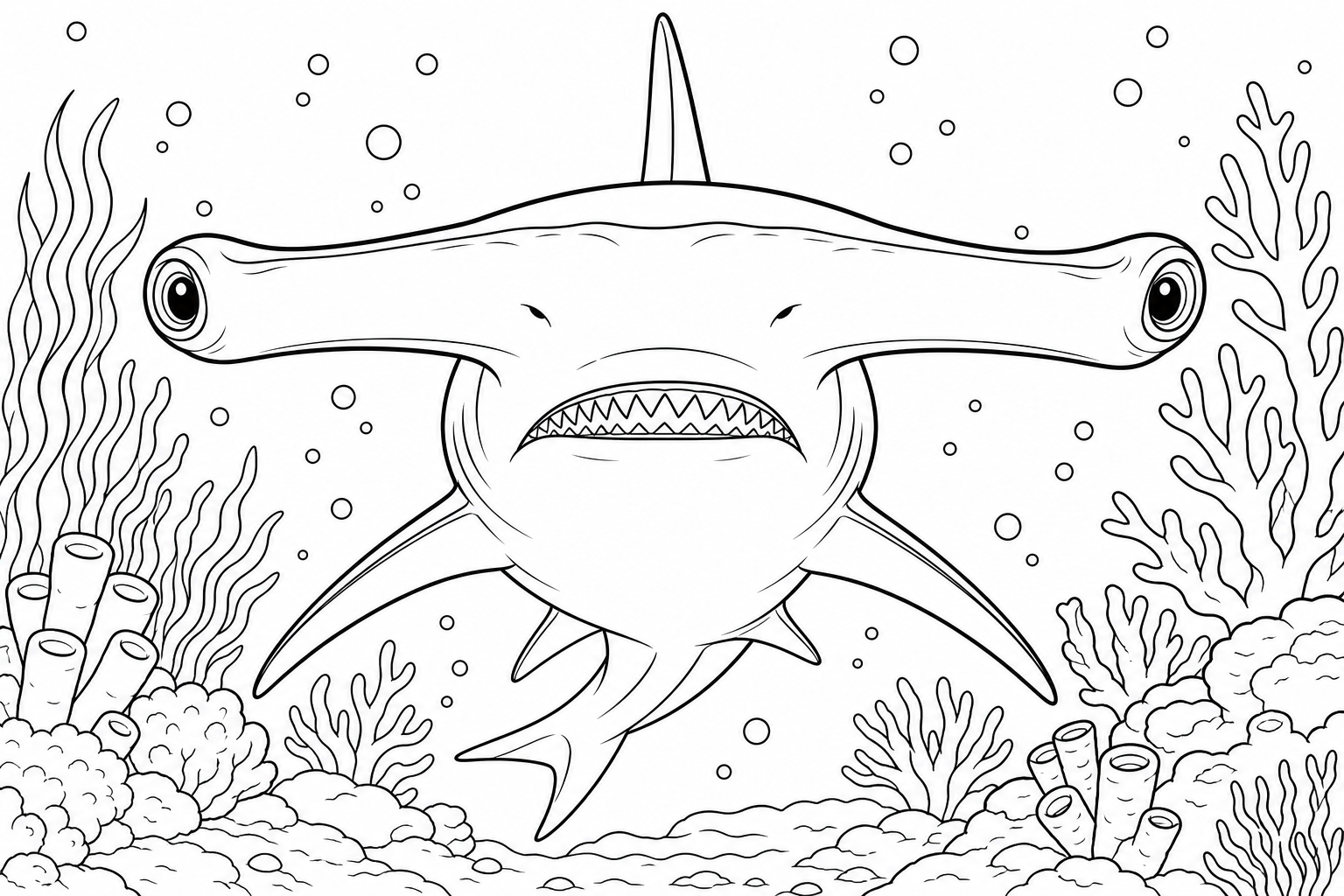
These are the sharks from the posters. The great white has the shape most kids reach for straight away: a torpedo body, a tall triangle of a fin, and that famous row of teeth. The tiger shark wears dark bars down its sides, which fade as it grows older. The hammerhead is the strange one, its head flattened into a wide bar with an eye at each end, swept low over the sand to hunt. Three very different outlines, all of them satisfying to fill in.
How the sizes actually stack up
Side by side, the range is hard to believe. The Smithsonian's shark size chart lays out just how far apart the largest and smallest sharks really sit.
| Shark | About how long | Roughly as long as |
|---|---|---|
| Whale shark | 12 m | A school bus |
| Basking shark | 8 m | Two cars end to end |
| Great white | 5 m | A family car |
| Tiger shark | 4 m | A small car |
| Hammerhead | 4 m | A small car |
| Dwarf lanternshark | 20 cm | A pencil |



Coloring fun for kids — anywhere.
Free for iOS & Android. No ads, no sign-up, offline-ready.


Coloring fun for kids — anywhere.
Free coloring app for kids. iOS and Android, phones and tablets. No ads, no sign-up, even offline.
The calm sharks of the reef
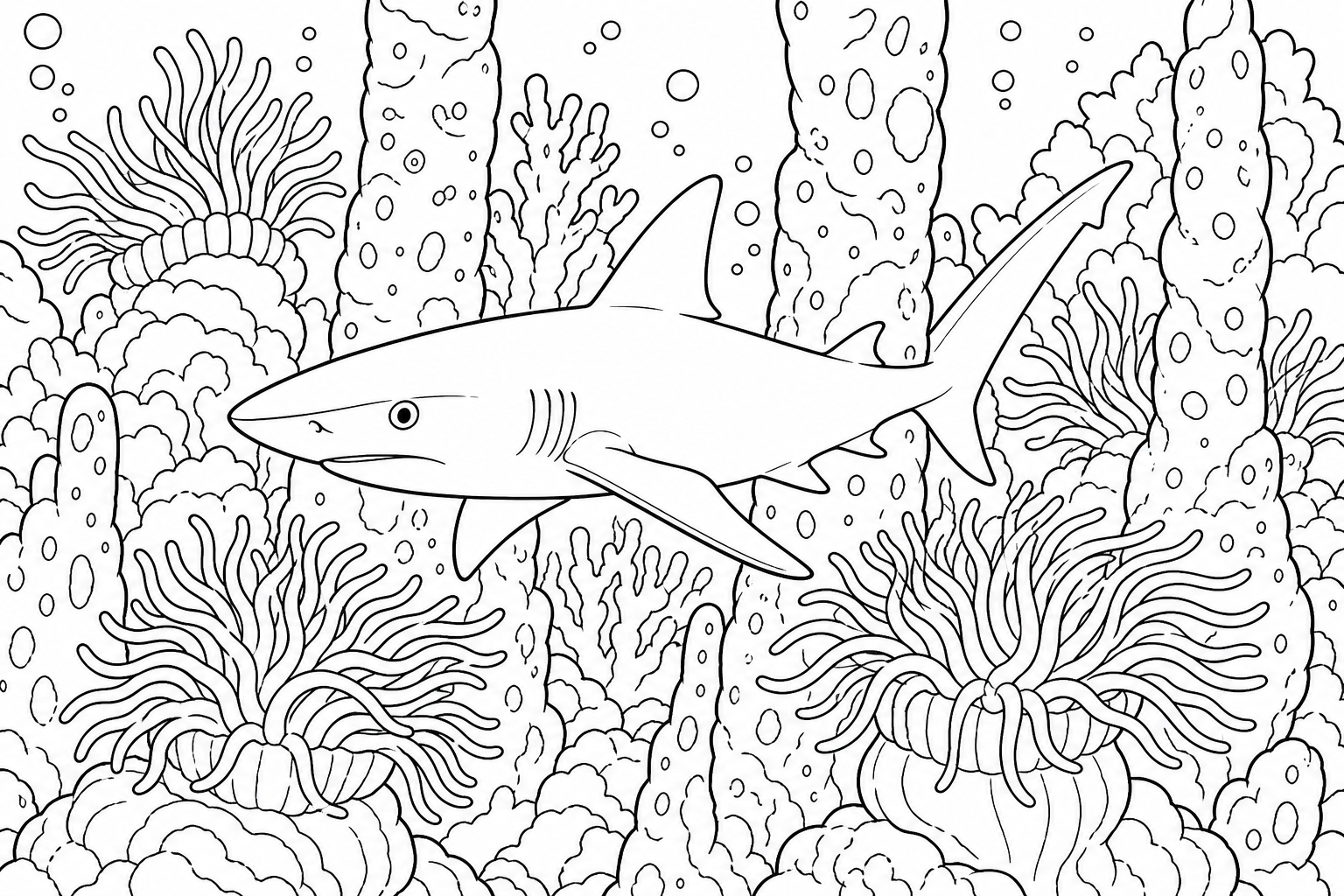
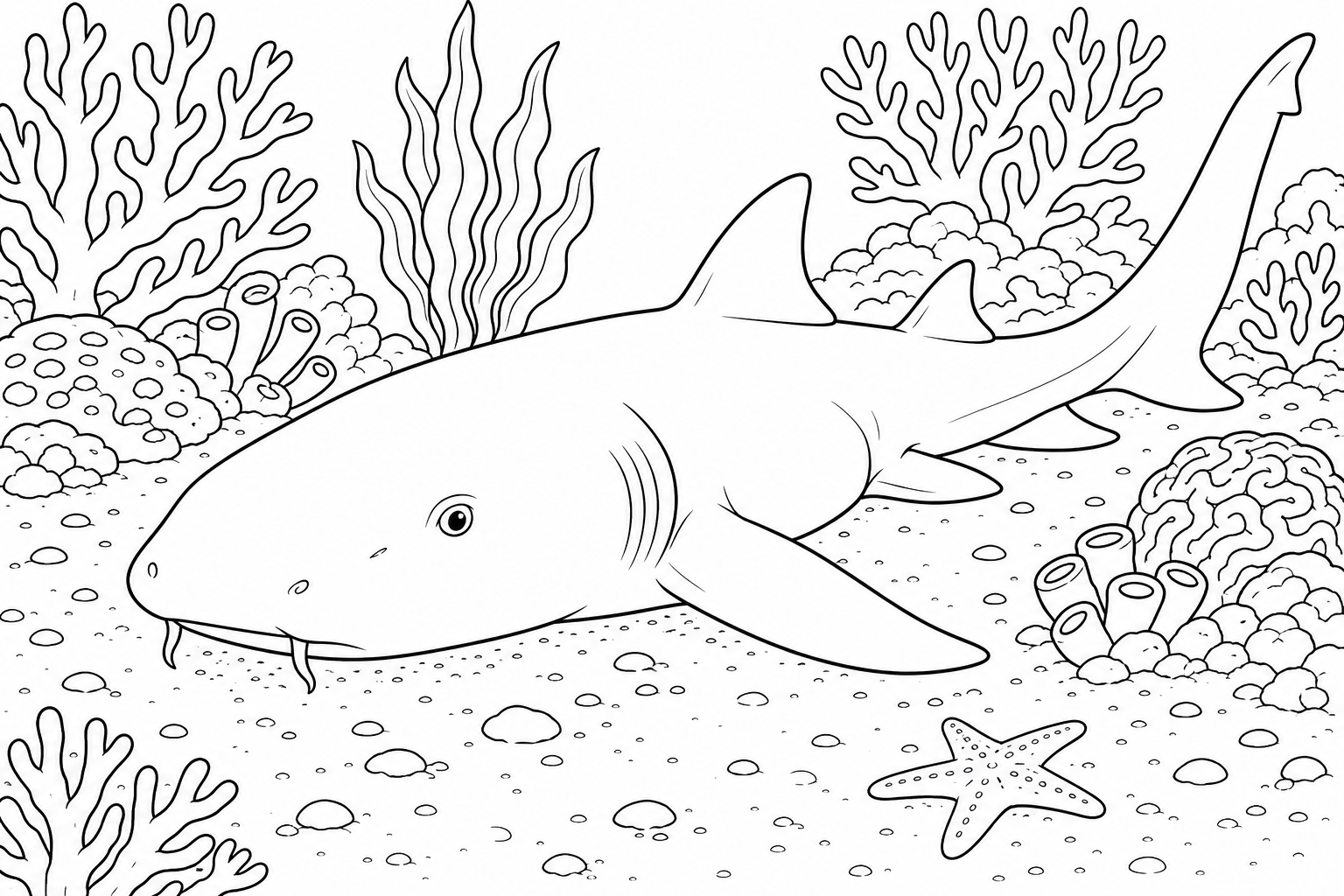
Between the giants and the tiny ones swim the sharks a snorkeler is most likely to actually meet. Nurse sharks spend the day resting on the seabed, two little whiskery barbels by the mouth, looking more sleepy than fierce. Blacktip reef sharks cruise the shallows over coral, their fin tips dipped in black as if they were painted on last. Gentle scenes to color: a sandy floor, a reef behind, a shark simply passing through. For everything else that shares that water, the fish, the coral, the tide pools, our under the sea coloring pages set fills it in.
The sharks small enough to hold
At the bottom of the ladder are the sharks almost nobody pictures. The dwarf lanternshark runs about the length of a pencil, with big round eyes, and parts of its underside give off a faint glow in the deep dark water. Several pocket-sized sharks live down there with it. Color one on the same page as a great white and the point makes itself: these are all sharks.
What else could you color?
Pick a prompt or type your own — opens in a new tab.
Print your own shark size ladder
Print a handful from each rung, line them up biggest to smallest along the floor or across the fridge, and let the size gap tell the story. Here is the full set to start from.