Your seven-year-old has been watching nature documentaries for three weeks. You can recite the gestation period of a humpback whale. The library books are overdue. Yesterday she asked, with real concern, whether anyone has ever met a giant squid in person.
You need an ocean-themed activity. Quiet, hands-on, sturdy enough to outlast bedtime. A coloring page fits, but only if you pick the right one. Hand a deep-sea kid a generic smiling fish and you'll get the look. Hand a toddler a hyper-detailed coral reef and you'll get a brown blob in the middle of the page and tears.
This guide sorts ocean coloring pages by what your kid is actually obsessed with. Four flavors. Pick yours.
What makes an ocean coloring page right for your kid
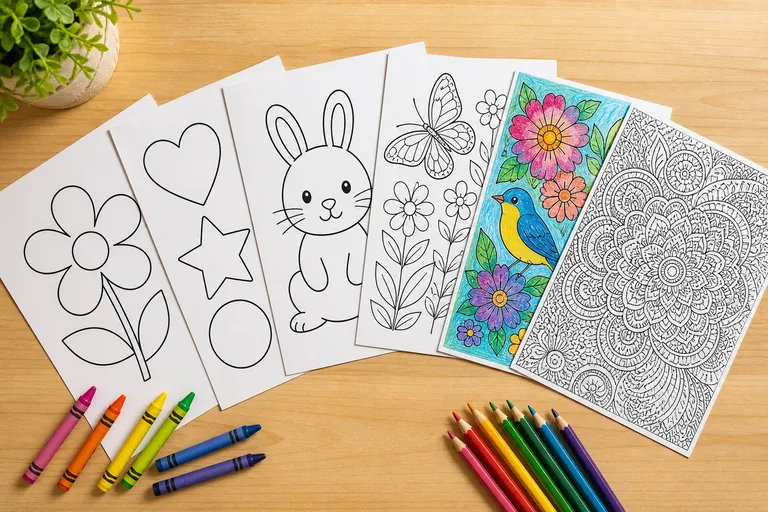
Ocean themes range wider than most parents realize. A sea-creature page can be a single cheerful fish for a two-year-old or a labyrinthine coral scene that takes a determined nine-year-old most of a Saturday. Picking well means matching three things: the complexity of the line work, the specific creatures involved, and the mood the kid is in.
Complexity is the obvious one. Toddlers do best with one large central subject and very few small details. Older kids want enough going on that they can spend twenty minutes on a single corner of the page.
The creature matters more than parents expect. A kid who lights up at sharks will sit and color a shark page for an hour. The same kid hands back a starfish page after thirty seconds. Don't fight it. Hand them what they're already chasing.
Mood is the wildcard. Some afternoons call for vibrant tropical chaos. Some call for one quiet whale gliding through a near-empty page. Read the room.
Reef fans: bright, busy, lots of small fish
These are the kids who got hooked on Finding Nemo and never let go. They want color. Lots of creatures sharing one frame. Pages where every square inch has something happening.
Reef pages work best for ages six and up, because the small fish-shapes and anemone tentacles need a steady hand and a willingness to color tiny spaces without giving up.
A small thing that helps: give a reef-loving kid more than three colors. Twelve to twenty-four. Reef pages are the one situation where a big crayon box pays off, because the kid will actually use the dusty pink and the teal and the orange-yellow that normally just sit there.
Gentle giants: whales, dolphins, sea turtles
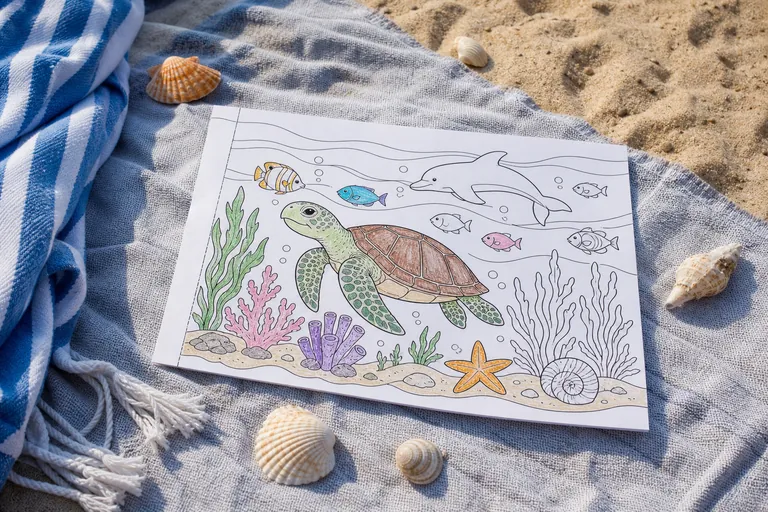
This is the calm category. One large, recognizable creature. Soft, sweeping lines. Plenty of negative space.
Gentle giants work for nearly every age. A toddler can fill the body of a whale in giant satisfying strokes. A nine-year-old can render fine water-texture detail in the surrounding waves. Same page, different result, both happy.
If your kid is in a tough mood, this is the category to reach for. The slow, repetitive coloring of one big shape does the same thing for kids that watching a fish tank does for grown-ups. The calming effect of ocean scenes lines up cleanly with what we cover in Why Coloring Reduces Stress (And How to Start in Minutes), and it tends to be the part parents already notice at the kitchen table without needing the research.
Tide pool detectives: crabs, starfish, hermit crabs
If your kid is the one who insists on stopping at every rock pool on a beach walk, this is their category. Tide pool pages are dense but discrete. A crab over here, a starfish there, an anemone in the corner. Each one is a small puzzle to be solved.
These work brilliantly for kids who like sorting and systems. They will color all the crabs red. Then all the starfish orange. Then negotiate with you about whether the seaweed should be the same green as the kelp or a different green. Let them. The negotiation is the activity. If you've already used our 25+ Cloud Coloring Pages for Calm, Daydreamy Afternoons with Kids for quiet afternoons, tide pool pages slot into the same role on slightly louder days.
Tide pool pages are also good for waiting rooms, long restaurant meals, and any context where you need the kid focused but not in a focused-on-one-thing-for-thirty-minutes way. The variety inside one page keeps a fidgety kid moving without leaving the page.
Deep sea explorers: jellyfish, anglerfish, mysterious creatures
The deep-sea kid is its own species. They want the weird animals. The bioluminescent ones. The ones with too many eyes. If your kid has asked a clarifying question about giant squid in the last week, you have a deep-sea explorer.
These pages can be tricky to get right. Too cute and they feel insulting. Too detailed and they're frustrating. The sweet spot is recognizably weird subjects, drawn with enough specificity that the kid can name what they're looking at.
A small piece of advice: ditch the ocean palette. Real deep-sea creatures are pink, transparent, bright red, electric purple. Tell your kid this and watch their face. The permission to ignore the expected blue-and-green ocean colors is the entire appeal. Pair the page with a quick five-minute clip from a documentary and the kid will be telling you facts about lanternfish for the rest of the week.
Common mistakes parents make
A few patterns we see often, that parents could skip:
Pushing a calming ocean coloring page on a kid who is wound up. Coloring isn't a magic off-switch. If the kid needs to burn energy, a coloring page is not what they need first. After they've run around for fifteen minutes, sure. Not before.
Buying a big themed pack and assuming any page will do. A reef kid will reject a starfish page, every time. Spend the two minutes upfront to match the page to the obsession.
Asking the kid to stay in the lines. Skip this. The lines are guidance, not a grade. Toddlers especially will color across the lines and then look at you for the reaction. Make it a non-event.
Pulling the page away when it's messy. Half-colored pages with one perfect crab and a chaotic background are normal. The kid is learning where to invest effort. That's a feature.
If you want a deeper look at how ocean pages work after a long summer day, our 25+ Summer Coloring Pages Kids Will Love All Season Long roundup covers the wider context, but the pages above are the place to start.
The full ocean collection
If you want to browse without committing to a category, here's the whole set in one place.
FAQ
Are ocean coloring pages good for toddlers?
Yes, but pick simple ones. A single large whale, dolphin, or smiling fish works much better than a detailed reef scene. For under-3s, the goal isn't accuracy. It's the experience of dragging a crayon across a recognizable shape. A toddler who scribbles a giant whale entirely in purple has done the activity correctly. Praise the effort, not the outcome.
What age is right for detailed coral reef coloring pages?
Six and up, generally. Reefs need patience with small spaces. A four-year-old will try one and get frustrated within five minutes. A six-year-old can usually hold focus for fifteen to twenty minutes on a busy page, and an eight-year-old can spend a quiet hour on a single reef if the mood is right.
Are markers or crayons better for ocean coloring pages?
Crayons for under-5s, no debate. Less mess, no bleed through. From around five or six, washable markers start being worthwhile, especially for reef pages where the bright saturated color pays off. Avoid permanent markers under age eight unless you really trust the kid and the kitchen table.
How long should a coloring session last?
Whatever the kid wants. Ten minutes is a normal session for a four-year-old. Forty-five minutes is normal for an eight-year-old on a page they love. If the kid stops, they stop. Don't push. The page will be there tomorrow.
Can you use ocean coloring pages for a beach trip or pool day?
They're great in a beach bag. Wait-time at restaurants, the car ride home, the post-swim hour when everyone is wiped out but it's too early for bedtime. Pre-print four or five and stash them in a folder. Crayons in a small tin. Done.
Do ocean coloring pages help kids learn about marine life?
A little, but don't oversell it. Coloring a sea turtle doesn't teach a kid biology on its own. What it does is keep the kid focused on the shape and details of one animal long enough that, if you happen to be talking about that animal at the same time, the information actually lands.
If you're sitting at the kitchen table watching your child color a humpback whale for the third time this week, you're doing parenting right. Print the next one. Keep going.