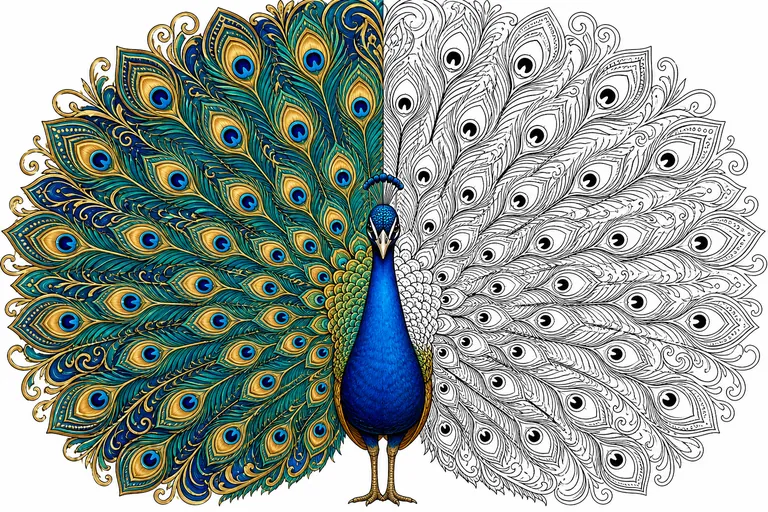
A peacock keeps its best trick folded up. Most of the day the long feathers trail behind it like a closed umbrella sweeping the ground. Then the bird turns, lifts them, and a tall wall of shimmering eyes fans open above its head. That is the moment kids want on paper.
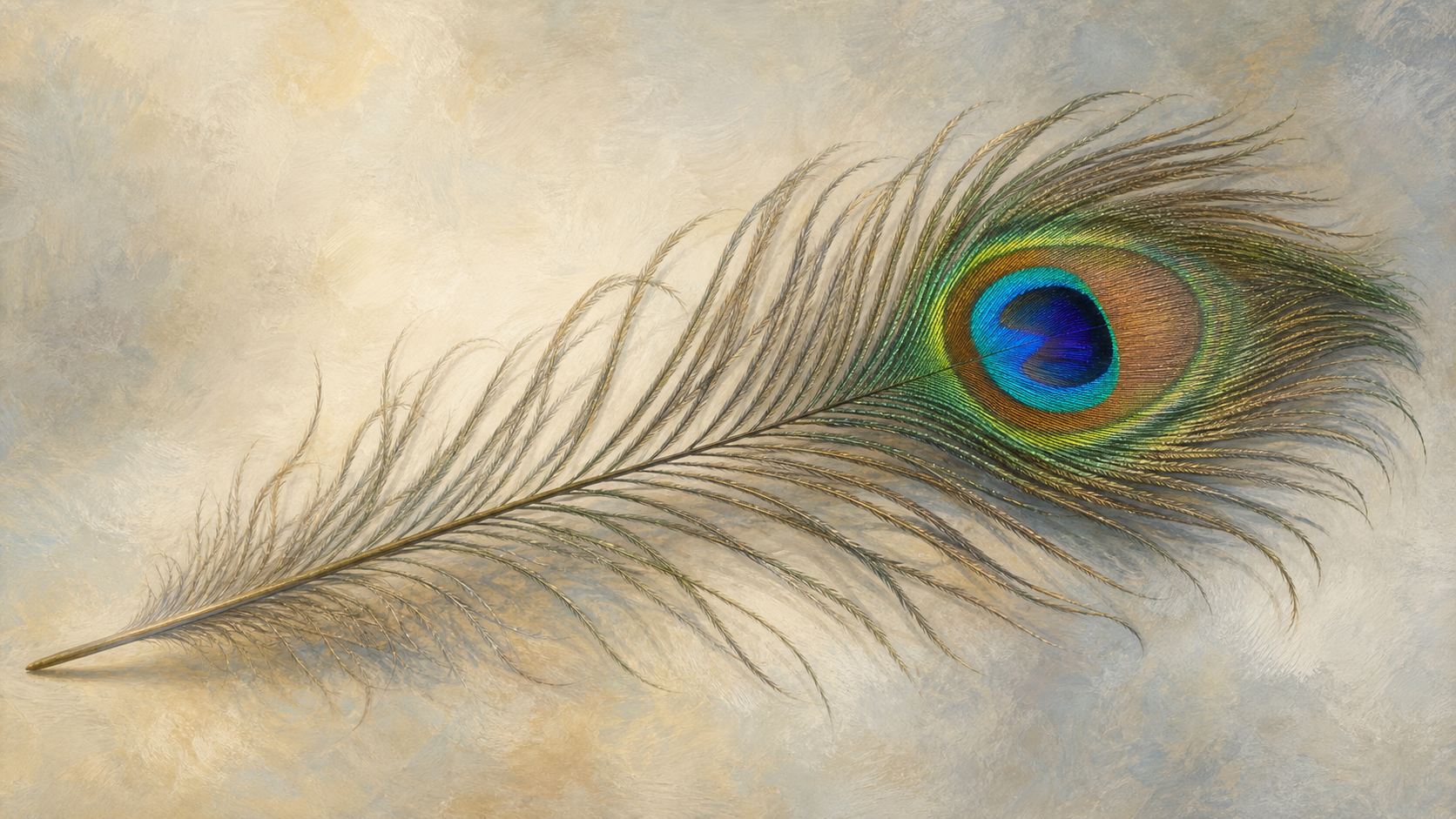
Here is the strange part. Those famous blues and greens are not paint. A peacock feather holds almost no blue or green coloring at all. The shimmer comes from microscopic structures inside the feather that bend light, so the color you see depends on the angle and on where you happen to be standing. Tip a feather one way and the blue slides toward green. Get it wet and the whole thing turns plain brown.
Start at the crest
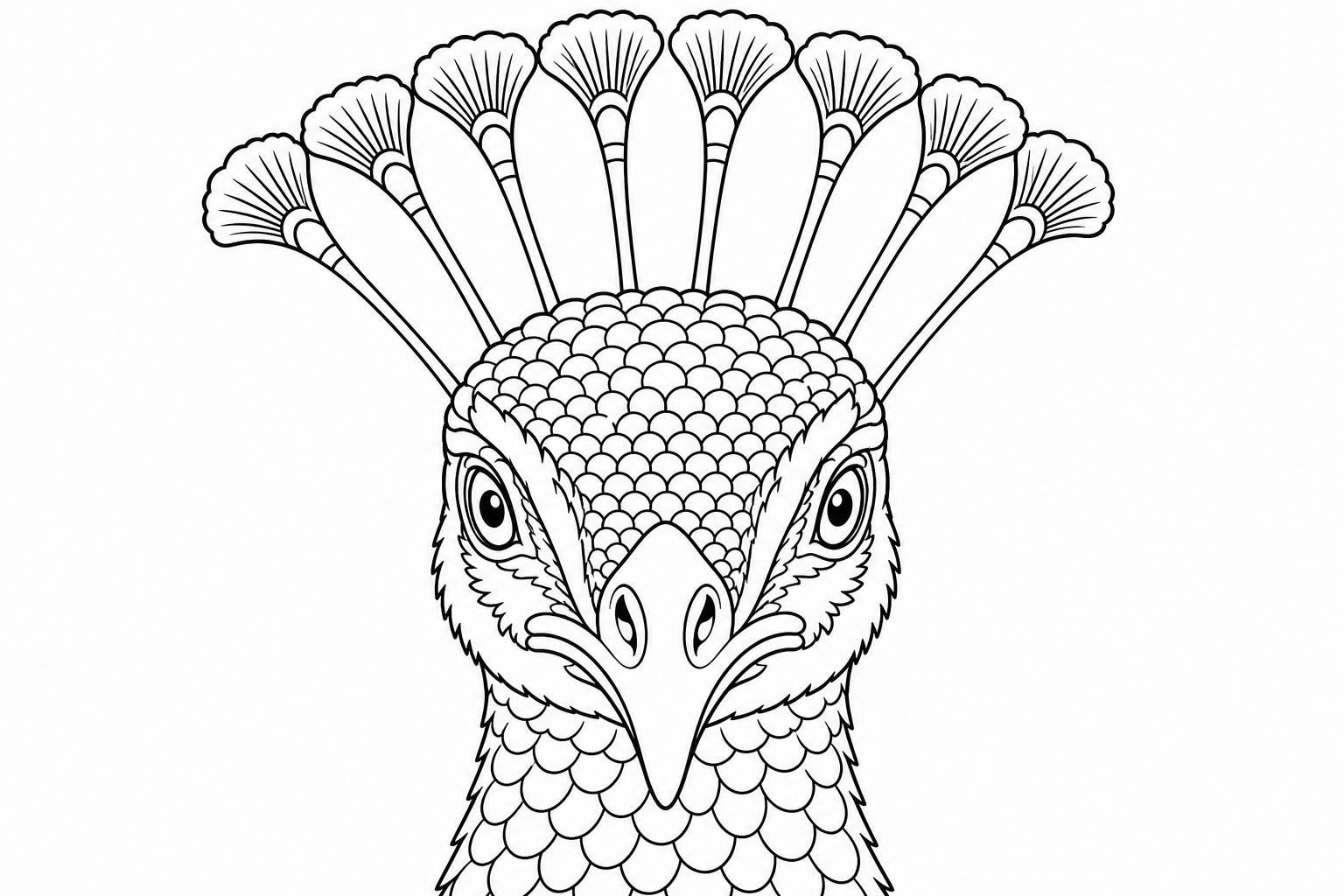
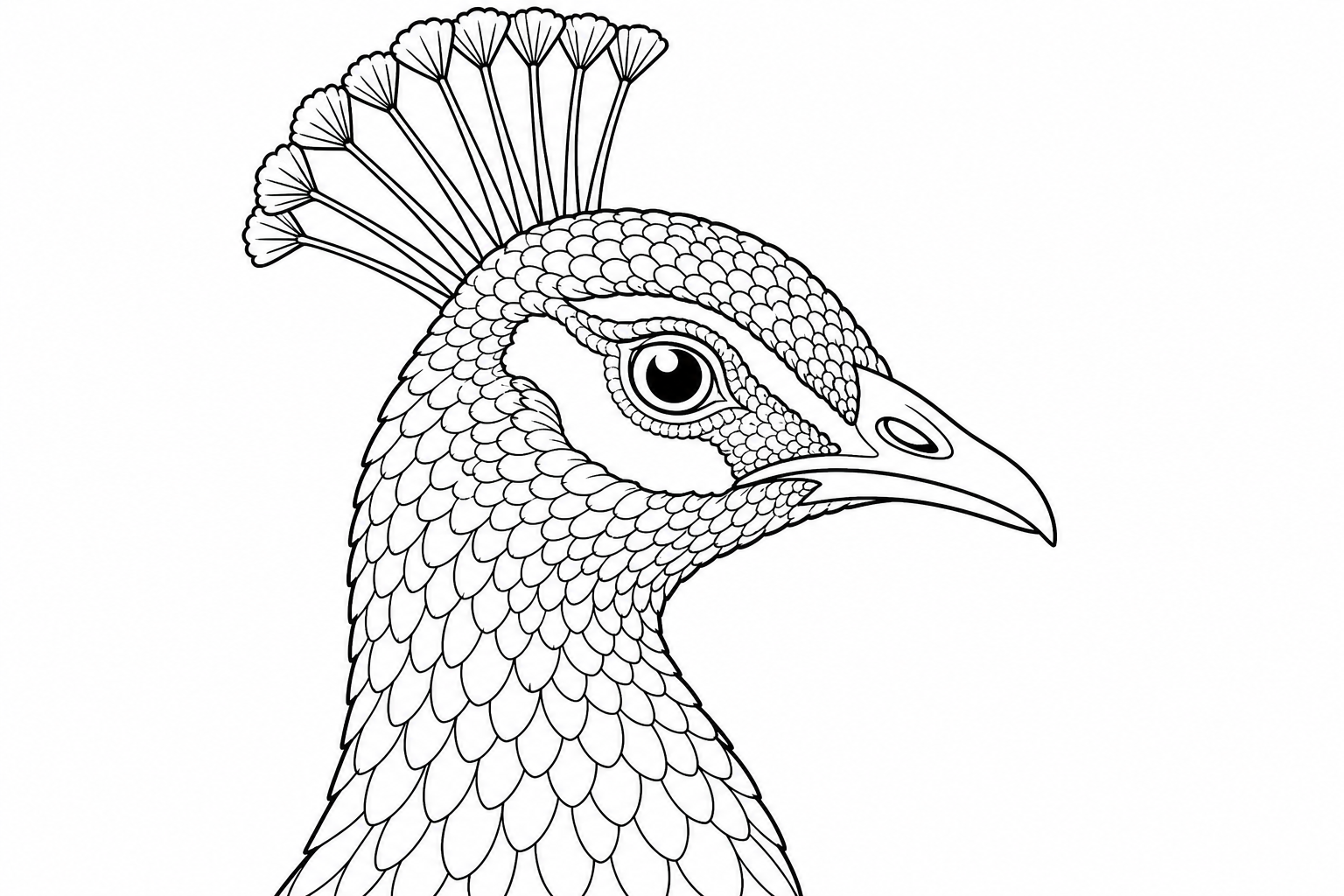
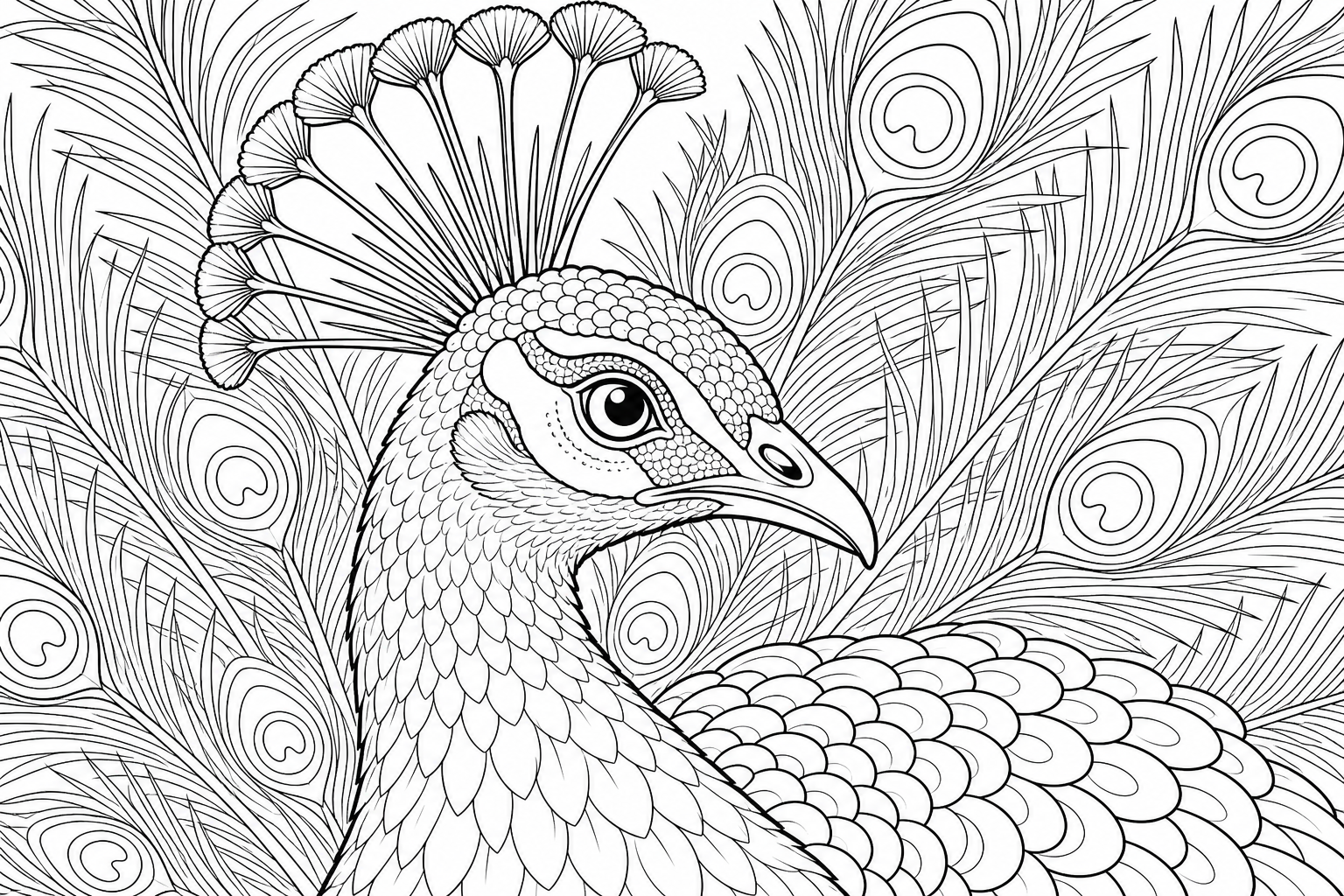
Before the big feathers, look at the head. A peacock wears a small fan of stalked feathers like a thin crown. This is the crest, and each stalk ends in a little round tuft, so the whole set looks like a row of tiny antennae. It is a good place to begin, a quick win before the long feathers start asking for patience.
The hundred eyes
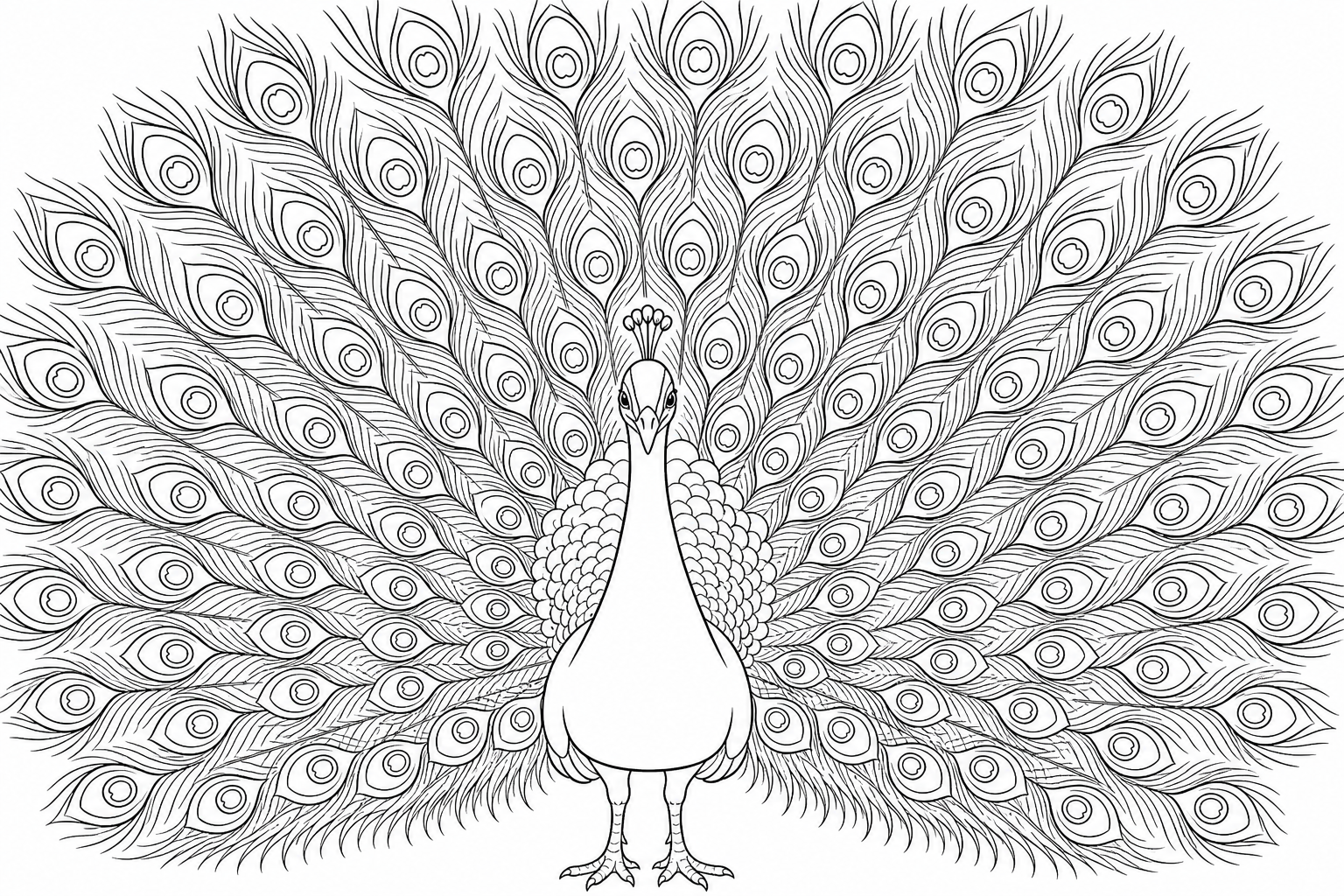
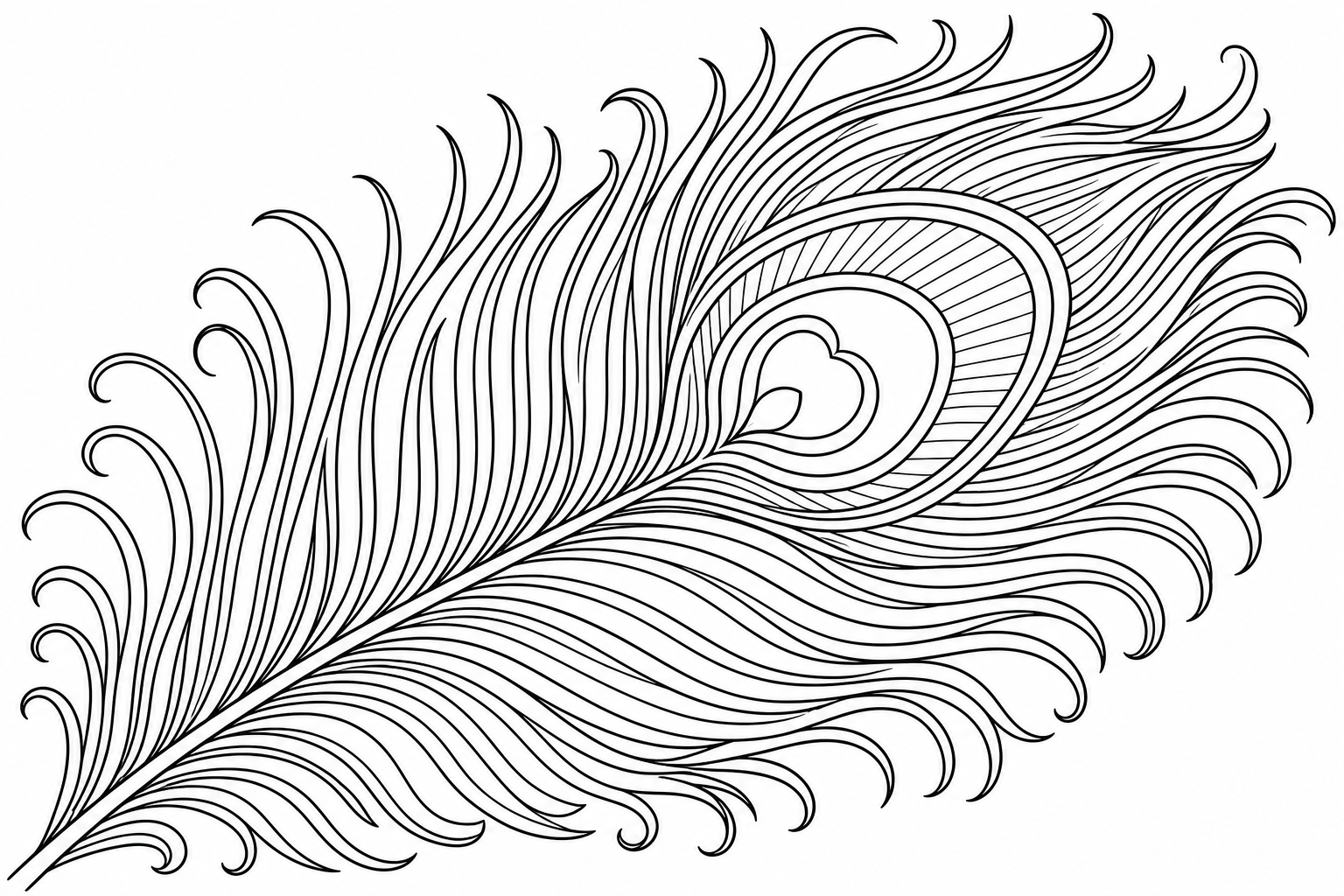
The round markings that stud the long feathers are the reason people stop and stare. Each one is called an ocellus, which just means little eye, and a grown peacock can carry well over a hundred of them. On a page they are pure invitation: rings inside rings, the same kind of repeating pattern that turns up in the middle of a sunflower, waiting for whatever colors a child wants to try. Match them all, or make every single one different. Both look right, because on the living bird no two catch the light quite the same way.
Open the fan
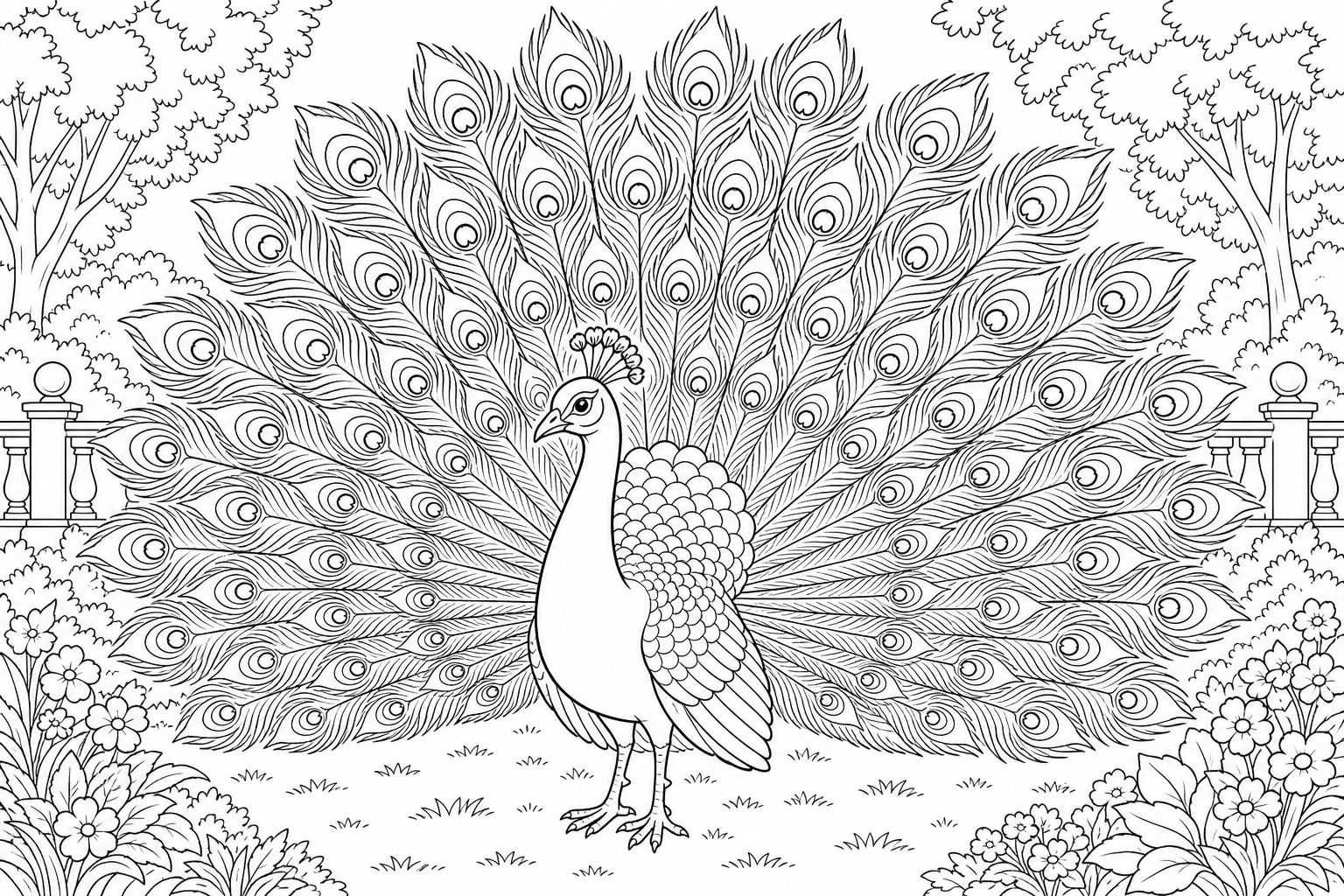
Raised, the long feathers form a shimmering half circle taller than the bird itself. This is the train, and despite what nearly everyone says, it is not the tail. A peacock's actual tail is short and brown and sits underneath, doing the unglamorous job of propping the whole display upright. Color the fan as one shade flowing into the next, or give every feather its own lane. There is no wrong way to fill a hundred eyes.



Coloring fun for kids — anywhere.
Free for iOS & Android. No ads, no sign-up, offline-ready.


Coloring fun for kids — anywhere.
Free coloring app for kids. iOS and Android, phones and tablets. No ads, no sign-up, even offline.
Three kinds of peacock
The bird most pages show is the Indian peacock, the deep blue one everybody pictures. It is not the only kind.
| Peacock | Where it lives | Its colors |
|---|---|---|
| Indian | South Asia | Deep blue neck, green train |
| Green | Southeast Asia | Green and gold, taller and slimmer |
| White | Bred in captivity | All white, faint pattern only |
The white one is the interesting case for coloring. It is not albino. It has simply been bred to lose its color, so a photo of a white peacock already looks a little like a coloring page: all line and shape, almost no color to copy. That makes it the perfect page for a child who would rather invent every shade from nothing.
Once your child has a favorite, it is worth seeing what else carries the same shimmer. Other birds built on structural color, or just more pages in the same showy spirit.
What else could you color?
Pick a prompt or type your own — opens in a new tab.
Print the flock
Ready when you are. Here is the full set of peacock pages, from a single feather to the whole fan thrown wide. Print a handful, hand over the brightest crayons in the box, and let the color be entirely their idea.