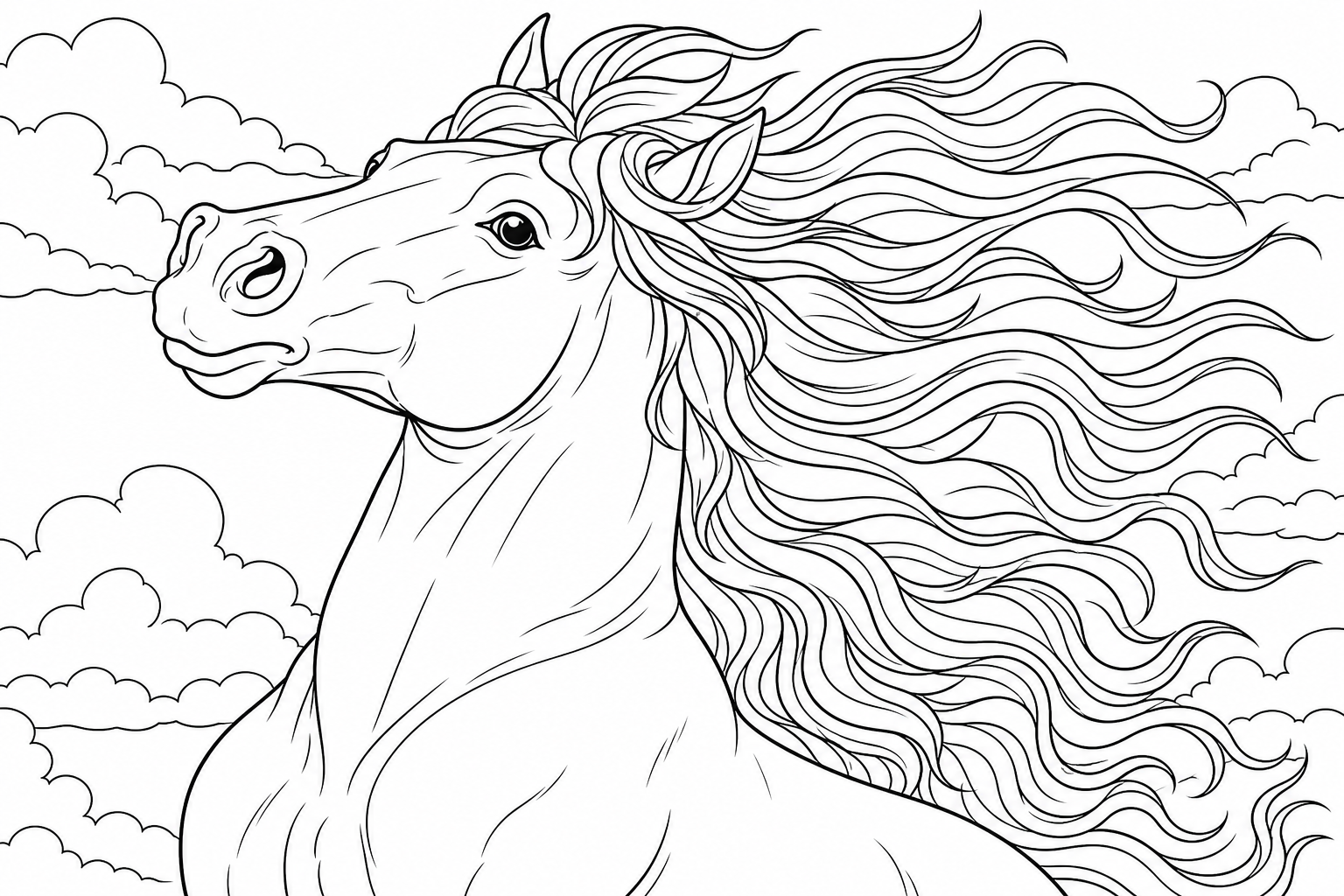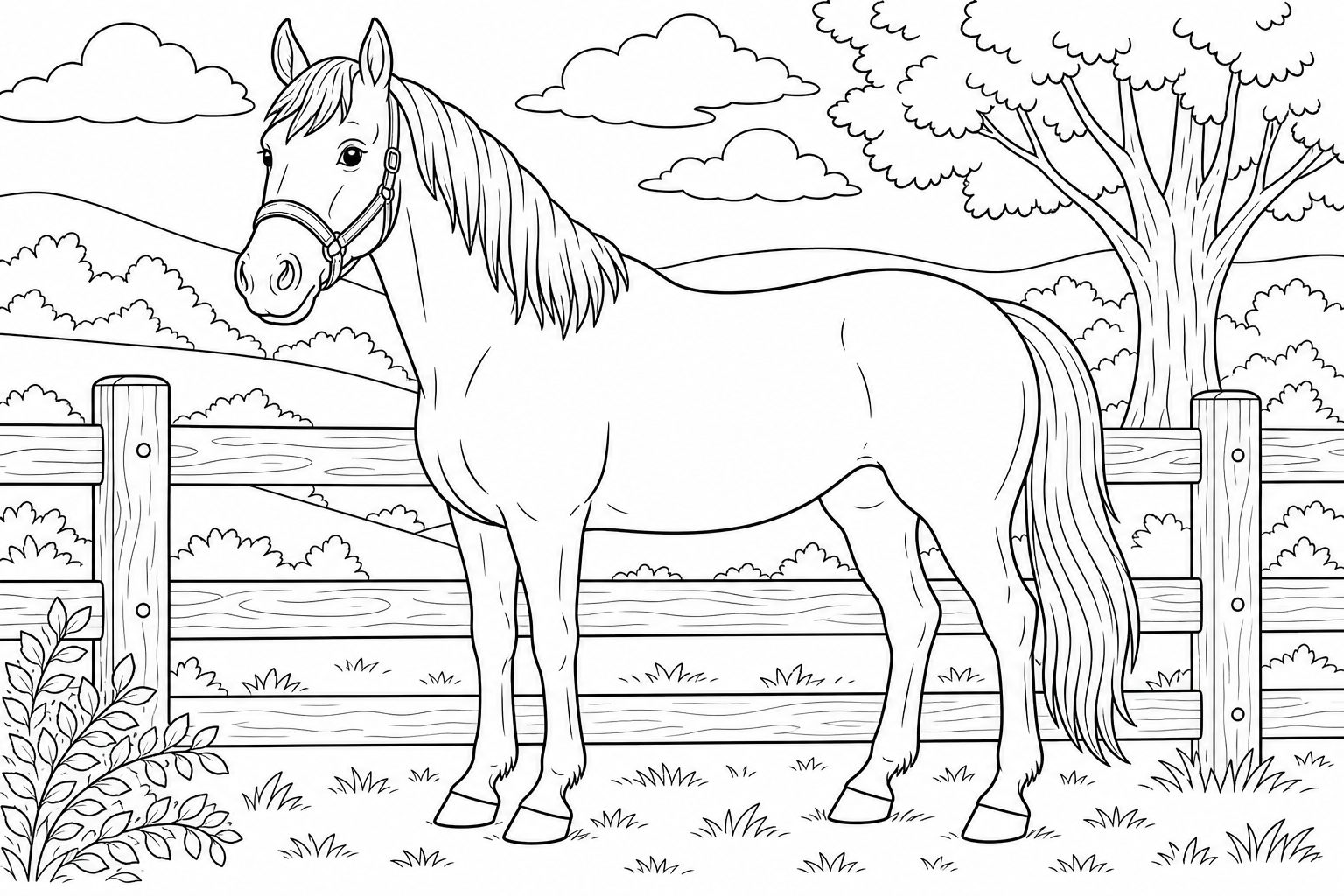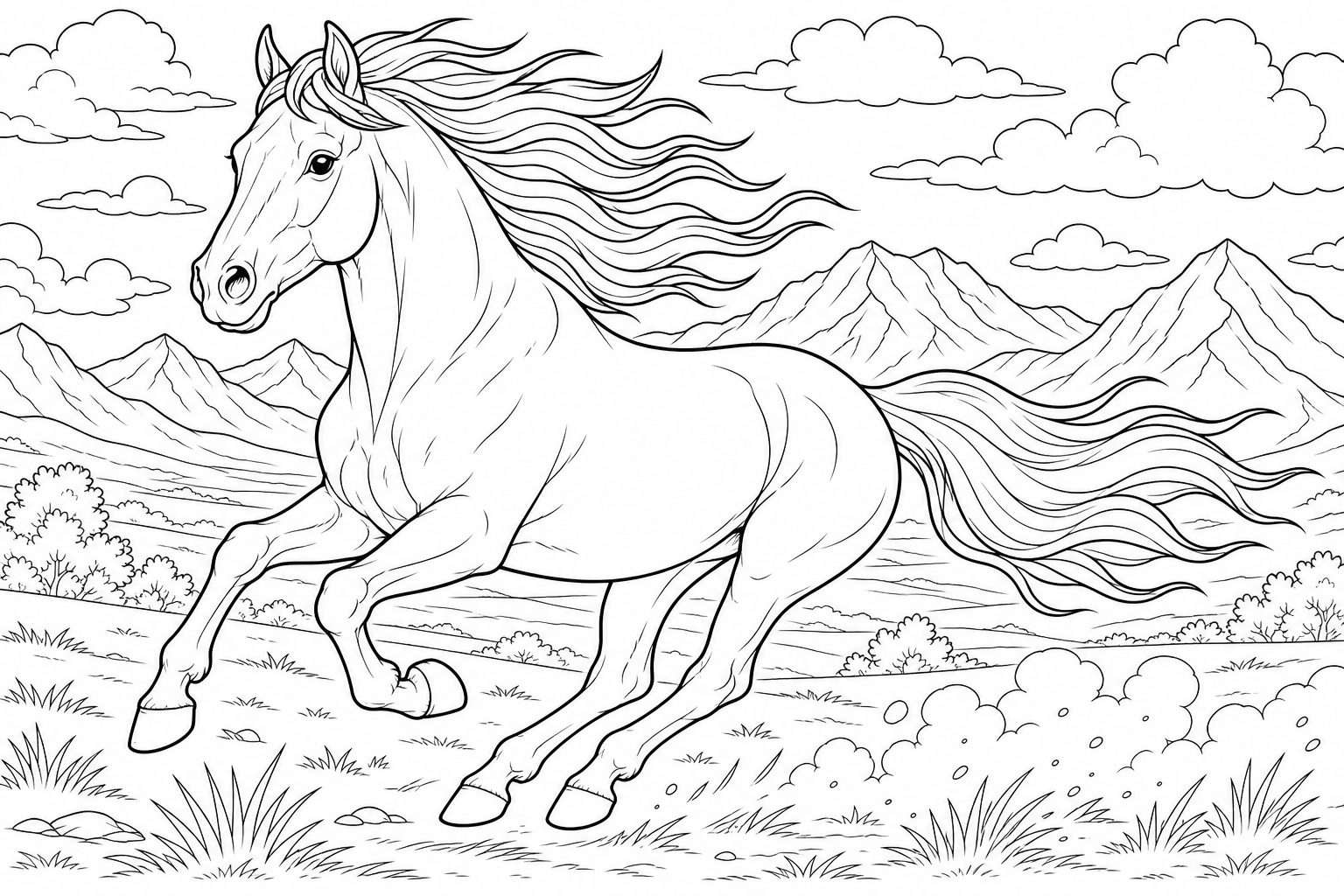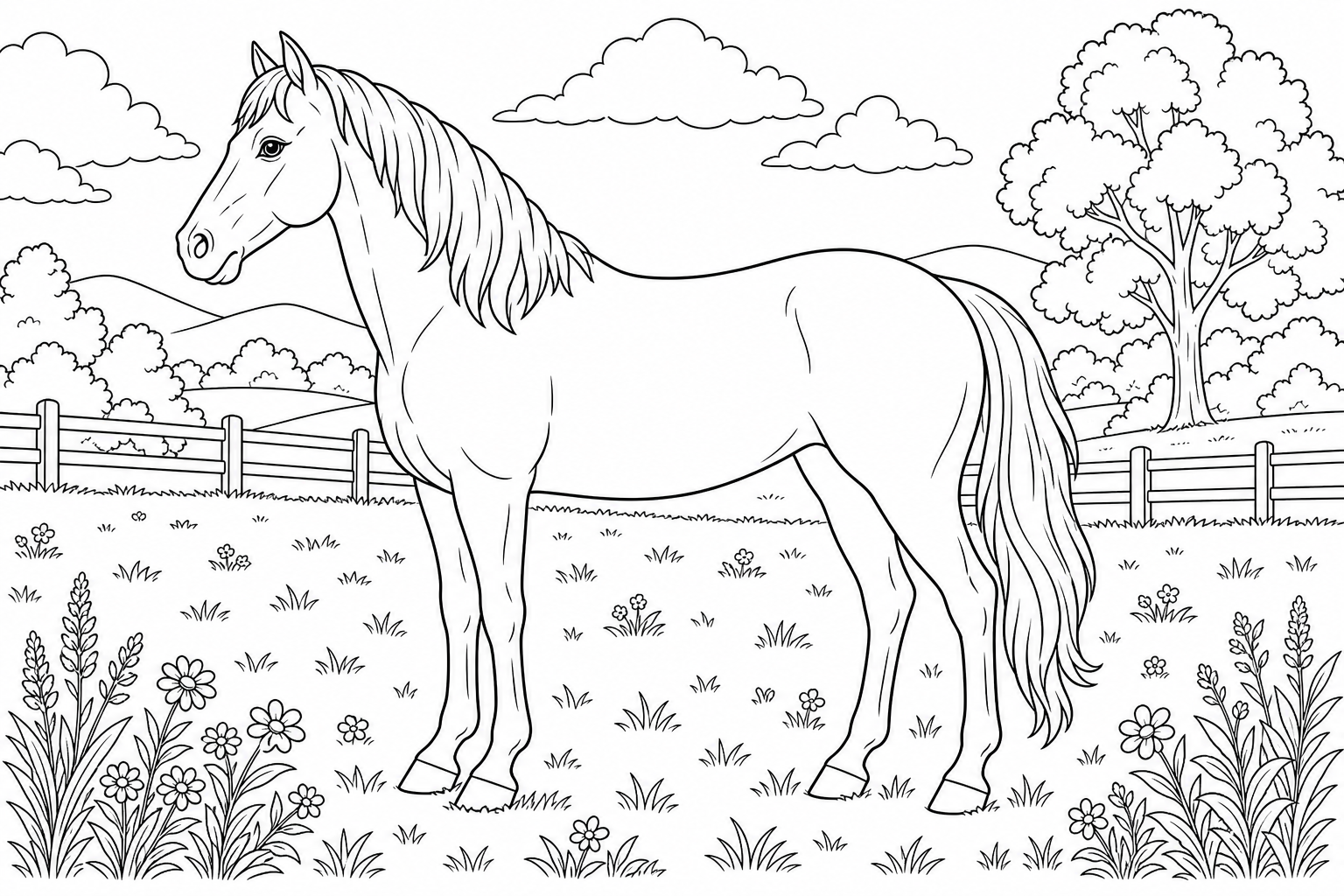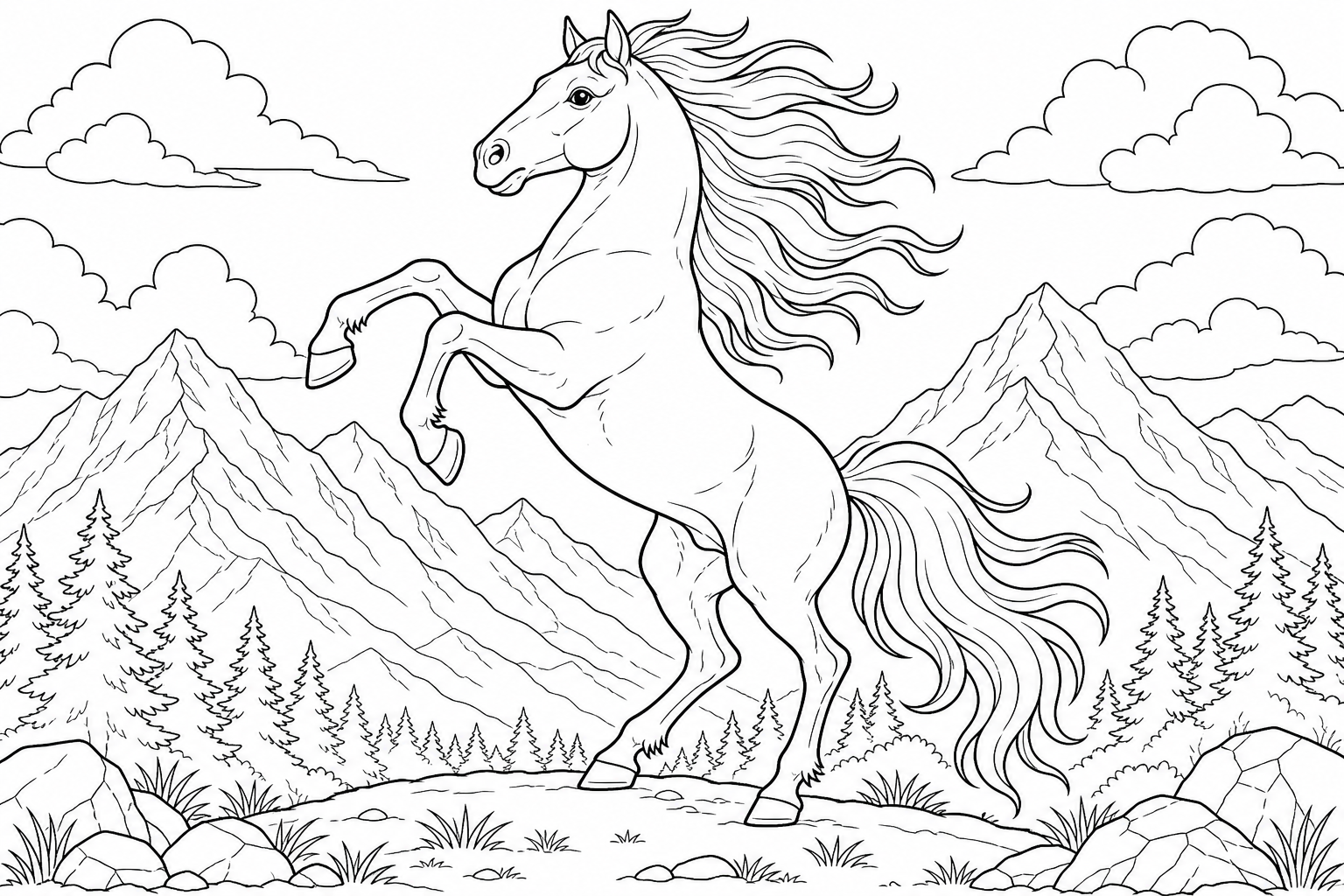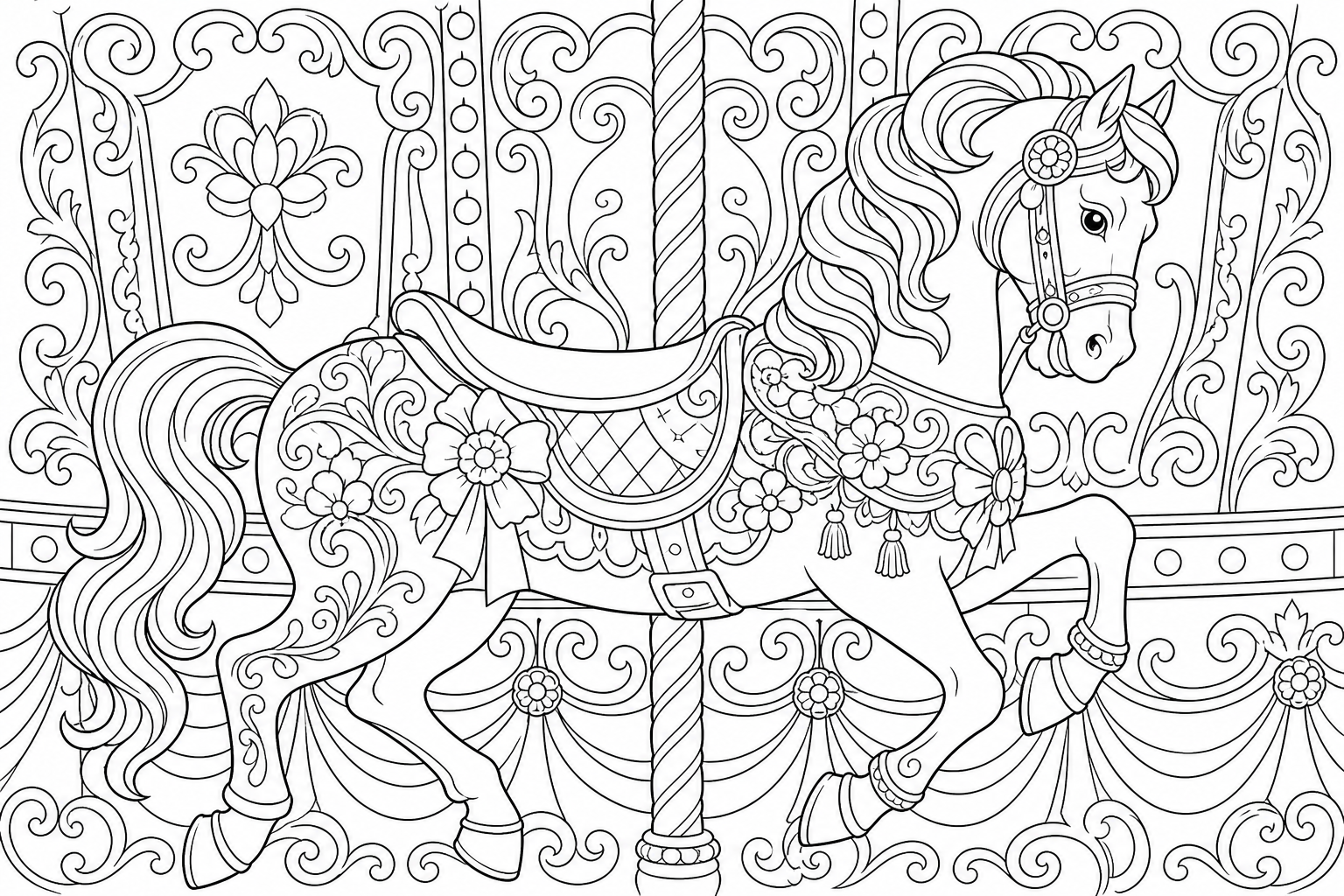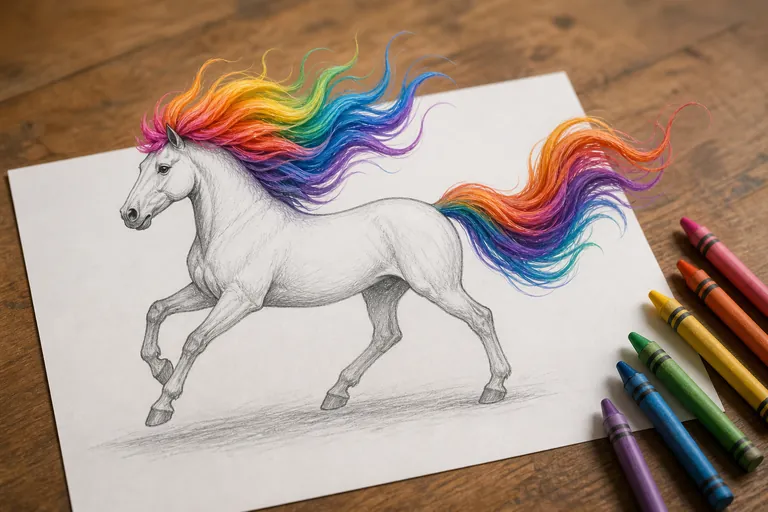
A horse is really two coloring pages hiding in one animal. The body is all smooth, closed shapes, the kind that reward staying inside the lines and taking your time. Then you reach the mane and the tail, and suddenly there are no lines to stay inside at all. That split is what makes a horse such a satisfying page. A kid gets to be careful and careless on the same drawing, and both halves come out looking right.
The body, where staying in the lines pays off
A horse's coat is one big smooth surface, so this is the part of the page that rewards a slow hand. Pick one main color and lay it down evenly, then press a little harder along the belly and under the neck to hint at shadow. A coat does not need ten colors. One or two, blended where the light would fall, is what makes a horse look solid instead of flat. If your kid is still working on keeping color inside the outline, a horse body is a forgiving place to practice, big and rounded with no fiddly corners. Our guide to coloring inside the lines has more if that is the part they are chasing.
The mane and tail, the part with no rules
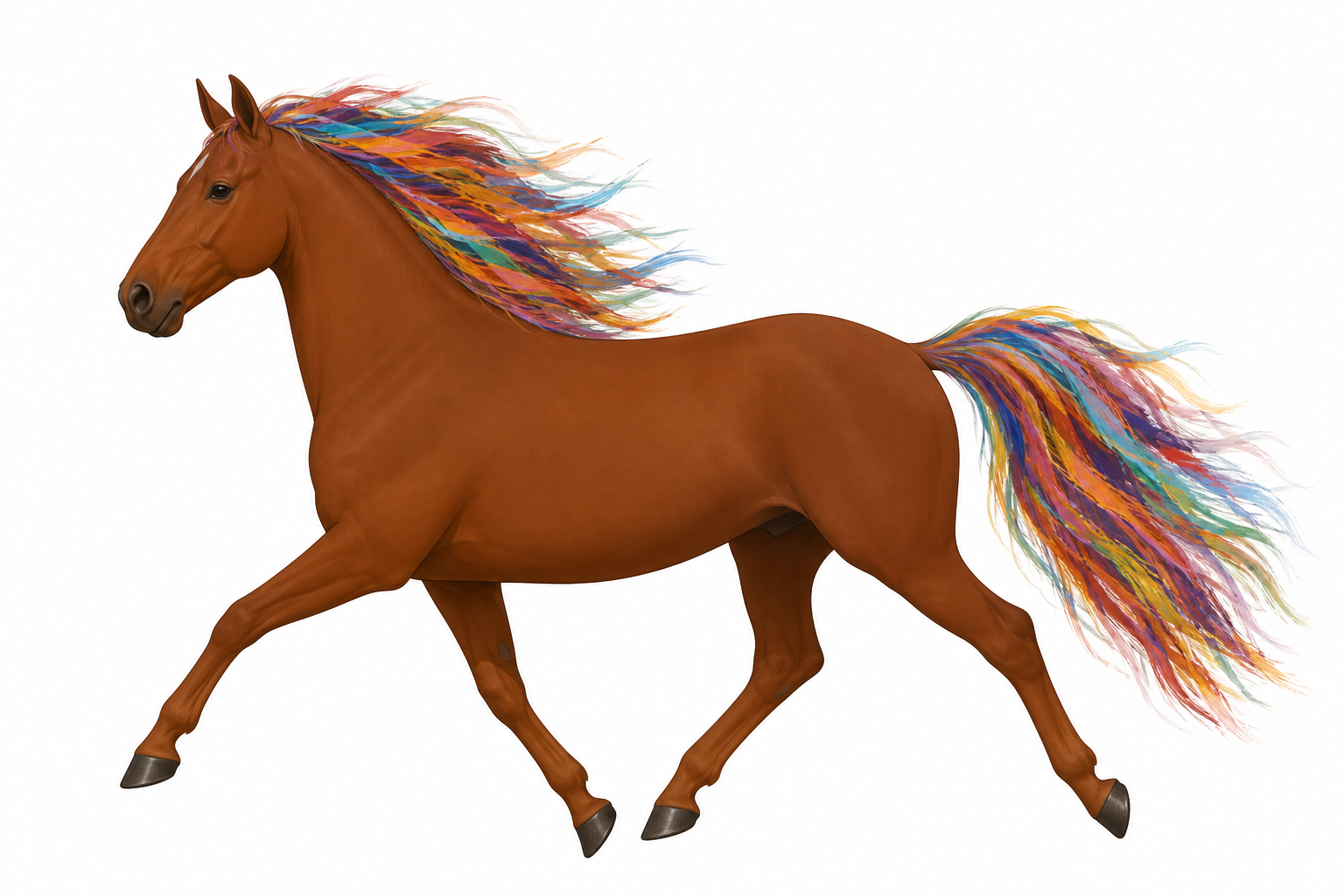
Now the fun. Manes and tails are drawn as loose, flowing shapes, and there is no single right way to fill them. Long strokes that follow the curve of the hair make it look like it is moving. Layering two or three colors, a base with lighter streaks pulled through, gives it depth. This is where a kid who has been carefully staying inside the lines all page gets to loosen their grip and just sweep the color along. A wind-blown mane forgives almost anything.
Horses come in more colors than brown
Ask a kid to color a horse and most reach straight for brown. Real horses are a whole vocabulary of color, and the names are half the fun. A reddish-brown horse is a chestnut. Brown with a black mane is a bay. Creamy gold with a pale mane is a palomino. A gray horse is often born nearly black and lightens a little every year. None of this makes a purple horse wrong, a page is a page, but knowing the real colors gives a kid somewhere to start. The list of recognized equine coat colors runs longer than most people expect.
| Coat name | What it looks like | Crayons to reach for |
|---|---|---|
| Chestnut | Reddish brown all over | Red-brown, burnt orange |
| Bay | Brown body, black mane and tail | Brown, black |
| Palomino | Golden coat, pale mane | Yellow-gold, cream |
| Dapple gray | Silver with soft darker rings | Gray, white |



Coloring fun for kids — anywhere.
Free for iOS & Android. No ads, no sign-up, offline-ready.


Coloring fun for kids — anywhere.
Free coloring app for kids. iOS and Android, phones and tablets. No ads, no sign-up, even offline.
Ponies and foals for smaller hands
For the youngest colorers, a full galloping stallion is a lot of horse. Ponies and foals are the friendlier shape, rounder, shorter in the leg, with big simple outlines and fewer places to get stuck. A foal lying down in the grass is about as gentle as a horse page gets. Keep the palette small and let them name the pony when they finish. Naming it tends to buy another ten minutes of coloring.
What else could you color?
Pick a prompt or type your own — opens in a new tab.
Print the whole herd
Smooth coats, wild manes, and a whole field of colors that go well past brown. Print a few and let your kids decide which horse gets colored with care and which one gets to be a glorious mess.