The leaf pile under the hedge has been there since October. On a grey Saturday in late November your five-year-old stops in front of it with a rake and asks the question that comes every year: where did the hedgehog go?
The short answer is that it is probably right there, under the leaves, asleep. The longer answer is better, because animals get through winter in three quite different ways, and children love sorting things. This set of hibernation coloring pages lines the animals up from the one that still gets up and wanders around to the one that cannot move at all. Color them, then sort them.
Three words for one long winter
German kindergartens teach this with three words, and they work in every language: deep sleep, winter rest and winter stiffness. The German nature conservation union NABU sorts the animals in exactly this way.
The question that decides the pile is simple enough for a preschooler: how much does the body slow down? A little, a lot, or so much that the animal is as cold as the ground around it. That is the line this article walks, from left to right.
The ones who still get up: squirrel and bear
At the warm end of the line are the animals that rest a lot and wake up in between. NABU lists the squirrel, the badger and the brown bear here: their body temperature does not drop much. A brown bear in Central Europe leaves its den several times over the winter, and the cubs are born in the den in January.
The squirrel does not truly hibernate either, as the Wildlife Trusts point out. It naps in its nest and comes out again, which is why you can still spot one in the park in December. Where its food comes from is a story of its own, told in our squirrel pages about the nuts that disappear.
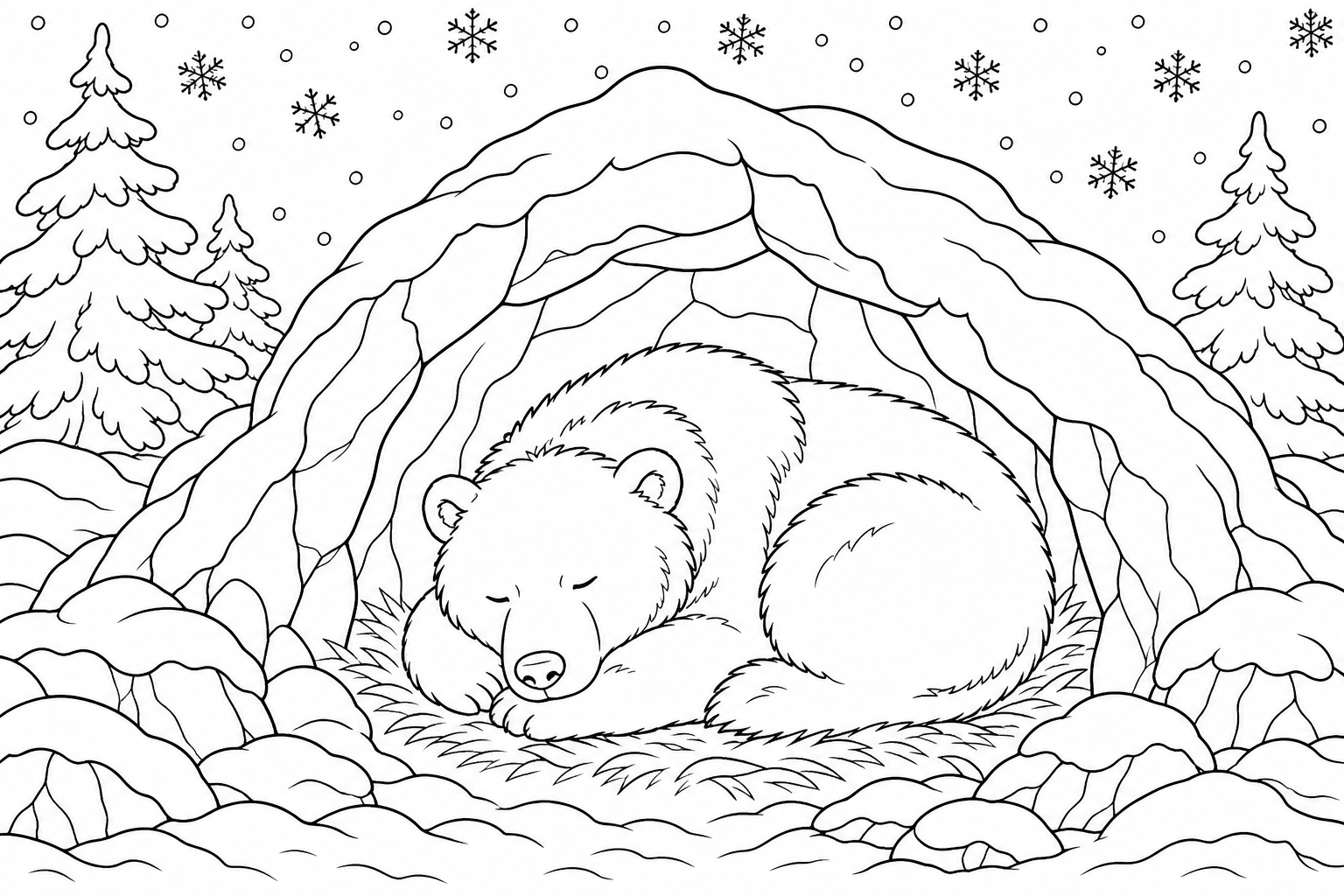
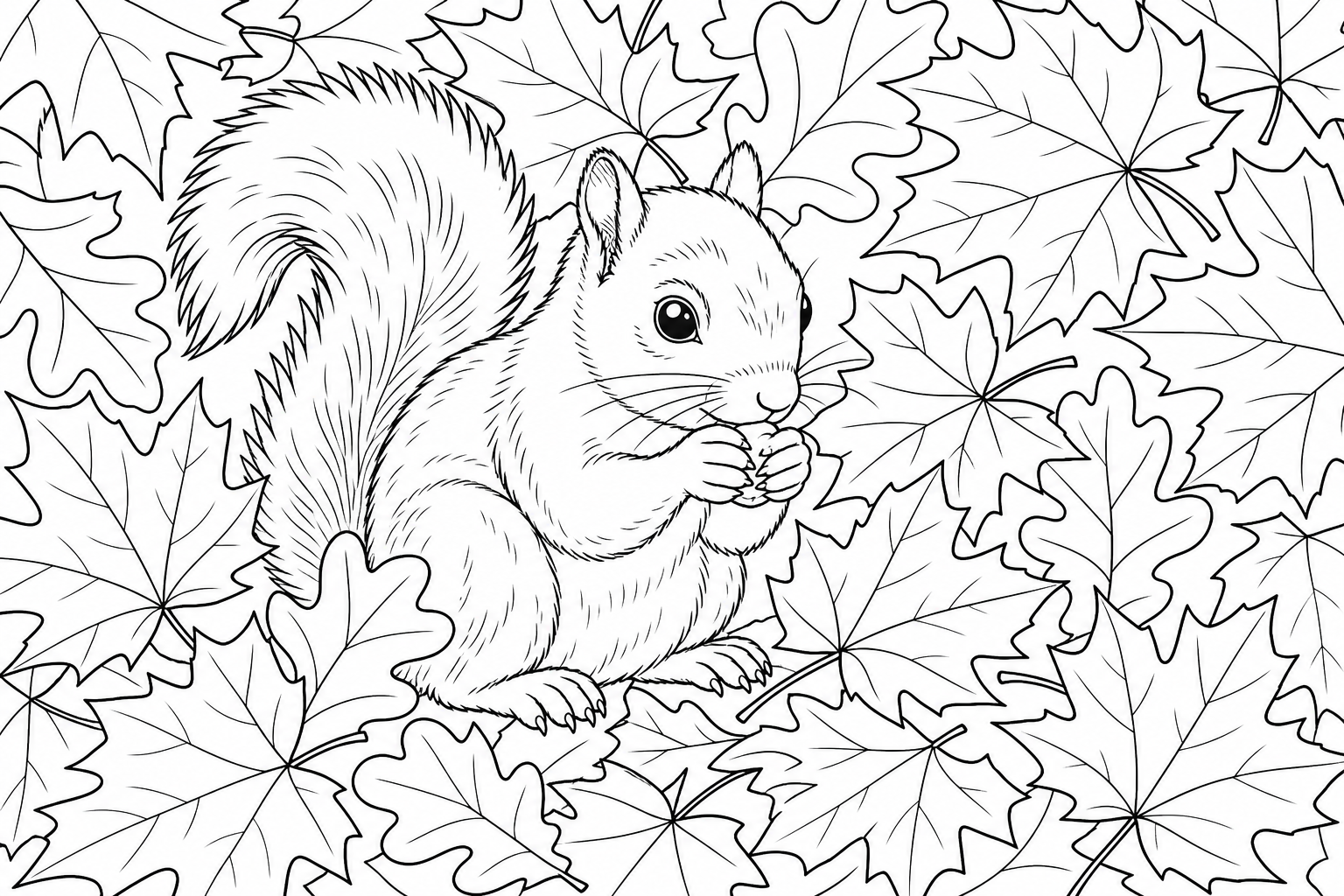
For a three-year-old, the bear is the easy one: one big brown shape in a cave. Older kids can give the squirrel a red or a grey coat and talk about which one lives near you.
The deep sleepers: hedgehog, bat and dormouse
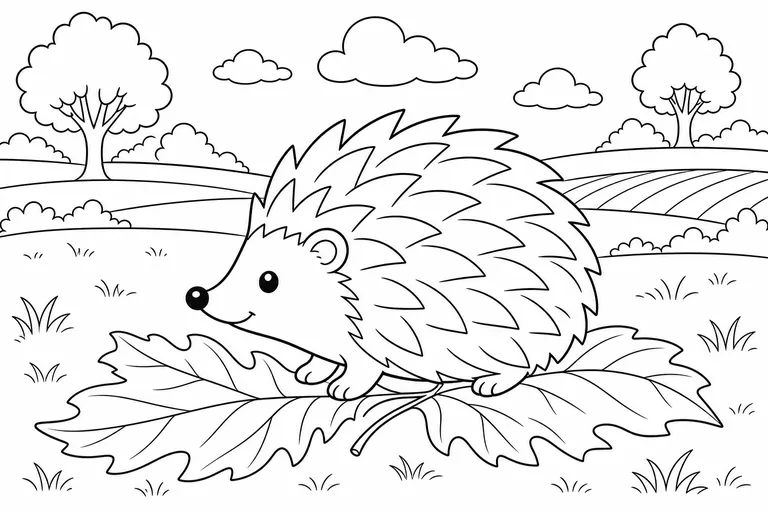
Here is the hedgehog, and here is where the numbers get good. According to NABU, a hibernating hedgehog cools from about 36 degrees to between one and eight degrees, breathes once or twice a minute and its heart beats about five times a minute instead of 200. It sleeps from about November to April.
Ask your child to count to five, slowly, and stretch it over a whole minute. That is all a sleeping hedgehog's heart does in that time. It is the fact that makes the page stick.
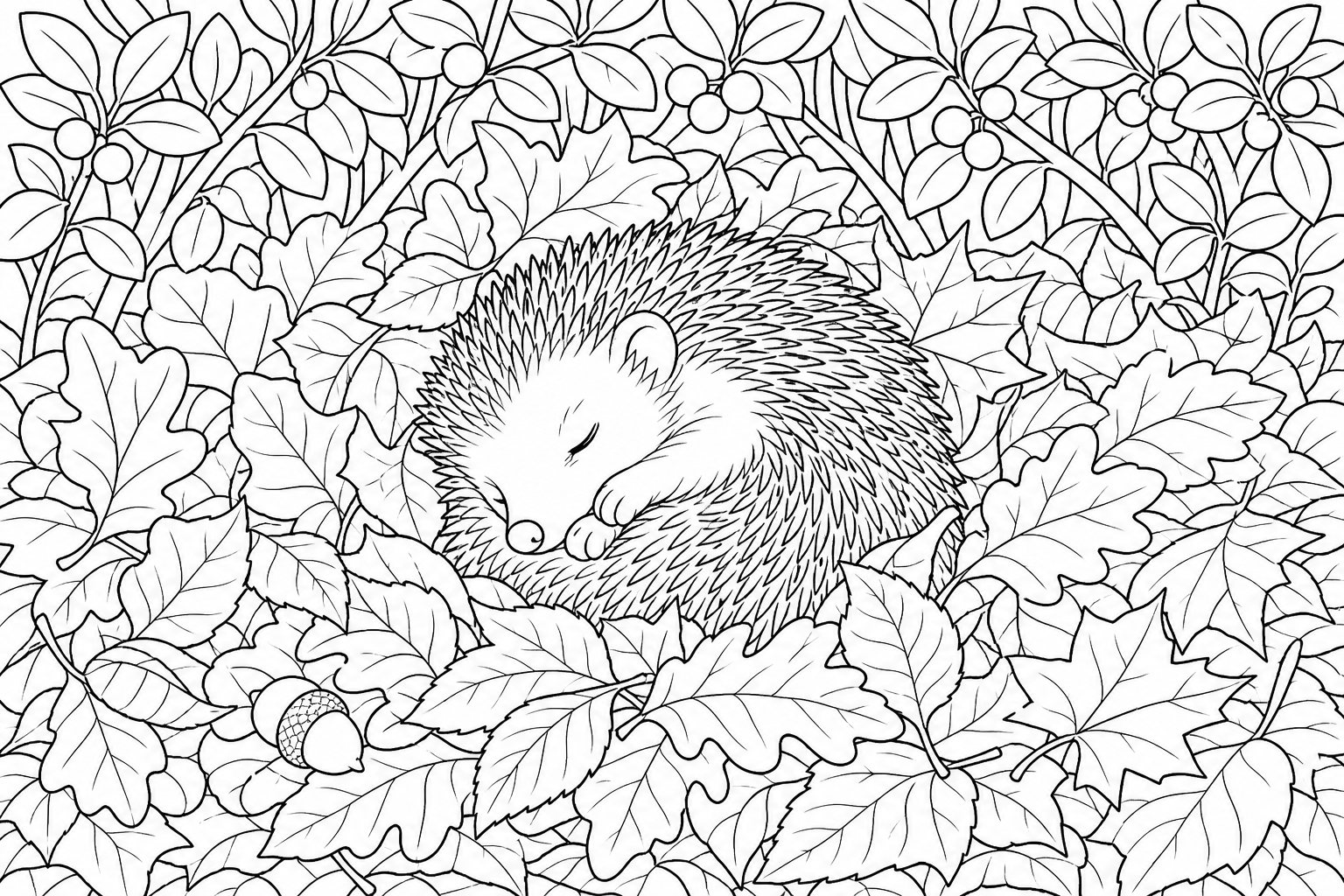
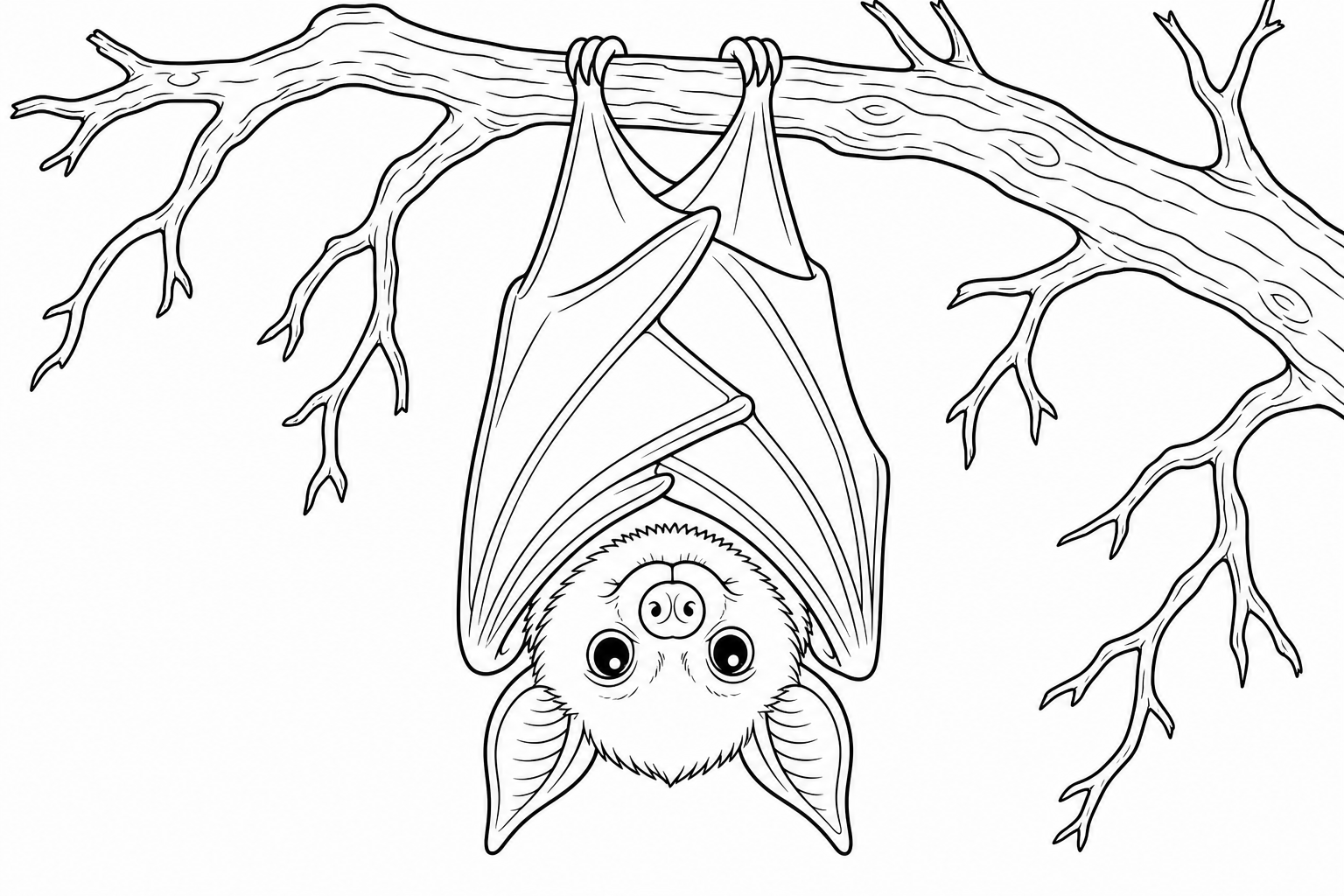
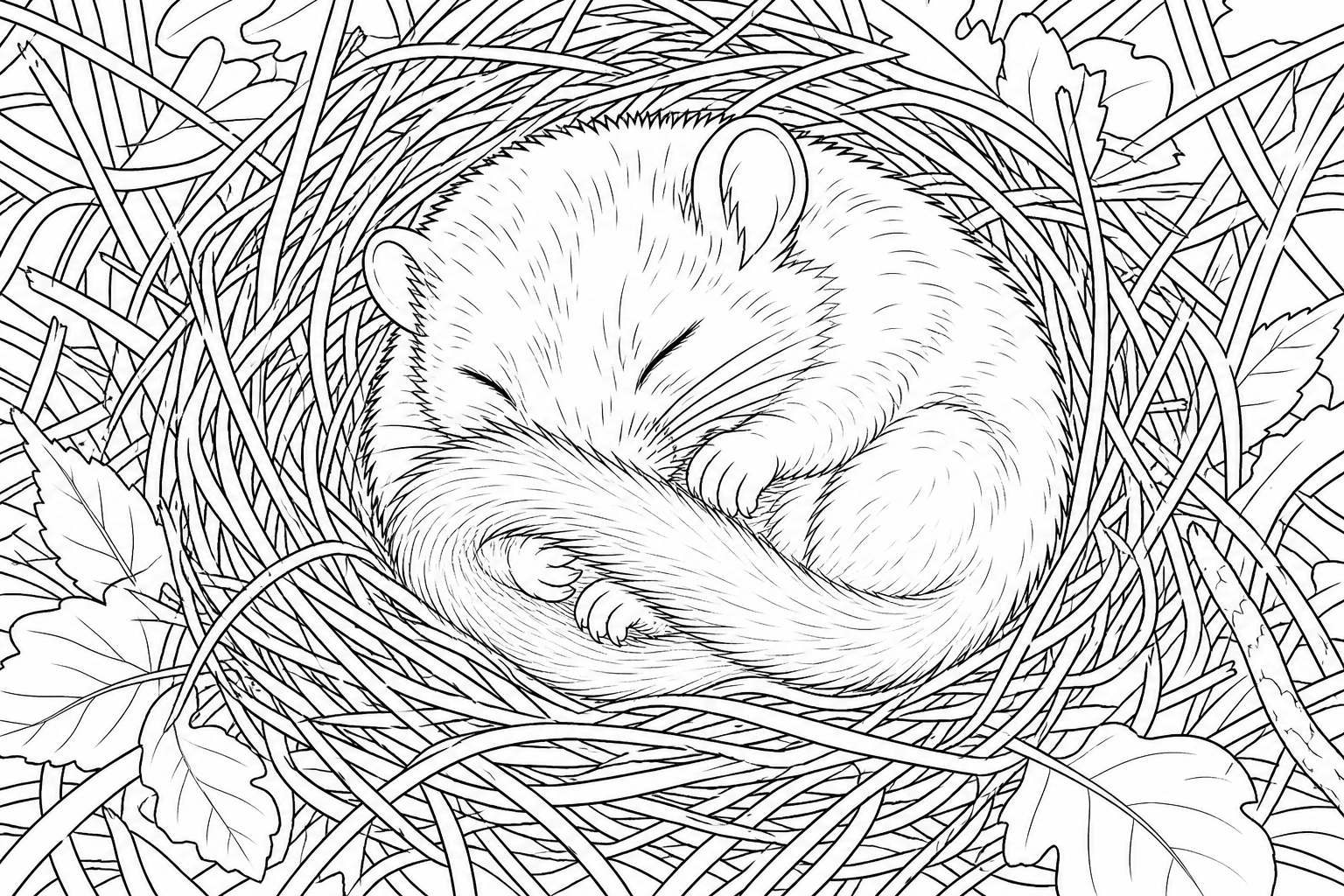
The bat hangs upside down, and its heart slows from several hundred beats a minute to somewhere between 18 and 80. The dormouse is the champion sleeper: NABU says it rests from September to May, sometimes June. The Wildlife Trusts name the same three, hedgehogs, bats and dormice, as the only UK mammals that truly hibernate.



Coloring fun for kids — anywhere.
Free for iOS & Android. No ads, no sign-up, offline-ready.


Coloring fun for kids — anywhere.
Free coloring app for kids. iOS and Android, phones and tablets. No ads, no sign-up, even offline.
The ones who freeze still: frog and ladybug
At the cold end of the line are the animals that cannot keep themselves warm at all. Their body takes on the temperature of whatever is around it, and when that gets cold they go stiff and wait. Frogs, toads, lizards and most insects belong here.
The common frog spends the winter on the bottom of a pond, the toad digs into a compost heap or a leaf pile, and ladybugs squeeze into the hollow stems of old sunflowers and thistles, as the NABU garden guide describes.
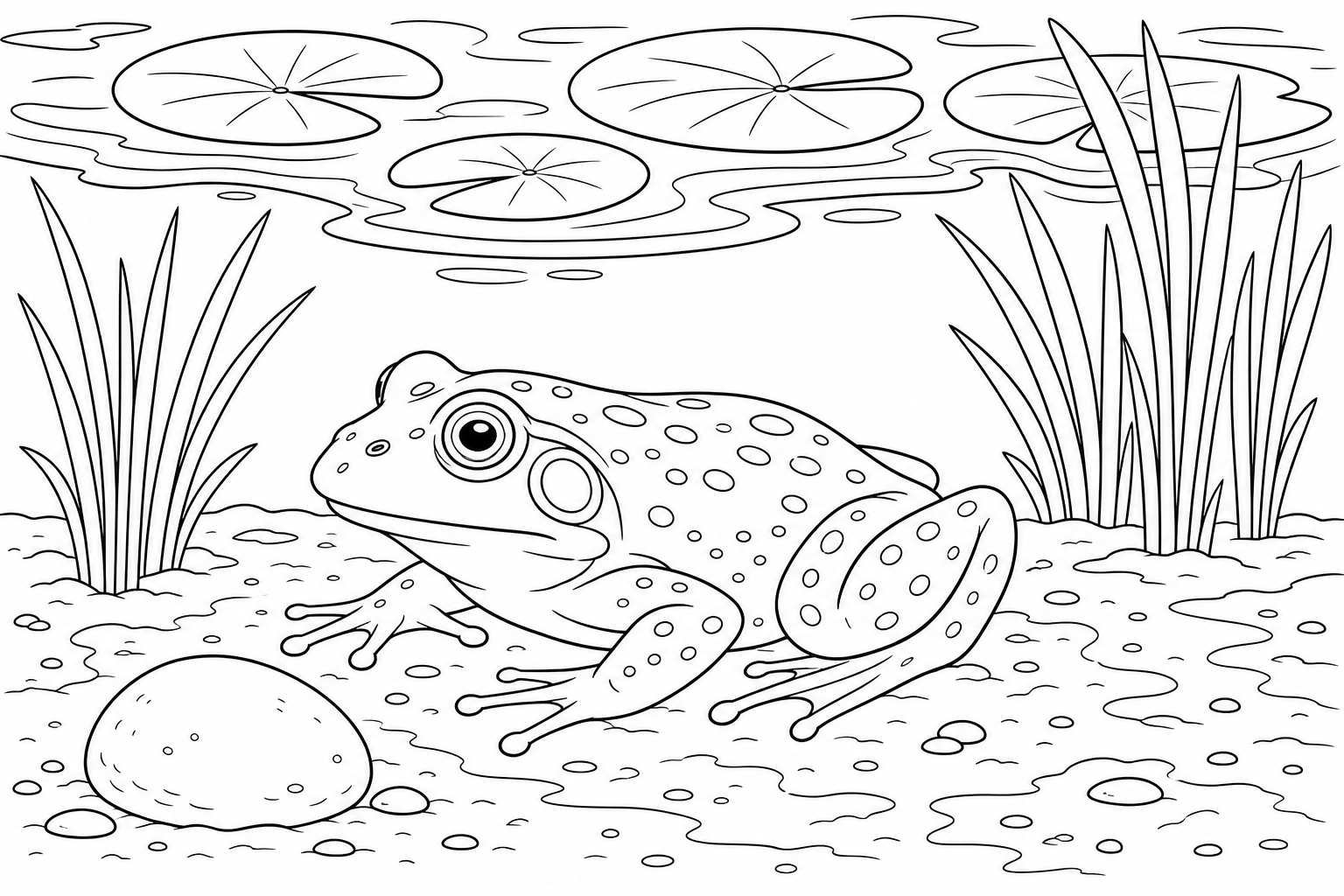
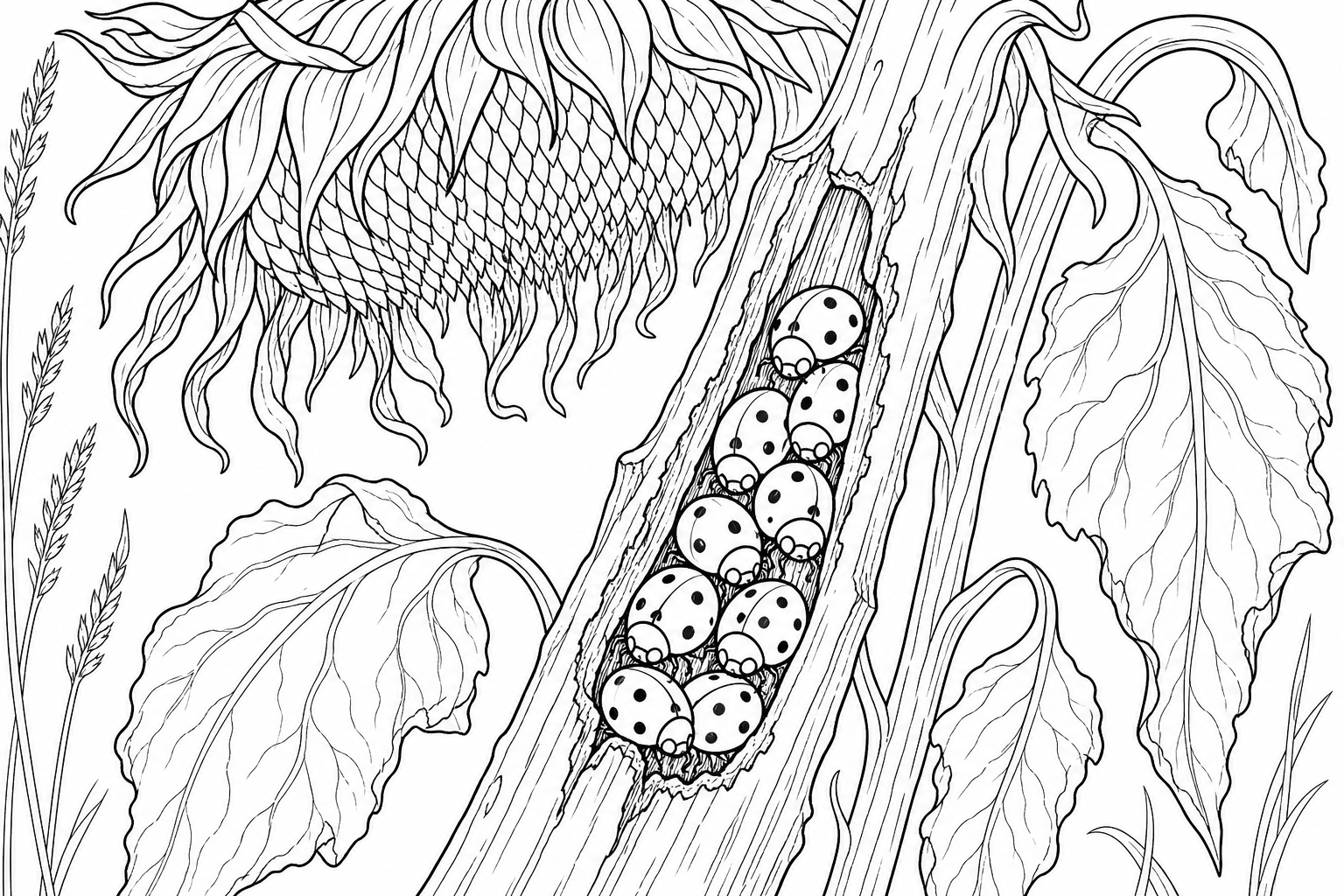
The ladybug page has a lot of little beetles. A six-year-old will want to count them before coloring, and a younger child can color only the spots.
The sorting game on the kitchen floor
Once the pages are done, the game is the part your child will ask for again.
- 1Lay three sheets of paper on the floor and draw a symbol on each: an open eye for the ones who get up, a closed eye for the deep sleepers, and a snowflake for the ones who freeze.
- 2Mix the colored pages and turn them face down.
- 3Your child turns one over, names the animal and puts it on a pile.
- 4Ask one question per animal: does its heart beat fast, slow, or almost not at all?
- 5When all seven are sorted, go back to the hedgehog and count its five slow heartbeats together.
For a group or a classroom, give each child one animal page and let the class sort itself into three corners of the room.
What else could you color?
Pick a prompt or type your own — opens in a new tab.
Leave the leaf pile where it is
The hedgehog question has a practical answer too. NABU asks gardeners to leave a thick layer of leaves under bushes or a leaf pile in a quiet corner, because hedgehogs, toads and insects sleep in there, and every unplanned wake-up costs a sleeping animal fat it needs until spring. So the rake goes back in the shed, and nobody jumps into the pile under the hedge.
If your family keeps a nature corner, the sleeping hedgehog page fits right next to the acorns in the autumn nature table.
The best thing a child can do for a sleeping hedgehog in November is nothing at all.