You do not need to explain the Cold War to a six-year-old.
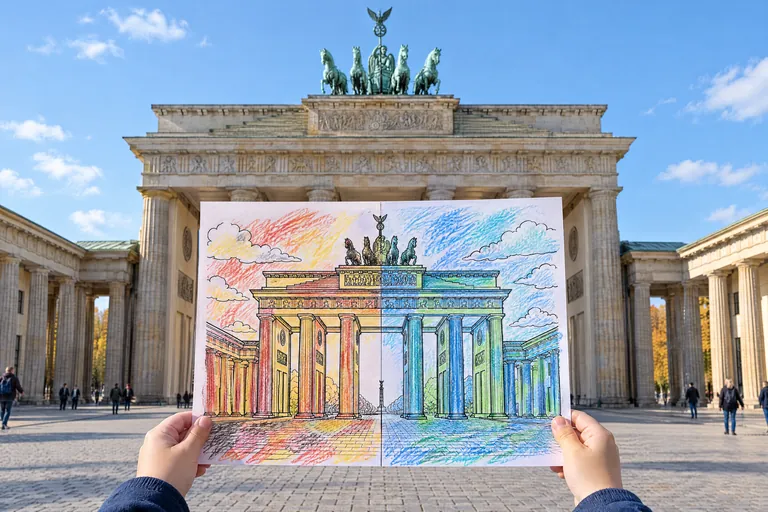
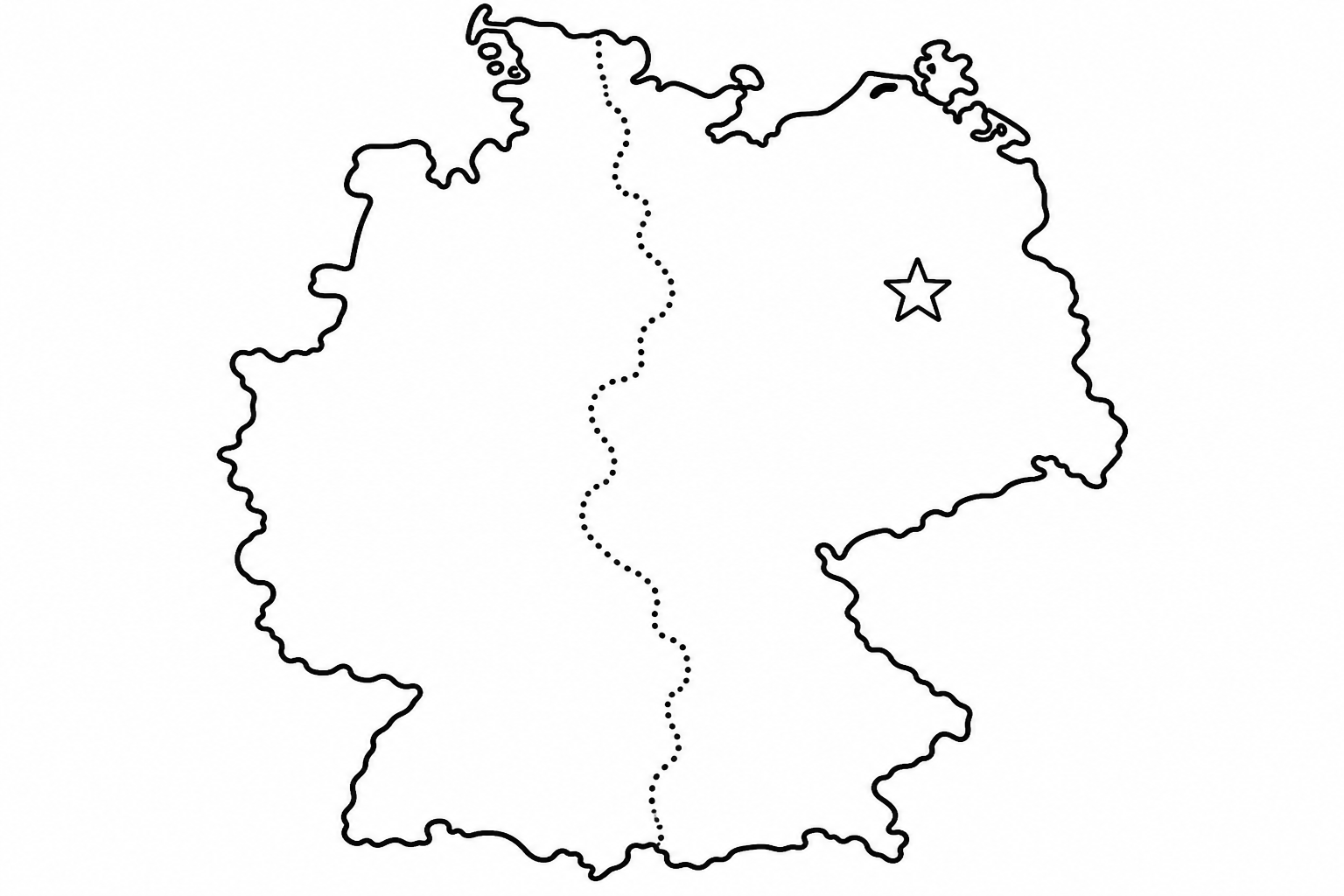
What a child that age can hold is a shape. One picture, a line down the middle, two people colouring one half each, and a strip of tape at the end. Germany keeps the third of October because on that date in 1990 two countries became one, and a page that only works once both halves are finished carries that better than a timeline does. This is written for the primary-school week before the holiday, and for the holiday itself.
Why was there ever a line down the middle?
After the Second World War Germany ended up as two states: the Bundesrepublik in the west, the DDR in the east, with separate governments and a guarded border between them. The children's pages of the Federal Agency for Civic Education say it in one sentence: the country was divided for more than forty years, and on 3 October 1990 the two parts were joined again.
Three dates carry the whole thing. Everything else can wait until your child is nine.
| When | What happened | What a child can see in it |
|---|---|---|
| 13 August 1961 | A wall is built through Berlin, and the Brandenburg Gate ends up inside the sealed border strip | A gate nobody is allowed to walk through |
| 22 December 1989 | The gate is opened again, with more than a hundred thousand people watching | The middle of the picture comes back |
| 3 October 1990 | The two states become one country, and this is the date the holiday keeps | One picture again |
If the origin story is the part your child latches onto, the real story behind Halloween works the same way a few weeks later.
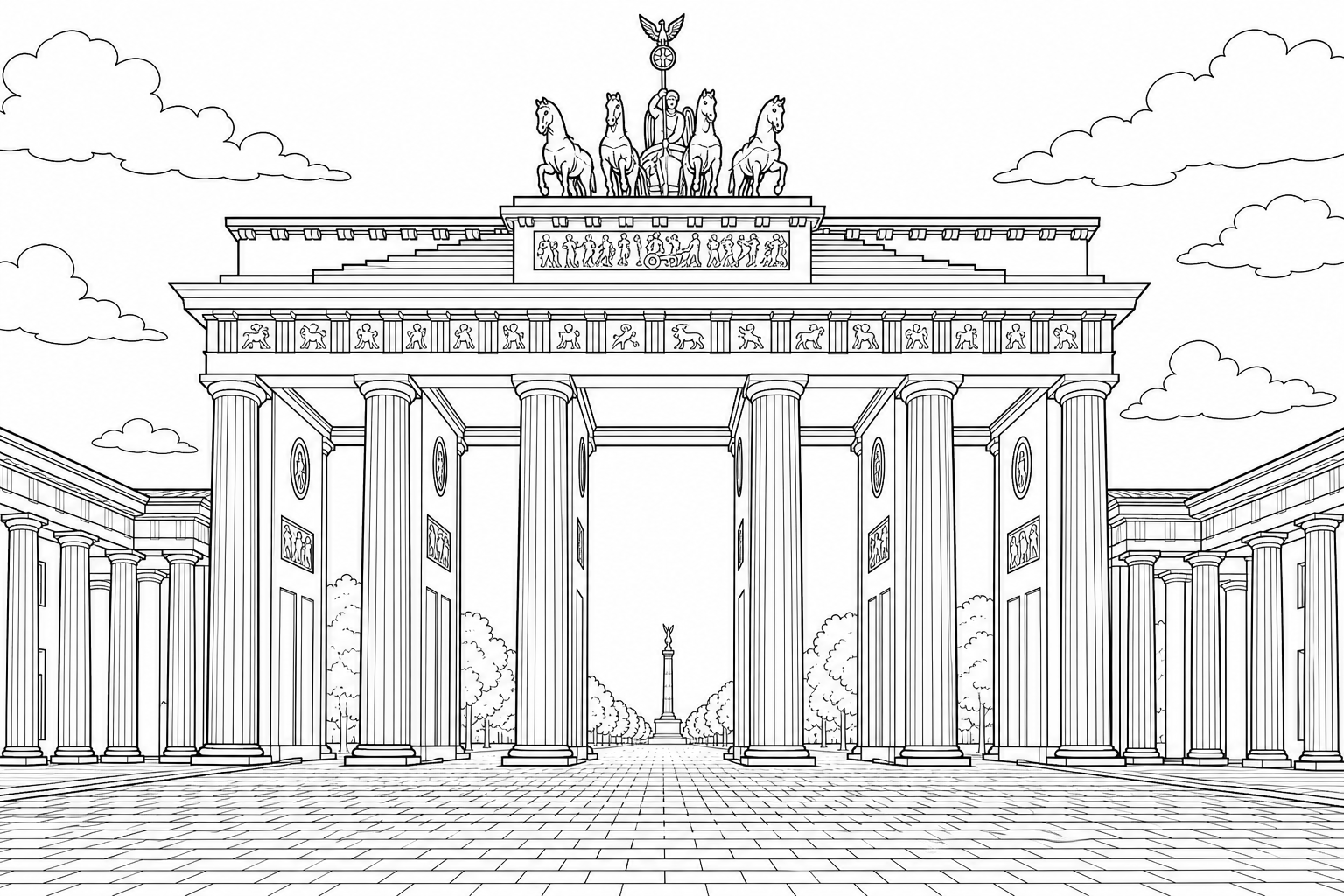
What is the gate with the horses on top?
It is the Brandenburg Gate, and it is the reason this day has a picture at all. When the wall went up in August 1961 the gate stood inside the closed strip, so for twenty-eight years nobody walked through it. It was opened again on 22 December 1989, and the federal government's account of that evening counts more than a hundred thousand people standing there in the December cold.
On the roof there is a chariot pulled by four horses. Count them together before anybody picks up a crayon. The horses overlap, so the fourth one gets missed, and a missed horse halfway through a page is its own small tragedy.



Coloring fun for kids — anywhere.
Free for iOS & Android. No ads, no sign-up, offline-ready.


Coloring fun for kids — anywhere.
Free coloring app for kids. iOS and Android, phones and tablets. No ads, no sign-up, even offline.
The page that only works once both halves are done
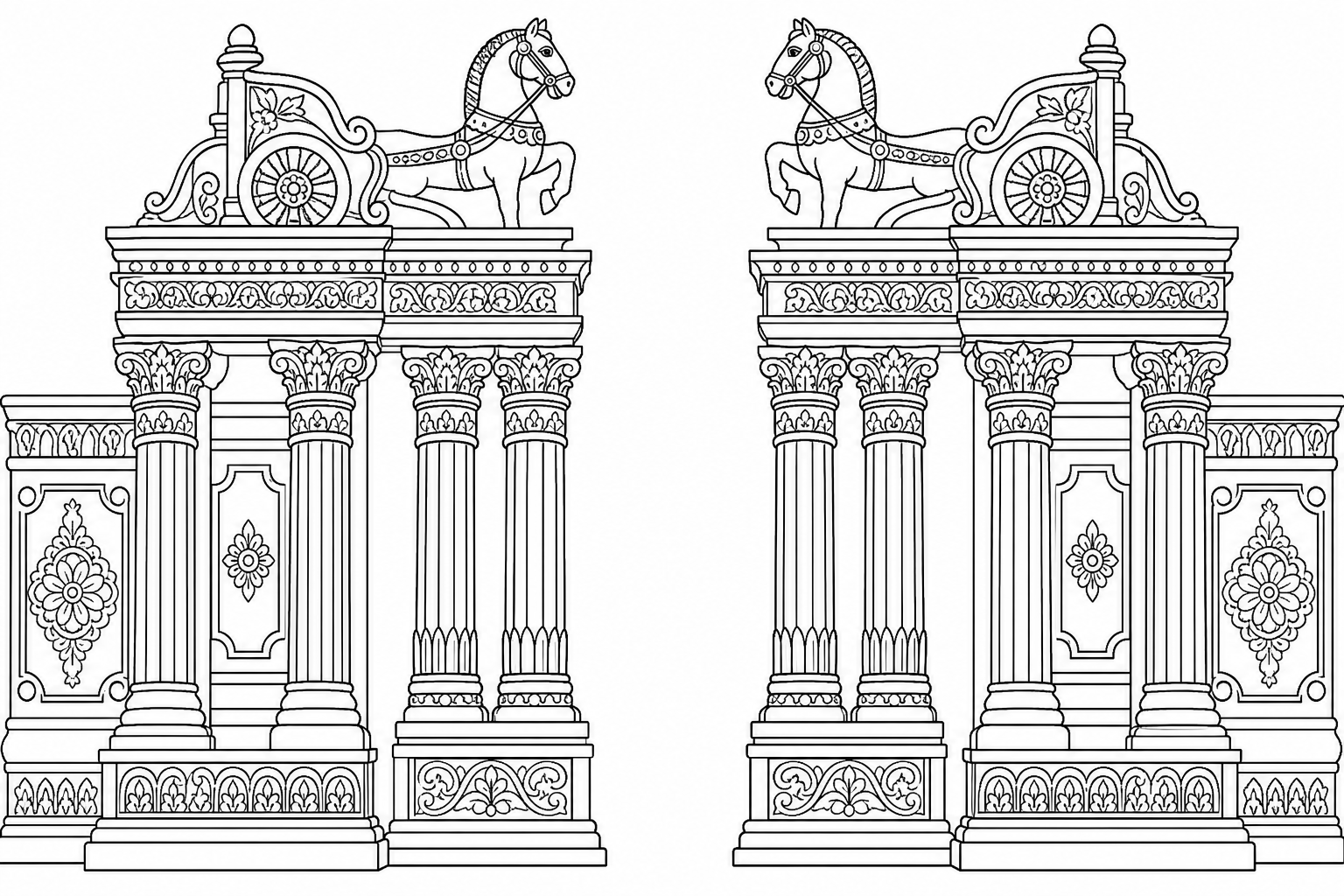
Print the split page, hand one half to each person, and agree on nothing beforehand. No comparing colours, no peeking, no helpful advice across the table. When both halves are finished, lay them side by side and tape them at the back.
What you get is one picture with a visible seam and two sets of handwriting in crayon. Nobody has to explain the seam. A four-year-old will run a finger along it without being asked.
What actually happens on the day
The third of October is a public holiday in every federal state, and the official celebration moves each year to whichever state currently chairs the Bundesrat. In 2026 that is Bremen, which is hosting it from the second to the fourth of October under the motto Viele Stärken, ein Land. The city expects more than four hundred thousand visitors across the centre and along the Weser. It falls on a Saturday this year, so nobody gets a morning off school for it and the afternoon is simply there.
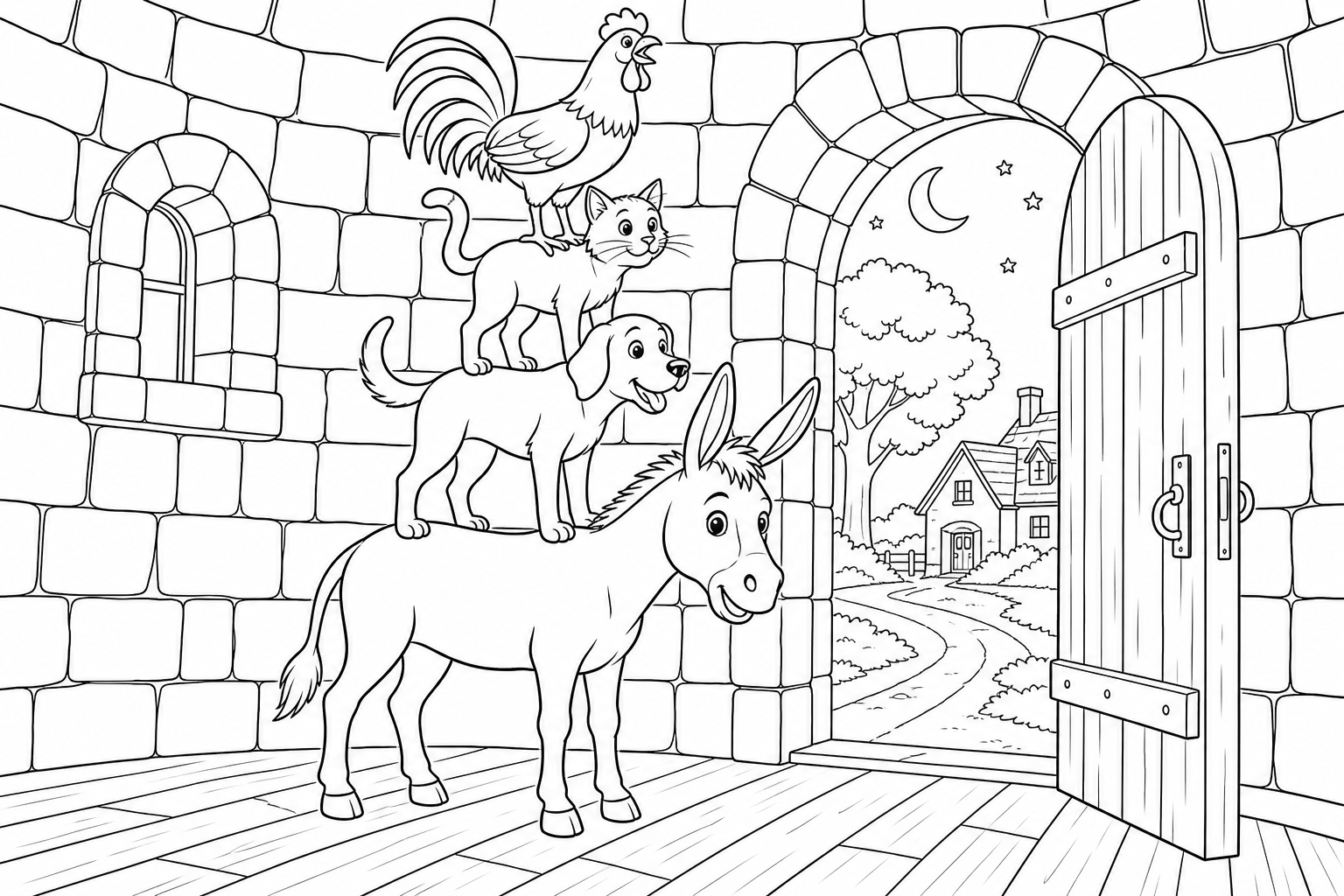
If Bremen is five hours away, the day still gives you bunting for the window and a fairy tale that fits it exactly. Bremen's four animals, the donkey, the dog, the cat and the rooster, get precisely nowhere on their own and manage the whole thing once they stand on each other. A few days earlier the same autumn calendar hands you Michaeli and its dragons, for the child who wants a story more than a country.

When the printed pages run out, there is more of the same in the showroom.
What else could you color?
Pick a prompt or type your own — opens in a new tab.
The question that comes last
Somewhere around the second half, when the taping is close and the red crayon is down to a stub, a child asks the question that has no date in it.
Was it one country before? Yes, and for more than forty years in between it was two, and the third of October is the day it stopped being two.
Tape the halves, put the picture in the window, and let that be the whole lesson.