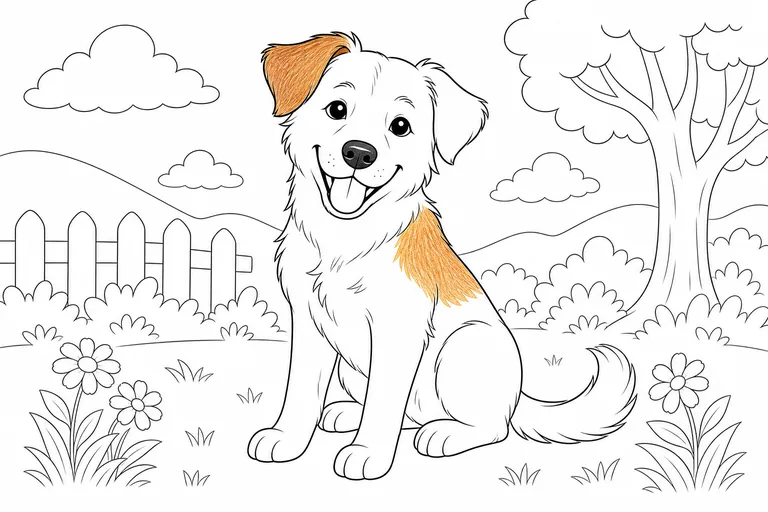
Hand the same dog outline to two kids and you can get two completely different dogs back. One returns sleek and short-haired, a beagle dozing in the sun. The other comes back as a soft gray cloud with legs, unmistakably a poodle. Same drawing. The difference was never the colors they picked. It was how they moved the pencil.
That is the part most dog coloring pages skip. A coat is not one flat color you fill in from edge to edge. It has length and direction, and a pencil can copy both. Short flicks make short fur. Long sweeps make the feathery kind. Tiny circles make curls. Once a kid feels that, a plain outline turns into their dog.
Four coats, four ways to move the pencil
Almost every breed you will find on a coloring page belongs to one of four coat families. Learn the stroke for each and you can color any dog on the site, from the ones below to the one asleep on your couch right now.
| Coat | Pencil move | Dogs to try it on |
|---|---|---|
| Sleek | Short, quick flicks that follow the body | Beagle, Labrador, Dachshund |
| Floofy | Long sweeps, lighter at the tips | Golden Retriever, Pomeranian, Collie |
| Wiry | Short choppy dashes, a little messy on purpose | Schnauzer, Fox Terrier, Scottie |
| Curly | Tiny overlapping circles, no straight lines | Poodle, Doodle, Bichon |
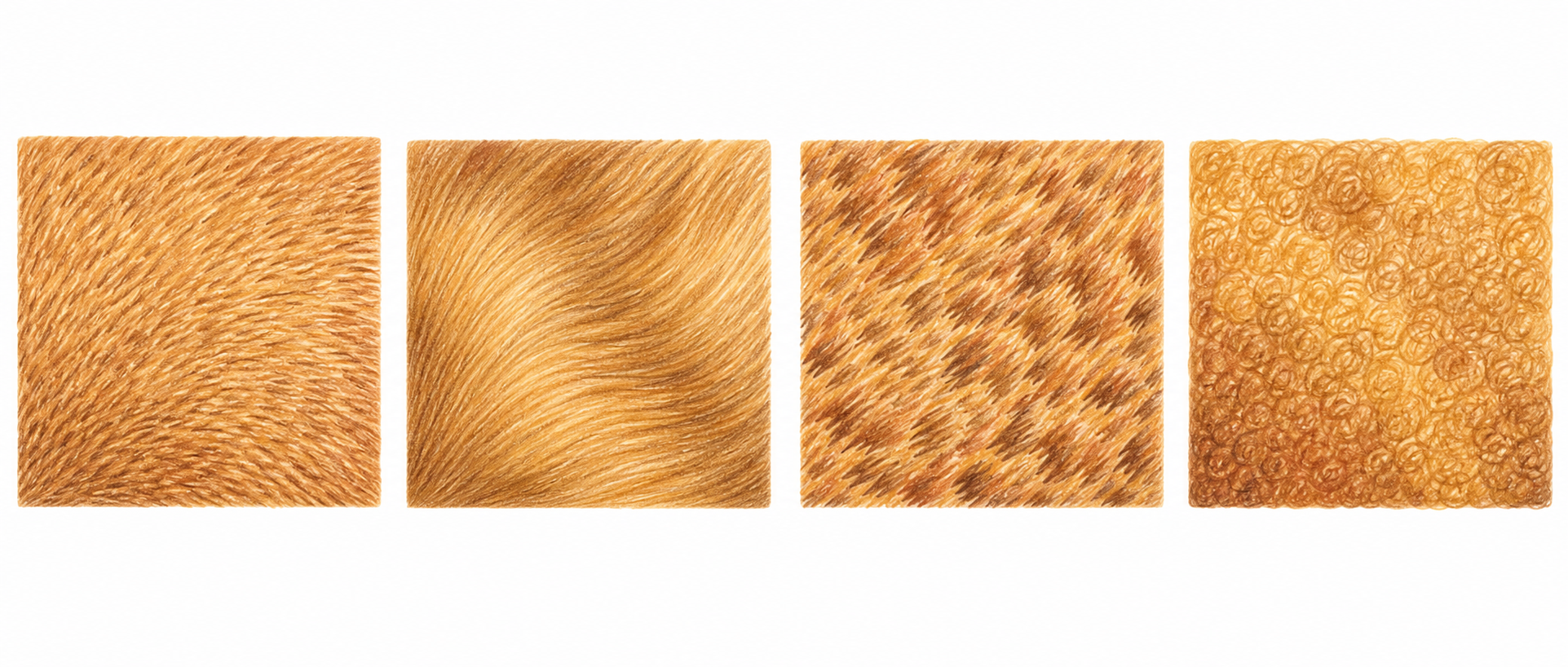
Sleek coats: short flicks, close to the skin
A beagle or a Labrador has fur so short it almost looks painted on. Color these with short, quick flicks, all running the way the body curves: down the back, along the legs. Keep the pressure light and let a little paper show through on the chest and belly, where real light would land. That sliver of unfilled paper is what stops a sleek dog from looking like a flat sticker.
Floofy coats: long sweeps that lift at the ends
Golden retrievers, collies, and tiny Pomeranians carry long fur that catches the air. Trade the short flicks for long, sweeping strokes, and lift the pencil a little at the end of each one so the tips stay soft. Follow the way the fur would hang: down off the chest, out along the tail. Lay a second color lightly over the first on the feathery parts and the coat starts to look warm to the touch.



Coloring fun for kids — anywhere.
Free for iOS & Android. No ads, no sign-up, offline-ready.


Coloring fun for kids — anywhere.
Free coloring app for kids. iOS and Android, phones and tablets. No ads, no sign-up, even offline.
Wiry coats: short choppy dashes, a little messy
Schnauzers, fox terriers, and Scotties have coats that stick out in every direction, and that is the whole charm. Use short choppy dashes and let them cross each other a bit. Neat is wrong here. The beard and eyebrows are the best part: a few darker dashes and a scruffy terrier suddenly has an opinion about something. This is the one coat where wandering a little past your own lines actually helps.
Curly coats: tiny circles, no straight lines
Poodles, doodles, and bichons are built from curls, so put the straight strokes away. Color these with tiny overlapping circles, like drawing hundreds of little loops. It is slower, which is part of why it is such a calm thing to do. Leave the circles a touch uneven and the coat reads as soft and springy instead of one solid blob.
The two spots to leave almost blank
All that stroke work is for the coat. The nose and the eyes want the opposite. Color the nose smoothly in one direction and keep the eyes to a single flat tone, so they stay calm against all that busy fur.
Once the strokes are down and you want the whole coat to look rounder and more solid, layering a second and third color is the move. There is a full walkthrough in our guide to shading with colored pencils.
There are far more dogs than four coats can hold. If your kid already has a specific breed in mind, it is almost certainly on the site.
What else could you color?
Pick a prompt or type your own — opens in a new tab.
Print, color, and make it your dog
Pick a pup, match the stroke to the coat, and remember those two white specks. Here is the full set to print.