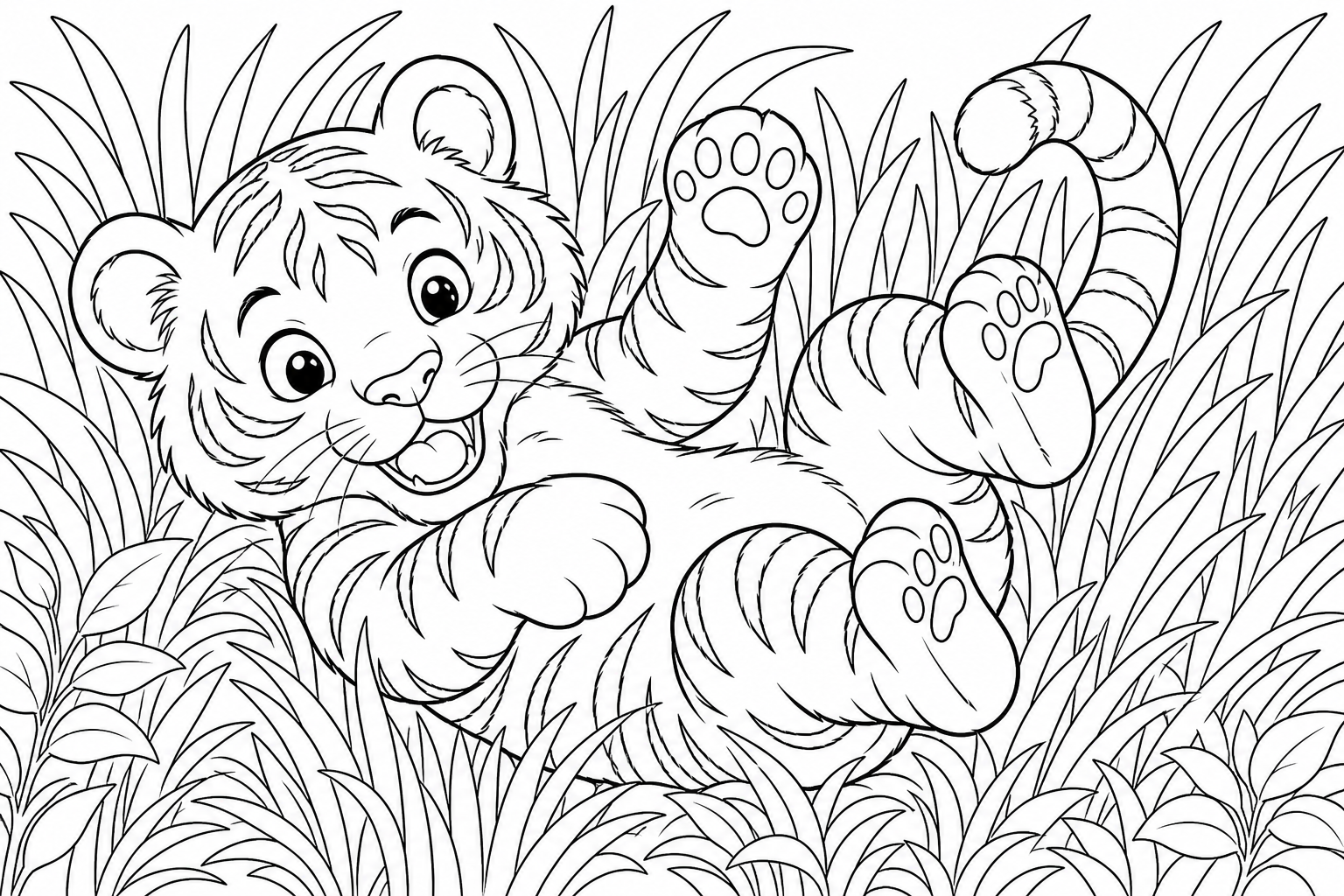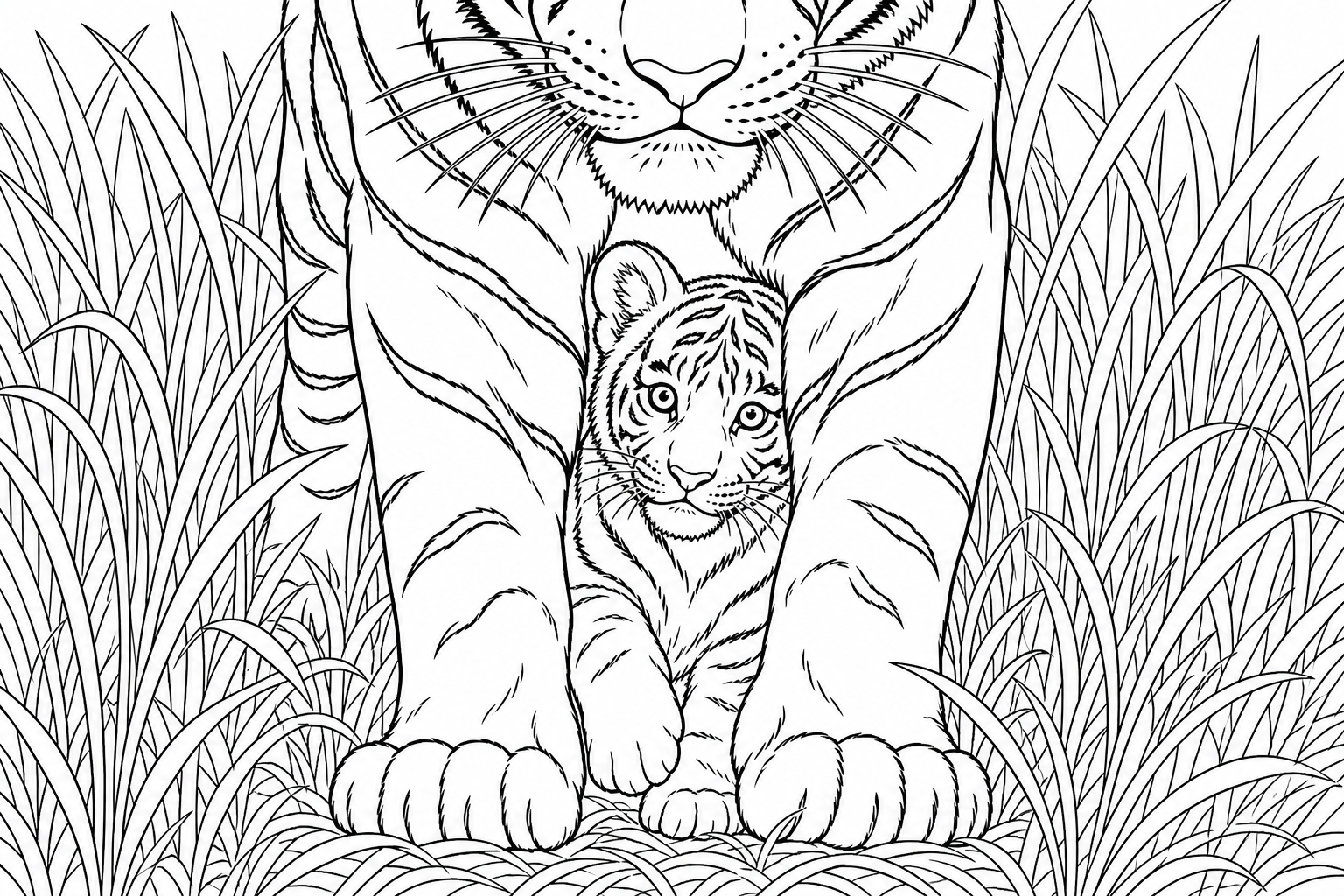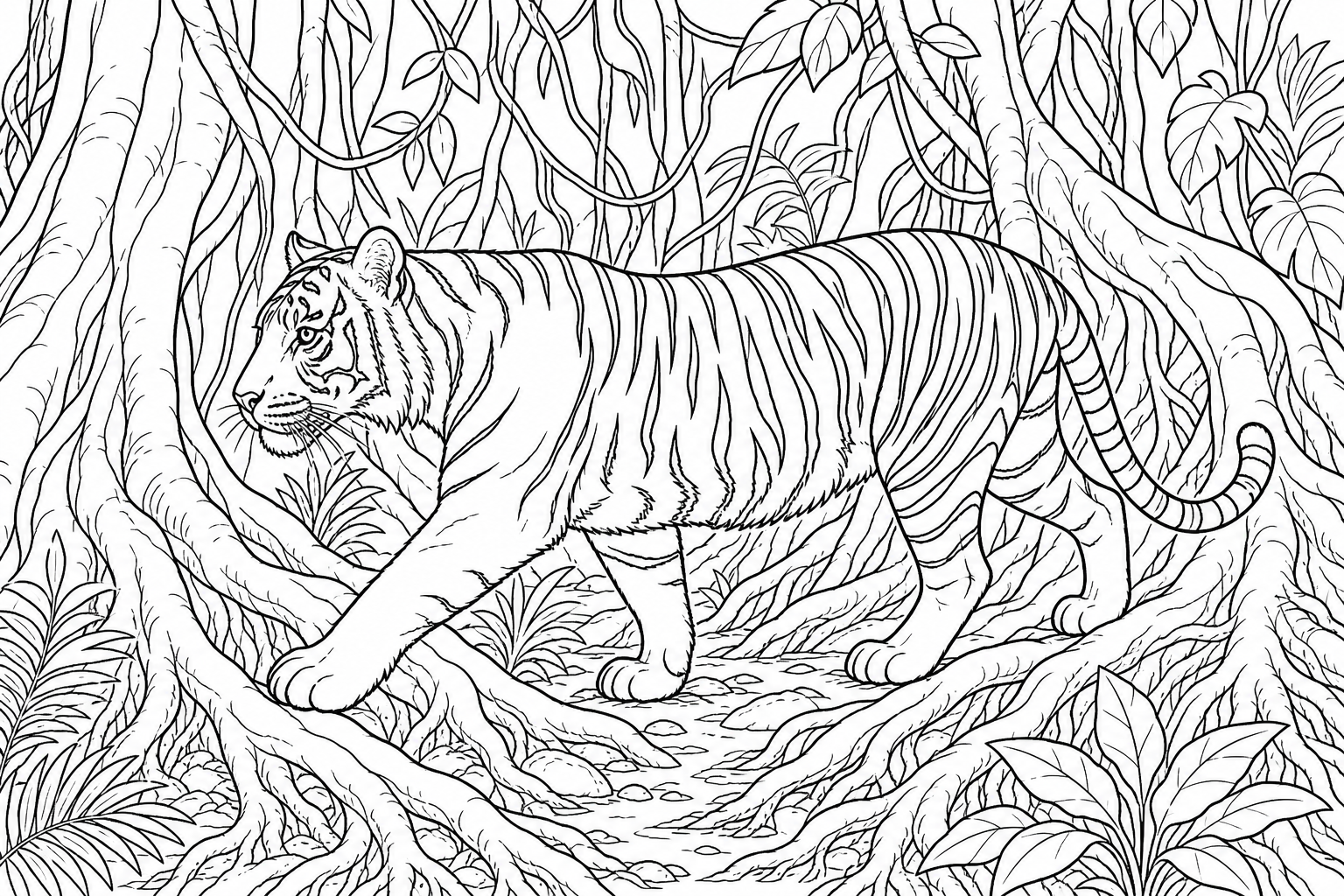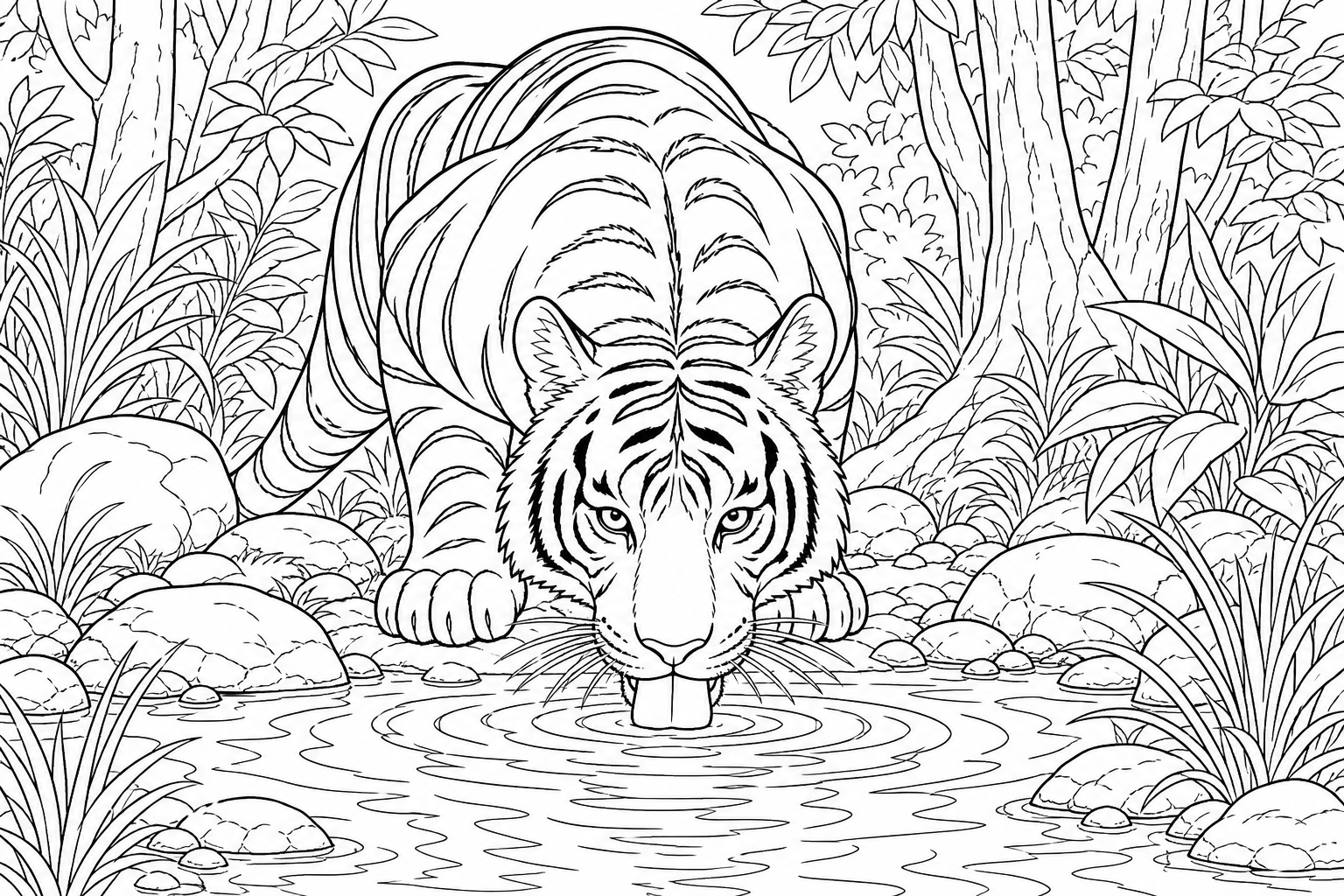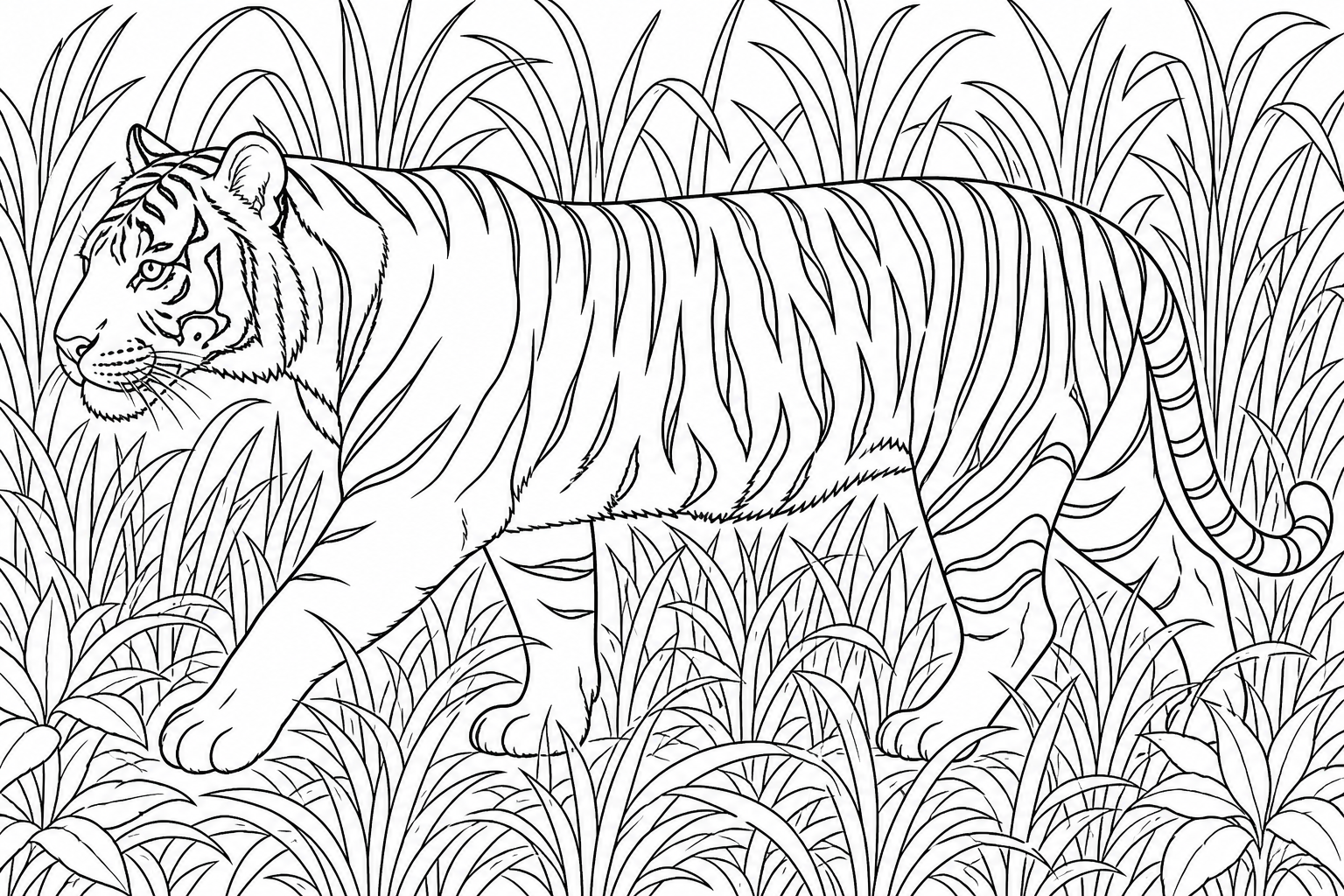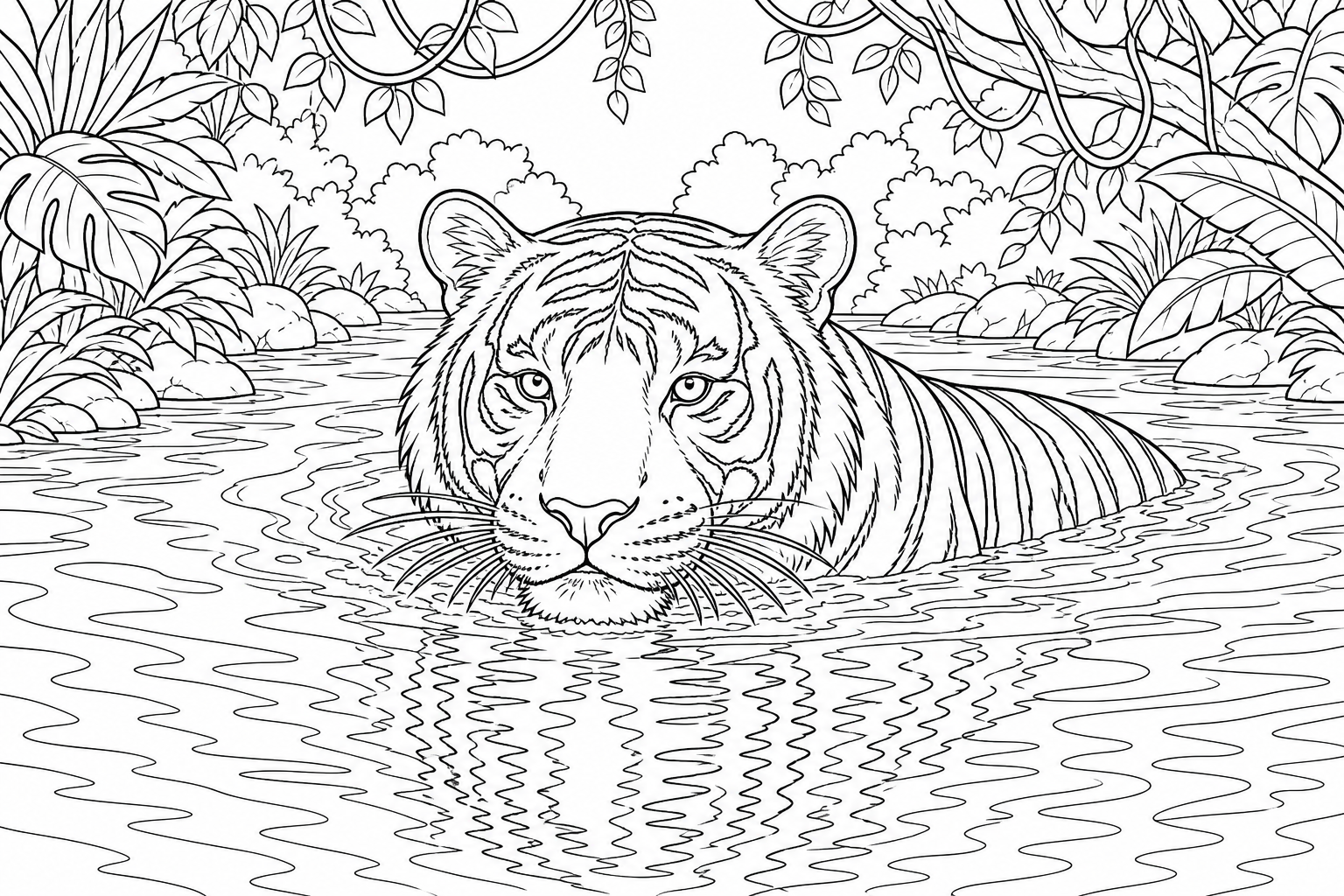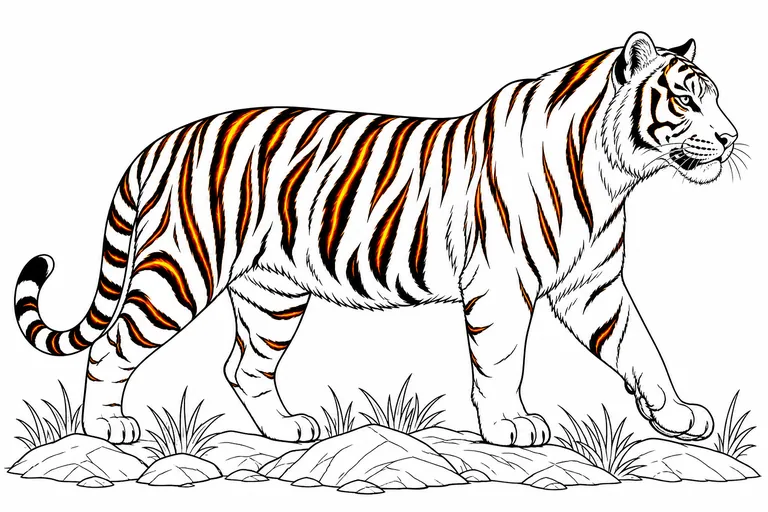
Somewhere in India tonight, a camera trap is photographing a tiger's flank. Not its face, its flank. The stripes there are enough to tell researchers exactly which tiger walked past, because no two tigers on earth wear the same pattern. Keep that in mind the next time a child hands you a tiger with stripes going the wrong way. There is no wrong way. That is the whole point of a tiger.
Scientists really do count tigers by their stripes
A tiger's stripe pattern works like a fingerprint. It is set before birth, it stays the same for life, and the left side does not match the right. Conservation teams put this to work: camera traps photograph tigers as they pass, and software matches the stripe patterns to tell one animal from the next. That is how a wild population gets counted, one individual at a time.
The stripes are not only in the fur. They are printed on the skin underneath, so a tiger stays striped all the way down.
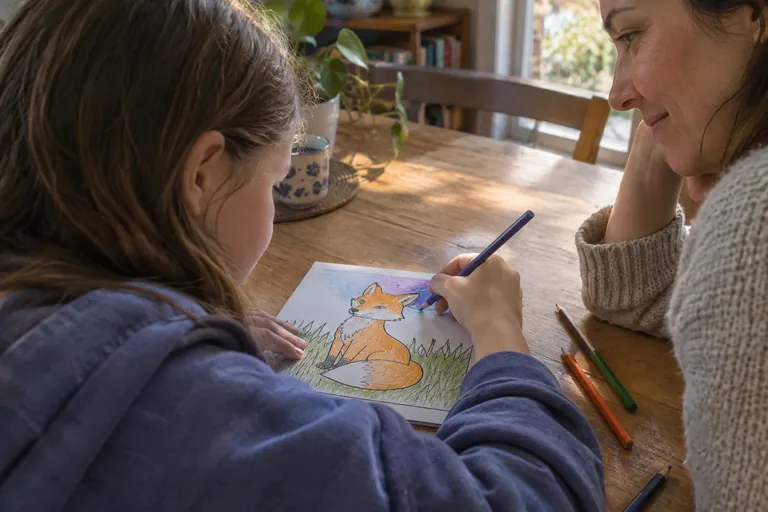
Sit down with a tiger page and you are not filling in an answer key. You are handing a tiger an identity.
Six tigers, six stripe signatures
Six subspecies of tiger are still alive, and they do not look alike. The quickest way to tell them apart is the striping: how many, how wide, how close together, and what color sits behind them.
| Tiger | Stripe signature |
|---|---|
| Bengal | Bold and well spaced, over deep orange. The pattern most people picture. |
| Amur (Siberian) | Fewer stripes, set wide apart, browner than black. The palest coat. |
| Sumatran | Narrow stripes packed tighter than any other tiger, on the smallest body. |
| Malayan | Close to a Bengal, on a noticeably smaller frame. |
| Indochinese | Short, narrow stripes that often break into spots. |
| South China | Broad, widely spaced stripes. Not seen in the wild in decades. |
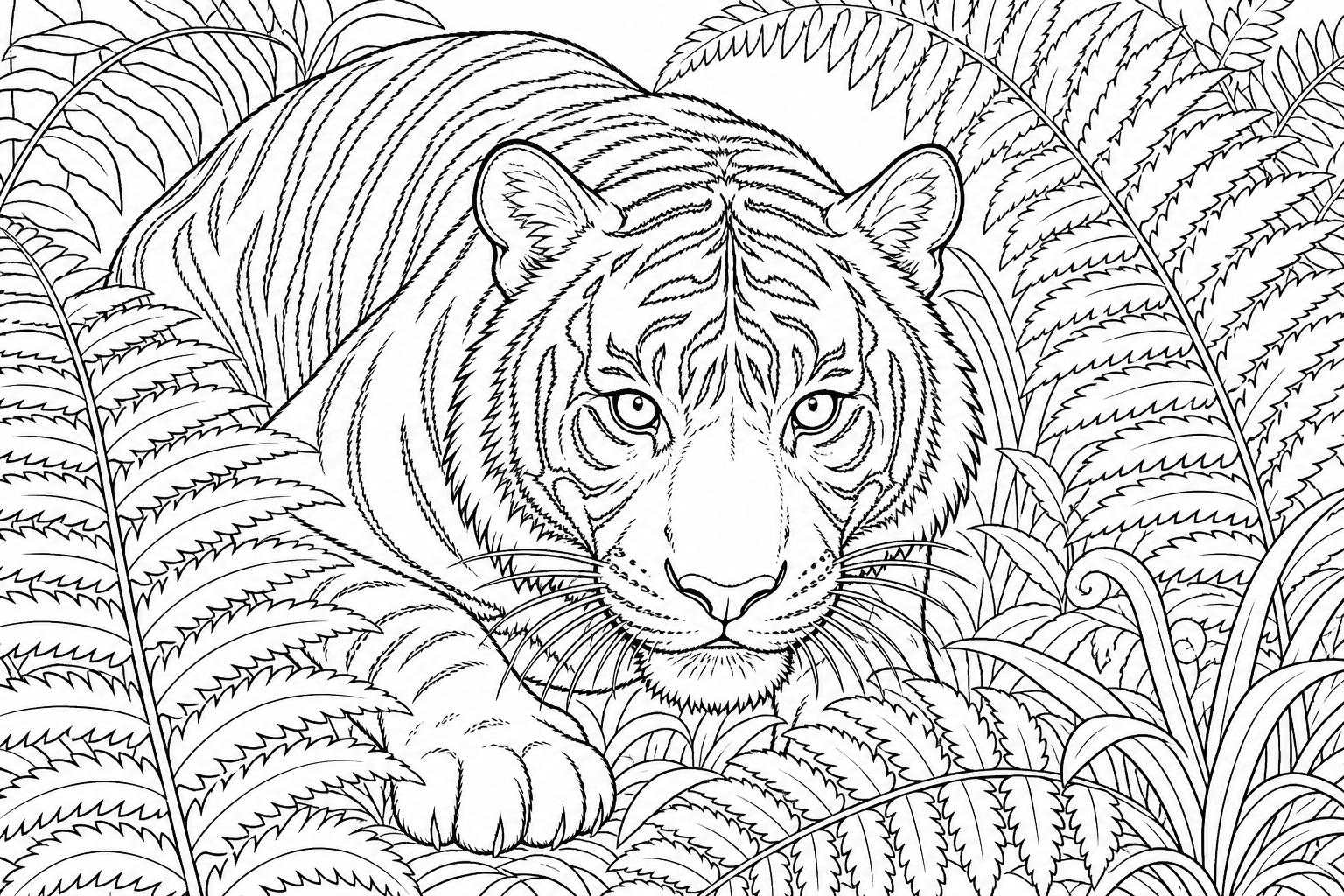
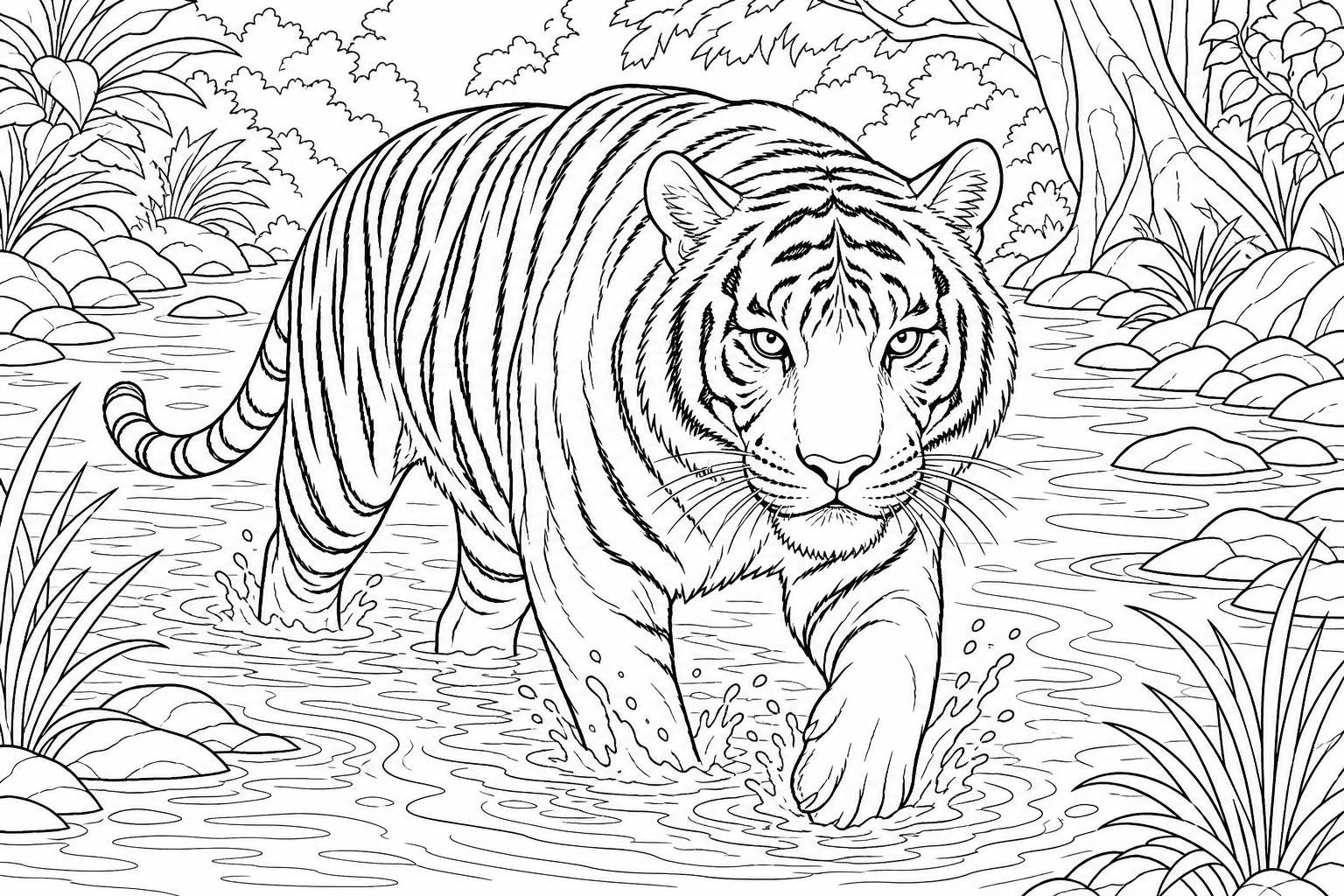
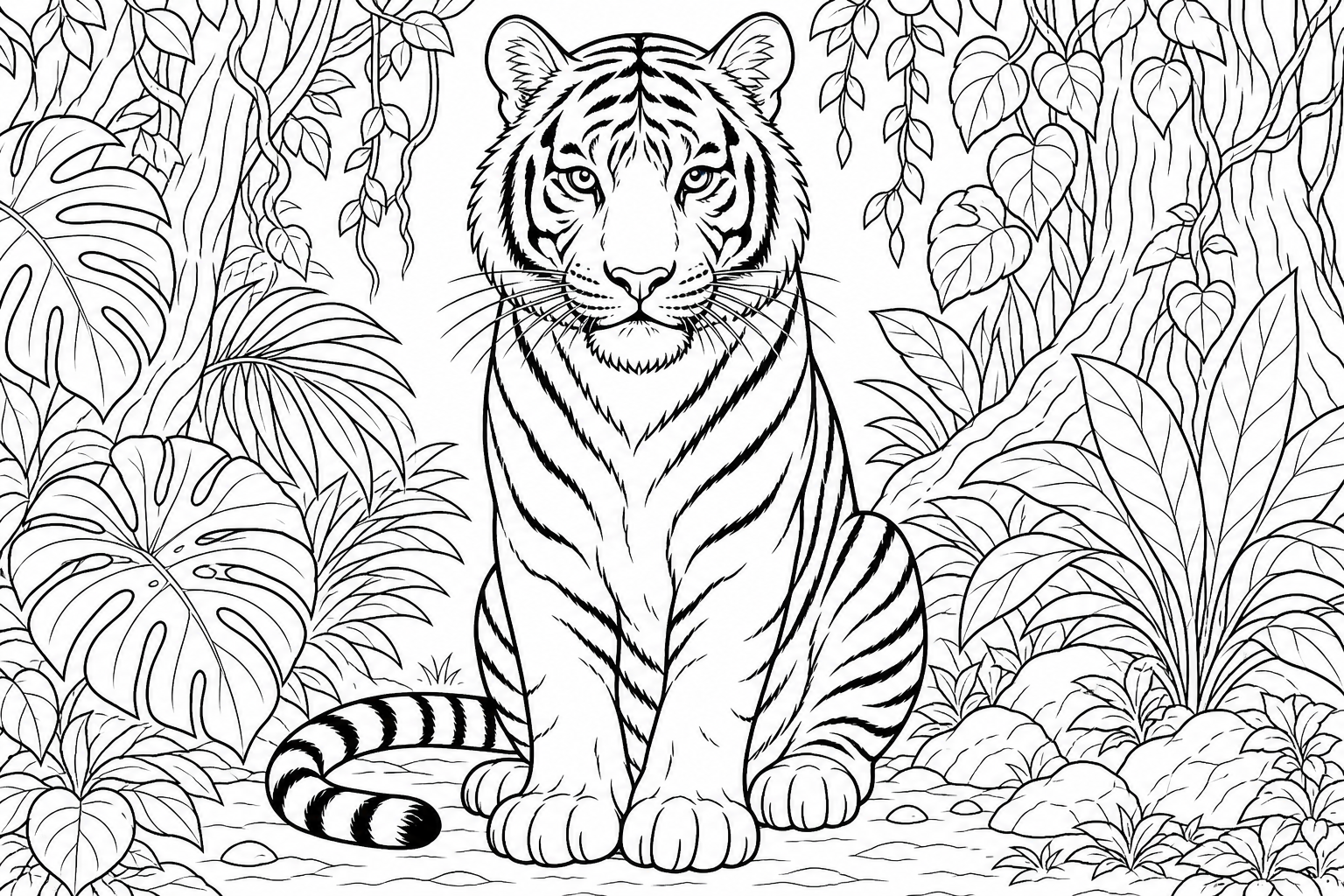
Three of them are worth printing side by side, because even a five year old can see the difference.
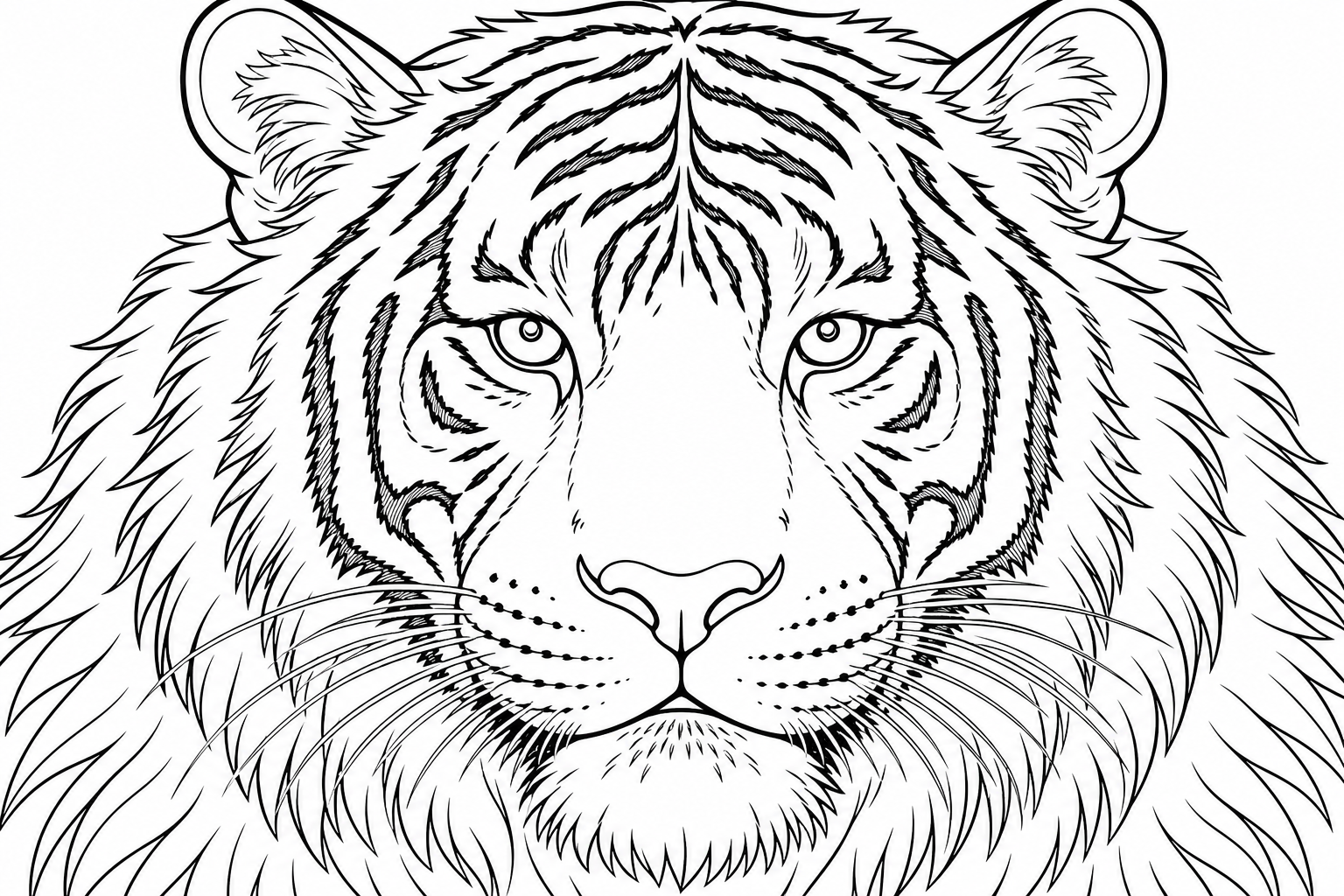
Bengal: the tiger everyone pictures
Ask anyone to picture a tiger and they picture this one. Deep orange, thick black bars, white belly and cheeks. Bengals carry the boldest contrast of the six, which makes them the easiest place to start. Big shapes, clear gaps, room to work.
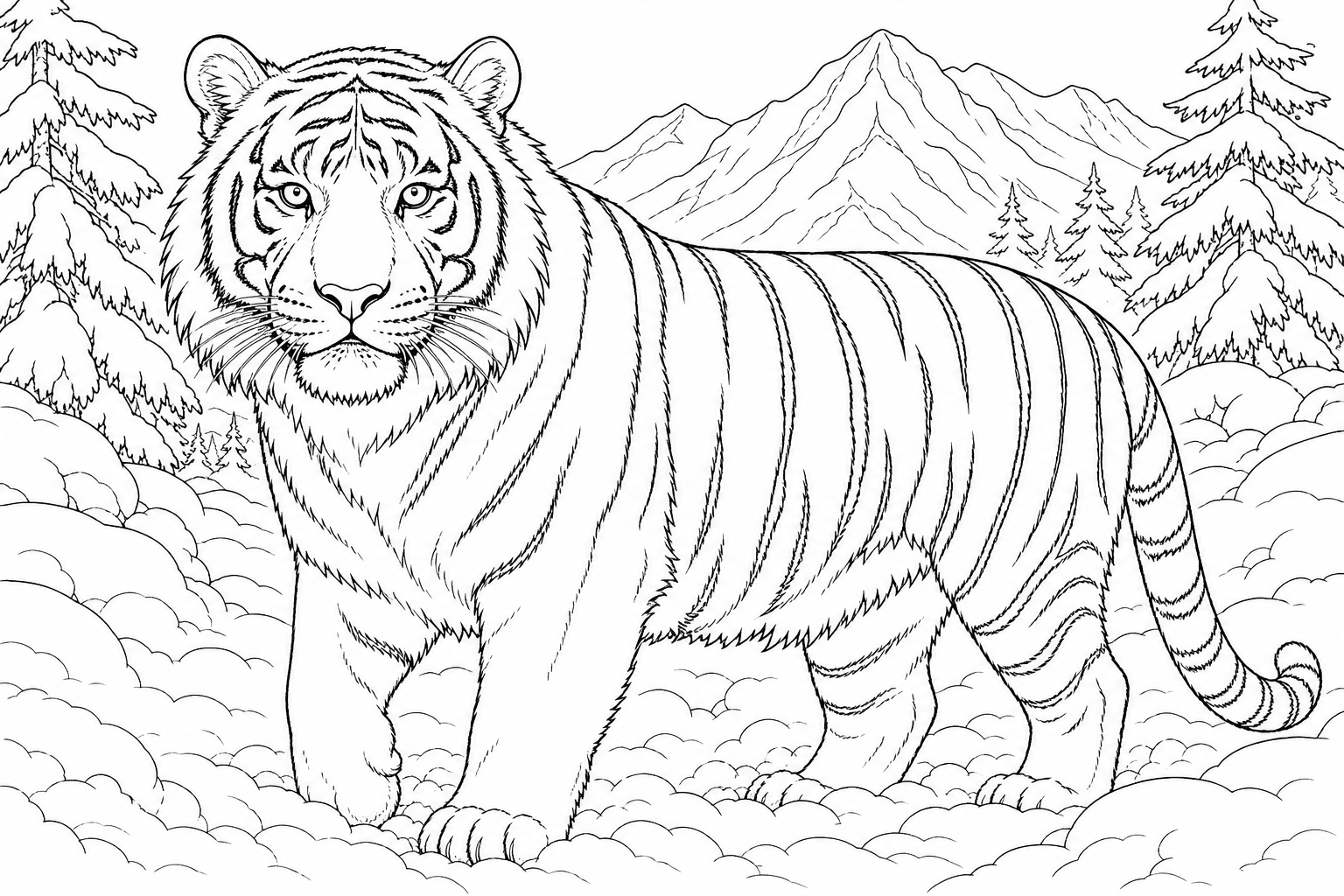
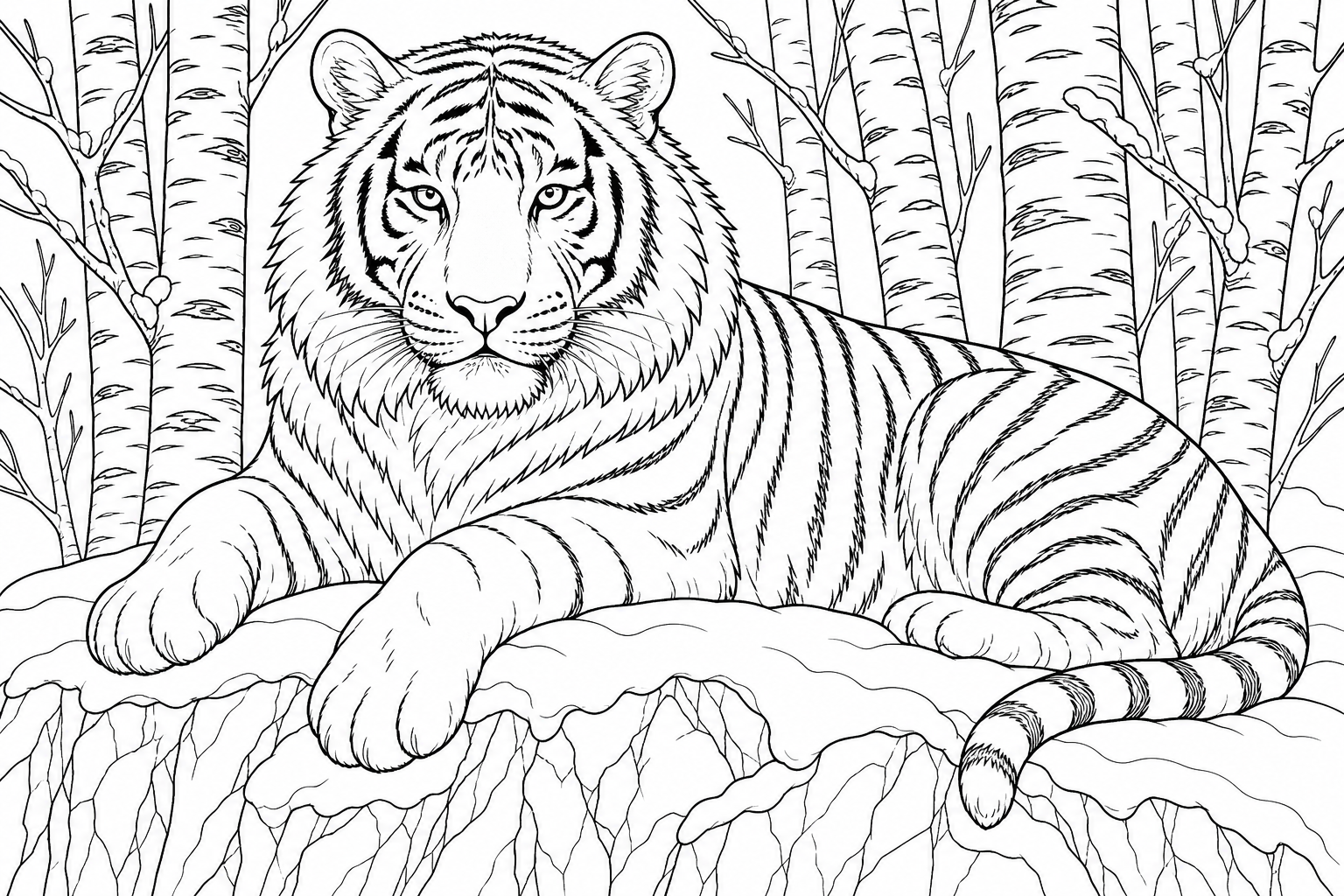
Amur: fewer stripes, more snow
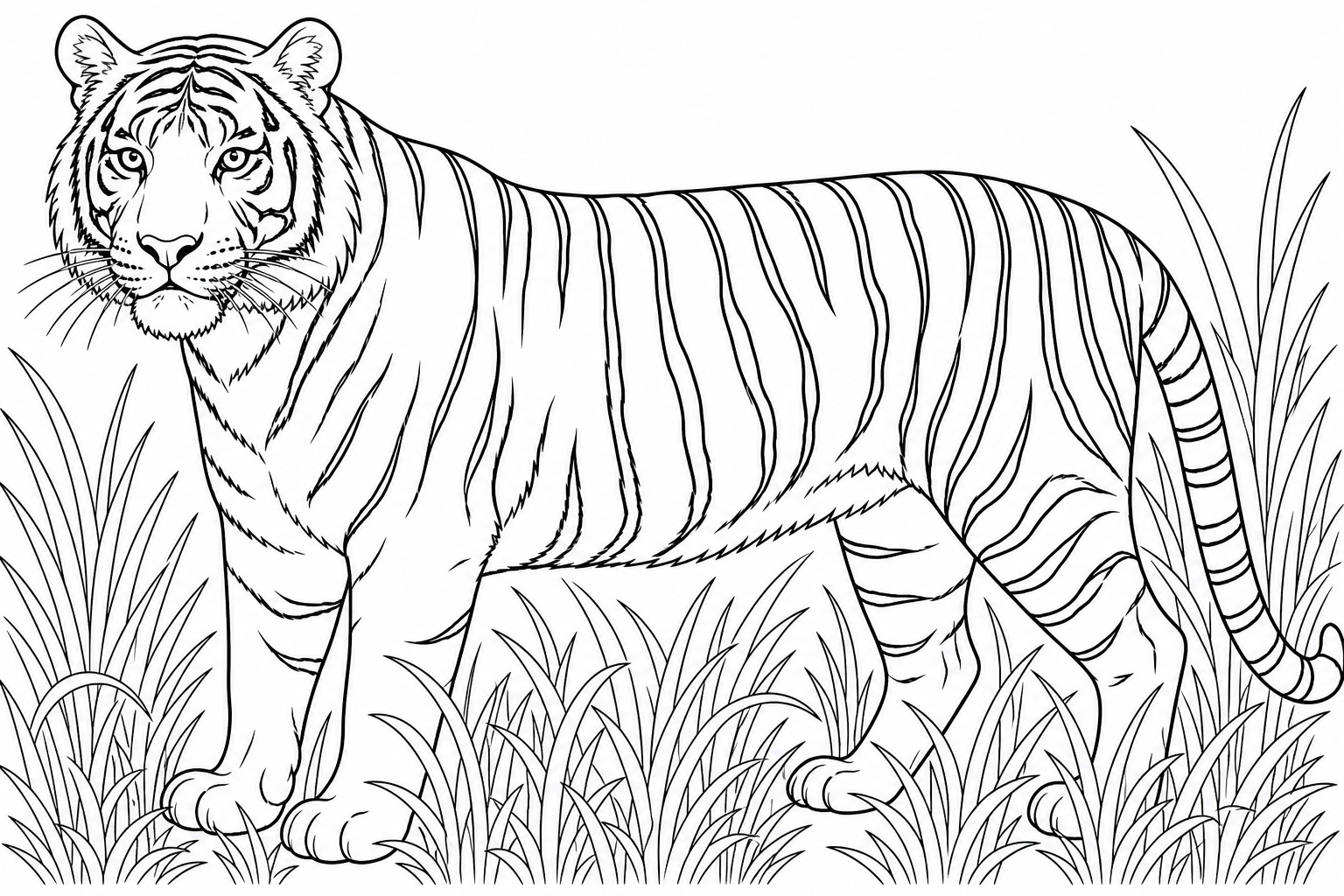
The Amur lives where winter means real snow, and it looks it. Paler coat, thicker fur, and stripes that are fewer, wider apart, and closer to brown than to black. Reach for a lighter orange than instinct suggests and leave more white showing than feels right. The gap between the stripes is the whole character of the animal.
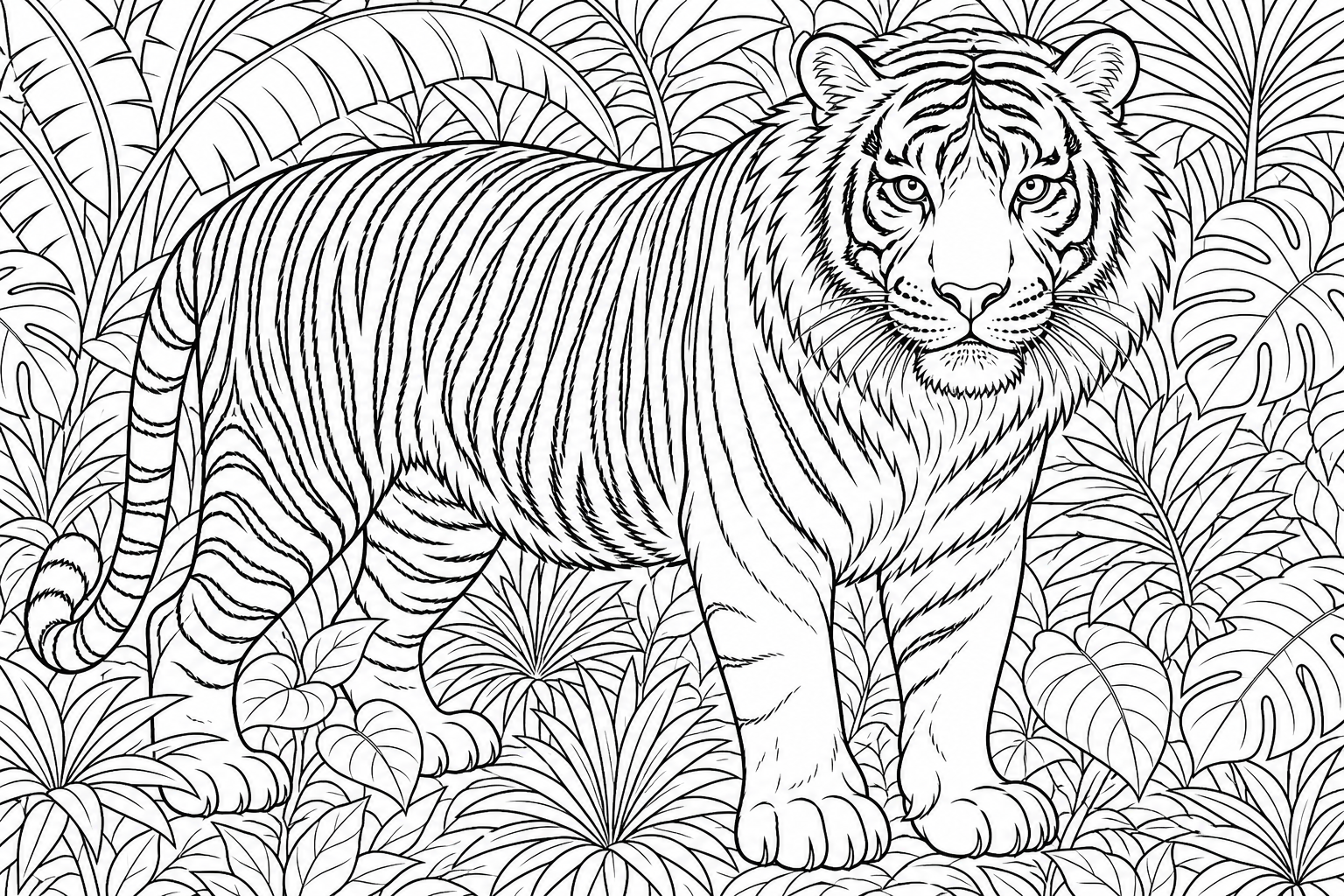
Sumatran: stripes packed tight
The smallest tiger wears the busiest coat. Sumatran stripes run narrow and crowded, sometimes doubling up on themselves, and a full ruff of fur frames the face. It is the most demanding of the three to color and the most satisfying to finish.



Coloring fun for kids — anywhere.
Free for iOS & Android. No ads, no sign-up, offline-ready.


Coloring fun for kids — anywhere.
Free coloring app for kids. iOS and Android, phones and tablets. No ads, no sign-up, even offline.
The white tiger is not a subspecies
There is no seventh tiger. A white tiger is a Bengal that inherited two copies of a single recessive gene, which switches off the orange and leaves the black. The stripes stay. Only the orange goes.
That detail changes how the page gets colored. A white tiger is not a blank tiger. It is a stripes-and-eyes tiger: charcoal or soft brown bars, ice blue eyes, and a coat closer to cream and grey than to paper white. Shadow does the work the orange used to do.
Nobody can correct your stripes
Here is the part worth saying out loud to a child. Every stripe pattern that has ever existed was a one off. The tiger they are working on right now is a pattern that has never existed and will not exist again, and there is no key to check it against.
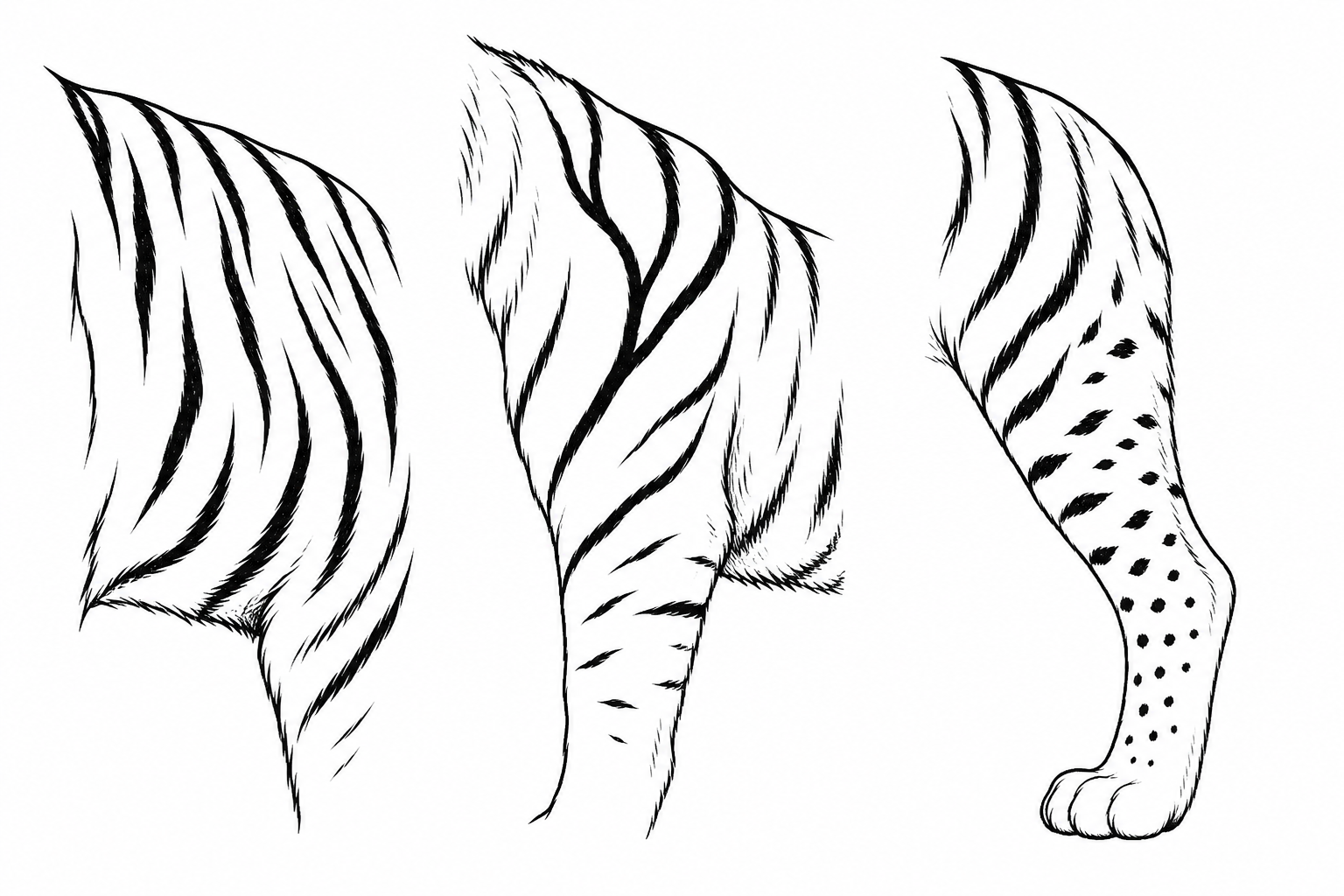
If they want somewhere to start, real stripes do three things: they taper to a point instead of ending square, they fork over the shoulder and hip, and they scatter into short dashes down the legs and tail. Borrow those three habits and any invented pattern reads as a real tiger. Skip them and it still reads as a tiger, just a bolder one. For fur that looks like fur instead of a flat block of orange, the pencil strokes in our guide to coloring real-looking coats work on tigers exactly as well as on dogs.
What else could you color?
Pick a prompt or type your own — opens in a new tab.
Print a tiger that has never existed
Pick a page, invent a pattern, and it belongs to that tiger alone. Nobody has ever worn it.