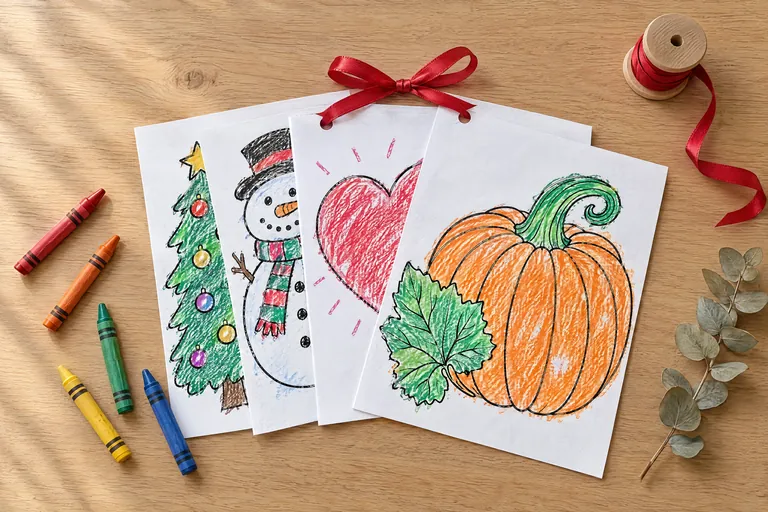
Three hundred and sixty-five mornings. That is how long a calendar hangs on a kitchen wall, and every one of those mornings somebody walks past it with a cup of coffee and looks. A printable coloring calendar for 2027, colored by your child over a few November weekends and tied together with a ribbon, is the one homemade present that grandma and grandpa will see every single day of next year.
It also asks very little of you. Twelve pages, one picture per month, two or three weekends at the kitchen table, and an afternoon with a hole punch. Below is the whole project, month by month, in the order we would do it.
Why a calendar is the present that stays on the wall
Most things children make for their grandparents have a short life. The drawing goes on the fridge for a week, then into a drawer with the others. That is no failure of love. A fridge simply has room for one picture, and next week brings another.
A calendar gets around that problem by being useful. It has a job in the house, so it stays where everyone sees it. In January the snowman is the first thing grandpa notices when he checks which day the bin goes out. In July it is the ice cream cone, colored in a shade of pink that exists nowhere in nature. Each month the picture changes, and each month there is a small reason to call and say "we just turned to the pumpkin."
There is a second, quieter reason it works. Twelve pages colored across several weekends show something a single drawing cannot: a child getting better at something. The January page is often the wobbliest, because it was the first. By December the strokes are steadier, the colors more deliberate, and the white gaps fewer. Grandparents notice that. Parents usually do not, until they see the twelve pages lined up.
And it is a present a child can make almost entirely alone. You pick the pages and do the binding. Everything a grandparent will look at is the child's own work.
A calendar is a drawing with a job, and a drawing with a job does not end up in a drawer.
The plan: one picture for each month
The trick is to choose the twelve pages before anyone picks up a crayon. A calendar with three butterflies and no December looks unfinished, however good each page is. One clear motif per month, big and simple, is what makes the whole thing read as a year.
This is the plan we use. Every page is a voilà page you can print today.
| Month | Page | Why it works |
|---|---|---|
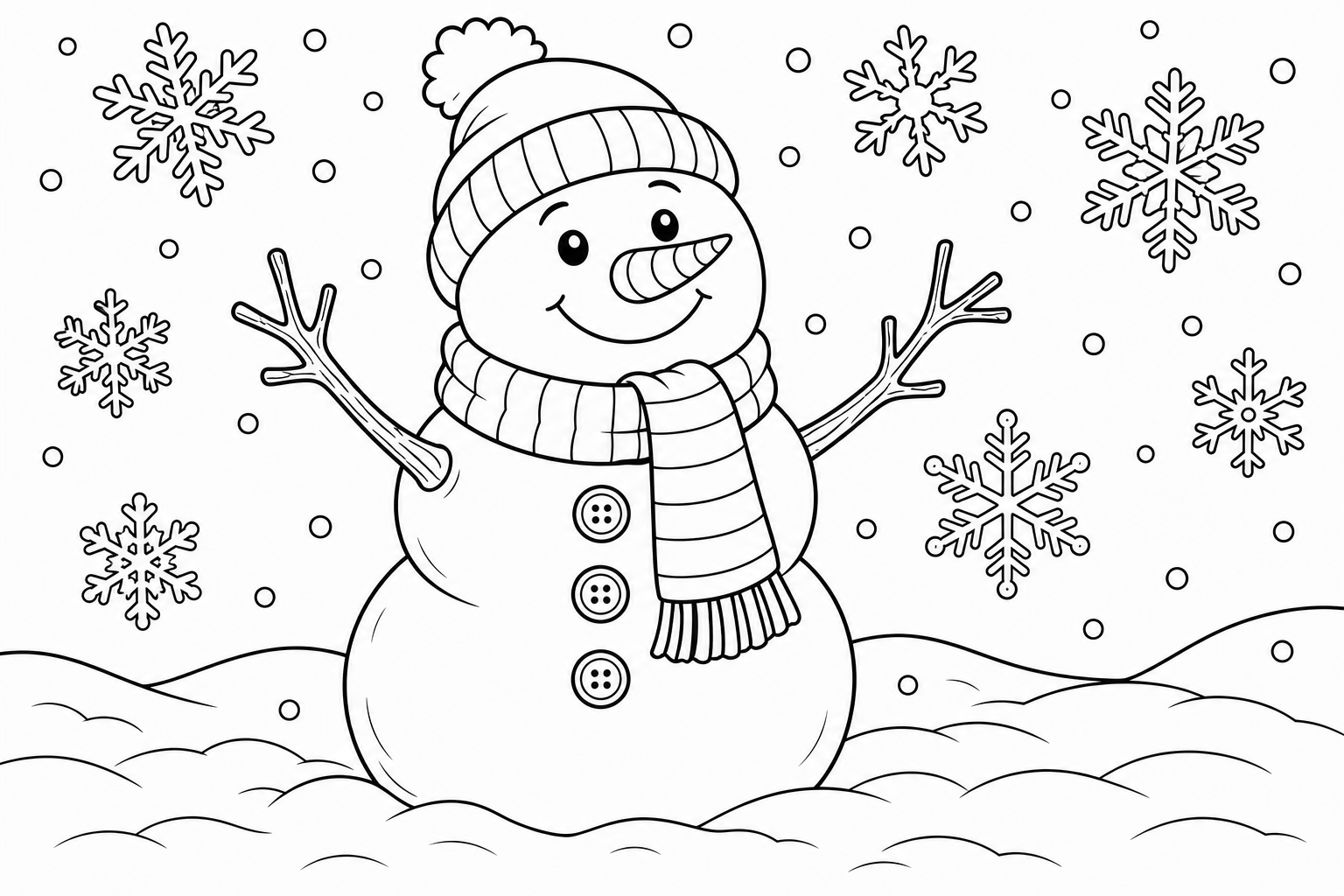
| January | A snowman with a striped scarf | The scarf stripes are the first good job for a whole box of colors |
| February | One big puffy heart | Large open shape, finished in one sitting |
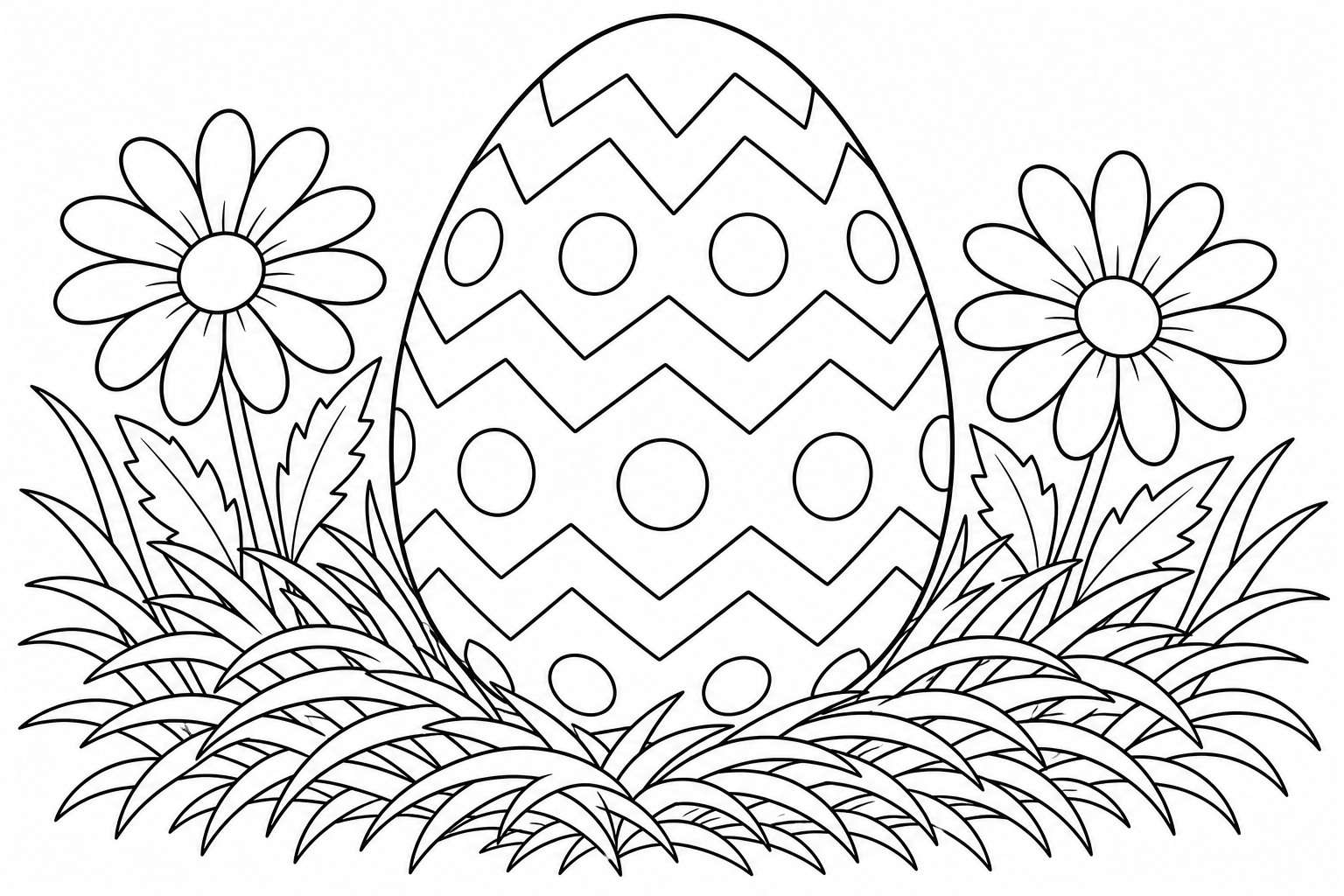
| March | An Easter egg in a grass nest | Easter falls in March in 2027 |
| April | A smiling tulip | Spring arrives on the wall right on time |
| May | A butterfly with matching wings | Both sides the same, a nice puzzle for older kids |
| June | A sandcastle with shells | Plenty of small shells for patient hands |
| July | An ice cream cone | Every flavor is allowed |
| August | A beach towel with a ball and flippers | Holiday month, stripes again |
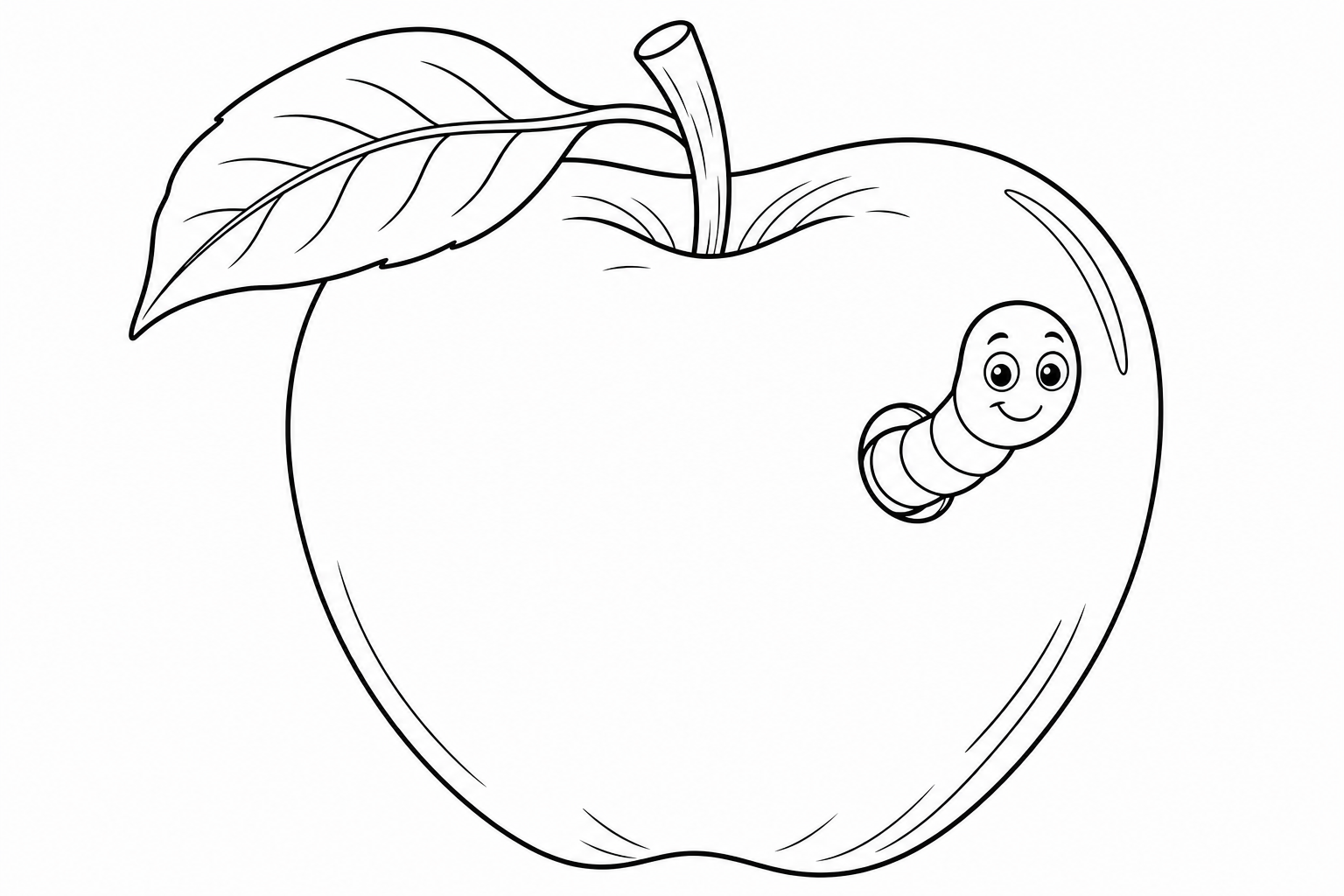
| September | An apple with a leaf | Back to school, back to apples |
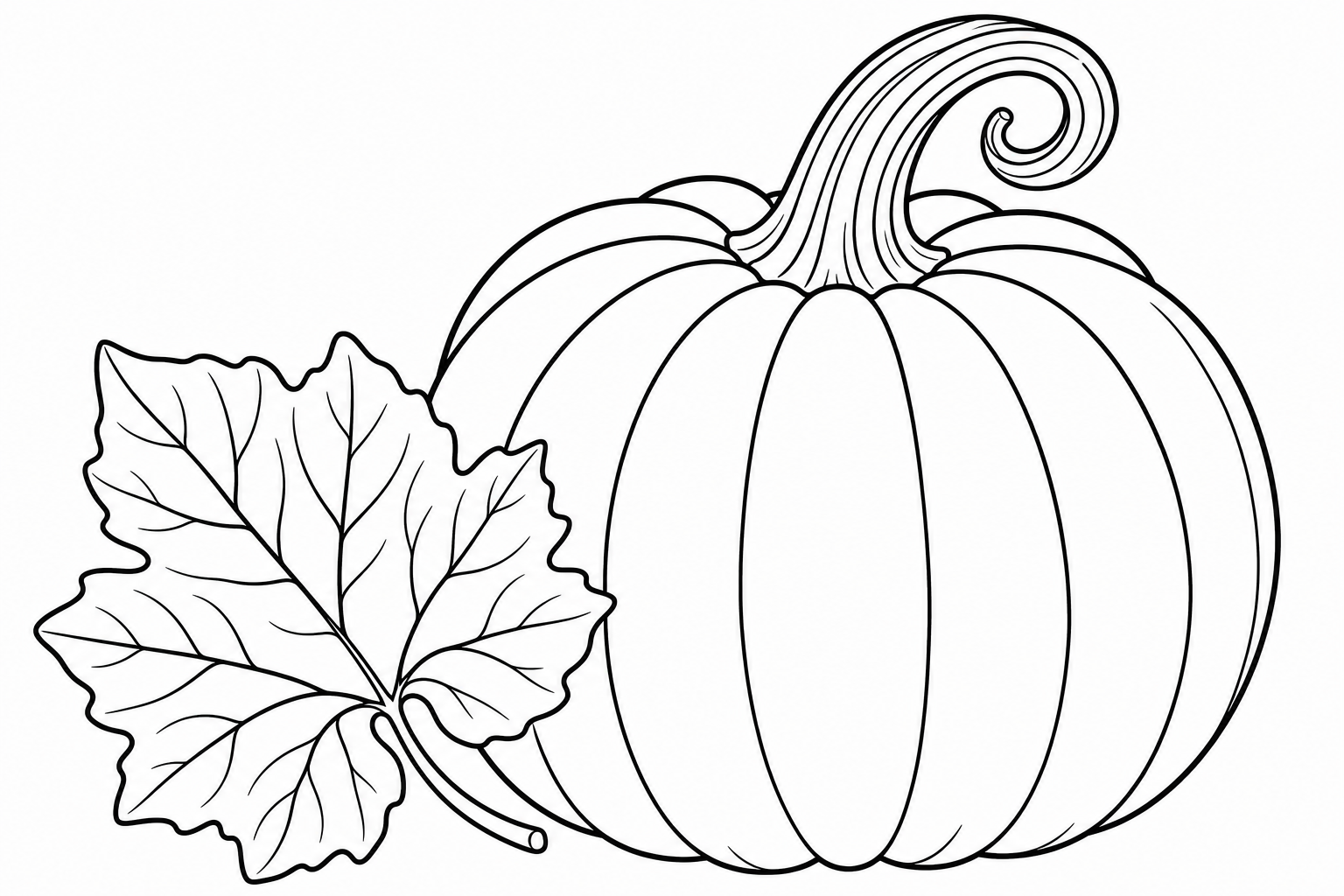
| October | A round pumpkin | Orange in its natural habitat |
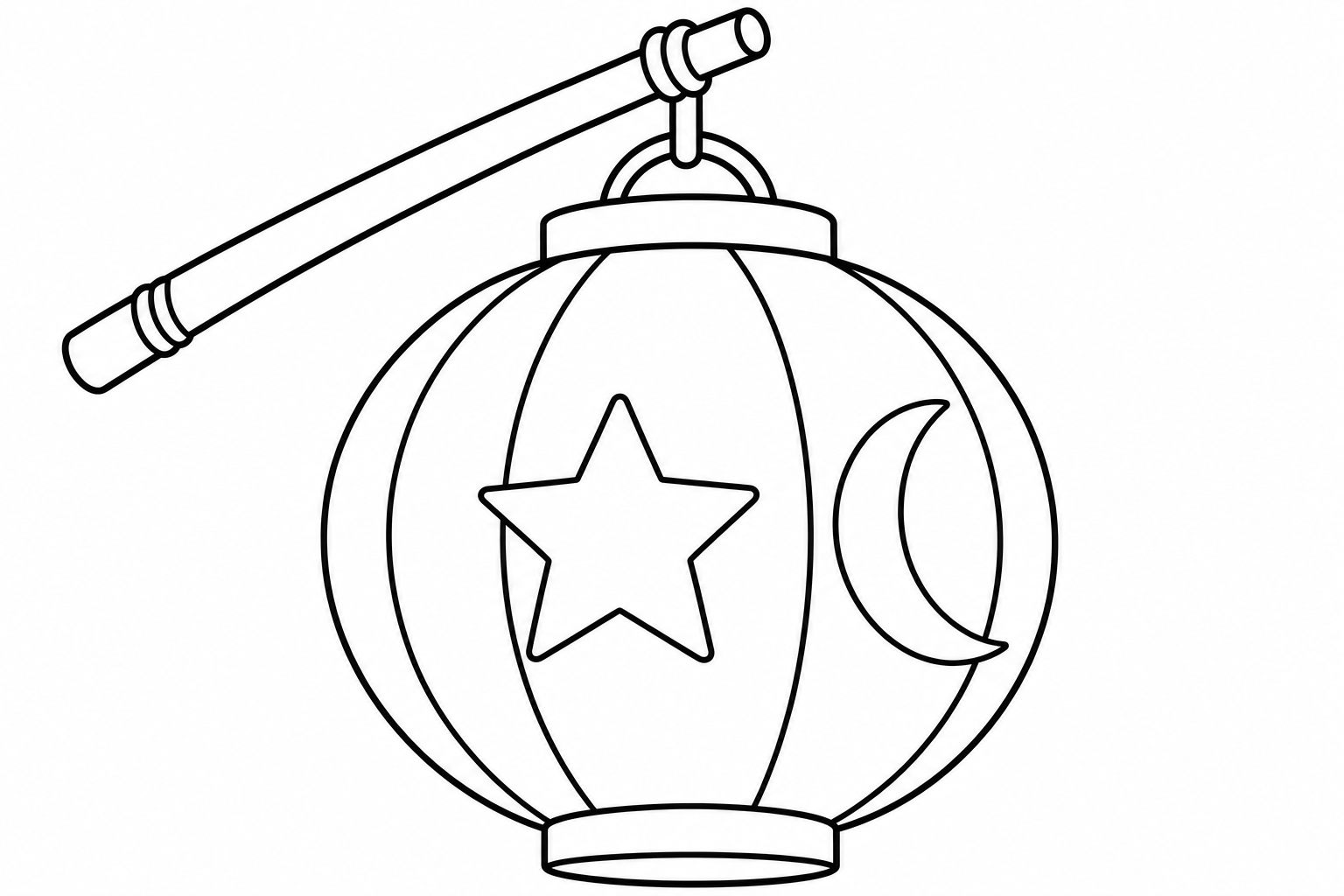
| November | A paper lantern | Lantern walks on St Martin's Day |
| December | A fir tree with baubles | The month the present is unwrapped |
Two of those choices depend on dates. Easter Sunday falls on 28 March in 2027 (list of dates for Easter), so the egg goes into March this time and the tulip waits until April. November gets a lantern because St Martin's Day on 11 November is when children in Germany, Austria and Switzerland walk through the streets with lanterns they made themselves (Apotheken Umschau). If your family marks other days, change the motifs. A calendar for grandparents in Hungary or Spain may want a different picture in October or December, and that is exactly the kind of decision a child loves to make.
First weekend: January to June
Start with the first half of the year. Print the six pages on a Friday evening so they are waiting on the table on Saturday morning.



How many pages fit in one sitting depends a lot on age.
For 3 to 5 year olds
One page per sitting is plenty. Pick the biggest shapes first: the heart, the snowman and the egg. A three year old will cover the heart in two or three colors and be done in ten minutes, and that is a perfectly good February. Let the page be as loud as they want. Grandparents are not judging the shading.
If concentration runs out halfway, put the page aside and come back after lunch. A calendar does not need to be finished in one go, and a page colored in two moods often ends up the most interesting one.
For 6 to 10 year olds
Older children can manage two or three pages in a morning and will often want to add things: a background behind the tulip, a sun over the sandcastle, a pattern on the egg that was not printed there. Say yes. The printed outline is a starting point, and the additions are what make the calendar theirs.
This is also the age where the month names can go on in your child's own handwriting, along the top or bottom margin. A slightly uneven "March" in pencil is worth more to a grandparent than any font.
Second weekend: July to December
The second half of the year usually goes faster. Your child knows how the project works now, and summer motifs are fun to color in November, when it is dark outside by five.
Keep the finished first-half pages somewhere flat and safe while you work. A big hardback book on top of them overnight takes out any curl from heavy coloring. If siblings are involved, give each child their own months rather than splitting a page: two children can share one calendar with six pages each, and both get to say "I made that."
A few things tend to go wrong around now, and all of them are easy to fix. The sandcastle page in June has lots of small shells, and a younger child may get tired of them. Let them color the castle and leave the shells white; white shells look fine. The pumpkin and the apple both invite one big block of a single color. That is fine too. If your child wants more, a darker stripe down each pumpkin rib is a nice next step.
The December page deserves a moment. It is the last page of the year and also the month the present will be opened, so many children want to make it special. A fir tree with every bauble a different color is a good way to end.



Once all twelve pages are done, lay them out on the floor in order. This is a good moment to stop and look together. Children rarely see their own work as a set, and seeing a whole year spread out is a quiet kind of pride.
Binding it into a calendar
Now the part that is mostly yours. It takes about an hour, less if you have done it before.
What you need:
- the twelve colored pages, plus one blank sheet or a thirteenth page for the cover
- a printed 2027 monthly date grid, one month per sheet or cut into strips
- a glue stick
- a hole punch
- about one meter of ribbon, or two binder rings
- a sheet of thin card for the back, so the calendar hangs straight
And the steps:
- 1Print the date grids. Any free monthly grid for 2027 works; choose one with large boxes so grandparents can write appointments in.
- 2Glue each month's grid under its picture, or on the back of the previous month's page so the picture and the dates face each other when the calendar hangs open.
- 3Stack the pages in order, cover on top and the card at the back, and tap the top edges straight.
- 4Punch two holes along the top edge, a hand's width apart, through the whole stack. Punch a few sheets at a time if your punch is small.
- 5Thread the ribbon through both holes and tie it in a bow, leaving a loop long enough to hang on a nail. Binder rings work the same way and turn the pages more easily.
- 6Hang it on a door handle for a day to check it sits straight, then wrap it.
If you would rather not punch holes, a copy shop will wire-bind the stack with a hanger for a small fee, and the result looks very professional. For the best results with heavy crayon, see our guide to printing coloring pages at home, which covers paper weight and printer settings.
What else could you color?
Pick a prompt or type your own — opens in a new tab.
Handing it over
Wrap the calendar flat, so the pages do not crease, and let your child hand it over themselves. Many grandparents will want to flip straight through all twelve months right there at the table. Let them. Then hang it up together, open at January, even if it is still December.
If you want one more personal touch, add a line on the back of the card: the child's name, their age, and the year they made it. In ten years that line is the part everyone reads first. It pairs well with a keepsake page from our Grandparents Day pages made to keep, if you want a matching card.
Next year, swap one thing: let your child choose the twelve motifs themselves, write them on a list in October, and print exactly those. The calendar becomes a record of what they loved that year, and grandma gets to find out what that was one month at a time.