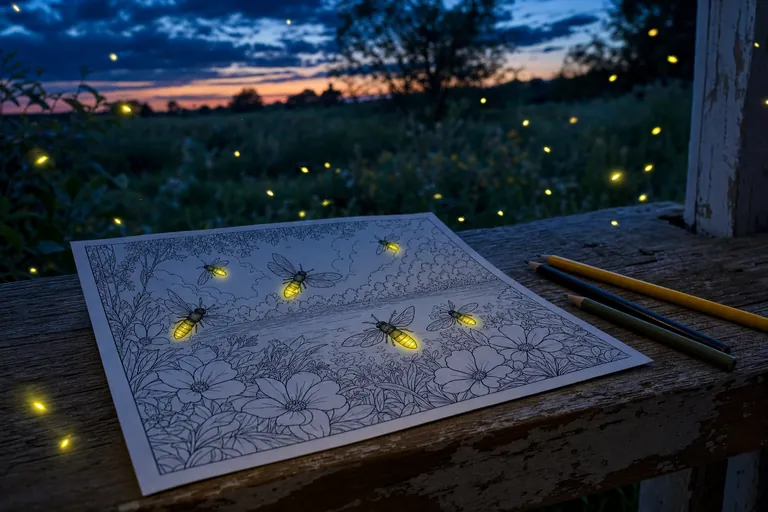
The first fireflies show up in the thin slice of evening after the sky goes dim and before anyone turns on the porch light. One blinks near the fence. Then two more, low in the grass. Kids freeze, then run for a jar. That hour is short, and it is the whole reason this page exists.
Most coloring subjects are about a shape. A firefly is about a light. That changes how you draw it, how you color it, and which page is worth printing. Here are the firefly and lightning bug pages we keep going back to, with a quick look at why that small glow works the way it does.
Why the light is the whole trick
A firefly's glow comes from a chemical reaction in its lower body, and it is almost absurdly efficient. Nearly all of the energy turns into light and almost none into heat, which is why it gets called "cold light." A regular bulb throws off most of its energy as warmth. A firefly throws off almost none. The Xerces Society keeps a clear, plain-language overview of how the light works and how the bugs are faring.
That one fact is also the coloring tip. The glow is the subject. Keep it bright, keep everything around it dark, and the page does the rest.
A small field guide to firefly pages
You do not need twenty-five of these. You need the four that actually feel like a summer evening.
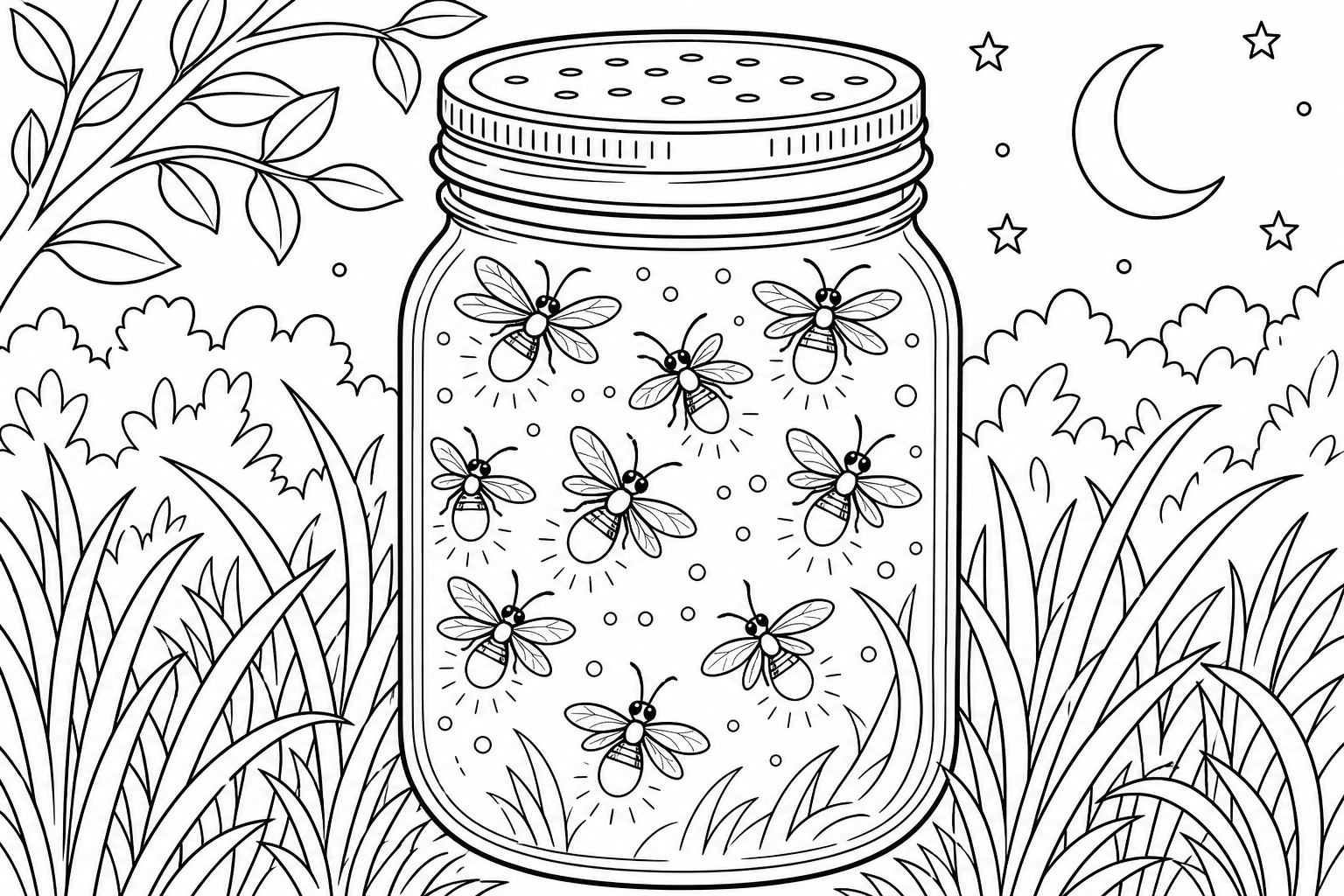
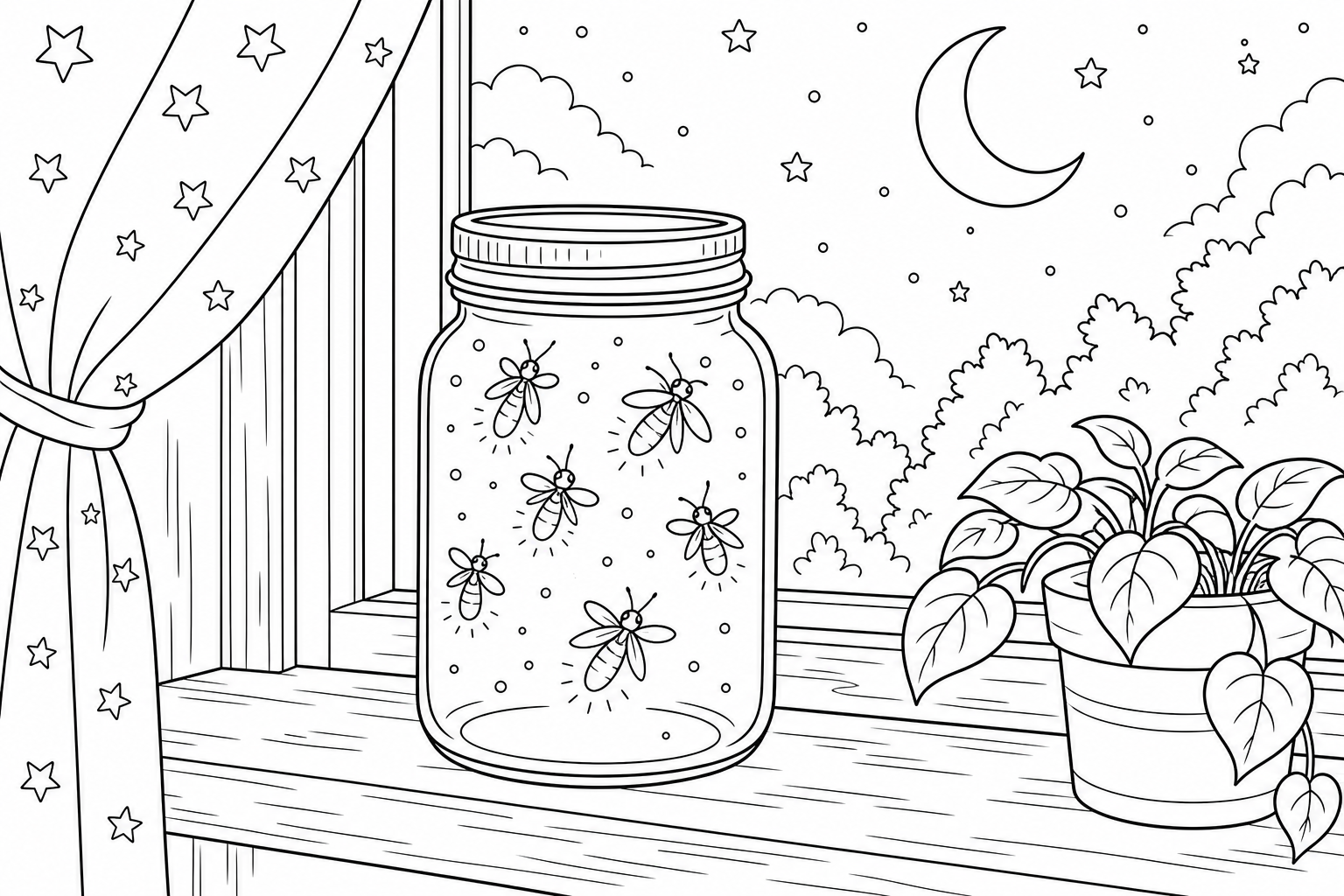
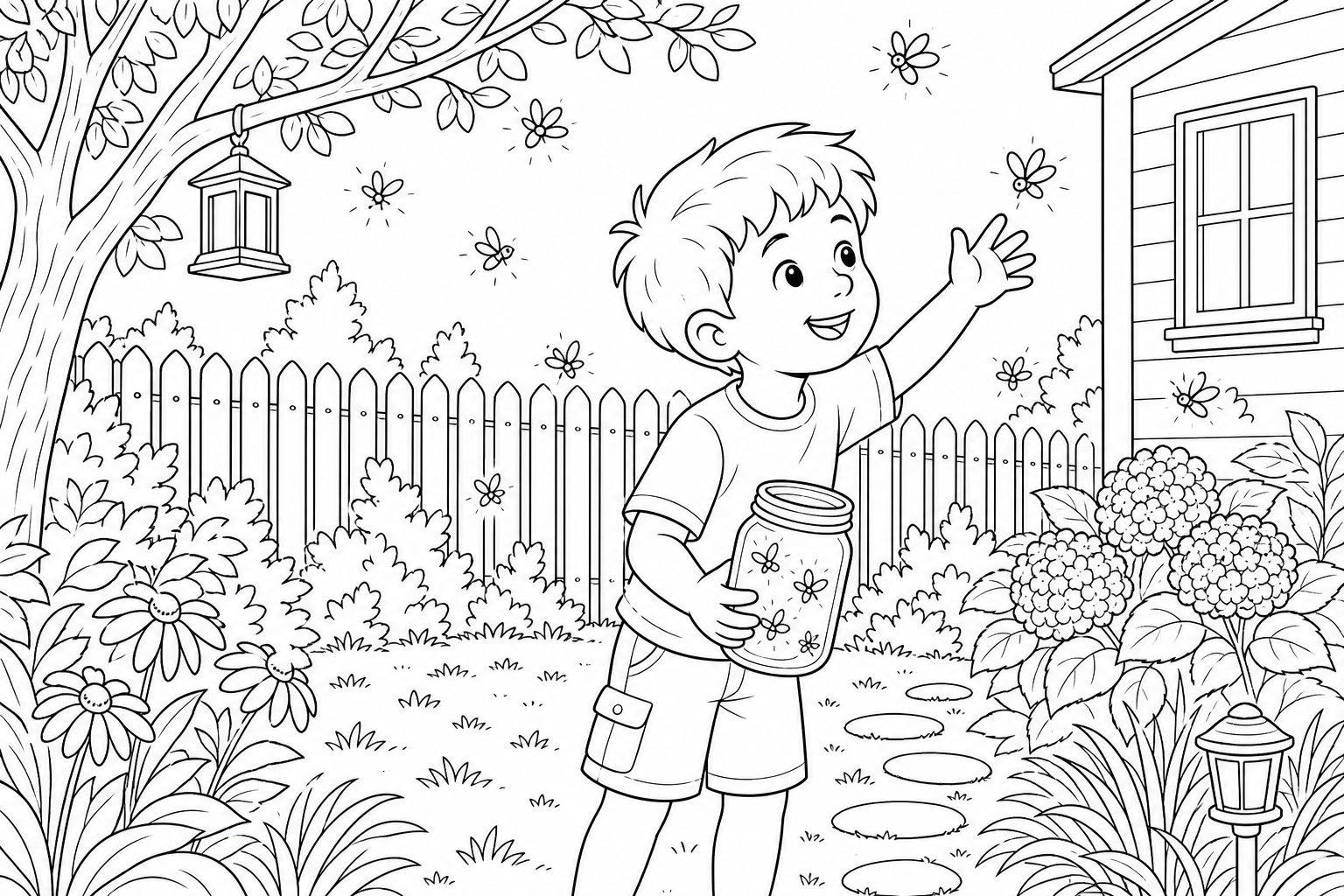
The jar
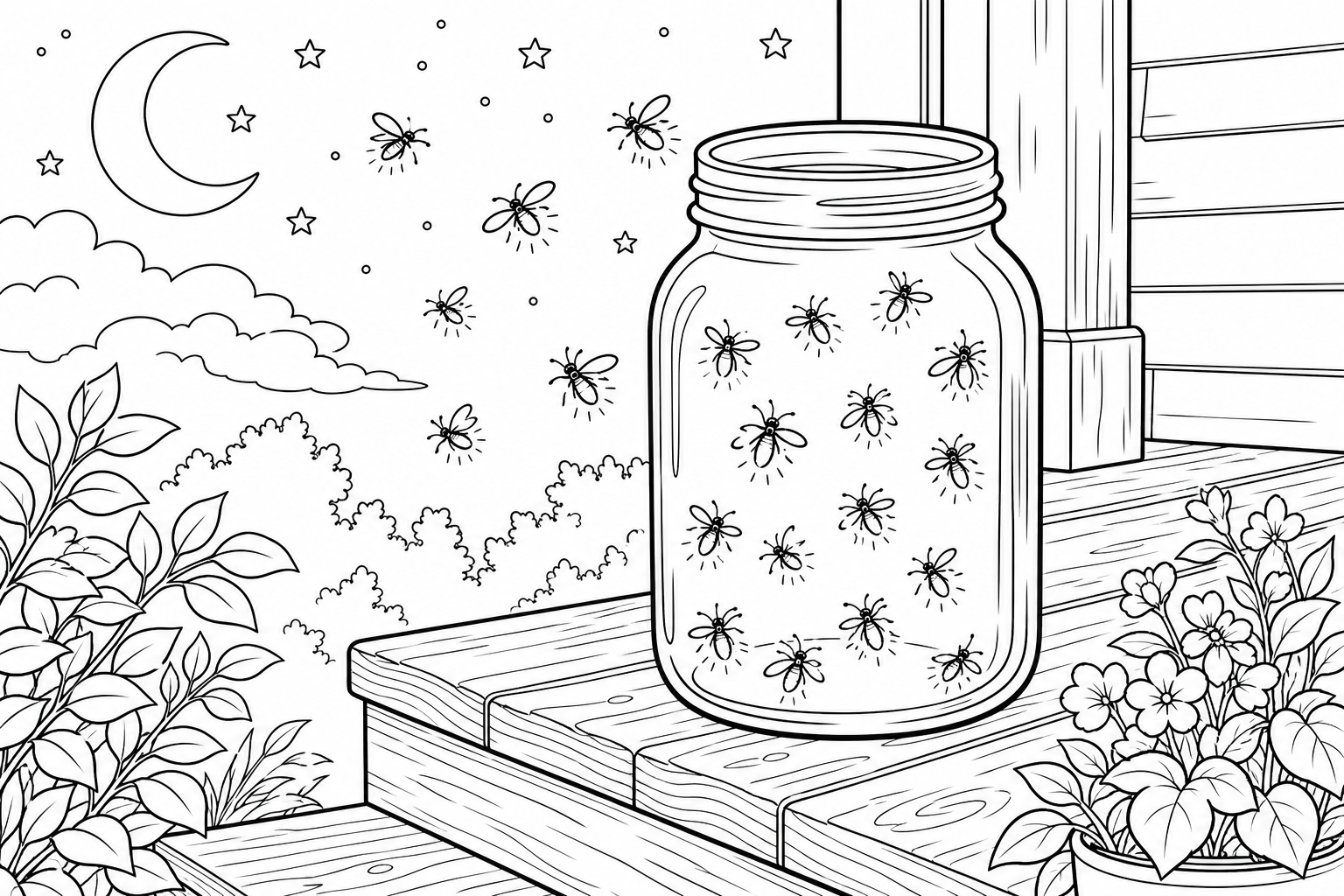
A glass jar, a lid with a few air holes, a cluster of fireflies inside. Color the glass light and the bugs lighter. Good for the stretch right after dinner.
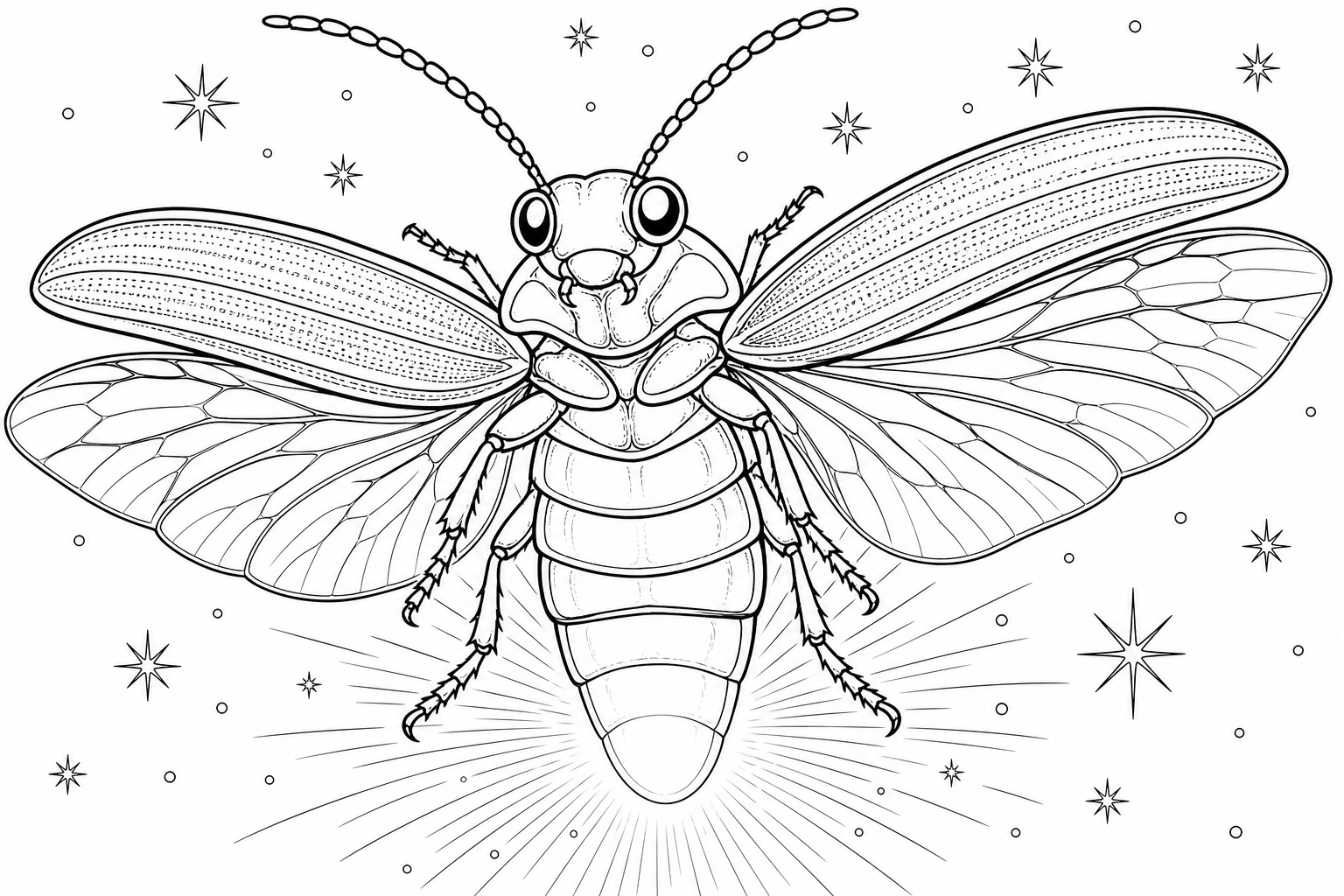
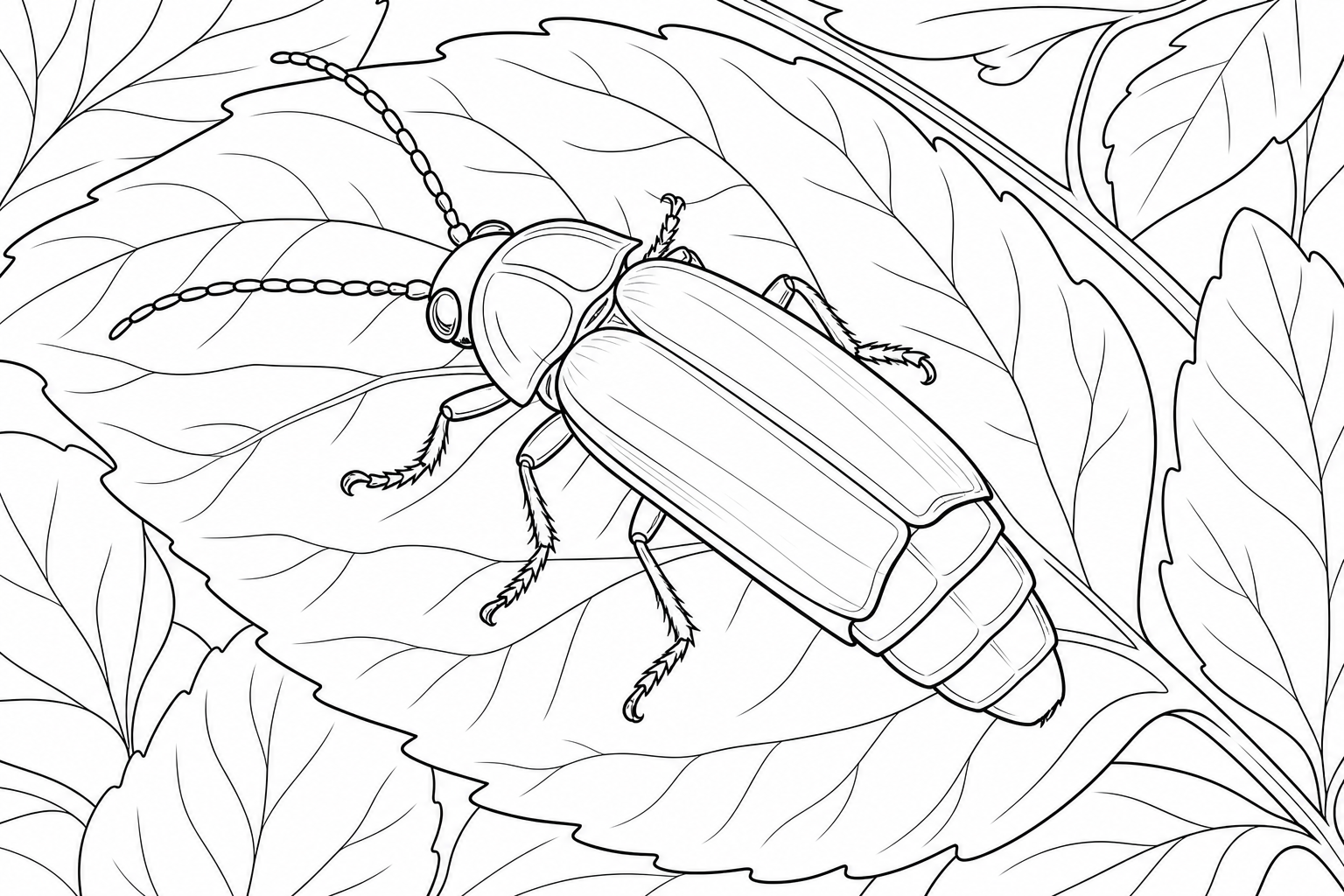
The single glow
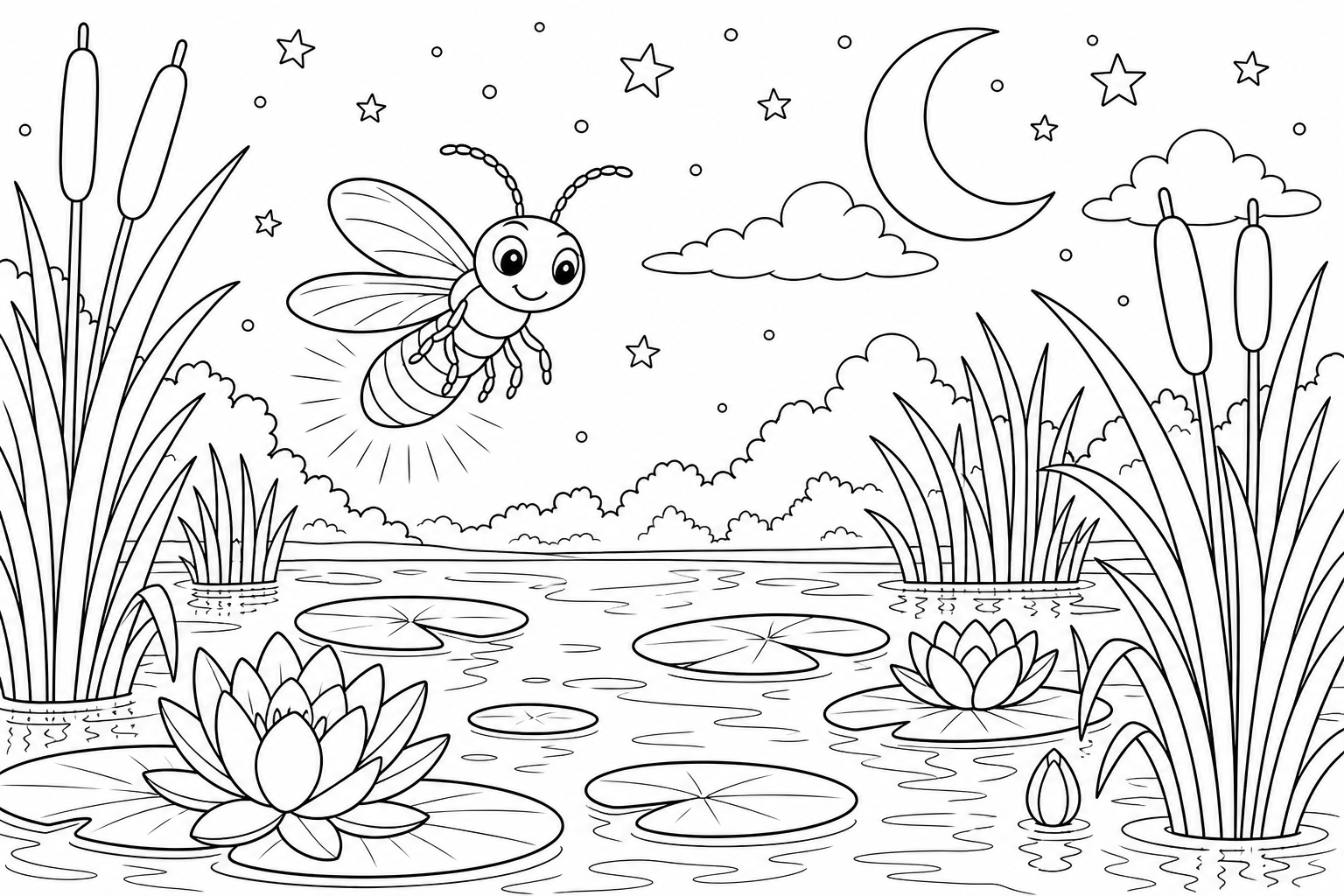
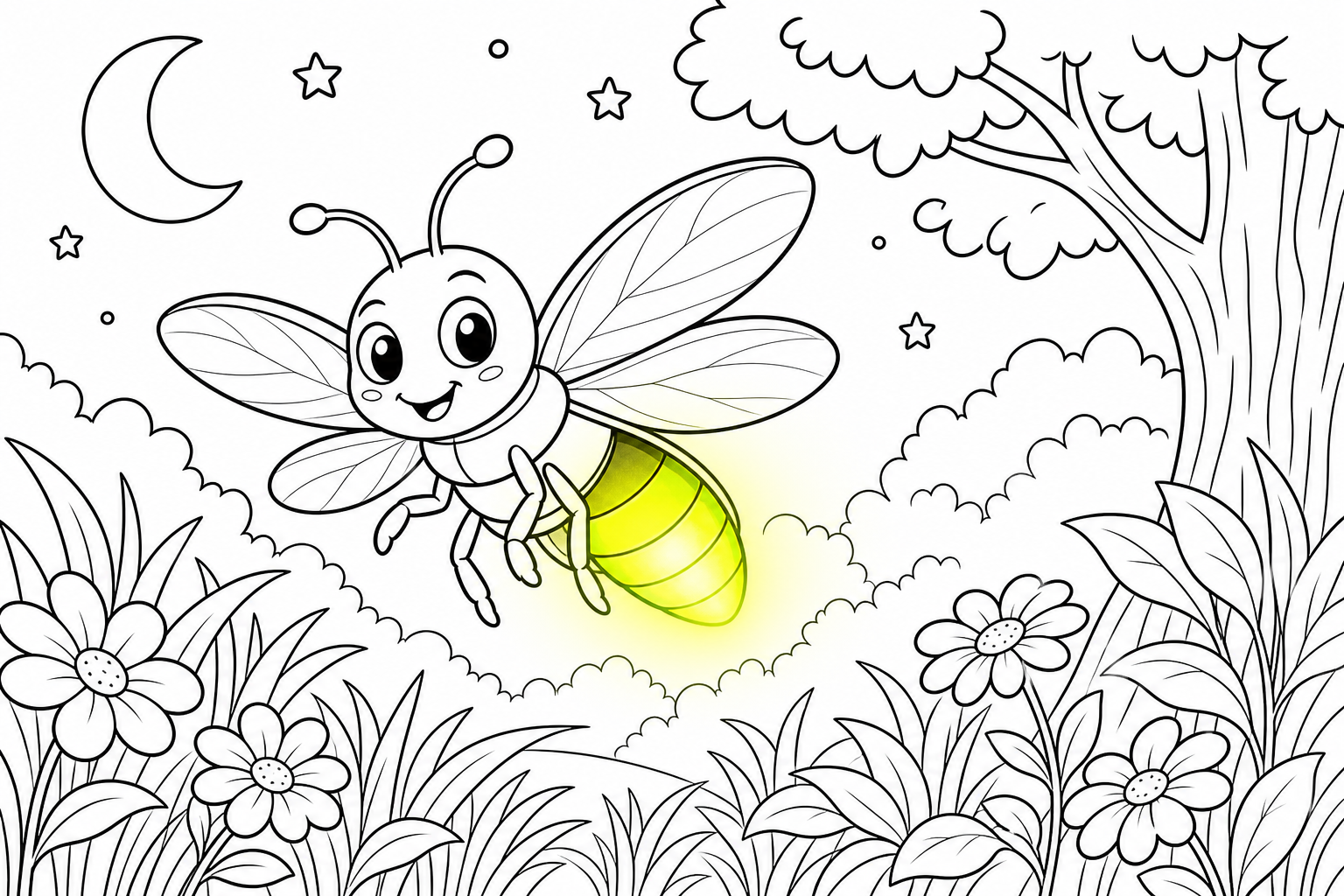
One firefly, close up, with room to make the abdomen the brightest thing on the page. The page for a kid who wants to get one thing exactly right.
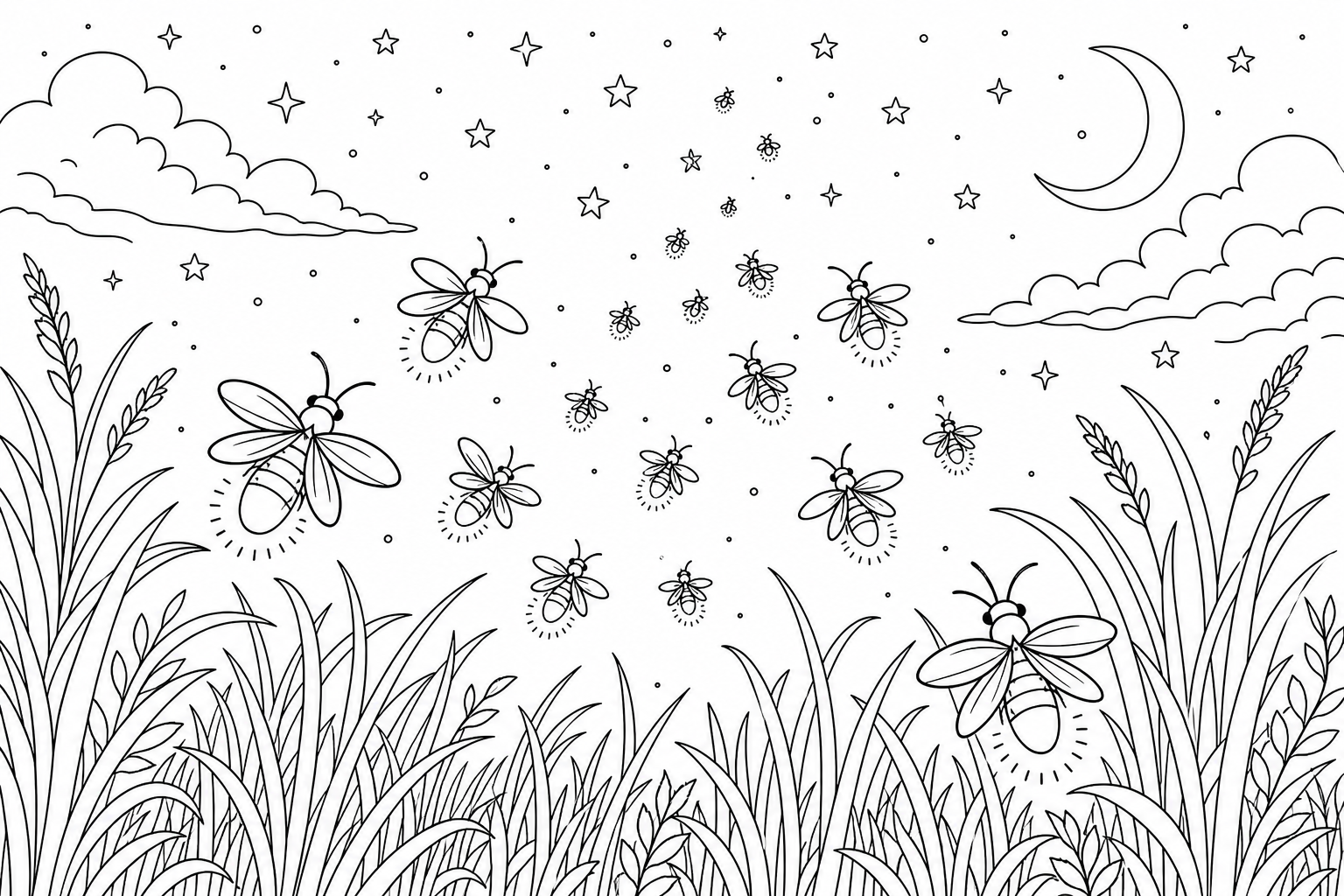
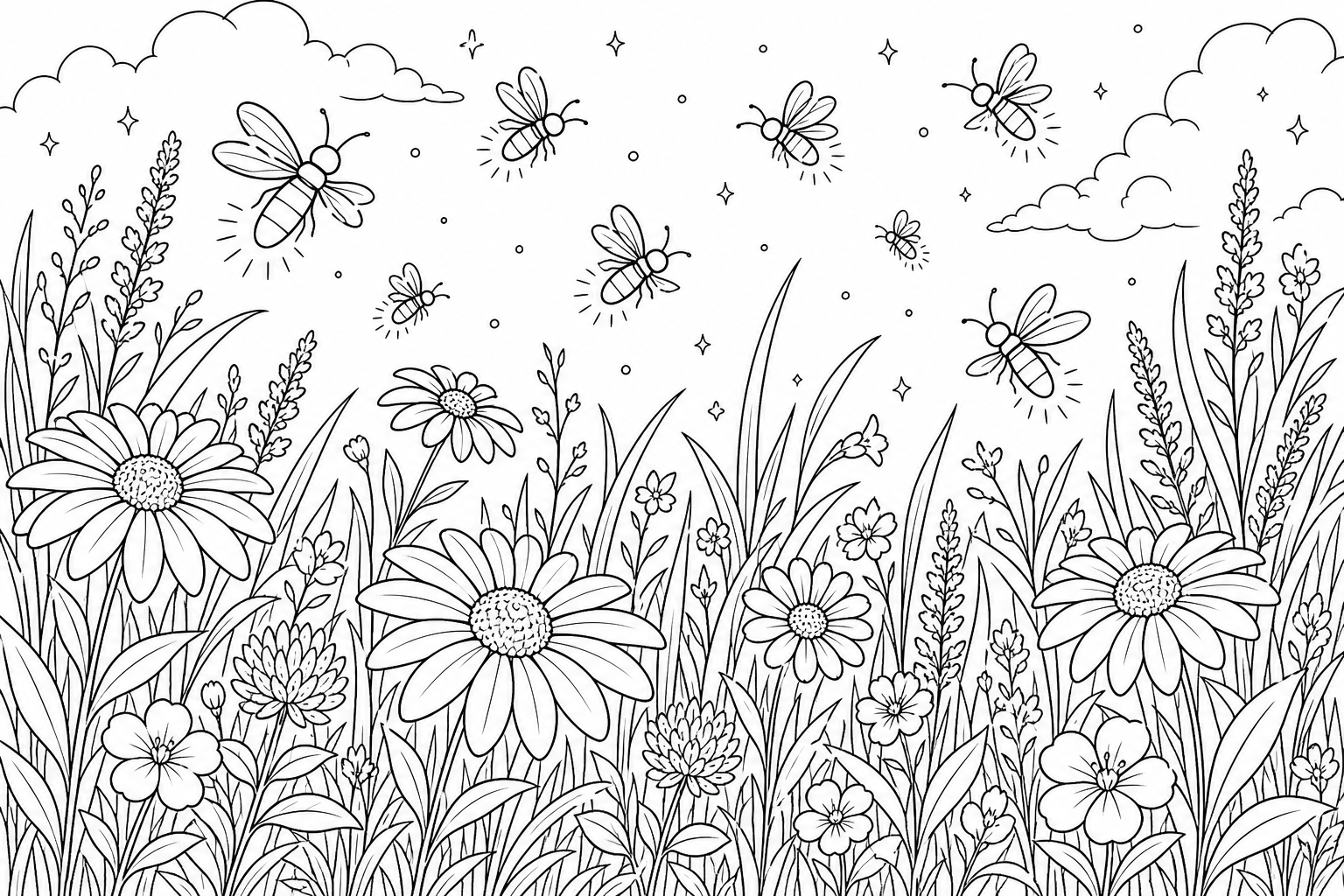
The meadow at dusk
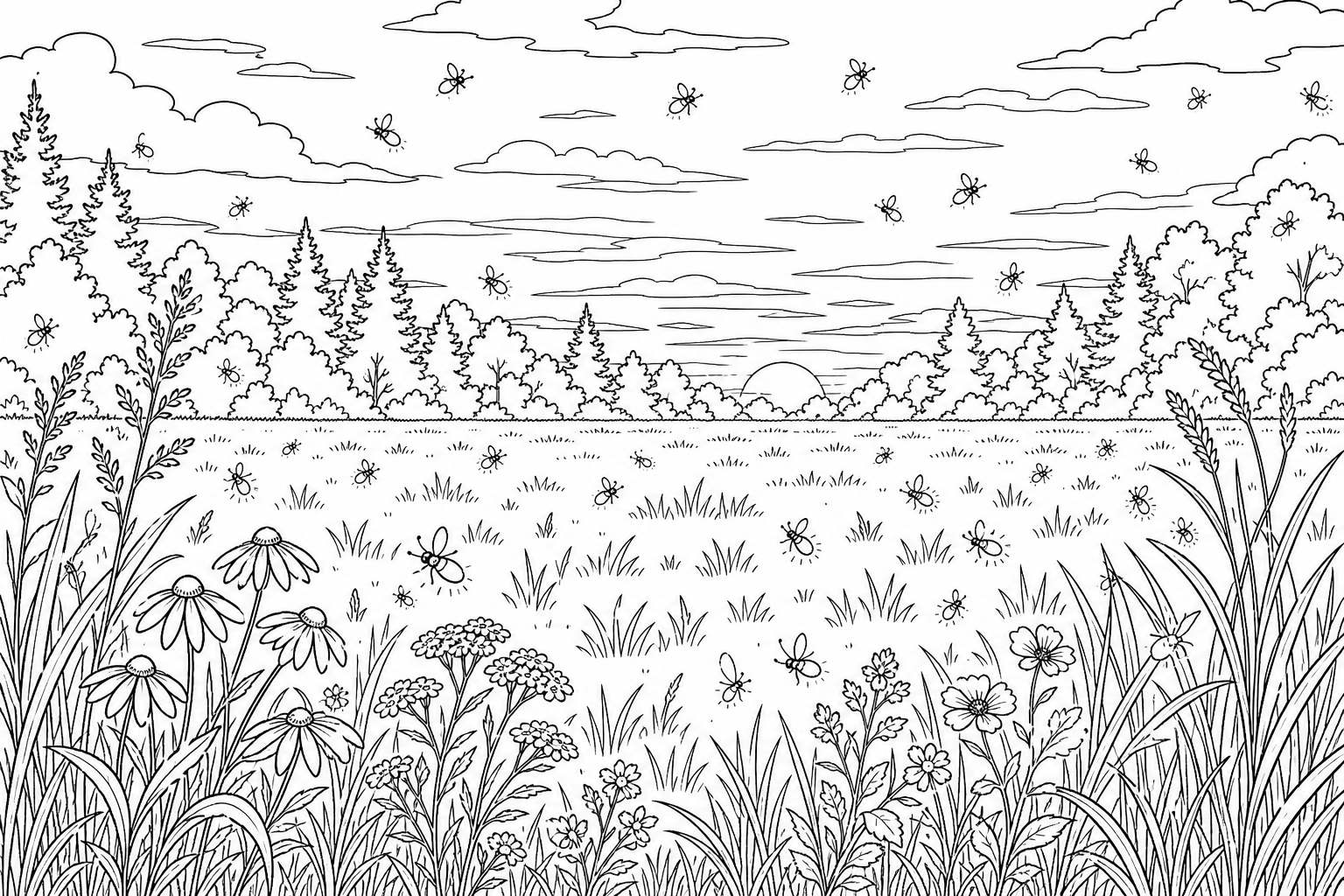
A wide scene with grass, a low sky, and dots of light scattered through it. More room, more patience, a calmer mood.
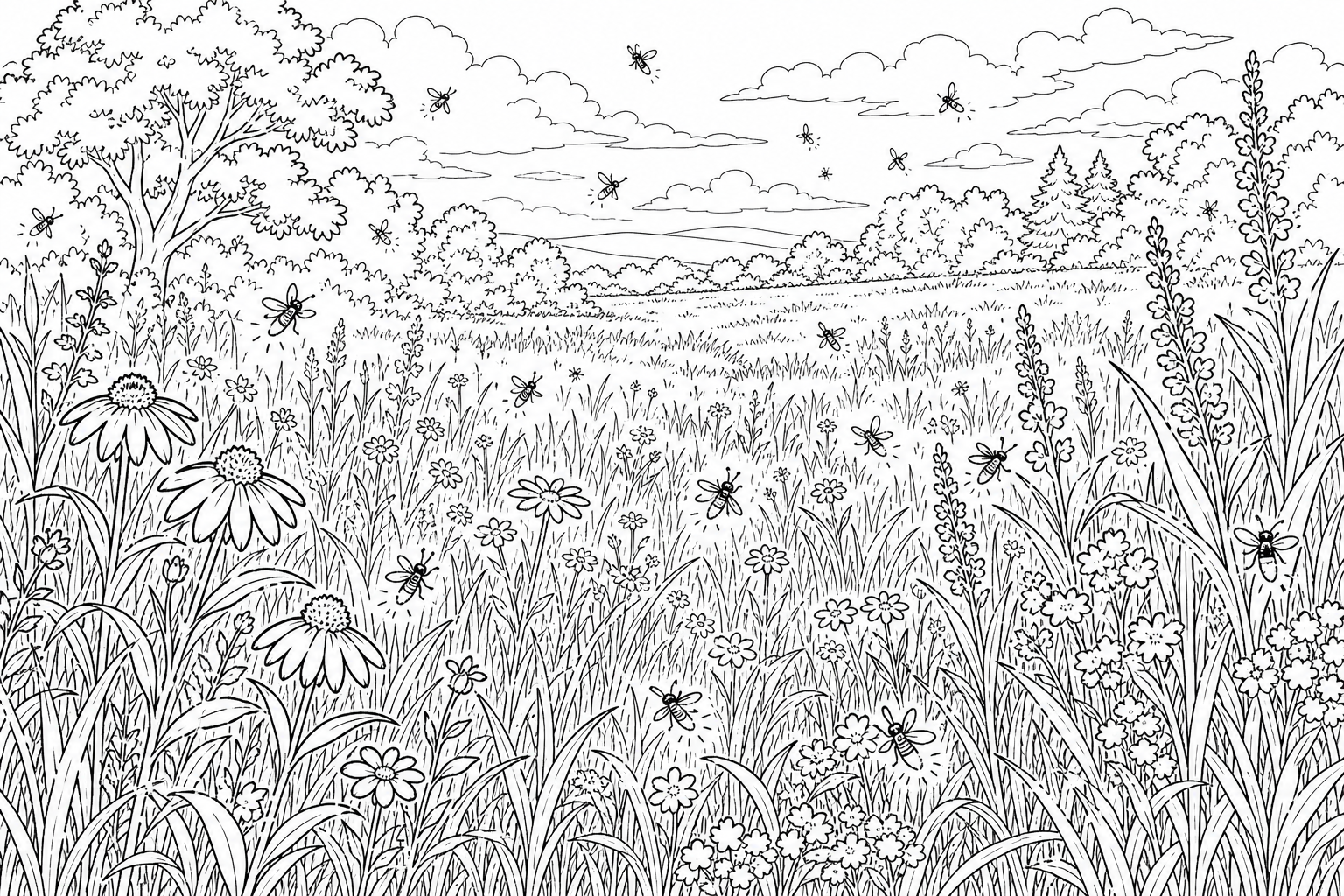
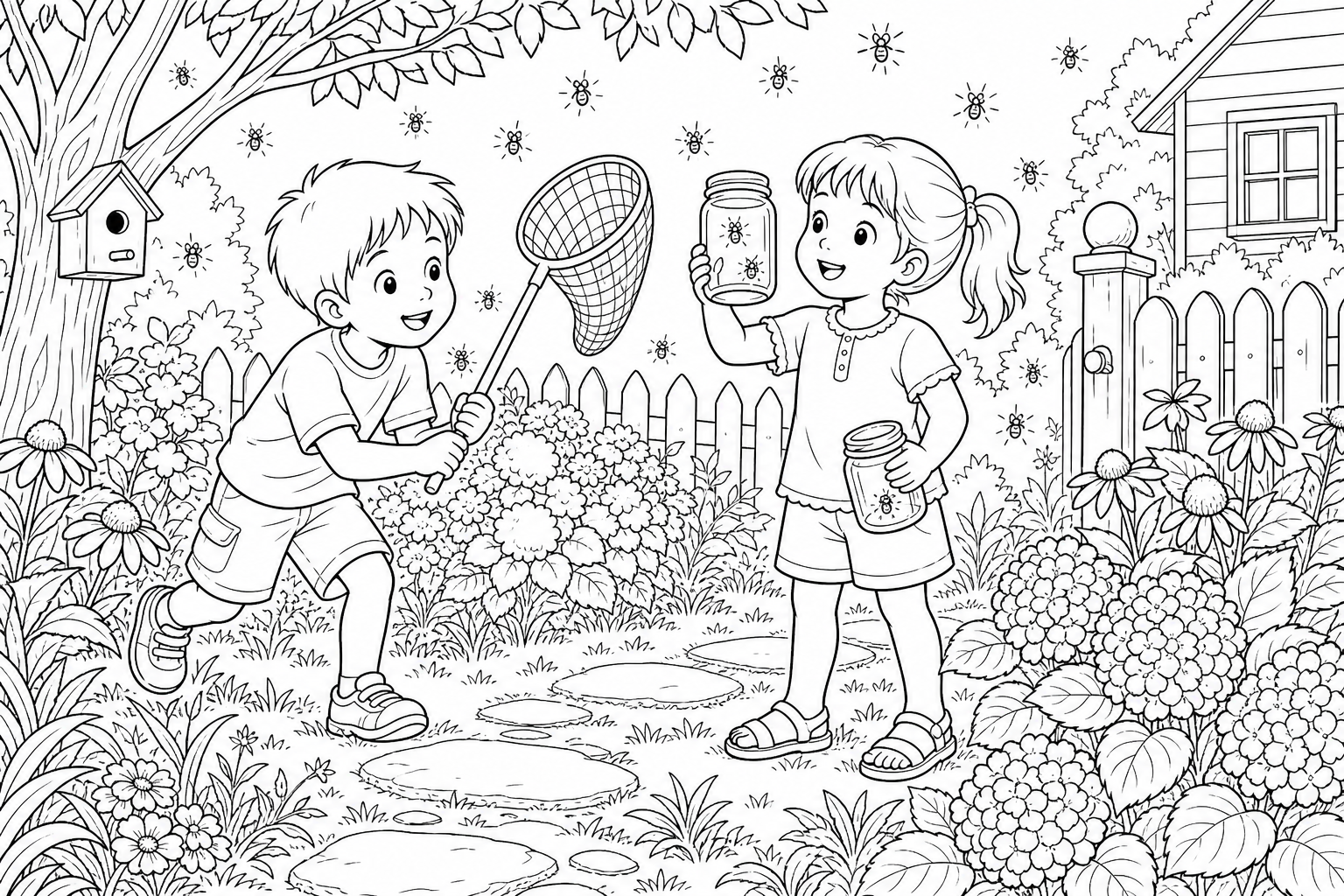
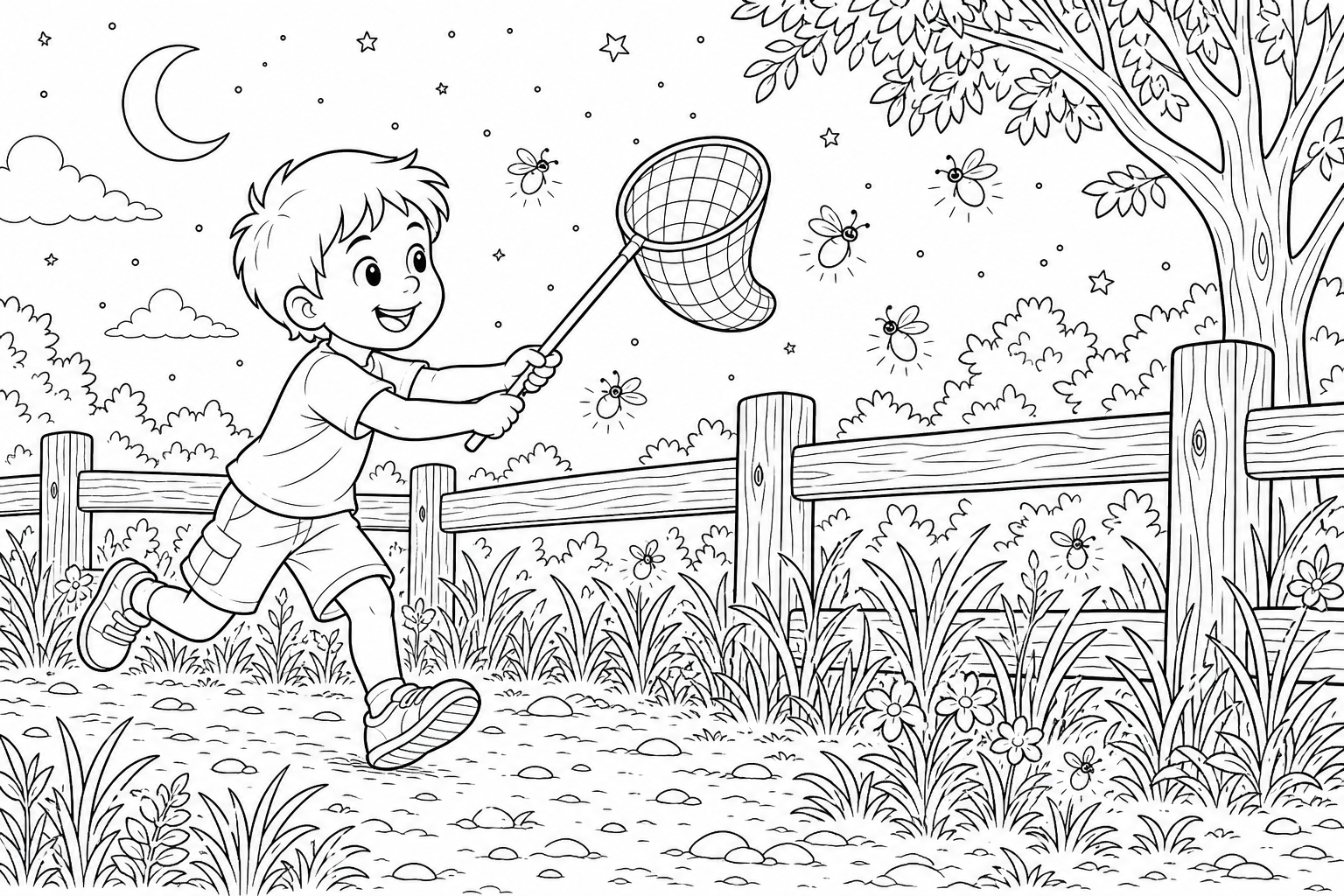
The chase
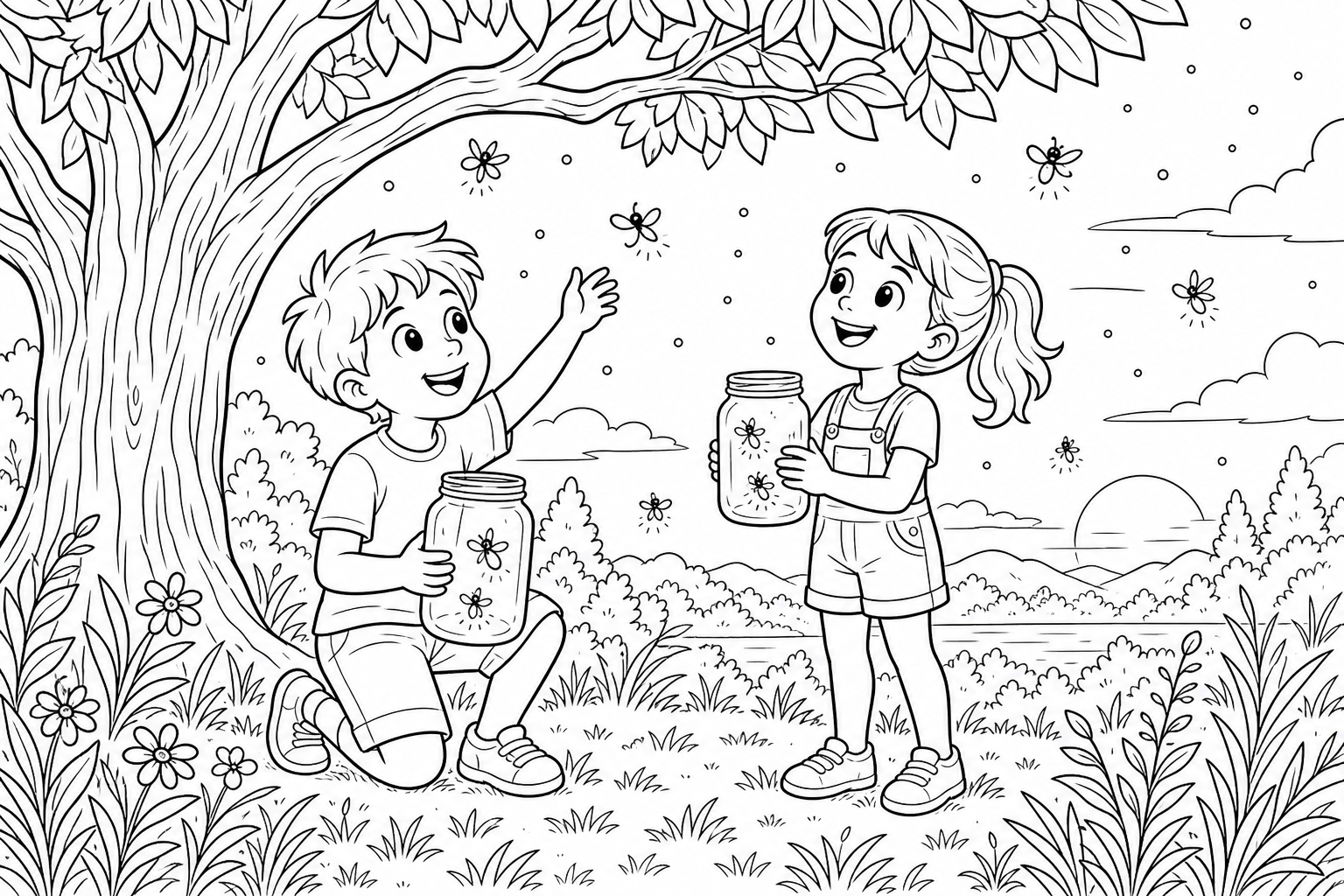
A kid mid-reach with a net or an open jar. The one that turns into a story while they color.
How to color a light
Coloring a glow runs backward from how you color most things. Three small moves make it work:
- 1Start with the dark. Lay down the night and the background first, so the light has something to push against.
- 2Leave the brightest spot nearly white. A thin ring of yellow around an uncolored center reads as glow far better than solid yellow.
- 3Soften the edges. A faint halo around the abdomen sells the light more than a hard outline ever will.
Look for a few more
What else could you color?
Pick a prompt or type your own — opens in a new tab.
Print one before the light goes
Pick a page, find a seat near a window, and let the evening do the rest. The fireflies outside only last an hour. The ones on paper keep glowing as long as the crayons hold out.