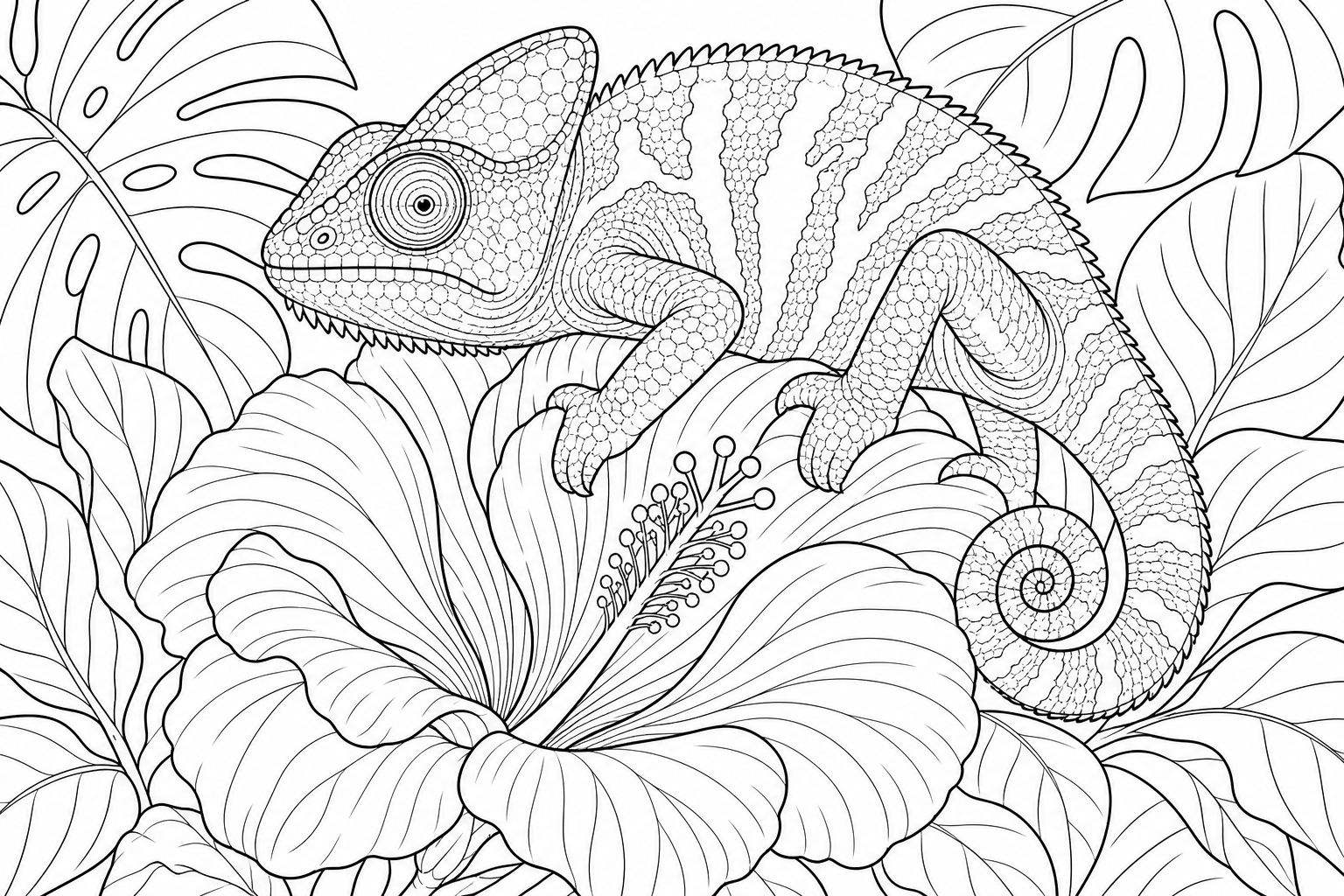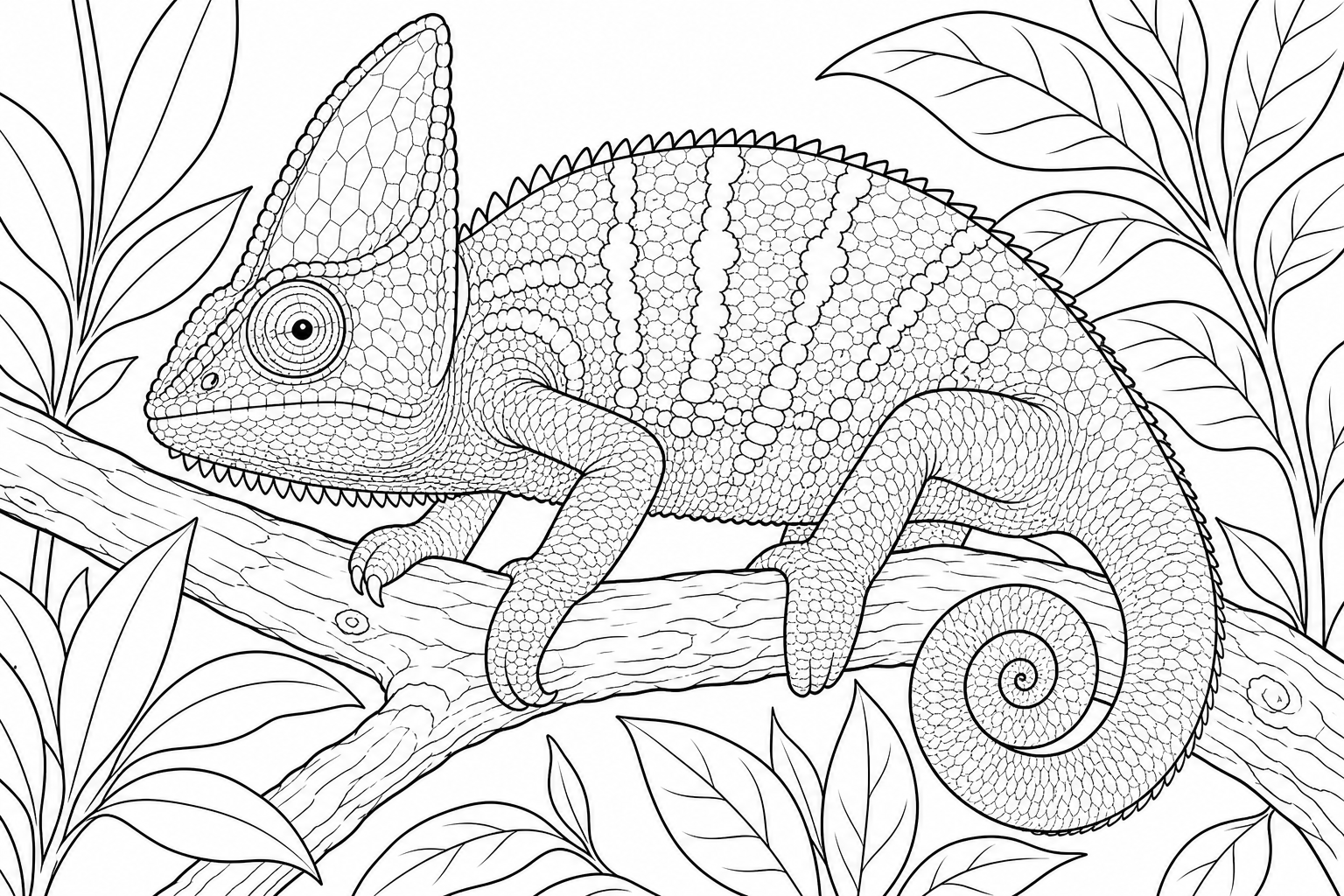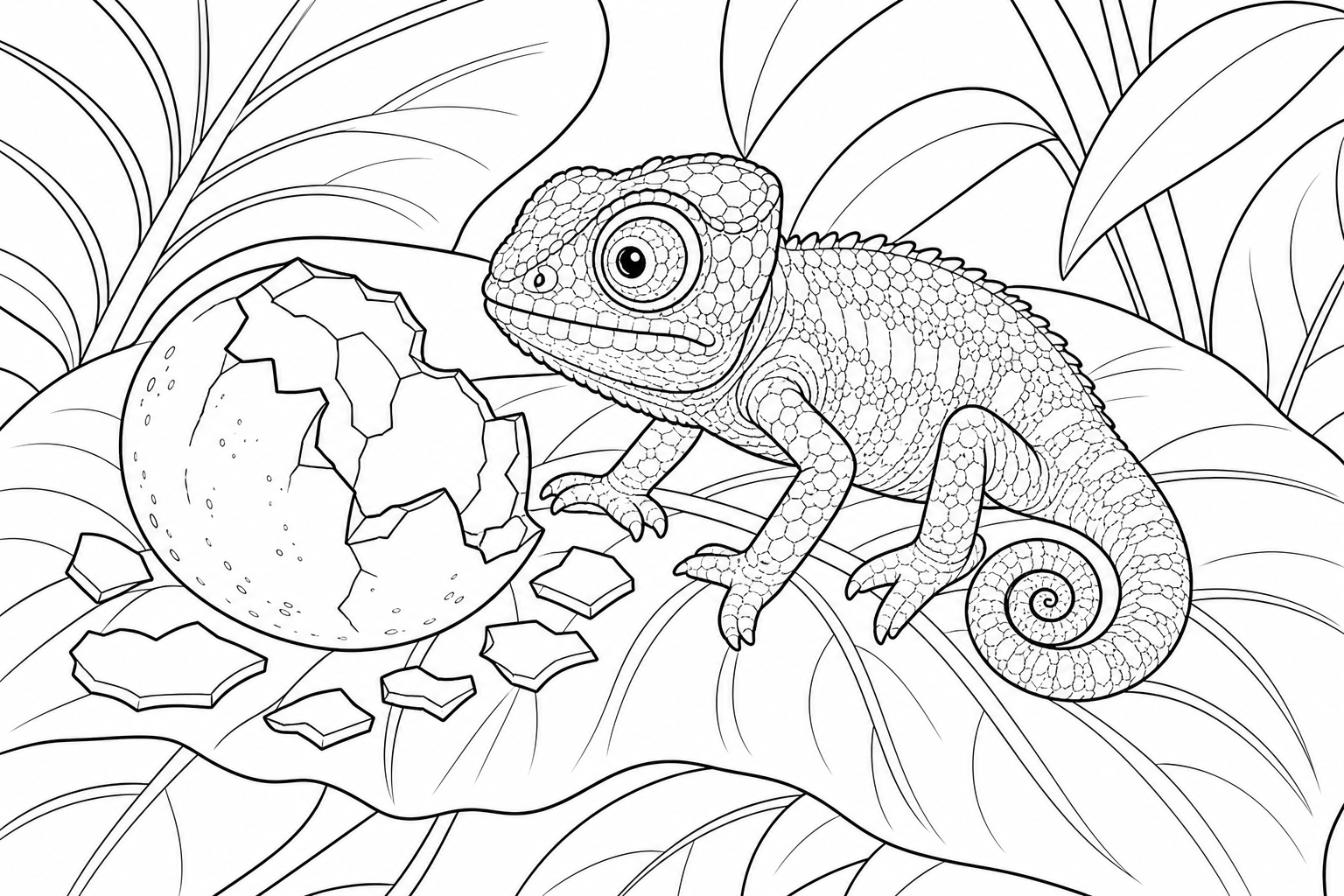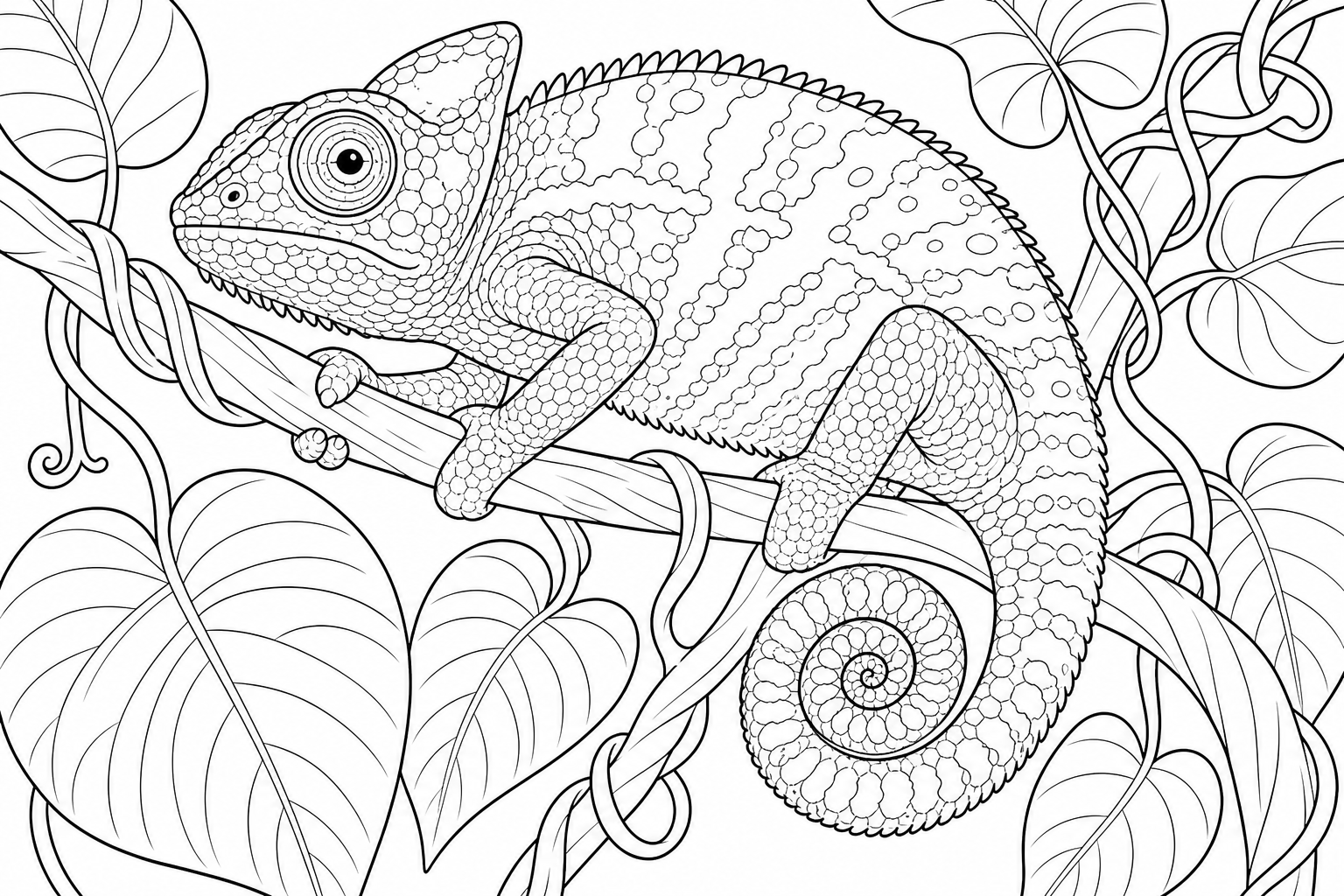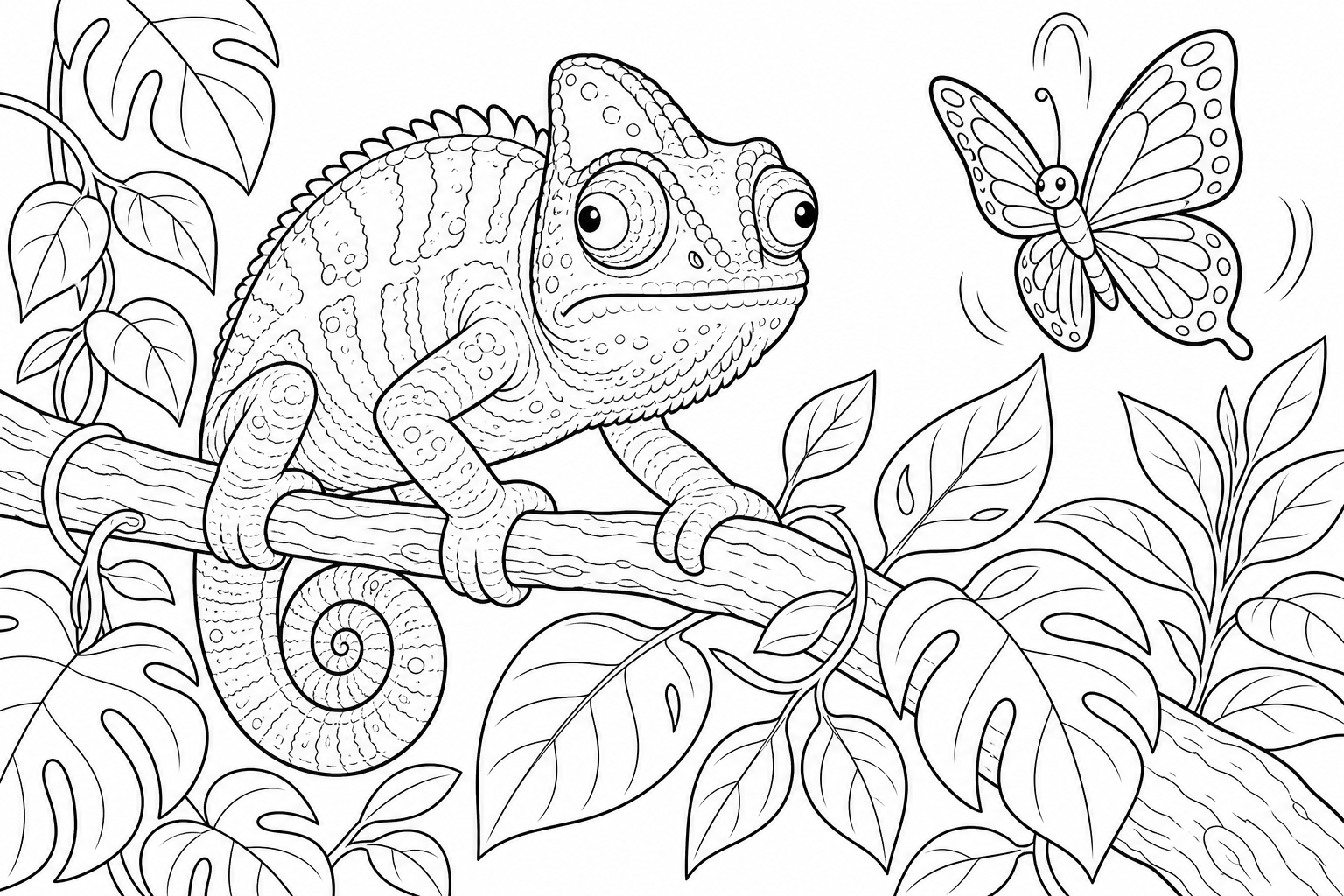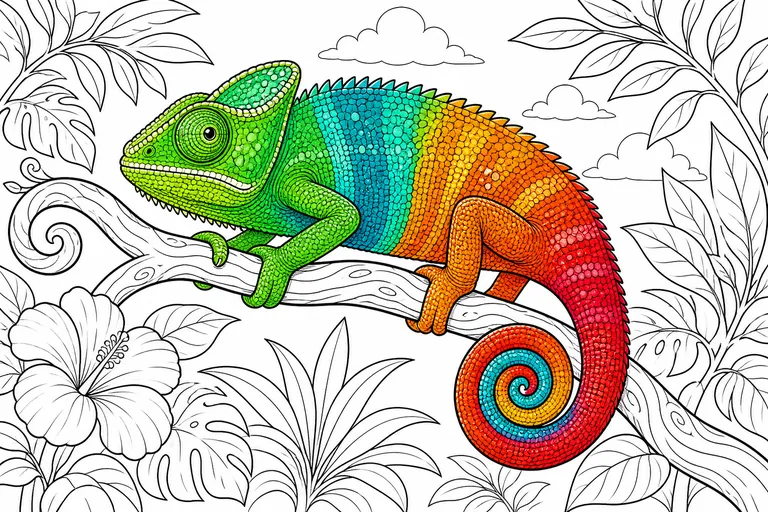
Hand a kid a chameleon to color and something nice happens. There is no reference photo to obey. Green works. So does hot pink, electric blue, a body that goes orange at one end and purple at the other. On almost any other animal a wild color is a mistake. On a chameleon it is closer to the truth, because a real chameleon changes color all day, and the colors are not random. They mean something.
That is the fun of this page. You are not just filling in a shape. You are picking a mood.
It is the same structural trick behind a lot of the boldest colors in nature. A peacock's tail works this way too, which is why a peacock's blue is not really blue paint, not pigment but light bouncing off tiny structures. So before you reach for a crayon, here is the code a real chameleon is running.
Green is the everyday color
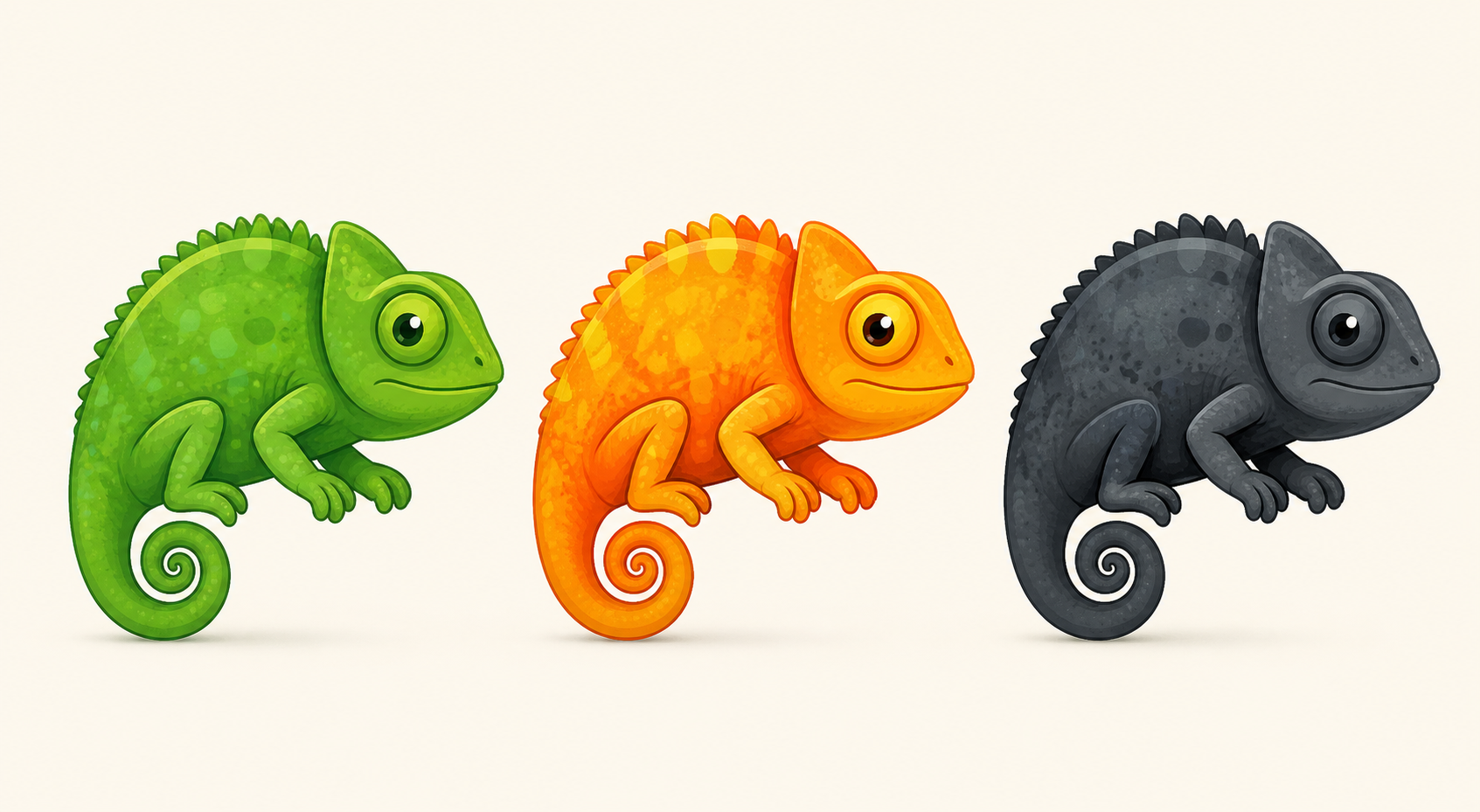
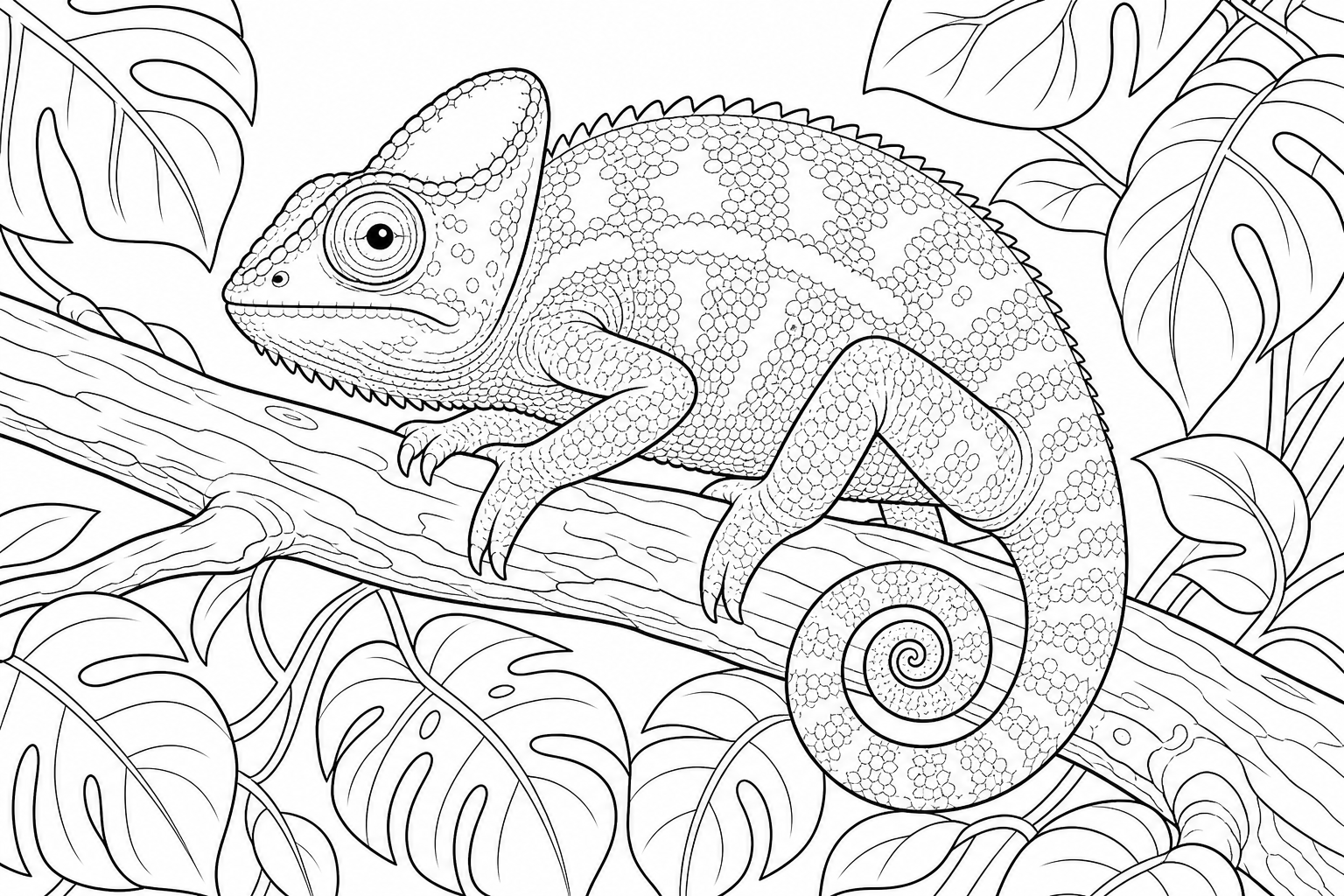
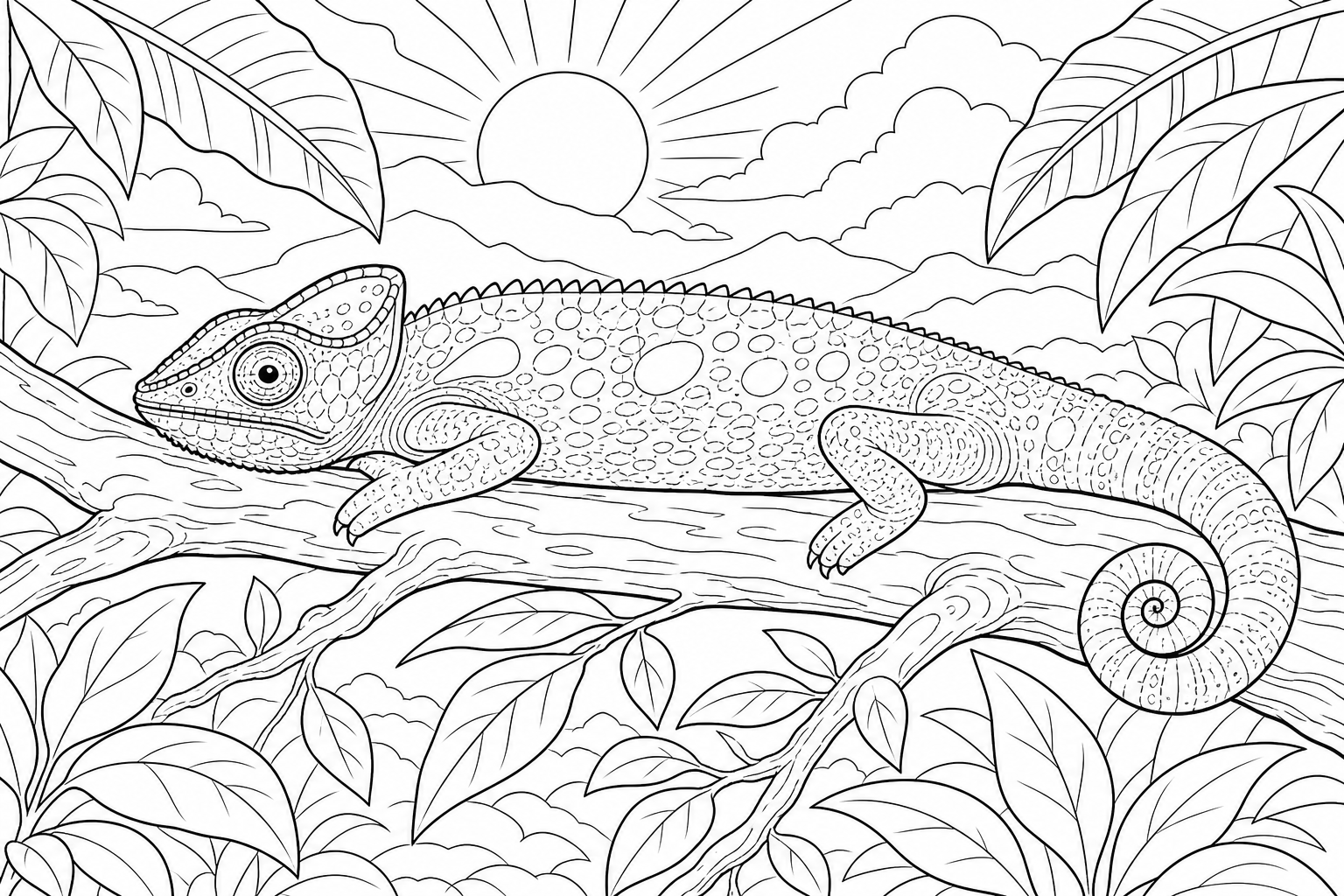
A calm chameleon on a branch, minding its own business, is usually some shade of green or brown. It does blend into the leaves, but blending in is a side effect here, not the goal. This is just the resting color, the one it wears when nothing much is happening. If you want your chameleon to look relaxed, reach for mossy greens, leafy yellows and a little brown along the belly.
Bright and bold is a chameleon with something to say
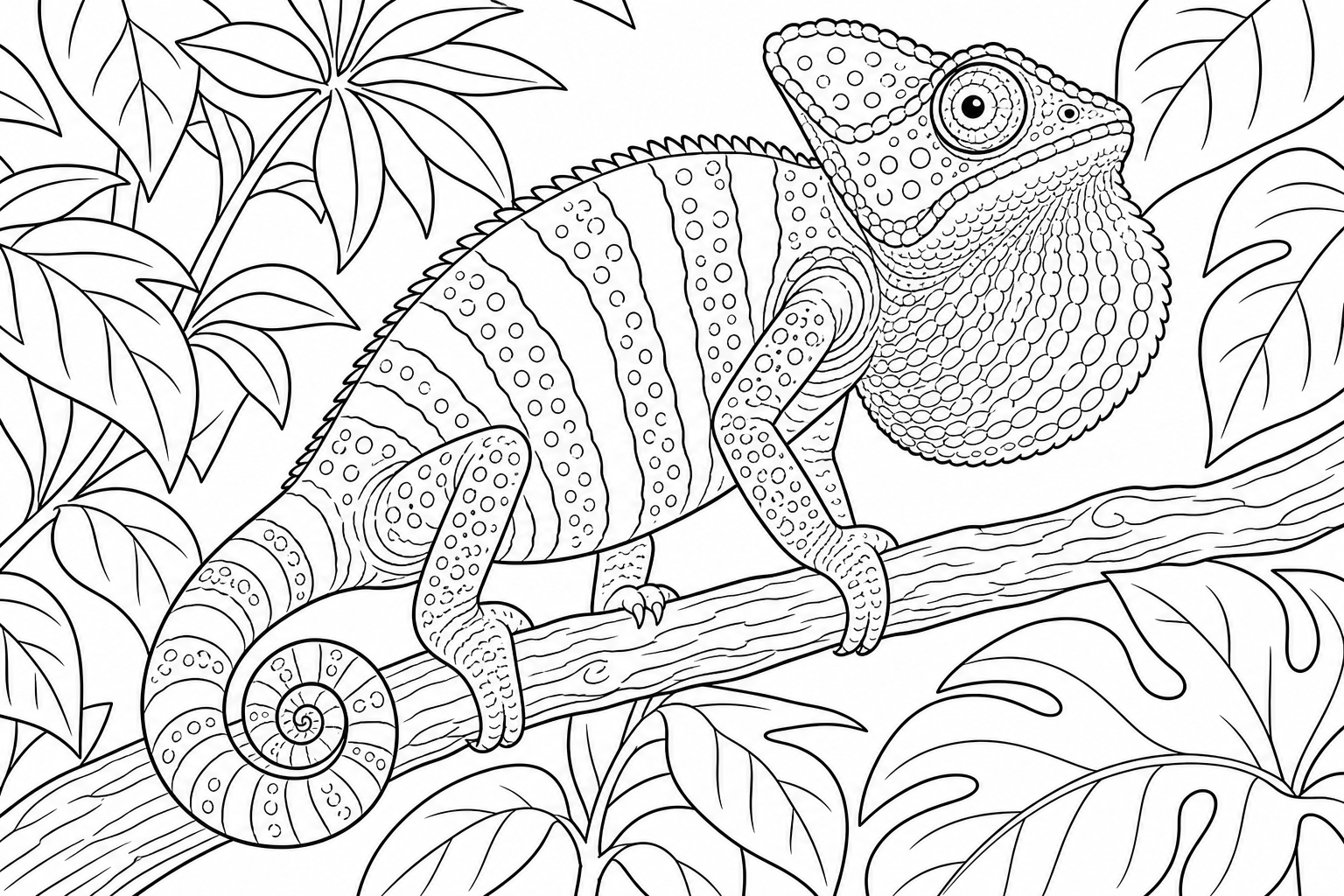
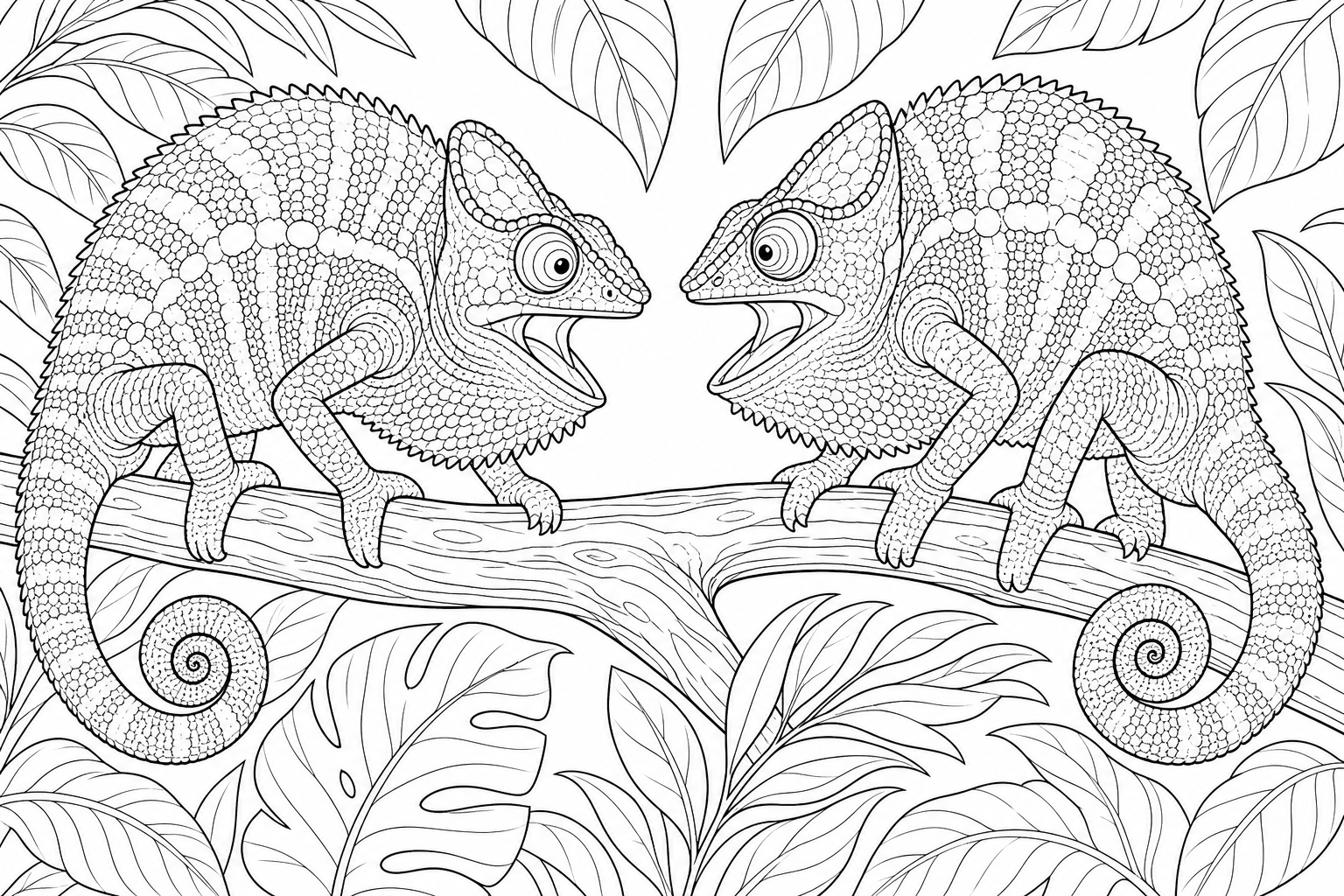
When a chameleon turns up the brightness, pay attention. Sudden yellows, hot oranges, patches of turquoise and red usually mean it is excited, defending its branch, or trying to impress. Two males meeting on the same tree will both flare up, each going as loud as it can to tell the other to back off. So if your chameleon looks like it is showing off, go all in. This is the page for every bright crayon in the box.



Coloring fun for kids — anywhere.
Free for iOS & Android. No ads, no sign-up, offline-ready.


Coloring fun for kids — anywhere.
Free coloring app for kids. iOS and Android, phones and tablets. No ads, no sign-up, even offline.
Dark colors are doing a quiet job
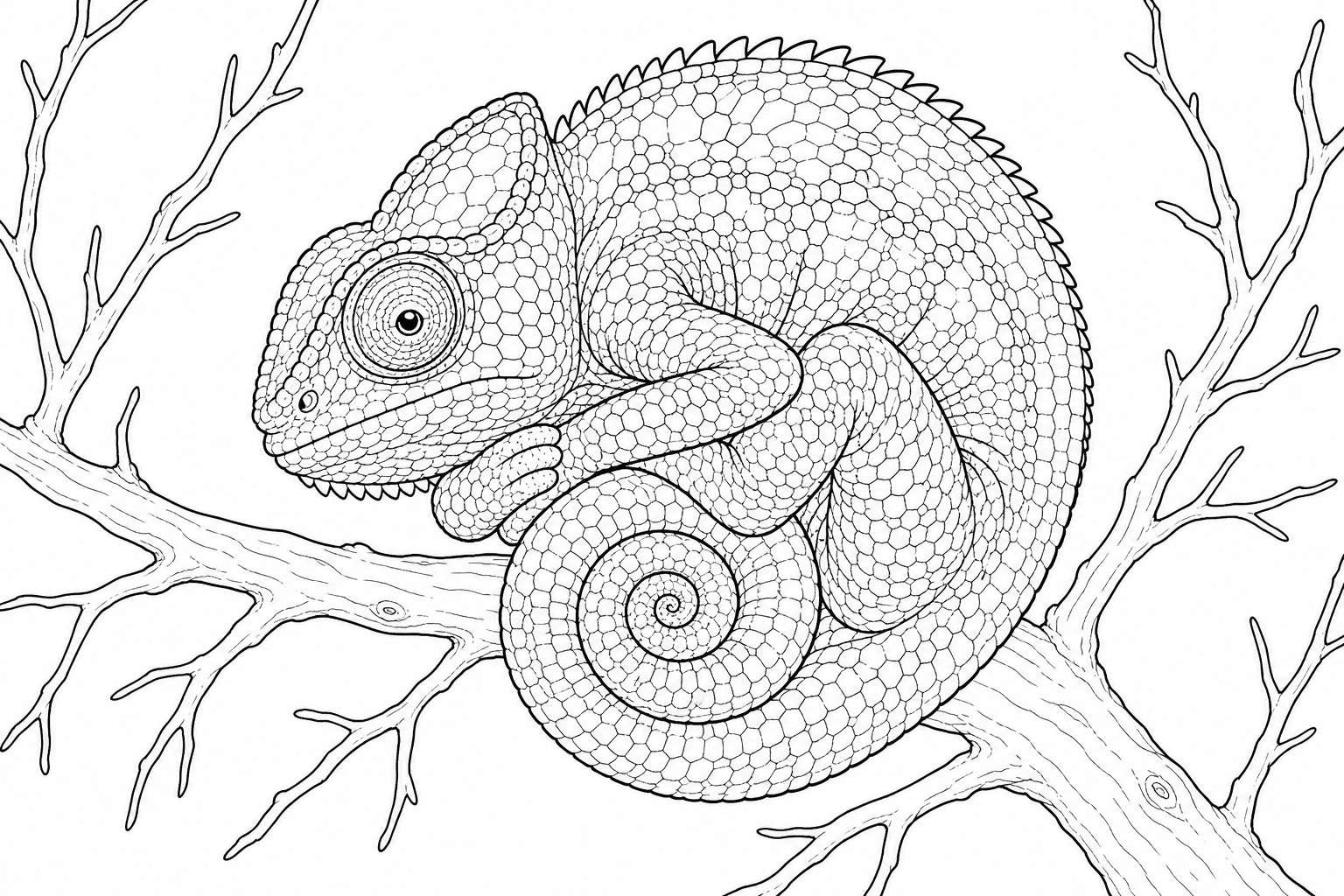
Not every color is a message to another chameleon. Some of it is about staying warm. A chameleon is cold-blooded, so on a cool morning it often goes darker, almost black down one side, because dark colors soak up more sunlight and warm it up faster. Later, in the heat of the day, it turns pale again to bounce the sun away. A dark chameleon can also be a stressed or grumpy one. Shade this page in deep greens, charcoals and browns and you have a chameleon warming up at sunrise.
The one thing color is not really for
Most books will tell you a chameleon changes color to hide. It is the famous fact, and it is mostly wrong.
That is oddly freeing when you sit down to color one. You are not trying to make it disappear. You are showing everyone exactly what it feels like.
From lap-sized to smaller than a thumbnail
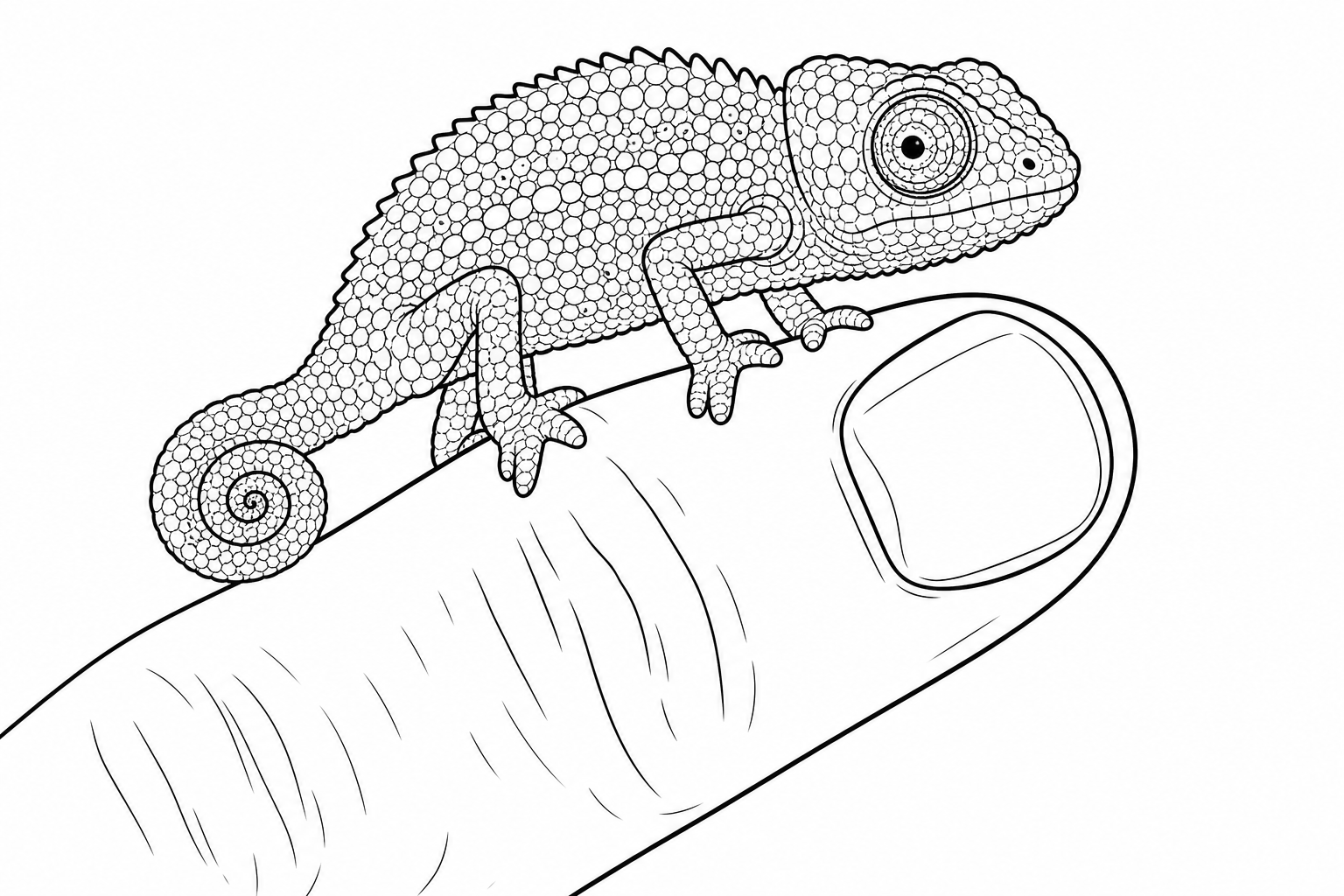
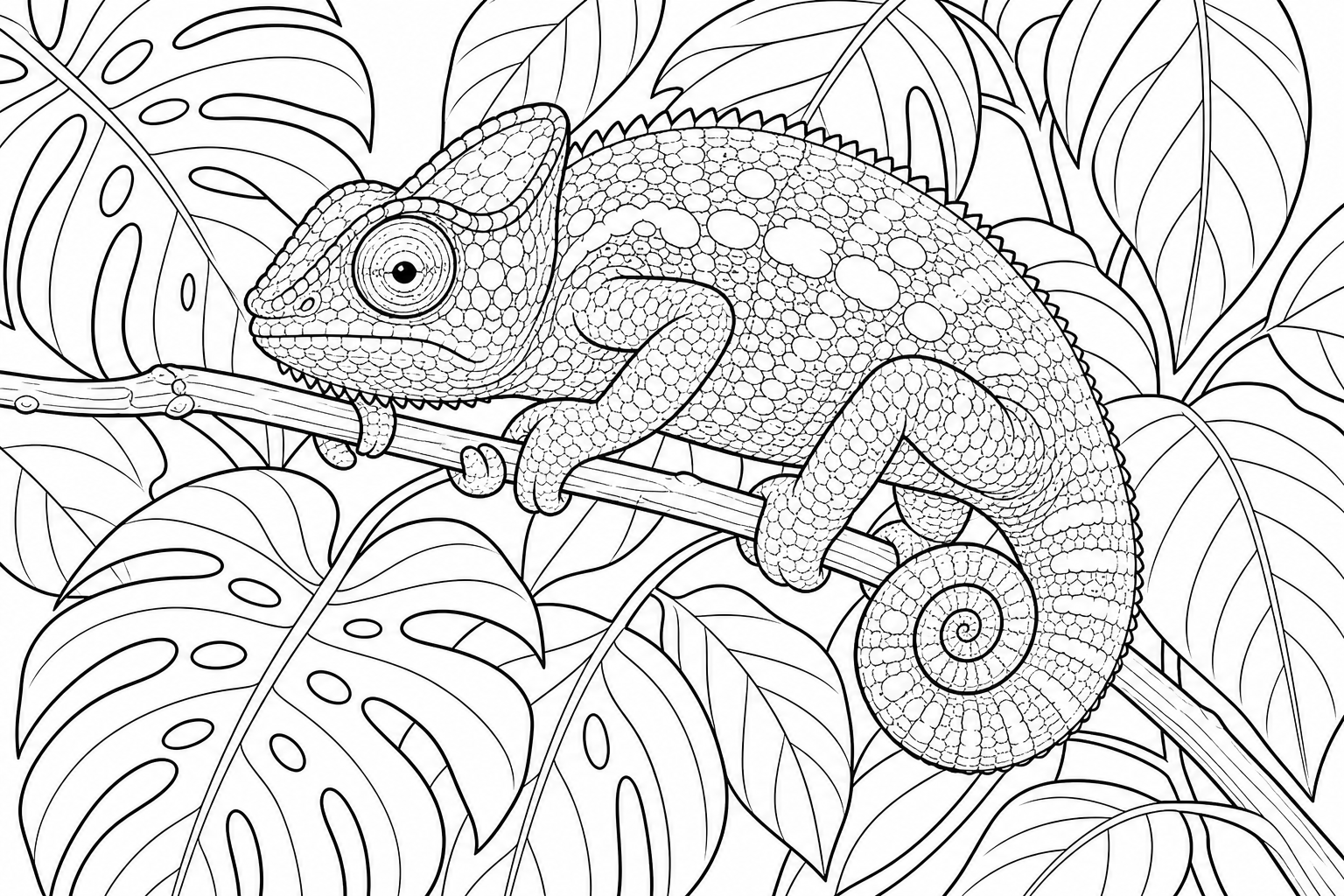
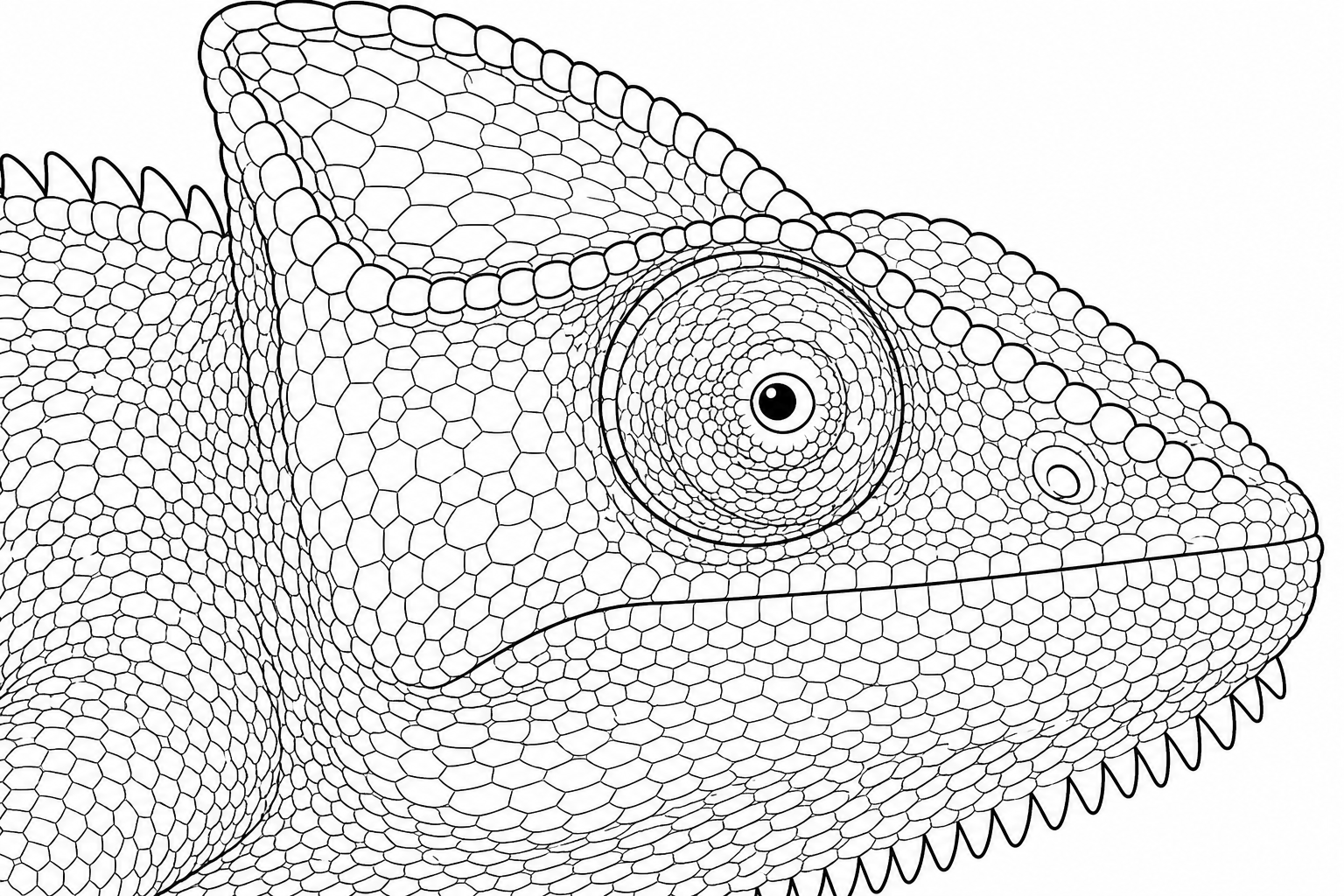
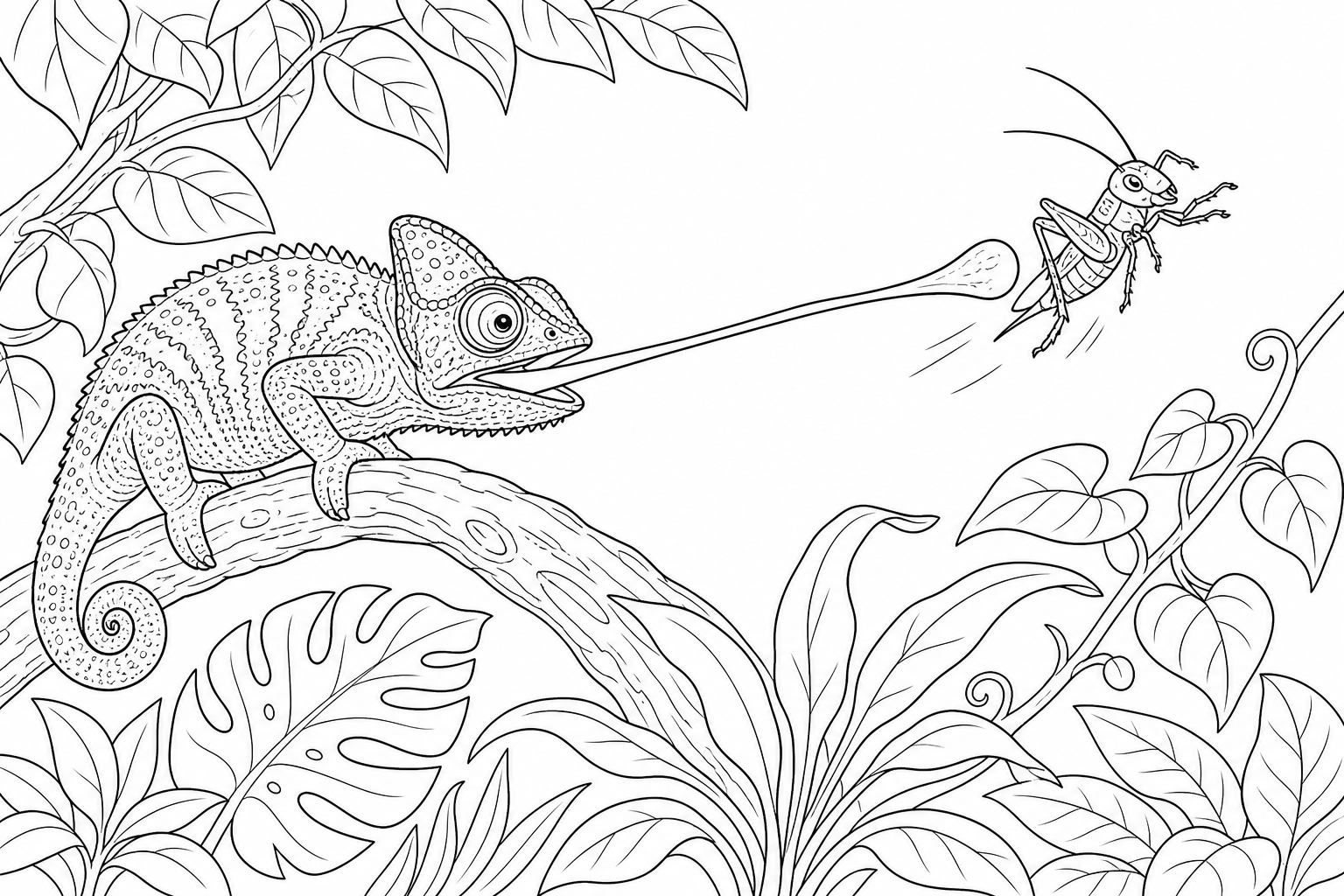
Chameleons are not all one size, and that changes how a page feels. A panther chameleon or a veiled chameleon is a big, chunky animal, close to the size of a small cat, with a tall helmet-like ridge on its head and plenty of room for detail. At the other end, the tiny Brookesia pygmy chameleons of Madagascar can perch on a fingertip, some barely longer than a fingernail. A big one is a slow, detailed page. A little one is a quick, sweet sketch you can finish in a sitting.
What else could you color?
Pick a prompt or type your own — opens in a new tab.
Print a few and pick your mood
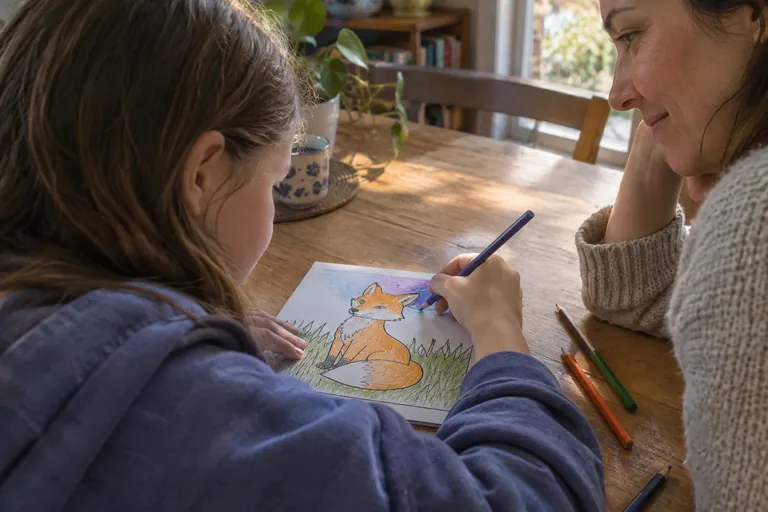
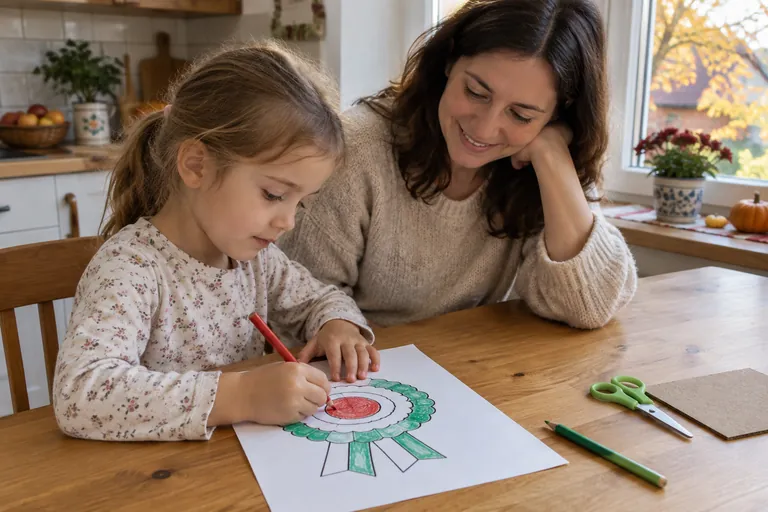
Here is the full set. Print a handful, keep the crayon box open, and let each chameleon say something different. Calm green, fired-up red, or a color no chameleon has ever actually worn. On this one, you cannot get it wrong.