Sunday evening, the school bag already packed by the door, and your child suddenly remembers: tomorrow is the day for teachers, and the others are bringing something. There is no card in the house and no shop open. There is a printer, though, and that is enough, because teacher appreciation coloring pages fold into a card a child can make alone, from the first crayon stroke to the last letter of their name.
The questions below are the ones children ask on that Sunday evening, in roughly the order they ask them.
Why does my teacher get a day?
Because the whole world agreed that teaching is a job worth looking after. UNESCO has marked World Teachers' Day on 5 October since 1994. The date points back to 1966, when UNESCO and the International Labour Organization adopted a recommendation on what teachers are owed: good training, fair hiring and decent conditions to teach in. In 2026 that paper turns sixty, and this year's theme is built around the anniversary.
Some countries keep a second, home-grown date as well. Czech schools celebrate Den učitelů on 28 March, the birthday of Jan Amos Komenský. Hungary has Pedagógusnap on the first Sunday of June, close to the end of the school year. So a Czech or Hungarian child gets two chances a year to say thank you. The one in October is the one the whole world shares.
For the picture itself, the old school motifs still do the job: an apple and a pile of books, or a desk with everything laid out for the morning.
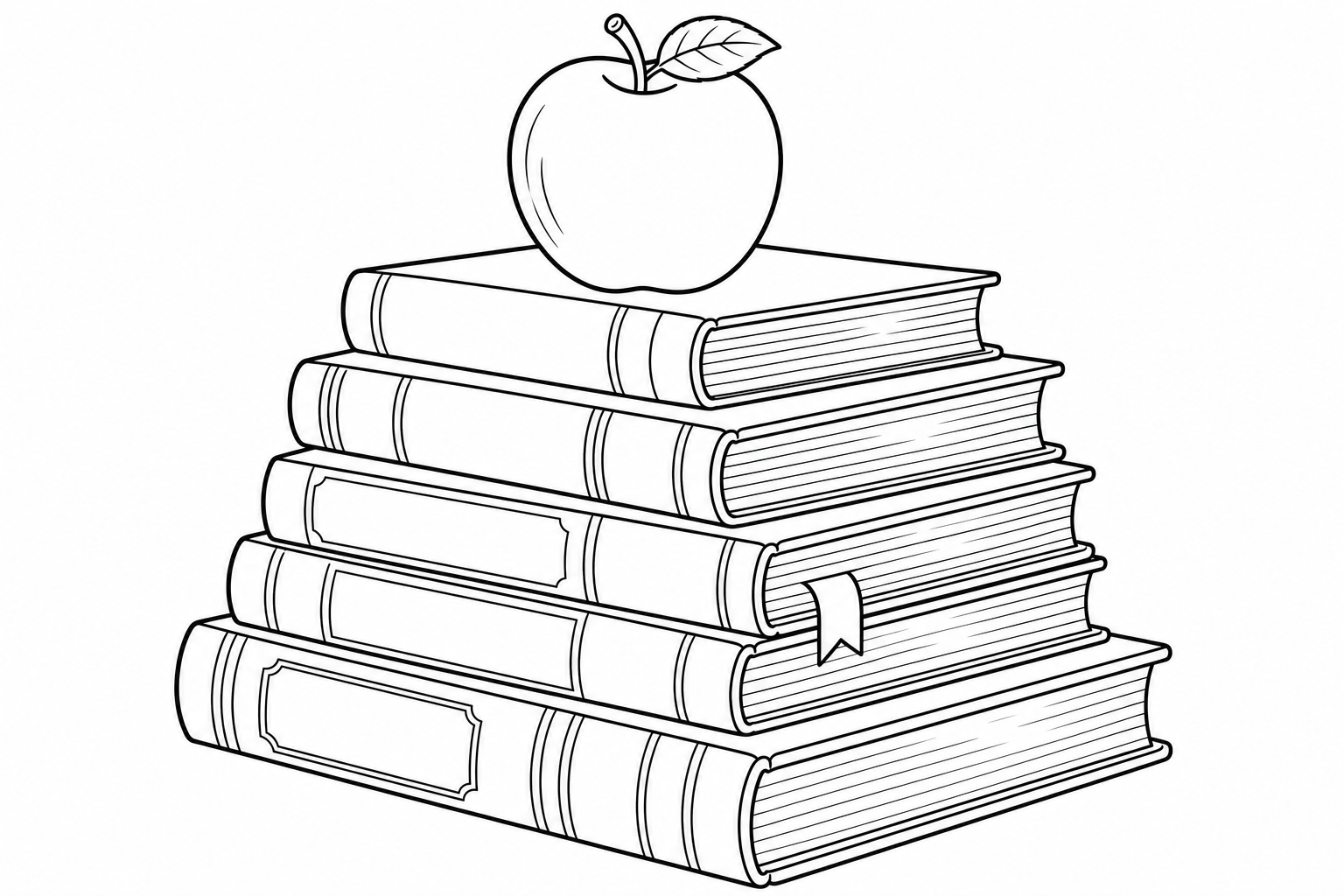
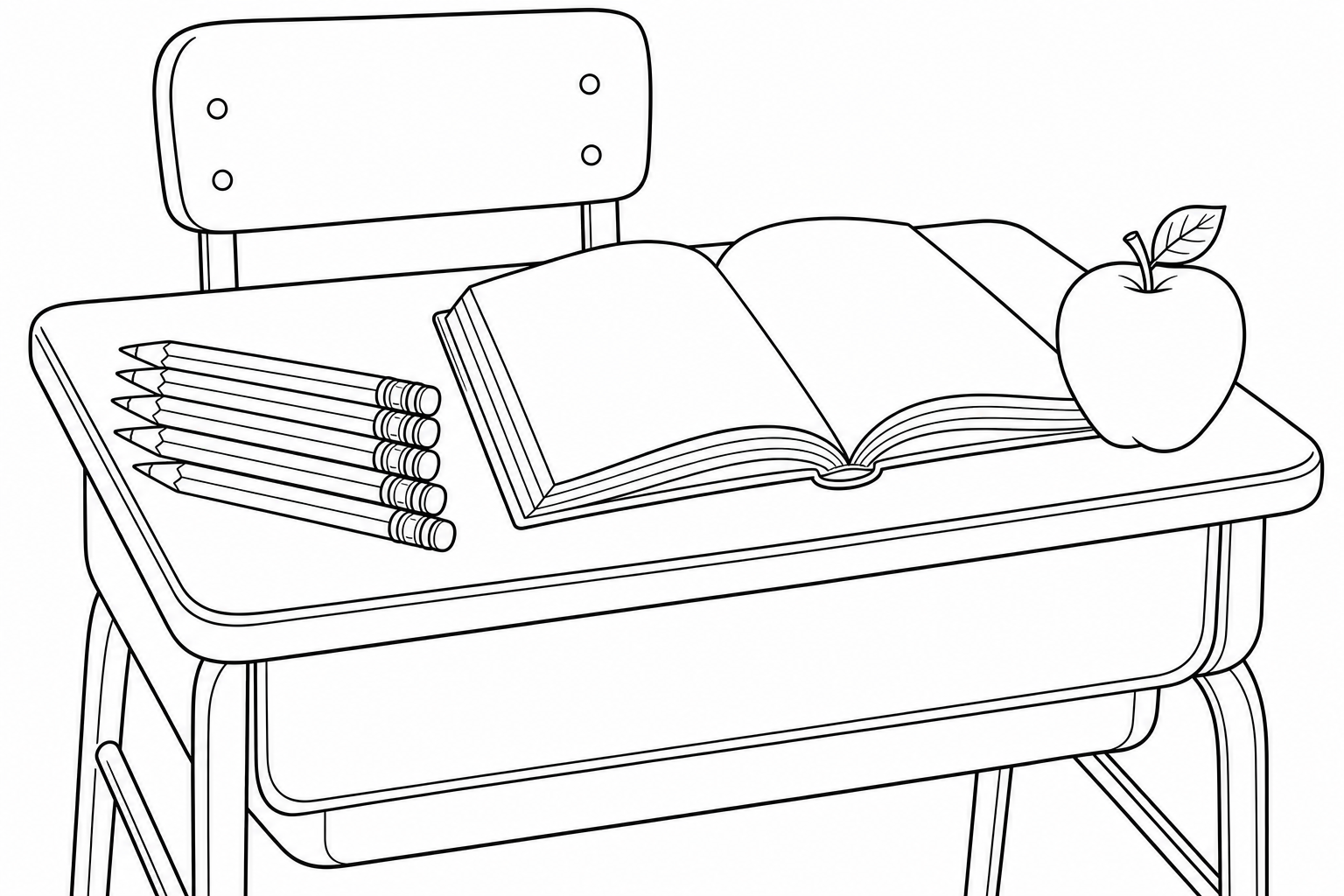
Which picture should I pick?
The one with the most empty paper. A card needs room for words, and a page packed edge to edge with flowers leaves nowhere to write. Look for one bold subject with calm white space around it, or a picture that has a blank space built in.
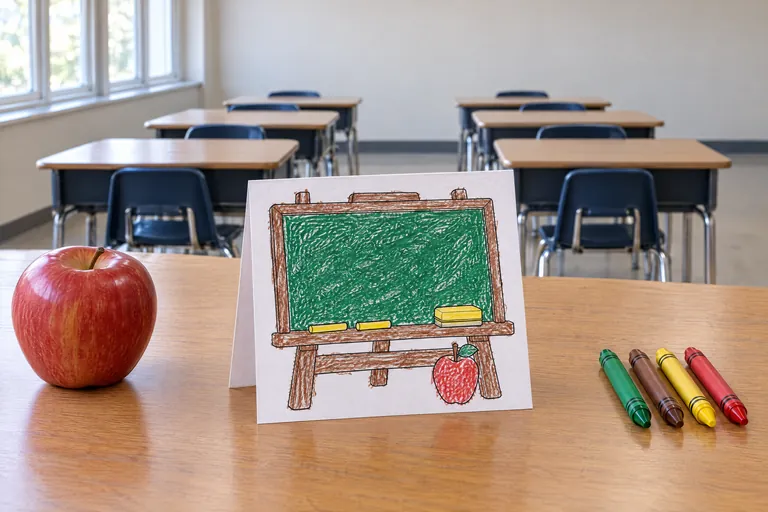
A chalkboard is the best example we have. The board is the empty space: your child colors the frame, the chalk and the apple, then writes the thank-you on the board in their own letters, or draws the teacher there instead.
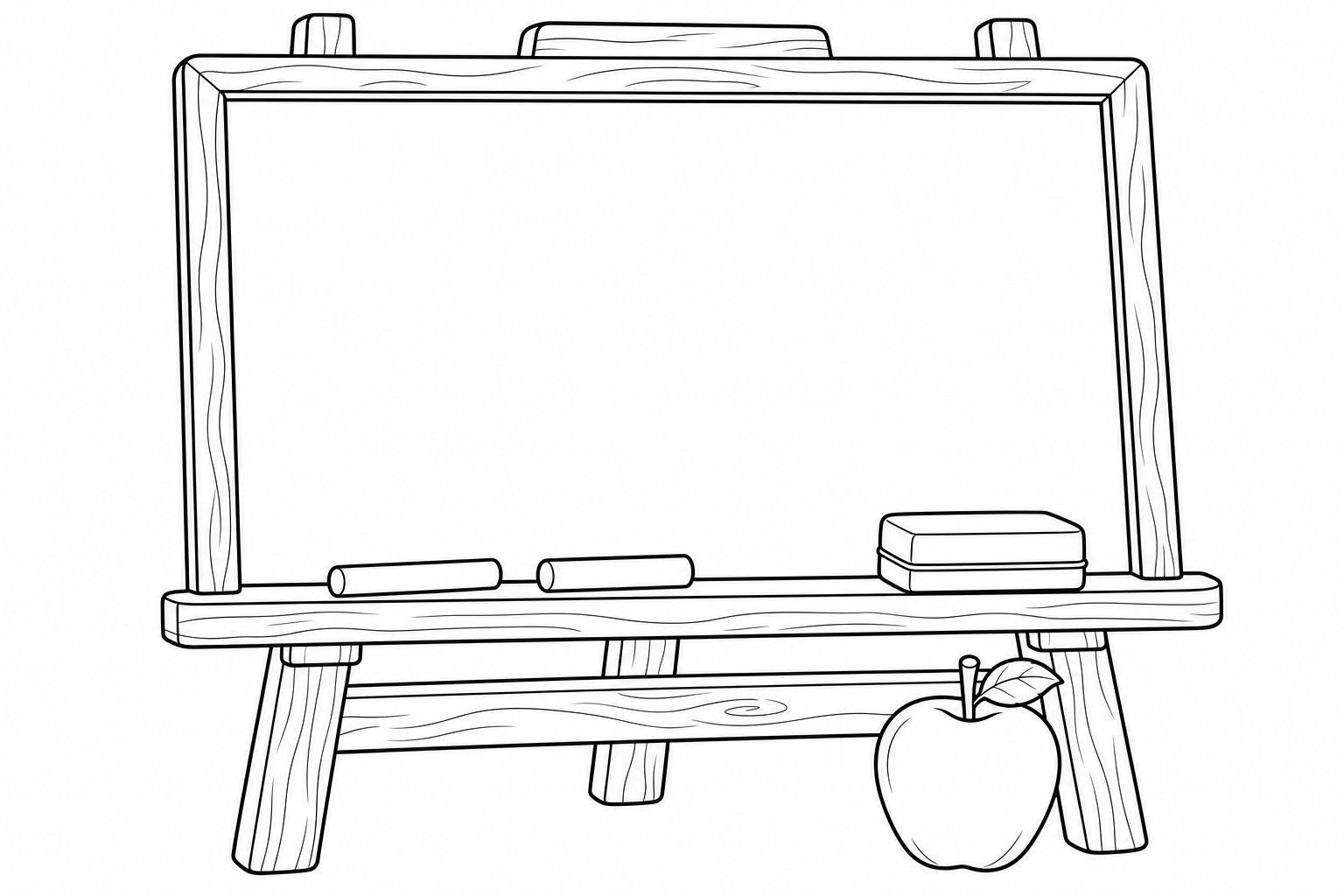
Bold outlines matter too. A five-year-old who presses hard with a fat crayon will drown thin lines, and the card ends up a muddy rectangle. Thick lines survive enthusiasm.



Coloring fun for kids — anywhere.
Free for iOS & Android. No ads, no sign-up, offline-ready.


Coloring fun for kids — anywhere.
Free coloring app for kids. iOS and Android, phones and tablets. No ads, no sign-up, even offline.
How does a page become a card?
Fold it once. Print the page on ordinary paper, let your child color it, then fold the sheet in half with the picture on the outside, so the card stands on a desk like a little tent. The blank back of the paper becomes the inside, and that is where the message goes.
If you want a surprise, fold it the other way: blank side out, picture inside. The front then carries only the teacher's name, and the drawing appears when the card opens.
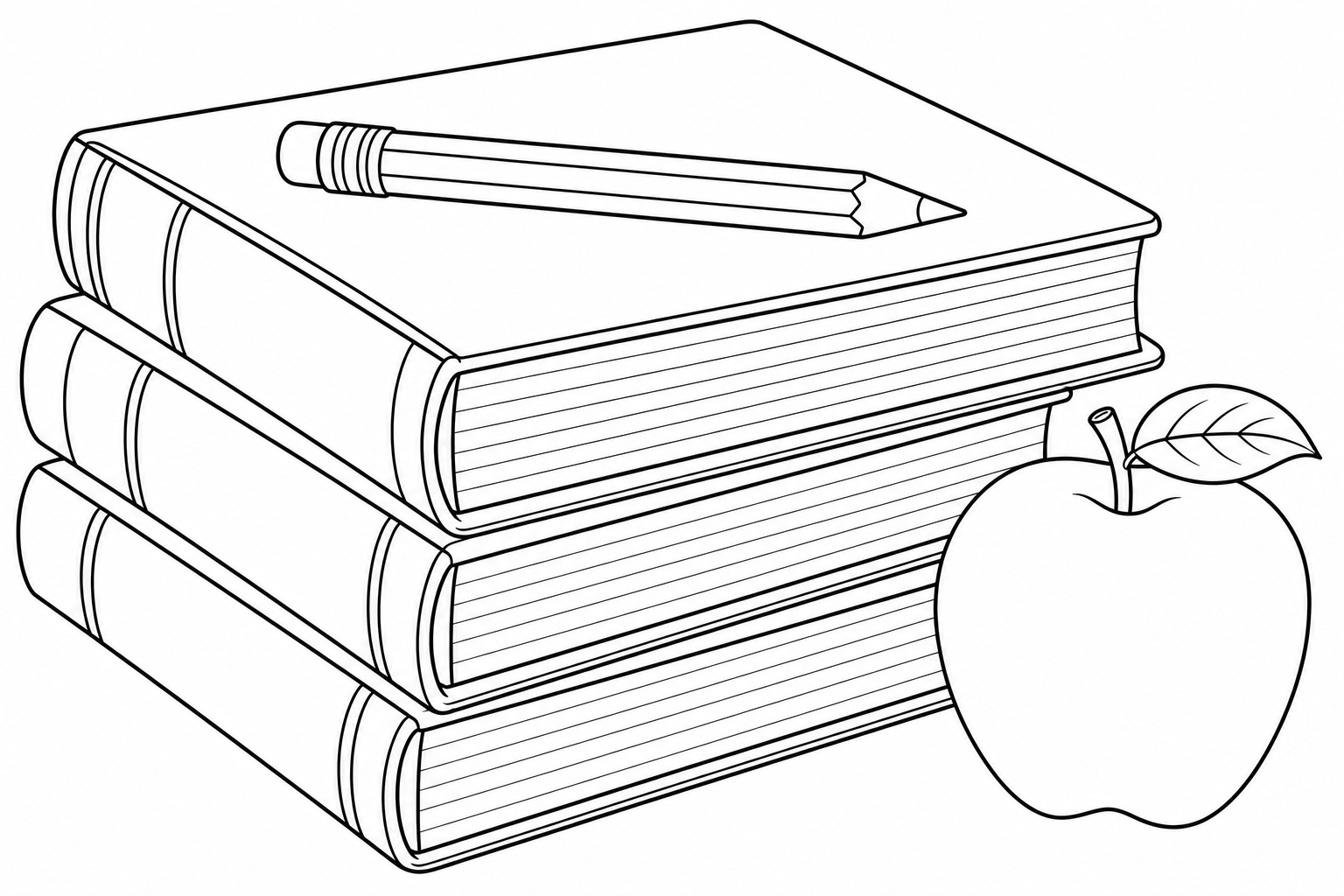
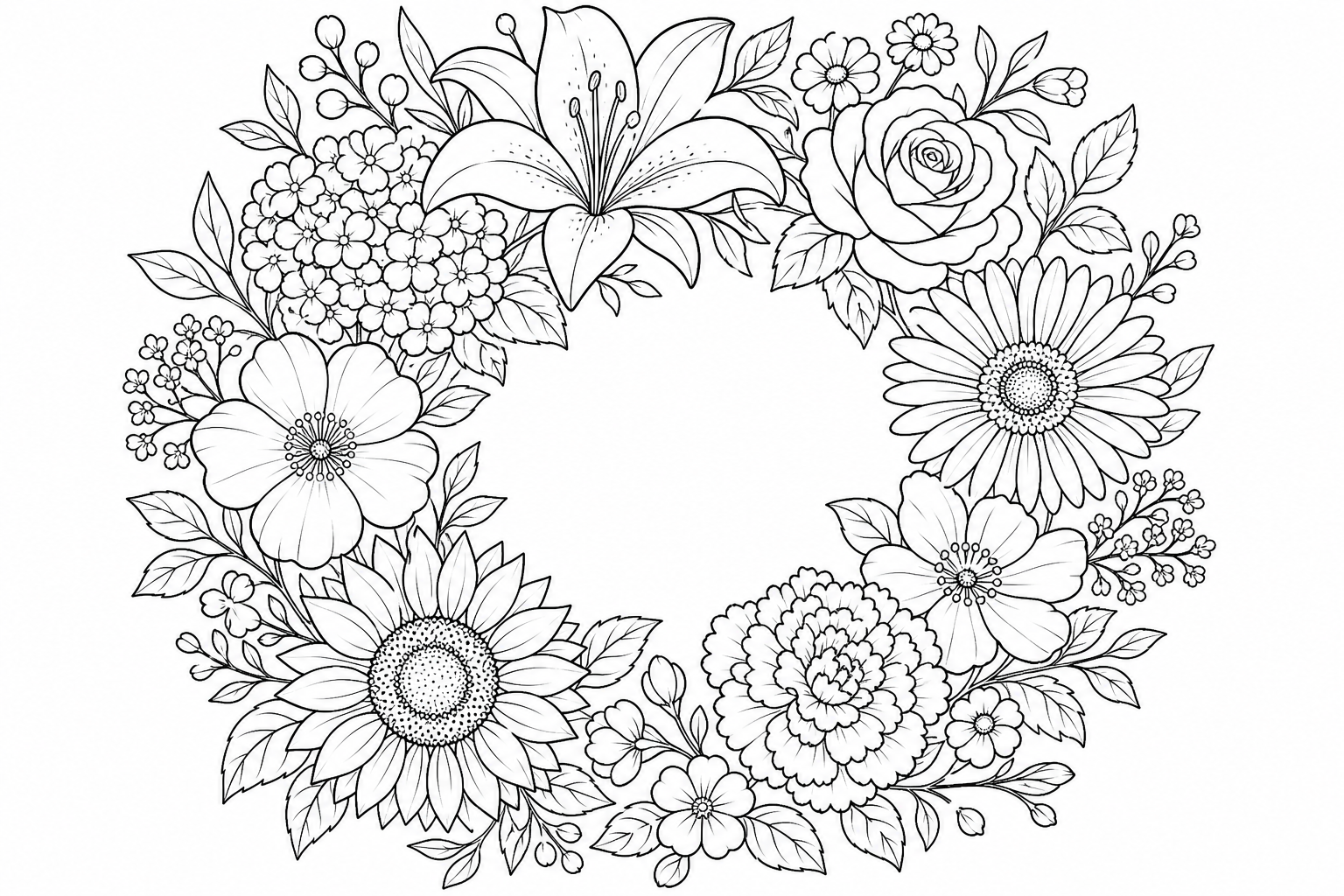
Let your child write the name, however wobbly. A three-year-old's attempt at their own initial says more than a neat grown-up hand, and the teacher will know at once which child it came from. These three pages leave room for it: a pencil with space on both sides, a book with a blank cover, and a flower wreath with an empty middle for an older child who likes detail.

Can the whole class make one?
Yes, and it is less work than it sounds.
If you are the parent organising it, pick a simple page so the youngest in the class can finish it in one sitting. The chalkboard works well here: every child writes one word on their own board.
What else could you color?
Pick a prompt or type your own — opens in a new tab.
Will my teacher really keep it?
Ask a teacher about the cards and notes from their pupils and you will often hear about a box, a drawer or a folder. Teachers quoted by WeAreTeachers talk about a "forever file" and a "Have a Nice Day" file for the hard weeks. What those keepsakes have in common is handwriting that only one child could have produced.
So on Sunday evening, skip the shop. Print one page, find the crayons, and leave the writing to your child.
A card your child colors and signs is the one that ends up in the drawer.