The tent is up by four. Dinner is not until six. The woods do not hand out a schedule, and somewhere in that gap a kid drops onto a camp chair and announces to the entire site that there is nothing to do.
That gap is what this collection is for. A camping day has its own slow plot: the afternoon after the gear is sorted, the long dusk while the fire burns down, the early dark inside the tent, the dawn nobody planned to be awake for. A stack of printed pages weighs less than one toy truck, and unlike the truck, it follows the plot beat for beat.
The afternoon the tent goes up
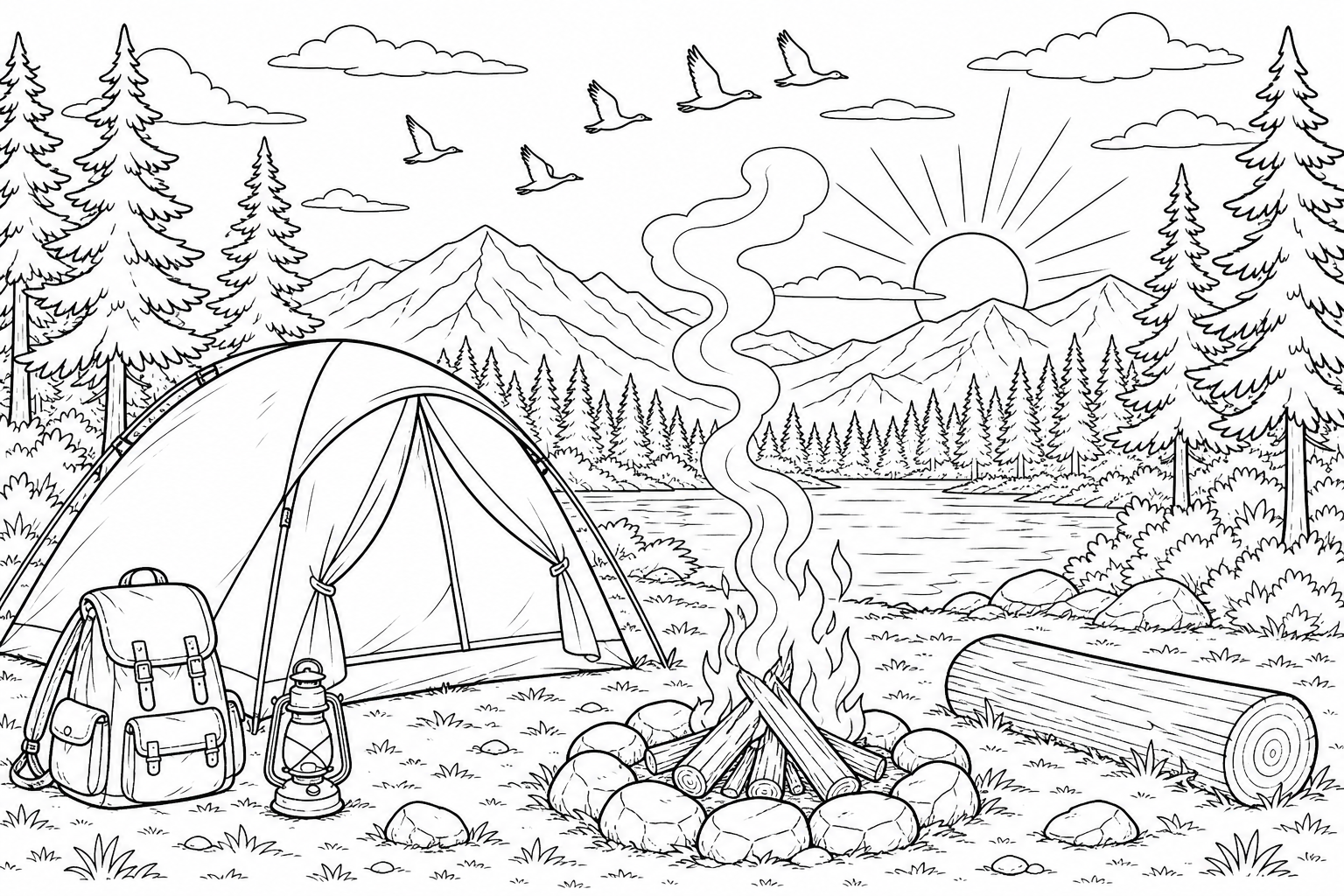
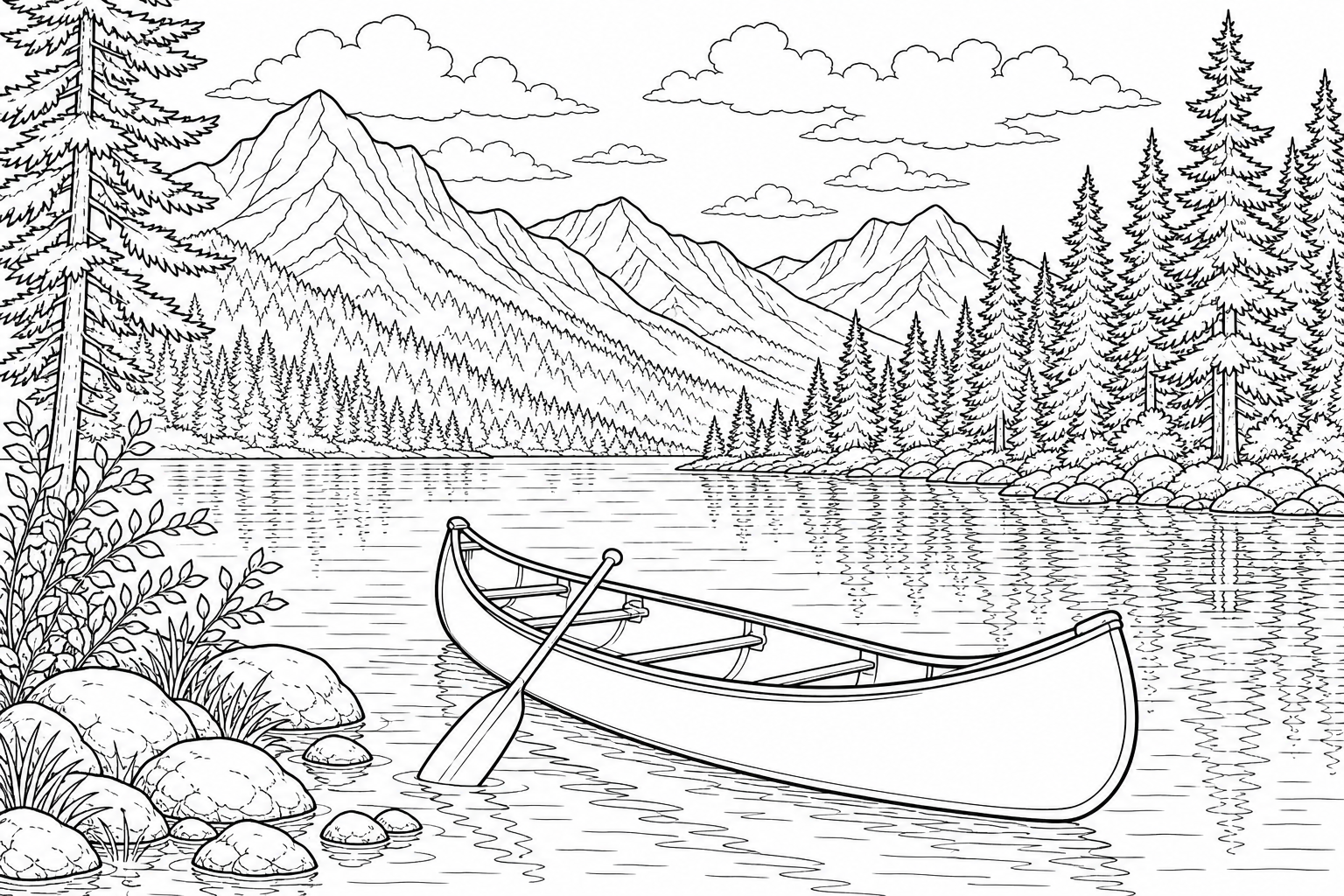
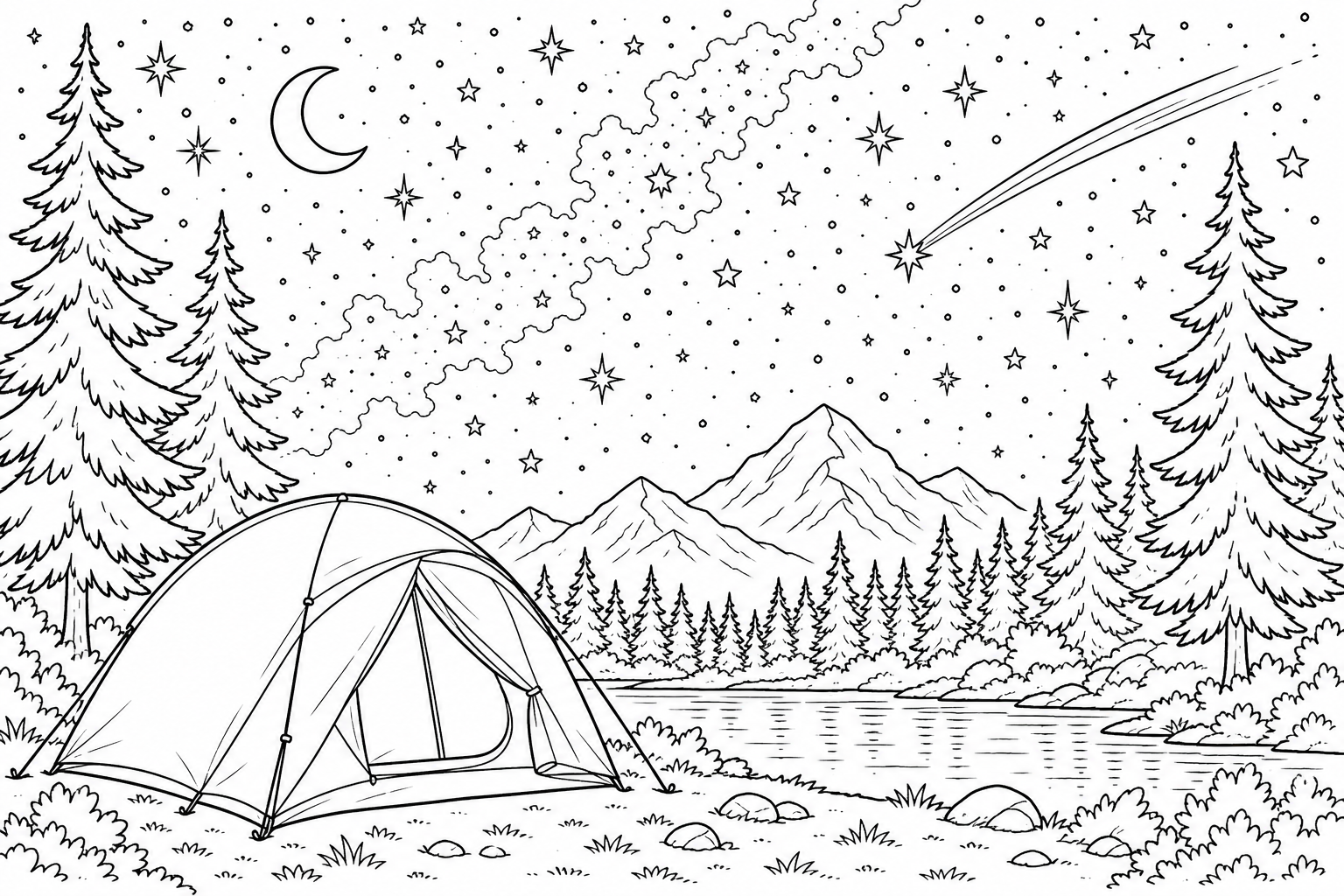
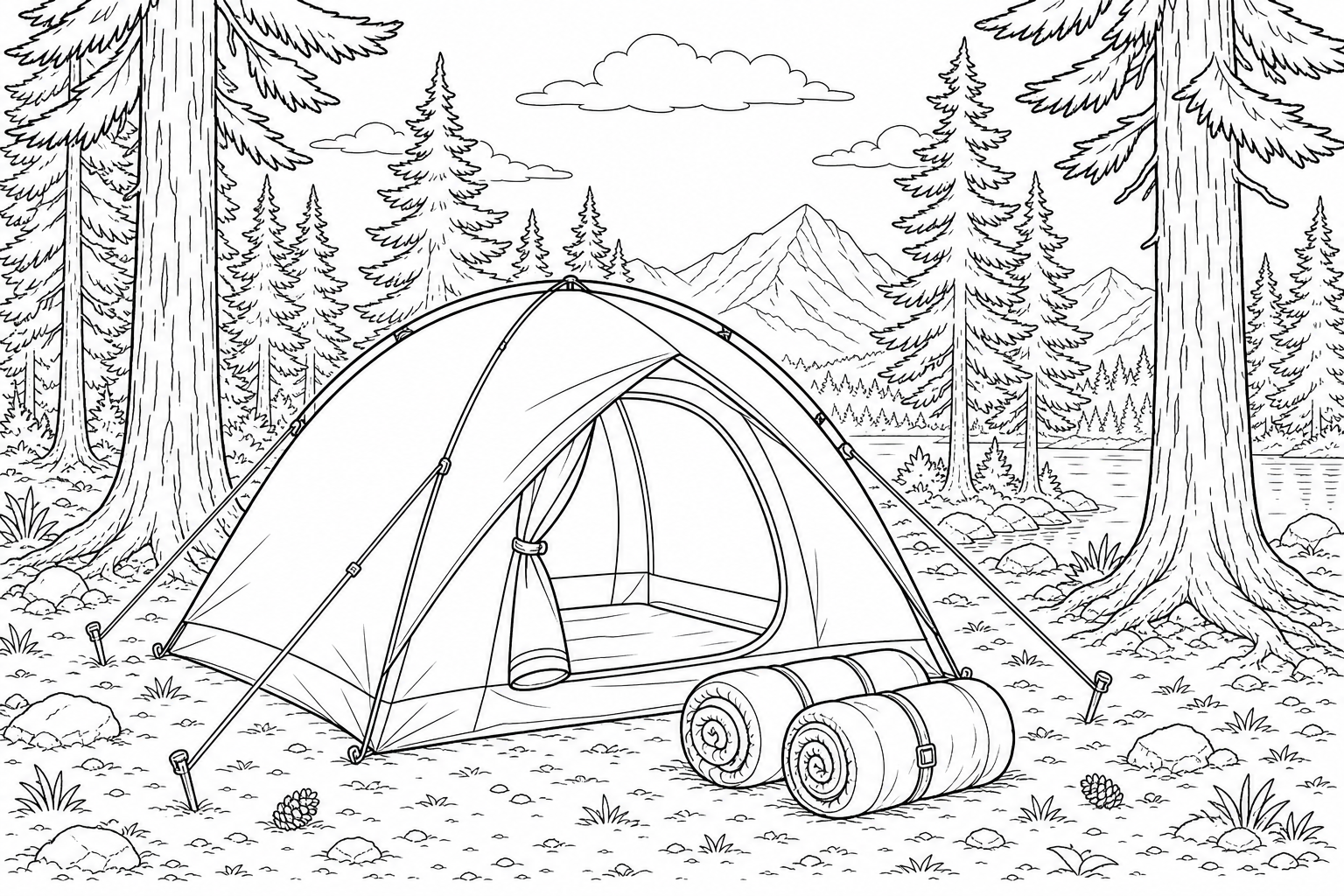
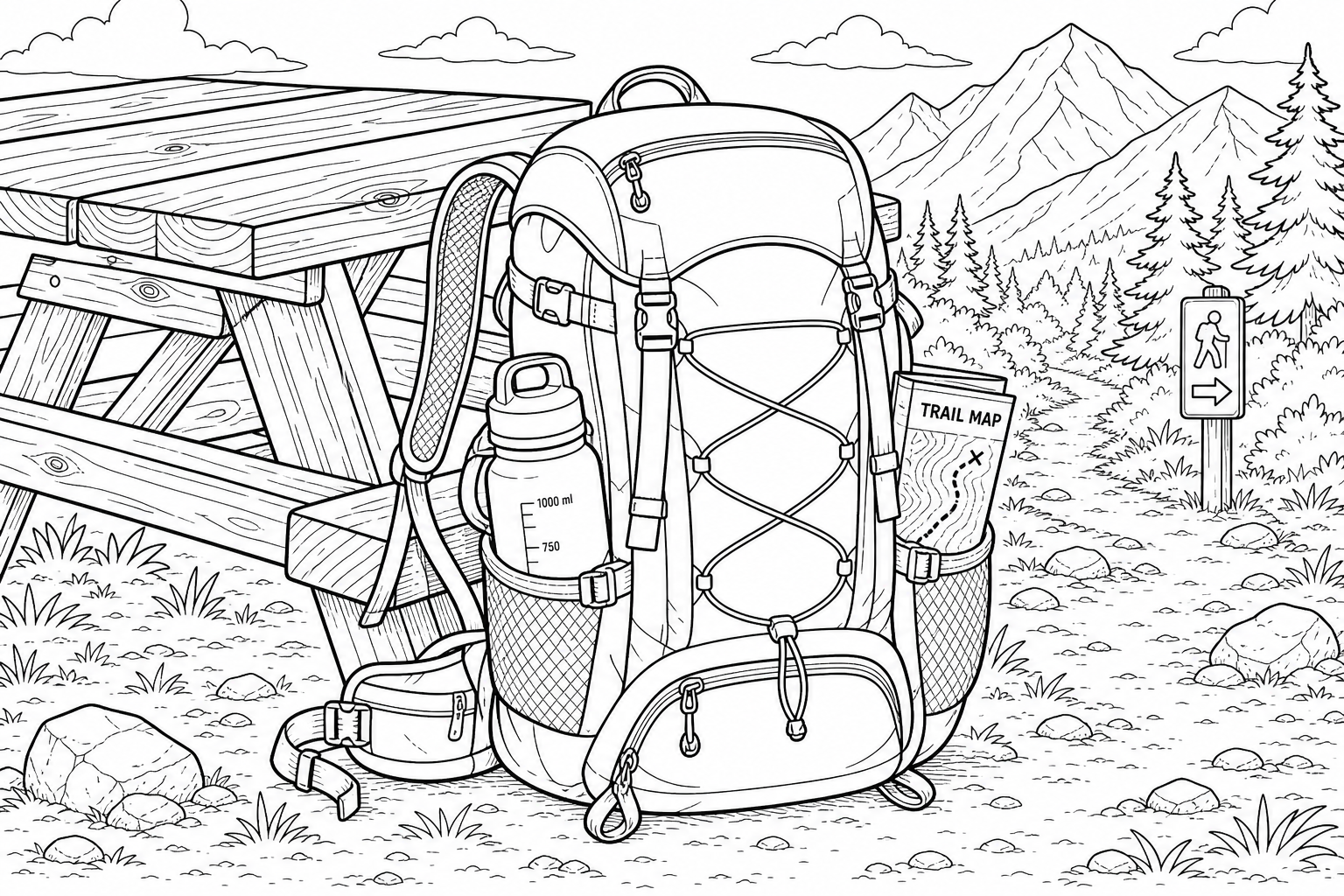
Setting up camp is the first show. Guy lines, tent poles that snap together, the backpack emptied across half the picnic table. Kids watch all of it, then run out of jobs long before the adults do. Hand over the pages that match what is right in front of them: a tent between the pines, a loaded backpack, a canoe pulled up on the gravel.
There is a small trick here. A page that mirrors the campsite gets colored from observation. The tent on paper turns the same blue as the real one ten feet away. That is a different kind of attention than coloring at the kitchen table, and kids fall into it fast.
Fire hours
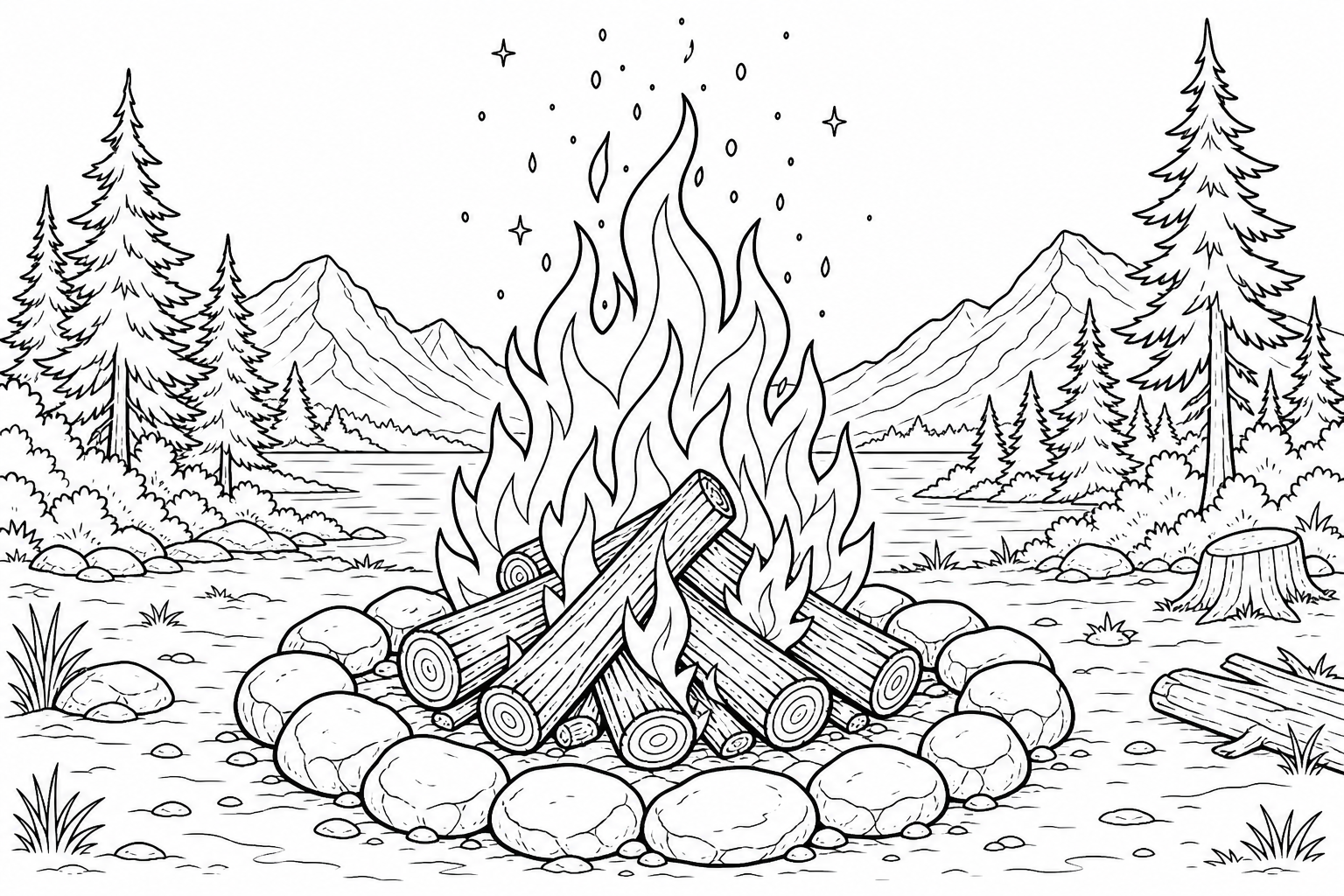
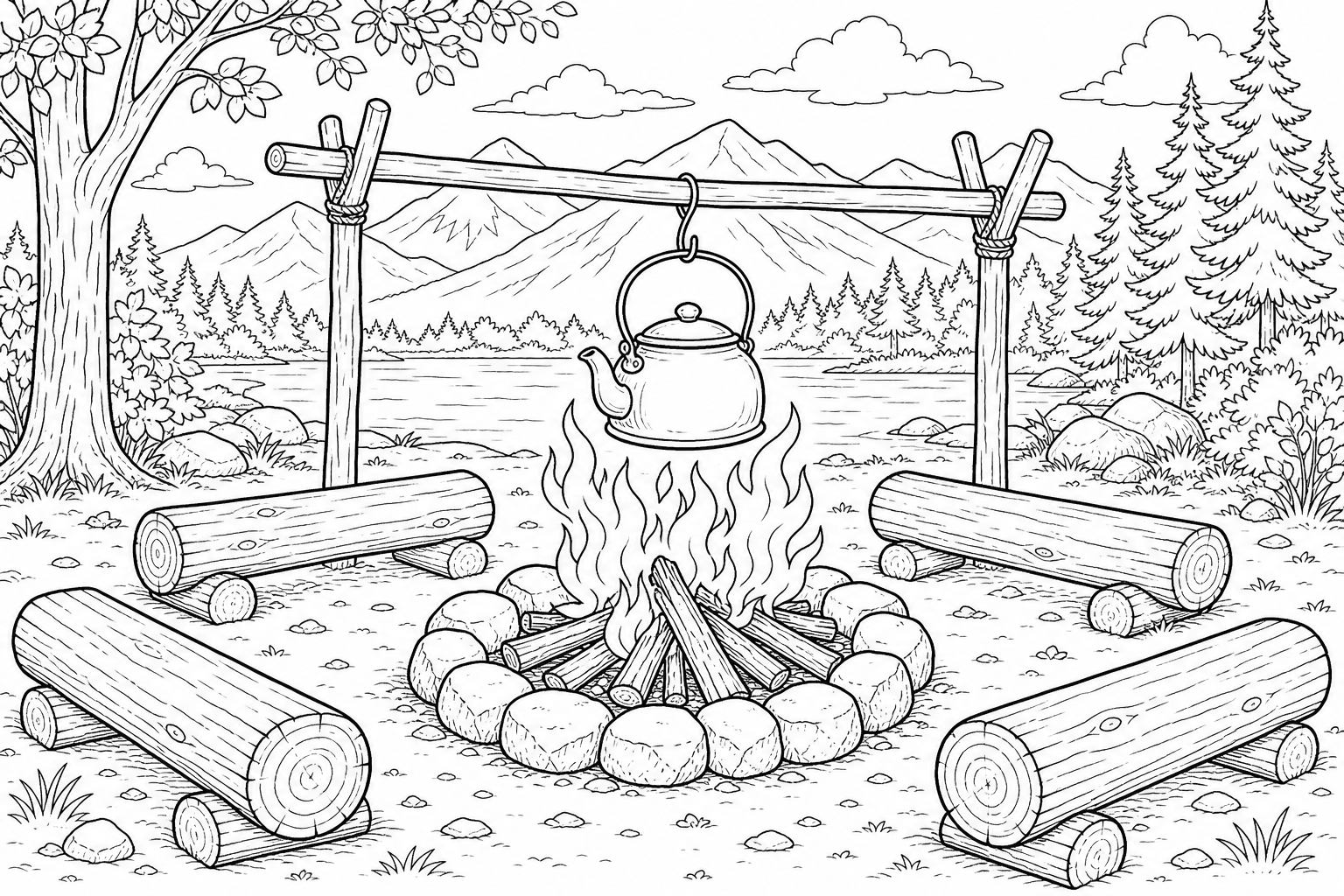
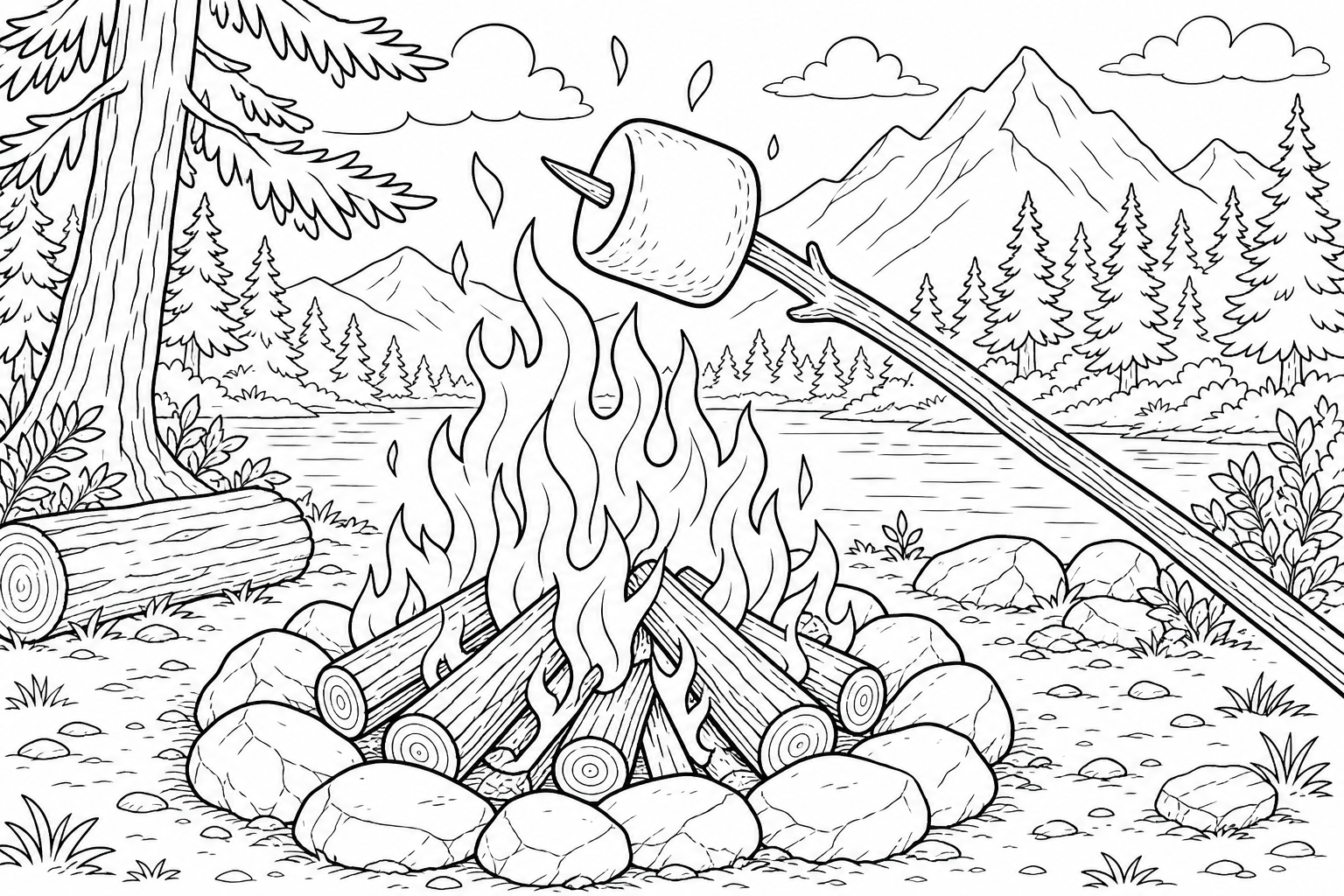
Dusk at a campsite is long. The fire needs feeding, dinner happens in stages, and there is a stretch where the only job a kid has is holding a marshmallow stick and not setting it on fire. Pages come out on the picnic table while the light is still good: campfires with their stacked logs, marshmallows mid-toast, the enamel mug nobody is allowed to lose.
Oranges and reds get used up first on these. Pack two of each.
When the woods switch shifts
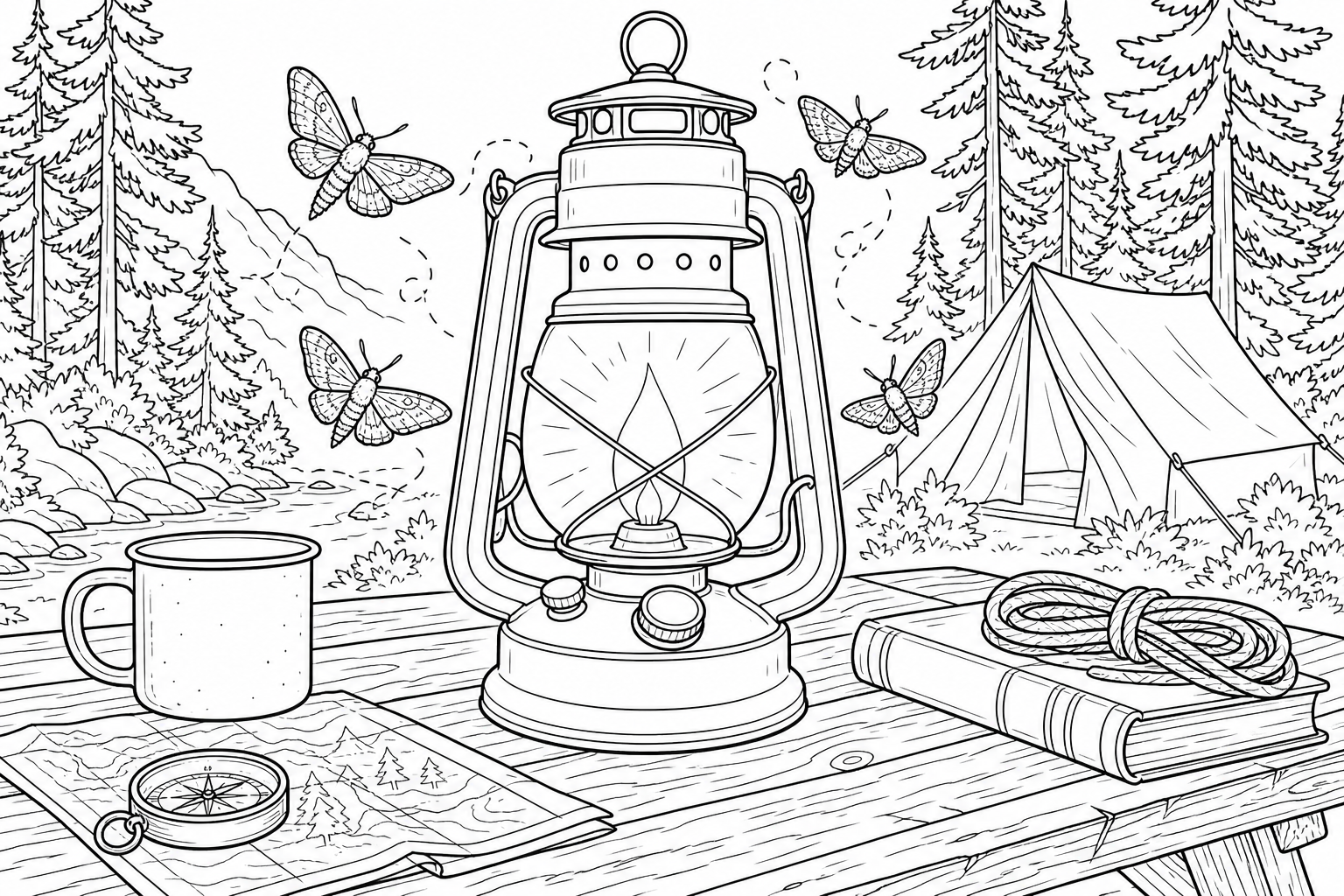
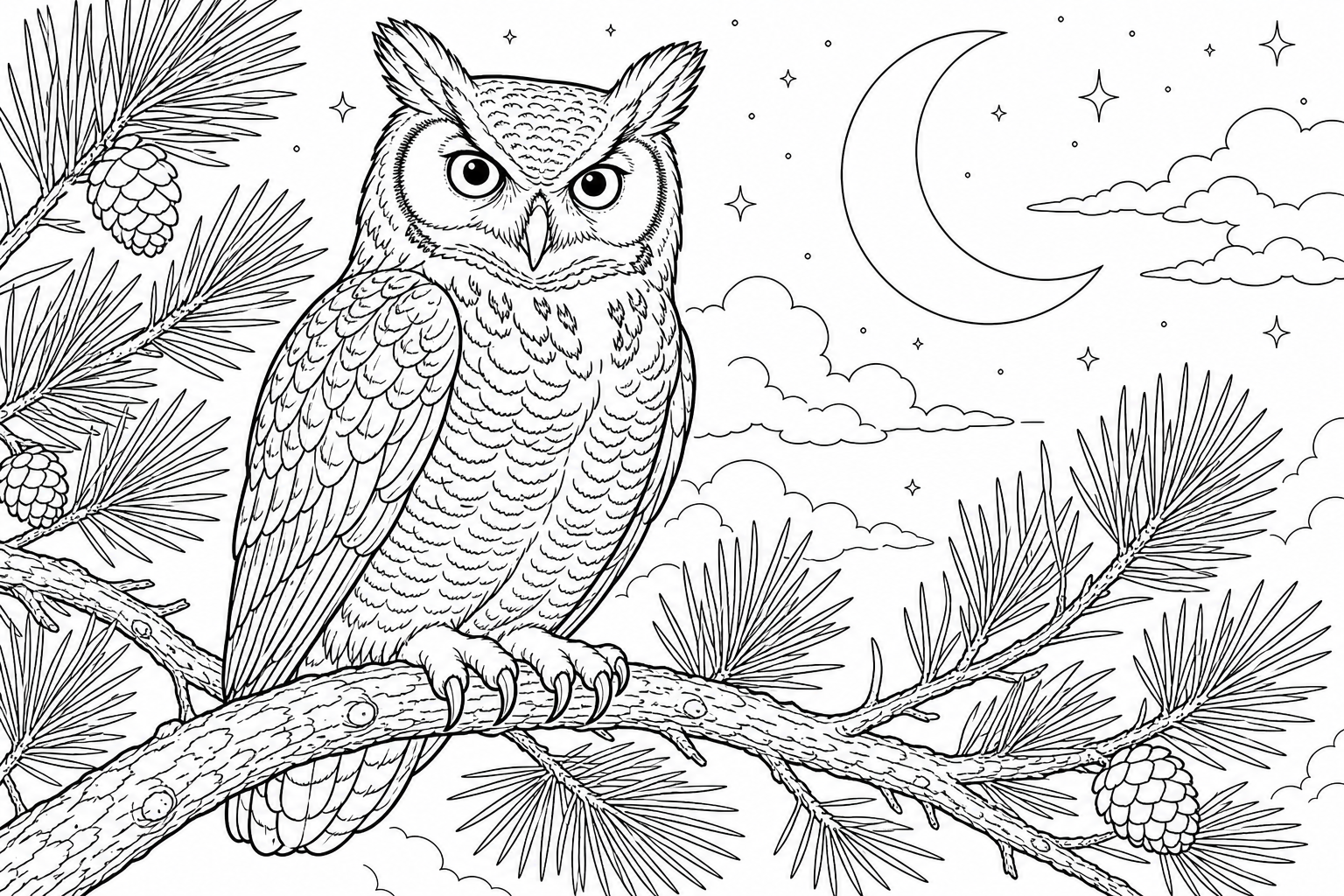
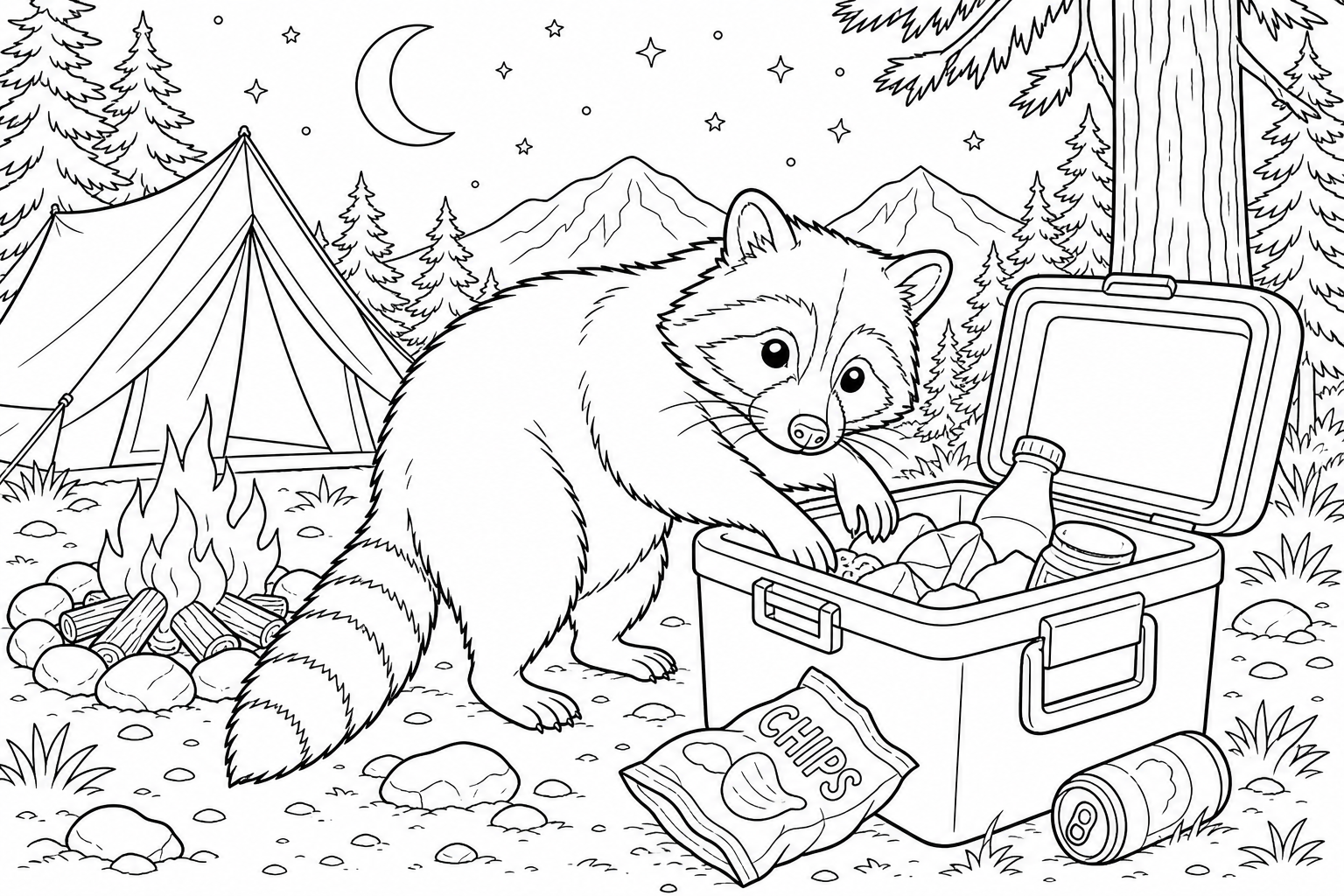
After dark the campsite shrinks to one circle of lantern light, and everything outside it gets louder. An owl somewhere up the hill. Something small and confident going through the woodpile, which is almost always a raccoon. For a kid in a sleeping bag this is either thrilling or terrifying, and a flashlight plus a page of the exact animal making the noise pushes it toward thrilling.
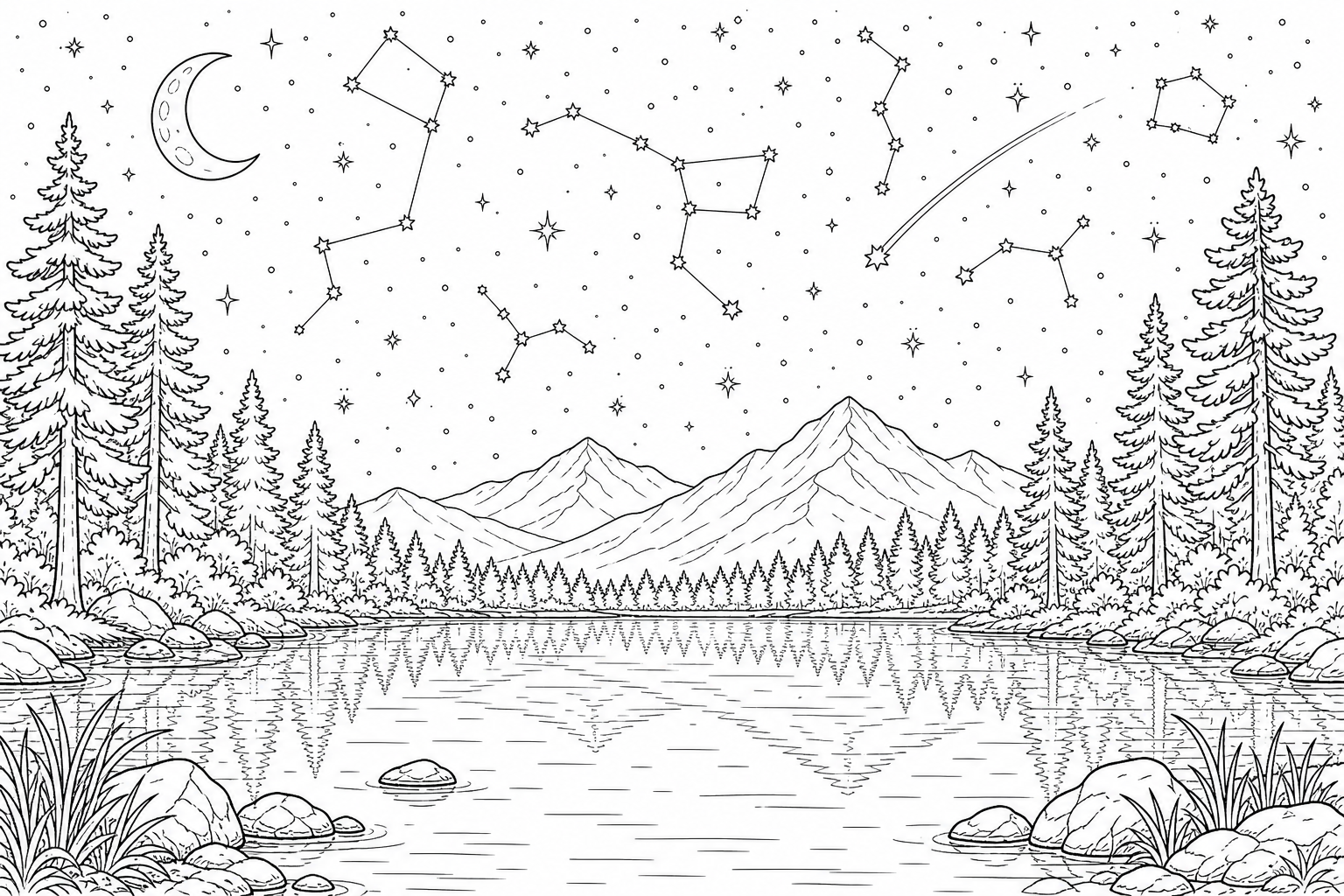
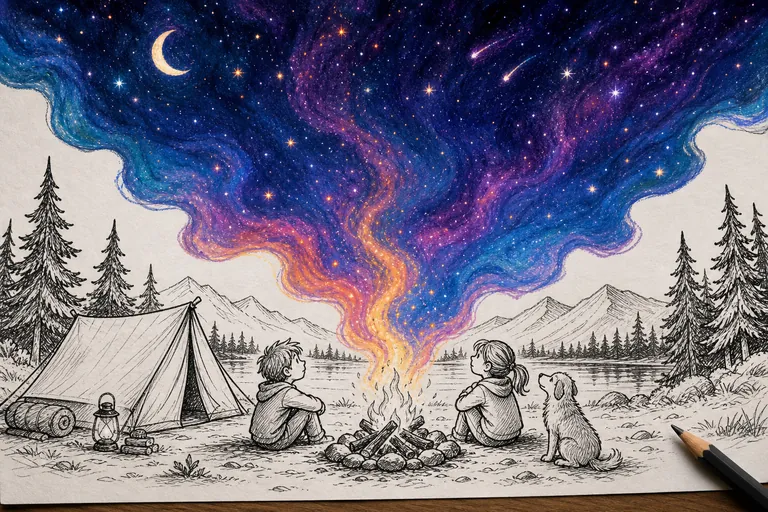
These are the pages for inside the tent: the night shift of the forest, and a sky with more stars on it than the one at home.
First light at the lake
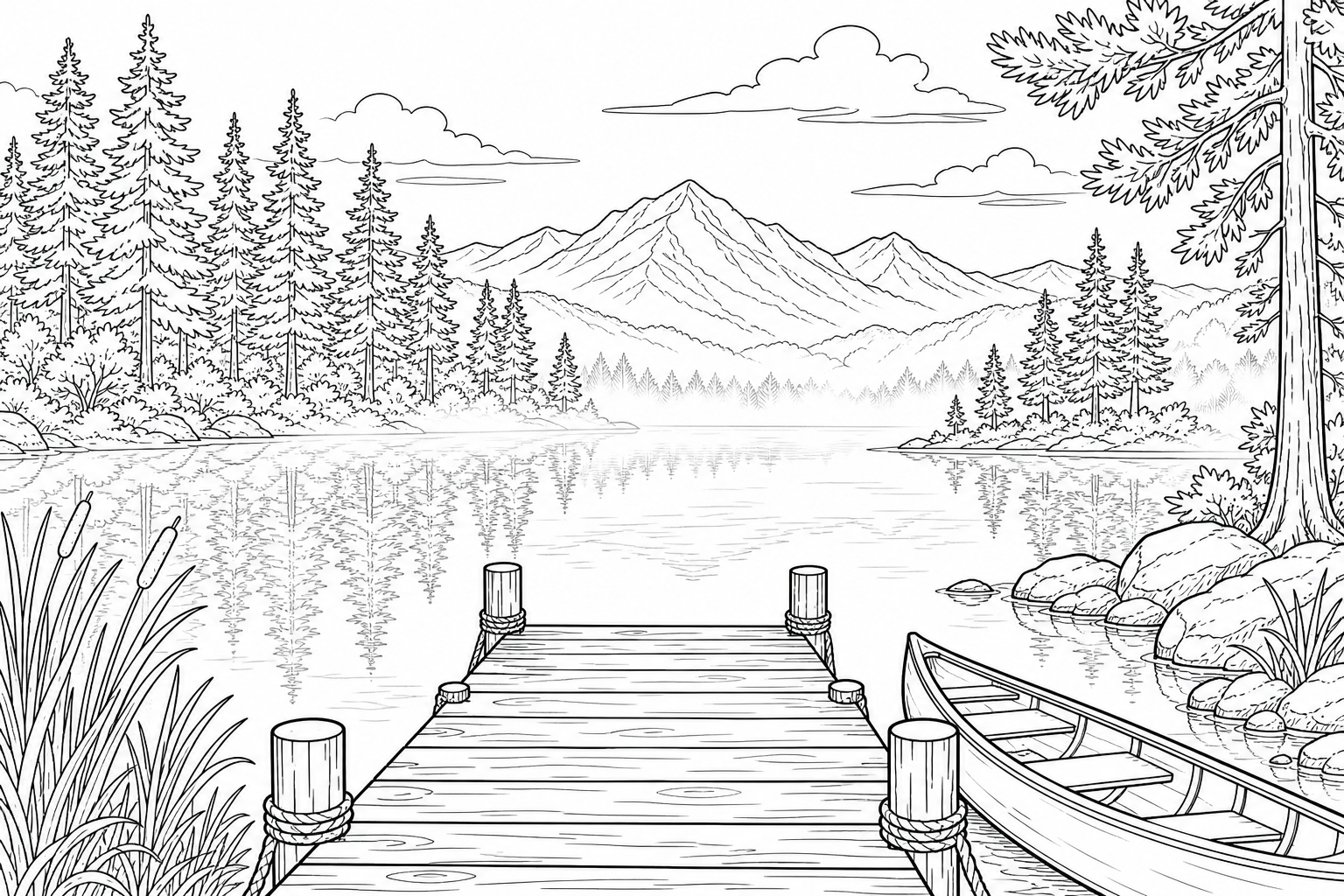
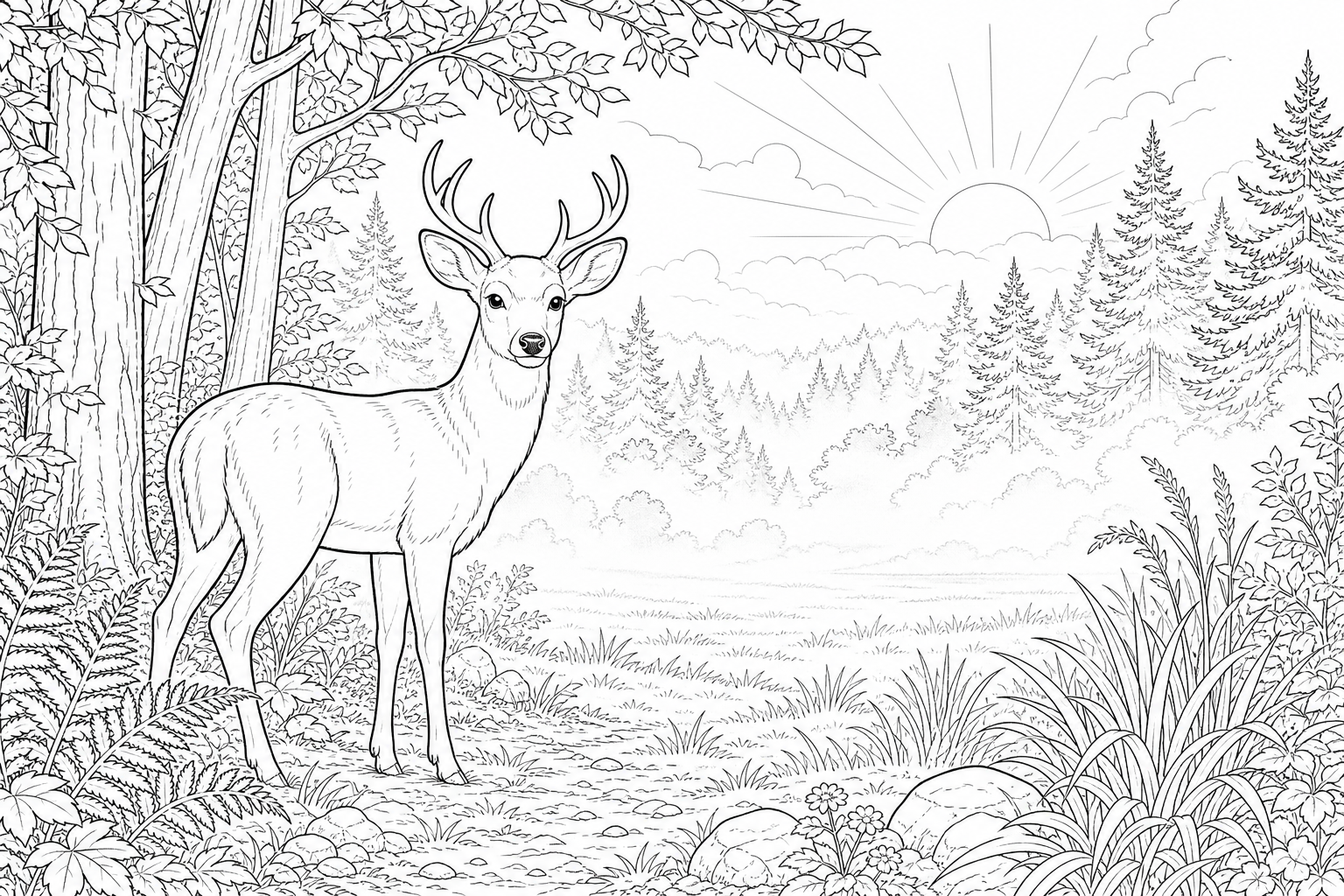
Kids wake at six in a tent. There is no version of camping where they do not. The campsite at that hour belongs to them: the lake flat as glass, mist sitting on the water, a deer at the tree line deciding whether the morning is safe yet. A quiet kid with a clipboard at the picnic bench is a fair trade for letting one parent sleep until seven.
How to make paper survive a campsite
Paper hates camping. Dew gets it at night, the picnic table is sticky by Saturday, and the wind has opinions. Three things fix all of it: a clipboard, a zip bag for finished pages, and colored pencils instead of crayons, because crayons turn to soup in a hot car and pencils do not care.
The hours before you even arrive are their own problem, and the road trip pages that survive the backseat handle those.
Want to wander past the campsite? Start here:
What else could you color?
Pick a prompt or type your own — opens in a new tab.
The full pack
Print the set the night before, clip it, bag the pencils, done. The trip fills in the rest.